Check out what is new in Poultry Industry
Find the best technical articles, forums, and videos on Poultry Industry at Engormix. Enter now and interact with the world's largest agricultural social network.



Julie Duong, Global Species Marketing Manager at Adisseo, explains how Adisseo helps nutritionists align formulation with real on-farm nutrient utilization—using data, practical insights, and enzymes to improve digestibility, reduce variability, and unlock measurable savings. ...
Comments : 1
Recommendations: 0

1. Introduction Several agricultural and agro-industrial by-products are produced during the production or processing of fruits and vegetable crops, which may cause environmental pollution. These by-products were of great interest during the COVID-19 crisis due to lockdown, close of dry borders and ports and traffic restrictions [1,2]. The use of alternative feedstuffs and locally available feed ingredients would improve a possible solution. Date by-products are the best-known...
Comments : 0
Recommendations: 0
Recommended events
January 25, 2027
United States - Georgia - Atlanta
1. Introduction Nowadays, alternative protein sources are essential due to the future perspectives of increasing the world’s human population [1] and limited grain supplies after the COVID-19 crisis and the Russia–Ukraine war. Insects are valuable protein supplies for animal nutrition [2–4] because of their high nutritive value and the limited natural resources (water, land, and feed) required for insect growth [5–7]. The primary and most expensive...
Comments : 0
Recommendations: 0


BETAINE CAN NOT REPLACE METHIONINE Nutritionists constantly seek opportunities to reduce diet costs while maintaining optimal animal performance. When ingredient prices rise, nutritionists search for ways to reduce their use or replace them with alternative ingredients. With respect to methionine...
Comments : 0
Recommendations: 3
Featured users in Poultry Industry

Dr. Algis Martínez  Cargill
DVM, Diplomado ACPV - Poultry Veterinarian North America Cargill
United States
United States





Featured comment:


@Luis Fernando Vergamini Luna Thank you. I also wonder about the effects of starch forms. In particular, is starch form responsible for peanut meal making incredible pellets compared to other protein sources? And I'm glad you said thermal comfort zone and not thermal neutral zone. Animals are always loosing heat to their environments as long as their body temperature is less than room temperature. They may expend some energy to keep their body temperature from raising, but that is another...
Comments : 9
Recommendations: 2



Karan Singh and Juan José Mallo (both from Norel) share how the company is supporting producers in one of the world’s fastest-growing poultry and dairy-egg markets. With 10 years of presence in India and a strong joint venture with NBPL, Norel is doubling down on mineral nutrition, gut health, and new solutions for the booming layer industry. ...
Comments : 0
Recommendations: 0



I. INTRODUCTION Exogenous phytases increased apparent ileal digestibility coefficients of 17 amino acids by an average of 4.13% (0.833 versus 0.800) in one meta-analysis (Cowieson et al., 2017); however, the scale of responses varies. Phytases increased apparent ileal digestibility coefficients of 16 amino acids by averages of 12.7%, 7.24% and 9.15%, respectively, across three selected assays (Amerah et al., 2014; Truong et al., 2015; Martínez-Vallespín et al., 2022)...
Comments : 0
Recommendations: 0
I. INTRODUCTION Acid binding capacity (ABC) of an ingredient, through its effect on gastric pH, plays an important role in the digestion and absorption of nutrients in poultry. The ABC is defined as the resistance of a feed ingredient to the pH reduction by gastric acid. Limestone, the major Ca source in poultry diets, has a high ABC (Lawlor et al., 2005), which can increase the digesta pH and, influence the solubility and digestibility of nutrients, including minerals. The average...
Comments : 0
Recommendations: 0
Lighting as a Strategic Tool for Optimizing Poultry House Performance
Suggested link
I. INTRODUCTION Wheat and sorghum are the most common feed grains for chicken-meat production in Australia. In two direct comparisons birds offered maize-based diets were better able to accommodate dietary crude protein (CP) reductions than wheat-based diets (Chrystal et al., 2021; Greenhalgh et al., 2022). One underlying reason for this difference appears to be the higher protein contents of wheat than maize and, similarly, wheat (n = 27) contained higher protein levels (115.5...
Comments : 0
Recommendations: 0


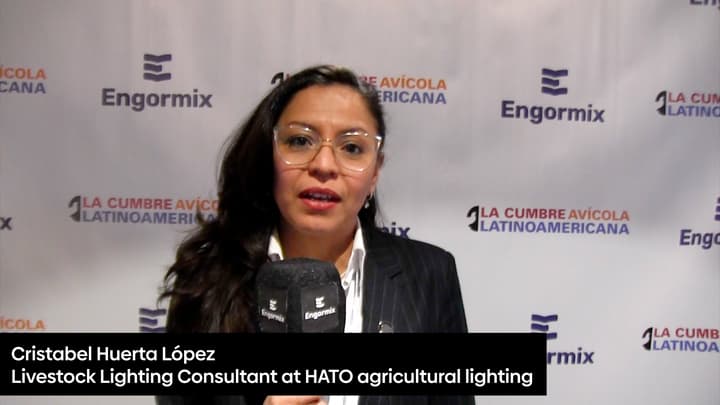
Cristabel Huerta, Brightness Consultant at HATO Lighting, discusses the advantages of modern poultry lighting and the key challenges it can solve beyond basic illumination. ...
Comments : 0
Recommendations: 1


NATURCOLIN VS. CONVENTIONAL CHOLINE: WHAT'S THE POINT? Synthetic choline chloride has been widely used in animal nutrition, but it comes with several limitations. Naturcolin provides plant-derived phosphatidylcholine together with valuable phospholipids, plus natural bioactive compounds like rosemary extracts. A smarter, more natural approach to choline nutrition. ...
Comments : 0
Recommendations: 1

Stella Molck, Scientist Microbiology RD&I at Evonik, discusses the importance of outgrowth speed in spore-forming probiotics and how it influences gut colonization, microbial balance, and overall effectiveness in animal nutrition. ...
Comments : 0
Recommendations: 2
.jpg&w=3840&q=75)


Content: 1---Optimization to Enhance Water Resistance of Shrimp and Crab Feed 2---Minimizing Dusting Rate in High-Fiber Livestock and Poultry Feed 3---Preventing ‘lubrication-induced delamination’ in High-fat Aquatic feed 4---Process-coupled Optimisation: Adaptation for...
Comments : 0
Recommendations: 0
Introduction The increasing world population and the growing demand for animal-based foods are driving research towards alternative, sustainable and low-environmental impact protein sources for livestock feed. In this context, edible insects, in particular the black soldier fly (Hermetia illucens L., BSF), are increasingly recognised as a valuable alternative resource for animal nutrition due to their efficiency in nutrient conversion, rapid growth and ability to transform...
Comments : 0
Recommendations: 0


FIGAP 2026: The Scientific And Technological Exhibition Of The Livestock Industry
Suggested link


1. Introduction Soybeans originated in East Asia and were domesticated from wild soybeans (Glycine soja) between 1700 and 1100 B.C. and are now grown worldwide [1]. However, soybean production and utilization were limited within or near its center of Origin (the Orient) for centuries. The first recorded use of soybeans in the U.S. was in 1765 in Savannah, GA. It is thought that Samuel Bowen, a former seaman of the East India Company, brought soybeans to the U.S. from China via...
Comments : 0
Recommendations: 1
1. Introduction The poultry industry is an important, fast-growing sector for producing low-cost and rich nutrients for human consumption. This industry is always at risk of infectious and non-infectious agents that cause adverse losses. Antibiotics, especially growth promoter types, are widely used to increase gut health, reduce subclinical infections, and promote growth and production [1]. However, antibiotic overuse negatively impacts the balance of the normal gut microbiome along...
Comments : 0
Recommendations: 0



Dr. Madhukar Vibhute, Operations Manager - West at ABTL, speaks about a multi-enzyme cocktail from ABTL, which combines xylanase, protease, and other key enzymes to boost energy utilization, reduce feed costs, and improve performance in layers, broilers, and stressed conditions. ...
Comments : 0
Recommendations: 1


Dr. Siliveru Srinath from ABTL, discusses rising mixed viral and bacterial infections linked to feed toxicity and immunosuppression and explains how corn–soy diets, organic acids, toxin binders, and probiotics from ABTL help restore gut health and improve bird productivity. ...
Comments : 0
Recommendations: 1
.jpg&w=3840&q=75)
1. Introduction Poultry farming is integral to global animal agriculture, supplying a vital source of economical protein for an expanding human population [1]. The industry makes up more than a third of the world’s meat production, and it is expected to grow to around half of all meat production, reaching 182 million tons in the next ten years [2]. Notwithstanding, the industry faces ongoing health challenges that jeopardize productivity and animal welfare, with necrotic...
Comments : 0
Recommendations: 0

1. Introduction Over the years, broiler chickens have been selected for rapid growth, which makes them very efficient at depositing body protein in a short period of time. This is important since the broiler sector is expected to contribute to the growing global demand for poultry meat. In light of this, the quality of proteins fed to poultry is becoming more important. Animal and plant ingredients are the main sources of protein used in poultry diets and they vary in...
Comments : 0
Recommendations: 1
.jpg&w=3840&q=75)