Natural Adsorbents as Therapeutic Candidates Against Necrotic Enteritis in Poultry: A Conceptual Review
Necrotic enteritis (NE), primarily associated with Clostridium perfringens, remains a major enteric disease in poultry production, particularly under reduced-antibiotic and antibioticfree systems. Natural adsorbents, including biochar, clay minerals, and graphite-based materials, have attracted interest because of their capacity to interact with toxins, microbial metabolites, pathogens, and the intestinal environment. This conceptual review synthesizes current evidence on the physicochemical and biological properties of these materials and evaluates their potential relevance to NE mitigation. Biochar and clay minerals have stronger poultry-related evidence, particularly for mycotoxin adsorption, gut microbial modulation, and performance responses, whereas graphite remains an emerging candidate supported mainly by in vitro, non-poultry, and graphite-derivative literature. Across all three adsorbent classes, direct evidence for NetB-specific adsorption is currently absent, making this a central research gap rather than an established mechanism. Therefore, this review proposes a structured evaluation pipeline integrating material characterization, in vitro toxin-binding and epithelial response assays, and in vivo poultry NE outcomes such as lesion scores, CP burden, barrier integrity, inflammation, oxidative stress, microbiome shifts, and growth performance. Overall, natural adsorbents should be viewed as promising but incompletely validated candidates requiring standardized, NE-specific testing before therapeutic or commercial application.
Keywords: necrotic enteritis; Clostridium perfringens; natural adsorbents; antibiotic alternatives; poultry
1. Introduction
2. Literature Search Strategy and Evidence Synthesis
3. Pathophysiology of NE in Poultry
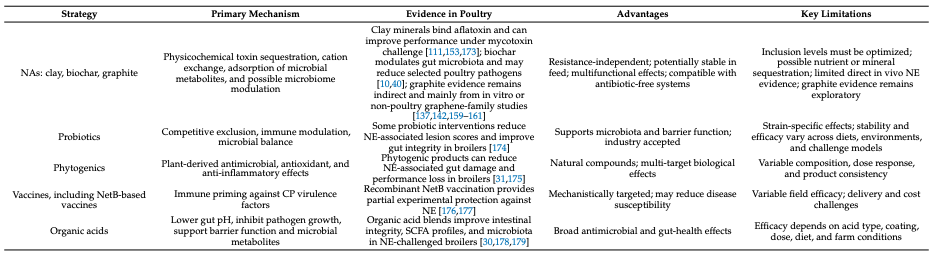
4. Existing Strategies for Controlling NE
5. Natural Adsorbents-Relevance in Poultry
5.1. Biochar

5.1.1. Physicochemical Properties of Biochar
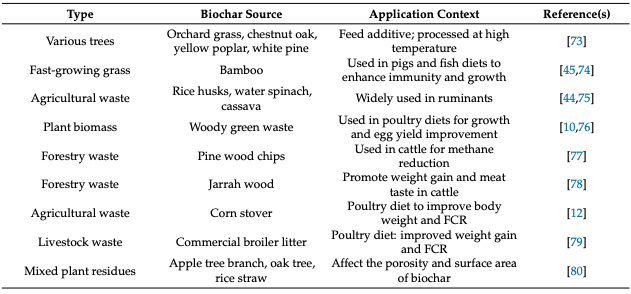

5.1.2. Source of Biochar
5.1.3. Limitation of Biochar
5.2. Clay Mineral


5.2.1. Physicochemical Properties of Clay Minerals
5.2.2. Potential Limitations and Safety Considerations Regarding Clay Minerals
5.3. Graphite-An Emerging Natural Adsorbent
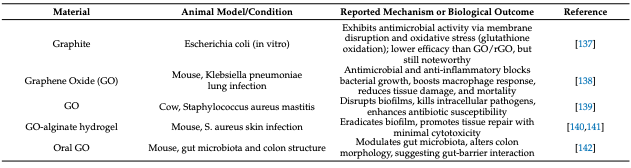
6. Natural Adsorbent’s Mechanism(s) of Action
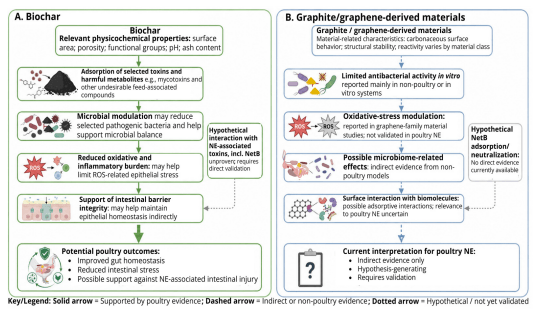
6.1. Biochar
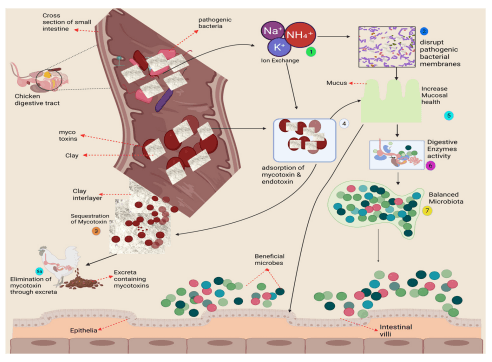
6.2. Clay Minerals
6.3. Graphite
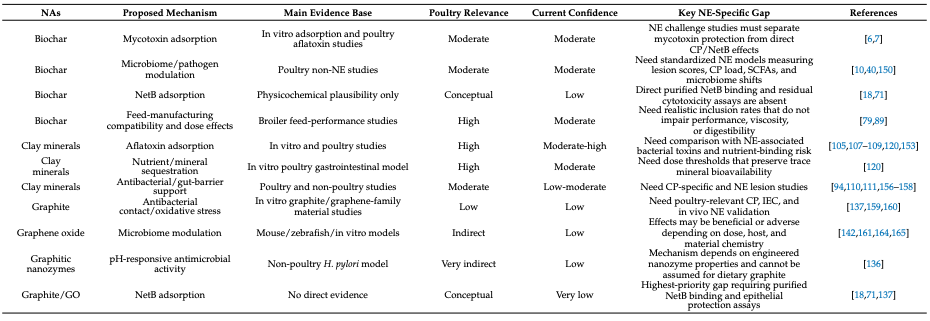
6.4. NetB Adsorption as a Central Unproven Mechanism
7. Proposed Screening Framework for Evaluating Natural Adsorbents for NE Control in Poultry
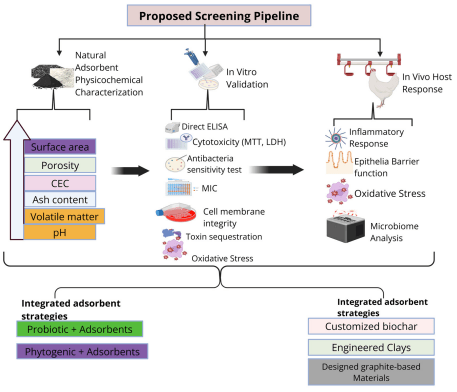
7.1. Dose-Response and Go/No-Go Decision Criteria
7.2. Translational and Commercial Considerations
8. Conclusions
1. Food and Agriculture Organization of the United Nations. FAOSTAT: Live Animals Data. Available online: http://www.fao.org/faostat/en/ (accessed on 15 December 2025).
2. OECD; FAO. *OECD-FAO Agricultural Outlook 2019–2028*; OECD Publishing: Paris, France, 2019.
3. Wade, B.; Keyburn, A. The true cost of necrotic enteritis. *Poult. World* **2015**, *31*, 16–17.
4. Van Immerseel, F.; De Buck, J.; Pasmans, F.; Huyghebaert, G.; Haesebrouck, F.; Ducatelle, R. Clostridium perfringens in poultry: An emerging threat for animal; public health. *Avian Pathol.* **2004**, *33*, 537–549.
5. Williams, R.B. Intercurrent coccidiosis and necrotic enteritis of chickens: Rational, integrated disease management by maintenance of gut integrity. *Avian Pathol.* **2005**, *34*, 159–180.
6. Rashidi, N.; Khatibjoo, A.; Taherpour, K.; Akbari-Gharaei, M.; Shirzadi, H. Effects of licorice extract, probiotic, toxin binder and poultry litter biochar on performance, immune function, blood indices and liver histopathology of broilers exposed to aflatoxin-B1. *Poult. Sci.* **2020**, *99*, 5896–5906.
7. Appell, M.; Wegener, E.; Sharma, B.; Eller, F.; Evans, K.; Compton, D. In vitro evaluation of the adsorption efficacy of biochar materials on aflatoxin B1, ochratoxin A, and zearalenone. *Animals* **2023**, *13*, 3311.
8. Papaioannou, D.; Kyriakis, S.; Papasteriadis, A.; Roumbies, N.; Yannakopoulos, A.; Alexopoulos, C. A field study on the effect of in-feed inclusion of a natural zeolite (clinoptilolite) on health status and performance of sows/gilts and their litters. *Res. Vet. Sci.* **2002**, *72*, 51–59.
9. Horký, P.; Venusová, E.; Aulichova, T.; Ridošková, A.; Skládanka, J.; Skalickova, S. Usability of graphene oxide as a mycotoxin binder: In vitro study. *PLoS ONE* **2020**, *15*, e0239479.
10. Prasai, T.P.; Walsh, K.B.; Bhattarai, S.P.; Midmore, D.J.; Van, T.T.; Moore, R.J.; Stanley, D. Biochar, bentonite and zeolite supplemented feeding of layer chickens alters intestinal microbiota and reduces *Campylobacter* load. *PLoS ONE* **2016**, *11*, e0154061.
11. Khatoon, A.; Khan, M.Z.; Abidin, Z.U.; Bhatti, S.A. Effects of feeding bentonite clay upon ochratoxin A-induced immunosuppression in broiler chicks. *Food Addit. Contam.* **2018**, *35*, 538–545.
12. Dim, C.E.; Akuru, E.A.; Egom, M.A.; Nnajiofor, N.W.; Ossai, O.K.; Ukaigwe, C.G.; Onyimonyi, A.E. Effect of dietary inclusion of biochar on growth performance, haematology and serum lipid profile of broiler birds. *Agro-Science* **2018**, *17*, 9–17.
13. Akhavan, O.; Ghaderi, E. Toxicity of graphene and graphene oxide nanowalls against bacteria. *ACS Nano* **2010**, *4*, 5731–5736.
14. Prescott, J.F.; Parreira, V.R.; Mehdizadeh Gohari, I.; Lepp, D.; Gong, J. The pathogenesis of necrotic enteritis in chickens: What we know and what we need to know: A review. *Avian Pathol.* **2016**, *45*, 288–294.
15. Keyburn, A.L.; Bannam, T.L.; Moore, R.J.; Rood, J.I. NetB, a Pore-Forming Toxin from Necrotic Enteritis Strains of *Clostridium perfringens*. *Toxins* **2010**, *2*, 1913–1927.
16. Fancher, C.A.; Thames, H.T.; Colvin, M.G.; Zhang, L.; Nuthalapati, N.; Kiess, A.; Dinh, T.T.N.; Sukumaran, A.T. Research Note: Prevalence and molecular characteristics of *Clostridium perfringens* in “no antibiotics ever” broiler farms. *Poult. Sci.* **2021**, *100*, 101414.
17. Craven, S.E.; Cox, N.A.; Stern, N.J.; Mauldin, J.M. Prevalence of *Clostridium perfringens* in commercial broiler hatcheries. *Avian Dis.* **2001**, *45*, 1050–1053.
18. Keyburn, A.L.; Boyce, J.D.; Vaz, P.; Bannam, T.L.; Ford, M.E.; Parker, D.; Di Rubbo, A.; Rood, J.I.; Moore, R.J. NetB, a New Toxin That Is Associated with Avian Necrotic Enteritis Caused by *Clostridium perfringens*. *PLoS Pathog.* **2008**, *4*, e26.
19. Timbermont, L.; Haesebrouck, F.; Ducatelle, R.; Van Immerseel, F. Necrotic enteritis in broilers: An updated review on pathogenesis. *Avian Pathol.* **2011**, *40*, 341–347.
20. Wijewanta, E.A.; Seneviratna, P. Bacteriological studies of fatal *Clostridium perfringens* type A infection in chickens. *Avian Dis.* **1971**, *15*, 654–661.
21. Cao, L.; Wu, X.H.; Bai, Y.L.; Wu, X.Y.; Gu, S.B. Anti-inflammatory and antioxidant activities of probiotic powder containing *Lactobacillus plantarum* 1.2567 in necrotic enteritis model of broiler chickens. *Livest. Sci.* **2019**, *223*, 157–163.
22. Keyburn, A.L.; Sheedy, S.A.; Ford, M.E.; Williamson, M.M.; Awad, M.M.; Rood, J.I.; Moore, R.J. Alpha-Toxin of *Clostridium perfringens* Is Not an Essential Virulence Factor in Necrotic Enteritis in Chickens. *Infect. Immun.* **2006**, *74*, 6496–6500.
23. Mohiuddin, M.; Yuan, W.; Song, Z.; Liao, S.; Qi, N.; Li, J.; Lv, M.; Wu, C.; Lin, X.; Hu, J.; et al. Experimental induction of necrotic enteritis with or without predisposing factors using *netB*-positive *Clostridium perfringens* strains. *Gut Pathog.* **2021**, *13*, 68.
24. Chen, J.; McClane, B.A. Characterization of *Clostridium perfringens* TpeL Toxin Gene Carriage, Production, Cytotoxic Contributions, and Trypsin Sensitivity. *Infect. Immun.* **2015**, *83*, 2369–2381.
25. Muneeb, M.; Khan, E.U.; Ahmad, S.; Naveed, S.; Ali, M.; Qazi, M.A.; Ahmad, T.; Abdollahi, M.R. An updated review on alternative strategies to antibiotics against necrotic enteritis in commercial broiler chickens. *World’s Poult. Sci. J.* **2024**, *80*, 821–870.
26. Casewell, M.; Friis, C.; Marco, E.; McMullin, P.; Phillips, I. The European ban on growth-promoting antibiotics and emerging consequences for human and animal health. *J. Antimicrob. Chemother.* **2003**, *52*, 159–161.
27. Lanckriet, A.; Timbermont, L.; Eeckhaut, V.; Haesebrouck, F.; Ducatelle, R.; Van Immerseel, F. Variable protection after vaccination of broiler chickens against necrotic enteritis using supernatants of different *Clostridium perfringens* strains. *Vaccine* **2010**, *28*, 5920–5923.
28. Oladokun, S.; Koehler, A.; MacIsaac, J.; Ibeagha-Awemu, E.M.; Adewole, D.I. *Bacillus subtilis* delivery route: Effect on growth performance, intestinal morphology, cecal short-chain fatty acid concentration, and cecal microbiota in broiler chickens. *Poult. Sci.* **2021**, *100*, 100809.
29. Keerqin, C.; Morgan, N.K.; Wu, S.B.; Swick, R.A.; Choct, M. Dietary inclusion of arabinoxylo-oligosaccharides in response to broilers challenged with subclinical necrotic enteritis. *Br. Poult. Sci.* **2017**, *58*, 418–424.
30. Kumar, A.; Toghyani, M.; Kheravii, S.K.; Pineda, L.; Han, Y.; Swick, R.A.; Wu, S.B. Organic acid blends improve intestinal integrity, modulate short-chain fatty acids profiles and alter microbiota of broilers under necrotic enteritis challenge. *Anim. Nutr.* **2022**, *8*, 82–90.
31. Wati, T.; Ghosh, T.K.; Syed, B.; Haldar, S. Comparative efficacy of a phytogenic feed additive and an antibiotic growth promoter on production performance, caecal microbial population and humoral immune response of broiler chickens inoculated with enteric pathogens. *Anim. Nutr.* **2015**, *1*, 213–219.
32. Angel, R.; Dalloul, R.A.; Doerr, J. Performance of broiler chickens fed diets supplemented with a direct-fed microbial. *Poult. Sci.* **2005**, *84*, 1222–1231.
33. Houshmand, M.; Azhar, K.; Zulkifli, I.; Bejo, M.H.; Kamyab, A. Effects of non-antibiotic feed additives on performance, immunity and intestinal morphology of broilers fed different levels of protein. *S. Afr. J. Anim. Sci.* **2012**, *42*, 22–32.
34. Khater, E.S.; Bahnasawy, A.; Hamouda, R.; Sabahy, A.; Abbas, W.; Morsy, O.M. Biochar production under different pyrolysis temperatures with different types of agricultural wastes. *Sci. Rep.* **2024**, *14*, 2625.
35. Yang, X.; Wang, H.; Strong, P.; Xu, S.; Liu, S.; Lu, K.; Sheng, K.; Guo, J.; Che, L.; He, L.; et al. Thermal properties of biochars derived from waste biomass generated by agricultural and forestry sectors. *Energies* **2017**, *10*, 469.
36. Da Silva, M.; Filho, A.; Carnier, R.; De Oliveira Santos Marcatto, J.; Saldanha, M.; Coscione, A.; De Carvalho, T.; Merlotto, G.; De Andrade, C. Low-temperature slow pyrolysis: Exploring biomass-specific biochar characteristics and potential for soil applications. *Technologies* **2025**, *13*, 100.
37. Haider, F.U.; Coulter, J.A.; Cheema, S.A.; Farooq, M.; Wu, J.; Zhang, R.; Shuaijie, G.; Liqun, C. Co-application of biochar and microorganisms improves soybean performance and remediate cadmium-contaminated soil. *Ecotoxicol. Environ. Saf.* **2021**, *214*, 112112.
38. Fujita, H.; Honda, K.; Iwakiri, R.; Guruge, K.S.; Yamanaka, N.; Tanimura, N. Suppressive effect of polychlorinated dibenzo-p-dioxins, polychlorinated dibenzofurans and dioxin-like polychlorinated biphenyls transfer from feed to eggs of laying hens by activated carbon as feed additive. *Chemosphere* **2012**, *88*, 820–827.
39. Lan, T.T.; Preston, T.R.; Leng, R.A. Feeding biochar or charcoal increased the growth rate of striped catfish (*Pangasius hypophthalmus*) and improved water quality. *Livest. Res. Rural Dev.* **2016**, *28*, 84.
40. Willson, N.L.; Van, T.T.H.; Bhattarai, S.P.; Courtice, J.M.; McIntyre, J.R.; Prasai, T.P.; Moore, R.J.; Walsh, K.; Stanley, D. Feed supplementation with biochar may reduce poultry pathogens, including *Campylobacter hepaticus*, the causative agent of Spotty Liver Disease. *PLoS ONE* **2019**, *14*, e0214471.
41. Watarai, S. Eliminating the carriage of *Salmonella enterica* serovar Enteritidis in domestic fowls by feeding activated charcoal from bark containing wood vinegar liquid (Nekka-Rich). *Poult. Sci.* **2005**, *84*, 515–521.
42. Hien, N.; Dung, N.; Minh, L.H.; Minh, B.T.L. Effects of biochar inclusion in feed and chicken litter on growth performance, plasma lipids and fecal bacteria count of Noi lai chicken. *Livest. Res. Rural Dev.* **2018**, *30*, 131.
43. Islam, M.M.; Ahmed, S.T.; Kim, Y.J.; Mun, H.S.; Kim, Y.J.; Yang, C.J. Effect of Sea Tangle and Charcoal Supplementation as Alternatives to Antibiotics on Growth Performance and Meat Quality of Ducks. *Asian-Australas. J. Anim. Sci.* **2014**, *27*, 217–224.
44. Leng, R.; Inthapanya, S.; Preston, T. Biochar reduces enteric methane and improves growth and feed conversion in local “Yellow” cattle fed cassava root chips and fresh cassava foliage. *Livest. Res. Rural Dev.* **2012**, *24*, 199.
45. Chu, G.M.; Jung, C.K.; Kim, H.Y.; Ha, J.H.; Kim, J.H.; Jung, M.S.; Lee, S.J.; Song, Y.; Ibrahim, R.I.H.; Cho, J.H.; et al. Effects of bamboo charcoal and bamboo vinegar as antibiotic alternatives on growth performance, immune responses and fecal microflora population in fattening pigs. *Anim. Sci. J.* **2013**, *84*, 113–120.
46. Kolf-Clauw, M.; Sassahara, M.; Lucioli, J.; Rubira-Gerez, J.; Alassane-Kpembi, I.; Lyazhri, F.; Borin, C.; Oswald, I.P. The emerging mycotoxin, enniatin B1, down-modulates the gastrointestinal toxicity of T-2 toxin in vitro on intestinal epithelial cells and ex vivo on intestinal explants. *Arch. Toxicol.* **2013**, *87*, 2233–2241.
47. Jamil, M.; Khatoon, A.; Saleemi, M.K.; Abbas, R.Z. *Bacillus licheniformis* as a protective agent in broiler chicken concurrently exposed to mycotoxins and necrotic enteritis: Toxicopathological and hematobiochemical perspectives. *Microb. Pathog.* **2025**, *198*, 107108.
48. Cui, Y.; Guan, H.; Okyere, S.K.; Hua, Z.; Deng, Y.; Deng, H.; Ren, Z.; Deng, J. Microbial guardians or foes? Metagenomics reveal association of gut microbiota in intestinal toxicity caused by DON in mice. *Int. J. Mol. Sci.* **2025**, *26*, 1712.
49. Teleb, H.M.; Hegazy, A.A.; Hussein, Y.A. Efficiency of Kaolin and Activated Charcoal to Reduce the Toxicity of Low Level of Aflatoxin in Broilers. *Sci. J. King Faisal Univ. J. Basic Appl. Sci.* **2004**, *5*, 145–160.
50. Jandosov, J.M.; Mikhalovska, L.I.; Howell, C.A.; Chenchik, D.I.; Kosher, B.K.; Lyubchik, S.B.; Silvestre-Albero, J.; Ablaikhanova, N.T.; Srailova, G.T.; Tuleukhanov, S.T.; et al. Synthesis, Morphostructure, Surface Chemistry and Preclinical Studies of Nanoporous Rice Husk-Derived Biochars for Gastrointestinal Detoxification. *Eurasian Chem.-Technol. J.* **2017**, *19*, 303–313.
51. Rattanawut, J. Effects of dietary bamboo charcoal powder including bamboo vinegar liquid supplementation on growth performance, fecal microflora population and intestinal morphology in Betong chickens. *Poult. Sci.* **2014**, *51*, 165–171.
52. Winders, T.M.; Jolly-Breithaupt, M.L.; Freeman, C.B.; Mark, B.M.; Erickson, G.E.; Watson, A.K. Evaluating the Effect of Feeding Biochar to Cattle on Methane Production and Diet Digestibility. In *Proceedings of the ASABE 2018*, Omaha, NE, USA, 25–27 September 2018; pp. 18–148.
53. Thu, M.; Koshio, S.; Ishikawa, M.; Yokoyama, S. Effects of supplementation of dietary bamboo charcoal on growth performance and body composition of juvenile Japanese flounder, *Paralichthys olivaceus*. *J. World Aquacult. Soc.* **2010**, *41*, 255–262.
54. Kara, T.; Bharti, V.S.; Amal, C.T.; Shukla, S.P.; Manupati, A.A.R.; Sahu, N.P. Sugarcane bagasse biochar enhances the growth parameters, haematological parameters, and enzyme activities of genetically improved farmed tilapia (GIFT) reared in inland saline water. *Environ. Sci. Pollut. Res.* **2024**, *31*, 62346–62357.
55. Keiluweit, M.; Nico, P.S.; Johnson, M.G.; Kleber, M. Dynamic molecular structure of plant biomass-derived black carbon (biochar). Environ. Sci. Technol. 2010, 44, 1247–1253.
56. Chatterjee, R.; Sajjadi, B.; Chen, W.Y.; Mattern, D.L.; Hammer, N.; Raman, V.; Dorris, A. Effect of pyrolysis temperature on physicochemical properties and acoustic-based amination of biochar for efficient CO2 adsorption. Front. Energy Res. 2020, 8, 85.
57. Zhang, M.; Li, Q.; Wang, J.; Sun, J.; Xiang, Y.; Jin, X. Aflatoxin B1 disrupts the intestinal barrier integrity by reducing junction protein, promoting apoptosis in pigs and mice. Ecotoxicol. Environ. Saf. 2022, 247, 114250.
58. Zimmerman, A.R. Abiotic and microbial oxidation of laboratory-produced black carbon (biochar). Environ. Sci. Technol. 2010, 44, 1295–1301.
59. Crombie, K.; Mašek, O.; Sohi, S.P.; Brownsort, P.; Cross, A. The effect of pyrolysis conditions on biochar stability as determined by three methods. GCB Bioenergy 2013, 5, 122–131.
60. Darmstadt, H.; Pantea, D.; Sümmchen, L.; Roland, U.; Kaliaguine, S.; Roy, C. Surface and bulk chemistry of charcoal obtained by vacuum pyrolysis of bark: Influence of feedstock moisture content. J. Anal. Appl. Pyrolysis 2000, 53, 1–17.
61. Domingues, R.R.; Trugilho, P.F.; Silva, C.A.; De Melo, I.C.N.A.; Melo, L.C.A.; Magriotis, Z.M.; Sánchez-Monedero, M.A. Properties of biochar derived from wood and high-nutrient biomasses with the aim of agronomic and environmental benefits. PLoS ONE 2017, 12, e0176884.
62. Rodríguez, J.A.; Lustosa Filho, J.F.; Melo, L.C.A.; de Assis, I.R.; de Oliveira, T.S. Influence of pyrolysis temperature and feedstock on the properties of biochars produced from agricultural and industrial wastes. J. Anal. Appl. Pyrolysis 2020, 149, 104839.
63. Banik, C.; Lawrinenko, M.; Bakshi, S.; Laird, D.A. Impact of Pyrolysis Temperature and Feedstock on Surface Charge and Functional Group Chemistry of Biochars. J. Environ. Qual. 2018, 47, 452–461.
64. Tsechansky, L.; Graber, E.R. Methodological limitations to determining acidic groups at biochar surfaces via the Boehm titration. Carbon 2014, 66, 730–733.
65. Edeh, I.G.; Masek, O.; Fusseis, F. 4D structural changes and pore network model of biomass during pyrolysis. Sci. Rep. 2023, 13, 22863.
66. Yuan, J.H.; Xu, R.K.; Zhang, H. The forms of alkalis in the biochar produced from crop residues at different temperatures. Bioresour. Technol. 2011, 102, 3488–3497.
67. Liang, B.; Lehmann, J.; Solomon, D.; Kinyangi, J.; Grossman, J.; O’Neill, B.; Skjemstad, J.O.; Thies, J.; Luizão, F.J.; Petersen, J.; et al. Black carbon increases cation exchange capacity in soils. Soil Sci. Soc. Am. J. 2006, 70, 1719–1730.
68. Zornoza, R.; Moreno-Barriga, F.; Acosta, J.A.; Muñoz, M.A.; Faz, A. Stability, nutrient availability and hydrophobicity of biochars derived from manure, crop residues, and municipal solid waste for their use as soil amendments. Chemosphere 2016, 144, 122–130.
69. Lima, I.M.; Boateng, A.A.; Klasson, K.T. Pyrolysis of broiler manure: Char and product gas characterization. Ind. Eng. Chem. Res. 2009, 48, 1292–1297.
70. Janu, R.; Mrlik, V.; Ribitsch, D.; Hofman, J.; Sedláček, P.; Bielská, L.; Soja, G. Biochar surface functional groups as affected by biomass feedstock, biochar composition and pyrolysis temperature. Carbon Res. Convers. 2021, 4, 36–46.
71. Yan, X.X.; Porter, C.J.; Hardy, S.P.; Steer, D.; Smith, A.I.; Quinsey, N.S.; Hughes, V.; Cheung, J.K.; Keyburn, A.L.; Kaldhusdal, M.; et al. Structural and functional analysis of the pore-forming toxin NetB from Clostridium perfringens. mBio 2013, 4, e00019-13.
72. Mukome, F.N.; Zhang, X.; Silva, L.C.; Six, J.; Parikh, S.J. Use of chemical and physical characteristics to investigate trends in biochar feedstocks. J. Agric. Food Chem. 2013, 61, 2196–2204.
73. McFarlane, Z.D.; Myer, P.R.; Cope, E.R.; Evans, N.D.; Bone, T.C.; Biss, B.E.; Mulliniks, J.T. Effect of Biochar Type and Size on in Vitro Rumen Fermentation of Orchard Grass Hay. J. Agric. Sci. 2017, 8, 316–325.
74. Thu, M.; Koshio, S.; Ishikawa, M.; Yokoyama, S. Effects of Dietary Bamboo Charcoal on Growth Parameters, Apparent Digestibility and Ammonia Nitrogen Excretion of Tiger Puffer Fish, Takifugu rubripes. Aquac. Sci. 2009, 57, 53–60.
75. Phongpanith, S.; Inthapanya, S.; Preston, T. Effect on feed intake, digestibility and N balance in goats of supplementing a basal diet of Muntingia foliage with biochar and water spinach (Ipomoea aquatica). Livest. Res. Rural Dev. 2013, 25, 35.
76. Prasai, T.P.; Walsh, K.B.; Midmore, D.J.; Jones, B.E.; Bhattarai, S.P. Manure from biochar, bentonite and zeolite feed supplemented poultry: Moisture retention and granulation properties. J. Environ. Manag. 2018, 216, 82–88.
77. Saleem, A.M.; Ribeiro, G.O.; Yang, W.Z.; Ran, T.; Beauchemin, K.A.; McGeough, E.J.; Ominski, K.H.; Okine, E.K.; McAllister, T.A. Effect of engineered biocarbon on rumen fermentation, microbial protein synthesis, and methane production in an artificial rumen (RUSITEC) fed a high forage diet. J. Anim. Sci. 2018, 96, 3121–3130.
78. Joseph, S.; Pow, D.; Dawson, K.; Mitchell, D.R.G.; Rawal, A.; Hook, J.; Taherymoosavi, S.; Van Zwieten, L.; Rust, J.; Donne, S.; et al. Feeding Biochar to Cows: An Innovative Solution for Improving Soil Fertility and Farm Productivity. Pedosphere 2015, 25, 666–679.
79. Evans, A.M.; Boney, J.W.; Moritz, J.S. The effect of poultry litter biochar on pellet quality, one to 21 d broiler performance, digesta viscosity, bone mineralization, and apparent ileal amino acid digestibility. J. Appl. Poult. Res. 2017, 26, 89–98.
80. Jindo, K.; Mizumoto, H.; Sawada, Y.; Sanchez-Monedero, M.A.; Sonoki, T. Physical and chemical characterization of biochars derived from different agricultural residues. Biogeosciences 2014, 11, 6613–6621.
81. Yargicoglu, E.N.; Sadasivam, B.Y.; Reddy, K.R.; Spokas, K. Physical and chemical characterization of waste wood derived biochars. Waste Manag. 2015, 36, 256–268.
82. Beljin, J.; Isakovski, M.K.; Zeremski, T.; Đukanović, N.; Apostolović, T.; Rončević, S.; Maletić, S. The efficiency of the hard wood origin biochar addition on the PAHs bioavailability and stability in sediment. J. Hazard. Mater. Adv. 2023, 10, 100276.
83. Clemente, J.S.; Beauchemin, S.; Thibault, Y.; MacKinnon, T.; Smith, D. Differentiating inorganics in biochars produced at commercial scale using principal component analysis. ACS Omega 2018, 3, 6931–6944.
84. Bai, T.; Qu, W.; Yan, Y.; Ma, K.; Xu, Y.; Zhou, X.; Xu, Y. Influence of pyrolysis temperature on the properties and environmental safety of heavy metals in chicken manure-derived biochars. J. Environ. Sci. 2020, 55, 941–950.
85. Katuwal, S.; Ashworth, A.J.; Rafsan, N.A.S.; Kolar, P. Characterization of poultry litter biochar and activated biochar as a soil amendment for valorization. Biomass 2022, 2, 209–223.
86. Lima, I.M.; Kyoung, S.; Ro, G.B.R.; Debbie, L.B.; Kjell, T.K. Efficacy of Chicken Litter and Wood Biochars and Their Activated Counterparts in Heavy Metal Clean up from Wastewater. Agriculture 2015, 3, 806–825.
87. Pereira, M.E.; Varanda, L.D.; de Carvalho, N.R.; Sette, C.R., Jr.; de Padua, F.A.; De Conti, A.C.; Yamaji, F.M. Biochar produced from poultry litter waste. Res. Soc. Dev. 2021, 10, e351101119704.
88. Alharbi, H.A.; Alotaibi, K.D.; El-Saeid, M.H.; Giesy, J.P. Polycyclic Aromatic Hydrocarbons (PAHs) and Metals in Diverse Biochar Products: Effect of Feedstock Type and Pyrolysis Temperature. Toxics 2023, 11, 96.
89. Evans, A.M.; Loop, S.A.; Moritz, J.S. Effect of poultry litter biochar diet inclusion on feed manufacture and 4-to 21-d broiler performance. J. Appl. Poult. Res. 2015, 24, 380–386.
90. Guggenheim, S.; Martin, R.T. Definition of clay and clay mineral: Joint report of the AIPEA nomenclature and CMS nomenclature committees. Clays Clay Miner. 1995, 43, 255–256.
91. Dunislawska, A.; Biesek, J.; Banaszak, M.; Siwek, M.; Adamski, M. Effect of Zeolite Supplementation on Gene Expression in the Intestinal Mucosa in the Context of Immuno safety Support in Poultry. Genes 2022, 13, 732.
92. Ghazalah, A.A.; Abd-Elsamee, M.O.; Elkloub, K.; Moustafa, M.E.; Khattab, M.A.; Rehan, A.-E.A.A.; Ghazalah, A.A.; Abd-Elsamee, M.O.; Moustafa, K.E.M.E.; Khattab, M.A.; et al. Effect of Nanosilica and Bentonite as Mycotoxins Adsorbent Agent in Broiler Chickens’ Diet on Growth Performance and Hepatic Histopathology. Animals 2021, 11, 2129.
93. Lafi, S.A.; Al-Dulaimy, M.R. Antibacterial Effect of some Mineral Clays In Vitro. Egypt. Acad. J. Biol. Sci. G Microbiol. 2011, 3, 75–81.
94. Xia, M.S.; Hu, C.H.; Xu, Z.R. Effects of copper-bearing montmorillonite on growth performance, digestive enzyme activities, and intestinal microflora and morphology of male broilers. Poult. Sci. 2004, 83, 1868–1875.
95. Hamad, G.M.; El-Makarem, H.S.A.; Allam, M.G.; El Okle, O.S.; El-Toukhy, M.I.; Mehany, T.; El-Halmouch, Y.; Abushaala, M.M.F.; Saad, M.S.; Korma, S.A.; et al. Evaluation of the Adsorption Efficacy of Bentonite on Aflatoxin M1 Levels in Contaminated Milk. Toxins 2023, 15, 107.
96. Oğuz, H.; Kurtoğlu, V. Effect of clinoptilolite on performance of broiler chickens during experimental aflatoxicosis. Br. Poult. Sci. 2000, 41, 512–517.
97. Oğuz, H.; Keçeci, T.; Birdane, Y.O.; Onder, F.; Kurtoğlu, V. Effect of clinoptilolite on serum biochemical and haematological characters of broiler chickens during aflatoxicosis. Res. Vet. Sci. 2000, 69, 89–93.
98. Oğuz, H.; Kurtoğlu, V.; Coşkun, B. Preventive efficacy of clinoptilolite in broilers during chronic aflatoxin (50 and 100 ppb) exposure. Res. Vet. Sci. 2000, 69, 197–201.
99. Yalçın, S.; Gebeş, E.S.; Şahin, A.; Duyum, H.M.; Escribano, F.; Ceylan, A. Sepiolite as a feed supplement for broilers. Appl. Clay Sci. 2017, 148, 95–102.
100. Trckova, M.; Vondruskova, H.; Zraly, Z.; Alexa, P.; Hamrik, J.; Kummer, V.; Maskova, J.; Mrlik, V.; Krizova, K.; Slana, I.; et al. The effect of kaolin feeding on efficiency, health status and course of diarrhoeal infections caused by enterotoxigenic Escherichia coli strains in weaned piglets. Vet. Med. 2009, 54, 47–63.
101. Elsherbeni, A.I.; Youssef, I.M.; Kamal, M.; Youssif, M.A.M.; El-Gendi, G.M.; El-Garhi, O.H.; Alfassam, H.E.; Rudayni, H.A.; Allam, A.A.; Moustafa, M.; et al. Impact of adding zeolite to broilers’ diet and litter on growth, blood parameters, immunity, and ammonia emission. Poult. Sci. 2024, 103, 103981.
102. Amon M, Dobeic M, Sneath RW, Phillips VR, Misselbrook TH, Pain BF. A farm-scale study on the use of clinoptilolite zeolite and De-Odorase® for reducing odour and ammonia emissions from broiler houses. **Bioresour Technol.** 1997;61:229–237.
103. Chen Y, Cheng Y, Wen C, Wang W, Kang Y, Wang A, Zhou Y. The protective effects of modified palygorskite on the broilers fed a purified zearalenone-contaminated diet. **Poult Sci.** 2019;98:3802–3810.
104. Schlattl M, Buffler M, Windisch W. Clay minerals affect the solubility of Zn and other bivalent cations in the digestive tract of ruminants in vitro. **Animals.** 2021;11:877.
105. D’Ascanio V, Greco D, Menicagli E, Santovito E, Catucci L, Logrieco AF, Avantaggiato G. The role of geological origin of smectites and of their physico-chemical properties on aflatoxin adsorption. **Appl Clay Sci.** 2019;181:105209.
106. Kahr G, Madsen FT. Determination of the cation exchange capacity and the surface area of bentonite, illite and kaolinite by methylene blue adsorption. **Appl Clay Sci.** 1995;9:327–336.
107. Deng Y, Velázquez ALB, Billes F, Dixon JB. Bonding mechanisms between aflatoxin B1 and smectite. **Appl Clay Sci.** 2010;50:92–98.
108. Deng Y, Liu L, Velázquez ALB, Dixon JB. The determinative role of the exchange cation and layer-charge density of smectite on aflatoxin adsorption. **Clays Clay Miner.** 2012;60:374–386.
109. Deng Y, Szczerba M. Computational evaluation of bonding between aflatoxin B1 and smectite. **Appl Clay Sci.** 2011;54:26–33.
110. Wu QJ, Wang LC, Zhou YM, Zhang JF, Wang T. Effects of clinoptilolite and modified clinoptilolite on the growth performance, intestinal microflora, and gut parameters of broilers. **Poult Sci.** 2013;92:684–692.
111. Shannon TA, Ledoux DR, Rottinghaus GE, Shaw DP, Daković A, Marković M. The efficacy of raw and concentrated bentonite clay in reducing the toxic effects of aflatoxin in broiler chicks. **Poult Sci.** 2017;96:1651–1658.
112. Kragović M, Stojmenović M, Petrović J, Loredo J, Pašalić S, Nedeljković A, Ristović I. Influence of alginate encapsulation on point of zero charge (pHpzc) and thermodynamic properties of the natural and Fe(III)-modified zeolite. **Procedia Manuf.** 2019;32:286–293.
113. Nwosu FO, Ajala OJ, Owoyemi RM, Raheem BG. Preparation and characterization of adsorbents derived from bentonite and kaolin clays. **Appl Water Sci.** 2018;8:195.
114. Egbedina AO, Odejobi SB, Akinbile BJ, Ambushe AA, Olu-Owolabi BI, Adebowale KO. A porous bentonite-coconut husk composite for the enhanced adsorption of selected emerging contaminants from aqueous solution. **Environ Sci Adv.** 2023;2:1554–1565.
115. Kaufhold S, Dohrmann R, Klinkenberg M. Water-uptake capacity of bentonites. **Clays Clay Miner.** 2010;58:37–43.
116. Miranda-Trevino JC, Coles CA. Kaolinite properties, structure and influence of metal retention on pH. **Appl Clay Sci.** 2003;23:133–139.
117. Wang N, Yin Q, Du X. Experimental investigation into the performances of water adsorption in kaolinite clay: Implications for occupational pneumoconiosis prevention and treatment. **J Taibah Univ Sci.** 2022;16:535–549.
118. Li X, Lin C, Wang Y, Zhao M, Hou Y. Clinoptilolite adsorption capability of ammonia in pig farm. **Procedia Environ Sci.** 2010;2:1598–1612.
119. Tosun I. Ammonium removal from aqueous solutions by clinoptilolite: Determination of isotherm and thermodynamic parameters and comparison of kinetics by the double exponential model and conventional kinetic models. **Int J Environ Res.** 2012;9:970–984.
120. Hernández-Martínez SP, Delgado-Cedeño A, Ramos-Zayas Y, Franco-Molina MA, Méndez-Zamora G, Marroquín-Cardona AG, Kawas JR. Aluminosilicates as a double-edged sword: Adsorption of aflatoxin B1 and sequestration of essential trace minerals in an in vitro gastrointestinal poultry model. **Toxins.** 2023;15:519.
121. Alharthi AS, Al Sulaiman AR, Aljumaah RS, Alabdullatif AA, Ferronato G, Alqhtani AH, Abudabos AM. The efficacy of bentonite and zeolite in reducing aflatoxin B1 toxicity on production performance and intestinal and hepatic health of broiler chickens. **Ital J Anim Sci.** 2022;21:181–1189.
122. Bouderoua Y, Ait-Saada D, Selselet-Attou G, Mourot J, Perier C, Robin G. Effects of dietary addition of raw and treated calcium bentonite on growth, digesta characteristics, blood profiles and meat fatty acids composition of broiler chicks. **Asian J Anim Vet Adv.** 2016;11:805–814.
123. Maisonnier S, Gomez J, Carré B. Nutrient digestibility and intestinal viscosities in broiler chickens fed on wheat diets, as compared to maize diets with added guar gum. **Br Poult Sci.** 2001;42:102–110.
124. Schmitz M, Scheeder G, Bernau S, Dohrmann R, Germann K. Dioxins in primary kaolin and secondary kaolinitic clays. **Environ Sci Technol.** 2011;45:461–467.
125. Ferrario J, Byrne C, Schaum J. An assessment of dioxin levels in processed ball clay from the United States. **Organohalogen Compd.** 2004;66:1639–1644.
126. Kwiecińska B, Petersen HI. Graphite, semi-graphite, natural coke, and natural char classification—ICCP system. **Int J Coal Geol.** 2004;57:99–116.
127. Bernal JD. The structure of graphite. **Proc R Soc Lond A.** 1924;106:749–773.
128. Wang W, Dai S, Li X, Yang J, Srolovitz DJ, Zheng Q. Measurement of the cleavage energy of graphite. **Nat Commun.** 2015;6:7853.
129. Kulkarni S, Huang TY, Thapaliya BP, Luo H, Dai S, Zhao F. Prospective life cycle assessment of synthetic graphite manufactured via electrochemical graphitization. **ACS Sustain Chem Eng.** 2022;10:13607–13618.
130. Simandl GJ, Paradis S, Akam C. Graphite deposit types, their origin, and economic significance. **Br Columbia Geol Surv.** 2015;3:163–171.
131. Mundszinger M, Farsi S, Rapp M, Golla-Schindler U, Kaiser U, Wachtler M. Morphology and texture of spheroidized natural and synthetic graphites. **Carbon.** 2017;111:764–773.
132. Ioni Y, Khamidullin T, Sapkov I, Brusko V, Dimiev AM. Revealing the effect of graphite source on the properties of synthesized graphene oxide. **Carbon Lett.** 2024;34:1219–1228.
133. Gulas M, Delort F, Gilardi R, Juri G, Ostinelli L, Rauscher F, Wang X, Zürcher S. High-purity biomass-derived synthetic graphite: Catalyst-free industrial synthesis and applications. **ACS Omega.** 2026;11:9435–9450.
134. Kim JH, Shim GH, Vo TTN, Kweon B, Kim KM, Ahn HS. Building with graphene oxide: Effect of graphite nature and oxidation methods on the graphene assembly. **RSC Adv.** 2021;11:3645–3654.
135. Maksimova Y, Pyankova E, Nesterova L, Maksimov A. Effects of graphene derivatives and near-infrared laser irradiation on *Escherichia coli* biofilms and stress response gene expression. **Int J Mol Sci.** 2025;26:4728.
136. Zhang L, Zhang L, Deng H, Li H, Tang W, Guan L, Qiu Y, Donovan MJ, Chen Z, Tan W. In vivo activation of pH-responsive oxidase-like graphitic nanozymes for selective killing of *Helicobacter pylori*. **Nat Commun.** 2021;12:2002.
137. Liu S, Zeng TH, Hofmann M, Burcombe E, Wei J, Jiang R, Kong J, Chen Y. Antibacterial activity of graphite, graphite oxide, graphene oxide, and reduced graphene oxide: Membrane and oxidative stress. **ACS Nano.** 2011;5:6971–6980.
138. Wu X, Tan S, Xing Y, Pu Q, Wu M, Zhao JX. Graphene oxide as an efficient antimicrobial nanomaterial for eradicating multidrug-resistant bacteria in vitro and in vivo. **Colloids Surf B Biointerfaces.** 2017;157:1–9.
139. Saeed SI, Vivian L, Zalati CWSCW, Sani NIM, Aklilu E, Mohamad M, Noor AAM, Muthoosamy K, Kamaruzzaman NF. Antimicrobial activities of graphene oxide against biofilm and intracellular *Staphylococcus aureus* isolated from bovine mastitis. **BMC Vet Res.** 2023;19:10.
140. Wu S, Gan T, Xie L, Deng S, Liu Y, Zhang H, Hu X, Lei L. Antibacterial performance of graphene oxide/alginate-based antisense hydrogel for potential therapeutic application in *Staphylococcus aureus* infection. **Biomater Adv.** 2022;141:213121.
141. Papi M, Palmieri V, Bugli F, De Spirito M, Sanguinetti M, Ciancico C, Braidotti MC, Gentilini S, Angelani L, Conti C. Biomimetic antimicrobial cloak by graphene-oxide agar hydrogel. **Sci Rep.** 2016;6:12.
142. Shen J, Dong J, Zhao J, Ye T, Gong L, Wang H, Chen W, Fu M, Cai Y. The effects of the oral administration of graphene oxide on the gut microbiota and ultrastructure of the colon of mice. **Ann Transl Med.** 2022;10:278.
143. Dreyer DR, Park S, Bielawski CW, Ruoff RS. The chemistry of graphene oxide. **Chem Soc Rev.** 2010;39:228–240.
144. Paulista Neto AJ, Fileti EE. Impact of edge groups on the hydration and aggregation properties of graphene oxide. **J Phys Chem B.** 2018;122:2578–2586.
145. Ji L, Chen W, Xu Z, Zheng S, Zhu D. Graphene nanosheets and graphite oxide as promising adsorbents for removal of organic contaminants from aqueous solution. **J Environ Qual.** 2013;42:191–198.
146. Aghara H, Chadha P, Mandal P. Mitigative effect of graphene oxide nanoparticles in maintaining gut-liver homeostasis against alcohol injury. **Gastroenterol Insights.** 2024;15:574–587.
147. Olczak K, Jakubowski W, Szymański W. Bactericidal activity of graphene oxide tests for selected microorganisms. **Materials (Basel).** 2023;16:4199.
148. Peng G, Sinkko HM, Alenius H, Lozano N, Kostarelos K, Bräutigam L, Fadeel B. Graphene oxide elicits microbiome-dependent type 2 immune responses via the aryl hydrocarbon receptor. **Nat Nanotechnol.** 2022;18:42–48.
149. Ying Z, Zhao D, Li H, Liu X, Zhang J. Efficient adsorption of deoxynivalenol by porous carbon prepared from soybean dreg. **Toxins.** 2021;13:500.
150. Goiri I, Ruiz R, Atxaerandio R, Lavín J, Otálora X, García-Rodríguez A. Assessing the potential use of a feed additive based on biochar on broilers feeding upon productive performance, pH of digestive organs, cecum fermentation and bacterial community. **Anim Feed Sci Technol.** 2021;279:115039.
Aquí tienes las referencias **151–173** en formato limpio para **copiar y pegar** (estilo Vancouver):
151. Peng L, He Z, Chen W, Holzman IR, Lin J. Effects of butyrate on intestinal barrier function in a Caco-2 cell monolayer model of intestinal barrier. **Pediatr Res.** 2007;61:37–41.
152. Mátis G, Mackei M, Boomsma B, Fébel H, Nadolna K, Szymański Ł, Edwards JE, Neogrády Z, Kozłowski K. Dietary protected butyrate supplementation of broilers modulates intestinal tight junction proteins and stimulates endogenous production of short-chain fatty acids in the caecum. **Animals.** 2022;12:1940.
153. Desheng Q, Fan L, Yanhu Y, Niya Z. Adsorption of aflatoxin B1 on montmorillonite. **Poult Sci.** 2005;84:959–961.
154. Wawrzyniak A, Kapica M, Stępień-Pyśniak D, Łuszczewska-Sierakowska I, Szewerniak R, Jarosz Ł. The effect of dietary supplementation of Transcarpathian zeolite on intestinal morphology in female broiler chickens. **J Appl Poult Res.** 2017;26:421–430.
155. Williams LB, Metge DW, Eberl DD, Harvey RW, Turner AG, Prapaipong P, Poret-Peterson AT. What makes a natural clay antibacterial? **Environ Sci Technol.** 2011;45:3768–3773.
156. Chen YP, Cheng YF, Li XH, Zhang H, Yang WL, Wen C, Zhou YM. Dietary palygorskite supplementation improves immunity, oxidative status, intestinal integrity, and barrier function of broilers at early age. **Anim Feed Sci Technol.** 2016;219:200–209.
157. Du M, Chen Y, Wang S, Zhao H, Wen C, Zhou Y. Effects of dietary palygorskite supplementation on the growth performance, oxidative status, immune function, intestinal barrier and cecal microbial community of broilers. **Front Microbiol.** 2022;13:985784.
158. Nadziakiewicz M, Lis MW, Micek P. The effect of dietary halloysite supplementation on the performance of broiler chickens and broiler house environmental parameters. **Animals.** 2021;11:2040.
159. Perreault F, de Faria AF, Nejati S, Elimelech M. Antimicrobial properties of graphene oxide nanosheets: Why size matters. **ACS Nano.** 2015;9:7226–7236.
160. Barrios AC, Wang Y, Gilbertson LM, Perreault F. Structure-property-toxicity relationships of graphene oxide: Role of surface chemistry on the mechanisms of interaction with bacteria. **Environ Sci Technol.** 2019;53:14679–14687.
161. Li J, Yang S, Yu J, Cui R, Liu R, Lei R, Chang Y, Geng H, Qin Y, Gu W, et al. Lipid- and gut microbiota-modulating effects of graphene oxide nanoparticles in high-fat diet-induced hyperlipidemic mice. **RSC Adv.** 2018;8:31366–31371.
162. Kim CH. Complex regulatory effects of gut microbial short-chain fatty acids on immune tolerance and autoimmunity. **Cell Mol Immunol.** 2023;20:341–350.
163. Yue X, Wen S, Long-Kun D, Man Y, Chang S, Min Z, Shuang-Yu L, Xin Q, Jie M, Liang W. Three important short-chain fatty acids (SCFAs) attenuate the inflammatory response induced by 5-FU and maintain the integrity of intestinal mucosal tight junction. **BMC Immunol.** 2022;23:19.
164. Zheng M, Lu J, Lin G, Su H, Sun J, Luan T. Dysbiosis of gut microbiota by dietary exposure of three graphene-family materials in zebrafish (*Danio rerio*). **Environ Pollut.** 2019;254:112969.
165. Couvillion SP, Danczak RE, Cao X, Yang Q, Keerthisinghe TP, McClure RS, Bitounis D, Burnet MC, Fansler SJ, Richardson RE, et al. Graphene oxide exposure alters gut microbial community composition and metabolism in an in vitro human model. **NanoImpact.** 2023;30:100463.
166. Huwig A, Freimund S, Käppeli O, Dutler H. Mycotoxin detoxication of animal feed by different adsorbents. **Toxicol Lett.** 2001;122:179–188.
167. Vekiru E, Fruhauf S, Sahin M, Ottner F, Schatzmayr G, Krska R. Investigation of various adsorbents for their ability to bind aflatoxin B1. **Mycotoxin Res.** 2007;23:27–33.
168. Mountzouris KC, Tsirtsikos P, Kalamara E, Nitsch S, Schatzmayr G, Fegeros K. Evaluation of the efficacy of a probiotic containing *Lactobacillus*, *Bifidobacterium*, *Enterococcus*, and *Pediococcus* strains in broilers. **Poult Sci.** 2007;86:309–317.
169. Windisch W, Schedle K, Plitzner C, Kroismayr A. Use of phytogenic products as feed additives for swine and poultry. **J Anim Sci.** 2008;86:E140–E148.
170. Mot D, Timbermont L, Haesebrouck F, Ducatelle R, Van Immerseel F. Progress and problems in vaccination against necrotic enteritis in broiler chickens. **Avian Pathol.** 2014;43:290–300.
171. Brigatti MF, Galan E, Theng BKG. Structure and mineralogy of clay minerals. **Appl Clay Sci.** 2013;5:21–81.
172. Zavala-Franco A, Hernández-Patlán D, Solis-Cruz B. Impact of dietary inclusion of zeolite on nutrient digestibility and mineral retention in broilers. **Poult Sci.** 2018;97:316–323.
173. Zavala-Franco A, Hernández-Patlán D, Solís-Cruz B, López-Arellano R, Tellez-Isaias G, Vázquez-Durán A, Méndez-Albores A. Assessing the aflatoxin B1 adsorption capacity between biosorbents using an in vitro multicompartmental model simulating dynamic conditions in the gastrointestinal tract of poultry. **Toxins.** 2018;10:484.
174. Shini, S., Zhang, D., Aland, R.C., Li, X., Dart, P.J., Callaghan, M.J., Speight, R.E., & Bryden, W.L. (2020). Probiotic Bacillus amyloliquefaciens H57 ameliorates subclinical necrotic enteritis in broiler chicks by maintaining intestinal mucosal integrity and improving feed efficiency. Poultry Science, 99, 4278–4293.
175. Khairunnesa, M., Kumar, A., Wu, S.B., Akter, S., Barekatain, R., Palanisamy, K., & Gharib-Naseri, K. (2026). Phytogenic feed additive mitigates necrotic enteritis-associated gut damage and performance loss in broilers. Poultry Science, 10, 106592.
176. Keyburn, A.L., Portela, R.W., Sproat, K., Ford, M.E., Bannam, T.L., Yan, X., Rood, J.I., & Moore, R.J. (2013). Vaccination with recombinant NetB toxin partially protects broiler chickens from necrotic enteritis. Veterinary Research, 44, 54.
177. Keyburn, A.L., Portela, R.W., Ford, M.E., Bannam, T.L., Yan, X.X., Rood, J.I., & Moore, R.J. (2013). Maternal immunization with vaccines containing recombinant NetB toxin partially protects progeny chickens from necrotic enteritis. Veterinary Research, 44, 108.
178. Pham, V.H., Kan, L., Huang, J., Geng, Y., Zhen, W., Guo, Y., Abbas, W., & Wang, Z. (2020). Dietary encapsulated essential oils and organic acids mixture improves gut health in broiler chickens challenged with necrotic enteritis. Journal of Animal Science and Biotechnology, 11, 18.
179. Swaggerty, C.L., Byrd, J.A., II, Arsenault, R.J., Perry, F., Johnson, C.N., Genovese, K.J., He, H., Kogut, M.H., Piva, A., & Grilli, E. (2022). A blend of microencapsulated organic acids and botanicals reduces necrotic enteritis via specific signaling pathways in broilers. Poultry Science, 101, 101753.
180. Lee, J., Cho, H., Song, D., Chang, S., An, J., Nam, J., Lee, B., Kim, S., Kim, W.K., & Cho, J. (2023). Effects of combinations of toxin binders with or without natural components on broiler breeders exposed to ochratoxin A. Animals, 13, 2266.
181. Zaytsoff, S.J.M., Lyons, S.M., Garner, A.M., Uwiera, R.R.E., Zandberg, W.F., Abbott, D.W., & Inglis, G.D. (2020). Host responses to Clostridium perfringens challenge in a chicken model of chronic stress. Gut Pathogens, 12, 24.
182. Goo, D., Ko, H., Sharma, M.K., Choppa, V.S.R., Paneru, D., Shi, H., & Kim, W.K. (2024). Comparison of necrotic enteritis effects on growth performance and intestinal health in two different meat-type chicken strains Athens Canadian Random Bred and Cobb 500. Poultry Science, 103, 103599.
183. Tian, X., Li, J., Liu, S., Dong, Q., Fu, Y., Luo, R., Sun, Y., Guo, L., Lu, Q., Ye, C., et al. (2024). Anemoside B4 attenuates necrotic enteritis of laying hens induced by Clostridium perfringens via inhibiting NF-κB and PI3K/Akt/mTOR signalling pathways. Heliyon, 10, e33161.
184. Calik, A., Niraula, A., Dong, B., Blue, C.E., Fenster, D.A., & Dalloul, R.A. (2024). Iohexol-based assessment of intestinal permeability in broilers challenged with Eimeria maxima, Clostridium perfringens or both. Frontiers in Physiology, 15, 1520346.
185. Pervaiz, R., Mustafa, R., Farooq, U., Abbas, W., Khalid, M.F., Rehman, A., Hussain, M., Riaz, M.M., & Fatima, A. (2025). Effect of dietary supplementation of biochars on growth performance, bone mineralization, footpad health, lymphoid organs weight, antibody titers of Newcastle disease and infectious bronchitis disease in broiler chicks. Veterinary Sciences, 12, 680.
186. Rejeb, R., Baere, S., Devreese, M., Ducatelle, R., Croubels, S., Ayed, M.H., Ghorbal, A., & Antonissen, G. (2020). Calcination improves the in vivo efficacy of a montmorillonite clay to bind aflatoxin G1 in broiler chickens: A toxicokinetic approach. Toxins, 12, 660.















United States