
Content sponsored by:
FIGAP MEXICO 2026 - INTERNATIONAL EXHIBITION
What Are Mycotoxins? The Silent Enemy of Livestock Profitability
Published: June 16, 2026
Source : FIGAP
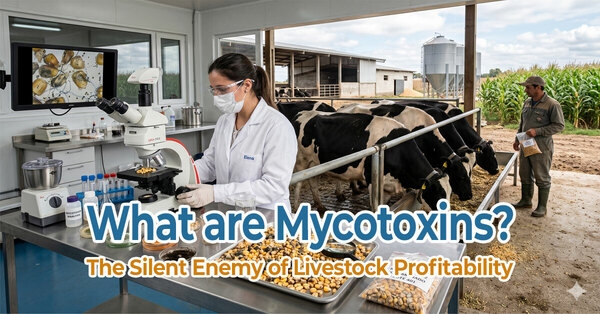
In today’s modern livestock industry, few threats generate such significant losses while remaining as invisible as mycotoxins. Although they often do not cause immediate mortality or obvious clinical signs, their cumulative impact can severely deteriorate productivity, feed efficiency, reproductive performance, food safety, and operational profitability.
For CEOs, production directors, quality managers, nutrition specialists, and decision, makers across the agroindustrial and livestock sectors, understanding mycotoxin risk is no longer optional, it is a strategic component of competitiveness.
What Are Mycotoxins and Why Are They a Critical Risk?
Mycotoxins are toxic compounds produced by fungi such as Aspergillus, Fusarium, and Penicillium, contaminating grains, raw materials, and animal feed. These toxins can develop during cultivation, harvesting, transportation, or storage.
The most relevant mycotoxins affecting livestock production include:
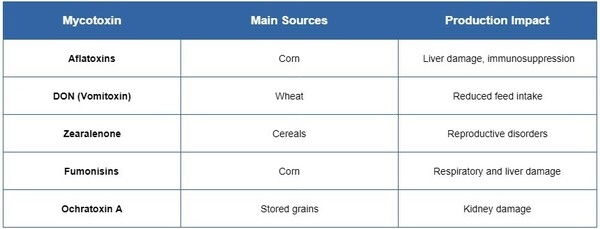
The challenge becomes even more complex because multiple mycotoxins often coexist within the same feed, generating synergistic effects more severe than those caused by a single toxin.
The Hidden Economic Impact on Livestock Profitability
Mycotoxins directly affect operational and financial performance across livestock enterprises by causing:
- Reduced feed conversion efficiency
- Lower average daily weight gain
- Decreased milk and egg production
- Increased mortality rates
- Reproductive disorders
- Greater incidence of secondary diseases
- Rejection of raw materials or export shipments
- Higher regulatory and monitoring costs
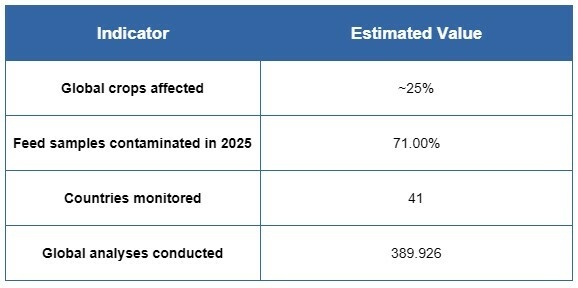
The Food and Agriculture Organization (FAO) estimates that approximately 25% of the world’s food crops are contaminated by mycotoxins.
Recent global reports further indicate that more than 70% of analyzed feed samples contain detectable levels of mycotoxins.
Global Statistics Raising Concern Across the Industry
Global Presence of Mycotoxins in Animal Feed
Production Effects Observed in Livestock and Poultry
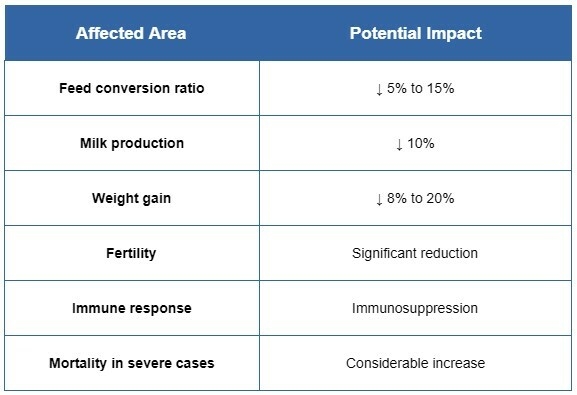
Compiled from international scientific reviews and industry studies.
The Real Problem: Invisible Losses
One of the greatest challenges for executive management is that mycotoxins rarely generate an immediate visible crisis.
In many operations, symptoms develop gradually:
- Lower productivity
- Increased veterinary treatments
- Reduced reproductive performance
- Greater batch variability
- Quality deterioration
- Longer finishing periods
- Reduced operational efficiency
As a result, many companies mistakenly attribute these issues to genetics, nutrition, management, or sanitary conditions when contaminated feed is actually the underlying cause.
Impact Across Different Livestock Industries
Poultry Industry
The presence of aflatoxins and DON may lead to:
- Lower egg production
- Fragile eggshells
- Reduced pigmentation
- Immunosuppression
- Greater susceptibility to respiratory diseases
In large poultry integrations, even small percentage losses may represent millions of dollars annually.
Swine Production
Pigs are highly sensitive to DON and zearalenone contamination.
Frequent consequences include:
- Reduced feed intake
- Reproductive failures
- Abortions
- Slower growth performance
- Greater market weight variability
Dairy Cattle
Aflatoxins also represent a regulatory risk because metabolites such as aflatoxin M1 may appear in milk intended for human consumption.
This can result in:
- Product rejection
- Commercial losses
- Regulatory sanctions
- Reputational damage
Success Case: Preventive Monitoring and Loss Reduction
A large-scale Latin American poultry company implemented a comprehensive mycotoxin management program based on:
- Systematic raw material monitoring
- Smart humidity sensors and storage systems
- Rapid testing during feed ingredient reception
- Strategic use of toxin binders
- Optimized inventory rotation
Results after 12 months included:
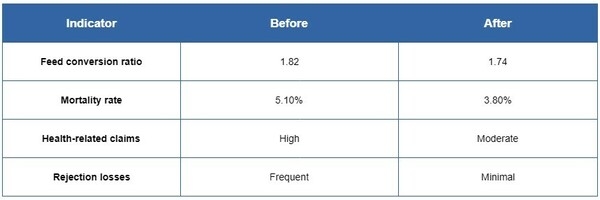
Although the initial investment was considerable, the company rapidly recovered costs through operational improvements and reduction of hidden losses.
Climate Change Is Increasing the Risk
Global warming is creating ideal conditions for fungal growth and mycotoxin production through:
- Increased humidity
- Extreme weather events
- Crop stress
- Changes in storage and transportation conditions
International studies indicate that climate trends are modifying the geographical distribution and prevalence of mycotoxins worldwide.
This means regions previously considered low-risk may face significantly higher contamination levels in the coming years.
Emerging Technologies to Combat Mycotoxins
The agroindustrial sector is entering a new era of intelligent prevention.
Key Innovations
Artificial Intelligence and Predictive Analytics
AI-based models can now predict contamination risks based on:
- Climate conditions
- Humidity levels
- Agricultural history
- Storage variables
Real-Time Sensors
New optical technologies allow rapid aflatoxin detection without destroying samples.
Blockchain and Traceability
Digital traceability systems will enable faster identification of contaminated batches while reducing regulatory risks.
Automated Rapid Laboratories
Advances in rapid testing kits and automation are significantly reducing analysis time and operational costs.
The Future of Mycotoxin Management
In the coming years, the most competitive companies will be those integrating mycotoxin management into their corporate risk strategies.
Industry trends point toward:
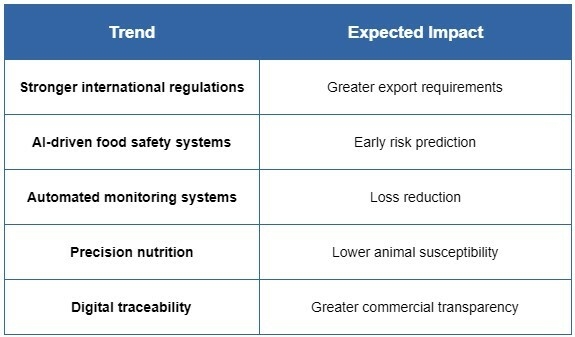
Mycotoxins should no longer be viewed solely as a technical issue for quality or nutrition departments. Today, they represent a strategic challenge directly impacting:
- Profitability
- Competitiveness
- Food safety
- Corporate reputation
- Export capacity
- Business sustainability
For agroindustrial and livestock executives, investing in prevention, monitoring, and advanced technologies should not be considered an additional expense, but rather a critical financial protection and operational continuity strategy.
Companies adopting preventive models and intelligent technologies will be better prepared to compete in an increasingly regulated, demanding, and globalized market.
Related topics:
Recommend
Comment
Share

Groexl Vet Pvt. Ltd.
2 de octubre de 2026
Poultry and dairy challenges and physiology differ, so it is better to separately design the binders.
Recommend
Reply
Groexl Vet Pvt. Ltd.
2 de octubre de 2026
The type of toxin binders and dose should be adjusted based on the challenge and type of toxins. However, at very high levels of especially polar toxins, most of the toxin binders fail to provide protection. Toxin binders and liver correctives used together give better results.
Recommend
Reply

24 de septiembre de 2026
I have experienced the benefit of increasing the dose of Toxin Binder in Dairy cattle feed. It works
Recommend
Reply


24 de agosto de 2026
Mycotoxins remain an important concern in livestock production, making regular monitoring and effective risk management essential.
Recommend
Reply
Would you like to discuss another topic? Create a new post to engage with experts in the community.
Featured users