Introduction
The increasing world population and the growing demand for animal-based foods are driving research towards alternative, sustainable and low-environmental impact protein sources for livestock feed. In this context, edible insects, in particular the black soldier fly (Hermetia illucens L., BSF), are increasingly recognised as a valuable alternative resource for animal nutrition due to their efficiency in nutrient conversion, rapid growth and ability to transform organic waste into biomass with high nutritional value (Van Huis 2013; Salahuddin et al. 2024). BSF larvae (BSFL) and prepupae (BSFP) are distinguished by their high content of crude protein and bioactive compounds including chitin and its derivatives (chitosan) as well as antimicrobial peptides (Rumpold & Schluter 2013; Cullere et al. 2016; Macwan et al. 2023). However, recent studies have shown that the nutritional composition of BSF fluctuates throughout its life cycle, with marked differences in protein, lipid and dry matter content between larvae and prepupae depending on rearing stage and substrate (Rachmawati et al. 2010; Veldkamp and Bosch 2015; Liu et al. 2017). Their production requires limited resources and can contribute to the mitigation of the environmental impact of the livestock supply chain, favouring a circular and sustainable economy model (Veldkamp and Bosch 2015; Smetana et al. 2016). Although the use of black soldier fly meal (BSFL) has been extensively studied in young laying hens, with positive results in terms of feed conversion and egg quality, evidence on its effect on older layers is still scarce. This group of birds, during the second laying cycle (over 100 weeks of age), is subject to a physiological decline in productivity, eggshell quality and feed efficiency, factors that necessitate the evaluation of targeted nutritional strategies to counteract this decline (Mwaniki, Neijat, et al. 2019). Considering these facts, experimental investigations aim to evaluate the effects of introducing low concentrations (1.25%, 2.5% and 3.75%) of BSFL and BSFP in the diet of 100-week- old Lohmann LSL-Classic hens, analysing not only the impact on production parameters, egg quality and economic efficiency, but also on blood serum chemistry, liver and kidney function and reproductive organs. In view of the advanced age of the flock (> 100weeks), we deliberately adopted a conservative, stepwise inclusion strategy to minimise dietary risk while assessing efficacy under late-cycle physiological conditions. In addition, current cost/availability considerations for BSF ingredients make low inclusions more realistic for near- term commercial adoption. Framing this work as a pilot validation in aged layers complements prior studies that tested higher ranges mainly in younger hens and helps define stage-appropriate use cases for BSF meals. The final objective is to support the advancement of innovative and sustainable nutritional approaches capable of prolonging production profitability at the late stages of the hen’s life cycle and ensure the wellbeing and overall health of the animals.
Materials and methods
Experimental birds and design
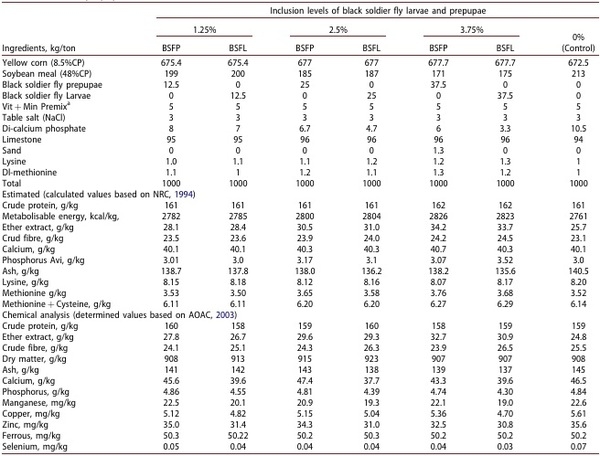
A total of 252, 100-week-old Lohmann LSL-Classic laying hens were randomly allocated to 42 wire cages, with six birds per cage (dimensions: 160x50x45cm; length x width x height), ensuring a minimum floor space of 520 cm 2 per hen. The birds remained in these housing conditions until the conclusion of the study at 115 weeks of age while maintaining a similar initial body weight (1730±22.3g) and egg production (69.3 ±4.63%). The hens were divided into seven treatment groups of 36 hens placed in a thermal control house at a temperature maintained between 20 ±2 ª C. Each treatment is assigned to six replicates, with each replicate comprising six hens. Each replicate was housed in a cage that represented the experimental unit. The cages were arranged in a manner within the facility, ensuring no direct interaction between birds from different treatment groups. The initial group functioned as the control and received a standard basal diet devoid of any components derived from black soldier fly. The other six groups received the same basal diet, in which mainly a soybean-bean meal was replaced with either black soldier fly larvae (BSFL) or black soldier fly prepupae (BSFP) meal at dietary three inclusion levels: 1.25%, 2.5% and 3.75% (on a dry matter weight basis). The BSFL and BSFP meals were produced at King Abdulaziz University, Jeddah, Saudi Arabia. The BSFL were reared on a mixture of vegetable and fruits waste that consisted of broccoli (30%), celery (26.25%), cabbage (18.75%), orange (12.5%) and apple (12.5%) collected from a local market in Jeddah, Saudi Arabia. The vegetable and fruit waste mixture was mixed with laying hens’ diets at 1:1 ratio. The mixture was fed to the larvae from 7 to 23days of age, whereas during 1-6 days of age, larvae were fed laying hens diets containing 65% moisture. The larvae and prepupae were harvested at 23 days of age and classified based on appearance and colour as BSFL and BSFP. Inclusion levels of BSFL and BSFP in the laying hens’ diets were chosen based on previous studies testing low inclusions of Hermetia illucens larvae meal in laying hens with positive effects on egg production and quality (Dabbou et al. 2018; Park et al. 2021). Consistent with the study focus on aged hens (100–115weeks), low inclusion levels were selected as a low-risk, stepwise titration prior to exploring higher inclusions. Moreover, given present market pricing and availability of BSF meals, these levels are operationally realistic for incremental adoption in current feeding programs. Specifically, BSFL was supplemented as a part of the diet to replace an equivalent amount of soybean meals in the corresponding treatment diets for groups 2, 4 and 6, while BSFP replaced an equivalent amount of soybean meals in groups 3, 5 and 7. Diets were formulated to be isocaloric and nitrogenous using the NRC (1994; Table 1), and to cover nutrient requirements according to the Lohman LSL-Classic laying hen breeder guide. The feeding system and husbandry practices were in accordance with the Lohman LSL-Classic management guide. The experimental diets were formulated according to the compositional analyses of the feed ingredients, as detailed in Table 1. The chemical composition of BSFL showed 889, 402, 278, 103, 35.7 and 181g/kg and 3980kcal ME, dry matter, crude protein, ether extract, ash, chitin, NFE and calculated ME/kg diet, respectively. The corresponding values for BSFP were 951, 302, 233, 152, 61.9
Table 1. Ingredients and chemical composition (g/kg) of the experimental diets containing different levels of black soldier fly larvae (BSFL) and prepupae (BSFP).
aEach 5kg premix contained Vit A,12,000,000IU; Vit D3,3,500,000IU; and Vit. E, 20g; Vit. K3,3g; Vit. B1,3g; Vit. B2,8g; Vit. B6,3g; Vit. B12, 15mg; Ca pantothenate,12g; Niacin, 40g; Folic acid, 1.5g; Biotin, 50mg; Choline chloride, 600g; Mn, 80g; Zn, 75g; Fe, 40g; Cu, 10g; I, 2g; Se, 0.3g; Co, 0.25g and CaCo3 as a carrier.
BSFL: Black Soldier Fly Larvae; BSFP: Black Soldier Fly Prepupae.
and 251g/kg and 3903kcal ME. The analysis was run according to AOAC (2003). All diet ingredients were individually weighed and added separately, to ensure homogeneity of the components, the diets were manually mixed for 10minutes on a biweekly basis. Subsequently, the prepared diets were stored at room temperature in sealed plastic containers. The diets were prepared on a small experimental scale and without using industrial feed production equipment.
Experimental management
Hens were kept in cages within a climate-controlled facility. Throughout the experimental period, the subjects were maintained under a photo period consisting of 16h of light followed by 8h of darkness. Vaccination and health care procedures were administered according to the hens’ age and were monitored by a veterinarian. Feed was prepared every 2 weeks and stored in sealed plastic containers. Mash feed and fresh water were always available to the hens during the study (100 to 115weeks of age).
Measurements
The live body weight of the hens was recorded at both the start (100weeks of age) and termination (115weeks of age) of the experimental period, always in the morning prior to feed access. Feed was provided ad libitum daily, following the Lohman LSL- Classic breeder guidelines for laying hens. Weekly, feed leftovers were collected and weighed throughout the 100- to 115-week period to calculate the average daily feed consumption per individual hen within each replicate (g/hen/day). The feed conversion ratio (g feed/ g egg) was calculated by determining the quotient of the total feed intake (g) and the cumulative egg mass (g) produced. Survival rate was calculated as number of live hens per treatment at the end of the experiment divided by the number of hens per treatment at the beginning of the experiment and multiplying by 100.
Eggs were gathered and documented daily. The rate of egg production, expressed as a percentage per hen per day, was determined for each replicate. Eggs that were dirty, cracked, soft-shelled, blood-stained, shell-less, or otherwise defective were excluded from the total count and denoted as a percentage of all laid eggs. The aggregate quantity of defective eggs served as the basis for calculating the total number of eggs that were discarded. Each egg was individually weighed using an electronic digital scale for every replicate, and the mean egg weight (g) was calculated for the entire trial. Eggs were graded by size according to (Yang et al., 2023): small (< 50g, grade 1), medium (50–55g, grade 2), large (55–60g, grade 3) and extra- large (> 60g, grade 4). Egg mass (g/hen/day) was determined by combining egg weight and production data. After 10 weeks on the experimental diets, 36 fresh eggs were collected per treatment, covering all replicates and split into two groups of 18 eggs. The first set was assessed for quality traits on the day of collection at 23 º C. The remaining 18 eggs per treatment were stored at room temperature (23 º C) for 21days before re-evaluation. The egg shape index was determined following the methodology outlined by Romanoff and Romanoff (1949) and is defined as the percentage ratio of the egg’s maximum width to its maximum length. Measurements were made using an electric digital calliper to the nearest 0.1 mm. Eggs were individually weighed and then carefully broken on a flat surface to facilitate the separate determination of yolk and shell masses. The mass of the albumen was obtained by subtracting the combined weights of the yolk and shell from the total egg mass. Subsequently, the shells were rinsed, thoroughly cleaned of residual albumen, and air-dried for a period of 96h prior to weighing (including membranes) with a precision of 0.1 grams. The proportion of shell was expressed as a percentage of the total egg weight using the formula: (shell weight/total egg weight) X 100.
The thickness of the eggshell, excluding the membranes, was determined with a precision of 0.01mm using a micrometer (S-6428; BC Ames, Melrose, MA, USA). The micrometer and digital calliper were zeroed and function-checked before each measurement session according to the manufacturers’ recommendations. Measurements were taken at three anatomical locations the blunt end, the pointed end, and the equatorial region and the mean value were calculated. Shell weight per unit surface area (SWUSA, mg/cm 2 ) was derived by dividing the shell mass by the total surface area of the egg, in accordance with the method described by Carter, (1975). The proportions of yolk and albumen were quantified as percentages relative to the total egg weight. Haugh units were determined following the methodology of Haugh (1937), based on measurements of egg weight and albumen height, the latter obtained using a tripod micrometer with a precision of 0.01mm. Yolk height and diameter were assessed using a tripod micrometer and a Vernier calliper, respectively, with a measurement accuracy of 0.1mm. The yolk index was calculated as the ratio of yolk height to yolk diameter, multiplied by 100, in accordance with the procedure outlined by Funk (1948). A sensory analysis (n¼18 per treatment) was performed based on Attia et al. (2024), involving 20 untrained panellists without reported egg allergies or intolerances. Participants were asked to refrain from eating or smoking for at least 2 hours before the evaluation. Eighteen eggs per treatment as three per replicate were collected at 110 weeks of age and hard-boiled by placing them in a single layer of water, cooking for 10min after boiling started. Following boiling, eggs were immersed in water maintained at 18 º C for a duration of 5 min to cool, after which they were peeled, quartered and presented on plastic plates. Sensory panellists evaluated the samples based on appearance, yolk colouration, albumen colouration, flavour and overall acceptability using a nine-point hedonic scale, where 1 indicated ‘extremely dislike’ and 9 indicated ‘extremely like’. Blood samples (n ¼6 per treatment, covering all replicates) were collected from the brachial vein at the end of the experimental period, and serum was obtained via centrifugation for biochemical analysis using commercial kits (Diamond Diagnostics). Serum was aliquoted immediately after separation to avoid repeated freeze–thaw cycles and stored at −20 º C until batch analysis. Samples were handled on ice during processing and visually inspected to minimise haemolysis. Total serum protein (g/dL) was quantified using the Biuret method as described by Henry et al. (1974), while albumin concentration (g/dL) was assessed following the protocol established by Doumas et al. (1971). The globulin fraction was derived by subtracting albumin from total protein values, in accordance with the approach outlined by Coles (1967). Concentrations of a-, b- and c-globulins were determined through enzyme-linked immunosorbent assay (ELISA), as specified by Bianchi et al. (1995). Serum AST and ALT enzymes were analysed following Reitman and Frankle (1957), and alkaline phosphatase was measured in accordance with the procedure outlined by Belfield and Goldberg (1971). All assays were performed following the manufacturers’ instructions. Analytical instruments were calibrated prior to each run, with calibration verification and internal control materials included in every batch to monitor drift and assay precision. Feed ingredients and diet samples underwent chemical and biochemical analyses according to AOAC procedures (2003). Crude protein (CP) was measured using the Kjeldahl method, applying a nitrogen-to-protein conversion factor of 4.76 for black soldier fly meal (Janssen et al. 2017) and 6.25 for other feed materials. Crude fat (ether extract, EE) was extracted with diethyl ether using an automatic extractor (AutomatIc solvent extractor SER 158/6). Crude fibre (CF) was analysed with a Velp FIWE 6 fibre analyser (Van Soest et al. 1991). The ash content was determined by subjecting the sample to incineration in a muffle furnace at 550 º C for a duration of 24h. The amino acid composition was calculated following the NRC (1994). At 115 weeks of age, 6 hens per treatment as one per replicate were chosen randomly after being fasted overnight and were slaughtered and the ovary was separated and weighted, and the number of white and yellow follicles were separated from the ovary and counted (n). In addition, the reproductive tract was separated from the internal cavity and the weight, and the length of oviduct (cm) were determined and expressed as relative to live body weight (%) of laying hens. The egg production efficiency index (EPI) and economic analysis were carried out based on the methodology outlined by Attia et al. (2025).
Statistical analysis
Normality of the data distribution and associated errors was assessed using the Shapiro-Wilk test (1965), while Levene’s test (SAS 2009) was employed to evaluate the homogeneity of variances. The random distribution pattern observed in the dataset supported the validity of the four key assumptions underlying analysis of variance. The analysis was conducted under the following statistical assumptions: (1) independence of observations, (2) adherence to an additive model incorporating both fixed treatment effects and random error terms, (3) normality of the residuals and (4) homogeneity of variance (homoscedasticity). A one-way analysis of variance (ANOVA) was carried out using SAS R V software (SAS 2009), with each replicate considered as an independent experimental unit. The statistical model applied was: Yij¼l þ Tiþeij, where Yij denotes the dependent variable, l is the overall mean, Ti represents the treatment effect and eij is the random error. Data for egg quality were analysed using a two-way analysis of variance (ANOVA) with treatments (7 groups) and two type of eggs (fresh vs. stored) as the main effects and their interaction. The statistical model applied was: Yijk ¼lþ TiþSjþ(TS)ijþeijk, where Yijk¼denotes the dependent variable, l is the overall mean, Ti represents the treatment effect, Sj shows the types of egg effect, TS is the interaction between treatment and types of egg effects and eijk is the random error. Variables that exhibited statistically significant differences were further analysed using Tukey’s test (SAS 2009). Orthogonal contrasts were employed to statistically evaluate the differences between the BSF and Control groups, as well as between the BSFL and BSFP groups. The cage/replicate (n¼6 per treatment) was the experimental unit for all analyses; hen-level observations were averaged within cage prior to analysis. Effects with 0.05 < p< 0.10 are described as a trend, and we acknowledge that no formal correction for multiple testing was applied (limitation). The analyses of variance and orthogonal contrasts were carried as pre- planned according to the experimental set-up.
Results
Feed intake (g/hen/day) and feed conversion (g feed/g egg mass)
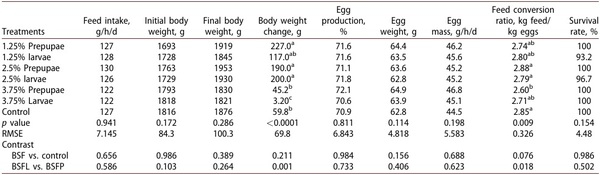
Table 2 presents the impact of varying dietary levels of BSFP and BSFL on feed intake (FI) and feed conversion ratio (FCR). FI was statistically similar among the different BSFP and BSFL groups. In contrast, the FCR was significantly (p < 0.009) better for the group supplied with 3.75% BSFP than 2.5% BSFP or BSFL and the control group. In addition, the contrast between the BSF and control groups showed a trend (0.05 < p< 0.10) for FCR, in favour of the BSF groups. In addition, BSFP had a significantly (p < 0.018) better FCR than BSFL.
Body weight and change in body weight (g)
The initial and final body weights were statistically similar across the different groups (Table 2). However, the groups supplemented with 1.25% and 2.5% BSFP, as well as 2.5% BSFL, showed a significantly (p < 0.0001) greater increase in body weight compared to most other groups. The group receiving 3.75% BSFL exhibited the lowest increase in body weight, the contrast analyses (BSF vs. control) and (BSFL vs. BSFP) groups showed insignificant differences in the initial and final BW, but BSFP had greater (p < 0.010) weight gain than BSFL.
Egg traits
Table 2 shows the effect of different dietary levels of BSFL and BSFP on egg production (EP) percentage. The results showed that EP was statistically comparable among the various groups. In addition, the contrasts between the BSF vs. control and BSFL vs. BSFP groups were not significantly different.
The egg weight (EW) and egg mass (EM) of laying hens supplemented with different levels of BSFL and BSFP were similar. In addition, contrast analyses showed that BSF versus control and BSFL versus BSFP groups were also similar.
Survival rate
Table 2 shows that the survival rate did not significantly differ due to supplementation with different concentrations of BSFP and BSFL. In addition, the contrasts between the BSF vs. control and BSFL vs. BSFP groups were not significantly different.
Table 2. Influence of different dietary inclusion levels of black soldier fly larvae and prepupae on egg production characteristics in laying hens aged 100 to 115 weeks.
a–cMeans within a row with different superscripts are significantly different (p< 0.05) based on Tukey’s test. RMSE: Root means square error; FI: Feed Intake; FCR: Feed Conversion Ratio; BW: Body Weight; EPI: Egg Production Index; BSFL: Black Soldier Fly Larvae; BSFP: Black Soldier Fly Prepupae.
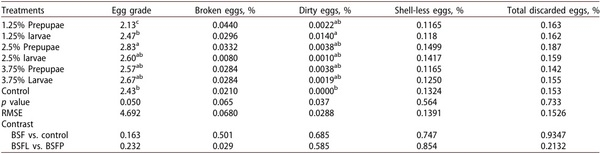
Table 3. Impact of varying dietary inclusion levels of black soldier fly larvae and prepupae on egg grading and the incidence of different categories of discarded eggs in laying hens aged 100 to 115 weeks.
a–cMeans within a row with different superscripts are significantly different (p< 0.05) based on Tukey’s test. RMSE: Root means square error; ESA: Egg Surface Area; SWUSA: Shell Weight Unit Surface Area; BSFL: Black Soldier Fly Larvae; BSFP: Black Soldier Fly Prepupae.
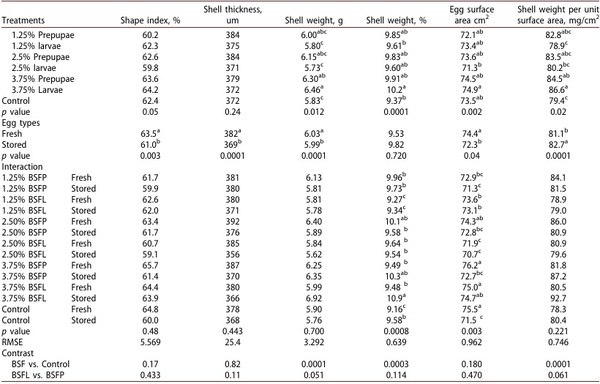
Table 4. Influence of varying dietary inclusion levels of black soldier fly larvae and prepupae and types of eggs on the external egg quality characteristics of LSL laying hens at 110weeks of age.
a–cMeans within a row with different superscripts are significantly different (p< 0.05) based on Tukey’s test. RMSE: Root means square error; SWUSA: Shell Weight Unit Surface Area; ESA: Egg Surface Area; BSFL: Black Soldier Fly Larvae; BSFP: Black Soldier Fly Prepupae.
whereas the rest of the experimental groups showed intermediate values. The highest broken eggs were observed in the 1.25% BSFP group, whereas the lowest value was recorded in the control group (p< 0.065). Contrast analyses between BSF and control, as well as between BSFL and BSFP for egg grade, broken eggs, dirty eggs, shell-less eggs and total discarded eggs, showed insignificant differences. Table 4 shows that external egg quality parameters, specifically egg shape index and shell thickness, were not statistically difference between BSFP, BSFL and control groups. Conversely, significant (p < 0.02-0.0001) variations were observed among the experimental groups in terms of shell weight (both in grams and percentage), egg surface area (ESA) and shell weight per unit surface area (SWUSA). The highest shell weight (g and %), ESA and SWUSA were recorded in the group supplemented with 3.75% BSFL, whereas the lowest values were recorded in the control group, except for ESA, where 2.5% BSFL recorded the lowest value. The groups supplemented with 1.25 and 2.5% BSFL exhibited lower eggshell qual ity than that of the group treated with 3.75% BSFL.
Overall, the groups supplemented with BSFL and BSFP exhibited superior eggshell quality compared to the control group. Furthermore, egg storage exerted a significant (p < 0.04-0.0001) influence on parameters such as egg shape index, shell thickness, shell weight (g), egg surface area and shell weight per unit surface area (SWUSA), whereas the proportion of shell weight relative to total egg weight remained unaffected, as shown in Table 4. Eggs stored for 21days at room temperature had significantly lower eggshell parameters than fresh eggs, but SWUSA increased. The interaction between BSFP and BSFL and the type of eggs (fresh and stored eggs) revealed that shell weight %, and ESA was signifi cantly (p < 0.0008 and 0.003; respectively) different among the various groups. Stored eggs from the 3.75% BSFL-fed group exhibited the highest eggshell percentage, whereas the lowest percentage was obtained in the fresh and stored eggs of hens fed 1.25% BSFL. The other groups were within the ranges of the highest and lowest values. Eggs surface, which reflect egg weight and egg size, were the highest among the fresh eggs from the 3.75% BSFL-fed group, whereas the lowest (the best) was from stored eggs of groups given 2.5% BSFL, stored eggs from 1.25% BSFP, and fresh eggs from 2.5% BSFL. The other groups had intermediate values. The ESA of the stored eggs was lower than that of the fresh eggs for each BSF type. Contrast analyses between the BSF and control groups showed that eggshell weight, shell weight % and SWUSA of the BSF groups were higher than those of the control group. Contrast analyses between BSFL and BSFP with respect to egg shape index, shell thickness, eggshell weight, shell weight percentage, egg surface area and SWUSA revealed no statistically significant differences.
Internal egg quality traits
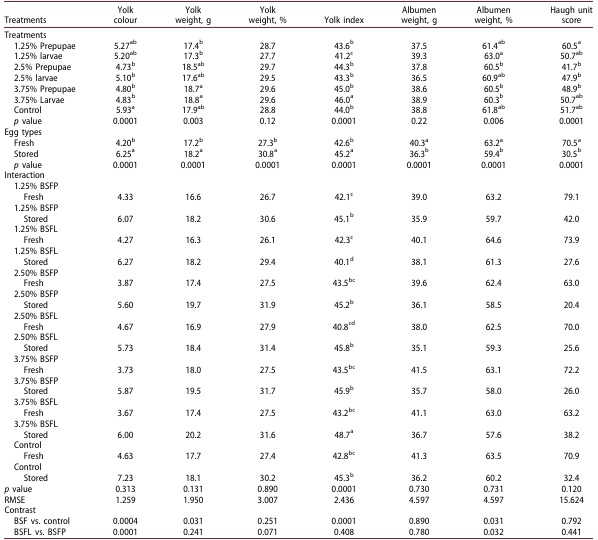
Table 5illustrates the impact of varying dietary levels of BSFL and BSFP on the internal quality parameters of both fresh and stored eggs. The findings reveal that significant (p < 0.006-0.0001) variations were observed in yolk colour, yolk weight (g), yolk index, albumen weight percentage and Haugh unit (HU) scores. Notably, the control group demonstrated the most intense yolk pigmentation, whereas the group receiving 2.5% BSFP supplementation exhibited the lightest yolk colour. The absolute weight of the yolk was significantly higher in the 3.75% BSFP and BSFL groups than in the 1.25% BSFP and BSFL groups.
Table 5. Impact of varying dietary inclusion levels of black soldier fly larvae and prepupae and types of eggs on internal egg quality traits of fresh and stored eggs from LSL laying hens at 110weeks of age.
a–dMeans within a row with different superscripts are significantly different (p< 0.05) based on Tukey’s test. RMSE: Root means square error; HU: Haugh Unit; BSFL: Black Soldier Fly Larvae; BSFP: Black Soldier Fly Prepupae.
Yolk index was significantly higher in the 3.75% BSFL group than in the other groups. In addition, the yolk index of the 1.25% BSFL group was significantly lower than those of the other groups. The control, 1.25%, 2.5%, 3.75% BSFP and 2.5% BSFL groups displayed similar and intermediate yolk indices. The albumen weight percentage was significantly higher in the 1.25% BSFL group than that in the 2.5% and 3.75% BSFP and 3.75% BSFL groups. The best HU was recorded for the group that was provided with 1.25% BSFP, which had higher values than the other groups, except for the 1.25 and 3.75% BSFL groups and control group. Egg storage significantly (p < 0.0001) affected interior egg quality. Fresh eggs showed higher albumen weight (g and %) and Haugh unit score but lower yolk colour, yolk weight (g and %) and yolk index. The interaction between BSFP and BSFL indicated that there were no significant differences between the different BSF products and egg types in all interior egg qualities except for the yolk index (p < 0.0001). The yolk index was significantly higher in eggs stored from hens fed a 3.75% BSFL than in the other groups. In contrast, stored eggs of hens fed 1.25 BSFL were lower than those from the other groups, except for fresh eggs from hens fed for 2.5% BSFL. The divergent findings revealed statistically significant variations between the BSF and the control groups with respect to yolk colour, yolk weight (g), yolk index and the percentage of albumen weight. The control group showed a higher yolk colour and albumin weight % than the BSF group but a lower yolk weight and yolk index. The divergent outcomes observed between BSFL and BSFP treatments revealed a statistically significant variation in yolk colour (p < 0.000) and albumen weight percentage (p < 0.032), whereas the remaining parameters did not exhibit any notable differences. BSFL displayed a higher yolk colour and albumen % than BSFP did.
Eggs sensory attributes
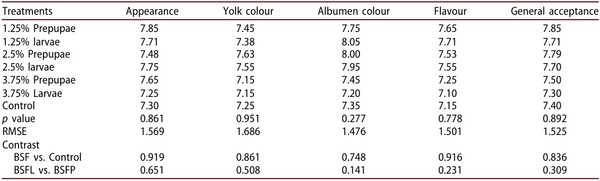
Table 6presents the effects of varying dietary levels of BSFP and BSFL on the sensory attributes of eggs. The findings demonstrate that there were no statistically significant differences among the experimental groups with respect to sensory parameters, including appearance, yolk colour, albumen colour, flavour and overall acceptability. In addition, the contrast analyses between BSF vs. control and BSFL vs. BSFP for all sensory quality attributes were not affected by different levels of BSFL or BSFP and were statistically similar.
Blood serum proteins
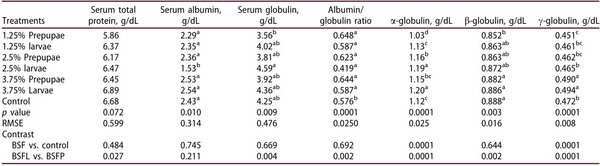
Table 7presents the impact of varying levels of BSFP and BSFL on total serum protein, albumin, globulin, the albumin/globulin ratio, and the concentrations of a-, b- and c-globulins. The findings indicate that total serum protein levels did not differ significantly between the control and experimental groups. However, statistically significant (p < 0.01-0.0001) differences were observed among the experimental groups in serum albumin and globulin concentrations, the albumin/globulin ratio, and a-, b- and c-globulin levels. Notably, the highest albumin concentration was detected in the group receiving 3.75% BSFL, whereas the lowest was observed in the group supplemented with 2.5% BSFL, with the latter showing a significantly reduced albumin level relative to the other experimental groups. Serum globulin was significantly higher in 2.5% BSFL than in groups supplemented with 1.25% BSFP. However, the two groups were not significantly different from the other BSFP and BSFL groups. The albumin/globulin ratio was lower in the control group than in the other groups. The a-globulin level was significantly higher in the 2.5 and 3.75% BSFL groups than in the other groups, with 1.25% BSFP displaying the lowest value. The 1.25% BSFP group had lower b-globulin levels than the 3.75% BSFP, 3.75% BSFL, and control groups did. The other groups had intermediate values. c-globulin levels were significantly higher in the groups fed 3.75% BSFL and BSFP than in the other groups, with no significant differences. The
Table 6. Impact of varying dietary inclusion levels of black soldier fly larvae and prepupae on the sensory evaluation scores of eggs produced by LSL laying hens at 110weeks of age.
RMSE: Root means square error; BSFL: Black Soldier Fly Larvae; BSFP: Black Soldier Fly Prepupae.
Table 7. Impact of varying dietary inclusion levels of black soldier fly larvae and prepupae on the serum biochemical parameters of laying hens aged 115 weeks.
a-cMeans in the same column within a similar treatment followed by different letters are significantly different at (p�0.05) based on Tukey’s test. RMSE: Root means square error; A/G: Albumin-to-Globulin ratio; BSFL: Black Soldier Fly Larvae; BSFP: Black Soldier Fly Prepupae.
Table 8. Impact of varying dietary inclusion levels of black soldier fly larvae and prepupae on hepatic and renal serum biomarkers in LSL laying hens aged 115 weeks.
a-cMeans in the same column within a similar treatment followed by different letters are significantly different at (p�0.05). RMSE: Root means square error; AST: Aspartate aminotransferase. ALT: Alanine aminotransferase ALK: Alkaline phosphatase based on Tukey’s test. UA: Uric Acid; UN: Urea Nitrogen; Cr: Creatinine; U/L: Units per Litre; BSFL: Black Soldier Fly Larvae; BSFP: Black Soldier Fly Prepupae.
contrast between the BSF and control groups did not show differences in most traits, except for a- and c-globulin, which were significantly (p < 0.0001) higher in the BSF groups than in the control group, but c-globulin was lower. The contrast between the BSFP and BSFL groups showed significant (p < 0.027-0.0001) differences in most serum protein profiles, except for the serum albumin concentration. The results showed higher total protein, globulin and a-, b- and c-globulin levels in the BSFL group than those in the BSFP group; however, the albumin/globulin ratio was lower.
Indices of liver and renal functions
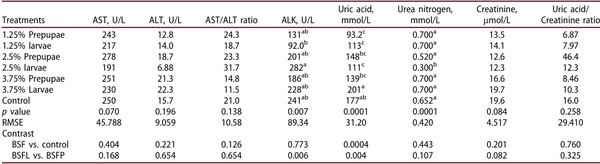
Liver and renal function indices are shown in Table 8. Serum AST, ALT and AST/ALT ratios were not significantly different among different levels of BSFP and BSFL groups. In addition, contrast showed that the difference between the BSF and control groups was not statistically significant, as was the difference between the BSFP and control groups. The serum ALK levels were significantly (p < 0.007) different between the 2.5% and the 1.25% BSFL groups. The other groups had intermediate values. The contrast analyses for serum ALK indicated that differences between BSF and the control group were not significant, but were significant (p < 0.006) for differences between BSFP and BSFL, showing higher values in the latter group (207.7 vs. 172.7%). The concentrations of uric acid and urea nitrogen were significantly (p < 0.0001) different among the various BSFP and BSFL groups, whereas the concentrations of creatinine and the uric acid/cre atine ratio were not. The highest uric acid concentration was recorded in the group with 3.75% BSFL, whereas the lowest concentration was recorded in the group feed 1.25% BSFP. The differences between the control and 3.75% BSFL groups were not significant. In addition, the control and 3.75% BSFP groups showed similar uric acid levels. The 3.75% BSFP group had values similar to those of the other groups, except for a lower value than that of the 3.75% BSFL group. Contrast analyses showed significant (p < 0.0004) variation between the BSF and control groups only in uric acid concentration, indicating that the control group had a higher value than the BSF group (177 vs. 134.2%; 31.9% increase). There was also a significant (p < 0.004) difference between the BSFP and the BSFL only for serum uric acid, indicating that BSFL had higher serum uric acid levels than BSFP (141.7 vs. 126.7%; 11.08% increase). There was no difference in urea nitrogen between BSF and the control groups as well as between BSFP versus BSFL.
Reproductive organs
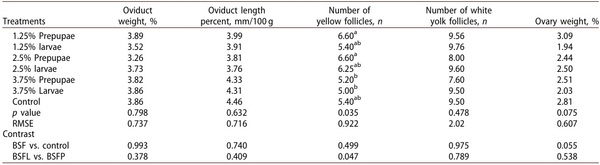
Table 9 summarises the effects of various BSFL and BSFP dietary treatments on the oviduct, ovary, and the counts of white and yellow follicles. Statistically significant differences were observed for the number of yellow follicles. Notably, the groups receiving 1.25% and 2.50% BSFP exhibited a significantly (p < 0.035) greater number of yellow follicles compared to those who fed 3.75% BSFP and BSFL diets.
Economic efficiency and egg production index
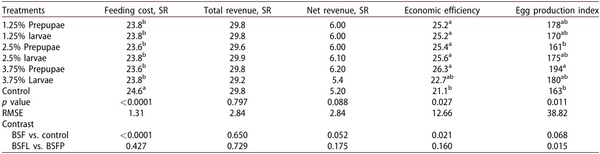
Table 10 presents a summary of the impact of varying dietary inclusion levels of BSFL and BSFP on the economic efficiency and production index of LSL laying hens from 100 to 115weeks of age. For clarity, we restate the assumptions used in Table 10– egg price 0.40Saudi Riyal/egg and 1 USD ¼3.756 Saudi Riyal - and we report absolute values alongside percentages. Over 100–115weeks, feeding cost decreased versus control (24.6 Saudi Riyal -> 23.6–23.8 Saudi Riyal across BSF diets), and the egg production index (EPI) reached 194 in the 3.75% BSFP group vs 163 in control. The findings demonstrate that feeding costs were significantly (p < 0.0001) reduced in both the BSFP and BSFL treatment groups compared to the control, with no notable difference in feeding costs between the two experimental groups. Contrast analyses further confirmed that feed expenditures were lower (p < 0.0001) in the BSF-treated hens relative to those in the control group. Total and net revenues were not significantly different among the BSFP and BSFL groups and were also
Table 9. Impact of varying dietary inclusion levels of black soldier fly larvae and prepupae on the reproductive organ development of LSL laying hens at 115weeks of age.
a-bMeans in the same column within a similar treatment followed by different letters are significantly different at (p�0.05) based on Tukey’s test. RMSE: root means square error; BSFL: Black Soldier Fly Larvae; BSFP: Black Soldier Fly Prepupae.
Table 10. Impact of varying inclusion levels of black soldier fly larvae and prepupae on the economic efficiency and production performance index of LSL laying hens between 100 and 115weeks of age.
a-bMeans in the same column within a similar treatment followed by different letters are significantly different at (p�0.05) based on Tukey’s test. One egg:0.40SR, 1 USD¼3.756SR, EE relative to feeding. RMSE: Root means square error; SR: Saudi Riyal; USD: United States Dollar; EPI: Egg Production Index; BSFL: Black Soldier Fly Larvae; BSFP: Black Soldier Fly Prepupae.
not affected when contrast analyses were performed for the control vs. BSF groups or BSFP vs. BSFL groups. Economic measurements, such as economic efficiency and egg production index, showed significant (p < 0.027 and 0.011; respectively) differences between the different BSFP and BSFL groups. Different levels of BSFP and BSFL significantly (p < 0.021) improved economic efficiency compared to those recorded for the control group, except for the group that was fed 3.75% BSFL. In addition, the BSF group showed higher economic efficiency than the control group (25.1 vs. 21.1%); how ever, the differences between the BSFP and BSFL were not significant. The highest egg production index was recorded for the group feeding a diet supplemented with 3.75% BSFP compared to the control and 2.5% BSFP groups (p < 0.011). The remaining groups exhib ited comparable egg production indices, with no signifi cant differences observed in comparison to the previously mentioned groups. Contrast analysis revealed that egg production was greater (p < 0.068) in the BSF- supplemented groups relative to the control group (176.4 vs. 163), and that the BSFP group outperformed (p < 0.015) the BSFL groups in terms of egg production (176.3 vs. 175).
Discussion
Incorporating up to 3.75% BSFL or BSFP in aged laying hens’ diets did not impair productivity.
In particular, relative to the control group, FCR improved and EPI was numerically higher (by -8.8% and -19.0%, respectively), consistent with the trends reported in the results (0.05 < p< 0.10). The improvement in FCR in the BSF-supplemented groups was accompanied by a less marked increase in body weight, but with similar feed intake across all groups. This indicates comparable palatability between BSF and standard diets. These findings align with earlier research which reported no adverse effects of BSFL inclusion on the feed intake of laying hens up to 68weeks of age (Attivi et al. 2022), nor on the FCR (Zhao et al. 2022) and on nutrient digestibility (Cutrignelli et al. 2018). However, other studies have shown a significant 5.4% reduction in feed intake following BSFL inclusion in the diet compared to the control (Maurer et al. 2016). In another study, the complete substitution of soybean meal with BSFL meal at levels up to 17% was associated with a significant enhancement in FCR (p< 0.01); however, it concurrently led to notable declines in laying rate, feed intake, egg weight and overall egg mass (Marono et al. 2017). Le Duc Thao et al. (2023) observed that inclusion of 15% and 30% BSFL in the diet of ISA Brown hens, replacing the same percentage of corn and soy, did not alter egg production or weight, but increased feed intake and FCR to produce 10 eggs. Specifically, the inclusion of 30% full-fat BSFL resulted in reduced feed intake but improved FCR. BSFP and BSFL show similar FCR and productivity effects. The improved FCR and egg production index observed, particularly with BSFP, may be explained by its high digestibility and favourable amino acid profile, which enhances nutrient absorption efficiency and energy utilisation in aged hens (Mahmoud et al. 2023). It is also plausible that the progressive increase in ether extract and metabolisable energy (ME) across BSF-supplemented diets contributed to the improved productive parameters, as higher dietary energy can support energy demand for egg production and improve FCR and egg output in aged hens. In line with these findings, Kawasaki et al. (2019) reported that replacing 10% of the diet with BSFL or BSFP (not defatted) in laying hens did not compromise productive performance. Alfian and Suryati (2023) found that BSFL replacing 30–60% of soybean protein improved egg production, mass and FCR. However, conflicting results have been reported. Marono et al. (2017) found that a 17% replacement of soybean meals with BSFL over 21 weeks worsened laying rate, egg weight and egg mass, and led to a higher incidence of malformed eggs, while improving FCR. Mwaniki et al. (2018) reported that supplementation with 7.5% defatted BSFL led to lower egg production than the 5% inclusion, due to a less favourable FCR related to lighter eggs, higher feed intake, higher body weight and heavier livers. In another study, Mwaniki, Shoveller, et al. (2019) found that partial (10%) or full (15%) replacement of soybean meal with defatted BSFL worsened the FCR (from 1.91 to 2.02 g of feed/g of egg), although no significant differences in egg weight or mass were observed with the 15% replacement. Performance of BSFP fed laying hens aligns with energy values (Mahmoud and Ravindran 2025). Beyond productive performance, the effects of BSFP on reproductive physiology also warrant attention. In our study, the number of yellow follicles was significantly higher in the 1.25% and 2.50% BSFP groups, suggesting a favourable impact of low-level prepupal meal inclusion on follicular development. Although no significant differences were found in most reproductive organs between BSFP and BSFL, the higher yellow follicle count observed in the BSFP group indicates a potential advantage in stimulating ovarian activity. These findings align with Attivi et al. (2023), who reported increased ovarian and oviduct weights, as well as enhanced reproductive hormone levels, in hens fed Hermetia illucens larvae meal, supporting a link between insect meal inclusion and improved reproductive function. Discrepancies may depend on BSF stage of development, rearing substrate and insect composition. The larval development stage, habitat, age of the hens, breed, management system and diet composition may also play a crucial role, thus suggesting the need for further experimental investigations. The findings align with those reported by Marono et al. (2017), who observed that incorporating 13.6% BSFL into the diet enhanced FCR (improving from 2.17 to 1.97 g feed/g egg), along with increases in both egg weight and egg mass. Patterson et al. (2021) reported performance decline only with 24% BSFL inclusion although lower levels had no negative effects. Fikri et al. (2024), in a 24–study meta- analysis, confirmed BSFL improved FCR. The analysis showed a positive effect of BSFL on FCR (SMD ¼ 0.53; p< 0.00001), but FCR was also negatively correlated with feed intake (SMD ¼−0.12; p¼0.02), body weight gain (SMD¼−0.27; p¼0.001) and laying rate (SMD¼−0.88; p< 0.00001). Nonetheless, the authors recommend the use of BSFL in laying hen diets to improve FCR. Studies by Heuel et al. (2021, 2023) demonstrated that the inclusion of up to 10% BSF in the diet of Brown Nick hens (22 to 30 weeks of age) did not significantly affect laying percentage, egg weight, egg mass, rejected eggs, or weight gain. However, the inclusion of 10% BSFL reduced feed intake and improved FCR. Further evidence comes from the study by Alfian et al. (2023), where Lohmann hens were fed three diets: one without BSFL, one containing 6.7% BSFL (equivalent to soybean meal protein), and one with 13% BSFL (equivalent to 60% soybean meal). The use of 13% BSFL had a significant impact (p< 0.05) on feed intake, daily laying, egg mass and FCR, but did not significantly affect egg weight. In summary, replacing 30 to 60% of soybean protein with BSFL protein can increase daily egg production by 2.34% to 8.21%, increase egg mass by 1.25, to 6.7g/hen, and improve FCR by 0.06 to 0.16 compared to the control group. More recently, Khan et al. (2024) observed that diets containing BSFL lin early reduced (p< 0.05) egg production (from 1.52% to 1.95%) and feed intake (from 3.64 to 3.86g). Between 48 and 52weeks of age, egg weight decreased by 0.93 g in the group fed 21% BSF compared to the control (p< 0.001), while no significant differences were detected between 52 and 56weeks. Contradictions may reflect larval substrate variability; therefore, it is essential to carefully monitor the quality of the larvae before use. Abd El-Ghany (2025), based on a review of six studies on laying hens and one on Japanese quails, concluded that inclusion of up to 15% BSFL does not compromise productive performance or egg quality. Broken eggs, shell-less eggs, and total discarded eggs did not show significant variations in shape index or shell thickness. Similar results were observed by Marono et al. (2017), who found a higher percentage of small, medium and extra-large eggs (p< 0.01) in hens fed BSFL compared to those fed soybean meals, which produced a higher percentage of large eggs (p< 0.01).
In our study, absolute and percentage shell quality parameters, egg surface area and SWUSA improved in the group feed 3.75% BSFL by 8.9%, 1.9% and 9.1% compared to the control group, respectively. Similar results were reported by Mwaniki et al. (2018), who observed a linear increase in shell strength and thickness with increased BSFL inclusion from 0 to 15%. Shell quality likely benefits from high calcium bioavailability in BSF diets, without harming egg quality (Mwaniki, Neijat, et al. 2019; Fikri et al. 2024; Osuch et al. 2024). These effects may be attributed to the high mineral metabolism and presence of bioactive compounds such as antimicrobial peptides and chitin in BSF, which are known to enhance calcium absorption and modulate immune function (Atallah et al. 2025).
A comparable improvement in shell thickness was observed by Tajudeen et al. (2025), who reported a quadratic increase in eggshell thickness with increased inclusion of expanded black soldier fly larvae flour. The improvement observed in shell characteristics particularly weight, percentage and thickness following BSFP and BSFL inclusion appears closely related to enhanced mineral metabolism, especially calcium. This hypothesis is supported by serum and egg mineral profiles, which indicate that BSF integration contributes to more efficient mineral metabolism, directly improving shell quality. Agunbiade et al. (2007) found minor effects on shell traits after fishmeal replacement with larval meal. This effect was attributed to differences in calcium (4.21% vs. 3.8%) and phosphorus (0.56% vs. 0.45%) concentrations between fishmeal- and larval meal-based diets. Similarly, Mlaga et al. (2022) reported that replacing 8% of fish meals with BSF larval meals at 50%, 75% and 100% caused no significant differences in parameters such as egg weight, shell weight, shape index and egg surface area. Zhao et al. (2022) also found no effect of BSFL on shell parameters. However, reduced shell proportion with 30% BSFL (Le Duc Thao et al. 2023). In contrast, Khan et al. (2024) found improved shell strength (p< 0.05), with no effect on albumen height or yolk weight due to BSF diets. This finding aligns with the results reported by Agunbiade et al. (2007) who indicate that the total substitution of fishmeal with larval meal had no marked impact on yolk index or egg pigmentation.
In line with these results, Secci et al. (2018) showed that full replacement of soybean meals with BSFL in Lohmann Brown Classic hens did not compromise overall egg quality but improved yolk mass. However, Maurer et al. (2016) found a 7.5% reduction in albumen when soybean was fully replaced with BSFL, while soybean enriched with BSF showed no evident effects. Mwaniki et al. (2018) showed that 5% and 7.5% defatted BSFL did not affect Haugh unit or yolk colour, but in 2019 the same authors observed that 10% and 15% BSFL inclusion improved yolk orange colour and shell quality. Patterson et al. (2021) found that 8–24% BSFL meal inclusion increased yolk colour compared to the control group (p¼0.0351), a result also confirmed by Le Duc Thao et al. (2023), who reported an increase in albumen proportion, while albumen height and Haugh units were unaffected. Alfian et al. (2023) also reported significant effects (p < 0.05) with 13% BSFL on albumen weight and Haugh units. In our study, the inclusion of 1.25%, 2.5% and 3.75% BSFP and BSFL did not cause significant changes in albumen weight or yolk percentage, although the highest yolk colour value was observed in the control group. Comparable findings were reported by Khan et al. (2024), who observed no statistically significant effects on albumen height, yolk weight, or Haugh score. Nonetheless, the group receiving 3.75% BSFL exhibited the highest mean values for yolk weight, yolk index, albumen weight and Haugh score relative to both the control and the 3.75% BSFP groups. The best HU value was obtained for the 1.25% BSFP group. Levels up to 3.75% BSFP or BSFL did not compromise internal egg quality. Ko et al. (2020) reported improved yolk colour without affecting HU or albumen height. Heuel et al. (2021) found that yolks of hens fed BSFL were redder and yellower than those fed soybean-based diets. This colour difference is due to higher levels of carotenoids, lutein, zeaxanthin and b-carotene in BSFL diets (Secci et al. 2018), resulting in increased c-tocopherol and other antioxidants in the yolk. BSFP and BSFL levels did not affect egg sensory characteristics (appearance, yolk and albumen colour, flavour and overall acceptability), as also shown by Al-Qazzaz et al. (2016), who reported an improved sensory profile with just 1% BSF. Similarly, Maurer et al. (2016) found no negative effects with 12% BSF inclusion and Cullere et al. (2018) observed no alterations in the sensory profile with 10–15% BSFL. On the other hand, Bejaei and Cheng (2020) reported some improvement with 10% BSFL. Arianna et al. (2025) also indicated that supplementation with live BSFL at 15% and 30% did not affect egg quality, yolk weight, or chemical composition. The 2.5% BSFP group showed the best mineral profile, similar to the control. Serum biochemical analysis showed that parameters such as total protein, AST, ALT, creatinine and uric acid/creatinine ratio did not differ from the control. Collectively, these results support that the inclusion of BSFL and BSFP in the diet of laying hens did not compromise liver or kidney function. Serum levels of AST, ALT and the AST/ALT ratio remained unchanged across groups, suggesting the absence of hepatic damage. These results are in line with those reported by Zawisza et al. (2023), who found that the inclusion of up to 15% BSFL in the diet of laying hens did not negatively affect liver biochemical parameters, although a slight increase in serum uric acid was observed. The changes in serum globulin levels and follicle development may be linked to chitin and antimicrobial peptides present in BSF, which can stimulate innate immune responses and endocrine activity (Elahi et al. 2022). However, the lowest level of albumin was observed in the control group, while 2.5% BSFL showed the highest levels of globulins, suggesting a possible immunostimulatory effect of BSFL in laying hens. Similarly, Marono et al. (2017) did not detect any immune system alterations or significant changes in blood biochemical parameters (blood glucose, total protein and albumin) but showed an increase in globulins and a decrease in albumin/globulin ratio, indicating a potential immune enhancement. This microbial balance promotes more efficient nutrient assimilation, further supporting hens’ productivity and egg quality (Kawasaki et al. 2019). In summary, integrating laying hen diets with 3.75% BSFP is an effective and sustainable strategy to optimise productivity. Therefore, the practical use of insect meals represents not only a valid alternative to traditional ingredients such as soy and fish, but also a concrete economic and environmental opportunity to promote a virtuous cycle of organic waste recycling and reduce feed costs in intensive laying hens farming. Testing low inclusions (1.25–3.75%) in aged layers (100–115weeks) shows that minimal BSF addition can maintain performance and internal egg quality while reducing feeding cost, providing a low-risk entry point given current pricing/availability of BSF ingredients. These findings justify follow-up trials at �5% under commercial conditions to map the upper inclusion window specifically in late-cycle hens.
Conclusions
The results of this study suggest that the inclusion of BSFL and BSFP in the diet of older laying hens may represent a promising, sustainable and safe nutritional strategy. Within the levels tested among all tested treatments, the diet containing 3.75% BSFP yielded the most favourable overall outcomes in terms of feed conversion ratio, egg production index and economic efficiency. From a performance perspective, the inclusion of these alternative protein sources maintained egg productivity and quality and, in some cases, improved feed conversion ratio, economic efficiency and egg production index. From a health perspective, the absence of significant alterations in serum biochemical parameters, liver and kidney functions and reproductive organ morphology supports the metabolic safety of using BSF in the diet. From an economic point of view, feed cost was reduced and overall economic efficiency improved, confirming the practical value of insect meal inclusion. Consequently, the utilisation of black soldier fly serves to enhance environmental sustainability by decreasing reliance on traditional protein sources, including soybean and fish meal. These results support the progressive adoption of insect-derived meals in poultry feeding programs, providing tangible benefits in practical production settings and promoting circularity in livestock systems. From a practical point of view, these results are particularly relevant for reducing feed costs and improving the nutritional profile of eggs, key objectives in modern and sustainable poultry farming. However, we acknowledge certain limitations of this study, including the lack of life cycle assessment (LCA) data to quantify environmental benefits, and a restricted panel of physiological and immunological indicators. Future research should investigate long-term effects, field- scale validation and development of precise guidelines for optimal inclusion in different production settings to pave the way to a wider adoption of insect-based ingredients in commercial layer diets.
This article was originally published in the Italian Journal of Animal Science 2025, VOL. 24, NO. 1, 2503–2519. https://doi.org/10.1080/1828051X.2025.2578314. This is an Open Access article distributed under the terms of the Creative Commons Attribution License (http://creativecommons.org/licenses/by/4.0/).