Betaine: A Potential Nutritional Metabolite in the Poultry Industry
Simple Summary: The effects of antibiotics as alternative feed additives on the health of poultry have gained promising results. Betaine has been extensively used in the poultry industry as a potential metabolite. This review article focuses on the interaction between betaine and other elements, such as methionine, choline, and creatine. In addition, poultry carcass traits and performance, as well as its osmoregulatory, anticoccidial, immune-modulatory, and heat-stress alleviation activities, were discussed with regard to the effects of dietary supplementation of betaine. Due to the different advantages of using betaine, it has been suggested to be a promising feed additive to the poultry diet. More research is needed to explain how betaine exerts its action in the body.
Abstract: Poultry industry has been recognized as a fast-developing sector aiming to produce lowcost and high-nutrient foods for human consumption. This review article aimed to focus on the significant roles of dietary betaine supplementation in the poultry industry. In this respect, different effects of betaine on performance and carcass traits, as well as its osmoregulatory, anticoccidial, immune-modulatory, and heat-stress alleviation activities, were discussed. Different concentrations of betaine supplementation can improve the feed conversion ratio, final body weight, breast muscle yield, egg production ratio, and reduce body fat contents in broiler chicken, turkey, duck, geese, and quail diets. Betaine supplemented with methyl groups can eliminate the need to have some methylgroup donors, including choline and methionine, therefore having positive effects on feed conversion ratio in poultry diets. The osmolytic character of betaine can alleviate heat stress and have a positive impact on tonic immobility, which consequently reduces stress in poultry. By inhibiting distinct developmental stages of Eimeria species, betaine reduces the damaging effects of coccidiosis on broiler chickens and improves intestinal structure and function. The immunological, cardiovascular, neurological, renal, and hepatic metabolic systems benefit from betaine’s osmo-protective properties. Therefore, betaine has the potential to be considered as an alternative to feed additives and enhances the health status and productive performance of poultry.
Keywords: antioxidant; betaine; heat stress; metabolism; osmolyte; performance; poultry
1. Introduction
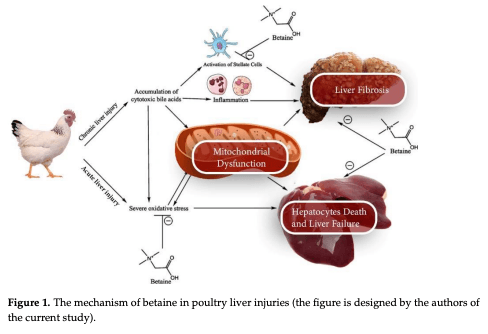
2. Interaction of Betaine with Other Elements
2.1. Methionine
2.2. Choline
2.3. Creatine
3. Different Beneficial Effects of Dietary Betaine in the Poultry Industry
3.1. Reproductive Performance
3.1.1. Chickens
Broiler
Layer
Duck
Quail
Geese
3.1.2. Turkey
3.1.3. Carcass Traits
3.2. Osmo-Regulation
3.3. Anticoccidiosis
3.4. Immune Modulation
4. Heat-Stress Alleviation
5. Conclusions
1. Costa, M.C.; Bessegatto, J.A.; Alfieri, A.A.; Weese, J.S.; Filho, J.A.; Oba, A. Different antibiotic growth promoters induce specific changes in the cecal microbiota membership of broiler chicken. PLoS ONE. 2017;12:e0171642.
2. Castanon, J.I.R. History of the use of antibiotic as growth promoters in European poultry feeds. Poultry Science. 2007;86:2466–2471.
3. Ferdous, M.F.; Arefin, M.S.; Rahman, M.M.; Ripon, M.M.R.; Rashid, M.H.; Sultana, M.R.; Hossain, M.T.; Ahammad, M.U.; Rafiq, K. Beneficial effects of probiotic and phytobiotic as growth promoter alternative to antibiotic for safe broiler production. Journal of Advanced Veterinary and Animal Research. 2019;6:409–415.
4. Rafiq, K.; Tofazzal Hossain, M.; Ahmed, R.; Hasan, M.M.; Islam, R.; Hossen, M.I.; Shaha, S.N.; Islam, M.R. Role of different growth enhancers as alternative to in-feed antibiotics in poultry industry. Frontiers in Veterinary Science. 2022;8:794588.
5. Mehdi, Y.; Létourneau-Montminy, M.P.; Gaucher, M.L.; Chorfi, Y.; Suresh, G.; Rouissi, T.; Brar, S.K.; Côté, C.; Ramirez, A.A.; Godbout, S. Use of antibiotics in broiler production: Global impacts and alternatives. Animal Nutrition. 2018;4:170–178.
6. Ratriyanto, A.; Mosenthin, R.; Bauer, E.; Eklund, M. Metabolic, osmoregulatory and nutritional functions of betaine in monogastric animals. Asian-Australasian Journal of Animal Sciences. 2009;22:1461–1476.
7. Arumugam, M.K.; Paal, M.C.; Donohue, T.M.; Ganesan, M.; Osna, N.A.; Kharbanda, K.K. Beneficial effects of betaine: A comprehensive review. Biology. 2021;10:456.
8. Chendrimada, T.P.; Neto, M.G.; Pesti, G.M.; Davis, A.J.; Bakalli, R.I. Determination of the betaine content of feed ingredients using high performance liquid chromatography. Journal of the Science of Food and Agriculture. 2002;82:1556–1563.
9. Matthews, J.; Southern, L. The effect of dietary betaine in Eimeria acervulina-infected chicks. Poultry Science. 2000;79:60–65.
10. Pillai, P.B.; Fanatico, A.C.; Beers, K.W.; Blair, M.E.; Emmert, J.L. Homocysteine remethylation in young broilers fed varying levels of methionine, choline and betaine. Poultry Science. 2006;85:90–95.
11. Dilger, R.N.; Garrow, T.A.; Baker, D.H. Betaine can partially spare choline in chicks but only when added to diets containing a minimal level of choline. Journal of Nutrition. 2007;137:2224.
12. Ahmed, M.M.N.; Ismail, Z.S.H.; Abdel-Wareth, A.A.A. Application of betaine as feed additives in poultry nutrition—A review. Journal of Experimental and Applied Animal Science. 2018;2:266–272.
13. Kidd, M.T.; Ferket, P.R.; Garlich, J.D. Nutritional and osmoregulatory functions of betaine. World's Poultry Science Journal. 1997;53:125–139.
14. Eklund, M.; Bauer, E.; Wamatu, J.; Mosenthin, R. Potential physiological and nutritional functions of betaine in livestock. Nutrition Research Reviews. 2005;18:31–48.
15. European Food Safety Authority (EFSA). Scientific opinion on the safety and efficacy of aliphatic and aromatic amines (chemical group 33) when used as flavourings for all animal species. EFSA Journal. 2012;10:2679.
16. Xu, Z.; Yu, D.; Wang, Y. The Effects of Betaine on Weanling Piglets and Its Mechanism. Journal of Zhejiang Agricultural University. 1999;25:543–546.
17. Chen, R.; Yang, M.; Song, Y.D.; Wang, R.X.; Wen, C.; Liu, Q.; Zhou, Y.M.; Zhuang, S. Effect of anhydrous betaine and hydrochloride betaine on growth performance, meat quality, postmortem glycolysis, and antioxidant capacity of broilers. Poultry Science. 2022;101:101687.
18. Schrama, J.; Heetkamp, M.; Simmins, P.; Gerrits, W. Dietary betaine supplementation affects energy metabolism of pigs. Journal of Animal Science. 2003;81:1202–1209.
19. Attia, Y.A.; Hassan, R.A.; Qota, E.M. Recovery from adverse effects of heat stress on slow-growing chicks in the tropics. I. Effect of ascorbic acid and different levels of betaine. Tropical Animal Health and Production. 2009;41:807–818.
20. Akhavan Salamat, H.; Ghasemi, H.A. Alleviation of chronic heat stress in broilers by dietary supplementation of betaine and turmeric rhizome powder: Dynamics of performance, leukocyte profile, humoral immunity, and antioxidant status. Tropical Animal Health and Production. 2016;48:181–188.
21. Saunderson, C.L.; Mackinlay, J. Changes in body weight, composition and hepatic enzyme activities in response to dietary methionine, betaine and choline levels in growing chicks. British Journal of Nutrition. 1990;63:339–349.
22. Ghasemi, H.A.; Nari, N. Effect of supplementary betaine on growth performance, blood biochemical profile, and immune response in heat-stressed broilers fed different dietary protein levels. Journal of Applied Poultry Research. 2020;29:301–313.
23. Alirezaei, M.; Jelodar, G.; Ghayemi, Z. Antioxidant defense of betaine against oxidative stress induced by ethanol in the rat testes. International Journal of Peptide Research and Therapeutics. 2012;18:239–247.
24. Sakomura, N.K.; Barbosa, N.A.A.; da Silva, E.P.; Longo, F.A.; Kawauchi, I.M.; Fernandes, J.B.K. Effect of betaine supplementation in diets for broiler chickens on thermoneutral environment. Brazilian Journal of Poultry Science. 2013;8:336–341.
25. Egbuniwe, I.C.; Ayo, J.O.; Kawu, M.U.; Mohammed, A. Effects of betaine and ascorbic acid on tonic immobility, superoxide dismutase and glutathione peroxidase in broiler chickens during the hot-dry season. Journal of Veterinary Behavior. 2016;12:60–65.
26. Saeed, M.; Babazadeh, D.; Naveed, M.; Arain, M.A.; Hassan, F.U.; Chao, S. Reconsidering betaine as a natural anti-heat stress agent in poultry industry: A review. Tropical Animal Health and Production. 2017;49:1329–1338.
27. Eklund, M.; Mosenthin, R.; Tafaj, M.; Wamatu, J. Effects of betaine and condensed molasses solubles on nitrogen balance and nutrient digestibility in piglets fed diets deficient in methionine and low in compatible osmolytes. Archives of Animal Nutrition. 2006;60:289–300.
28. Ratriyanto, A.; Mosenthin, R.; Jezierny, D.; Eklund, M. Effect of graded levels of dietary betaine on ileal and total tract nutrient digestibilities and intestinal bacterial metabolites in piglets. Journal of Animal Physiology and Animal Nutrition. 2010;94:788–796.
29. Siljander-Rasi, H.; Peuranen, S.; Tiihonen, K.; Virtanen, E.; Kettunen, H.; Alaviuhkola, T.; Simmins, P.H. Effect of equimolecular dietary betaine and choline addition on performance, carcass quality and physiological parameters of pigs. Animal Science. 2003;76:55–62.
30. Singh, A.; Ghosh, T.; Creswell, D.; Haldar, S. Effects of supplementation of betaine hydrochloride on physiological performances of broilers exposed to thermal stress. Open Access Animal Physiology. 2015;7:111–120.
31. Alirezaei, M.; Jelodar, G.; Niknam, P.; Ghayemi, Z.; Nazifi, S. Betaine prevents ethanol-induced oxidative stress and reduces total homocysteine in the rat cerebellum. Journal of Physiology and Biochemistry. 2011;67:605–612.
32. Sun, H.; Yang, W.; Yang, Z.; Wang, Y.; Jiang, S.; Zhang, G. Effects of betaine supplementation to methionine deficient diet on growth performance and carcass characteristics of broilers. Journal of Animal and Veterinary Sciences. 2008;3:78–84.
33. Alirezaei, M.; Gheisari, H.R.; Ranjbar, V.R.; Hajibemani, A. Betaine: A promising antioxidant agent for enhancement of broiler meat quality. British Poultry Science. 2012;53:699–707.
34. Alirezaei, M.; Saeb, M.; Javidnia, K.; Nazifi, S.; Khalighyan, N.; Saeb, S. Betaine reduction of hyperhomocysteinemia and enhancement of 5-hydroxyindoleacetic acid in ethanol-induced hyperhomocysteinemia in rabbits. African Journal of Biochemistry Research. 2010;4:246–254.
35. Turker, M.; Alp, M.; Kocabacli, N. Performance of Broiler Chicks Fed on Reduced Methionine Diets Supplemented with Betaine. In: Proceedings of the XXII World's Poultry Congress. Istanbul, Turkey. 8–13 June 2004; pp. 8–13.
36. Lukic, M.; Jokic, Z.; Petricevic, V.; Pavlovski, Z.; Skrbic, Z.; Stojanovic, L. The effect of full substitution of supplemental methionine with betaine in broiler nutrition on production and slaughter results. Journal of Animal Science and Biotechnology. 2012;28:361–368.
37. Maidin, M.B.M.; McCormack, H.A.; Wilson, P.W.; Caughey, S.D.; Whenham, N.; Dunn, I.C. Dietary betaine reduces plasma homocysteine concentrations and improves bone strength in laying hens. British Poultry Science. 2021;62:573–578.
38. Paniz, C.; Grotto, D.; Schmitt, G.C.; Valentini, J.; Schott, K.L.; Pomblum, V.J.; Garcia, S.C. Pathophysiology of vitamin B12 deficiency and its laboratory diagnosis. Jornal Brasileiro de Patologia e Medicina Laboratorial. 2005;41:323–334.
39. Pesti, G.M.; Harper, A.E.; Sunde, M.L. Sulfur amino acid and methyl donor status of corn-soy diets for starting broiler chicks and turkey poults. Poultry Science. 1979;58:1541–1547.
40. Florou-Paneri, P.; Kufidis, D.; Vassilopoulos, V.; Spais, A.B. Performance of broiler chicks fed on low methionine diets supplemented with betaine. Journal of the Hellenic Veterinary Medical Society. 1997;45:303–311.
41. Rostagno, H.S.; Pack, M. Can betaine replace supplemental DL-methionine in broiler diets? Journal of Applied Poultry Research. 1996;5:150–154.
42. Schutte, J.B.; De Jong, J.; Smink, W.; Pack, M. Replacement value of betaine for DL-methionine in male broiler chicks. Poultry Science. 1997;76:321–325.
43. Firman, J.D.; Remus, J.C. Relationship between cystine and betaine in low methionine diets. Poultry Science. 1999;78:135.
44. Pesti, G.M.; Benevenga, N.J.; Harper, A.E.; Sunde, M.L. Factors influencing the assessment of the availability of choline in feedstuffs. Poultry Science. 1981;60:188–196.
45. Sakomura, N.K.; Barbosa, N.A.; Longo, F.A.; Da Silva, E.P.; Bonato, M.A.; Fernandez, J.B. Effect of dietary betaine supplementation on the performance, carcass yield and intestinal morphometrics of broilers submitted to heat stress. Revista Brasileira de Ciência Avícola. 2013;15:105–112.
46. Waldroup, P.W.; Fritts, C.A. Evaluation of separate and combined effects of choline and betaine in diets for male broilers. International Journal of Poultry Science. 2005;4:442–448.
47. Lowry, K.R.; Izquierdo, Q.A.; Baker, D.H. Efficacy of betaine relative to choline as a dietary methyl donor. Poultry Science. 1987;66:135.
48. Stekol, J.A.; Hsu, P.T.; Weiss, S.; Smith, P. Labile methyl group and its synthesis de novo in relation to growth of chicks. Journal of Biological Chemistry. 1953;203:763–773.
49. Tyler, D.D. Transport and oxidation of choline by liver mitochondria. Biochemical Journal. 1977;166:571–581.
50. Young, J.F.; Bertram, H.C.; Rosenvold, K.; Lindahl, G.; Oksbjerg, N. Dietary creatine monohydrate affects quality attributes of Duroc but not Landrace pork. Meat Science. 2005;70:717–725.
51. Rao, S.V.R.; Raju, M.V.L.N.; Panda, A.K.; Ria, P.S.; Sunder, A.G.S. Effect of supplementing betaine on performance, carcass traits and immune responses in broiler chicken fed diets containing different concentrations of methionine. Asian-Australasian Journal of Animal Sciences. 2011;24:662–669.
52. Zhan, X.A.; Li, J.X.; Xu, Z.R.; Zhao, R.Q. Effects of methionine and betaine supplementation on growth performance, carcass composition and metabolism of lipids in male broilers. British Poultry Science. 2006;47:576–580.
53. Zhan, X.A.; Xu, Z.R. Effects of betaine on meat quality and mechanism of the effects in finishing broilers. Journal of Zhejiang University Agricultural and Life Sciences. 1999;25:611–614.
54. Feng, J.; Xu, Z.R. Effect of betaine on muscle, liver and serum amino acid composition in finishing swine. Journal of Zhejiang University Agricultural and Life Sciences. 2001;27:107–110.
55. Xu, Z.R.; Feng, J. Effect of betaine on carcass characteristics and approach to mechanism of the effect in finishing swine. Acta Veterinaria et Zootechnica Sinica. 1998;29:397–405.
56. Urbanczyk, J.; Hanczakowska, E.; Swiatkiewycz, M. Betaine and organic chromium as feed additives in pig nutrition. Annals of Warsaw University of Life Sciences – Animal Science. 1999;36:133–140.
57. Al-Tamimi, H.; Mahmoud, K.; Al-Dawood, A.; Nusairat, B.; Bani Khalaf, H. Thermotolerance of broiler chicks ingesting dietary betaine and/or creatine. Animals. 2019;9:742.
58. Shuzhen, L.; Yang, L.; Wenhuan, C.; Zhimin, C.; Aijuan, Z.; Zedong, W.; Guohua, L. Supplementation of guanidinoacetic acid and betaine improve growth performance and meat quality of ducks by accelerating energy metabolism. Italian Journal of Animal Science. 2021;20:1656–1663.
59. Zulkifli, I.; Mysahra, S.A.; Jin, L.Z. Dietary supplementation of betaine and response to high temperature stress in male broiler chickens. Asian-Australasian Journal of Animal Sciences. 2004;17:244–249.
60. Attia, Y.A.; Hassan, R.A.; Shehatta, M.H.; Abd-El-Hady, S.B. Growth, carcass quality and serum constituents of slow growing chicks as affected by betaine addition to diets containing different levels of methionine. International Journal of Poultry Science. 2005;4:856–865.
61. Hassan, R.A.; Attia, Y.A.; El-Ganzory, E.H. Growth, carcass quality and serum constituents of slow growing chicks as affected by betaine addition to diets containing different levels of choline. International Journal of Poultry Science. 2005;4:840–850.
62. Yang, M.; Chen, R.; Song, Y.D.; Zhou, Y.M.; Liu, Q.; Zhuang, S. Effects of dietary betaine supplementation on growth performance, meat quality, muscle fatty acid composition and antioxidant ability in slow-growing broiler chickens. British Poultry Science. 2022;63:351–359.
63. Sayed, M.; Downing, J. The effects of water replacement by oral rehydration fluids with or without betaine supplementation on performance, acid-base balance and water retention of heat-stressed broiler chickens. Poultry Science. 2011;90:157–167.
64. Wang, Y.Z.; Xu, Z.R.; Feng, J. The effect of betaine and DL-methionine on growth performance and carcass characteristics in meat ducks. Animal Feed Science and Technology. 2004;116:151–159.
65. Nilipour, A.H. Betafin improves performance of broilers exposed to high ambient temperature and fed diets reduced in methionine and choline chloride. World Poultry. 1998;14:26–27.
66. Chen, H.; Chiang, S. Effect of Dietary Betaine Supplementation on the Heat Tolerance in Broilers. Danisco Animal Nutrition. Wiltshire, UK. 2002.
67. He, S.; Zhao, S.; Dai, S.; Liu, D.; Bokhari, S.G. Effects of dietary betaine on growth performance, fat deposition and serum lipids in broilers subjected to chronic heat stress. Journal of Animal Science. 2015;86:897–903.
68. Amer, S.; Omar, A.; Mohamed, W.; Gharib, H.; El-Eraky, W. Impact of betaine supplementation on the growth performance, tonic immobility and some blood chemistry of broiler chickens fed normal and low energy diets during natural summer stress. Zagazig Veterinary Journal. 2018;46:37–50.
69. Klasing, K.C.; Adler, K.L.; Remus, J.C.; Calvert, C.C. Dietary betaine increases intraepithelial lymphocytes in the duodenum of coccidia-infected chicks and increases functional properties of phagocytes. Journal of Nutrition. 2002;132:2274–2282.
70. Garcia, M.N.; Pesti, G.M.; Bakalli, R.I. Influence of dietary protein level on the broiler chicken's response to methionine and betaine supplements. Poultry Science. 2000;79:1478–1484.
71. Honarbakhsh, S.; Zaghari, M.; Shivazad, M. Can exogenous betaine be an effective osmolyte in broiler chicks under water salinity stress? Asian-Australasian Journal of Animal Sciences. 2007;20:1729–1737.
72. Honarbakhsh, S.; Zaghari, M.; Shivazad, M. Interactive effects of dietary betaine and saline water on carcass traits of broiler chicks. Journal of Biological Sciences. 2007;7:1208–1214.
73. El-Husseiny, O.M.; Abo-El-Ella, M.A.; Abd-Elsamee, M.O.; Abd-Elfattah, M.M. Response of broilers performance to dietary betaine and folic acid at different methionine levels. International Journal of Poultry Science. 2007;6:515–523.
74. Remus, J. Betaine for Increased Breast Meat Yield in Turkeys. World Poultry. 2001;17:14–15.
75. Csonka, L.N. Physiological and genetic responses of bacteria to osmotic stress. Microbiological Reviews. 1989;53:121–147.
76. Kettunen, H.; Peuranen, S.; Jatila, H.; Nurminen, P.; Saarinen, M.; Apajalahti, J. Effect of betaine on the microbiology of the chicken gastrointestinal tract. Proceedings of the 12th European Symposium on Poultry Nutrition. 1999;186.
77. Park, B.S.; Park, S.O. Effects of feeding time with betaine diet on growth performance, blood markers and short-chain fatty acids in meat ducks exposed to heat stress. Livestock Science. 2017;199:31–36.
78. Park, S.O.; Kim, W.K. Effects of betaine on biological functions in meat-type ducks exposed to heat stress. Poultry Science. 2017;96:1212–1218.
79. Esteve-Garcia, E.; Mack, S. The effect of DL-methionine and betaine on growth performance and carcass characteristics in broilers. Animal Feed Science and Technology. 2000;87:85–93.
80. Zou, X.T.; Ma, Y.L.; Xu, Z.R. Effects of betaine and thyroprotein on laying performance and mechanisms of the effects in hens. Acta Agriculturae Zhejiangensis. 1998;10:144–149.
81. Ryu, M.S.; Cho, K.H.; Shin, W.J.; Ryu, K.S. Influence of dietary supplemental betaine on performance and egg quality of laying hens during heat stress. Korean Journal of Poultry Science. 2002;29:117–123.
82. Tolba, A.A.H.; Shabaan, S.A.M.; Wagdy, A.Z. Improvement of Fayoumi laying hens performance under hot climate conditions. II. Betaine, folic acid and choline. Egyptian Poultry Science Journal. 2007;1:21–35.
83. Attia, Y.A.; Abd El-Hamid, A.E.; Abedalla, A.A.; Al-Harthi, M.A.; Berika, M.A.; Kucuk, O.; Sahin, K.; Abou-Shehema, B.M. Laying performance, digestibility and plasma hormones in laying hens exposed to chronic heat stress as affected by betaine, vitamin C and/or vitamin E supplementation. SpringerPlus. 2016;5:1–12.
84. Hao, S.; Liu, L.; Wang, G.; Gu, X.; Pan, F. Effects of dietary betaine on performance, egg quality and serum biochemical parameters of laying hens under heat stress conditions. Chinese Journal of Clinical Nutrition. 2017;29:184–192.
85. Bollengier-Lee, S.; Williams, P.E.; Whitehead, C.C. Optimal dietary concentration of vitamin E for alleviating the effect of heat stress on egg production in laying hens. British Poultry Science. 1999;40:102–107.
86. Lu, J.J.; Zou, X.T. Effects of adding betaine on laying performance and contents of serum yolk precursors VLDL and VTG in laying hens. Journal of Zhejiang University Agricultural and Life Sciences. 2006;32:287–291.
87. Zou, X.T. Effects of betaine on endocrinology of laying hens and its mechanism of action. Chinese Journal of Veterinary Science. 2001;21:300–303.
88. Zou, X.T.; Feng, J. Effect of betaine on performance of laying hens. Chinese Journal of Animal Science. 2002;38:7–9.
89. Downing, J.A. Nutritional strategies to support performance of commercial Pekin ducks exposed to a high-temperature thermal challenge over 29–41 days of age. Animal Production Science. 2022;62:572–580.
90. Bang, H.T.; Hwangbo, J.; Kang, H.K.; Park, B.S. Effect of different feeding times using a diet containing betaine on production, blood profile and short-chain fatty acids in meat ducks exposed to a scorching heat wave. Journal of the Korean Applied Science and Technology. 2015;32:427–438.
91. Lee, H.S.; Shin, J.S.; Choi, Y.S.; Um, K.H.; Park, H.J.; Park, B.S. Effect of betaine and ascorbic acid in drinking water on growth performance and blood biomarkers in meat ducks exposed to heat stress. South African Journal of Animal Science. 2019;49:417–423.
92. Kumar, S.; Pangeni, D.; Yang, X.; Park, S.O. Effect of ascorbic acid in the drinking water and betaine in the diet on performance, blood haematology, IgG and HSP70 gene expression in Pekin ducks reared under high temperatures. European Poultry Science. 2017;81:177.
93. Park, S.O.; Zammit, V.A. Effect of feed restriction with betaine and ascorbic acid supplementation on caecal bacteria, short-chain fatty acids, blood biomarkers, duodenal morphology and growth performance of meat ducks under heat stress. European Poultry Science. 2019;83.
94. Awad, L.; Ibrahim, A.F.; Fahim, H.N.; Beshara, M.M. Effect of dietary betaine supplementation on growth performance and carcass traits of Domyati ducks under summer conditions. Egyptian Poultry Science Journal. 2014;34:1019–1038.
95. Ratriyanto, A.; Indreswari, R.; Nuhriawangsa, A.M.P. Effects of dietary protein level and betaine supplementation on nutrient digestibility and performance of Japanese quails. Brazilian Journal of Poultry Science. 2017;19:445–454.
96. Rasul, M.; Mehmood, S.; Ahmad, S.; Javid, A.; Mahmud, A.; Rehman, A.; Usman, M.; Hussain, J.; Ahmad, M.; Azhar, M. Effects of different anti-stressors on growth, serum chemistry and meat quality attributes of Japanese quail. Brazilian Journal of Poultry Science. 2019;21.
97. Ratriyanto, A.; Prastowo, S. Floor space and betaine supplementation alter the nutrient digestibility and performance of Japanese quail in a tropical environment. Journal of Thermal Biology. 2019;83:80–86.
98. Ratriyanto, A.; Indreswari, R.; Dewanti, R.; Wahyuningsih, S. Egg quality of quails fed low methionine diet supplemented with betaine. IOP Conference Series: Earth and Environmental Science. 2018;142:012002.
99. Ratriyanto, A.; Prastowo, S.; Widyas, N. The effect of activated silicon dioxide and betaine supplementation on quails' growth and productivity. Veterinary World. 2021;14:2009.
100. Yang, W.; Huang, L.; Gao, J.; Wen, S.; Tai, Y.; Chen, M.; Huang, Z.; Liu, R.; Tang, C.; Li, J. Betaine attenuates chronic alcohol-induced fatty liver by broadly regulating hepatic lipid metabolism. Molecular Medicine Reports. 2017;16:5225–5234.
101. Su, S.Y.; Dodson, M.V.; Li, X.B.; Li, Q.F.; Wang, H.W.; Xie, Z. The effects of dietary betaine supplementation on fatty liver performance, serum parameters, histological changes, methylation status and the mRNA expression level of Spot14α in Landes goose fatty liver. Comparative Biochemistry and Physiology Part A: Molecular & Integrative Physiology. 2009;154:308–314.
102. Yu, S.L.; Su, S.Y.; Li, Q.F.; Zhang, X.; Xie, Z. Duplicated CCAAT/enhancer-binding protein β (C/EBPβ) gene: Transcription and methylation changes in response to dietary betaine in Landes goose liver. Poultry Science. 2013;92:1878–1887.
103. Ferket, P. Flushing Syndrome in Commercial Turkeys during the Grow-out Stage. In: Proceedings of the Pacesetter Conference, National Turkey Federation Annual Meeting. Orlando, FL, USA; 1995. pp. 5–14.
104. Dorra, T.; Ibrahim, S.; Zayed, S. Effect of dietary betaine supplementation on growth performance and carcass traits of growing turkey. Journal of Animal and Poultry Production. 2012;3:365–377.
105. McDevitt, R.; Mack, S.; Wallis, I. Can betaine partially replace or enhance the effect of methionine by improving broiler growth and carcass characteristics? British Poultry Science. 2000;41:473–480.
106. Jahanian, R.; Rahmani, H.R. The effect of dietary fat level on the response of broiler chicks to betaine and choline supplements. Journal of Biological Sciences. 2008;2:362–367.
107. Zeisel, S.H. Choline, other methyl-donors and epigenetics. Nutrients. 2017;9:445.
108. Virtanen, E.; Rosi, L. Effects of Betaine on Methionine Requirement of Broilers under Various Environmental Conditions. In: Proceedings of the Australian Poultry Science Symposium. Sydney, Australia; 1995. pp. 88–92.
109. Gholami, J.; Qotbi, A.A.A.; Seidavi, A.; Meluzzi, A.; Tavaniello, S.; Maiorano, G. Effects of in ovo administration of betaine and choline on hatchability results, growth and carcass characteristics and immune response of broiler chickens. Italian Journal of Animal Science. 2015;14:2.
110. Nofal, M.E.; Magda, A.G.; Mousa, S.M.M.; Doaa, M.M.Y.; Bealsh, A.M.A. Effect of Dietary Betaine Supplementation on Productive, Physiological and Immunological Performance and Carcass Characteristics of Growing Developed Chicks under Heat Stress. Egyptian Poultry Science Journal. 2015;35:237–259.
111. El-Shinnawy, A.M. Effect of betaine supplementation to methionine adequate diet on growth performance, carcass characteristics, some blood parameters and economic efficiency of broilers. Journal of Animal and Poultry Production. 2015;1:27–41.
112. Enting, H.; Eissen, J.; de los Mozos, J.; del Álamo, A.G.; Ayala, P.P. TNI Betaine Improves Broiler Chicken Performance and Carcass Quality under Heat Stress Conditions. In: Proceedings of the 16th European Symposium on Poultry Nutrition. Strasbourg, France; 2007.
113. Konca, Y.; Kirkpinar, F.; Mert, S.; Yaylak, E. Effects of Betaine on Performance, Carcass, Bone and Blood Characteristics of Broilers during Natural Summer Temperatures. Journal of Animal and Veterinary Advances. 2008;7:930–937.
114. Yang, Z.; Wang, Z.; Yang, H.; Zhao, F.; Kong, L. Response of growing goslings to dietary supplementation with methionine and betaine. British Poultry Science. 2016;57:833–841.
115. Partridge, G. Betaine from Sugar Beet Gives an Energy Boost. Pig International. 2002;32:21.
116. Stryer, L. Biosynthesis of Amino Acids and Heme. In: Biochemistry. 3rd ed. New York: W.H. Freeman and Company; 1988. pp. 575–626.
117. Yao, Z.; Vance, D. Head group specificity in the requirement of phosphatidylcholine biosynthesis for very low density lipoprotein secretion from cultured hepatocytes. Journal of Biological Chemistry. 1990;264:11373–11380.
118. Yun, H.; Sun, Q.; Li, X.; Wang, M.; Cai, D.; Li, X.; Zhao, R. In ovo injection of betaine affects hepatic cholesterol metabolism through epigenetic gene regulation in newly hatched chicks. PLoS ONE. 2015;10:e0122643.
119. Chambers, S.T.; Kunin, C.M. The osmoprotective properties of urine for bacteria: The protective effect of betaine and human urine against low pH and high concentrations of electrolytes, sugars and urea. Journal of Infectious Diseases. 1985;152:1308–1316.
120. Hochachka, P.W.; Somero, G.N. Biochemical Adaptation. Princeton: Princeton University Press; 1984.
121. Petronini, P.G.; De Angelis, E.M.; Borghetti, P.; Borghetti, A.F. Modulation by betaine of cellular response to osmotic stress. Biochemical Journal. 1992;282:69–73.
122. Alfieri, R.R.; Cavazzoni, A.; Petronini, P.G.; Bonelli, M.A.; Caccamo, A.E.; Borghetti, A.F.; Wheeler, K.P. Compatible osmolytes modulate the responses of porcine endothelial cells to hypertonicity and protect them from apoptosis. Journal of Physiology. 2002;540:499–508.
123. Moeckel, G.W.; Shadman, R.; Fogel, J.M.; Sadrzadeh, S.M.H. Organic osmolytes betaine, sorbitol and inositol are potent inhibitors of erythrocyte membrane ATPases. Life Sciences. 2002;71:2413–2424.
124. Mooney, M.; Belay, T.; Teeter, R.G. Effect of Betaine on Loss of Corporal Water. In: Proceedings of the International Poultry Scientific Forum. Atlanta, GA, USA; 1998.
125. Kettunen, H.; Tiihonen, K.; Peuranen, S.; Saarinen, M.T.; Remus, J.C. Dietary betaine accumulates in the liver and intestinal tissue and stabilizes the intestinal epithelial structure in healthy and coccidia-infected broiler chicks. Comparative Biochemistry and Physiology Part A: Molecular & Integrative Physiology. 2001;130:759–769.
126. Remus, J.; Quarles, C. The effect of betaine on lesion scores and tensile strength of coccidian-challenged broilers. Poultry Science. 2000;79:118.
127. Blake, D.P.; Knox, J.; Dehaeck, B.; Huntington, B.; Rathinam, T.; Ravipati, V.; Ayoade, S.; Gilbert, W.; Adebambo, A.O.; Jatau, I.D.; et al. Re-calculating the cost of coccidiosis in chickens. Veterinary Research. 2020;51:115.
128. Teeter, R.G.; Remus, J.C.; Belay, T.; Mooney, M.; Virtanen, E.; Augustine, P. The Effects of Betaine on Water Balance and Performance in Broilers Reared under Differing Environmental Conditions. In: Proceedings of the Australian Poultry Science Symposium. Sydney, Australia; 1999.
129. Virtanen, E.; McNaughton, J.; Rosi, L.; Hall, D. Effects of Betaine Supplementation on Intestinal Lesion, Mortality and Performance of Coccidian-Challenged Broiler Chicks. In: Proceedings of the 9th European Symposium on Poultry Nutrition. Jelenia Góra, Poland; 1993.
130. Augustine, P.C.; McNaughton, J.L.; Virtanen, E.; Rosi, L. Effects of betaine on the growth performance of chicks inoculated with mixed cultures of avian Eimeria species and on invasion and development of Eimeria tenella and Eimeria acervulina in vitro and in vivo. Poultry Science. 1997;76:802–809.
131. Amerah, A.; Ravindran, V. Effect of coccidia challenge and natural betaine supplementation on performance, nutrient utilization, and intestinal lesion scores of broiler chickens fed suboptimal levels of dietary methionine. Poultry Science. 2015;94:673–680.
132. Augustine, P.C.; Danforth, H.D. Influence of betaine and salinomycin on intestinal absorption of methionine and glucose and on the ultrastructure of intestinal cells and parasite developmental stages in chicks infected with Eimeria acervulina. Avian Diseases. 1999;43:89–97.
133. Waldenstedt, L.; Elwinger, K.; Thebo, P.; Uggla, A. Effect of betaine supplementation on broiler performance during an experimental coccidial infection. Poultry Science. 1998;78:182–189.
134. Zhan, X.A. Effects of betaine on immune responses to Newcastle disease in broiler chicks. Chinese Journal of Veterinary Science. 2001;21:99–102.
135. Farooqui, H.A.G.; Khan, M.S.; Khan, M.A.; Rabbani, M.; Pervez, K.; Khan, J.A. Evaluation of betaine and vitamin C in alleviation of heat stress in broilers. International Journal of Agriculture and Biology. 2005;5:744–746.
136. Elbayoumi, K.M.; Girh, Z.M.S.A.; Hassan, E.R.; Amer, A.M.; Zohair, G.A.M.; Amer, M.M. Enhancement of immune response against infectious bursal disease (IBD) and infectious bronchitis (IB) in antibiotic-treated Mycoplasma gallisepticum-seropositive broiler chickens. International Journal of ChemTech Research. 2016;9:934–942.
137. Amer, M.M.; Elbayoumi, K.M.; Girh, Z.M.S.A.; Hassan, E.R.; Bosila, M.A. Studies on the effect of prebiotic on immune response of broiler chickens to ND-AI combined inactivated vaccine. International Journal of ChemTech Research. 2016;9:182–190.
138. Hassan, R.A.; Ebeid, T.A.; Abd El-Lateif, A.I.; Ismail, N.B. Effect of dietary betaine supplementation on growth, carcass characteristics and immunity of New Zealand White rabbits under high ambient temperature. Livestock Science. 2011;135:103–109.
139. Tsiagbe, V.K.; Cook, M.E.; Harper, A.E.; Sunde, M.L. Enhanced immune responses in broiler chicks fed methionine-supplemented diets. Poultry Science. 1987;66:1147–1154.
140. Zhang, F.; Warskulat, U.; Häussinger, D. Modulation of tumor necrosis factor-α release by anisoosmolarity and betaine in rat liver macrophages (Kupffer cells). FEBS Letters. 1996;391:293–296.
141. Aengwanich, W.; Suttajit, M. Effect of polyphenols extracted from tamarind (Tamarindus indica L.) seed coat on physiological changes, heterophil/lymphocyte ratio, oxidative stress and body weight of broilers under chronic heat stress. Animal Science Journal. 2010;81:264–270.
142. Gudev, D.; Popovaralcheva, S.; Ianchev, I.; Moneva, P. Effect of betaine and air ammonia concentration on broiler performance, plasma corticosterone level, lymphoid organ weights and some haematological indices. Biotechnology in Animal Husbandry. 2011;27:687–703.
143. Wasti, S.; Sah, N.; Mishra, B. Impact of heat stress on poultry health and performance, and potential mitigation strategies. Animals. 2020;10:1266.
144. Daghir, N.J. Poultry Production in Hot Climates. 2nd ed. Wallingford, UK: CAB International; 2008.
145. Abd-Ellah, A.M. Effect of ascorbic acid supplementation on performance of laying hens during hot summer months. Assiut Veterinary Medical Journal. 1995;34:83–92.
146. Gunal, M. The effects of early-age thermal manipulation and daily short-term fasting on performance and body temperatures in broilers exposed to heat stress. Journal of Animal Physiology and Animal Nutrition. 2013;97:854–860.
147. Pamok, S.; Aengwanich, W.; Komutrin, T. Adaptation to oxidative stress and impact of chronic oxidative stress on immunity in heat-stressed broilers. Journal of Thermal Biology. 2009;34:353–357.
148. Graham, H. Betaine—Combating Heat Stress in Poultry. AFMA Matrix. 2002;15:16–17.
149. Al-Aqil, A.; Zulkifli, I.; Sazili, A.Q.; Omar, A.R.; Rajion, M.A. The effects of the hot, humid tropical climate and early-age feed restriction on stress and fear responses, and performance in broiler chickens. Asian-Australasian Journal of Animal Sciences. 2009;22:1581–1586.
150. Skomorucha, I.; Sosnówka-Czajka, E.; Muchacka, R. Effect of thermal conditions on welfare of broiler chickens of different origin. Annals of Animal Science. 2010;10:489–497.
151. Al-Sagan, A.A.; Al-Yemni, A.H.; Abudabos, A.M.; Al-Abdullatif, A.A.; Hussein, E.O.S. Effect of different dietary betaine fortifications on performance, carcass traits, meat quality, blood biochemistry, and hematology of broilers exposed to various temperature patterns. Animals. 2021;11:1555.
















United States