Check out what is new in Poultry Industry
Technical and commercial information on Poultry Industry. Health, nutrition, management, genetics and reproduction in poultry industry.
The UGA Broiler Short Course provides a comprehensive overview of modern broiler production. It is intended for those individuals who have limited knowledge of poultry as well as those who might have considerable experience in one area of broiler production but would like to have a better understanding of the overall...
Comments : 0
Recommendations: 0
The International Production & Processing Expo (IPPE) is pleased to recognize the 2027 Young Leaders Under 30 honorees, highlighting the next generation of professionals making an impact across the industry. This award celebrates emerging talent and provides recipients with valuable...
Comments : 0
Recommendations: 1
Recommended events
January 25, 2027
United States - Georgia - Atlanta



Anita Menconi, Regional Business Director, Specialty Nutrition, Americas, explains the importance of genetic capability and spore germination inside the bird's gastrointestinal tract. ...
Comments : 0
Recommendations: 1

Salmonella infections cause enteric diseases in humans and animals, and poultry production is generally associated with contamination by this foodborne pathogen. S. enteritidis (SE) and S. typhimurium (ST), as well as other serotypes such as S. Heidelberg (SH) and S. infantis (SI), are highly prevalent. This study evaluated the protection conferred by a live SE vaccine (auxotrophic for the amino acids adenine and histidine) in laying hens exposed to field strains of SH or...
Comments : 0
Recommendations: 0
Featured users in Poultry Industry

Dr. Algis Martínez  Cargill
DVM, Diplomado ACPV - Poultry Veterinarian North America Cargill
United States
United States




1. Introduction In the ever-evolving landscape of poultry farming, the critical role of nutrition in maximizing productivity and promoting avian health has gained significant attention. Domestic fowl, specifically chickens, turkeys, geese, and ducks, hold a paramount position in the global animal protein industry, meeting the rising demand for affordable and nutritious protein sources. Forecasts indicate that by 2031, approximately 47% of the protein sourced from meat will stem...
Comments : 0
Recommendations: 0
1. Introduction Thermoelectric modules convert heat energy into electrical energy and vice versa. The temperature difference between the hot and cold junctions creates a potential difference, which generates electrical energy [1]. The generated electrical energy, in turn, creates a temperature difference between the two junctions, where the cold junction becomes colder, and the hot junction becomes hotter [2]. These modules are primarily used for cooling and heating...
Comments : 0
Recommendations: 0


FIGAP 2026: The Scientific And Technological Exhibition Of The Livestock Industry
Suggested link
1. Introduction Poultry production has one of the fastest rates of development among animal industries, and it greatly enhances nutrition and food security. Over the past few years, broiler chicken genetics, feed conversion ratio, fat reduction and breast size, as well as egg production and quality, have all seen considerable improvements [1–3]. In the poultry industry, the cost of feed makes up a sizeable amount of the total cost of producing meat and eggs. The general...
Comments : 0
Recommendations: 0
Featured comment:

Interesting discussion and great batting by both sides for their respective 'teams'. As a casual observer, some of the statements seem a little too absolute and imply that these compounds behave in linear, siloed, non-interacting ways in the body. Betaine clearly cannot replace methionine as an amino acid, but that does not mean it cannot spare dietary methionine. Methionine and potentially betaine can or could contribute indirectly to the broader one-carbon metabolism that supports purine...
Comments : 22
Recommendations: 6
.jpg&w=3840&q=75)


Cristabel Huerta, Brightness Consultant at HATO Lighting, explains how innovative lighting solutions can improve bird welfare, optimize farm conditions, and enhance overall poultry performance. ...
Comments : 0
Recommendations: 1
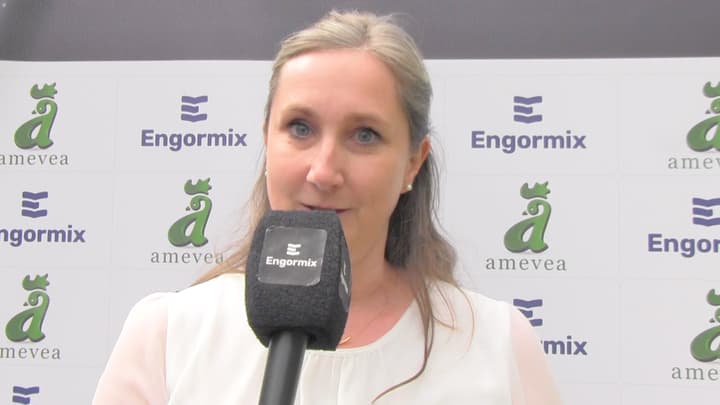
Dr. Stella Molck, Scientist Microbiology RD&I at Evonik, explains how dynamic in vitro intestinal simulation tools provide deeper insights than traditional poultry gut health studies, helping researchers better understand gut function, feed additive performance, and microbiome interactions. ...
Comments : 0
Recommendations: 4



In modern poultry production, maintaining a healthy avian immune system is essential for protecting birds against pathogens and sustaining productive performance. When immune defense is weakened, poultry become more susceptible to invasion by viruses, bacteria, parasites, and other pathogens, increasing the...
Comments : 0
Recommendations: 1

EUROTIER 2026: Visit us at booth G46 Hall 21
EuroTier 2026, the world’s leading trade fair for animal farming,will take place from Nov.10 to 13, 2026, in Hanover, Germany.
You are cordially invited to visit us and speak with us in person. Our team will be happy to answer your...
Comments : 0
Recommendations: 1
.jpg&w=3840&q=75)

Trends and challenges in Poultry Production: Jonathan Cade, President of Hy-Line International
Suggested link
Featured comment:

@Kalyani Sarode Dear Kalyani Sarode, your remark adds an aspect which we usually do not emphasize a lot in context of whether or not betaine can replace supplemental methionine. Indeed, also cobalamine (B12) has an - at least - as important role for remethylating homocysteine to methionine - which actually reduces the importance of betaine in this context. You remind me to be scientifically correct. While, for sure, betaine is not a building block, it cannot replace...
Comments : 22
Recommendations: 6

Anita Menconi, Regional Business Director, Specialty Nutrition, Americas, highlights the role of processing stability and selecting the right mode of action for effective field application. ...
Comments : 0
Recommendations: 1


Technical Advances in Vitamin Physical Properties and Premix Performance
Suggested link
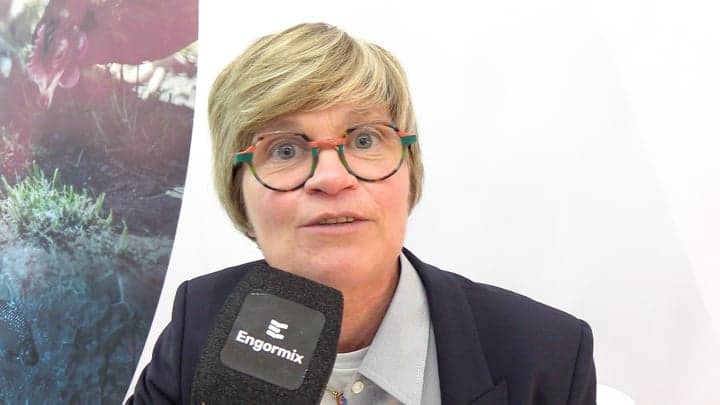
Severine Deschandelliers, Global Market Access Director at Adisseo, shares key insights from the international meeting of feed regulators held in Brazil. Across three segments, she discusses how regulatory authorities are balancing feed safety with technological innovation, as well as FEFANA's role in delivering specialty feed ingredients that help farmers meet sustainability and productivity challenges. ...
Comments : 0
Recommendations: 5
Featured comment:

F2CARE
@dear Mario, in my view, we cannot make meaningful progress in defining starch quality unless we first reach global agreement on an appropriate method for total starch analysis. For more than twenty years we have debated Ewers versus enzymatic starch determination, and the discrepancies—especially in pulses—remain substantial. In many cases, the analytical method used is not even reported, which further complicates nutritional interpretation. In short: first things first. We need to resolve...
Comments : 23
Recommendations: 4


Interactions among nutrients such as vitamins and minerals are of great importance in poultry nutrition and can negatively affect the performance of birds if not considered (Mir et al. 2021). Providing protection to the cells against the oxidative damage by free radicals and lipo-peroxides, selenium (Se) is an integral part of Se-dependent antioxidant enzymes, and thus involved in the antioxidant defense system of the body (Finkel and Holbrook 1991). Traditionally, in poultry diets, Se...
Comments : 0
Recommendations: 0

Introduction Cognition encompasses the mental processes involved in perceiving, processing, storing, and acting on information from the environment (Shettleworth, 2001). This includes a wide range of cognitive skills such as sensory perception memory, learning, decision making, reasoning, and problem solving (Dukas, 2004). The cognitive abilities of chicken are already highly developed in early life, with research demonstrating that the cognitive abilities of chicks include...
Comments : 0
Recommendations: 0


Jean-François Rous, CTO of Adisseo, outlines the company's global research and innovation strategy built on three core pillars. He details their molecule development capabilities across specialized hubs in France and China, dedicated animal nutrition science teams, and worldwide startup scouting supported by strategic investment funds. ...
Comments : 0
Recommendations: 1

Jean-François Rous, CTO of Adisseo, discusses the complex future of the feed additive sector, emphasizing a shift away from one-size-fits-all solutions toward regionalized strategies. He highlights the need for targeted additives that enhance the digestibility of local raw materials and support animal health resilience against disease outbreaks. This tailored approach enables precise, effective nutritional strategies across global livestock production systems. ...
Comments : 1
Recommendations: 3
.jpg&w=3840&q=75)