Energy in poultry diets
While protein, vitamins and minerals are referred to as nutrients, energy -the 4th and most costly part of the diet- is not a nutrient but the property of energy yielding nutrients. Dietary nutrients that yield energy are protein, fat and carbohydrates. Dietary energy level is the main factor influencing feed intake, as birds will, under normal circumstances, eat to satisfy their energy needs. Therefore the dietary nutrients, protein vitamins and minerals should vary in relation to the dietary energy content of the diet, if they are not to become deficient, with low feed intakes, or overconsumed, with low energy diets. While there are a number of factors, such as level of protein, balance of essential amino acids and perhaps level of some of the other dietary nutrients, that can influence the cost of a diet, the level of dietary energy is usually the main factor influencing diet cost.
XylaOpt™ is an intrinsically thermostable xylanase enzyme with optimal pH activity profile that targets the arabinoxylan fraction in dietary fibre, resulting in improved digestibility & increased performance....
I. INTRODUCTION Both glucose and amino acids are essential for muscle protein deposition and feed conversion efficiency and total tract nitrogen retention was reported to be influenced by protein and starch digestion in broiler chickens (Liu et al., 2013). Liu and Selle (2015) found that 76% of the variation in the feed-conversion ratio (FCR) could be attributed to starch and protein digestion rates in sorghum-based diets. Quadratic relationships between proximal jejunal...
Introduction Under normal commercial conditions, poultry tend to eat to satisfy their energy needs, thus dietary energy level drives feed intake, which in turn, is the basis of diet formulation. Feed is the major cost for poultry production and accurate diet formulation is therefore of paramount importance to the profitability of poultry enterprises. The metabolisable energy (ME)...
It has been proposed that the metabolic energy requirements of free-ranging hens are up to 15% higher compared to caged hens due to the increased metabolic activity required for locomotion and thermoregulation (GfE 1999; Tiller 2001; Aerni et al. 2005). The aim of the study was to investigate the impact of various feed strategies on laying performance and egg quality of free-range laying hens. A total of 9,375 hens, placed amongst 5 flocks of 40,000 hens each were selected according to their...
Introduction The gradual increase in the world's poultry production concomitantly increases the need for ingredients to supply protein for diets. Cereals constitute about 60 - 70% of diets to meet the energy requirements of poultry, whereas oilseeds contribute to cover the dietary protein requirements of birds (Senkoylu & Dale, 1999). Soybean meal (SBM) is the main protein source in poultry rations given its high nutritional value. Most of the European and Asian...
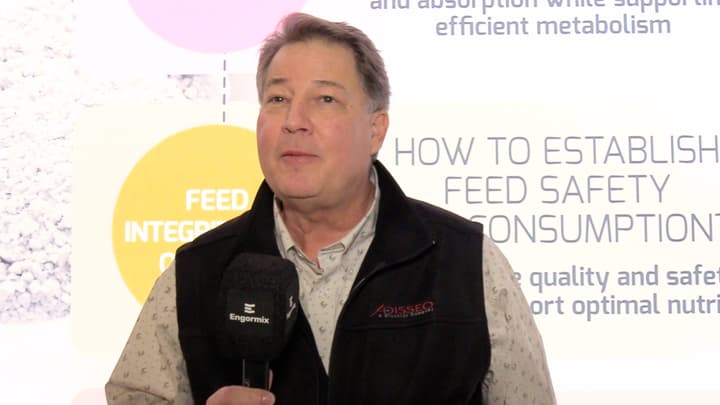
BE THE MASTER OF ENERGY. Dr. Pierre-André Geraert, Adisseo's director of Scientific Marketing, points out the benefits of NESTOR, a service to obtain nutritional recommendations for poultry & swine in net energy, digestible amino acids, and minerals to adapt them to specific conditions ...
Background & Objectives Wheat has known as an alternative source of energy in poultry diets because of a shortage of corn supply and the increase in corn price. However, its utilization efficiency is lower than that of corn because it contains more anti-nutritive factors, especially non-starch polysaccharides (NSP). Some studies suggest that the addition of xylanase in wheat-based diets can reduce the intestinal viscosity by partially hydrolyzing the NSP of wheat, resulting...
Neil Turner, Sales Director of Creamino® at Alzchem, speaks about the mode of action of Creamino® a feed additive for animals, which is naturally processed into creatine after absorption into the body
...
Reducing limitations in intracellular energy metabolism and improving cellular energy homeostasis can maximise the feed utilisation efficiency in broilers. Optimising the creatine stores by supplementing guanidinoacetic acid (Creamino) can maximise performance, a study shows. Could you improve the profitability of production by adding Creamino on top of an application or energy-saving effect? And would this make a valuable contribution to reducing the impact of currently...
I. INTRODUCTION True sustainability was defined by the World Commission on Environment and Development (Brundtland Commission, 1987) as “the ability to meet the needs of the present without compromising the ability of future generations to meet their own needs”. Sustainability is a concept with multiple facets including, environmental (which includes both the demand for resources and environmental pollution), ethical (welfare and social conscience), economic and...
I. INTRODUCTION There is widespread interest in the successful development of reduced-crude protein (CP) diets, focusing on alternative dietary strategies to reduce CP levels whilst maintaining acceptable growth performance (Greenhalgh et al., 2020). Reduced CP diets have the potential to provide advantages environmentally by decreasing outputs of nitrogen and ammonia, improving bird welfare by enhancing litter quality and lowering incidences of foot-pad dermatitis and improving...
I. INTRODUCTION The current system of feeding laying hens with a fully mixed diet, that attempts to meet all the nutrient requirements of the birds, only really developed with the introduction of cage housing facilities after the Second World War. Research on confining laying hens to cages ramped up in the first half of the 20th Century in California but it was not until the late 1940s that the first commercial cage farms started to appear (American Egg Board, 2020). Nutrition...
Introduction. The indigestible soy galactooligosaccharides (GOS) stachyose and raffinose are considered anti-nutritional factors in poultry because they decrease the metabolizable energy of soy protein (Leske et al., 1993) and decrease performance (Jiang et al., 2006). The objective was to investigate if there was a dose-response effect of increasing levels of the soy GOS raffinose and stachyose in feed on performance and gastrointestinal health including AMEn, nitrogen retention and...
DESCRIPTION OF PROBLEM The world population is growing over the years, and it is expected to increase by 2 billion people in 2050. As a result, the increased demand for animal protein will have to be met by a congruent production in accordance to sustainable and environmental concerns. This suggests that alternative feed ingredients should be introduced in the animal production chain (Henchion et al., 2017). Insects meal is one of the promising strategies proposed...
1. Introduction β-mannans (BM) are commonly present in a wide variety of feedstuffs, including soybean meal, and have been described as one of the major anti-nutritional factors for non-ruminant animals (Bertechini, 2013). Dietary BM are associated with negative effects in pigs and broilers, such as increased intestinal viscosity and decreased nutrient digestibility (Shastak et al., 2015). Despite being naturally found in non-pathogenic substances, these compounds may...
In this video interview, Martina Kluenemann, Research Manager for Nutrition Immunology and Physiology at Evonik Animal Nutrition, highlights how Guanidinoacetic acid (GAA) could be beneficial to improving animal energy metabolism in animal diets...
GuanAMINO® is a creatine source that ensures optimal nutrient utilization and returns over feed cost. Furthermore, it spares metabolic energy and works towards an optimized amino acid metabolism. Not sure why you should add GuanAMINO® to your feeds? Contact your Evonik representative for more information.
...
INTRODUCTION Physical treatments, such as expansion and pelleting, are used in the processing of diets with the aim of enhancing feed efficiency. This occurs because during these processes, in addition to starch granule gelatinization, there are also partial protein denaturation, which leads to increased food digestibility and consequently improved broiler performance (Oliveira et al., 2011). Besides technological benefits, feed processing methods are associated with the...



.jpg&w=3840&q=75)















.jpg&w=3840&q=75)





.jpg&w=3840&q=75)