Check out what is new in Pig Industry
Find the best technical articles, forums, and videos on Pig Industry at Engormix. Enter now and interact with the world's largest agricultural social network.


1. Introduction Porcine Circovirus Type 2 (PCV2), a member of the Circoviridae family, is the smallest swine virus, with a diameter ranging from 17 to 20 nanometers. It is a nonenveloped virus with a circular, single-stranded DNA (ssDNA) genome of approximately 1.7 kilobases in length. PCV2 is recognized as one of the most economically significant pathogens affecting swine worldwide. It is associated with a range of clinical manifestations that are collectively known as porcine...
Comments : 0
Recommendations: 0


1. Introduction Porcine circovirus type 2 (PCV2) belongs to the genus Circovirus within the family Circoviridae. It is a small, non-enveloped virus containing a circular single-stranded DNA genome of approximately 1.7 kb. To date, nine PCV2 genotypes, designated PCV2a to PCV2i, have been described worldwide. The genotype distribution of PCV2 has changed over time: PCV2a was initially the most common genotype but was surpassed by PCV2b following its expansion in several regions,...
Comments : 0
Recommendations: 0

1. Introduction Modern pig farming represents a pillar of global food security, constituting the second-largest source of animal protein consumed worldwide [1,2]. The expansion of intensive farming systems, driven by the demand for low-cost protein and the rapid growth cycle of animals, nonetheless, generates an environmental liability of critical proportions [3]. The annual production of approximately 11.2 billion tons of piggery wastewater (PWW) presents a difficult challenge [4]....
Comments : 0
Recommendations: 0
Featured comment:

Very valuable study. It highlights that even low-dose DON exposure should not be underestimated, as mycotoxin risks may affect intestinal health and overall animal performance beyond visible symptoms. ...
Comments : 2
Recommendations: 0
Featured users in Pig Industry









Faazi Adam, Sustainability Director at Evonik Animal Nutrition, shares how the company is translating ambitious sustainability goals into measurable results, the biggest opportunities for the animal nutrition sector, and why recognizing industry sustainability initiatives matters more than ever.
...
Comments : 0
Recommendations: 0


Victor Naranjo, Technical Director at Evonik Animal Nutrition, explains from a technical perspective what guanidinoacetic acid (GAA) is and how it supports animal energy metabolism. He also discusses its reliability during feed processing and handling, and outlines the key nutritional factors that must be considered to maximize the benefits of GAA in animal production systems. ...
Comments : 0
Recommendations: 3



Veterinary APIs Price Index (VPi): Jun 3rd 66.71 Jun 10th 66.51 Jun 17th 66.39 Jun 24th 66.21 In June, the veterinary APIs market exhibited a distinct divergence across various product categories, with the majority of prices trending downward. Notably, colistin sulfate and sulfonamides showed relatively strong performance; doxycycline ceased its decline in mid-June and subsequently recorded two consecutive weekly gains...
Comments : 0
Recommendations: 0
Evonik and regional partners now share infrastructure
New methanol pipeline from Lülsdorf to Wesseling
Synergies and improved carbon footprint of methanol
As part of strengthening its long-term raw material strategy, Evonik has developed a new solution to secure the methanol supply needed for producing a methionine precursor at its Wesseling site. The concept was implemented together with Lülsdorf Functional Solutions GmbH, Röhm GmbH,...
Comments : 0
Recommendations: 0

The True Future of the Agribusiness and Livestock Sector in 2026
Suggested link
The adoption of Artificial Intelligence (AI) in agribusiness has evolved from a futuristic concept into a measurable reality that drives cost reduction, operational efficiency, and production resilience. For agribusiness and livestock executives, AI...
Comments : 0
Recommendations: 0
The reproductive system of a sow plays a central role in determining farm productivity, directly influencing litter size, farrowing rate, and overall economic returns. Efficient reproductive performance depends on the coordination of hormonal regulation, organ function, nutrition, semen quality, and environmental...
Comments : 0
Recommendations: 2

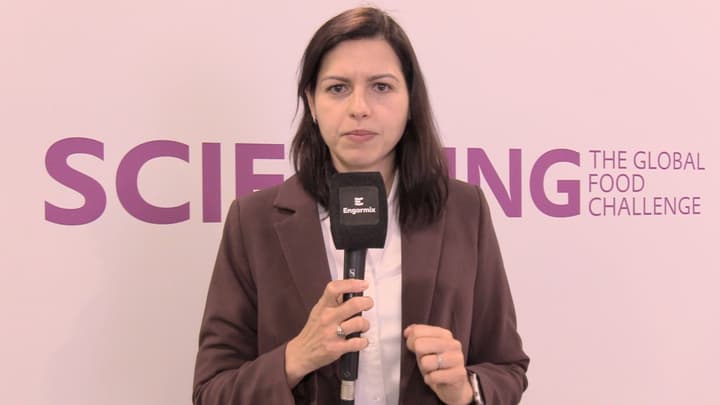
Anita Menconi, Regional Business Director for Specialty Nutrition, Americas at Evonik, shares her perspective on how specialty nutrition will support animal health and performance toward 2026. She also addresses how nutrition and gut health solutions can help maintain productivity as antibiotic use in animal production continues to decline. ...
Comments : 0
Recommendations: 0


1. Introduction Feed sanitizers are a type of feed additive that, when applied to or mixed into feed, provide an antimicrobial benefit. Feed sanitization addresses significant economic and health challenges in swine production. Animal feed serves as a reservoir for various pathogens that can enter feed through multiple pathways including ingredients, dust, contaminated equipment, and wildlife [1–4]. Feed sanitization also prevents mold growth and mycotoxin development. Molds...
Comments : 0
Recommendations: 0
Standardized ileal digestible lysine requirements for 7- to 11-kg weanling pigs fed a corn-soybean meal-based diet
Suggested link

1. Introduction Poor sanitary conditions (SC) affecting herd health may be associated with improper biosecurity practices adopted in modern swine farms [1]. Poor or suboptimal herd health is often a target of concern due to a diversity of factors that may contribute to a high prevalence of infections, including a variety of pathogen sources and transmission routes [2,3]. In this way, mixing management of pigs from different origins, as occurs in large-scale pig operations using...
Comments : 1
Recommendations: 0



Fabiano Favarin, Global Business Director – Vitamins at Adisseo, discusses ongoing investment in vitamin technology, highlighting improvements in physical characteristics, reduced dust generation, enhanced premix homogeneity, workplace safety benefits, and the operational and economic impact of optimized vitamin handling. ...
Comments : 0
Recommendations: 0
.jpg&w=3840&q=75)


Victor Naranjo, Technical Director at Evonik Animal Nutrition, explains the main challenges nutritionists face when designing more precise feeding programs. He also highlights the benefits of nutrient-modelling tools like AMINOSpec® and shows how diet customization helps improve efficiency and resource utilization in animal production. ...
Comments : 0
Recommendations: 2
Efficient grain and forage management has become a critical factor for profitability and sustainability in the agro-industrial and livestock sectors. Climate variability, post harvest losses, and input cost volatility are forcing companies to adopt precision technologies . In this context, smart sensors...
Comments : 0
Recommendations: 0
Technical Advances in Vitamin Physical Properties and Premix Performance
Suggested link
Adisseo updated its Microvit ® Nutrition Guide, reenforcing its commitment on vitamin nutrition close to feed producers. Producing vitamins for over 70 years and always focused on supporting the feed industry for improved animal...
Comments : 0
Recommendations: 2

1. Introduction Rye (Secale cereale L.) is a versatile cereal crop that is widely cultivated and known for its high winter hardiness and high drought and stress tolerance, suitable for infertile, acidic, or sandy soils (Miedaner and Laidig, 2019). These conditions make rye a major crop in Northern Europe, with 7.63 million metric tons being produced in 2023, and approximately 12.4 million metric tons produced per year globally in the last decade (USDA, 2024). Rye is also produced in...
Comments : 0
Recommendations: 0


CALPID
Calpid from Norel is based on calcium pidolate to help animals maintain performance, especially in diets with reduced calcium and phosphorus levels.
Suggested link
INTRODUCTION β-mannans are plant cell wall polysaccharides of D-mannose units linked by β-(1-4) glycosidic bonds (Lee and Brown, 2022). β-mannans are a complex carbohydrate and may consist of a long chain of only mannose units or a chain of mannose units with side chains of α-1,6-linked galactose or glucose residues, resulting in galactomannans or galactoglucomannans, respectively (Chen et al., 2018). Soybean meal is a common plant protein in diets for pigs due...
Comments : 0
Recommendations: 0
Values for digestible energy (DE) and metabolizable energy (ME) in feed ingredients are usually determined in growing pigs and subsequently applied to all groups of pigs. Results of recent re search, however, indicates that the energy concentration of soy bean meal (SBM) is greater than previously thought when fed to growing pigs (Sotak-Peper et al., 2015; Lopez et al., 2020; Lee et al., 2021). This increase in energy may be a result of changes in genetic status of pigs or differences in...
Comments : 0
Recommendations: 1