Content sponsored by:
Hangzhou DE Mark Industrial Co Ltd
APIs, Vitamins and Amino Acids MARKET
Published: June 30, 2026
Source : Ronnick Fong
Veterinary APIs Price Index (VPi):
Jun 3rd 66.71
Jun 10th 66.51
Jun 17th 66.39
Jun 24th 66.21
In June, the veterinary APIs market exhibited a distinct divergence across various product categories, with the majority of prices trending downward.
Notably, colistin sulfate and sulfonamides showed relatively strong performance; doxycycline ceased its decline in mid-June and subsequently recorded two consecutive weekly gains as supply experienced a slight tightening. Mequindox remained stable at the start of the month but declined after reaching its peak in late June, while tylosin tartrate, tilmicosin, and florfenicol persisted in their downward trend throughout the month. Overall, the market maintained a relatively weak stance, characterized by subdued trading sentiment and widespread price negotiations. In the short term, the market is anticipated to continue fluctuating within a narrow range.
Significantly, recent increases in hog prices and substantial gains in egg prices have indicated early signs of improvement in the profitability of livestock farmers. Nevertheless, a substantial rebound in demand for veterinary APIs will require time to develop, as the transition from enhanced farming margins to actual procurement of veterinary medications is not instantaneous. A true demand inflection point necessitates patient waiting.
Jun 3rd 66.71
Jun 10th 66.51
Jun 17th 66.39
Jun 24th 66.21
In June, the veterinary APIs market exhibited a distinct divergence across various product categories, with the majority of prices trending downward.
Notably, colistin sulfate and sulfonamides showed relatively strong performance; doxycycline ceased its decline in mid-June and subsequently recorded two consecutive weekly gains as supply experienced a slight tightening. Mequindox remained stable at the start of the month but declined after reaching its peak in late June, while tylosin tartrate, tilmicosin, and florfenicol persisted in their downward trend throughout the month. Overall, the market maintained a relatively weak stance, characterized by subdued trading sentiment and widespread price negotiations. In the short term, the market is anticipated to continue fluctuating within a narrow range.
Significantly, recent increases in hog prices and substantial gains in egg prices have indicated early signs of improvement in the profitability of livestock farmers. Nevertheless, a substantial rebound in demand for veterinary APIs will require time to develop, as the transition from enhanced farming margins to actual procurement of veterinary medications is not instantaneous. A true demand inflection point necessitates patient waiting.
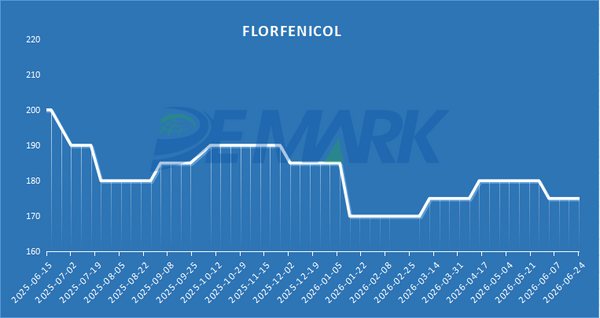
FLORFENICOL
As of June 26, the average market price was recorded at RMB170/kg, which remains at historically low levels. Following a record low of RMB162/kg in early 2026, prices experienced a slight recovery to RMB173/kg starting in March.
However, this upward trend clearly lost momentum by June. The primary factors contributing to this situation are: 1) A significant overcapacity in the market, with supply greatly surpassing demand; 2) The introduction of new production methods has drastically lowered manufacturing costs, effectively undermining the traditional cost-support framework and leading to a substantial decrease in product prices. Additionally, ongoing production activities are not affected by external disruptions that could lead to output halts; 3) Demand from the downstream livestock sector remains moderate, characterized by only stable essential requirements and a lack of additional demand stemming from industry growth—this is inadequate to facilitate sustained or considerable price increases. It is anticipated that prices will continue to fluctuate within a low range in the near future.
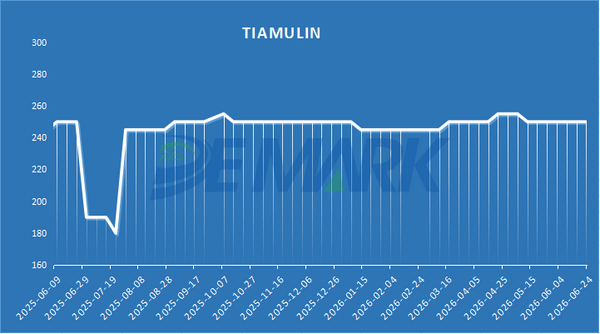
TIAMULIN
On June 26, the average market price of tiamulin stood at RMB250/kg, down 0.5% month-on-month. Supply from major producers remains relatively tight, providing some support to prices.However, the seasonal demand lull, coupled with destocking pressure among traders, is expected to keep the market in a weak range-bound pattern in the near term.
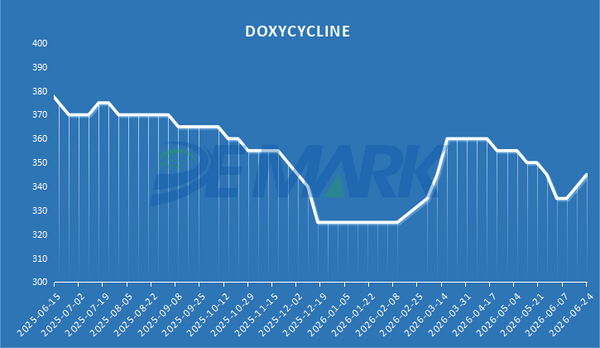
DOXYCYCLINE HCL
As of June 26, the average market price for doxycycline was recorded at RMB335/kg, reflecting two consecutive weeks of increases and effectively concluding a prolonged decline that persisted for over two months. The primary catalyst for this price recovery is a temporary tightening of supply from certain manufacturers, along with strong intentions from other producers to support prices, which together bolster the market. Additionally, some production facilities in northern China have planned maintenance shutdowns; should the impacted capacity be significant, support from the supply side may become more pronounced in the future. Nevertheless, downstream demand has not yet demonstrated any substantial growth, and the overall supply situation remains relatively abundant. In the short term, the potential for price increases appears limited, with expectations of a narrow range-bound movement.
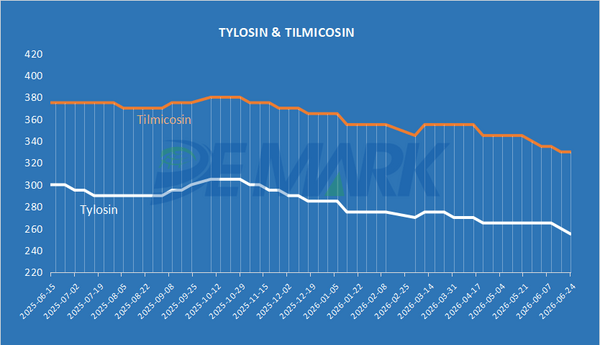
TYLOSIN & TILMICOSIN
As of June 26, the average market price for tylosin tartrate was recorded at RMB254/kg, reflecting a decrease of 3.74% compared to the previous month. Its related product, tilmicosin, also experienced a decline, dropping to RMB333/kg. Both products are currently situated within a downward trend.
Due to persistently low prices for hogs, livestock farmers in the downstream sector are exercising caution in their purchasing decisions, typically opting for a strategy of "restocking only as necessary and buying for immediate needs." This cautious approach has led to weak demand for veterinary drugs, thereby placing overall market conditions under strain. Tylosin tartrate, a crucial product in swine production, has experienced particularly significant declines. This situation is exacerbated by a continued loose supply and increasing competition among manufacturers. In the short term, it appears unlikely that the market will shift from its current soft trend, with additional downside risks still present.
For other vet APIs market information and solid inquiries, please feel free to contact us.
VITAMIN MARKET
The vitamin market overall showed a weak and volatile trend in June. VA and VE, which had seen significant gains earlier, continued to soften, falling 7.57% and 8.32%, respectively. Calcium pantothenate, niacinamide, biotin, VK3, and VD3 all registered varying degrees of decline. VB2, VB6, VB12, and folic acid remained relatively stable, with trading largely driven by essential needs. On the VB1 front, some domestic producers raised their offers and maintained strict control over supply, keeping market prices at elevated levels with volatile movement. VC, in contrast, bucked the overall trend and moved higher, rising 3.36% amid frequent news of production halts, plant maintenance, and price hikes.
On the whole, vitamin producers have maintained a price-supportive stance. However, midstream and downstream players remain cautious, and the market lacks the conditions for a near-term bottoming out. A pronounced upward rally is unlikely in the short term.
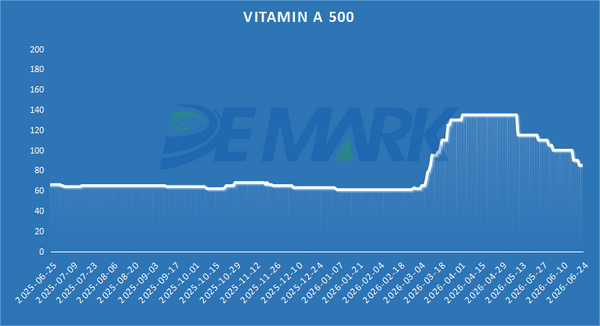
Vitamin A (500,000IU/G)
Major producers have maintained a price-supportive strategy, with some suspending price quotations and halting new order acceptance. However, traders have shown a strong willingness to offload inventory, facing significant selling pressure.
Meanwhile, BASF has resumed production at its European plants,while downstream demand remains tepid and market sentiment is increasingly bearish. As a result, the market price index is trending on the weak side.
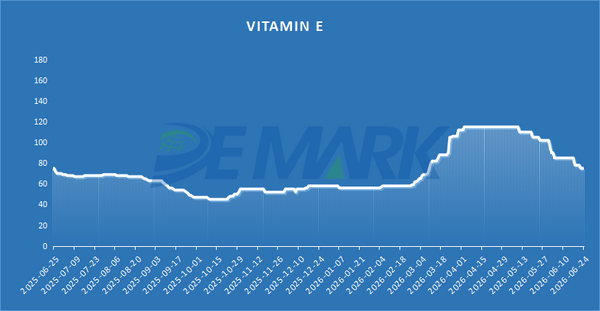
Vitamin E 50%
Major producers have raised their offers, with some plants planning maintenance shutdowns, signaling an intention to push prices higher. However, downstream buyers continue to purchase only for essential needs, resulting in thin trading activity.
The market price index is holding steady but on the weak side. Going forward, market attention should be focused on the construction and commissioning schedules of new production capacity. Beisha Pharmaceutical has scheduled a maintenance shutdown for its vitamin E production line, set to begin in July and expected to last 6–8 weeks.
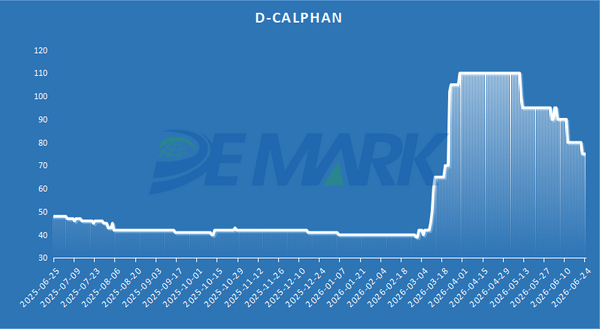
D-Calphan
Calcium pantothenate prices continued their weak trend, with the market suffering from oversupply. Major producers have suspended price quotations and halted new order acceptance, while traders remain inclined to offload inventory. Inquiries have been thin, and the market price index is moving in a volatile range.
Vitamin K3 (MSB)
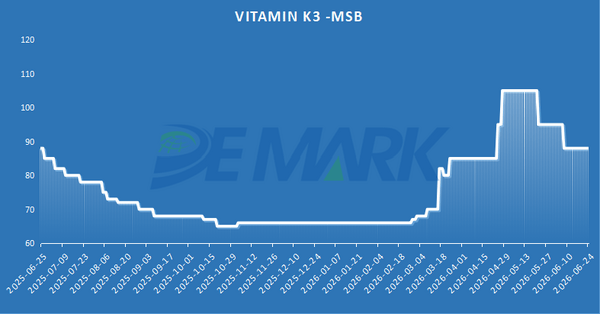
The Vitamin K3 industry landscape remains stable, with prices driven by production costs. Manufacturers continue to quote firm prices, while traders are actively offloading inventory. However, downstream demand has been lackluster recently, resulting in thin actual transactions and a slight dip in vitamin K3 market prices.
For market information on other vitamin products and solid inquiries, please feel free to contact us.
AMINO ACIDS MARKET
The overall amino acid market has remained stable, albeit with a slight downward trend. The industry is currently experiencing the lowest point in its cycle, characterized by a fundamental contradiction of medium-to-long-term overcapacity alongside sluggish downstream demand that has yet to be addressed.
--Lysine (98.5%): Export offers from producers have remained weak and stable, with overall export performance being generally unimpressive. For the 70% grade, producers have made slight increases in their offers. The lysine sector has now fully entered a phase of financial losses.
--Methionine: Producers are continuing to adopt a "high-low mix" pricing strategy while restricting shipments. The availability of low-priced supplies has decreased. End-users are adopting a hand-to-mouth purchasing strategy, leading to a decline in market sentiment.
--Threonine: Domestic offers from producers have been adjusted downward, with export offers also showing a slight decrease. End-users currently possess sufficient inventories, and transactions are primarily conducted through small-volume price negotiations.
--Valine: The oversupply situation is worsening, resulting in prices dropping to historic lows. Trading activity remains limited.
--Tryptophan: The supply surplus continues, with offers from both major producers and traders falling to their lowest levels since early 2026. Prices are still adjusting downward.
I. New Capacity Additions
--East Hope Group: The company has officially announced its entry into the methionine sector. It recently revealed plans to construct a pilot plant with a capacity of 100 t/a in Xinjiang, alongside a larger commercial production facility anticipated to produce 450,000 t/a of DL-methionine by 2028.
--Sichuan Hebang Biotechnology: The company intends to initiate liquid methionine production in 2027, targeting a capacity of 600,000 t/a.
--Inner Mongolia Lingsheng Company: The company aims to start trial production of solid methionine by the end of 2026, with an expected annual output of 200,000 t/a.
II. Existing Plant Updates (Maintenance / Shutdowns / Limited Supply)
--Evonik: Maintenance activities at its production facility in Singapore are ongoing and are expected to continue until the end of June, with no specified timeline for the resumption of production.
--NHU: The solid methionine plant is undergoing maintenance from June 10 to July 15, which will result in a supply reduction of 35,000 tons.
--Adisseo: The company has been operating under limited supply conditions since May. Its production line in Quanzhou, with a capacity of 150,000 t/a, is projected to commence trial production by the end of 2026.
--CUC: The company will initiate its annual maintenance in mid-July, lasting for approximately 50 days, which will lead to production cuts of around 10,000 tons. --Sumitomo Chemical: The facility has remained idle since declaring force majeure at the end of March, with no timeline provided for the resumption of production.
Declaration:
The prices indicated in this newsletter are for your reference only and do not constitute a solid offer by our company. The transaction price shall be determined by both parties through negotiation based on the quantity and transaction conditions.
The prices indicated in this newsletter are for your reference only and do not constitute a solid offer by our company. The transaction price shall be determined by both parties through negotiation based on the quantity and transaction conditions.
FEATURED PRODUCTS
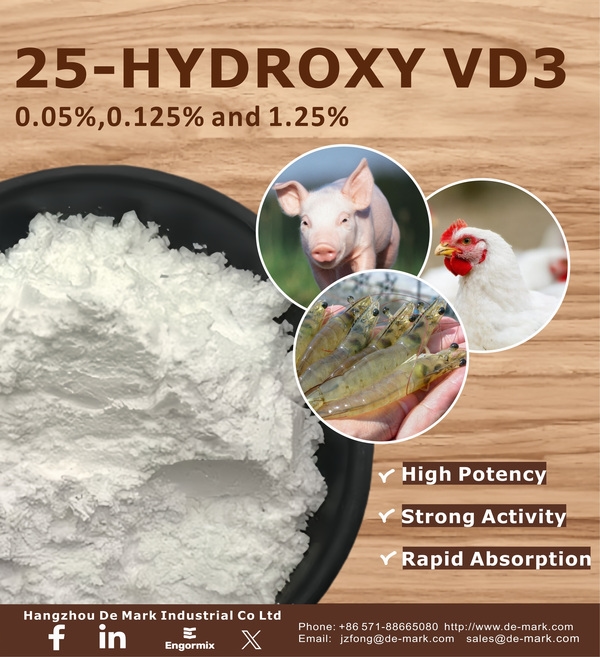
25-HYDROXY VD3
25-Hydroxy VD3 is the pre-activated form of vitamin D, requiring no liver conversion for immediate absorption—unlike standard D3, which faces a metabolic bottleneck in young or stressed animals.
Research shows it's up to 5x more effective at raising and maintaining serum vitamin D levels. Benefits include stronger bones, enhanced immunity, and superior calcium metabolism—essential for high-producing dairy cows, beef cattle, swine, and poultry.
Research shows it's up to 5x more effective at raising and maintaining serum vitamin D levels. Benefits include stronger bones, enhanced immunity, and superior calcium metabolism—essential for high-producing dairy cows, beef cattle, swine, and poultry.
No waste. No delay. Just results.
Contact us for more information
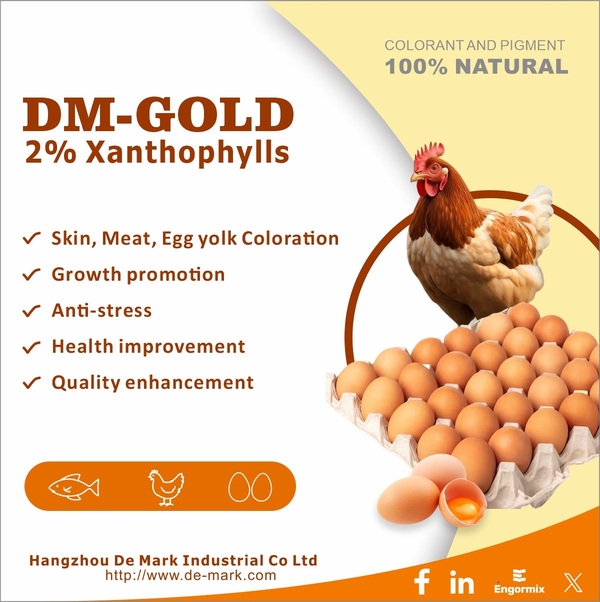
DM-GOLD (2% Xanthophylls)
The active ingredient Xanthophylls is a type of carotenoids colorant extract from marigold flower. Here are some benefits when used in commercial animal feed: ---As colorant improving the color of chicken skin, feet, shin and egg yolk. ---As natural pigment for improving the color of salmon trout and shrimp. ---As antioxidant Improve resistance to disease in animals, Improve the egg hatching rate.
Related topics:
Authors:

Recommend
Comment
Share

Would you like to discuss another topic? Create a new post to engage with experts in the community.
VITAMIN E 50%
VITAMIN E 50% by Hangzhou DE Mark Industrial is a Vitamin E premix for animals that protects cells and tissues and regulates blood flow in animals.
D-Calcium Pantothenate
D-Calcium Pantothenate from Demark is Vitamin B5 for animal nutrition enhancemen in poultry and livestock.
Featured users