1. Introduction
Rye (Secale cereale L.) is a versatile cereal crop that is widely cultivated and known for its high winter hardiness and high drought and stress tolerance, suitable for infertile, acidic, or sandy soils (Miedaner and Laidig, 2019). These conditions make rye a major crop in Northern Europe, with 7.63 million metric tons being produced in 2023, and approximately 12.4 million metric tons produced per year globally in the last decade (USDA, 2024). Rye is also produced in Russia, and to a lesser degree in Canada, United States, Australia, and Argentina (USDA, 2024). Rye is primarily used for bread making in European countries, but may be also used as pasture, hay, cover crop, or grain feed for animals, distilling spirits, or for bioenergy production (Miedaner and Laidig, 2019).
Rye is a cross-pollinating cereal, a characteristic that has been used since 1970 to produce hybrid varieties. The objective of hybrid rye breeding is to maximize heterosis by breeding two genetically different inbred rye lines to produce a superior F1 hybrid (Geiger and Miedaner, 2009). Hybrid breeding provides yield improvement and targeted development for particular purposes, which may lead to greater utilization (Hansen et al., 2004).
In Europe, population rye yields are on average 5.56 metric tons per hectare, whereas in the U.S., the average yield is 2.46 metric tons per hectare (Miedaner and Laidig, 2019; USDA, 2024). However, hybrid crops can produce 15–40 % greater yield than population rye, and when appropriately managed, hybrid rye can also out-yield other small grains such as wheat or triticale (Hübner et al., 2013; Laidig et al., 2017; Hackauf et al., 2022). There are, however, no data documenting the average yield of hybrid rye in the U.S., but there are examples of fields yielding more than 6 metric tons per hectare (Link and Gailans, 2024).
Open-pollinated rye is susceptible to being infected by the fungi Claviceps purpurea during flowering, which causes the plant to form large overwintering organs known as purple-black sclerotia (Wegulo and Carlson, 2011). This fungus infection, known as ergot, produces toxic alkaloids (i.e., ergosine, ergotamine, ergocornine, ergocryptine, and ergocristine), which results in economic losses and toxicity risks to both humans and livestock when consumed. Consuming ergot-infected rye may result in reduced fertility, abortion, skin gangrene, respiratory issues, and general health deterioration (Klotz, 2015). The hybridization of rye has been successful in reducing the risk of ergot contamination due to genetic diversity that provides resistance to pathogens, improved agronomic practices, and seed-set characteristics such as better canopy structure, faster growth rates, uniform flowering, greater amounts of pollen produced by the plant, and increased resistance to stress, including drought and extreme temperatures, which limit the conditions under which the ergot fungus thrives (Miedaner et al., 2021, 2022). Therefore, hybrid rye significantly increases productivity, uniformity, resistance to disease, and lodging resistance compared with open-pollinated rye varieties. The application of hybrid rye has extended beyond traditional uses, with its versatile nature making it a valuable resource as a feed ingredient. Therefore, hybrid rye is now being successfully used in diets for pigs in both Europe and North America, and research has been conducted to determine the nutritional value of hybrid rye when fed to pigs. Likewise, the impact of including graded levels of hybrid rye in diets for weanling, growing, finishing, and reproducing pigs has been reported. There is, however, no overview over all research conducted with hybrid rye fed to pigs, and there are no recommendations for use of hybrid rye in diets for pigs.
Therefore, the objective of this review was to summarize current knowledge about composition and digestibility of energy and nutrients in hybrid rye, recommended inclusion rates in diets containing hybrid rye, and to discuss effects of feeding hybrid rye on growth performance and health of pigs. It is, however, outside the scope of this work to discuss agronomic aspects that relates to growing hybrid rye, and impacts of harvest, storage, and processing on composition and nutritional value of hybrid rye are also not included in this review. Likewise, because this review is specific to hybrid rye, composition and nutritional value of population rye will not be discussed although there are no indications that chemical composition of hybrid rye is different from that of population rye (Hansen et al., 2004).
2. Methods
The current review utilized a literature search to compile published peer-reviewed journal articles and abstracts to summarize data for nutritional characteristics of hybrid rye, energy and nutrient composition and digestibility, and utilization of hybrid rye in diets for growing and reproducing swine. The search was performed via the PubMed database, Web of Science at the University of Illinois Urbana Champaign Library, and Google Scholar. Search terms included “RYE and HYBRID RYE”, “PIGS or SWINE” and the respective search item of interest (protein, amino acids, phosphorus, energy, digestibility, growth performance, nursery, growing, finishing, sows, carcass, mycotoxin, ergot alkaloids, fiber, starch, gastrointestinal, microbiome, and intestinal). Articles were not restricted based on region, but were restricted to the English language. The time frame for data selection was not restricted by year to provide a a representation of all available research. A total of 116 articles were screened for eligibility. Peer-reviewed articles were filed and categorized according to topic for further evaluation. As this review focused on pigs, research performed on other animal models, including broiler chickens, laying hens, minipigs, cows, horses, mice, rats, and humans, were excluded, unless they provided information about the nutritional composition of hybrid rye. Research about consumption of whole grain rye bread or rye bread, or articles where there was no clear distinction between population rye and hybrid rye were also excluded. Therefore, after exclusion, data were collected from 67 published peer-reviewed journal articles and 6 abstracts. The contents in the 6 abstracts were not included in any of the 67 peer-reviewed journal articles.
In most cases, compositional data and data for digestibility of energy and nutrients were provided on an as-is basis and with a corresponding value for dry matter, but in a few cases, data were provided on a dry matter basis. To make comparisons relevant, all compositional data were converted to 880 g/kg dry matter.
3. Results and discussion
3.1. Physical characteristics of hybrid rye
Rye is a small cereal grain, but hybrid varieties commonly have larger grains than population rye. Grain quality is assessed using indexes such as test weight or 1000 kernels weight (Poutanen et al., 2014). In European countries, the minimum test weight for rye is 70 kg/hectoliter, whereas the kernel weight varies between 15.7 and 33.7 g/1000 kernels (Hansen et al., 2004). In the U.S., standard requirements classify rye and hybrid rye into U.S. Grade No. 1–4 (USDA-FGIS, 1988) depending on the test weight (70–61 kg/hectoliter), number of damaged kernels, and concentration of foreign materials. As with other cereal grains, the diluting effect of the non-nutritive contaminants is expected to result in lower concentrations of energy and nutrients in grade No. 4 or sample grade of rye and hybrid rye than in grade No 1.
Rye contains starch-degrading amylases that are important for baking quality of the flour, and its activity is measured by the falling number method, which is also used as quality control in Europe for rye intended for animal feed (Hansen et al., 2004). The falling number indicates the time it takes a stirrer to fall through a heated starch paste, which is indirectly associated with the activity of α-amylase on gelatinized starch (method 56–81.04; AACC, 1999). In rye cultivars, the falling number is between 94 and 337 and is influenced by environmental factors including time of harvest relative to the ripeness of the grain. However, the falling number is not different between hybrid rye and population rye cultivars (Hansen et al., 2004; Linina et al., 2019), indicating that the hybridization of rye does not impact flour quality.
3.2. Energy and nutrient composition of hybrid rye
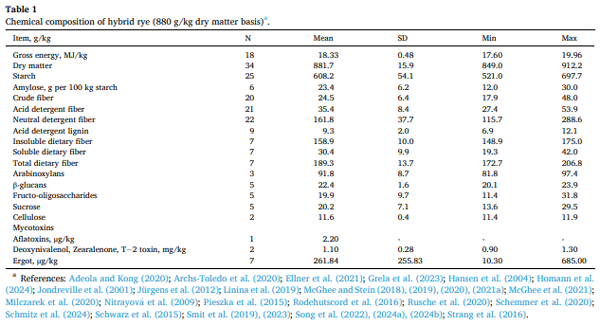
Hybrid rye grain is characterized by the high concentration of energy contained as starch in the endosperm of the grain, which constitutes more than half of the grain by weight (Poutanen et al., 2014). The dry matter of ground hybrid rye is usually 849.0 – 912.2 g/kg, and the concentration of gross energy averages 18.33 MJ/kg on an 880 g/kg dry matter basis (Table 1; Strang et al., 2016; McGhee and Stein, 2018; Archs-Toledo et al., 2020; Song et al., 2024b). Starch in hybrid rye varies between 521.0 and 697.7 g/kg, of which approximately 23.4 g/100 g consists of amylose (Autio and Eliasson, 2009; Deleu et al., 2020; McGhee and Stein, 2018, 2020; Schmitz et al., 2024; Song et al., 2022, 2024b).
The unique feature of rye is its high concentration of dietary fiber compared with wheat and corn. The fiber in rye is mainly contained in the inner endosperm, middle aleurone layer, and outer pericarp (Glitsø et al., 1998; Rodehutscord et al., 2016). Hybrid rye contains between 172.7 and 206.8 g/kg total dietary fiber, with 19.3 – 42.0 g/kg of soluble dietary fiber (McGhee and Stein, 2021a; McGhee et al., 2021). Arabinoxylans, cellulose, mixed-linked β-glucans, fructo-oligosaccharides, and lignin are the primary constituents of the fiber in hybrid rye (Jürgens et al., 2012; Strang et al., 2016; Rodehutscord et al., 2016; McGhee and Stein, 2018). However, the arabinoxylans in rye differ from arabinoxylans in other cereal grains because they are more soluble than those in barley and oats (Bach Knudsen, 2014). On an 880 g/kg dry matter basis, the concentration of arabinoxylans in rye is between 81.8 and 97.4 g/kg, with an average of 91.8 g/kg (Hansen et al., 2004; Jürgens et al., 2012; Strang et al., 2016; Rodehutscord et al., 2016).
Hybrid rye contains on average 261.84 µg/kg ergot alkaloids, whereas traditional rye has a concentration of 2295 µg/kg (Blaney et al., 2009; Schwarz et al., 2015; Rusche et al., 2020). Other mycotoxins such as aflatoxins, deoxynivalenol, zearalenone, and T-2 toxin may also be present at low concentrations, but are often present in concentrations below detection limits (McGhee and Stein, 2018, 2019; Smit et al., 2019; McGhee et al., 2023).
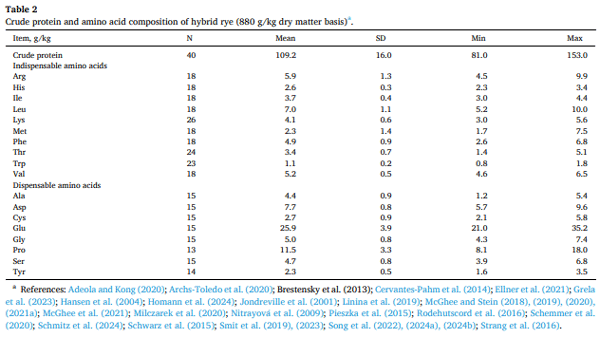
Crude protein in hybrid rye ranges from 81.0 to 153.0 g/kg (Table 2; McGhee et al., 2021; Smit et al., 2019, 2023; Song et al., 2022, 2024b), although the genotype of the variety, growing conditions, and fertilization may affect the amount of nitrogen in the grain (Hansen et al., 2004; Jürgens et al., 2012; Rodehutscord et al., 2016). The average concentration of Lys in hybrid rye is 4.1 g/kg, and Met, Thr, and Trp are approximately 2.3 g/kg, 3.4 g/kg, and 1.1 g/kg, respectively (Rodehutscord et al., 2016; Strang et al., 2016; McGhee and Stein, 2018, 2019; Smit et al., 2019, 2023).

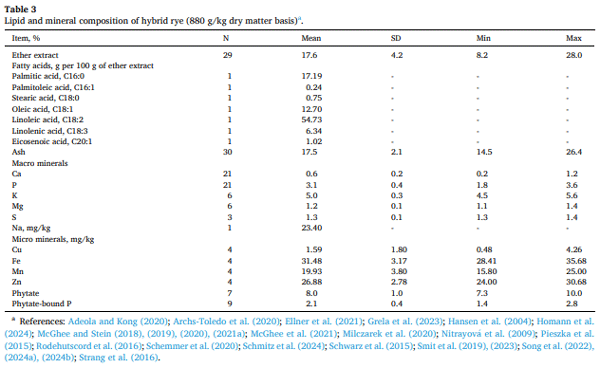
Hybrid rye contains less lipids than most other grains, including barley, wheat, corn, and sorghum, and the ether extract concentration in rye is less than 20 g/kg (Table 3; Rodehutscord et al., 2016; McGhee and Stein, 2018, 2019, 2020; McGhee et al., 2021). The fatty acids per 100 g of ether extract consist of 54.73 g linoleic acid (C18:2), 17.19 g palmitic acid (C16:0), 12.70 g oleic acid (C18:1), 6.34 g α-linolenic acid (C18:3), and less than 10 g palmitoleic acid (C16:1), stearic acid (C18:0), and eicosenoic acid (C20:1; McGhee and Stein, 2018; Grela et al., 2023). The ash in hybrid rye is approximately 17.5 g/kg and is composed of approximately 3.1 g P/kg, 0.6 g Ca/kg, and 1.2 g Mg/kg, which is not different from other cereal grains. Hybrid rye contains 8.0 g phytate/kg, with 2.1 g bound P/kg (McGhee and Stein, 2019; Smit et al., 2019; Archs-Toledo et al., 2020; Song et al., 2022; Schmitz et al., 2024).
3.3. Digestibility of energy and nutrients in hybrid rye by pigs
Digestible energy, metabolizable energy, and net energy in hybrid rye fed to growing pigs averaged 15.62, 14.72, and 11.54 MJ/kg (880 g dry matter/kg; Table 4; McGhee and Stein, 2020; Schemmer et al., 2020; Song et al., 2024b). However, because sows have greater capacity to ferment fiber and longer intestinal retention time, digestible and metabolizable energy in hybrid rye fed to gestating sows are 16.04 and 15.56 MJ/kg (880 g dry matter/kg), respectively (McGhee and Stein, 2022). There are, however, no published data for net energy in hybrid rye fed to sows.
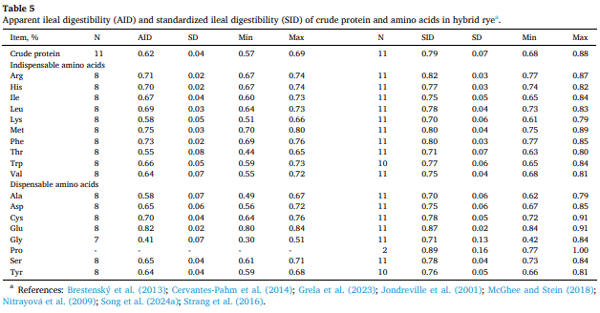
When hybrid rye is included in grain-soybean meal-based diets for growing pigs, the first 2 limiting amino acids are Lys and Met (Brestenský et al., 2013). The standardized ileal digestibility (SID) of crude protein is approximately 0.79, and the SID of Lys and Met is approximately 0.70 and 0.80, respectively, with some variation dependent on the hybrid rye variety (Table 5; Jondreville et al., 2001; Brestenský et al., 2013; Strang et al., 2016; McGhee and Stein, 2018). However, despite lower SID of crude protein and amino acids in hybrid rye compared with wheat and corn (NRC, 2012; Swi ´ ęch et al., 2012), hybrid rye contains more total amino acids than corn, which results in greater concentrations of standardized ileal digestible crude protein and most amino acids in hybrid rye than in corn (McGhee and Stein, 2018).
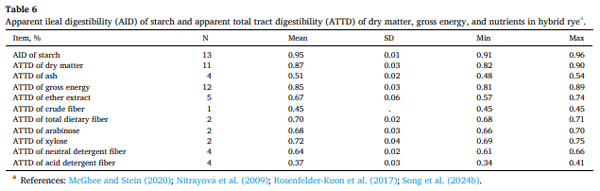
The apparent ileal digestibility (AID) of starch in hybrid rye is approximately 0.95, which is in agreement with the AID of starch in barley, wheat, sorghum, and corn (Table 6; Rosenfelder-Kuon et al., 2017; McGhee and Stein, 2020). The apparent total tract digestibility (ATTD) of dry matter is approximately 0.87, and the ATTD of gross energy ranged from 0.81 to 0.89, which is less than the ATTD of gross energy in other grains (Nitrayov´ a et al., 2009; McGhee and Stein, 2020, 2022; Smit et al., 2023; Song et al., 2024b). The ATTD of crude fiber is approximately 0.45, whereas the ATTD of total dietary fiber, neutral detergent fiber, arabinose, and xylose is greater than 0.65 in hybrid rye, which is greater compared with other cereal grains. It therefore appears that the fiber in hybrid rye is highly fermentable in the large intestine of pigs, which is likely due to the greater solubility of arabinoxylans in rye compared with other cereal grains (Glitsø et al., 1999; Le Gall et al., 2009; McGhee and Stein, 2020; Ellner et al., 2022; Wilke and Kamphues, 2023).
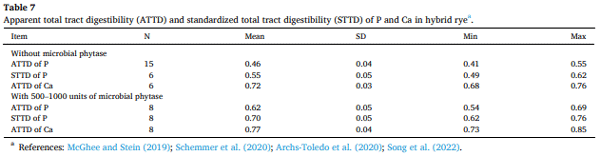
Rye has the greatest phytase activity among cereal grains, and hybrid rye contains more than 2000 units per kg of phytase (Rodehutscord et al., 2016; McGhee and Stein, 2019; Archs-Toledo et al., 2020; Schemmer et al., 2020; Song et al., 2022). Due to the intrinsic phytase activity in hybrid rye, the standardized total tract digestibility (STTD) of P is 0.55, which is greater than the STTD of P in other cereals when microbial phytase is not included in the diet (Table 7; McGhee and Stein, 2019; Archs-Toledo et al., 2020). Phytate in feed ingredients may chelate Ca in the digestive tract of pigs, which results in an undigestible Ca-phytate complex, but addition of microbial phytase to diets for pigs results in increased ATTD of Ca in individual ingredients or mixed diets (Gonzalez-Vega et al., 2015; Arredondo et al., 2019; Archs-Toledo et al., 2020). Despite the intrinsic phytase activity in hybrid rye, microbial phytase also increases both STTD of P and ATTD of Ca in hybrid rye (Archs-Toledo et al., 2020; Song et al., 2022). However, in diets where exogenous phytase is not included, the intrinsic phytase from hybrid rye can hydrolyze some of the ester bonds in phytate from other dietary ingredients and, therefore, increase STTD of P in all ingredients in the diets (Archs-Toledo et al., 2020). Nevertheless, inclusion of hybrid rye in a corn-soybean meal diet will not increase the STTD of P and the ATTD of Ca to the same extent as when microbial phytase is added to the diets (Archs-Toledo et al., 2020) and it is, therefore, advisable to add microbial phytase to the diets even when hybrid rye is included.
3.4. Growth performance of pigs fed diets containing hybrid rye
Historically, rye has not been extensively used in diets for pigs due to the risk of ergot contamination and low energy concentration caused by the greater levels of dietary fiber in rye than in other cereal grains. However, because hybrid rye varieties contain less ergot alkaloids than older varieties, and because pigs have the capacity to ferment more than 65 % of the fiber in hybrid rye, there is increased interest in using hybrid rye in diets for pigs. Indeed, fermentation of the fiber in rye may benefit the intestinal microbiome because of synthesis of volatile fatty acids, reduction in intestinal pH, and synthesis of metabolites for immune support (Burbach et al., 2017; Miedaner et al., 2021; Wilke et al., 2021; Hankel et al., 2022). As a consequence, hybrid rye may become a valuable ingredient in diets for pigs, although responses to hybrid rye may be different in different stages of production. The effects of diets containing hybrid rye on growth performance of pigs and reproducing sows are summarized in Tables S1, S2, and S3.
3.4.1. Weanling pigs
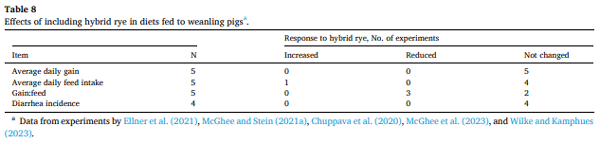
Hybrid rye may replace wheat or corn in diets for weanling pigs without influencing growth performance (Table 8; Bussi`eres, 2019; Chuppava et al., 2020; Ellner et al., 2021; McGhee and Stein, 2021a). However, average daily gain (ADG), average daily feed intake (ADFI), and gain:feed (G:F) of pigs fed diets containing up to 240 g/kg hybrid rye the first seven days post-weaning increased as the inclusion of hybrid rye increased in the diet and the inclusion of corn was reduced (McGhee et al., 2023). It is possible that the reason for this observation is that pigs fed hybrid rye have improved intestinal health compared with pigs fed corn due to the greater concentration of soluble dietary fiber in hybrid rye, which may have a positive impact on the intestinal microbiome by serving as a fermentable substrate that results in growth of commensal microbes. More microbes in the hindgut result in increased synthesis of short-chained fatty acids that the animal may absorb and use as a source of energy, reduced intestinal pH, which reduces pathogenic bacteria, and improved tight junction integrity (Le Gall et al., 2009; Burbach et al., 2017; Chuppava et al., 2020). However, body weight of pigs fed hybrid rye may not be different from that of pigs fed corn, but G:F may be reduced if hybrid rye is included by up to 700 g/kg in diets for pigs during the last phases of the weanling period (McGhee and Stein, 2021a; McGhee et al., 2023; Wilke and Kamphues, 2023), which is likely because of the reduced net energy in hybrid rye compared with corn. Because of the reduced net energy in hybrid rye compared with wheat and corn, it is expected that G:F is reduced when hybrid rye is used. The reason that it is not always the case is most likely that if pigs have compromised intestinal health, the beneficial impact of hybrid rye on the intestinal microbiome compensates for the reduced net energy in hybrid rye and negates the negative impact of the lower net energy. Pigs may consume hybrid rye more slowly or at reduced amounts compared with other feed ingredients due to the physicochemical properties of dietary fiber in hybrid rye increasing the satiety of the animal and diluting the concentration of energy compared with corn and wheat (McGhee and Stein, 2020). The soluble arabinoxylans in hybrid rye may also increase viscosity and reduce the pH of digesta in the jejunum and ileum of pigs (Bach Knudsen et al., 2005; Bach Knudsen and Lærke, 2010; Le Gall et al., 2009, 2010; Ellner et al., 2021), which may slow digesta passage rate and prolong satiety. However, changes in digesta viscosity by rye did not negatively impact the growth performance of weanling pigs (Thacker et al., 2002), and it is, therefore, unlikely that changes in viscosity result in reduced digestibility of nutrients.
Despite the greater dietary fiber, hybrid rye fed to pigs did not reduce diarrhea scores or reduce diarrhea incidence (McGhee and Stein, 2021a; McGhee et al., 2023; Wilke and Kamphues, 2023), and did not result in greater digesta mass, organ mass, or concentrations of short-chain fatty acids in the cecum and colon of pigs (Chuppava et al., 2020; Wilke and Kamphues, 2023). However, high intake of hybrid rye may promote growth of beneficial intestinal bacteria such as Bifidobacterium and lactic acid bacteria (Hankel et al., 2022), which is likely a result of fiber fermentation.
Blood urea nitrogen and serum total protein increased as hybrid rye increased in diets for weanling pigs, indicating that amino acid catabolism increased and utilization of dietary protein may have been less efficient in pigs fed diets containing hybrid rye compared with diets based on corn (McGhee et al., 2023). However, the undigested protein from hybrid rye did not appear to negatively impact intestinal health and there was no increase in the incidence of diarrhea when hybrid rye was included in the diet (McGhee and Stein, 2021a). Likewise, plasma concentrations of the pro-inflammatory cytokines interleukin (IL)-1β, IL-8, and IL-12 were greater in pigs fed greater amounts of hybrid rye, whereas the anti-inflammatory cytokines IL-2 and IL-10 were reduced during the nursery period, indicating that dietary fiber in hybrid rye and undigested amino acids activate the immune system in nursery pigs. However, immune activation and microbial modulation were beneficial under a challenge infection, indicating that pigs fed hybrid rye reduced the cecal prevalence and fecal shedding of Salmonella (Chuppava et al., 2020; Hankel et al., 2022). Therefore, there may be an optimum level of hybrid rye in diets for weanling pigs that effectively inhibits pathogens in the intestinal tract and maximizes intestinal health, but research to confirm this hypothesis is needed.
3.4.2. Growing-finishing pigs
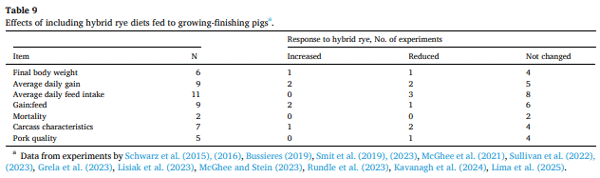
Replacing barley with hybrid rye in diets for growing and finishing pigs at inclusion rates of up to 800 g/kg in early growing and late finishing phases, while maintaining an isocaloric and isonitrogenous profile, did not negatively impact ADG, ADFI, or final body weight of pigs (Table 9; Schwarz et al., 2015, 2016; Bussi`eres, 2018; Grela et al., 2023; Lisiak et al., 2023). When substituting 228, 455, or 659 g/kg of dietary wheat with hybrid rye, there were no differences in body weight or G:F in the growing and finishing phases, but ADG and ADFI were reduced during the finishing phase as greater inclusion of hybrid rye substituted wheat in the diet (Smit et al., 2019). These observations indicate that hybrid rye may replace up to at least 600 g/kg of wheat in diets for finishing pigs. Hybrid rye contains less metabolizable energy than wheat, which causes pigs to consume more feed to compensate for the lower energetic density, but the dietary fiber in hybrid rye may be limiting the ability to consume more feed because of the bulking effect and greater water binding in the gastrointestinal tract (Ndou et al., 2013; Smit et al., 2019). Therefore, it was hypothesized that increased dietary net energy by adding fat to the diet may counteract the reduction in growth caused by reduced feed intake when pigs are fed hybrid rye instead of wheat (Smit et al., 2023). Results indicated that pigs fed a diet containing 400 g/kg hybrid rye and 418 kJ/kg net energy from added fat had greater ADG than pigs fed a diet without added fat, indicating that it may be useful to increase the net energy of diets in the growing-finishing phase when including hybrid rye in the diet. However, it is not known if it is also possible to maintain growth performance if more than 400 g/kg wheat is replaced by hybrid rye in growing-finishing diets. Likewise, feeding rye bread to pigs may promote changes in the intestinal microbiome and increase butyrate production (Bach Knudsen et al., 2005; Burbach et al., 2017; Lindhaus et al., 2024); however, more research is needed to determine the impact of hybrid rye on intestinal health and butyrate production by pigs.
In the U.S., hybrid rye will usually replace corn during growing and finishing phases, and hybrid rye may replace all corn in the diets without negative impacts on growth performance of growing pigs (McGhee et al., 2021; McGhee and Stein, 2023; Rundle et al., 2023; Lima et al., 2025), although a slight reduction in ADFI was sometimes observed. Carcass characteristics were slightly improved or not impacted by increasing levels of hybrid rye in diets for pigs (Schwarz et al., 2015; Bussi`eres, 2018; Smit et al., 2019; McGhee et al., 2021; Lisiak et al., 2023; Lima et al., 2025). Pigs fed diets containing hybrid rye may have greater backfat thickness, but lower cholesterol, and pork from pigs fed a diet containing hybrid rye had greater water holding capacity, and greater concentrations of saturated fatty acids, which may positively impact storage time of pork (Grela et al., 2023). In contrast, Schwarz et al. (2015), Bussieres (2018), McGhee et al. (2021), and Lisiak et al. (2023) did not observe any effect of hybrid rye on backfat thickness or water binding properties of pork measured as drip loss or cooking loss, but replacing corn with hybrid rye in diets for growing-finishing pigs may decrease carcass yield, hot carcass weight, backfat, and iodine value (Sullivan et al., 2023). Loin and backfat color may also be impacted by inclusion of hybrid rye in the diet, but no consistent effects have been reported (McGhee et al., 2021; Grela et al., 2023; Lisiak et al., 2023). However, changes in color do not impact consumer acceptability of pork (Sullivan et al., 2023; Kavanagh et al., 2024), and is, therefore, not an important parameter in predicting consumer acceptance of pork from pigs fed hybrid rye.
3.4.3. Gestating and lactating sows
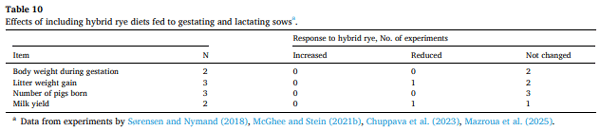
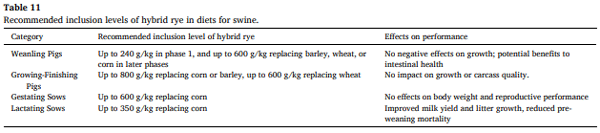
Hybrid rye may replace other cereal grains in diets for reproducing sows (Table 10). Inclusion of 600 g/kg hybrid rye instead of barley and wheat in gestation and 350 g/kg hybrid rye in lactation diets for sows resulted in no differences in litter size, farrowing rate, or milk yield during lactation (Sørensen and Nymand, 2018). Likewise, no differences in litter weight gain, litter weaning weight, or in the number of sows culled were observed, indicating that addition of 600 g/kg hybrid rye to diets fed to gestating sows and 350 g/kg hybrid rye in diets fed to lactating sows results in sow and litter performance that is not different from that of sows fed diets without hybrid rye (Sørensen and Nymand, 2018; Mazroua et al., 2025). When sows were fed 300 g/kg hybrid rye from seven days before farrowing and during lactation, the body weight of pigs at weaning was not different from that of pigs from sows fed diets based on wheat, indicating that hybrid rye may replace wheat in lactation diets without adversely affecting body weight of pigs (Chuppava et al., 2023). Replacing up to 525 g/kg of corn in diets fed in gestation and 509 g/kg in diets fed in lactation with hybrid rye resulted in no differences in ADG of sows during gestation, body weight of sows at farrowing and weaning, or number of pigs born (McGhee and Stein, 2021b). Likewise, when sows were fed a diet containing 150 g/kg rye bran or up to 600 g/kg hybrid rye during gestat week after farrowing, no differences in ADG of sows were observed (Homan et al., 2024; Mazroua et al., 2025). Milk yield, number of pigs weaned, litter weaning weight, and litter ADG increased when 250 or 500 g/kg of the corn was replaced by hybrid rye, but decreased when hybrid rye replaced 750 g/kg corn in lactation diets, indicating that replacing up to 500 g/kg of corn with hybrid rye improves lactation performance compared with that of sows fed diets based only on corn (McGhee and Stein, 2021b). Likewise, feeding 600 g/kg hybrid rye during gestation and a week after farrowing did not result in differences in litter ADG, number of pigs weaned per litter, or litter weaning weight (Mazroua et al., 2025). Sows fed diets in which 250 or 500 g/kg of the corn was replaced by hybrid rye also had reduced pre-weaning mortality of pigs, which may be a result of sows being calmer because of the increased fiber in hybrid rye compared with corn (McGhee and Stein, 2021b), but feeding sows with 600 g/kg hybrid rye during gestation and 1 week after farrowing did not influence pre-weaning mortality of pigs (Mazroua et al., 2025). Although hybrid rye may be used in diets for reproducing sows, there is no impact of increasing levels of hybrid rye on the composition of colostrum or milk, or the concentration of immunoglobulin G in colostrum (McGhee and Stein, 2021b; Chuppava et al., 2023; Mazroua et al., 2025). Diets containing 600 g/kg hybrid rye fed to gestating sows resulted in greater propionate and butyrate in the serum of sows before farrowing, as well as greater relative abundance of Prevotellaceae in fecal samples, indicating that when hybrid rye is fed to gestating sows, fermentation end products are being absorbed. The microbiota may also be modulated by proliferation of specific bacteria, which may also influence the microbiota of the offspring of sows fed hybrid rye, as was observed by increased alpha diversity in feces of pigs one week after birth (Mazroua et al., 2025). Recommended inclusion levels of hybrid rye have been summarized in Table 11. More research investigating the effects of hybrid rye on the intestinal health of sows and pigs, and the impact of hybrid rye on sow behavior in gestating and lactating sows is warranted.
4. Conclusions
Hybrid rye may be used in diets for pigs of all physiological stages. As a cereal grain, hybrid rye provides greater standardized ileal digestible amino acids than corn, but metabolizable energy and net energy are reduced because of the greater concentration of fermentable dietary fiber in hybrid rye compared with corn or wheat. Hybrid rye has a greater concentration of soluble dietary fiber compared with wheat and corn, and hybrid rye contains more intrinsic phytase than other cereal grains. Based on the current data, hybrid rye may replace barley, wheat, and corn by up to 600 g/kg in diets for weanling pigs, by between 600 and 800 g/kg in diets for growing-finishing pigs, by up to 600 g/kg in diets for gestating sows, and by up to 350 g/kg in diets for lactating sows without negatively impacting growth or reproductive performance. Hybrid rye does not impact carcass characteristics or meat quality. Likewise, hybrid rye does not negatively impact reproductive performance of sows, and sows may benefit from the dietary fiber in hybrid rye to maintain body weight during gestation and lactation.