
Content sponsored by:
FIGAP MEXICO 2026 - INTERNATIONAL EXHIBITION
Smart Sensors for Grain and Forage Management
Published: April 22, 2026
Source : FIGAP
Efficient grain and forage management has become a critical factor for profitability and sustainability in the agro-industrial and livestock sectors. Climate variability, post harvest losses, and input cost volatility are forcing companies to adopt precision technologies.
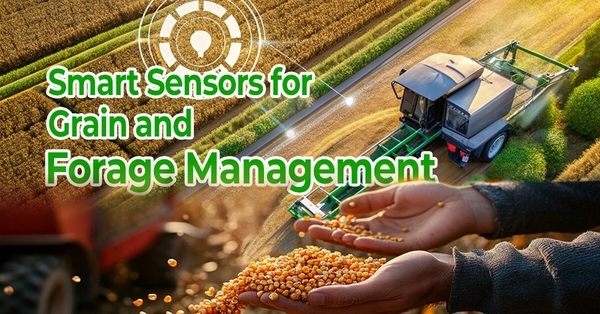
In this context, smart sensors integrated with analytics platforms and IoT are redefining the management of storage, preservation, and distribution of raw materials. These systems enable real-time data capture on critical variables such as moisture, temperature, nutritional composition, and environmental conditions.
The transition toward data driven operating models is no longer optional, it is a structural competitive advantage.
What Are Smart Sensors in Grain and Forage Management?
In an environment where decision-making requires speed and precision, understanding the role of smart sensors is essential. These devices form the technological foundation of agro-industrial digitalization by converting physical variables into actionable data.
In an environment where decision-making requires speed and precision, understanding the role of smart sensors is essential. These devices form the technological foundation of agro-industrial digitalization by converting physical variables into actionable data.
Smart sensors are devices capable of measuring, processing, and transmitting data in real time, integrating into digital ecosystems that automate decision-making.
In agricultural and livestock operations, these sensors monitor:
- Grain and forage moisture content
- Temperature in silos and storage facilities
- Presence of mycotoxins or spoilage
- Oxygen levels and gases (CO₂)
- Climatic variables (relative humidity, radiation)
Their value lies in transforming traditional operations into predictive and automated systems, reducing losses and optimizing resources.
Types of Sensors Applied to Grain and Forage Management
The diversity of sensors available enables targeted solutions across each stage of post-harvest handling and animal nutrition. Proper selection is critical to maximize ROI and ensure effective implementation.
The diversity of sensors available enables targeted solutions across each stage of post-harvest handling and animal nutrition. Proper selection is critical to maximize ROI and ensure effective implementation.
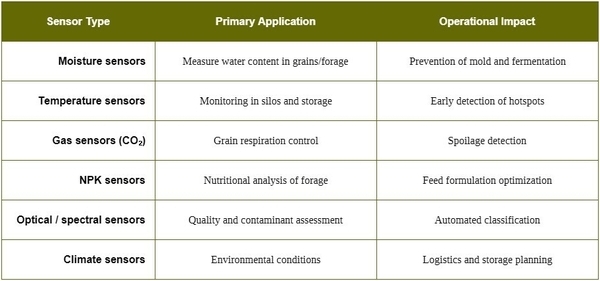
These sensors operate within IoT networks, enabling site specific management, resource optimization, and productivity gains.
Economic and Operational Impact
For executive leadership, the adoption of smart sensors must be evaluated in terms of financial impact and operational efficiency. Beyond technological innovation, their value is reflected in loss reduction and cost optimization.
For executive leadership, the adoption of smart sensors must be evaluated in terms of financial impact and operational efficiency. Beyond technological innovation, their value is reflected in loss reduction and cost optimization.
Estimated Impact of Sensors in Grain Management:
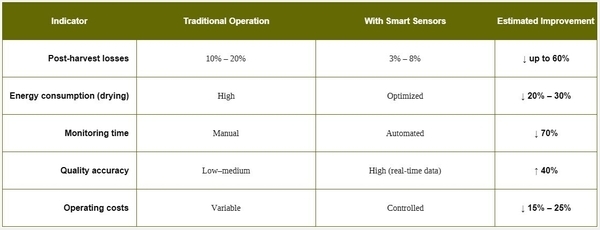
These outcomes position sensors as a key lever to enhance profitability and ensure final product quality.
Strategic Applications in the Livestock Sector
The impact of smart sensors extends beyond grain storage, directly influencing livestock productivity. Their application enables feed quality optimization and improved production performance.
4.1 Smart Silo Management
Sensors detect heating zones within silos, preventing losses from fermentation or spontaneous combustion.
Sensors detect heating zones within silos, preventing losses from fermentation or spontaneous combustion.
4.2 Silage Optimization
Moisture and temperature sensors enable control of fermentation processes, ensuring nutritional quality of forage.
Moisture and temperature sensors enable control of fermentation processes, ensuring nutritional quality of forage.
4.3 Precision Feeding
Integration of nutritional sensors allows real-time formulation adjustments, improving:
Integration of nutritional sensors allows real-time formulation adjustments, improving:
- Feed conversion ratios - Weight gain - Waste reduction
Case Studies
Empirical evidence is critical to validate technology adoption. Multiple agro-industrial companies have demonstrated tangible short- and medium-term benefits.
Empirical evidence is critical to validate technology adoption. Multiple agro-industrial companies have demonstrated tangible short- and medium-term benefits.
Case 1: Reduction of Losses in Corn Storage (LatAm)
- Loss reduction: -45%
- Commercial quality increase: +18%
- ROI: < 12 months
Case 2: Dairy Production with Monitored Forage (USA)
- Feed digestibility improvement: +12%
- Milk production increase: +8%
- Feed cost reduction: -10%
Case 3: Feed Processing Plant (Mexico)
- Formulation accuracy: +25%
- Waste reduction: -20%
Technology Integration: IoT, Big Data, and AI
The real competitive advantage lies not only in data capture, but in its integration and analysis. The convergence of sensors with advanced digital technologies enables intelligent and automated value chain management.
The real competitive advantage lies not only in data capture, but in its integration and analysis. The convergence of sensors with advanced digital technologies enables intelligent and automated value chain management.
Sensors integrate with:
- Agricultural IoT: continuous data transmission
- Big Data: large-scale data analysis
- Artificial Intelligence: predictive models
This enables a shift from reactive to predictive and prescriptive operations, where decisions anticipate problems.
Modern systems can trigger automated actions such as:
- Silo ventilation
- Temperature adjustments
- Humidity control
Adoption Challenges
Despite their benefits, implementing smart sensors involves challenges that must be addressed strategically:
Despite their benefits, implementing smart sensors involves challenges that must be addressed strategically:
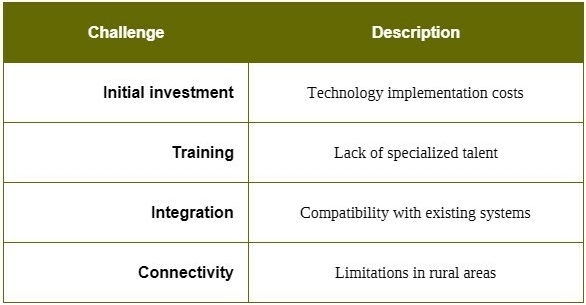
However, global trends indicate accelerated adoption driven by efficiency and sustainability requirements.
Related topics:
Recommend
Comment
Share

Would you like to discuss another topic? Create a new post to engage with experts in the community.

Featured users