Check out what is new in Animal Feed
Technical and commercial information on Animal Feed. Feed Formulation. Extrusion, Pelletizing, Feedstuffs, Forage and Probiotics in animal nutrition.


INTRODUCTION Soybean meal (SBM) is frequently used in poultry diets due to its high protein content, ideal amino acid (AA) profile, and digestibility (Ravindran et al., 2014). However, soybean products also contribute 20 to 30% of ME in poultry diets. The ME values of SBMs vary according to processing techniques (Pacheco et al., 2013; Rueda-Agudelo and Giraldo-Mejía, 2018; Mateos et al., 2019; Thanabalan et al., 2021; Abdollahi et al., 2022), varieties or genotypes (Parsons et...
Comments : 0
Recommendations: 0
The International Production & Processing Expo (IPPE) is pleased to recognize the 2027 Young Leaders Under 30 honorees, highlighting the next generation of professionals making an impact across the industry. This award celebrates emerging talent and provides recipients with valuable...
Comments : 0
Recommendations: 1
Recommended events
January 25, 2027
United States - Georgia - Atlanta


Severine Deschandelliers, Global Market Access Director at Adisseo, shares key insights from the international meeting of feed regulators held in Brazil. Across three segments, she discusses how regulatory authorities are balancing feed safety with technological innovation, as well as FEFANA's role in delivering specialty feed ingredients that help farmers meet sustainability and productivity challenges. ...
Comments : 0
Recommendations: 5

Jean-François Rous, CTO of Adisseo, discusses the complex future of the feed additive sector, emphasizing a shift away from one-size-fits-all solutions toward regionalized strategies. He highlights the need for targeted additives that enhance the digestibility of local raw materials and support animal health resilience against disease outbreaks. This tailored approach enables precise, effective nutritional strategies across global livestock production systems. ...
Comments : 1
Recommendations: 3
Featured users in Animal Feed







1. Introduction Mycotoxins are naturally occurring small-molecule secondary metabolites produced by certain mold species, primarily from Alternaria, Aspergillus, Claviceps, Fusarium, and Penicillium genera, among others [1]. The production of mycotoxins can occur globally in numerous crops and under a wide range of environmental and agronomic conditions, from field production through harvest, storage, and feed out. Some of the major factors affecting mycotoxin production...
Comments : 0
Recommendations: 0


Julie Duong, Global Species Marketing Manager at Adisseo, explains how Adisseo helps nutritionists align formulation with real on-farm nutrient utilization—using data, practical insights, and enzymes to improve digestibility, reduce variability, and unlock measurable savings. ...
Comments : 1
Recommendations: 1
.jpg&w=3840&q=75)


1. Introduction Several agricultural and agro-industrial by-products are produced during the production or processing of fruits and vegetable crops, which may cause environmental pollution. These by-products were of great interest during the COVID-19 crisis due to lockdown, close of dry borders and ports and traffic restrictions [1,2]. The use of alternative feedstuffs and locally available feed ingredients would improve a possible solution. Date by-products are the best-known...
Comments : 0
Recommendations: 0
1. Introduction Nowadays, alternative protein sources are essential due to the future perspectives of increasing the world’s human population [1] and limited grain supplies after the COVID-19 crisis and the Russia–Ukraine war. Insects are valuable protein supplies for animal nutrition [2–4] because of their high nutritive value and the limited natural resources (water, land, and feed) required for insect growth [5–7]. The primary and most expensive...
Comments : 0
Recommendations: 0

The Hidden Cost of Manual Bagging: How Agro-Industrial Plants Lose Up to 18% of Their Profitability Without Knowing It
Suggested link


I. INTRODUCTION Acid binding capacity (ABC) of an ingredient, through its effect on gastric pH, plays an important role in the digestion and absorption of nutrients in poultry. The ABC is defined as the resistance of a feed ingredient to the pH reduction by gastric acid. Limestone, the major Ca source in poultry diets, has a high ABC (Lawlor et al., 2005), which can increase the digesta pH and, influence the solubility and digestibility of nutrients, including minerals. The average...
Comments : 0
Recommendations: 0
I. INTRODUCTION Wheat and sorghum are the most common feed grains for chicken-meat production in Australia. In two direct comparisons birds offered maize-based diets were better able to accommodate dietary crude protein (CP) reductions than wheat-based diets (Chrystal et al., 2021; Greenhalgh et al., 2022). One underlying reason for this difference appears to be the higher protein contents of wheat than maize and, similarly, wheat (n = 27) contained higher protein levels (115.5...
Comments : 0
Recommendations: 0



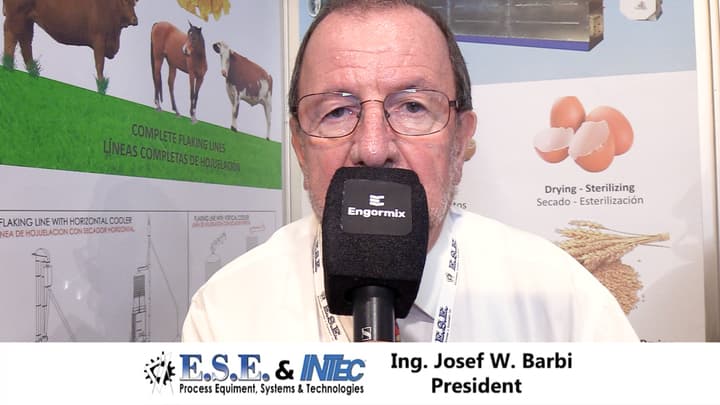
Eng. Josef Barbi, president of E.S.E. & INTEC, shares key takeaways from a recent aquaculture conference in Ghent, Belgium. As global aquaculture continues to expand, the industry faces growing challenges around ingredient availability, feed costs, and sustainable production. ...
Comments : 0
Recommendations: 0
Introduction The increasing world population and the growing demand for animal-based foods are driving research towards alternative, sustainable and low-environmental impact protein sources for livestock feed. In this context, edible insects, in particular the black soldier fly (Hermetia illucens L., BSF), are increasingly recognised as a valuable alternative resource for animal nutrition due to their efficiency in nutrient conversion, rapid growth and ability to transform...
Comments : 0
Recommendations: 0
.jpg&w=3840&q=75)
1. Introduction Soybeans originated in East Asia and were domesticated from wild soybeans (Glycine soja) between 1700 and 1100 B.C. and are now grown worldwide [1]. However, soybean production and utilization were limited within or near its center of Origin (the Orient) for centuries. The first recorded use of soybeans in the U.S. was in 1765 in Savannah, GA. It is thought that Samuel Bowen, a former seaman of the East India Company, brought soybeans to the U.S. from China via...
Comments : 0
Recommendations: 1
1. Introduction The poultry industry is an important, fast-growing sector for producing low-cost and rich nutrients for human consumption. This industry is always at risk of infectious and non-infectious agents that cause adverse losses. Antibiotics, especially growth promoter types, are widely used to increase gut health, reduce subclinical infections, and promote growth and production [1]. However, antibiotic overuse negatively impacts the balance of the normal gut microbiome along...
Comments : 0
Recommendations: 1

1. Introduction Over the years, broiler chickens have been selected for rapid growth, which makes them very efficient at depositing body protein in a short period of time. This is important since the broiler sector is expected to contribute to the growing global demand for poultry meat. In light of this, the quality of proteins fed to poultry is becoming more important. Animal and plant ingredients are the main sources of protein used in poultry diets and they vary in...
Comments : 0
Recommendations: 1

1. Introduction Poultry production is an important agricultural subsector in many countries. Poultry are birds which render economic services to humans as a primary supplier of meat, egg and raw materials for different industries (feather, waste products, etc.), source of income and employment to people when compared to other domestic animals [1]. According to USDA (2020), the world chicken meat production in 2020 increased than previous years. In July 2020, the total production of...
Comments : 0
Recommendations: 0
The Hidden Cost of Manual Bagging: How Agro-Industrial Plants Lose Up to 18% of Their Profitability Without Knowing It
Suggested link

1. Introduction High-producing dairy cows have high nutrient requirements, commonly met by feeding concentrated feeds rich in nutrients that can be digested and absorbed as volatile fatty acids in the rumen or as glucose and amino acids in the small intestine. Starch and protein are essential for rumen microbial growth, and a synchronized release and digestion of these nutrients in the rumen can enhance microbial protein synthesis and thus amino acids absorbed in the small...
Comments : 0
Recommendations: 0
I. INTRODUCTION Necrotic enteritis (NE) is a major intestinal disease in commercial poultry. It affects ~40% of broiler flocks and costs the industry through increased mortalities and reduced growth performances. The causative agent is Clostridium perfringens (CP) a Gram-positive member of the normal intestinal microbiota of poultry. A disturbance in the intestinal microbiome or a change in the behaviour of CP can result in the development of NE. CP can produce > 18 different...
Comments : 0
Recommendations: 0

I. INTRODUCTION Sustainability comprises three principal components: the environment (demand for resources and potential for environmental pollution), ethical issues (welfare of man and his animals), and economic robustness (FAO, 2012). At first glance, insect protein is a sustainable alternative to traditional protein sources such as soybean meal. Insect production requires less land, water and other resources than traditional protein sources, and they can be raised on...
Comments : 1
Recommendations: 3

Introduction Poultry scientists have long discussed and debated how the energy values of feed ingredients should be expressed (Zuidhof 2019). Pesti (2024) suggested that it is time for a paradigm shift in the way feed ingredient nutrient contents are described, and labeled the new categories collectively the Armidale method (see Fig. 1 for examples). He also proposed expanding the net energy (NE) to NEATP, based on the production of adenosine triphosphate (ATP) system of...
Comments : 23
Recommendations: 4