Cinnamon: A Natural Feed Additive for Poultry Health and Production—A Review
Simple Summary: Due to restrictions on antibiotics in chicken production in recent years, the poultry industry has looked towards alternatives such as plant-derived feed additives. Plant bioactive compounds, such as phytochemicals, in poultry diets, are gaining popularity due to their potential antioxidant and anti-microbial activities. Some plant derivatives improve the immune system, reduce the stress response, and exert positive effects on health and performance. The dietary supplementation of cinnamon in poultry feed as a natural feed additive has beneficial impacts on nutrient digestibility, hypocholesterolaemic, blood biochemical profile, gene expression, immunity, and particularly on gut health to alleviate the impact of disease and heat stress by maintaining water and electrolytic balance and feed intake. It is clearly demonstrated that cinnamon can be used as an alternative to antibiotics in the poultry industry offering greater animal health, food safety, and economic aspects of poultry production.
Abstract: The increased bacterial resistance to synthetic antibiotics and consumer awareness about the health and food safety concerns have triggered the ban on the use of antibiotic growth promotors (AGPs) in the poultry industry. This situation encouraged the poultry sector and industry to explore safe alternatives to AGPs and focus on developing more sustainable feed management strategies to improve the intestinal health and growth performance of poultry. Consequently, phytogenic feed additives (PFAs) have emerged as natural alternatives to AGPs and have great potential in the poultry industry. In recent years, cinnamon (one of the most widely used spices) has attracted attention from researchers as a natural product with numerous health benefits for poultry. The essential oils in cinnamon, in particular, are of interest because of their antioxidant, anti-microbial, anti-inflammatory, antifungal, and hypocholesterolaemic effects, in addition to their ability to stimulate digestive enzymes in the gut. This review mainly emphasizes the potential impact of cinnamon as a natural feed additive on overall gut health, nutrient digestibility, blood biochemical profile, gene expression, gut microbiota and immune response.
Keywords: cinnamon; natural feed additive; gut microbiota; poultry health; immune response
1. Introduction
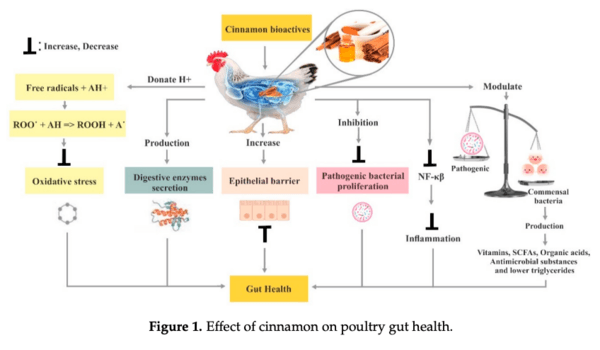
2. Cinnamon
Phytochemistry of Cinnamon
3. Poultry Gut Health
3.1. Utilization of Cinnamon in Poultry Feed
3.2. Impact of Cinnamon on the Digestibility of Nutrients
3.3. Cinnamon and Blood Biochemical Profile
3.4. Cinnamon and Gene Expression in Poultry
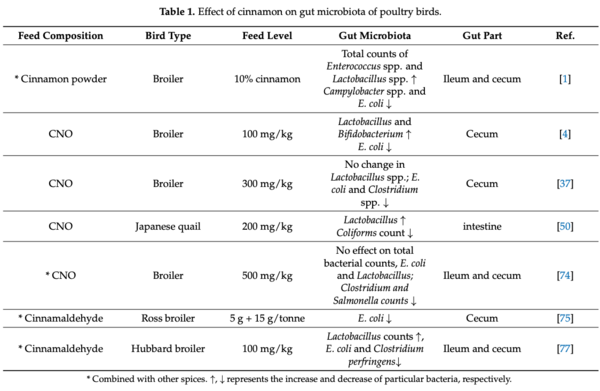
3.5. Effect of Cinnamon on the Gut Microbiota
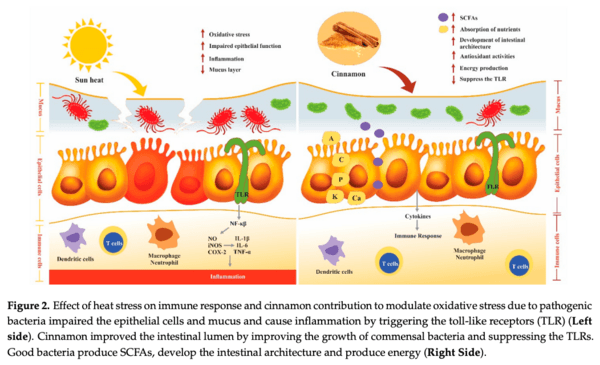
3.6. Effect of Cinnamon on the Immune System
4. Future Perspective
5. Conclusions
Rashid, Z., Mirani, Z. A., Zehra, S., Gilani, S. M. H., Ashraf, A., Azhar, A., Al-Ghanim, K. A., Al-Misned, F., Al-Mulahim, N., & Mahboob, S. (2020). Enhanced modulation of gut microbial dynamics affecting body weight in birds triggered by natural growth promoters administered in conventional feed. Saudi Journal of Biological Sciences, 27, 2747–2755.
Diaz Carrasco, J. M., Casanova, N. A., & Fernández Miyakawa, M. E. (2019). Microbiota, gut health and chicken productivity: What is the connection? Microorganisms, 7, 374.
Cottrell, J. J., Le, H. H., Artaiz, O., Iqbal, Y., Suleria, H. A., Ali, A., Celi, P., & Dunshea, F. R. (2021). Recent advances in the use of phytochemicals to manage gastrointestinal oxidative stress in poultry and pigs. Animal Production Science, 10, 1071.
Yang, Y.-F., Zhao, L.-L., Shao, Y.-X., Liao, X.-D., Zhang, L.-Y., Lu, L., & Luo, X.-G. (2019). Effects of dietary graded levels of cinnamon essential oil and its combination with bamboo leaf flavonoid on immune function, antioxidative ability and intestinal microbiota of broilers. Journal of Integrative Agriculture, 18, 2123–2132.
Saeed, M., Abbas, G., Alagawany, M., Kamboh, A. A., Abd El-Hack, M. E., Khafaga, A. F., & Chao, S. (2019). Heat stress management in poultry farms: A comprehensive overview. Journal of Thermal Biology, 84, 414–425.
Jayaprakasha, G. K., & Rao, L. J. (2011). Chemistry, biogenesis, and biological activities of Cinnamomum zeylanicum. Critical Reviews in Food Science and Nutrition, 51, 547–562.
Paranagama, P. A., Dayananda, K. R., & Hewage, J. W. (2020). Chemistry and bioactive compounds of Cinnamomum zeylanicum Blume. In R. Senaratne & R. Pathirana (Eds.), Cinnamon (1st ed., pp. 251–271). Springer.
Bandaranayake, P. C. G., & Pushpakumara, D. (2020). Genetics and molecular characterization of genus Cinnamomum. In R. Senaratne & R. Pathirana (Eds.), Cinnamon (1st ed., pp. 119–146). Springer.
Sharifi-Rad, J., Song, S., Ali, A., Subbiah, V., Taheri, Y., & Suleria, H. A. R. (2021). LC-ESI-QTOF-MS/MS characterization of phenolic compounds from Pyracantha coccinea M. Roem. and their antioxidant capacity. Cellular and Molecular Biology, 67, 201–211.
Chou, O., Ali, A., Subbiah, V., Barrow, C. J., Dunshea, F. R., & Suleria, H. A. R. (2021). LC-ESI-QTOF-MS/MS characterisation of phenolics in herbal tea infusion and their antioxidant potential. Fermentation, 7, 73.
Hashemi, S. R., & Davoodi, H. (2011). Herbal plants and their derivatives as growth and health promoters in animal nutrition. Veterinary Research Communications, 35, 169–180.
Ali, A., Wu, H., Ponnampalam, E. N., Cottrell, J. J., Dunshea, F. R., & Suleria, H. A. R. (2021). Comprehensive profiling of most widely used spices for their phenolic compounds through LC-ESI-QTOF-MS² and their antioxidant potential. Antioxidants, 10, 721.
Li, Y., Kong, D., Lin, X., Xie, Z., Bai, M., Huang, S., Nian, H., & Wu, H. (2016). Quality evaluation for essential oil of Cinnamomum verum leaves at different growth stages based on GC–MS, FTIR and microscopy. Food Analytical Methods, 9, 202–212.
Liyanage, N. M. N., Bandusekara, B. S., Kanchanamala, R. W. M. K., Hathurusinghe, H. A. B. M., Dilhan, A. M. R. W. S., Pushpakumara, D. K. N. G., Samita, S., Wijesinghe, K. G. G., Jayasinghe, G. G., & Liyanage, W. K. (2021). Identification of superior Cinnamomum zeylanicum Blume germplasm for future true cinnamon breeding in the world. Journal of Food Composition and Analysis, 96, 103747.
Ribeiro-Santos, R., Andrade, M., Madella, D., Martinazzo, A. P., Moura, L. d’A. G., de Melo, N. R., & Sanches-Silva, A. (2017). Revisiting an ancient spice with medicinal purposes: Cinnamon. Trends in Food Science & Technology, 62, 154–169.
Geng, S., Cui, Z., Huang, X., Chen, Y., Xu, D., & Xiong, P. (2011). Variations in essential oil yield and composition during Cinnamomum cassia bark growth. Industrial Crops and Products, 33, 248–252.
Hamidpour, R., Hamidpour, M., Hamidpour, S., & Shahlari, M. (2015). Cinnamon from the selection of traditional applications to its novel effects on the inhibition of angiogenesis in cancer cells and prevention of Alzheimer’s disease, and a series of functions such as antioxidant, anticholesterol, antidiabetes, antibacterial, antifungal, nematicidal, acaricidal, and repellent activities. Journal of Traditional and Complementary Medicine, 5, 66–70.
Kim, Y.-G., Lee, J.-H., Kim, S.-I., Baek, K.-H., & Lee, J. (2015). Cinnamon bark oil and its components inhibit biofilm formation and toxin production. International Journal of Food Microbiology, 195, 30–39.
Rao, P. V., & Gan, S. H. (2014). Cinnamon: A multifaceted medicinal plant. Evidence-Based Complementary and Alternative Medicine, 2014, 642942.
Namazi, N., Khodamoradi, K., Khamechi, S. P., Heshmati, J., Ayati, M. H., & Larijani, B. (2019). The impact of cinnamon on anthropometric indices and glycemic status in patients with type 2 diabetes: A systematic review and meta-analysis of clinical trials. Complementary Therapies in Medicine, 43, 92–101.
Shan, B., Cai, Y.-Z., Brooks, J. D., & Corke, H. (2007). Antibacterial properties and major bioactive components of cinnamon stick (Cinnamomum burmannii): Activity against foodborne pathogenic bacteria. Journal of Agricultural and Food Chemistry, 55, 5484–5490.
Nawab, A., Ibtisham, F., Li, G., Kieser, B., Wu, J., Liu, W., Zhao, Y., Nawab, Y., Li, K., & Xiao, M. (2018). Heat stress in poultry production: Mitigation strategies to overcome the future challenges facing the global poultry industry. Journal of Thermal Biology, 78, 131–139.
Iqbal, Y., Cottrell, J. J., Suleria, H. A. R., & Dunshea, F. R. (2020). Gut microbiota-polyphenol interactions in chicken: A review. Animals, 10, 1391.
Zhu, C., Yan, H., Zheng, Y., Santos, H. O., Macit, M. S., & Zhao, K. (2020). Impact of cinnamon supplementation on cardiometabolic biomarkers of inflammation and oxidative stress: A systematic review and meta-analysis of randomized controlled trials. Complementary Therapies in Medicine, 53, 102517.
Lin, C. C., Wu, S. J., Chang, C. H., & Ng, L. T. (2003). Antioxidant activity of Cinnamomum cassia. Phytotherapy Research, 17, 726–730.
Wenk, C. (2003). Herbs and botanicals as feed additives in monogastric animals. Asian-Australasian Journal of Animal Sciences, 16, 282–289.
O’Bryan, C. A., Pendleton, S. J., Crandall, P. G., & Ricke, S. C. (2015). Potential of plant essential oils and their components in animal agriculture—in vitro studies on antibacterial mode of action. Frontiers in Veterinary Science, 2, 35.
Bento, M., Ouwehand, A., Tiihonen, K., Lahtinen, S., Nurminen, P., Saarinen, M., Schulze, H., Mygind, T., & Fischer, J. (2013). Essential oils and their use in animal feeds for monogastric animals—Effects on feed quality, gut microbiota, growth performance and food safety: A review. Veterinary Medicine, 58, 449–458.
Lee, K.-W., Everts, H., Kappert, H., Frehner, M., Losa, R., & Beynen, A. (2003). Effects of dietary essential oil components on growth performance, digestive enzymes and lipid metabolism in female broiler chickens. British Poultry Science, 44, 450–457.
Jang, I., Ko, Y., Kang, S., & Lee, C. (2007). Effect of a commercial essential oil on growth performance, digestive enzyme activity and intestinal microflora population in broiler chickens. Animal Feed Science and Technology, 134, 304–315.
Jamroz, D., Wertelecki, T., Houszka, M., & Kamel, C. (2006). Influence of diet type on the inclusion of plant origin active substances on morphological and histochemical characteristics of the stomach and jejunum walls in chicken. Journal of Animal Physiology and Animal Nutrition, 90, 255–268.
Basmacioğlu Malayoğlu, H., Baysal, Ş., Misirlioğlu, Z., Polat, M., Yilmaz, H., & Turan, N. (2010). Effects of oregano essential oil with or without feed enzymes on growth performance, digestive enzyme, nutrient digestibility, lipid metabolism and immune response of broilers fed on wheat–soybean meal diets. British Poultry Science, 51, 67–80.
Garcia, V., Catala-Gregori, P., Hernandez, F., Megias, M., & Madrid, J. (2007). Effect of formic acid and plant extracts on growth, nutrient digestibility, intestine mucosa morphology, and meat yield of broilers. Journal of Applied Poultry Research, 16, 555–562.
Zhai, H., Liu, H., Wang, S., Wu, J., & Kluenter, A.-M. (2018). Potential of essential oils for poultry and pigs. Animal Nutrition, 4, 179–186.
Mehdi, Y., Létourneau-Montminy, M.-P., Gaucher, M.-L., Chorfi, Y., Suresh, G., Rouissi, T., Brar, S. K., Côté, C., Ramirez, A. A., & Godbout, S. (2018). Use of antibiotics in broiler production: Global impacts and alternatives. Animal Nutrition, 4, 170–178.
Devi, P. C., Samanta, A. K., Das, B., Kalita, G., Behera, P. S., & Barman, S. (2018). Effect of plant extracts and essential oil blend as alternatives to antibiotic growth promoters on growth performance, nutrient utilization and carcass characteristics of broiler chicken. Indian Journal of Animal Nutrition, 35, 421–427.
Chowdhury, S., Mandal, G. P., Patra, A. K., Kumar, P., Samanta, I., Pradhan, S., & Samanta, A. K. (2018). Different essential oils in diets of broiler chickens: 2. Gut microbes and morphology, immune response, and some blood profile and antioxidant enzymes. Animal Feed Science and Technology, 236, 39–47.
Windisch, W., Schedle, K., Plitzner, C., & Kroismayr, A. (2008). Use of phytogenic products as feed additives for swine and poultry. Journal of Animal Science, 86, E140–E148.
Zeng, Z., Zhang, S., Wang, H., & Piao, X. (2015). Essential oil and aromatic plants as feed additives in non-ruminant nutrition: A review. Journal of Animal Science and Biotechnology, 6, 7.
Chowdhury, S., Mandal, G. P., & Patra, A. K. (2018). Different essential oils in diets of chickens: 1. Growth performance, nutrient utilisation, nitrogen excretion, carcass traits and chemical composition of meat. Animal Feed Science and Technology, 236, 86–97.
Redondo, L. M., Chacana, P. A., Dominguez, J. E., & Fernandez Miyakawa, M. E. (2014). Perspectives in the use of tannins as alternative to antimicrobial growth promoter factors in poultry. Frontiers in Microbiology, 5, 118.
Cross, D. E., McDevitt, R. M., & Acamovic, T. (2011). Herbs, thyme essential oil and condensed tannin extracts as dietary supplements for broilers, and their effects on performance, digestibility, volatile fatty acids and organoleptic properties. British Poultry Science, 52, 227–237.
Jamroz, D., Orda, J., Kamel, C., Wiliczkiewicz, A., Wertelecki, T., & Skorupinska, J. (2003). The influence of phytogenic extracts on performance, nutrient digestibility, carcass characteristics, and gut microbial status in broiler chickens. Journal of Animal and Feed Sciences, 12, 583–596.
Mountzouris, K., Paraskevas, V., Tsirtsikos, P., Palamidi, I., Steiner, T., Schatzmayr, G., & Fegeros, K. (2011). Assessment of a phytogenic feed additive effect on broiler growth performance, nutrient digestibility and caecal microflora composition. Animal Feed Science and Technology, 168, 223–231.
Platel, K., & Srinivasan, K. (2004). Digestive stimulant action of spices: A myth or reality? Indian Journal of Medical Research, 119, 167.
Maenner, K., Vahjen, W., & Simon, O. (2011). Studies on the effects of essential-oil-based feed additives on performance, ileal nutrient digestibility, and selected bacterial groups in the gastrointestinal tract of piglets. Journal of Animal Science, 89, 2106–2112.
Kettunen, H., Ouwehand, A., Schulze, H., & Rautonen, N. (2006). Dietary essential oil supplementation enhanced intestinal immunocompetence in young broiler chick. Reproduction Nutrition Development, 46, S101.
Al-Kassie, G. A. (2009). Influence of two plant extracts derived from thyme and cinnamon on broiler performance. Pakistan Veterinary Journal, 29, 169–173.
Ciftci, M., Simsek, U. G., Yuce, A., Yilmaz, O., & Dalkilic, B. (2010). Effects of dietary antibiotic and cinnamon oil supplementation on antioxidant enzyme activities, cholesterol levels and fatty acid compositions of serum and meat in broiler chickens. Acta Veterinaria Brno, 79, 33–40.
Mehdipour, Z., & Afsharmanesh, M. (2018). Evaluation of synbiotic and cinnamon (Cinnamomum verum) as antibiotic growth promoter substitutions on growth performance, intestinal microbial populations and blood parameters in Japanese quail. Journal of Livestock Science and Technology, 6, 1–8.
Kanani, P. B., Daneshyar, M., & Najafi, R. (2016). Effects of cinnamon (Cinnamomum zeylanicum) and turmeric (Curcuma longa) powders on performance, enzyme activity, and blood parameters of broiler chickens under heat stress. Poultry Science Journal, 4, 47–53.
Naderi, M., Akbari, M., Asadi-Khoshoei, E., Khaksar, K., & Khajali, F. (2014). Effects of dietary inclusion of turmeric (Curcuma longa) and cinnamon (Cinnamomum verum) powders on performance, organs relative weight and some immune system parameters in broiler chickens. Poultry Science Journal, 2, 153–163.
Toghyani, M., Toghyani, M., Gheisari, A., Ghalamkari, G., & Eghbalsaied, S. (2011). Evaluation of cinnamon and garlic as antibiotic growth promoter substitutions on performance, immune responses, serum biochemical and haematological parameters in broiler chicks. Livestock Science, 138, 167–173.
Faghani, M., Rahimian, Y., Rafiee, A., & Namjoo, A. R. (2014). Effect of garlic and cinnamon in comparison to virginiamycin on performance and some haematological parameters in broiler chicks. Research Opinions in Animal and Veterinary Sciences, 4, 504–507.
Najafi, S., & Taherpour, K. (2014). Effects of dietary ginger (Zingiber officinale), cinnamon (Cinnamomum), synbiotic and antibiotic supplementation on performance of broilers. Journal of Animal Science Advances, 4, 658–667.
Hossain, M., Howlader, A., Islam, M., & Beg, M. (2014). Evaluation of locally available herbs and spices on physical, biochemical and economical parameters on broiler production. International Journal of Plant, Animal and Environmental Sciences, 4, 317–323.
Torki, M., Akbari, M., & Kaviani, K. (2015). Single and combined effects of zinc and cinnamon essential oil in diet on productive performance, egg quality traits, and blood parameters of laying hens reared under cold stress condition. International Journal of Biometeorology, 59, 1169–1177.
Shirzadegan, K. (2014). Reactions of modern broiler chickens to administration of cinnamon powder in the diet. Iranian Journal of Applied Animal Science, 4, 367–371.
Sang-Oh, P., Chae-Min, R., Byung-Sung, P., & Jong, H. (2013). The meat quality and growth performance in broiler chickens fed diet with cinnamon powder. Journal of Environmental Biology, 34, 127–133.
Abudabos, A. M., Alyemni, A. H., Dafalla, Y. M., & Khan, R. U. (2018). The effect of phytogenics on growth traits, blood biochemical and intestinal histology in broiler chickens exposed to Clostridium perfringens challenge. Journal of Applied Animal Research, 46, 691–695.
Izadnia, H. R., Tahmoorespur, M., Bakhtiarizadeh, M. R., Nassiri, M., & Esmaeilkhanien, S. (2019). Gene expression profile analysis of residual feed intake for Isfahan native chickens using RNA-SEQ data. Italian Journal of Animal Science, 18, 246–260.
Zhuo, Z., Lamont, S. J., Lee, W. R., & Abasht, B. (2015). RNA-Seq analysis of abdominal fat reveals differences between modern commercial broiler chickens with high and low feed efficiencies. PLOS ONE, 10, e0135810.
Tabatabaei, S. M., Badalzadeh, R., Mohammadnezhad, G.-R., & Balaei, R. (2015). Effects of cinnamon extract on biochemical enzymes, TNF-α and NF-κB gene expression levels in liver of broiler chickens inoculated with Escherichia coli. Pesquisa Veterinária Brasileira, 35, 781–787.
Alves-Santos, A. M., Sugizaki, C. S. A., Lima, G. C., & Naves, M. M. V. (2020). Prebiotic effect of dietary polyphenols: A systematic review. Journal of Functional Foods, 74, 104169.
Mandal, R. S., Saha, S., & Das, S. (2015). Metagenomic surveys of gut microbiota. Genomics, Proteomics & Bioinformatics, 13, 148–158.
Mueller, K., Blum, N. M., Kluge, H., & Mueller, A. S. (2012). Influence of broccoli extract and various essential oils on performance and expression of xenobiotic- and antioxidant enzymes in broiler chickens. British Journal of Nutrition, 108, 588–602.
Lee, S. A., Apajalahti, J., Vienola, K., González-Ortiz, G., Fontes, C. M. G. A., & Bedford, M. R. (2017). Age and dietary xylanase supplementation affects ileal sugar residues and short chain fatty acid concentration in the ileum and caecum of broiler chickens. Animal Feed Science and Technology, 234, 29–42.
Yin, Y., Lei, F., Zhu, L., Li, S., Wu, Z., Zhang, R., Gao, G. F., Zhu, B., & Wang, X. (2010). Exposure of different bacterial inocula to newborn chicken affects gut microbiota development and ileum gene expression. The ISME Journal, 4, 367–376.
Bogusławska-Tryk, M., Szymeczko, R., Piotrowska, A., Burlikowska, K., & Śliżewska, K. (2015). Ileal and cecal microbial population and short-chain fatty acid profile in broiler chickens fed diets supplemented with lignocellulose. Pakistan Veterinary Journal, 35, 212–216.
Chang, S.-T., Chen, P.-F., & Chang, S.-C. (2001). Antibacterial activity of leaf essential oils and their constituents from Cinnamomum osmophloeum. Journal of Ethnopharmacology, 77, 123–127.
Chao, S. C., Young, D. G., & Oberg, C. J. (2000). Screening for inhibitory activity of essential oils on selected bacteria, fungi and viruses. Journal of Essential Oil Research, 12, 639–649.
Zhao, L., Liao, X., Zhang, L., Luo, X., & Lu, L. (2017). Bacteriostatic effects of plant extracts and their compounds on chicken pathogenic bacteria in vitro. Chinese Journal of Animal Nutrition, 29, 3277–3286.
Gupta, C., Garg, A. P., Uniyal, R. C., & Kumari, A. (2008). Comparative analysis of the antimicrobial activity of cinnamon oil and cinnamon extract on some food-borne microbes. African Journal of Microbiology Research, 2, 247–251.
Pathak, M., Mandal, G. P., Patra, A. K., Samanta, I., Pradhan, S., & Haldar, S. (2017). Effects of dietary supplementation of cinnamaldehyde and formic acid on growth performance, intestinal microbiota and immune response in broiler chickens. Animal Production Science, 57, 821–827.
Tiihonen, K., Kettunen, H., Bento, M. H., Saarinen, M., Lahtinen, S., Ouwehand, A. C., Schulze, H., & Rautonen, N. (2010). The effect of feeding essential oils on broiler performance and gut microbiota. British Poultry Science, 51, 381–392.
Rehman, H. U., Vahjen, W., Awad, W. A., & Zentek, J. (2007). Indigenous bacteria and bacterial metabolic products in the gastrointestinal tract of broiler chickens. Archives of Animal Nutrition, 61, 319–335.
Jamroz, D., Wiliczkiewicz, A., Wertelecki, T., Orda, J., & Skorupińska, J. (2005). Use of active substances of plant origin in chicken diets based on maize and locally grown cereals. British Poultry Science, 46, 485–493.
Johny, A. K., Darre, M., Donoghue, A., Donoghue, D., & Venkitanarayanan, K. (2010). Antibacterial effect of trans-cinnamaldehyde, eugenol, carvacrol, and thymol on Salmonella Enteritidis and Campylobacter jejuni in chicken cecal contents in vitro. Journal of Applied Poultry Research, 19, 237–244.
Si, W., Gong, J., Tsao, R., Zhou, T., Yu, H., Poppe, C., Johnson, R., & Du, Z. (2006). Antimicrobial activity of essential oils and structurally related synthetic food additives towards selected pathogenic and beneficial gut bacteria. Journal of Applied Microbiology, 100, 296–305.
Hernandez, F., Madrid, J., Garcia, V., Orengo, J., & Megias, M. (2004). Influence of two plant extracts on broilers performance, digestibility, and digestive organ size. Poultry Science, 83, 169–174.
Lambert, R., Skandamis, P. N., Coote, P. J., & Nychas, G. J. (2001). A study of the minimum inhibitory concentration and mode of action of oregano essential oil, thymol and carvacrol. Journal of Applied Microbiology, 91, 453–462.
Faix, Š., Faixová, Z., Plachá, I., & Koppel, J. (2009). Effect of Cinnamomum zeylanicum essential oil on antioxidative status in broiler chickens. Acta Veterinaria Brno, 78, 411–417.
Atiphasaworn, P., Monggoot, S., & Pripdeevech, P. (2017). Chemical composition, antibacterial and antifungal activities of Cinnamomum bejolghota bark oil from Thailand. Journal of Applied Pharmaceutical Science, 7, 69–73.
Orengo, J., Buendía, A., Ruiz-Ibáñez, M., Madrid, J., Del Río, L., Catalá-Gregori, P., García, V., & Hernández, F. (2012). Evaluating the efficacy of cinnamaldehyde and Echinacea purpurea plant extract in broilers against Eimeria acervulina. Veterinary Parasitology, 185, 158–163.
Naidoo, V., McGaw, L. J., Bisschop, S., Duncan, N., & Eloff, J. N. (2008). The value of plant extracts with antioxidant activity in attenuating coccidiosis in broiler chickens. Veterinary Parasitology, 153, 214–219.
Vallverdú-Queralt, A., Regueiro, J., Martínez-Huélamo, M., Alvarenga, J. F. R., Leal, L. N., & Lamuela-Raventos, R. M. (2014). A comprehensive study on the phenolic profile of widely used culinary herbs and spices: Rosemary, thyme, oregano, cinnamon, cumin and bay. Food Chemistry, 154, 299–307.
Dvorackova, E., Snoblova, M., Chromcova, L., & Hrdlicka, P. (2015). Effects of extraction methods on the phenolic compounds contents and antioxidant capacities of cinnamon extracts. Food Science and Biotechnology, 24, 1201–1207.
Kruger, M. J., Davies, N., Myburgh, K. H., & Lecour, S. (2014). Proanthocyanidins, anthocyanins and cardiovascular diseases. Food Research International, 59, 41–52.
Teixeira, S. (2002). Bioflavonoids: Proanthocyanidins and quercetin and their potential roles in treating musculoskeletal conditions. Journal of Orthopaedic & Sports Physical Therapy, 32, 357–363.
Forester, S. C., & Waterhouse, A. L. (2009). Metabolites are key to understanding health effects of wine polyphenolics. The Journal of Nutrition, 139, 1824S–1831S.
Diarra, M. S., & Malouin, F. (2014). Antibiotics in Canadian poultry productions and anticipated alternatives. Frontiers in Microbiology, 5, 282.
Anderson, R. C., Vodovnik, M., Min, B. R., Pinchak, W. E., Krueger, N. A., Harvey, R. B., & Nisbet, D. J. (2012). Bactericidal effect of hydrolysable and condensed tannin extracts on Campylobacter jejuni in vitro. Folia Microbiologica, 57, 253–258.
Bonilla, J., & Sobral, P. J. d’A. (2017). Antioxidant and antimicrobial properties of ethanolic extracts of guarana, boldo, rosemary and cinnamon. Brazilian Journal of Food Technology, 20, 1–8.
Kikusato, M. (2021). Phytobiotics to improve health and production of broiler chickens: Functions beyond the antioxidant activity. Animal Bioscience, 34, 345.
Jha, R., Fouhse, J. M., Tiwari, U. P., Li, L., & Willing, B. P. (2019). Dietary fiber and intestinal health of monogastric animals. Frontiers in Veterinary Science, 6, 48.
Choct, M. (2009). Managing gut health through nutrition. British Poultry Science, 50, 9–15.
Grondin, J. A., Kwon, Y. H., Far, P. M., Haq, S., & Khan, W. I. (2020). Mucins in intestinal mucosal defense and inflammation: Learning from clinical and experimental studies. Frontiers in Immunology, 11, 2054.
Hansson, G. C. (2012). Role of mucus layers in gut infection and inflammation. Current Opinion in Microbiology, 15, 57–62.
Şimşek, Ü. G., Ciftci, M., Doğan, G., & Özçelik, M. (2013). Antioxidant activity of cinnamon bark oil (Cinnamomum zeylanicum L.) in Japanese quails under thermoneutral and heat-stressed conditions. Kafkas Üniversitesi Veteriner Fakültesi Dergisi, 19, 889–894.
Dawson, J., Miltz, W., Mir, A. K., & Wiessner, C. (2003). Targeting monocyte chemoattractant protein-1 signalling in disease. Expert Opinion on Therapeutic Targets, 7, 35–48.
Pannee, C., Chandhanee, I., & Wacharee, L. (2014). Antiinflammatory effects of essential oil from the leaves of Cinnamomum cassia and cinnamaldehyde on lipopolysaccharide-stimulated J774A.1 cells. Journal of Advanced Pharmaceutical Technology & Research, 5, 164–170.
Youn, H. S., Lee, J. K., Choi, Y. J., Saitoh, S. I., Miyake, K., Hwang, D. H., & Lee, J. Y. (2008). Cinnamaldehyde suppresses toll-like receptor 4 activation mediated through the inhibition of receptor oligomerization. Biochemical Pharmacology, 75, 494–502.
Lillehoj, H. S., Kim, D. K., Bravo, D. M., & Lee, S. H. (2011). Effects of dietary plant-derived phytonutrients on the genome-wide profiles and coccidiosis resistance in the broiler chickens. BMC Proceedings, 5(Suppl. 4), 1–8.











United States
United States