Check out what is new in Poultry Industry
Technical and commercial information on Poultry Industry. Health, nutrition, management, genetics and reproduction in poultry industry.


Introduction In poultry, the net energy (NE) is the sum of the energy retained in the body and lost through heat production. Under its classic definition, the prediction of NE requires precise and accurate determinations of fasting heat production (FHP) and heat increment, which accounts for the energy production due to feeding, digestion, and the associated physical activity (Maharjan et al., 2021c). Then, the NE is indirectly obtained by sequential differences from the gross...
Comments : 0
Recommendations: 1

Introduction The global population is anticipated to reach around 10 billion people by 2050. At the same time the global middle-class is growing significantly particularly in high populous countries such as China and India. The combination of these two factors places significant pressure on global food systems which must be capable of providing food and nutrition security in 2050. The next 30 years are arguably one of the most critical transitions in human history as we approach a...
Comments : 1
Recommendations: 0


Introduction Ergot alkaloids (EA) are a group of compounds produced primarily by fungi of the Claviceps and Epichloë spp. Ergot infection has traditionally been associated with grasses and rye, however when conditions are favourable, other important cereals such as wheat, barley, triticale and oats can become infected. The fungus prefers cool, moist conditions during the flowering phase of the host plant and there is evidence that the incidence is increasing. For example, in a...
Comments : 0
Recommendations: 0

The commercial poultry industry is concerned about the continued spread of Avian Influenza (AI) and is closely watching as this disease is found in more countries around the world. Almost daily we receive reports that there are more outbreaks here or there in different media. We see these reports in digital newspapers, television, radio, and this time we are bombarded with more ads on WhatsApp, Twitter, Facebook, TikTok, Instagram, Telegram, etc. In many cases, we do not know the source of...
Comments : 1
Recommendations: 3

Introduction The poultry industry has experienced unprecedented growth in the past 70 years due to improved genetics, nutrition, housing, water quality and veterinary care driven by post-WWII consumer demands (Havenstein, et al., 2003). Modern-day poultry efficiently convert feed to meat and eggs, but genetic selection for improved performance may have inadvertently selected for a negative correlative response to other traits such as immune function (Cheema et al., 2003). The reader...
Comments : 0
Recommendations: 2
Featured comment:


Great topic! That will be a robust energy system to chase NE for maintenance and production. So far, there's been an ongoing debate among researchers on whether the poultry industry would benefit from a NE system over the ME system due to the following challenges:
1. Inconsistent definition of NE
2. Challenges regarding measuring heat production (Sources of heat are confounded; Non-feed factors can affect heat production)
3. Data lacking
Thanks to the precision feeding technology, more data are...
Comments : 6
Recommendations: 5


Sustainable poultry production in India requires consistent quality and continuous supply of feed and feed additives. The implementation of laws to prohibit the use of growth promoters in animal diets enforces feed industries to use plant sources as feed additives in poultry diets. Research on phtyochemicals as natural feed additives should be supported so that India can be self-sufficient in feed additives for poultry industries. Phytobiotics or phytogenic feed additives (PFAs) in...
Comments : 0
Recommendations: 2

Interest in plastic evaporative cooling pads has been steadily increasing since their introduction approximately ten years ago, especially for producers with water quality issues. Though for the most part six-inch plastic pads are interchangeable with six-inch paper pads, and can produce similar cooling, this doesn’t mean there are not significant differences between plastic and paper pads. Not taking into account these potentially important differences can result in an increased...
Comments : 1
Recommendations: 1

Protein quality of the soybean meal is the result of amino acid present in the meal and the portion in the bioavailable form to the animals. While intending to utilize the same for monogastric animals, it has to be properly heat processed so as to minimize the anti nutritional effect and thereby increasing the digestibility of amino acids present in the meal. At the same time as known to everyone, it should not be over processed which will decrease the concentration and digestibility of...
Comments : 2
Recommendations: 6

Oxidative stress is a biological process which is produced as a result of an imbalance between the generation of oxygen free radicals and the antioxidants that remove them, favorable to the first ones. In animals, free radicals are generated by endogenous pathways in aerobic metabolic processes, as well as exogenous vias, particularly after stress situations caused by inadequate environmental factors (such as temperature, relative humidity, poor air quality and/or presence...
Comments : 1
Recommendations: 6


Featured comment:
This important topic has been on my radar as an animal nutritionist. I added the take-home message from this excellent talk to my list below. Thanks for sharing!
Some solutions to mitigate the adverse effects of heat stress:
1. Dietary considerations:
1.1. stimulate feed intake by feeding crumble; feed during the cool hours as much as possible; increase feeding frequency; top-dress the feed using oyster shell meal, molasses, etc.)
1.2. Increase dietary energy so the birds can get their nutrient...
Comments : 69
Recommendations: 11
Featured comment:


Dear Dr. Kotaiah Talapaneni, Thank you for your message. Gano-met ® is a natural liquid immune enhancer without antibiotics, containing Ganoderma lucidum fermented extract. Ganoderma lucidum consists of more than 400 biologically active compounds such as polysaccharides and triterpenoids. Ganoderma lucidum polysaccharides can block or slow down the oxidation reaction to protect the integrity of the cell membrane. So in all our animal experiments animals have better...
Comments : 25
Recommendations: 4



Introduction Microorganisms constitute the largest fraction of biodiversity on Earth. Their functions are highly diverse, with fundamental roles to maintain chemical equilibria and cycles in their respective environments. It is, therefore, surprising that many humans consider all microorganisms as ”dangerous”, particularly when it comes to equating bacteria with pathogens (Musso et al., 2010; B¨ackhed, 2011). As another aspect, the prokaryotic bacteria that have...
Comments : 1
Recommendations: 3
When placing chicks it is crucial to their future performance and health to make sure the litter they are placed upon has been thoroughly warmed. Though the air in a house can be heated relatively quickly, insuring the litter throughout a brooding area is heated to between 85°F and 95°F can take from 12 and 36 hours depending on the type of heating system, level of air movement, house tightness, litter moisture level, etc. Since the chicks are in constant contact with the litter,...
Comments : 0
Recommendations: 0



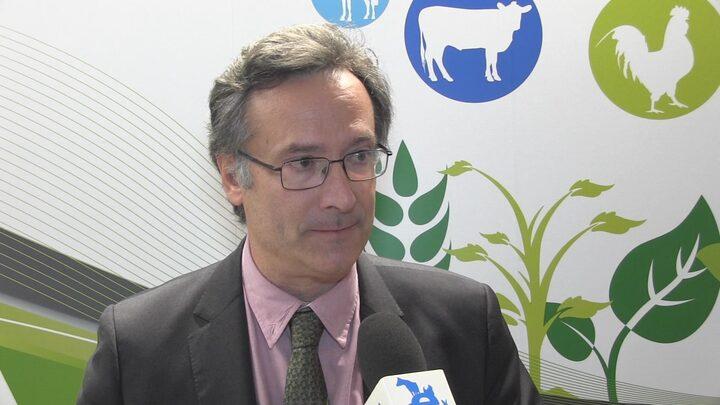
Antonio Martínez Sánchez, General Manager at LIPTOSA, explains the mode of action and uses of some phytogenics solutions.
Certain information associated with products, their composition and claims may be different depending on the geographical region and may not be applicable in all countries. Liptosa reserves the right to adapt to the requirements and legislation in each case. The information and technical recommendations provided herein are based on Liptosa's current knowledge and...
Comments : 2
Recommendations: 3

Cordyceps militaris is widely used as a tonic for vitality and longevity for thousands of years by the Chinese, it is a rare and exotic Chinese medicinal mushroom. Cordyceps militaris also used for a long time as a nutraceutical food in Korea and Japan. The medical potential of the metabolites of Cordyceps militaris has been widely reviewed. Cordycepin, or 3'-deoxyadenosine, is the major active secondary metabolite of Cordyceps militaris ....
Comments : 0
Recommendations: 1

Evonik’s animal feed solutions quench livestock thirst and reduce the environmental impact of meat and dairy production WHITEPAPER According to the UN, four billion people experience severe water scarcity for at least a month a year – and due to our unsustainable use of freshwater and other resources, water stress will increase further. One of the drivers is water-intensive meat and dairy production, which accounts for roughly a quarter of the global water...
Comments : 0
Recommendations: 1
by Sam Shafer
Broiler chickens show better growth and reduced liver problems when given brown seaweed extract or meal during times of heat stress
Chickens don’t do well in the heat. In fact, birds experiencing heat stress tend to eat less, grow slower, and even have compromised immune function. Heat stress is also a major cause of mortality for chickens and leads to considerable economic losses each year in the poultry...
Comments : 0
Recommendations: 0

Norel Makes History in Asia with the Opening of Its New Plant in Malaysia
Suggested link
by Sam Shafer
Poultry scientists find that Asp+Asn, Glu, or Glu+Gln supplementation can partly make up for low crude protein levels in male broiler chicken diets
A new study led by poultry scientists at the University of Hohenheim suggests it is possible to reduce crude protein in broiler diets while still encouraging bird growth—as long as birds receive supplementation with several “nonessential” amino...
Comments : 1
Recommendations: 0
Poultry scientists show that a few hours of darkness a day does not harm broiler chicks
Broiler chicks can be provided between 1 to 4 hours of darkness a day without negative consequences, according to a recent study led by scientists at the USDA Agricultural Research Service and Auburn University.
Their findings, published in The Journal of Applied Poultry Research, address the practice of rearing chicks with constant light during their...
Comments : 0
Recommendations: 1