Check out what is new in Poultry Industry
Technical and commercial information on Poultry Industry. Health, nutrition, management, genetics and reproduction in poultry industry.

Introduction In Syria chicken occupies a major place in production and consumption among poultry. It has become the second most popular meat eaten and is most likely to maintain this position. Chicken meat is a good source of protein and many nutrients, and is relatively low in fat, especially if the skin is removed. Chicken meat is also characterized by versatility in menu planning, ease of preparation, consistent quality, and the availability of wide range of pre-packaged, branded,...
Comments : 0
Recommendations: 0

INTRODUCTION The World Health Organization recognizes antimicrobial resistance (AMR) as a major health threat in the 21st century (1). A global projection predicts that the increase of deaths linked to AMR will develop from 700,000 in 2016 to 10 million deaths per year in 2050 while 100 trillion USD could be lost by 2050 (2). In this scenario, the use of antibiotics in food animal production is one of the most important issues contributing to the AMR crisis. In fact, over 50% of...
Comments : 0
Recommendations: 0

INTRODUCTION The introduction of antibiotics has revolutionized medicine, providing effective treatment for infectious diseases that were once fatal and enabling modern medicine, such as surgery and organ transplantation. Widespread resistance development thwarts the effectiveness and lifespan of antibiotics, calling for the discovery of new drugs in the perpetual standoff against human pathogens. Most antibiotics used in the clinic originate from natural product scaffolds that...
Comments : 0
Recommendations: 0

1 Introduction By 2050, the world’s population is predicted to increase to 9.8 billion people, threatening food security and causing shifts in consumer purchasing patterns (1, 2). Animal-derived meat products are central to the current food supply, accounting for 40% of the agricultural production value and 13% of the calories consumed globally. Furthermore, based on consumer patterns meat consumption is predicted to increase by between 62% to 144% by 2050, with...
Comments : 0
Recommendations: 1
Introduction Every animal production system experiences stress because of the numerous stressors on the farms. Stress is a biologically adaptive response to re-establish homeostasis (1). Heat stress is a variant of environmental stress caused by an increase in environmental temperature (and humidity) beyond the thermotolerance of an animal. Poultry birds possess a narrow range of thermoregulatory thresholds and are sensitive to environmental temperatures, which can pose as a...
Comments : 0
Recommendations: 3
1. Introduction Salmonella enterica has emerged across the globe as a threat to health systems [1]. Serovars of this species can infect humans, causing diverse effects varying from typhoid fever to gastroenteritis [2]. Non-typhoidal Salmonella (NTS) is associated with millions of infections and thousands of deaths annually around the globe [3,4]. S. Typhimurium and S. Enteritidis are considered the principal serovars associated with human infections; nevertheless, S. enterica subsp....
Comments : 0
Recommendations: 0


1. Introduction Antimicrobial resistance (AMR) is one of the top 10 global threats to public health and is thought to be partly driven by the widespread use of antibiotics in food-producing animals (WHO, 2021). Globally, a greater proportion of the tonnage of all antibiotics sold are for use in food-producing animal sectors compared to for use in humans (Van Boeckel et al., 2017). In 2017, an estimated 93 million kilograms of active ingredient were sold worldwide for use in...
Comments : 0
Recommendations: 0
INTRODUCTION Demand for poultry source foods is increasing, particularly in developing countries (1), and this is driven primarily by population growth (2, 3). To keep pace with the growing request for poultry products, farmers now use antibiotics at minute doses to reduce the incidence of enteric pathogens, improve feed conversion ratio (FCR) and body weight gain (BWG) in broiler chickens (4). Despite the significant economic benefit of AGPs in large-scale broiler production, their...
Comments : 0
Recommendations: 1
.jpg&w=3840&q=75)


INTRODUCTION Consumer preferences are leading to changes throughout the poultry industry (Northcutt and Jones, 2004; Fanatico et al., 2005; Meneses et al., 2017). From 2016 to 2017 the amount of organic poultry production has increased by 76%, holding a 2016 market share of $750 million (Philips, 2017). This is compared to an increase of the total organic agricultural farming market share which rose only 23% (Philips, 2017). This is partially influenced by consumers believing the...
Comments : 0
Recommendations: 1

.jpg&w=3840&q=75)
Kurt Wegleitner, Managing Director of Phytobiotics, highlights key takeaways from the IQ Seminar 2023, which took place in Germany....
Comments : 0
Recommendations: 1

Sustainability and profitability in animal production: a necessary and possible balance
Suggested link


1 | INTRODUCTION Due to the impact of climatic changes and other global events such as conflict, the Covid‐19 pandemic, recession, and supply chain issues, conventional feed ingredient prices are continually increasing. The effect of these constraints is felt largely in developing countries that are coming under huge pressure to source raw materials such as corn and soybean meal (Abro et al., 2020). The search for alternative feed ingredients to sustain the livestock...
Comments : 0
Recommendations: 1


Introduction The concept of maintenance has been defined as the state of balance between the intake of nutrients and their inevitable losses (Siqueira et al., 2011; Silva et al., 2014; Soares et al., 2019). That contributes to an understanding of the differences in responses between individuals of a population and enhances the requirements concept. Different methodologies have been developed to estimate nitrogen and amino acid requirements for maintenance (Burnham and Gous, 1992;...
Comments : 0
Recommendations: 0


FIGAP 2026: The Scientific And Technological Exhibition Of The Livestock Industry
Suggested link

Heat stress is a huge problem in farm animals, as their welfare and performance can be negatively affected by extreme environmental conditions. When animals are exposed to very high or low temperatures outside their comfort range, they might experience heat stress. This can bring about various unfavorable consequences, such as decreased food intake, reduced zootechnical performance, alterations in the immune system, and increased susceptibility to diseases. Mechanisms through which...
Comments : 5
Recommendations: 3


Introduction Poultry, due to its genetic, nutritional and managemental upgradation have become a source for quick productivity. But, skyrocketing conventional ingredients, fluctuating managemental conditions, and other quality parameters of rearing birds, farmer...
Comments : 1
Recommendations: 0

Veterinary APIs Market Overview: Cost Pressures and Post-Holiday Price Adjustments
Suggested link

In the first half of 2023, Life Rainbow mycotoxin analysis lab collected 141 feed samples of raw materials and feed mills in farms and analyzed them. The survey provides essential information on the feed pollution situation of Aflatoxins (B1, B2, G1, and G2), Zearalenone, Fumonisins (B1, B2, and B3) and deoxynivalenol (DON) in Taiwan. All the samples were analyzed using ELISA Mycotoxin analysis kit. Results: 141 feed samples were collected, and 80.1% were...
Comments : 2
Recommendations: 2


Spondylolisthesis, often called ‘kinky back’, is a deformity that affects broiler chickens’ spines. The deformity occurs in the fifth and/or sixth vertebrae (T6) and leads to spinal cord compression making it hard for birds to walk, and in severe cases it can cause...
Comments : 0
Recommendations: 0


The Future of Feed Additives: Regionalization, Alternative Raw Materials, and Preventive Health
Suggested link
ABTL Limited's Chairman & Managing Director, Mr. O.P. Singh, Honored as the Best CEO in the Poultry Industry for 2023
NRS Events, in collaboration with Poultry Fortune magazine, bestowed the prestigious "Best CEO Award 2023" to Mr. O.P. Singh, Chairman & Managing Director of ABTL...
Comments : 1
Recommendations: 1


The first few days of life are some of the most important in chicks' lives. During this time, chicks start developing and set themselves up for the rest of their lifetime. The husbandry decisions made at this point can impact the birds' growth, development, health and welfare. This newsletter will focus on three important...
Comments : 0
Recommendations: 0
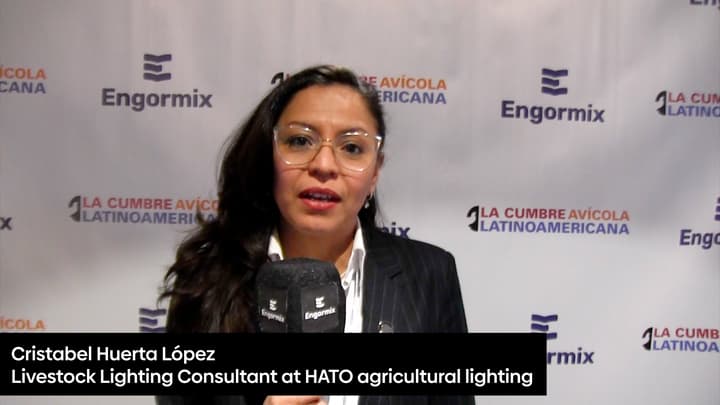
Lighting as a Strategic Tool for Optimizing Poultry House Performance
Suggested link

I. Introduction Feed is the largest cost in poultry production, particularly in recent times due to the increased price of protein and energy sources. Feed cost can be reduced with the inclusion of alternate protein and energy sources like pearl millet, deoiled rice bran (DORB), meat and bone meal (MBM), dried distillers’ grains with solubles (DDGS) and mustard deoiled cake (MDOC) replacing soya bean meal (SBM) and corn. However, these alternate ingredients have low...
Comments : 0
Recommendations: 0
1. Introduction Air emissions from concentrated animal feeding operations (CAFOs), are reported to cause health impacts for both the animals and humans exposed [1–3]. The concentration of fine particulate matter (PM 2.5 ) and gases emitted from CAFOs can have regional impacts on people living in the area around them [3–7]. More recent studies show that emissions from agricultural facilities can cause the nitrogen enrichment of soils and waterways [8]. While...
Comments : 0
Recommendations: 1