Check out what is new in Poultry Industry
Technical and commercial information on Poultry Industry. Health, nutrition, management, genetics and reproduction in poultry industry.


Madalina Diaconu (EW Nutrition) explains their current projects, as well as their solutions aimed at helping producers with important challenges, such as Coccidiosis and Necrotic Enteritis, during this Engormix interview at IPPE 2026 in Atlanta. ...
Comments : 0
Recommendations: 0


Dr. Ajay Awati (EW Nutrition) comments on the advantages of using a xylanase product, among them thermostability, during this Engormix interview at IPPE 2026 in Atlanta. ...
Comments : 0
Recommendations: 1

The Role of Amino Acids in the Immune System – A special focus on broilers.
Suggested link

WHY IN VITRO METHODS MATTER Traditionally, diet formulation has relied on in vivo trials to determine digestible and metabolizable energy. These trials are accurate but slow, costly, and raise ethical concerns. Existing in vitro systems, meanwhile, are often too simplistic or poorly standardized to replace live-animal trials. Simulated Digestion System (SDS III) changes this. Developed over more than a decade of research, it uses computer-controlled digestion to simulate the...
Comments : 1
Recommendations: 0



Gwen Venable (Executive Vice President - Expo & Communication Services) comments on the success of IPPE 2026 in Atlanta, and shares the dates for next year's edition: Jan. 26-28, 2027. ...
Comments : 1
Recommendations: 2



Mr. Al Faiz Bathi of Anns Poultry, which manages a 100,000-layer farming capacity in Chhattisgarh, discusses why the use of plastic trays should be limited to farmers and why paper trays are a better alternative. He also highlights the importance of increasing awareness regarding the use and management of poultry waste and manure. ...
Comments : 0
Recommendations: 0


Dr. Rishabh Chugh, Director of Brinda Feeds Private Limited, shares his perspective on the evolving poultry feed sector in India. He discusses feed cost volatility, the role of alternative protein ingredients, sustainability through local sourcing, and the need for innovation, education, and smarter regulation to drive the industry forward. ...
Comments : 0
Recommendations: 0


FIGAP 2026: The Scientific And Technological Exhibition Of The Livestock Industry
Suggested link

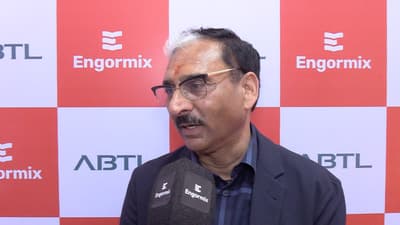
Dr. Sanjeev Gupta, Owner of Khusboo Feed Mills & the Vice-President of Poultry Federation of India highlights the challenges the farmers were facing due to over-production and less chick & feed prices. He also conveys that all the associations should come together & promote eggs and its benefits. There are a lot of myths around the consumption of eggs and how we can make India a protein deficit free country. ...
Comments : 0
Recommendations: 2
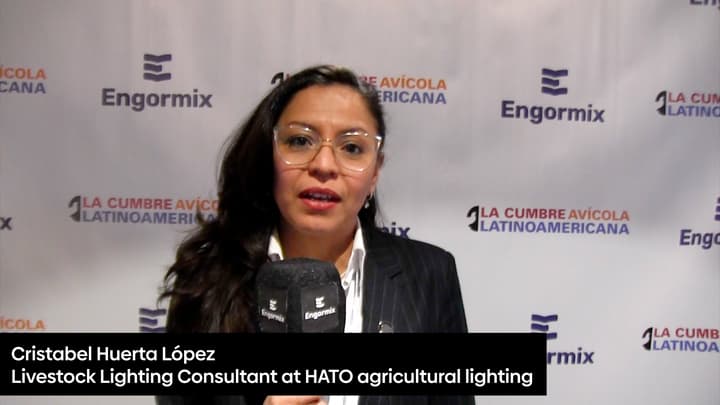
Lighting plays a central role in every poultry house. It influences animal behaviour, supports daily routines, and contributes to overall farm performance. When lighting works well, everything else runs smoother. We’re announcing the next generation of CORAX and PULSA lighting systems - built to meet...
Comments : 0
Recommendations: 1
.jpg&w=3840&q=75)

Jonathan Cade comments on his new role as Chairman of the U.S. Poultry & Egg Association
Suggested link
Featured comment:


It is not common to have discussions that bring blood composition data to support some bird health condition, as Dr. Cotter said regarding toxins. I believe that the poultry (broiler, laying hens, and breeder hens) hematology information can come as support to different diagnostics, as it happens in humans and other species, such as horses, dogs, and cats. ...
Comments : 37
Recommendations: 15

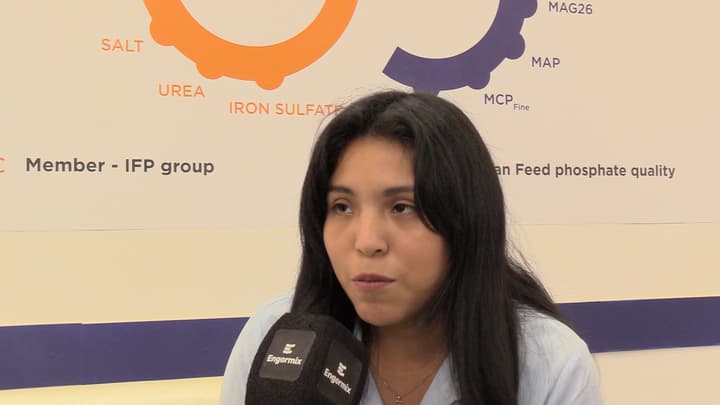
Jetsabel Gutiérrez Vallejos, Poultry Product Manager at Phosphea, explains how the interaction between calcium and phosphorus directly influences digestibility, bone development, and the metabolic functions of poultry.
...
Comments : 0
Recommendations: 0

Adisseo announces the appointment of Li Bo as Chairman of the Board and Chief Executive Officer
Suggested link

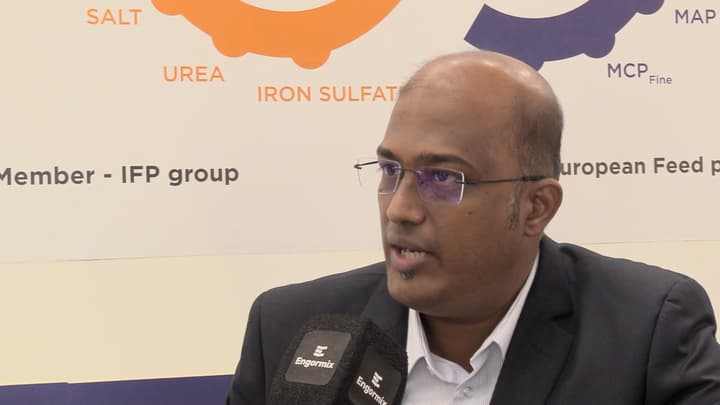
Ravi Renganathan, Director-Asia Pacific at PHOSPHEA, discusses the evolving phosphate market in India, emphasizing import dependency, regulatory challenges, and rising costs for feed producers. ...
Comments : 0
Recommendations: 0

Hy-Line International and Garanti have been revolutionizing the poultry industry since 2018. Through this partnership, Aysum Yilmaz, Export Sales Manager at Garanti, discusses the incredible efficiency and productivity achieved. ...
Comments : 0
Recommendations: 0
The introduction of the W80 variety by Hy-Line International marked a turning point in the Egyptian poultry market with unmatched demand and performance. Hy-Line International has transformed how we see poultry quality today, continuing the legacy of excellence since MIPCO, led by Yasmine El Alaily, started importing Hy-Line breeds in 1987. ...
Comments : 0
Recommendations: 0


Jonathan Cade, President of Hy-Line International, shares how the company has developed a new egg layer variety tailored to India’s climate, market needs, and production systems. He also speaks about Hy-Line’s commitment to support India’s rapidly evolving layer industry with genetics built for long-term success.
...
Comments : 0
Recommendations: 1



1. Introduction Eggs offer accessible and affordable sources of high-quality protein along with important micronutrients [1]. With the growing population, demand for table eggs continues to rise [2]. Meanwhile, consumers are demanding improved animal welfare, with a notable shift in table egg production from caged to cage-free (CF) systems [2,3]. Considering the welfare issues in conventional cages (CC), CF housing systems are gaining momentum globally [4,5]. As part of this trend,...
Comments : 0
Recommendations: 0


1. Introduction The ongoing pandemic of a highly pathogenic avian influenza virus (HPAIV) of subtype H5N1 (goose/Guangdong lineage [gs/GD]), clade 2.3.4.4b, is posing an unprecedented threat, impacting both industrial and small-scale poultry operations [1,2]. Similarly, HPAIV infections in wild birds, particularly those leading to mass mortalities among colony-breeding species, are exerting significant pressure on avian biodiversity [3,4]. The recent increase in spillover...
Comments : 1
Recommendations: 0



1. Introduction Over the last few hundred years, humans have influenced the evolution of multiple animal species and different ecosystems involved in animal production [1]. This approach has led to the genetic change of domestic animals and has undoubtedly been driven by agriculture. The most important genetic changes in poultry production have occurred in the previous 60 years. Modern broiler chickens are likely the clearest example of these genetic improvements. Newborn chicks grow...
Comments : 0
Recommendations: 0



Mina Sedhom, Sales Manager at Cigalah, highlights the collaboration with ABTL, a global leader in enzyme manufacturing. This partnership has strengthened the performance across the UAE ...
Comments : 0
Recommendations: 1



1. Introduction Although the global production of duck meat reached 6.07 million tonnes in 2022 [1], an increase of 111.5% since 2000, there is limited information available on different areas of commercial duck production compared to broiler chickens, laying hens, or even turkey. Along with the increase in meat production due to more ducks being raised annually, there has been a significant improvement in genetic selection to increase the growth rate. Particularly, Pekin ducks have...
Comments : 0
Recommendations: 0

Dr. Christian Lukshed (Addcon) reports on the positive industry outlook and highlights Addcon’s concept of supporting animal performance ...
Comments : 0
Recommendations: 0