Poultry nutrition - Other additives
Alternative feed additives have promising importance in broiler production due to the ban on the use of certain antibiotics. The most used antibiotic alternatives in broiler production are phytogenics, organic acids, prebiotics, probiotics, enzymes, and their derivatives. Antibiotic alternatives have been reported to increase feed intake, stimulate digestion, improve feed efficiency, increase growth performance, and reduce the incidence of diseases by modulating the intestinal microbiota and immune system, inhibiting pathogens, and improving intestinal integrity. Simply, the gut microbiota is the target to raise the health benefits and growth-promoting effects of feed additives on broilers. Therefore, naturally available feed additives are promising antibiotic alternatives for broilers.
Cordyceps militaris is a well-known Chinese medicinal fungus that has been used as a nutraceutical food in several Asian countries. Cordycepin (3’-deoxyadenosine), a secondary metabolite produced from Cordyceps militaris has been demonstrated to exert a wide spectrum of pharmacological activities, such as anti-microbial and antitumor activities. However, the effect of cordycepin on immunomodulation in broilers is poorly investigated. In the current study, we...
Hear what Kai-Jens Kühlmann, Regional Program Manager, Feed Safety, at Trouw Nutrition, has to say about this topic
...
The genetic potential of modern broiler strains can only be exploited by focusing on their changed nutritional requirements. Feed is the most important aspect of poultry production which is primarily based on corn and soy, but the cost of feed ingredients for poultry diets continues to rise due to increased demand and decreased availability. This has resulted in rise in conventional feed formulations, making it important to understand the composition of alternative feed ingredients. The cell...
I. Introduction A consistent definition of aging was presented by DiLoreto and Murphy (2015). According to these authors, aging is the result of the non-functionality of the animal's cells, tissues and organs, caused by the stochastic degradation of its parts. This definition considers the changes that have occurred in laying hens that affect the rate of lay (Gu et al. 2021a, 2021b). The main changes are related to the digestive, reproductive system, endocrine glands and...
1-Monoglycerides of short and medium chain fatty acids (monobutyrin, monocaprin and monocaprylin) have shown positive effects on cell metabolism, intestinal integrity and immune system (Calder 2008). However, little is known about their effect on laying hen health, performance and egg quality. Therefore, this study was designed to add further insight into the applied benefits as well as optimal inclusion level of 1-monoglycerides of butyric, capric and caprylic acid on hen performance, their...
The use of antimicrobials in agriculture including broiler production is cause for concern due to the development of antibiotic resistant pathogens affecting both farm animals and humans (Marshall and Levy, 2011). Essential oils (EO) have been considered as promising alternatives to antibiotics. The aim of this study was to establish a standard in-ovo intervention using oregano EO to enhance resilience of new-born chicks against pathogens without compromising post-hatching performance. One...
I. Introduction The World Health Organisation has raised concern regarding increasing antibiotic resistance to commonly used antimicrobial drugs. In response, the use of antibiotic growth promoters in livestock production is being reduced each year, directed either by local government legislation or the pressure of consumer preferences. The objective of this study was to evaluate the effectiveness of several active compounds in maintaining bird health and performance when an...
I. Introduction Ingredients other than in-feed antimicrobial compounds can offer a sustainable approach to improving gastrointestinal (GI) health and animal performance. Efficient egg production and egg quality are of major importance to the poultry industry, but their optimisation is dependent on numerous factors. Nutrition and disease factors are among the most common factors affecting egg production and quality (Roberts, 2004). It follows that a healthy GI tract is required for...
An estimated 7.3 million tonnes of food waste are dumped annually in Australia, leading to substantial environmental and economic losses (Arcadis, 2019). Additionally, poultry feed represents the majority of production cost. Therefore, an experiment was designed to evaluate food waste as a feed for laying hens. A total of 150 Isa Brown laying hens at 24 weeks of age were allocated to 3 treatments (50 replicates per treatment) on the basis of body weight to maintain uniformity between the...
Amanda Cobucci, Techno-Commercial Manager at Proteon LATAM, speaks about how bacteriophages modulate the microbiome to improve animal health...
INTRODUCTION For many years now, the formulation of least cost diets to maximize poultry production has been the focus area for feed compounders and animal producers around the world. Formulating inexpensive high-quality feeds requires highly nutritious ingredients that are easily accessible and whose market prices are low. However, over-reliance on maize and soybeans as major ingredients during diet formulation contributes to high feed costs due to their exorbitant market...
In a bid to enhance animal health and nutrition for sustainable food security in Sub-Saharan Africa, Livestock Industry Foundation for Africa (LIFA), with the support of the Zoetis Foundation, orchestrated a groundbreaking initiative in West Africa titled “Knowledge Update on Poultry Health and Nutrition.” This transformative program aimed to impart critical knowledge and skills to enhance poultry health practices in the region.
Spanning two significant sessions held on...
Proteon Pharmaceuticals modulates the microbiome to improve animal health. Our products allow farmers to reduce the need to use antibiotics, enable more sustainable agriculture, improve food safety/quality and increase productivity by eliminating on-farm animal health challenges....
Respiratory infections are the most important group of diseases affecting poultry. They occur worldwide but especially in temperate areas during autumn and winter months. Several pathogens may initiate respiratory diseases in poultry, including a variety of viruses, bacteria and fungi. The profitability of the farm is...
Dive into the world of feed safety, efficiency, and sustainability with Dr. Kai Jens Kuehlmann, the distinguished Program Manager for Feed Quality at Trouw Nutrition. Discover his expert take on the critical issues shaping today's livestock industry. ...
Theresia Lavergne (Natural Biologics) To produce resilient and healthy poultry, it is necessary to understand the effects of diet and dietary feed additives on the microbiome and its development. This trial was conducted to evaluate the microbiota of broilers 14, 28, and 42 d of age, while feeding them a combination of yeast postbiotics and fermentation extracts (Provillus 4Poultry). A total of 300 Ross 308 male chicks were allotted to 2 treatments:...
Kostas Mountzouris (Agricultural University of Athens) shares his research on modeling responses through molecular analytical data, linked to animal homeostasis, during the 11th Symposium on Gut Health in Production of Food Animals in St. Louis, USA....
Theresia Lavergne (Natural Biologics) comments on her research on the antiviral properties of medium-chain monoglycerides in pigs with PRRS challenge, as well as future tests on poultry viruses, during the 11th Symposium on Gut Health in Production of Food Animals in St. Louis, USA....
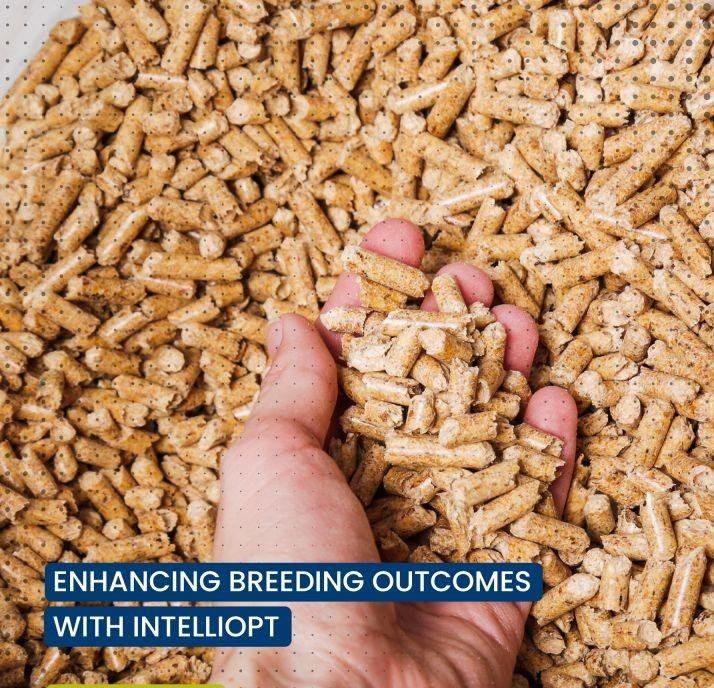
Breeding is crucial in livestock management, ensuring continuous production and maintaining genetic excellence. Better breeding results mean healthier offspring, higher birth rates, and enhanced herd or flock health. Nutrition is pivotal for breeding success in most livestock. Balanced diets, rich in essential vitamins, minerals, and nutrients, help animals achieve their full reproductive potential. We present IntelliOpt, the solution for effective nutrient utilization...
Ryan Arsenault (University of Delaware) Significant research and development has been committed to finding alternatives to antibiotics that are at least as effective as conventional antibiotics in preventing disease and promoting growth. It has been well known for 70 years that antibiotics have this dual disease/growth effect. However, it was only around the turn of the century that consideration of antibiotic host effects on growth and immunity were...







.jpg&w=3840&q=75)


.jpg&w=3840&q=75)








.jpg&w=3840&q=75)
.jpg&w=3840&q=75)







.jpg&w=3840&q=75)