Explore all the information on
NIR - Feed analysis
Welcome to the page about NIR - Feed analysis of Engormix; a source of knowledge on NIR - Feed analysis.

1. Introduction Mycotoxins are naturally occurring small-molecule secondary metabolites produced by certain mold species, primarily from Alternaria, Aspergillus, Claviceps, Fusarium, and Penicillium genera, among others [1]. The production of mycotoxins can occur globally in numerous crops and under a wide range of environmental and agronomic conditions, from field production through harvest, storage, and feed out. Some of the major factors affecting mycotoxin production...
Comments : 0
Recommendations: 0

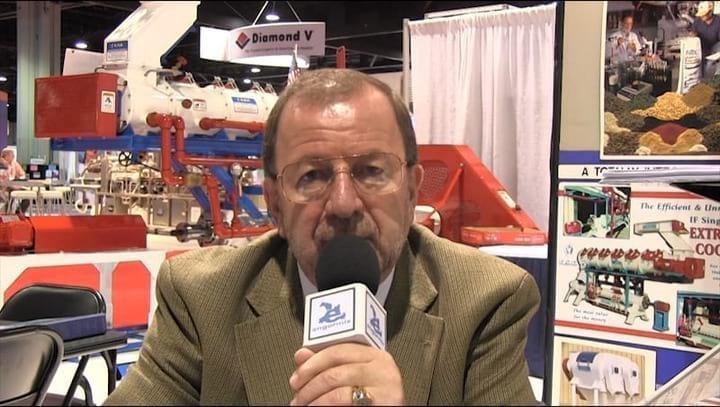
Nelson Ruiz (Nelson Ruiz Nutrition, LLC) explained the difference between the two methods through a comparative study, during IPPE 2019 in Atlanta, USA....
Comments : 16
Recommendations: 3
Recommended events
January 25, 2027
United States - Georgia - Atlanta

1. Introduction Over the years, broiler chickens have been selected for rapid growth, which makes them very efficient at depositing body protein in a short period of time. This is important since the broiler sector is expected to contribute to the growing global demand for poultry meat. In light of this, the quality of proteins fed to poultry is becoming more important. Animal and plant ingredients are the main sources of protein used in poultry diets and they vary in...
Comments : 0
Recommendations: 1

1. Introduction Food safety is one of the most urgent global challenges in current times [1]. Since the world population will multiply in the next decades, the demand for resources will increase significantly, and we will need more quantity and higher quality of feed and food [2]. Additionally, the world will have to face the consequences of climate change that will affect the functioning of ecosystems, which directly and indirectly involve human and animal health as well as the...
Comments : 0
Recommendations: 0
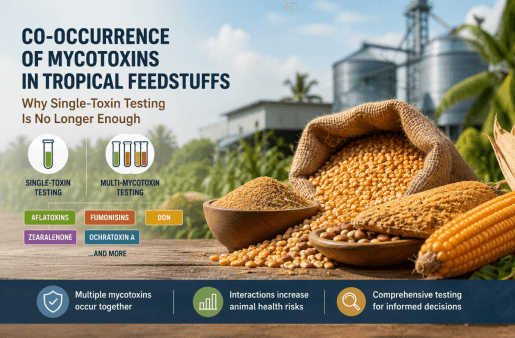
Tropical and subtropical regions across South and Southeast Asia, Latin America and sub-Saharan Africa contribute a major share of worlds maize, sorghum, groundnuts, cottonseed and other important feed ingredients. However, these regions also face a major challenge- climatic condition that strongly encourage fungal growth and mycotoxin contamination. High temperatures, heavy humidity and regular rainfall create an ideal environment where several toxin producing fungi can grow...
Comments : 0
Recommendations: 0

Clement Soulet (Cargill) comments on how performance determines these thresholds and highlights the impact of multi-mycotoxin contamination in this Engormix interview. ...
Comments : 0
Recommendations: 1

Clement Soulet (Cargill) discusses four important steps in risk management strategies and offers recommendations on mycotoxin mitigation in this Engormix interview. ...
Comments : 0
Recommendations: 0
Clement Soulet (Cargill) explains how the Global Mycotoxin Report is conducted, shares its findings, and analyzes concerning trends and very useful data in this Engormix interview. ...
Comments : 0
Recommendations: 0

Effective poultry nutrition depends heavily on the quality of protein sources, with soybean meal (SBM) serving as the industry benchmark. This technical analysis, based on research and protocols established by Mahmoud Abdallah and the technical team at Advance Support , highlights the critical balance required during the thermal processing of soybeans to neutralize anti-nutritional factors (ANFs) without compromising...
Comments : 0
Recommendations: 0

Author details: 1 Department of Animal Sciences and Industry, College of Agriculture, Kansas State University, Manhattan, KS, USA 66506-0201; 2 Gordon Denny, LLC, Thornton, CO, USA 80602; 3 Agri Networks Management, Old Saybrook, CT, USA 06475; 4 Bunge North America, Chesterfield, MO, USA 63017; 5 Agricultural Research Service, U.S. Department of Agriculture and Divisions of Plant Sciences and Animal Sciences, University of Missouri, Columbia, MO, USA 65211; 6 Department...
Comments : 1
Recommendations: 0


FIGAP 2026: The Scientific And Technological Exhibition Of The Livestock Industry
Suggested link

When a Laboratory Result Changes Everything The laboratory report arrives late in the morning. The batch complies with all nutritional specifications… except one. A trace of a coccidiostat is detected in a premix intended for a non-target species. The level is very low, only a few milligrams per tonne. And yet, doubt immediately arises: where did it come from? The previous product? Residual material in the circuit? A fraction of dust trapped in a filter? Nothing...
Comments : 0
Recommendations: 1

Extreme rains in northwest Iowa have caused instances of stored grain being covered with floodwater. According to current Food and Drug Administration policy, grain inundated by uncontrolled river or stream water is considered adulterated and must be destroyed. The current situation is one of river water flooding rather than of rain-driven pooled water in low ground, for which there are salvage options. River-based floodwaters can bring in many hazards and rapid spoilage. Flooding...
Comments : 0
Recommendations: 0



Introduction Animal production relies on the supply of nutritious feeds supporting high growth, welfare and health of animals and the production of high-quality products in an environmentally sustainable and profitable manner. With feed cost representing 50 to 80% of the total production cost, feed manufacturers have a very important role in the overall economic viability of animal agriculture enterprises. Animal production involves a complex “nutritional supply...
Comments : 3
Recommendations: 2
1. Introduction The term ‘Aflatoxins’ (AFT) typically refers to the sum of variants AFB1, AFB2, AFG1, AFG2, while ‘Fumonisins’ (FBs) refers to the sum of variants FB1 and FB2 [1]. These groups are mycotoxins produced by molds of genera Aspergillus spp. and Fusarium spp., which commonly colonize corn [2–4]. The contamination of corn by AFT or FBs (especially the main variant FB1) has health implications for consumers of corn-derived products. The AFT are...
Comments : 0
Recommendations: 1


James Wen (Evonik Animal Nutrition) explains how NIR calibration helps address feed ingredient variability by measuring factors like trypsin inhibitors and reactive lysine, ensuring consistent quality and nutrient balance for optimal animal performance.
...
Comments : 3
Recommendations: 2
Nelson Ruiz (Nelson Ruiz Nutrition, LLC) shares an overview of his research on KOH solubility, trypsin inhibitors, and over and underprocessing in this Engormix interview during IPPE 2025 in Atlanta, USA....
Comments : 0
Recommendations: 0

Mark Detweiler, Equipment and Technology Services Manager at Evonik, discusses how their proprietary AMINOSys® system uses vacuum technology to efficiently transfer dry materials, optimizing feed mill operations with better accuracy, space utilization, and cost savings....
Comments : 0
Recommendations: 0
James Wen (Evonik Animal Nutrition) discusses the 2024 Feeding Reading Report, highlighting nutrient variations across U.S. feed ingredients and the importance of quality control for nutritionists. The report helps producers optimize feed efficiency, reduce waste, and improve sustainability. ...
Comments : 0
Recommendations: 1
FIGAP 2026: The Scientific And Technological Exhibition Of The Livestock Industry
Suggested link
Nils Niedner (Evonik Animal Nutrition) highlights how MetAMINO® Calculator and AMINONIR® help stakeholders make smarter, data-driven decisions in feed formulation. With rapid, precise analysis of raw materials and finished feed, these tools ensure optimal nutrition and cost efficiency....
Comments : 0
Recommendations: 2
The U.S. Food and Drug Administration updated the Mycotoxins in Domestic and Imported Human Foods Compliance Program to include the monitoring of additional mycotoxins of regulatory interest in human foods, specifically T-2/HT-2 toxins and zearalenone. The updated compliance program also reflects the transition by FDA regulatory laboratories to a ...
Comments : 0
Recommendations: 0