Explore all the information on
Dairy cattle ruminal performance
Welcome to the page about Dairy cattle ruminal performance of Engormix; a source of knowledge on Dairy cattle ruminal performance.


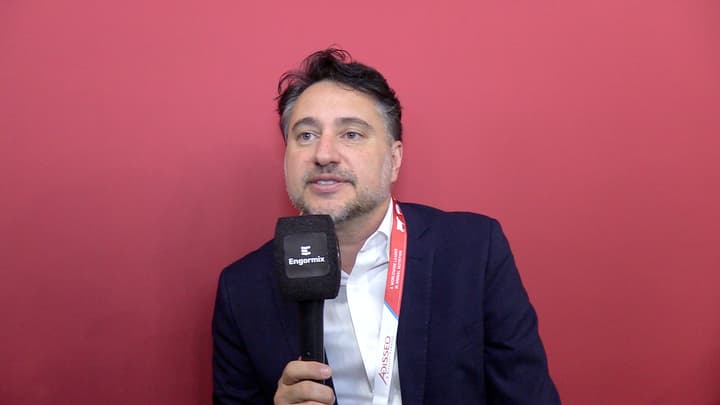
Stefano Vandoni, Ruminant Technical Services Manager for Italy and MEA at Balchem, speaks about the importance of balancing amino acids to maximize efficiency and performance in dairy cows. He explains how rumen-protected technologies ensure essential nutrients reach the animal precisely where and when they’re needed. ...
Comments : 3
Recommendations: 1

1. Introduction High-producing dairy cows have high nutrient requirements, commonly met by feeding concentrated feeds rich in nutrients that can be digested and absorbed as volatile fatty acids in the rumen or as glucose and amino acids in the small intestine. Starch and protein are essential for rumen microbial growth, and a synchronized release and digestion of these nutrients in the rumen can enhance microbial protein synthesis and thus amino acids absorbed in the small...
Comments : 0
Recommendations: 0


This study aimed to evaluate the effects of sodium and calcium salts of malic acid (RUMALATO (R)) supplementation on rumen fermentation, CH4 emissions and productivity parameters in ruminants. Three...
Comments : 0
Recommendations: 0

A cow’s biology and genetics set the stage for her milk production potential. Thanks to genomics, the pace of genetic progress has accelerated in recent years, pushing that potential ever higher. But are we feeding cows to match it? Today’s dairy cows can achieve more with better nutrition, yet their ability to physically consume enough nutrients lags behind their rising requirements. ...
Comments : 1
Recommendations: 0


Introduction The first phase of lactation remains the most nutritionally stressful period for a dairy cow. Milk yield rises sharply while dry matter intake (DMI) increases more slowly, creating a temporary negative energy and protein balance. Many farmers respond by adding more protein, assuming it will automatically boost milk. Yet excessive protein rarely improves yield and often leads to higher nitrogen waste, liver stress, and feed costs. This article revisits the...
Comments : 0
Recommendations: 0


INTRODUCTION In the tropics, grasses are the main source of food for livestock; however, during the drought season, growth and quality of forages is low, affecting animals productivity. Therefore to evaluate alternatives for forage replacement during that period, turns necessary. Sugarcane is a crop produced in more than 100 countries worldwide, and its biomass production exceeds that of any other forage, making it a good animal feed strategy for sustainable agricultural...
Comments : 1
Recommendations: 1

Smart Sensors for Grain and Forage Management
Suggested link
This interview with Stefano Vandoni (Balchem) explores how TMR stability directly influences the effectiveness of rumen-protected nutrients such as amino acids. ...
Comments : 0
Recommendations: 0
Stefano Vandoni (Balchem) highlights how a new precision release lysine technology helps nutritionists and producers manage performance, feed costs, and ration variability. ...
Comments : 0
Recommendations: 0

Technical Advances in Vitamin Physical Properties and Premix Performance
Suggested link
Stefano Vandoni (Balchem) points out the importance of encapsulation for delivering key nutrients to dairy cows ...
Comments : 0
Recommendations: 0
Stefano Vandoni (Balchem) explains how Balchem leverages decades of expertise in encapsulated technologies to deliver reliable rumen-protected amino acids. He highlights the Aminoshure range and previews the upcoming next-generation lysine source designed for precision and consistent on-farm performance. ...
Comments : 0
Recommendations: 0



Dr. Claudia Parys shares insights on the mechanisms behind improved amino acid balance, microbial protein synthesis, and metabolic resilience, highlighting BoruCare® Capsin's role in advancing sustainable dairy production ...
Comments : 0
Recommendations: 0
Dr. Claudia Parys, responsible for the ruminant portfolio at Evonik Animal Nutrition, shares the inspiration behind developing a natural, capsaicinoid-rich solution designed to improve nutrient supply and milk production in lactating dairy cows. She also explains how this approach differs from traditional nutritional products and its unique benefits for dairy farming.
...
Comments : 0
Recommendations: 0

Spotlight: “Encapsulated nutrients can provide consistent, reliable and cost-effective alternatives to traditional feedstuffs. However, how well these products perform in terms of durability, rumen stability, intestinal release and, ultimately, cow performance vary depending on the encapsulation and manufacturing process utilized. Thus, it is critical that in situ , in vitro and in vivo research be used to evaluate an encapsulate’ s performance in...
Comments : 0
Recommendations: 1
Introduction : Choline is essentially a required nutrient for all dairy cows, with proven benefits on metabolic health, milk production, colostrum yield, and calf vitality. It offers a proven solution to help cows transition smoothly and boost productivity. Discover how this innovation benefits both herds and profitability. The Power of ReaShure®-XC Precision Release Choline - Choline has long been recognized as a critical nutrient for dairy cows, particularly...
Comments : 0
Recommendations: 0
Supplementation with sodium and calcium salts of malic acid positively impacts productivity and mitigates methane emissions in ruminants: Goats and dairy cattle as case studies
Suggested link
Spotlight: “The interaction between lysine and methionine in increasing milk fat and feed efficiency is a perfect example of why balancing for all essential amino acids is so important. In an ideal world, we could provide exactly the required amount of essential amino acids, but this is difficult with only rumen protected forms of lysine and methionine currently available in the market. In this case, if we only balance for lysine or methionine instead of both, we could be missing out...
Comments : 0
Recommendations: 0
Balchem Animal Nutrition & Health successfully concluded its European seminar series in the UK and Italy, welcoming more than 300 participants from 19 countries across Europe and the Middle East. The events featured top international speakers and...
Comments : 0
Recommendations: 0
.jpg&w=3840&q=75)
Benefits of Mitigating Heat Stress in Dairy Cows - Dr. Lance Baumgard, Iowa State University
Suggested link

...
Comments : 2
Recommendations: 1
In-Person Seminar with Dr. Mike Van Amburgh.
Join Balchem and featured guests in the UK and Italy for a full day of learning, research and conversation around amino acid nutrition and how you can help reach cows’ full genetic potential.
Speakers
Dr. Mike Van Amburgh, Cornell University
Dr. Usman Arshad, ETH Zurich
...
Comments : 0
Recommendations: 0
A cow’s biology and genetics set the stage for her milk production potential. Thanks to genomics, the pace of genetic progress has accelerated in recent years, pushing that potential ever higher. But are we feeding cows to match it? Today’s dairy cows can achieve more with better nutrition, yet their ability to physically consume enough nutrients lags behind their rising requirements. ...
Comments : 0
Recommendations: 1
Introduction The dairy industry continues to provide a nutritious food source to our growing global population. Throughout history this industry has undergone significant evolutions contributing to a “more sustainable” product. But what does sustainability really mean, and in animal agriculture, why do we care? According to the U.S. National Environmental Policy Act (NEPA) of 1969 sustainability is to “create and maintain conditions, under which humans and nature...
Comments : 0
Recommendations: 0