Check out what is new in Pig Industry
Find the best technical articles, forums, and videos on Pig Industry at Engormix. Enter now and interact with the world's largest agricultural social network.



Anita Menconi, Regional Business Director for Specialty Nutrition, Americas at Evonik, shares her perspective on how specialty nutrition will support animal health and performance toward 2026. She also addresses how nutrition and gut health solutions can help maintain productivity as antibiotic use in animal production continues to decline. ...
Comments : 0
Recommendations: 0


1. Introduction Feed sanitizers are a type of feed additive that, when applied to or mixed into feed, provide an antimicrobial benefit. Feed sanitization addresses significant economic and health challenges in swine production. Animal feed serves as a reservoir for various pathogens that can enter feed through multiple pathways including ingredients, dust, contaminated equipment, and wildlife [1–4]. Feed sanitization also prevents mold growth and mycotoxin development. Molds...
Comments : 0
Recommendations: 0

1. Introduction Poor sanitary conditions (SC) affecting herd health may be associated with improper biosecurity practices adopted in modern swine farms [1]. Poor or suboptimal herd health is often a target of concern due to a diversity of factors that may contribute to a high prevalence of infections, including a variety of pathogen sources and transmission routes [2,3]. In this way, mixing management of pigs from different origins, as occurs in large-scale pig operations using...
Comments : 0
Recommendations: 0


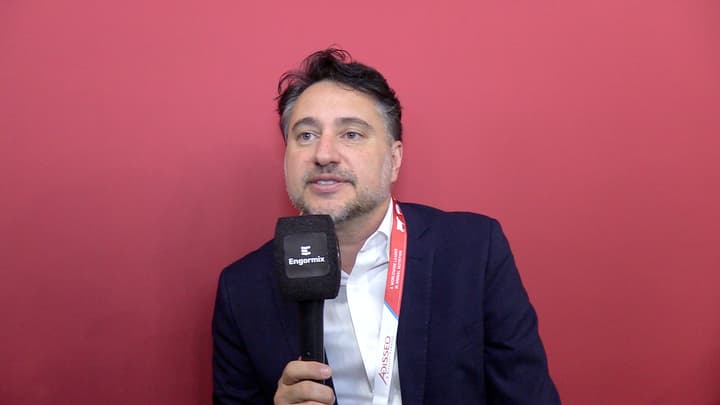
Fabiano Favarin, Global Business Director – Vitamins at Adisseo, discusses ongoing investment in vitamin technology, highlighting improvements in physical characteristics, reduced dust generation, enhanced premix homogeneity, workplace safety benefits, and the operational and economic impact of optimized vitamin handling. ...
Comments : 0
Recommendations: 0
Featured users in Pig Industry



Francis Simard
Trouw Nutrition
Agr., M. Sc. / Nutrition and Development Director at Trouw Nutrition Canada
United States
United States





Victor Naranjo, Technical Director at Evonik Animal Nutrition, explains the main challenges nutritionists face when designing more precise feeding programs. He also highlights the benefits of nutrient-modelling tools like AMINOSpec® and shows how diet customization helps improve efficiency and resource utilization in animal production. ...
Comments : 0
Recommendations: 2

Efficient grain and forage management has become a critical factor for profitability and sustainability in the agro-industrial and livestock sectors. Climate variability, post harvest losses, and input cost volatility are forcing companies to adopt precision technologies . In this context, smart sensors...
Comments : 0
Recommendations: 0
Standardized ileal digestible lysine requirements for 7- to 11-kg weanling pigs fed a corn-soybean meal-based diet
Suggested link
Adisseo updated its Microvit ® Nutrition Guide, reenforcing its commitment on vitamin nutrition close to feed producers. Producing vitamins for over 70 years and always focused on supporting the feed industry for improved animal...
Comments : 0
Recommendations: 1


1. Introduction Rye (Secale cereale L.) is a versatile cereal crop that is widely cultivated and known for its high winter hardiness and high drought and stress tolerance, suitable for infertile, acidic, or sandy soils (Miedaner and Laidig, 2019). These conditions make rye a major crop in Northern Europe, with 7.63 million metric tons being produced in 2023, and approximately 12.4 million metric tons produced per year globally in the last decade (USDA, 2024). Rye is also produced in...
Comments : 0
Recommendations: 0
INTRODUCTION β-mannans are plant cell wall polysaccharides of D-mannose units linked by β-(1-4) glycosidic bonds (Lee and Brown, 2022). β-mannans are a complex carbohydrate and may consist of a long chain of only mannose units or a chain of mannose units with side chains of α-1,6-linked galactose or glucose residues, resulting in galactomannans or galactoglucomannans, respectively (Chen et al., 2018). Soybean meal is a common plant protein in diets for pigs due...
Comments : 0
Recommendations: 0
Values for digestible energy (DE) and metabolizable energy (ME) in feed ingredients are usually determined in growing pigs and subsequently applied to all groups of pigs. Results of recent re search, however, indicates that the energy concentration of soy bean meal (SBM) is greater than previously thought when fed to growing pigs (Sotak-Peper et al., 2015; Lopez et al., 2020; Lee et al., 2021). This increase in energy may be a result of changes in genetic status of pigs or differences in...
Comments : 0
Recommendations: 1



Weaning is considered a critical period in the piglet’s life because it is related to several stressors, such as loss of contact with the mother and litter of origin, environmental and dietary changes, and the establishment of a new social hierarchy. In recent decades, due to the search for improving the zootechnical performance of weaned piglets, a range of molecules (e.g. antibiotics, copper sulfate, and zinc oxide) have been used as performance enhancers, resulting in the selection...
Comments : 0
Recommendations: 0


1. Introduction The swine industry faces numerous sanitary and environmental challenges that can significantly affect pig health and productivity (Le Floc’h et al., 2021; Gomes et al., 2023). These challenges include infectious diseases, environmental stressors, and management practices that can result in the overactivation of the immune system and oxidative stress in pigs (Pluske et al., 2018). Various challenge models have been employed to simulate commercial stress...
Comments : 0
Recommendations: 0


Veterinary APIs Price Index (VPi): March 4th 65.95 March 11th 66.35 March 18th 67.14 March 25th 67.57 Market trading sentiment has notably intensified, propelled by widespread price hikes across major categories, resulting in an increase in market inquiries and procurement. The veterinary APIs market is exhibiting robust performance overall, characterized by active inquiries and a favorable procurement environment. The market trend in the latter half of the...
Comments : 0
Recommendations: 0


Garros Fontinhas, Global Category Manager for Feed Digestibility Portfolio at Adisseo, explains how decades of enzyme innovation, the Feedase holistic approach, and targeted solutions enhance nutrient release, sustainability, and gut health in animal production. ...
Comments : 0
Recommendations: 1
Smart Agriculture and Livestock: A Data-Driven Revolution Artificial Intelligence (AI) is transforming operational decision-making by providing predictive analytics based on vast volumes of data. Technologies such as IoT sensors, drones, satellites, and thermal cameras are already generating...
Comments : 0
Recommendations: 1


Scientific rationale and the value of synergistic blends WHY SCIENCE MATTERS MORE THAN “NATURAL” CLAIMS? Pig production is undergoing a structural shift driven by antimicrobial-resistance concerns and stricter stewardship expectations. In the European Union, antibiotic growth promoters have been banned for years, and therapeutic use is increasingly controlled while prophylactic is no longer allowed. Producers are therefore expected to maintain performance and...
Comments : 0
Recommendations: 0
The veterinary APIs market is currently stable, although there are varying trends across different categories. In early February, prior to the Spring Festival, market sentiment was weak, leading to lighter transaction volumes. Following the holiday, the price of mequindox has seen an upward trend, supported by stronger cost-side factors. Manufacturers of amoxicillin have maintained firm pricing, while the market displays a strong wait-and-see attitude. Categories such as doxycycline hyclate,...
Comments : 0
Recommendations: 0
Two new high concentration protected sodium butyrate solutions delivering proven performance and optimal handling
Adisseo has launched Sanion Tetra 50 and Sanion Tetra 70, protected sodium butyrate additives with 50% and 70% active content. Produced in...
Comments : 0
Recommendations: 1
The True Future of the Agribusiness and Livestock Sector in 2026
Suggested link


Join Patricia Jazo, Director of FIGAP, as she invites the industry to FIGAP 2026, happening October 21–23 at Expo Guadalajara. A global meeting point for equipment, machinery, and now expanded nutrition—bringing the entire production chain together in one place. ...
Comments : 0
Recommendations: 5


Marcio Ceccantini, Global Technical Manager for Vitamins at Adisseo, discusses the evolving role of vitamins in modern animal production and introduces the Microvit® Nutrition Guide 2026, featuring updated recommendations for 18 species and 36 production phases to support performance and nutritional precision worldwide. ...
Comments : 0
Recommendations: 3