Explore all the information on
Feed pelletizing
Welcome to the page about Feed pelletizing of Engormix; a source of knowledge on Feed pelletizing.

Today’s livestock are fed complete or complementary feed given mainly in the form of pellets. This form gives better animal performance (average daily gain and feed...
Comments : 0
Recommendations: 4


1. Introduction Sorghum has been described as an enigmatic grain for chicken meat production because sorghum-based broiler diets have been associated with sub-optimal performance of chickens under Australian conditions (Selle et al., 2013). Six red 'tannin-free' grain sorghum varieties harvested on the Liverpool Plains of New South Wales in 2009 were extensively characterised and compared in broilers offered sorghum-casein diets (Khoddami et al., submitted for publication). On...
Comments : 0
Recommendations: 0

Sensors and Predictive Analytics in the Management of Silos and Forage Warehouses
Suggested link
Because of its high density, large capacity and good palatability, the feed pellet machine is very popular among farmers and feed processing manufacturers. The production volume and mechanical performance of the pellet machine are closely related to the production efficiency. In actual operation, many farmers use pellets because of low production, high wear and tear, and frequent replacement of parts. In terms of factors that restrict the yield of pellets, please explain: 1. If the machine...
Comments : 0
Recommendations: 0

Introduction The efficient use of feed is extremely important in broiler production. Investigations have to be continued to decrease cost of broiler production and improve broiler performance. Pellet feed has been shown to have the greatest potential to improve feed conversion ratio (FCR) and reduce cost compared to mash feed (Maiorka et al. 2005, Salari et al. 2006, Amerah et al. 2008). These improvements have been associated with changes in nutrients, digestibility and less...
Comments : 1
Recommendations: 1


Updated Vitamin Requirements Across Species: Microvit® Nutrition Guide
Suggested link

Dear all, In the aim to create a full ration mix that includes ( pellets + flakes + forage ) What is the best type of mixer to use in order to avoid flake and pellet from breaking. Regards ...
Comments : 0
Recommendations: 0


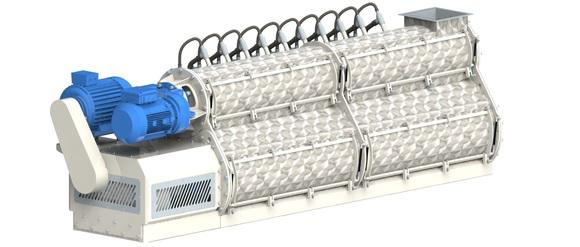
Conditioning is a process of hydrothermal treatment of powdery materials before pelleting of pellet feed. Domestic and foreign studies show that conditioning is one of the important factors affecting the quality of pellet feed, and it accounts for about 20% in the overall quality of pellet feed.
Learn more about #the role of conditioner in pellet feed processing# at: http://www.zhengchang.com/eng/index.aspx?cat_code=Zhengchang%20News...
Comments : 3
Recommendations: 0



Dear sir In my plant, Andritz pellet mill 60 tph , the die was not freely rotate by hand when the machine was stopped,(The main bearing changed 3 months back, main motor amps normal, out put also good) Kindly gives your advice Arul Anand M ...
Comments : 1
Recommendations: 0

Does yeast pro ingredients expand pellet diameter? During compression process of pelleting, discharged pellet copied the shaped of the die hole pattern with relief....
Comments : 0
Recommendations: 0
.jpg&w=3840&q=75)

Dear all, Any idea how can we increase production output (rate) of pellet mill considering non variable motor (fixed)? Common low rate those have dairy (high grains) type. Thanks. ...
Comments : 0
Recommendations: 0
Numerous studies on growth and digestibility have demonstrated the benefits of non-starch polysaccharides (NSP) degrading enzymes in poultry and pigs, which have led to a wide adoption of feed enzymes in the feed industries. On the other hand, all enzymes are live proteins with specific 3-dimensional structures and may be denatured by heat processing, which always poses a problem for incorporation of the enzymes into feeds when it comes to industrial applications. Rovabio Excel...
Comments : 5
Recommendations: 0
Sensors and Predictive Analytics in the Management of Silos and Forage Warehouses
Suggested link

...
Comments : 30
Recommendations: 4

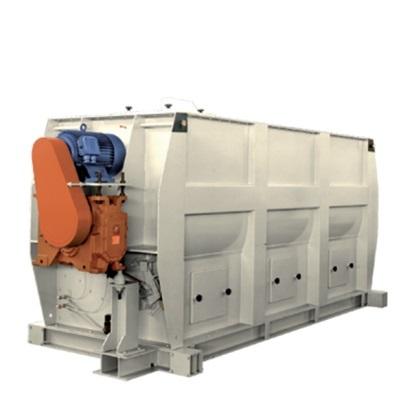
The mixer plays a vital role in the feed production process, with efficient mixing being the key to good feed production. In fact, only then the assortment of ingredients (formula) will create the best results and uniformity of the feed pellets is secured. Prior to the mixing process, the feed ingredients have been weighed and ground and the vitamins and minerals have been added to the feed compound. Basically, mixing (or homogenizing) means to transport the individual particles to an exact...
Comments : 0
Recommendations: 0
Updated Vitamin Requirements Across Species: Microvit® Nutrition Guide
Suggested link

1. Introduction In January 2014, the European Union presented some climate and energy targets to achieve in 2030 [1], which imply more contribution of renewable energies to the energy mix, although with a postponement of the achievement for these goals. The preceding scenario, the well-known 20-20-20 target, was signed in 2008 and implied, compared to 1990, 20% reduction in CO 2 emissions by 2020, consuming 20% less energy (with efficient and saving measures) and...
Comments : 0
Recommendations: 1
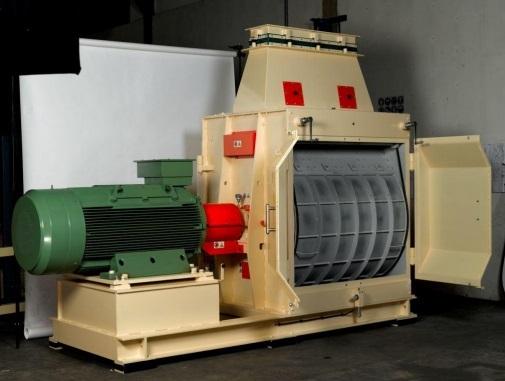
To produce pellets or extruded feeds of acceptable quality the particle size of the ground materials must be correct.
Finer grinding will result in a better-quality pellet or extruded feed, increases the capacity of the pellet mill or extruder, and reduces wear of the pellet mill or extruder working parts such as dies, rollers, and worms.
Because animal needs vary considerably, the degree of processing for various diets also must be different.
Ruminant animals such as cattle and sheep have...
Comments : 0
Recommendations: 0
To produce pellets or extruded feeds of acceptable quality the particle size of the ground materials must be correct. Finer grinding will result in a better-quality pellet or extruded feed, increases the capacity of the pellet mill or extruder, and reduces wear of the pellet mill or extruder working parts such as dies, rollers, and worms. Because animal needs vary considerably, the degree of processing for various diets also must be different. Ruminant animals such as cattle and sheep have...
Comments : 0
Recommendations: 0

Particle Size
Optimum particle size for best pelleting results has been a matter of controversy for almost as long as feeds have been pelleted. Young (1960) found no significant differences in pellet durability when he experimented with feed rations containing 40, 60, and 70 percent ground corn or grain sorghum when the grain portions were ground coarse, medium, and fine.
Martin (1984) compared pelleting efficiencies and durabilities using a hammermill and a roller mill to...
Comments : 1
Recommendations: 4


Introduction The global aquaculture production of food fish has increased tremendously over the last decade, reaching 62.7 million metric tonnes in 2011 or about 40.1% of world total fish production [1]. Asian seabass ( Lates calcarifer ) or barramundi is an important aquaculture species native to the Indo-West Pacific region [2] with increasing production currently estimated at 67,000 tonnes [3]. In collaboration with the Marine Aquaculture Centre of Agri-Food and...
Comments : 0
Recommendations: 1
Feed is too expensive to waste, so pellet quality has an economic value. There are a number of excellent methods to objectively measure and record the quality of pellets during the manufacturing process. This is the first step toward correcting destructive conditions and improving quality. Compound feed quality should be assessed by at least four different groups of characteristics: physiological characteristics, hygiene standards, environmental compatibility and technical...
Comments : 12
Recommendations: 1
Sensors and Predictive Analytics in the Management of Silos and Forage Warehouses
Suggested link
Pelleting has been, and continues to be, a popular processing technique in feed manufacturing. In basic terms, pelleting converts a finely ground blend of ingredients into dense, free flowing agglomerates (pellets). There are many reasons used to justify the process, but it may be appropriate to list just a few: - improved animal performance, - decreased feed wastage, - reduced selective feeding, - improved bulk density, - better material handling...
Comments : 2
Recommendations: 2

Good day. Sticking exclusively to the processing/treatment, I would like to specify some aspects to improve the use of fiber in pigs: - It is important to quantify the particle size of the most relevant grains, such as grasses: maize, sorghum and legumes: Soy, for example. The studies conclude that particles of maize grain and GF sorghum with respect to grains> 1,000 μm. In the case of Soy, it has been shown that between 600 and 700 μm is the recommended range in most diets for...
Comments : 1
Recommendations: 0