
Content sponsored by:
LIPTOSA
Effect of Nutrition on Hepatic Health
Published: December 22, 2025
Source : Daniel Díaz García, Degree in Agri-food engineering. Export Area Manager LATAM
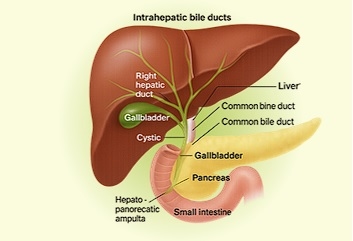
Within the digestive system, the liver is the primary organ for nutrient transformation and distribution, as well as the elimination and excretion of metabolites. The quality of nutrition has a direct impact on liver health, as the liver performs vital functions. A balanced diet supports liver function and prevents diseases. In contrast, imbalanced or contaminated diets can damage the liver, increasing the risk of diseases.
IMPORTANCE OF LIVER DEVELOPMENT IN EARLY LIFE (PIGS AND POULTRY)
In swine, the piglet is adapted to dairy nutrients, which are highly digestible, such as short-chain lipids, during the first few weeks. After weaning and during the following 8 weeks, it is necessary to promote digestibility until digestive maturity is reached.
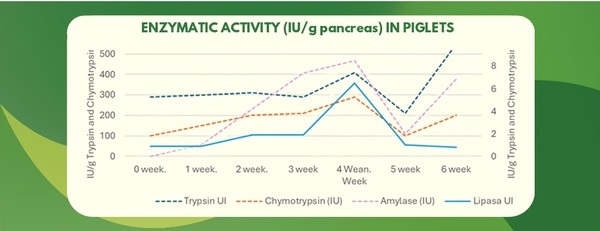
In starter diets, it is important to work with digestible fats (short-chain or polyunsaturated fats) and later use fats with lower digestibility, supported by emulsifiers (Medel, P et al. FEDNA, 1999).
In poultry, genetic improvement accelerates growth, requiring optimal nutrition in terms of quality and digestibility during the first week of life, to enhance their development.
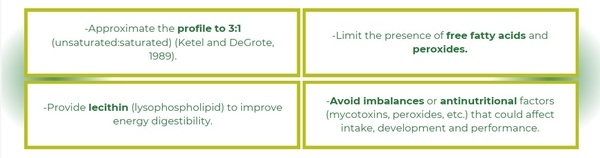
Chicks (Chávez, López, and Parra, 2016), from day 1st to day 10th of age, the use of highly digestible energy and protein are essential. During the first 2 days, the yolk (Noy and Sklan, 1998) is the main energy source, consisting of 66% triglycerides (38% saturated fatty acids, 62% unsaturated fatty acids), and 28% phospholipids (phosphatidylcholine). Later, the absorption of dietary lipids is low due to digestive immaturity, making it advisable to:
The liver should be protected from challenges that could damage it (pathogens, toxins, stress, etc.). Phytobiotics can reduce liver damage. In chickens challenged between 16 and 22 days of age, the use of phytobiotics (Carvajal et al., 2022 UDES) reduced inflammation and liver markers (AST and ALT). At 42 days, performance improved (weight, feed conversion, and efficiency).
The use of mycotoxin detoxifiers (FPA) in chicks (0-21 days) challenged with trichothecenes, helps to recover from liver and digestive damage, restoring the poultry's growth.
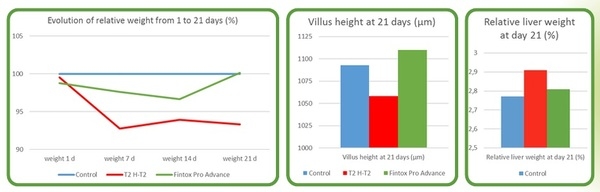
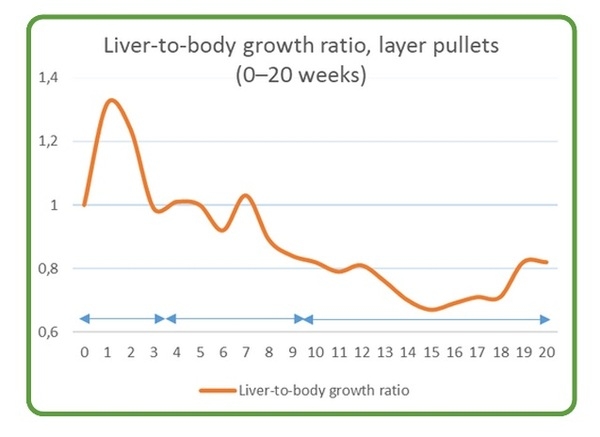
Liver development in laying pullets will determine the performance. The growth relationship between the liver and the poullet is very high during the first 3 weeks of life and remains high until week 7.
The lay of eggs requires 6 g/protein and 6 g/fat per day. The yolk fat is synthesized by the liver from energy. A good bird development, along with direct fat inclusion in the diet, reduces the hepatic effort and its synthesis from carbohydrates.
In poultry and swine, using fat sources with a profile like that synthesized by the liver improves fat utilization efficiency. The cost of converting carbohydrates or oils into fat is lower than converting one type of fat into another.
FEED QUALITY THAT INFLUENCES IN LIVER HEALTH
There are multiple factors in the feed that can put liver health at risk.
•Raw materials quality – microbiological, mycotoxins, antinutritional factors, peroxides, acidity.
•Composition:
- Deficiencies – choline, vitamins, amino acids, minerals
- Formulation: essential amino acids (methionine), energy balance (carbohydrates: lipids 3-4:1), protein balance (energy:protein), essential fatty acids (linoleic), ω-6:ω-3 ratio (5:1).
•Manufacturing temperatures or storage conditions affect levels of oxidation, microbiological factors, and toxic compounds for the liver.
MAIN LIVER FUNCTIONS THAT AFFECT NUTRITION
Digestion:
The main function of the liver in the digestive process is the synthesis of bile. Hepatocytes produce bile in the cytosol. A chicken weighing 2 kg (with a 30 g liver weight) can produce 15-20 g of bile per day.
The storage capacity in the gallbladder is limited (10%), and its emptying is important to stimulate hepatic synthesis. This process is activated by the feed intake.
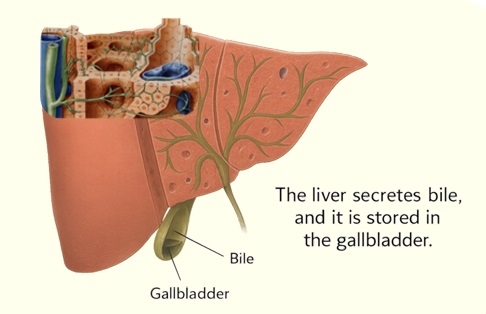
BILE SALTS INCREASE THE EFFICIENCY OF DIETARY ENERGY
Bile is composed of:
•Bile salts and phospholipids emulsifies of lipids (triglycerides, fatty acids, phospholipids, vitamins, etc.) as part of digestion and absorption.
•Bicarbonate regulates the pH to activate protease enzymes, lipase, amylase, etc.
•Eliminates bilirubin (from red blood cells), toxins, and cholesterol.
Metabolism:
Nutritional energy: glucose and lipids
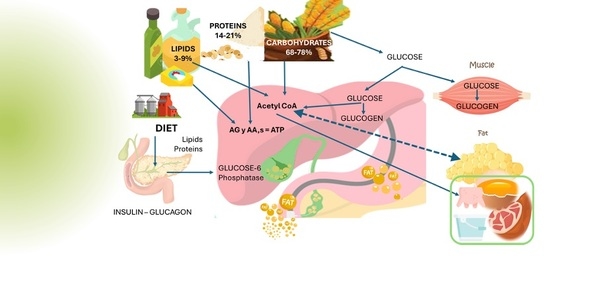
The liver obtains the energy (ATP) primarily through the β-oxidation of fatty acids and amino acids. It stores the excess of energy as fat or glycogen, which is later used for the production of acetyl-CoA.
Protein regulation:
In the hepatocyte, are synthesized 90% of plasma proteins, transport proteins, and precursor enzymes involved in detoxification (ALT, AST, GGT, phosphatase, and dehydrogenase).
The liver is essential for development, growth, and lactation
DIETS OF LOW DIGESTIBLE OR METABOLIZABLE ENERGY DO NOT ALLOW THE ANIMAL TO FULLY EXPRESS ITS PERFORMANCE AND GENETIC POTENTIAL

Detoxification
The liver metabolizes and eliminates endogenous and exogenous toxins from the diet.
Endogenous detoxification (amines, ketones) includes:
Exogenous detoxification (mycotoxins, drugs) follows different steps:
Biotransformation: Lipophilic toxins are converted into reactive compounds. This process generates free radicals, which require chemical detoxification through oxidation, reduction, and hydrolysis.
THE HEPATOCYTE REGULATES THE REDOX BALANCE; IF AN INCREASE OF RADICALS EXCEEDS THE REGULATORY CAPACITY, THE OXIDATION AFFECTS THE HEPATOCYTE ITSELF, CAUSING LIVER DISORDERS
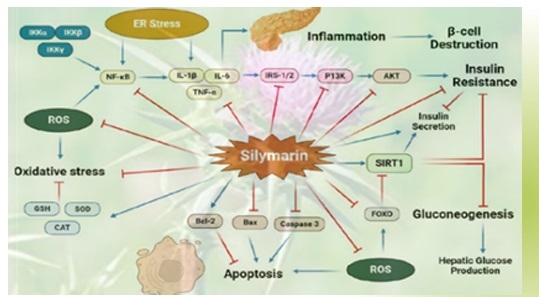
Conjugation: Neutralizes toxins through biochemical processes catalysed by transformation enzymes, converting them into water-soluble molecules for excretion.
NATURAL ANTIOXIDANTS (POLYPHENOLS) HELP IN THE HEPATIC DETOXIFICATION PROCESS
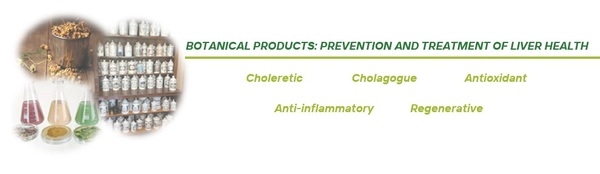
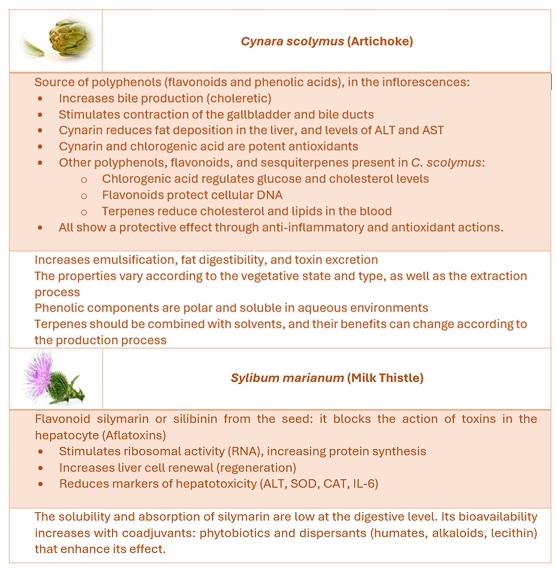
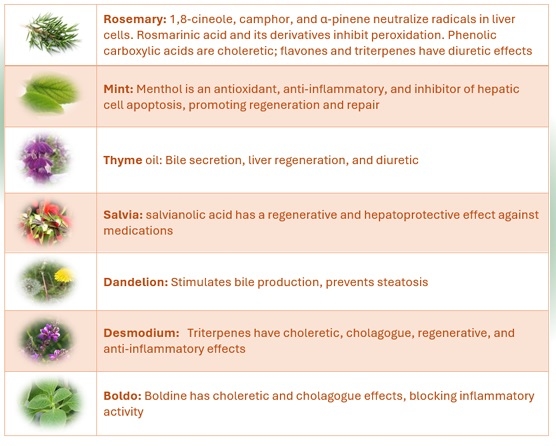
The liver health from the early stages of development is an important measure in the prevention of future disorders. Quality of feed formulation is a key factor in prevention and the solutions, as it allows the incorporation of functional ingredients and nutrients focused on the liver development, metabolism, and health.
Related topics:
Authors:


Influencers who recommended :
Martin SmithRecommend
Comment
Share

Would you like to discuss another topic? Create a new post to engage with experts in the community.
Featured users