Explore

Advertise on Engormix

Appetite gene expression and gut microbiota in broiler chickens with varying body weights: a new perspective on flock uniformity

Published: June 1, 2026
Source : Janghan Choi 1, Doyun Goo 2, Woo Kyun Kim 2* / 1 Department of Animal and Food Sciences, Texas Tech University, Lubbock, TX; 2 Department of Poultry Science, University of Georgia, Athens, GA.
Summary

Flock uniformity is critical in the broiler industry to ensure consistent processing yields, optimize feed efficiency, and reduce economic losses associated with size variation. The purpose of this study was to investigate differences in appetite-related gene expression and microbiota in broiler chickens with different BW. On D 18, birds were categorized into three BW groups within a flock: small (S; 300 to 400 g), medium (M; 400 to 500 g), and large (L; 500 to 600 g), with 8 replicates per group. Data were analyzed by ANOVA with post hoc Tukey's test (P < 0.05). The S group had significantly higher mRNA expression of taste receptor type 2 member 7 (T2R7; bitter taste receptor) in the upper palate and cholecystokinin (CCK) in the brain compared to the L group. In contrast, the S group had significantly lower expression of neuropeptide Y receptor Y1 (NPYY1) and NPYY2 in the brain, and taste receptor type 1 member 1 (T1R1; umami taste receptor) in the duodenum compared to the L group. No differences were observed in duodenal brush border enzyme activities (P > 0.05). The L group showed higher serum endotoxin levels compared to the S group (P < 0.05). No significant differences in phylum-level taxonomic abundance were observed in the cecal microbiota (P > 0.05). At the family level, the M group had a higher relative abundance of the family Bacillaceae compared to the L group (P < 0.05). Alpha diversity showed no significant differences (P > 0.05). Beta diversity analyses (Jaccard and unweighted UniFrac) revealed distinct microbial community structures among the different BW groups with visual separation of the S group, and unweighted UniFrac distances confirmed significant group differences (P < 0.05). In conclusion, BW variation within the flock was associated with differences in appetite-related gene expression, while differences in cecal microbiota and gut function were observed but their functional relevance in relation to BW variation remains unclear under the present conditions.

Keywords: Flock uniformity Feed intake Appetite-related gene Microbiota Broiler chicken

Introduction

Whereas modern broilers have low genetic variation and wellcontrolled rearing environment, there are still high variations in BW within a flock (Lundberg et al., 2021). While uniformity is a universal issue in poultry production, there are still no cost-effective interventions other than culling heavy and small birds to improve uniformity within a broiler flock (Choi et al., 2026). Poor uniformity can cause tremendous economic loss mainly by decreasing efficiency nutrition programs, increasing mortality, and inducing slaughterhouse rejection (Gous, 2018). Ideally, broiler production aims to achieve homogenous products for enhanced production efficiency (Mulder et al., 2009). Diverse factors including genetics, rearing environments (e.g., temperature and humidity), water and feed accessibility, feed composition, etc. can affect flock uniformity of broilers (Choi et al., 2026).
Desire for feed intake (e.g., appetite) would be regulated by the combination of visual, smell, taste, and texture properties of feeds (Te Pas et al., 2020). Birds are thought to be less sensitive to taste compared to mammals due to their lower number of taste buds (Niknafs et al., 2023). Nonetheless, it is widely accepted that feed intake remains the most predominant factor directly affecting body weight gain in broiler chickens (Ferket and Gernat, 2006). Moreover, the number of taste buds per oral cavity volume is higher than most mammals, and taste system plays an important role in poultry nutrition (Roura et al., 2013). Chickens have diverse nutrient sensing receptors for diverse nutrients in the oral cavity and gastro-intestinal (GI) tract: glucose receptor (sodium dependent glucose transporter 1; SGLT1), umami taste receptors (taste receptor type 1 member 1 and 3; T1R1 and T1R3), bitter taste receptors (taste receptor type 2 member 1, 2, 7; T2R1, T2R2, and T2R7), fatty acid receptors (G protein-coupled receptor 120 and 40; GPR120 and GPR40), calcium sensing receptor (CaSR), and sodium receptor (epithelial sodium channels; ENaC) (Niknafs and Roura, 2018). These receptors communicate with the brain by using sensory fibers and gut hormones (Tian et al., 2019). Finally, the agouti-related protein (AGRP) and pro-opiomelanocortin (POMC) in the brain increase and decrease feed intake of chickens, respectively (Joody et al., 2018). Previous research has shown that Eimeria infection in broilers reduces feed intake by modulating the expression of genes involved in appetite regulation, highlighting the critical role of these physiological pathways in determining growth performance (Choi et al., 2025). Broilers with lower BW within a flock may exhibit differences in taste-sensing mechanisms, potentially leading to reduced appetite and/or a less efficient gut ecosystem for nutrient utilization compared with their higher-BW counterparts.
Gut ecosystem refers that various components such as gut morphology, digestive enzymes, nutrient transporters and sensors, immune system, gut barrier integrity, and gut microbiota are interconnected and interact each other (Choi, 2019). Variations in the development of gut ecosystem in broilers within a flock can result in BW variation (Farkas et al., 2022). Therefore, it was hypothesized that individual differences in appetite regulation and gut microbial ecosystems could contribute to BW variation within a broiler flock. The objective was to investigate physiological differences, particularly in appetite-related gene expression and gut microbiota composition, among broiler chickens with divergent BW raised under identical environmental and management conditions.

Materials and methods

Experimental design, animals, and diets

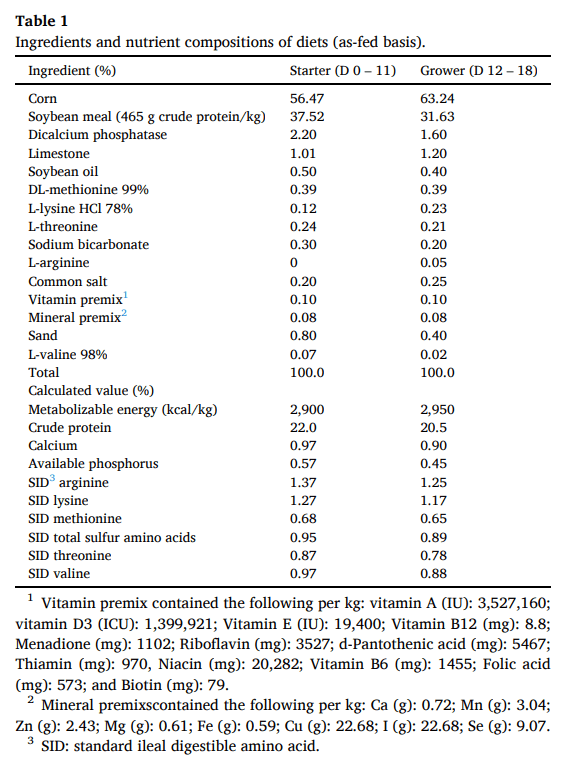
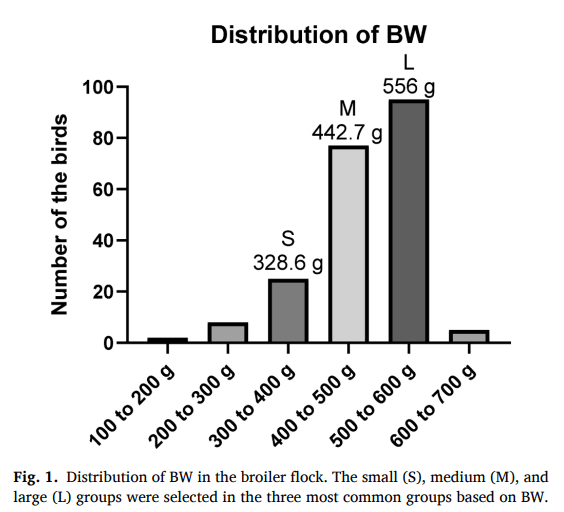
Institutional Animal Care and Use Committee at the University of Georgia, Athens, GA reviewed and approved the animal use and the current study (A2022 04-029). A total of 300 one-day-old broiler chicks (average BW 45.94 ± 0.08 g) were randomly allocated to 12 floor pens of 25 birds per pen (L: 1.52 m; W: 1.22 m; H:0.61 m), 13.48 birds per m2. Diets were formulated based on Cobb 500 Broiler Performance & Nutrition Supplement (2022) as shown in Table 1 (Cobb-Vantress, 2022). There were two phases: starter (D 0 to 11) and grower (D 12 to 18). Birds were managed based on Cobb 500 Broiler Management Guideline (Cobb-Vantress, 2021). All birds had free access to water and feed during the entire experimental period. On D 18, 8 pens with normal growth rate and mortality were selected, and individual weights of broiler chickens were measured. The three most common BW groups within a flock were 300 to 400 g, 400 to 500 g, and 500 to 600 g, and the three groups were determined as small (S; average BW: 328.6 g), medium (M; average BW: 442.7 g), and large (L; average BW: 556.0 g) groups (Fig. 1). One bird per group in the 8 replicated pen (e.g., total 3 birds per pen and total 24 birds) was selected.

Sample collection

Selected birds were euthanized via cervical dislocation. Blood was instantly collected from the heart into heparin-free Vacutainer tubes (Greiner Bio-One, Kremsmuenster, Austria) using an 18-gauge needle connected to a 5 mL syringe. After the blood samples were collected, they stood at room temperature for 1 h for clotting and were centrifuged at 1,000 × g for 15 mins to recover the serum. Cecal content and tissue were collected and snap-frozen in liquid nitrogen. Duodenum (mid-part of the duodenal loop) were collected, and the remaining digesta was rinsed with PBS and snap-frozen in liquid nitrogen. The upper palate was collected after opening the mouth, and the whole brain was collected after opening the skull and snap-frozen in liquid nitrogen. The serum and snap-frozen samples were stored at – 80◦C for further analysis.
Table 1 Ingredients and nutrient compositions of diets (as-fed basis).
Fig. 1. Distribution of BW in the broiler flock. The small (S), medium (M), and large (L) groups were selected in the three most common groups based on BW.

Serum endotoxin level and activities of serum alkaline phosphatase

Serum endotoxin level was analyzed using a Pierce™ LAL Chromogenic Endotoxin Quantitation Kit (Thermo Fisher Scientific, Cleveland, OH) after 10 times dilution with endotoxin-free water. Activities of alkaline phosphatase in the serum were analyzed according to Lackeyram et al. (2010) with modifications, and 10 times diluted serum (20 μL) were incubated with 180 μL 10 mM p-nitrophenyl phosphate solution at 41◦C for 60 mins. The absorbance of the end products (p-nitrophenyl) was analyzed at 400 nm by using a spectrophotometer (VICTOR Nivo, Perkin Elmer, Pontyclun, UK) and was quantified using a prepared standard curve. The activities of serum alkaline phosphatase were expressed as their values per mL serum per min.

Activities of brush border digestive enzymes in the duodenum tissue

Activities of brush border digestive enzymes was determined in the duodenum tissue according to Choi et al. (2022a). Approximately, 100 mg of frozen tissue samples were homogenized with 1.8 mL PBS using a bead beater (Biospec Products, Bartlesville, OK). Subsequently, the samples were centrifugated at 12,000 × g for 15 mins at 4◦C. The protein concentrations of the supernatants were assessed using Pierce BCA protein assay kits following the manufacturer’s guidelines (Thermo Fisher Scientific). Activities of maltase and sucrase in the supernatants were determined based on the method of Lackeyram et al. (2012). The supernatants were incubated with pre-heated (41◦C) maltose (75 mM) and sucrose solution (75 mM), separately at 41◦C for 30 mins. Subsequently, the concentrations of glucose in the solution were analyzed using a Glucose Oxidase Reagent Set (Pointe Scientific, Canton, MI) in accordance with the manufacturer’s protocol. The activities of lipase was analyzed after 10 times dilution and by incubating the diluted supernatant (60 μL) with 1 mg/ml p-nitrophenyl palmitate solution (Sigma-Aldrich Co., St Louis, MO; 140 μL) formulated as described by Elgharbawy et al. (2018) at 41◦C for 30 mins. The activities of LAP were determined by incubating 100 μL supernatant (10 times diluted) with 100 μL 1 mg/ml L-leucine-p-nitroanilide solution (Sigma-Aldrich Co., St Louis, MO) at 41◦C for 30 mins according to Maroux et al. (1973). The activities of intestinal alkaline phosphatase were analyzed by incubating 20 μLsupernatant (2 times dilution) with 180 μL 10 mM p-nitrophenyl phosphate solution at 41◦C for 60 mins according to Lackeyram et al. (2010). The absorbance of the end products including p-nitrophenyl and p-nitroanilide was determined at 400 nm by using a spectrophotometer (VICTOR Nivo, Perkin Elmer, Pontyclun, UK) and quantified using a prepared standard curve, and the activities of the enzymes were expressed as their values per mg protein per min.

RNA extraction and real-time reverse transcription (RT)-PCR analysis
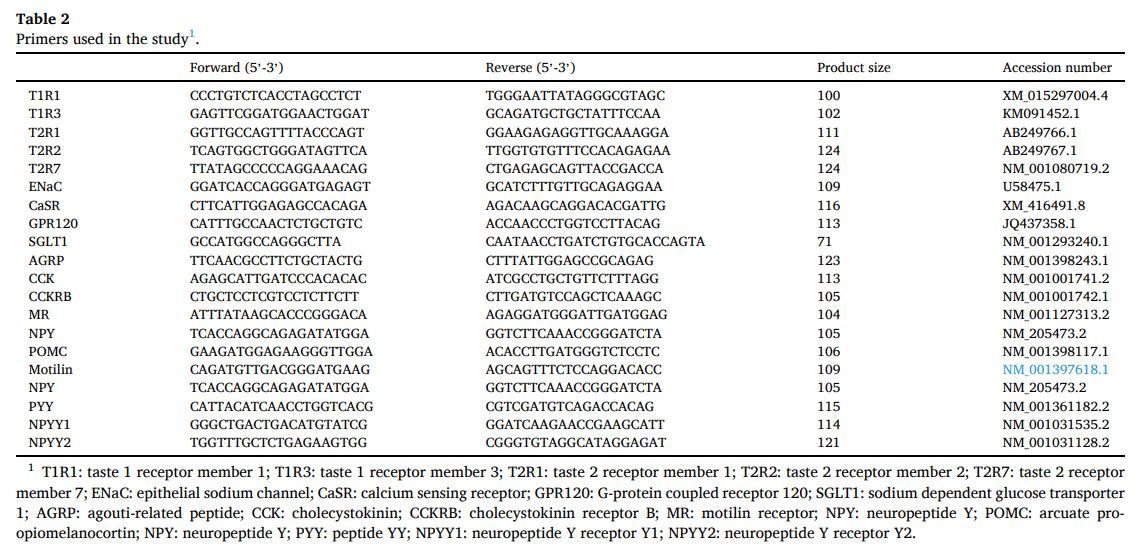
Relative mRNA expression of appetite-related genes in the duodenum, ceca, upper palate, and whole brain was determined by using real-time reverse transcription-PCR. Around 100 mg of duodenum tissue samples were homogenized in QIAzol lysis reagents (Qiagen, Valencia, CA) using a bead beater (Biospec Products, Bartlesville, OK). The whole brain was pulverized with liquid nitrogen and then homogenized. Subsequently, RNA was extracted according to the manufacturer's protocol. RNA extraction procedure for the upper palate and whole brain samples was repeated twice to remove genomic DNA and to increase the quality of RNA. The quantity and quality of the extracted RNA were checked by using the NanoDrop™ Eight Spectrophotometer (Thermo Fisher Scientific) (Teng et al., 2023). The first strand cDNA was synthesized by using one microgram of the extracted RNA with a high-capacity cDNA synthesis kit (Applied Biosystems, Foster City, CA) according to the manufacturer's protocol. The cDNA samples of duodenum, ceca, and whole brain samples were diluted 5 times with water, and the cDNA of upper palate samples were not diluted. The primers utilized in the study are presented in Table 2. Real-time reverse transcript (RT)-PCR was performed by using the SYBR Green Master Mix on a Step Onethermocycler (Applied Biosystem). The final volume for PCR mixture was 10 μL which contained 5 μL of SYBR Green Master Mix (Applied Biosystems), 1.5 μL of cDNA, 0.5 μL of forward and reverse primers (10 μM each), and 2.5 μL of water. The thermal cycle condition for all genes contained 95◦C denature for 10 mins, 40 cycles at 95◦C for 15 s and 60◦C for 1 min, 95◦C for 15 s, 60◦C for 1 min, and 95◦C for 15 s. The geometric mean of Ct values of glyceraldehyde 3-phosphate dehydrogenase (GAPDH) and cyclophilin A (CYC) were utilized as reference values for each sample to normalize all target genes’ mRNA abundance (Vandesompele et al., 2002). Relative mRNA abundance of target genes was determined by using the 2-ΔΔCT method according to Livak and Schmittgen (2001), and the S group was set as the reference group. Each sample was analyzed in duplicate, and two values were averaged. A negative control containing water instead of cDNA was included in each run. Following the PCR amplification, the melting curve analysis and gel electrophoresis were carried out to confirm the specificity of the PCR reactions and verify the size of the products.

DNA extraction and cecal microbiome analysis

Approximately 100 mg of cecal content was vigorously homogenized in the lysis buffer and DNA was extracted by using QIAamp® DNA stool mini kit (Qiagen GmbH, Hilden, Germany) based on the manufacturer’s protocol. The quality and quantity of extract DNA were checked by using a NanoDrop™ Eight Spectrophotometer (Thermo Fisher Scientific, Waltham, MA). The DNA samples were shipped to LC sciences, LLC (Houston, TX), and sequencing was performed as described by Choi and Kim (2022). Briefly, the amplification of the V3 and V4 regions was performed using 338F (5-CCTACGGGNGGCWGCAG-3)/806R (5-GACTACHVGGGTATCTAATCC-3) primers by using PCR procedures. For 16 s rRNA analyses in the cecal microbial communities, QIIME2 (version 2022.02) was employed (Bolyen et al., 2019). QIIME2 plugin DADA2 was used to denoise demultiplexed sequence. By employing QIIME2′s built in functions, the alpha diversity parameters including shannon entropy (richness and evenness), observed features (richness), faith phylogenetic diversity (biodiversity based on phylogeny), and pielou evenness (evenness) were determined. Beta diversity parameters including bray curtis, jaccard, and unweighted and weight unifrac of cecal microbial communities were visualized. Unweighted and weighted unifrac distance (quantitative beta diversity) were measured by setting each group as the control group. SILVA gene reference alignment database was used for taxonomic classification (Pruesse et al., 2007).

Statistical analysis

Data analysis and graph construction were performed by using GraphPad PRISM 9.0.00 (GraphPad Software, San Diego, CA). The three groups with different BW were compared using ANOVA in a completely randomized design followed by the Tukey’s HSD (honestly significant difference) test. To assess unweighted and weighted beta-diversity, differences in microbial community structures among the BW groups were evaluated using PERMANOVA (Permutational Multivariate Analysis of Variance) with 9,999 permutations based on both weighted and unweighted UniFrac distance matrices. Pairwise PERMANOVA was further employed to identify specific differences between group pairs with p-values adjusted for multiple comparisons using the BenjaminiHochberg (FDR) method. Results were considered significant at P < 0.05.

Results

Activities of brush border digestive enzymes in the duodenum tissue
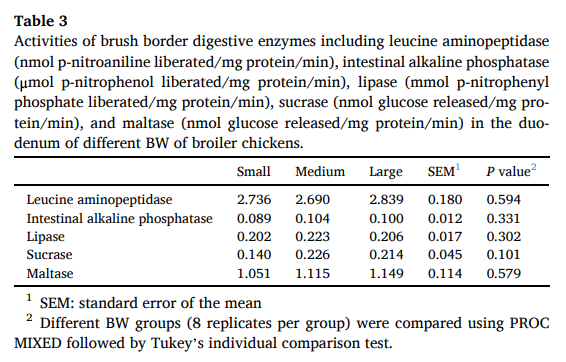
As shown in Table 3, no differences were observed in the activities of leucine aminopeptidase (LAP), intestinal alkaline phosphatase, lipase, sucrase, and maltase among the groups with different BW (P > 0.05).
Table 3 Activities of brush border digestive enzymes including leucine aminopeptidase (nmol p-nitroaniline liberated/mg protein/min), intestinal alkaline phosphatase (μmol p-nitrophenol liberated/mg protein/min), lipase (mmol p-nitrophenyl phosphate liberated/mg protein/min), sucrase (nmol glucose released/mg protein/min), and maltase (nmol glucose released/mg protein/min) in the duodenum of different BW of broiler chickens.

Serum endotoxin level and activities of serum alkaline phosphatase
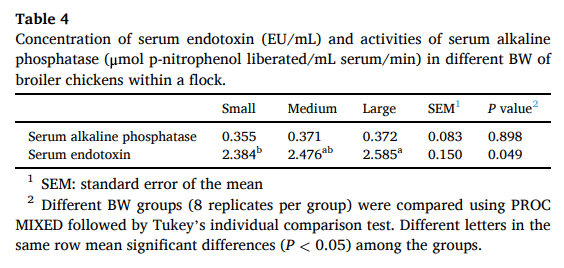
The L group had significantly higher serum endotoxin level compared to the S group (P < 0.05; Table 4). However, no differences were observed in the activities of serum alkaline phosphatase among the groups with different BW (P > 0.05).
Table 4 Concentration of serum endotoxin (EU/mL) and activities of serum alkaline phosphatase (μmol p-nitrophenol liberated/mL serum/min) in different BW of broiler chickens within a flock.

Relative mRNA expression of taste receptors and feed intake regulatory genes
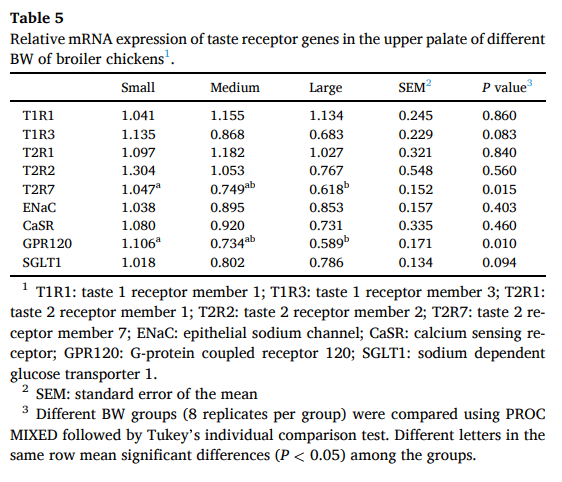
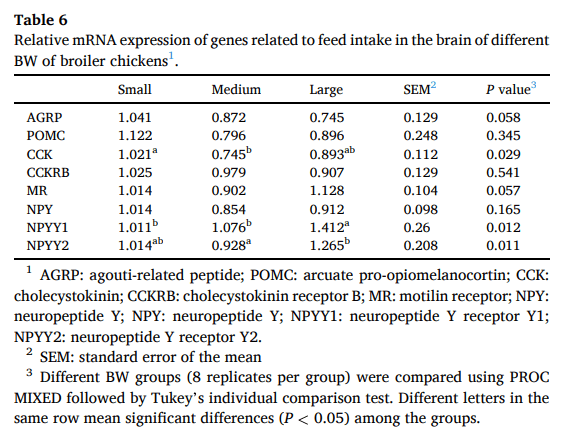
As shown in Table 5, the S group had significantly higher relative mRNA expression of T2R7 compared to the L group in the upper palate (P < 0.05). The S group had significantly higher relative mRNA expression of GPR120 compared to the L group in the upper palate (P < 0.05). The S group had significantly higher relative mRNA expression of cholecystokinin (CCK) compared to the L group in the brain (P < 0.05; Table 6). The S group had significantly lower relative mRNA expression of neuropeptide Y receptor Y1 (NPYY1) compared to the L group in the brain (P < 0.05). The M group had significantly lower relative mRNA expression of NPYY2 compared to the L group in the brain (P < 0.05).
Table 5 Relative mRNA expression of taste receptor genes in the upper palate of different BW of broiler chickens1 .
Table 6 Relative mRNA expression of genes related to feed intake in the brain of different BW of broiler chickens1 .
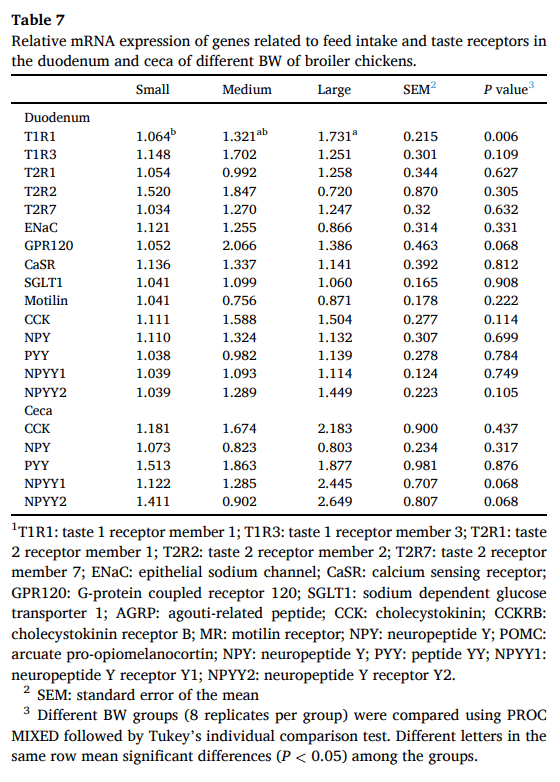
For TIR1, the S group had significantly lower relative mRNA expression of T1R1 compared to the L group in the duodenum (P < 0.05). However, no differences were observed in other gut hormones and feed intake regulatory genes in the duodenum and ceca among groups with different BW (P > 0.05). Table 7
Table 7 Relative mRNA expression of genes related to feed intake and taste receptors in the duodenum and ceca of different BW of broiler chickens.

Cecal microbiome

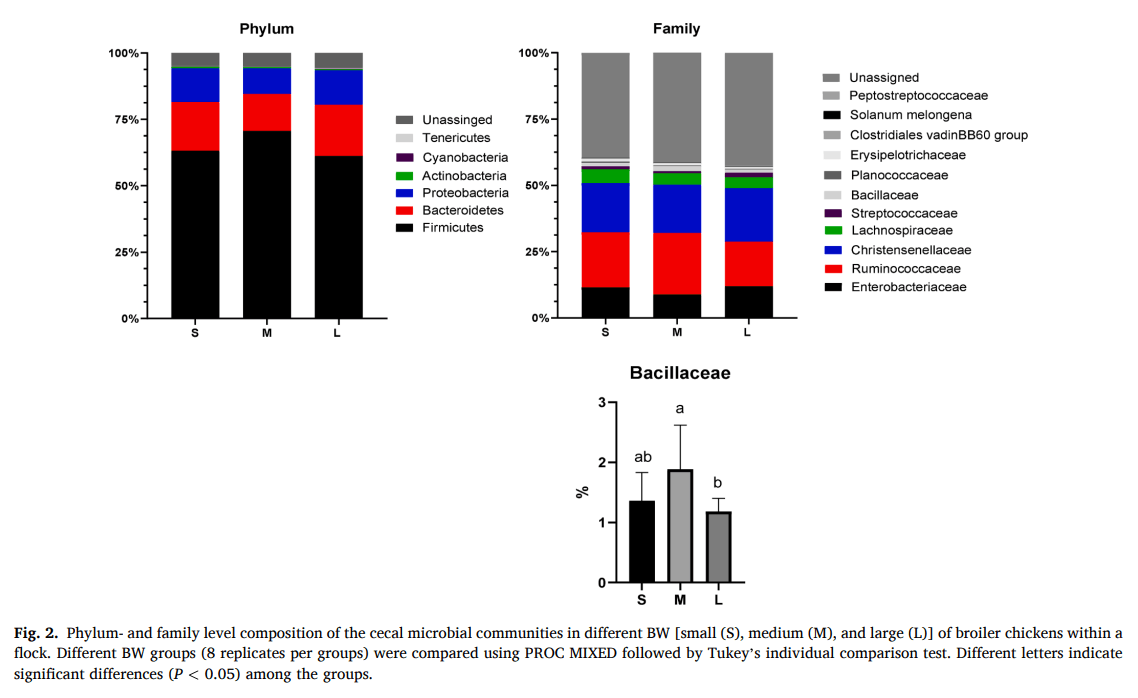
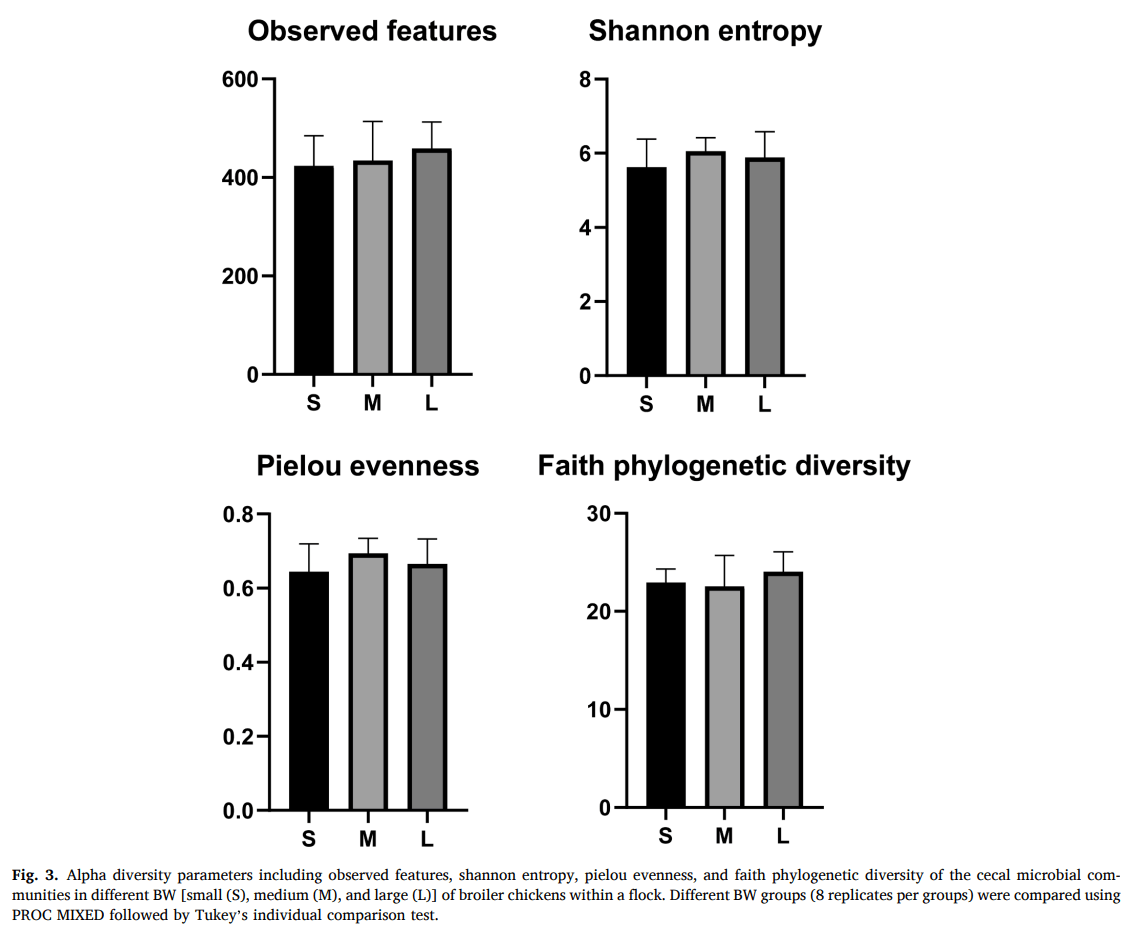
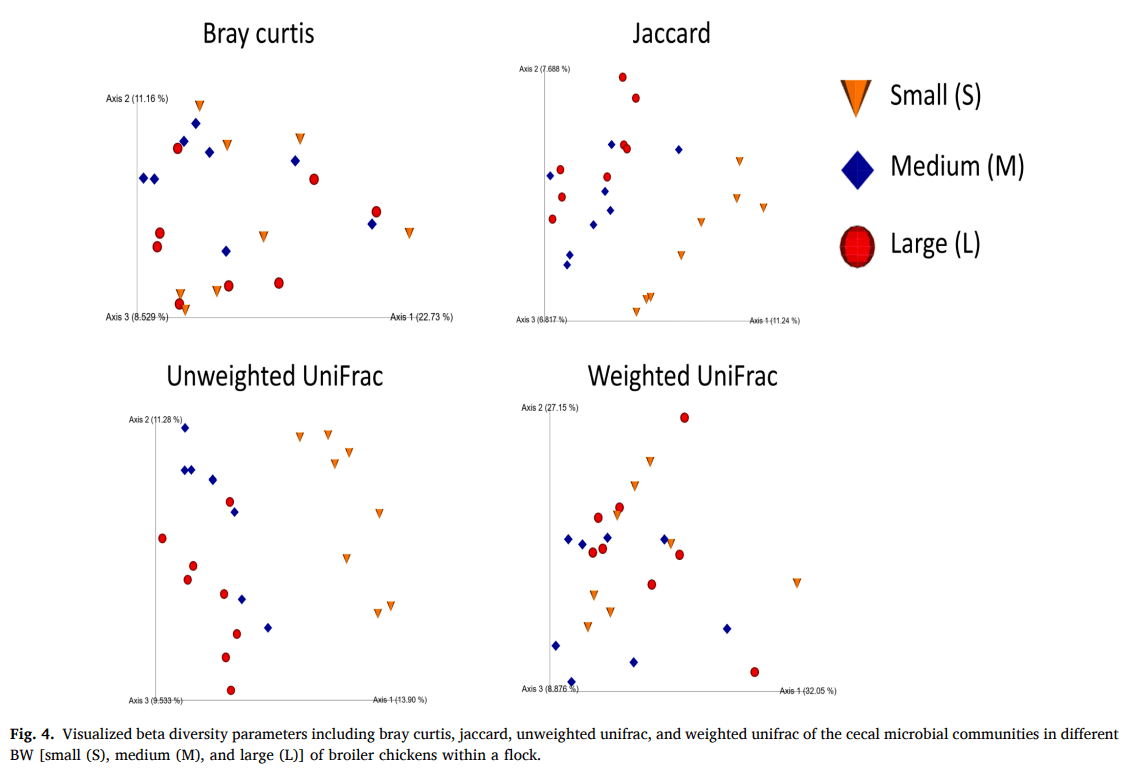
For microbial community changes in ceca, no differences were observed in the taxa abundance at the phylum level in the cecal bacterial communities among groups with different BW (P > 0.05; Fig. 2). At the family level, the M group had significantly higher relative abundance of family Bacillaceae compared to the L group (P < 0.05). As shown in Fig. 3, no differences were observed in the parameters of alpha diversity (P > 0.05). In the Jaccard and Unweighted unifrac (qualitative beta diversity), visual differences were observed in the S group: the S group had a distinct microbiome from the M and L groups (Fig. 4). Furthermore, PERMANOVA confirmed significant differences in microbial community structures based on unweighted UniFrac distances (P < 0.001), whereas no significant differences were detected in weighted UniFrac distances (P > 0.05).

Discussion

The purpose of the study was to investigate the physiological differences related to appetite and gut ecosystem among the broilers with different BW within a flock. Understanding the physiological differences among broilers with varying BW within a flock may help identify potential solutions to improve flock uniformity. Targeting broilers with lower BW may be an effective strategy to improve flock uniformity for the following reasons: 1) broilers with lower BW are more likely to experience welfare issues and increased mortality, as they may have limited access to feeders and drinkers; and 2) maintaining broilers with higher BW is critical for maximizing production efficiency. Moreover, it would be important to investigate broiler uniformity during the early phase because BW variation initiates at the early phase and continues through to the finisher phase, particularly due to the limited feed access of broilers with lower BW. Therefore, the current study was conducted at an early age on Day 18 to focus on the biological and metabolic differences that manifest after the initial establishment of the gut microbiota and the accumulation of individual feeding behaviors.
Brush border digestive enzyme activities were selected as indicators of gut health across broiler chickens with different BW, given their relative independence from BW (Wang et al., 2020). Brush border digestive enzymes represent matureness of the gastrointestinal (GI) tract because they are mainly expressed in mature enterocytes in the tip of the villus of small intestine (Raul et al., 1988). Moreover, the activities of intestinal alkaline phosphatase, an intrinsic enzyme, represent intestinal membrane function and integrity of enterocytes of GI tract of animals (Wahnon et al., 1992). The activities of brush border digestive enzymes represent gut development and integrity of animals (Wu et al., 2025). In the present study, no differences were observed in the activities of brush border digestive enzymes in the duodenum of broiler chickens with different BW. Intestinal morphology and length of the intestine, which are commonly regarded as crucial parameters for assessing gut health, were not assessed in the present study. This decision assumed that intestinal morphology and length would likely exhibit a strong correlation with the BW of broiler chickens. Previous findings on the relationship between intestinal morphology and BW remain inconsistent across species. A previous study by Segú et al. (2022) reported that villus height was closely related to BW in rats. In contrast, Itza-Ortiz et al. (2019) showed that there were no correlation between intestine villus height and BW in finishing pigs. These discrepancies may be attributed to differences in species, age, and other experimental conditions. In the present study, the lack of differences in brush border digestive enzyme activities among broilers with varying BW suggests that intestinal morphology and functionality may not play a critical role in driving BW variation within flocks.
Gut microbiota play an important role in nutrient digestion and absorption, production of nutrients (e.g., short chain fatty acids), protection against pathogens, and maturation of immune systems in broiler chickens (Aruwa et al., 2021). Furthermore, our previous study showed that gut microbiota were closely related to feed efficiency in broiler chickens (Choi et al., 2021). Appropriate development of gut microbiota is important to maintain healthy gut ecosystem, which would be closely associated with BW of broiler chickens (Shang et al., 2018). It was hypothesized that the broiler chickens with lower BW may have immature and unhealthy gut microbiota compared to the broiler chickens with higher BW. Lower alpha diversity and higher abundance of the phylum proteobacteria (e.g., pathogenic bacteria) and lower abundance of the phylum firmicutes (e.g., fiber degrading bacteria) are considered as immature and unhealthy gut microbiota in broiler chickens (Choi and Kim, 2022; Schokker et al., 2021). In the present study, significant differences were observed only in the qualitative beta-diversity metrics (unweighted UniFrac and Jaccard) but not in the quantitative metric (weighted UniFrac). This discrepancy suggests that the observed shifts in the cecal microbiota are primarily driven by changes in the presence or absence of rare or low-abundance bacterial taxa (microbial membership) rather than fluctuations in the relative abundance of dominant species (Lozupone et al., 2007). In the present study, the relative abundance of the family Bacillaceae was significantly higher in the M group compared to the L group (P < 0.05). While this taxa represented less than 3% of the total bacterial community, its enrichment in the M group is noteworthy given that Bacillaceae (including the genus Bacillus) are well-recognized for their beneficial roles in enhancing growth performance and maintaining gut health in poultry (Bilal et al., 2021; Luise et al., 2022). However, as no major shifts were observed in alpha diversity or at the phylum level, this targeted variation suggests that specific minor taxa play a disproportionately influential role in the cecal ecosystem instead of broad or large-scale community shifts. Consequently, given the high degree of microbial uniformity across most parameters, it is difficult to conclude that a systemic shift in the microbiome was the primary driver of the observed BW variance in this flock. In contrast, a previous study by Zhang et al. (2022) reported that the abundance of Microbacterium, Sphingomonas, and Slackia was altered to regulate fat metabolism in different BW of broiler chickens at D 49. Additionally, the transplantation of fecal microbiota enhanced fat metabolism and accumulation in broiler chickens. Potentially, the differences would be originated from the age (D 18 vs. D 49) because the rate of fat metabolism and fat accumulation is elevated in the finisher stage (D 36 to D 54), which can significantly influence BW of broiler chickens (Zhang et al., 2022). Moreover, it is well-established that microbiota can significantly affect fat accumulation in broiler chickens (Choi et al., 2022b).
Along with gut ecosystem parameters, serum endotoxin level, which is affected by gut microbiota and gut integrity (Chen et al., 2015), was measured in the current study. The broilers with higher BW had higher level of serum endotoxin compared to the broilers with lower BW. The observed increase in circulating endotoxins may be attributed to the higher feed intake and accelerated growth rates in broilers with greater BW, which potentially leads to increased exposure and translocation of lipopolysaccharides derived from commensal Gram-negative bacteria in the GI tract (Jawamis et al., 2025). Moreover, activities of serum alkaline phosphatase, which has an important role in detoxifying lipopolysaccharides (e.g., endotoxins), were not affected in the current study. This result suggests that the serum endotoxin level was not associated with BW variation in a broiler flock. Broilers with lower BW within a flock did not exhibit a compromised gut ecosystem; accordingly, differences in the gut ecosystem were not clearly associated with BW variation under the conditions of this study.
Although individual feed intake could not be directly measured because birds were selected from the same pen to represent different BW groups within a single flock, it is highly probable that substantial differences in cumulative feed intake existed among the individuals. In a shared environment, such variations in BW are primarily driven by individual differences in appetite and feeding behavior, which is consistent with the established principle that feed intake is the major factor influencing BW gain in broiler chickens (Ferket and Gernat, 2006). Taste receptors and gut hormones in the GI tract are key regulators that affect appetite by influencing orexigenic neurons (AGRP) and anorexigenic neurons (POMC) in the brain (Argente-Arizon ´ et al., 2015). Ganchrow and Ganchrow (1987) and Kudo et al. (2010) showed that chicken breeds with higher BW had higher number of taste buds and greater taste sensitivity. Because most of the taste buds (60%) located in the upper palate of birds, the upper palate was collected rather than the tongue (Yoshida et al., 2021b). Chickens can perceive the tastes of umami, bitterness, saltiness, sourness, and fatty acids by specific taste receptors (Yoshida et al., 2022a). In the present study, the broilers with lower BW had significantly higher relative mRNA expression of T2R7 compared to the broilers with higher BW. T2R7 is one of the bitter taste receptors (alongside T2R1, T2R2, and T2R7) found in broiler chickens. Higher expression of T2R7 may indicate higher sensitivity to the bitter taste, which may reduce appetite of broiler chickens (Cheled-Shoval et al., 2014). Higher sensitivity to the bitter taste may be associated with feed intake of broiler chickens with lower BW in the present study; but further research is necessary to determine the relationship among feed intake, bitter taste genes, and BW. In the present study, the relative mRNA expression of GPR120, fat taste receptor, was higher in the broilers with lower BW. GPR120 in the oral cavity play an important role in increasing appetite by sensing long chain fatty acids (Im, 2018). However, GPR120 also can increase satiety (e.g., reducing appetite) by inducing secretion of CCK (Chen et al., 2022). Additional research is necessary to explore the role of GPR120 in the oral cavity in regulating appetite in broiler chickens.
While T1R1-T1R3 heterodimers are responsible for sensing umami taste in mammals, recent studies have confirmed that T1R1 and T1R3 also function as amino acid sensors in chickens, where they are expressed and can be activated by a broad range of L-amino acids (Yoshida et al., 2021a). In the present study, the broilers with lower BW had lower expression of T1R1 in the duodenum compared to the broilers with higher BW. In addition to sensing amino acids, T1R1 involves in stimulating CCK secretion in the GI tract, which may indicate that T1R1 can influence appetite and feed intake of broiler chickens (Yoshida et al., 2021a). Potentially, the reduced expression of T1R1 in the intestines of broilers with lower BW may have contributed to their decreased appetite. Nevertheless, further research is needed to clarify the relationship between umami taste receptors and appetite in broiler chickens. No differences were observed in the gene expression of taste receptors and gut hormones with their receptors of the duodenum and ceca among broiler chickens with different BW.
The brain regulate appetite and satiety by controlling neuronal and hormonal signals, and the hypothalamus is known to be the main part that regulates appetite and satiety (Cheled-Shoval et al., 2014; He et al., 2025). However, in the current study, the pulverized whole brain was used because 1) some proteins such as CCK, neuropeptide Y (NPY), and NPYY2 are expressed in the different part of the brain (Tanaka et al., 2021); and 2) the relative size of hypothalamus would not be affected by different BW of broiler chickens. In the present study, the broilers with lower BW had higher relative mRNA expression of CCK compared to the broilers with average BW. CCK is a well-known satiety hormone involved in the regulation of feed intake, where its central expression contributes to reduced appetite (Gibbs et al., 1973; Kim et al., 2003). In the present study, the elevated brain CCK expression in the S group may reflect altered feeding regulation and reduced feed intake. Given that social hierarchy and competition for feed and water can influence feeding behavior and induce physiological stress responses in group-housed birds, the observed changes in CCK expression may be indirectly associated with stress-related modulation of feeding behavior. The NPYY1 and NPYY2, which are widely expressed in the GI tract and brain, are the receptors for NPY and peptide YY (PYY) (Parker and Balasubramaniam, 2008). The NPY and PYY have important roles in stimulating and inhibiting feed intake of chickens, respectively (Batterham et al., 2002; Beck, 2006). Their receptors NPYY1 and NPYY2 are involved in a variety of NPY- and PYY- induced pathways (Mercer et al., 2011; Ueno et al., 2008). NPYY1 and NPYY2 have an important function to regulate feed intake of chickens (Dyer et al., 1997; Greene et al., 2022). In the present study, expression of NPYY1 and NPYY2 was reduced in the brain of broilers with lower BW, suggesting a potential association with altered feed intake–regulatory signaling; but further studies is warranted to understand the relationship among the feed intake, BW, and NPYY1/2. However, no differences were observed in the expression of NPY and PYY among broilers with different BW in the present study.
Based on the results of the present study, enhancing appetite of broilers with nutritional interventions may be one of the potential solutions to improve flock uniformity. The current study showed that broilers with lower BW would be more sensitive to the bitter taste. The broiler chickens may taste bitterness in the litter (wood shaving) and in the feed (bitter taste amino acids; ten of the 16 L-amino acids are bitter) (Stoeger et al., 2018). Feed flavors that mask bitter taste or bioactive compounds that modulate bitter taste receptor expression in the GI tract may represent potential strategies to improve appetite in broilers with lower BW within a flock. Agonists for T1R1 includes L-amino acids, and supplementation of L-amino acids can modulate expression of T1R1 (Yoshida et al., 2022b). A previous study by Daly et al. (2013) reported that supplementation of L-amino acids modulated CCK secretion by modulating functionality of T1R1. While individual feed intake was not measured in the current study and direct evidence for amino acid–mediated improvements in uniformity is lacking, our findings suggest that appetite-regulating receptors may represent potential targets for enhancing feed intake in smaller individuals. These results provide a physiological basis for developing nutritional interventions; however, further validation is required to confirm the efficacy of specific amino acids in research and commercial production settings.
In summary, no significant differences were observed in the gut ecosystem among broilers with different BW, and microbiome-related findings did not demonstrate clear functional relevance under the conditions of this study. In contrast, broilers with lower BW exhibited higher expression of T2R7 (bitter taste receptor) and lower expression of T1R1 (umami taste receptor) in the oral cavity and GI tract compared with higher BW birds. While individual feed intake was not measured, representing a key limitation, these results suggest an association between BW variation and differences in appetite regulation–related signaling. Further studies incorporating direct measurements of individual feed intake are needed, along with nutritional intervention studies to further investigate these associations.
   
This article was originally published in Poultry Science 105 (2026) 107006. https://doi.org/10.1016/j.psj.2026.107006. This is an Open Access article under the CC BY-NC-ND license (http://creativecommons.org/licenses/by-nc-nd/4.0/).

Argente-Arizon, P., Freire-Regatillo, A., Argente, J., & Chowen, J. A. (2015). Role of nonneuronal cells in body weight and appetite control. Frontiers in Endocrinology, 6, Artículo 42.

Aruwa, C. E., Pillay, C., Nyaga, M. M., & Sabiu, S. (2021). Poultry gut health–microbiome functions, environmental impacts, microbiome engineering and advancements in characterization technologies. Journal of Animal Science and Biotechnology, 12, 1–15.

Batterham, R. L., Cowley, M. A., Small, C. J., Herzog, H., Cohen, M. A., Dakin, C. L., Wren, A. M., Brynes, A. E., Low, M. J., & Ghatei, M. A. (2002). Gut hormone PYY3-36 physiologically inhibits food intake. Nature, 418(6898), 650–654.

Beck, B. (2006). Neuropeptide Y in normal eating and in genetic and dietary-induced obesity. Philosophical Transactions of the Royal Society B: Biological Sciences, 361(1471), 1159–1185.

Bilal, M., Si, W., Barbe, F., Chevaux, E., Sienkiewicz, O., & Zhao, X. (2021). Effects of novel probiotic strains of Bacillus pumilus and Bacillus subtilis on production, gut health, and immunity of broiler chickens raised under suboptimal conditions. Poultry Science, 100(3), Artículo 100871.

Bolyen, E., Rideout, J. R., Dillon, M. R., Bokulich, N. A., Abnet, C. C., Al-Ghalith, G. A., Alexander, H., Alm, E. J., Arumugam, M., Asnicar, F., & Caporaso, J. G. (2019). Reproducible, interactive, scalable and extensible microbiome data science using QIIME 2. Nature Biotechnology, 37(8), 852–857.

Cheled-Shoval, S. L., Behrens, M., Meyerhof, W., Niv, M. Y., & Uni, Z. (2014). Perinatal administration of a bitter tastant influences gene expression in chicken palate and duodenum. Journal of Agricultural and Food Chemistry, 62(52), 12512–12520.

Chen, J., Tellez, G., Richards, J. D., & Escobar, J. (2015). Identification of potential biomarkers for gut barrier failure in broiler chickens. Frontiers in Veterinary Science, 2, Artículo 14.

Chen, X., Nie, X., Wang, H., Yan, S., & Zhang, Y. (2022). Stearic acid induces CCK and GLP-1 upregulation via GPR120/PLC-β, leading to reduced appetite in Hu sheep fed with rice straw. Frontiers in Veterinary Science, 9, Artículo 948074.

Choi, J. (2019). Lipid Matrix Microencapsulation for Effective Delivery of Essential Oils and Organic Acids to Improve Gut Health in Weaned Piglets [Tesis de maestría, University of Manitoba]. Repositorio institucional de la University of Manitoba.

Choi, J., Goo, D., Ko, H., Lee, J., & Kim, W. K. (2026). Factors affecting flock uniformity in broiler production: Individual, environmental, and management characteristics. Animals, 16(2), Artículo 185.

Choi, J., & Kim, W. (2022). Interactions of microbiota and mucosal immunity in the ceca of broiler chickens infected with Eimeria tenella. Vaccines, 10(11), Artículo 1941.

Choi, J., Ko, H., Tompkins, Y. H., Teng, P.-Y., Lourenco, J. M., Callaway, T. R., & Kim, W. K. (2021). Effects of Eimeria tenella infection on key parameters for feed efficiency in broiler chickens. Animals, 11(12), Artículo 3428.

Choi, J., Lee, J., & Kim, W. K. (2025). Changes in gene and protein expression related to feed intake and thermoregulation in broilers challenged with different doses of mixed Eimeria spp. Poultry Science, 104(4), Artículo 105481.

Choi, J., Liu, G., Goo, D., Wang, J., Bowker, B., Zhuang, H., & Kim, W. K. (2022a). Effects of tannic acid supplementation on growth performance, gut health, and meat production and quality of broiler chickens raised in floor pens for 42 days. Frontiers in Physiology, 13, Artículo 1082009.

Choi, J., Yadav, S., Wang, J., Lorentz, B. J., Lourenco, J. M., Callaway, T. R., & Kim, W. K. (2022b). Effects of supplemental tannic acid on growth performance, gut health, microbiota, and fat accumulation and optimal dosages of tannic acid in broilers. Frontiers in Physiology, 13, Artículo 912797.

Cobb-Vantress. (2021). Cobb 500 Broiler Management Guideline. Cobb-Vantress.

Cobb-Vantress. (2022). Cobb500 Broiler Performance & Nutrition Supplement. Cobb-Vantress.

Daly, K., Al-Rammahi, M., Moran, A., Marcello, M., Ninomiya, Y., & Shirazi-Beechey, S. P. (2013). Sensing of amino acids by the gut-expressed taste receptor T1R1-T1R3 stimulates CCK secretion. American Journal of Physiology-Gastrointestinal and Liver Physiology, 304(3), G271–G282.

Dyer, C., Simmons, J., Matteri, R., & Keisler, D. (1997). cDNA cloning and tissue-specific gene expression of ovine leptin, NPY-Y1 receptor, and NPY-Y2 receptor. Domestic Animal Endocrinology, 14(5), 295–303.

Elgharbawy, A. A., Hayyan, A., Hayyan, M., Rashid, S. N., Nor, M. R. M., Zulkifli, M. Y., Alias, Y., & Mirghani, M. E. S. (2018). Shedding light on lipase stability in natural deep eutectic solvents. Chemical and Biochemical Engineering Quarterly, 32(3), 359–370.

Farkas, V., Csitari, G., Menyhart, L., Such, N., Pal, L., Husveth, F., Rawash, M. A., Mezolaki, A., & Dublecz, K. (2022). Microbiota composition of mucosa and interactions between the microbes of the different gut segments could be a factor to modulate the growth rate of broiler chickens. Animals, 12(10), Artículo 1296.

Ferket, P. R., & Gernat, A. G. (2006). Factors that affect feed intake of meat birds: A review. International Journal of Poultry Science, 5(10), 905–911.

Ganchrow, J. R., & Ganchrow, D. (1987). Taste bud development in chickens (Gallus gallus domesticus). The Anatomical Record, 218(1), 88–93.

Gibbs, J., Young, R. C., & Smith, G. P. (1973). Cholecystokinin decreases food intake in rats. Journal of Comparative and Physiological Psychology, 84(3), 488–495.

Gous, R. (2018). Nutritional and environmental effects on broiler uniformity. World's Poultry Science Journal, 74(1), 21–34.

Greene, E. S., Abdelli, N., Dridi, J. S., & Dridi, S. (2022). Avian neuropeptide Y: Beyond feed intake regulation. Veterinary Sciences, 9(4), Artículo 171.

He, X., Ma, B., Zhang, L., & Gao, F. (2025). Identification of differentially expressed genes in the hypothalamus of broilers under heat stress using transcriptome analysis. Animals, 15(4), Artículo 502.

Im, D.-S. (2018). FFA4 (GPR120) as a fatty acid sensor involved in appetite control, insulin sensitivity and inflammation regulation. Molecular Aspects of Medicine, 64, 92–108.

Itza-Ortiz, M., Segura-Correa, J., Parra-Suescún, J., Aguilar-Urquizo, E., & Escobar-Gordillo, N. (2019). Correlation between body weight and intestinal villi morphology in finishing pigs. Acta Universitaria, 29, e2168.

Jawamis, A., Hayder, A., & Al Sarayreh, N. (2025). Effect of dietary fat intake on metabolic endotoxemia: Mechanisms and clinical insights. Clinical Nutrition ESPEN. Publicación anticipada en línea.

Joody, A., Abdul-Hassan, I., & Al-Hassani, D. (2018). Association of ghrelin gene polymorphisms and expression levels with some biochemical traits in broiler chickens. Iraqi Journal of Agricultural Sciences, 49(5), 870–878.

Kim, H., Whang, W.-W., Kim, H.-T., Pyun, K.-H., Cho, S.-Y., Hahm, D.-H., Lee, H.-J., & Shim, I. (2003). Expression of neuropeptide Y and cholecystokinin in the rat brain by chronic mild stress. Brain Research, 983(1-2), 201–208.

Kudo, K., Shiraishi, J., Nishimura, S., Bungo, T., & Tabata, S. (2010). The number of taste buds is related to bitter taste sensitivity in layer and broiler chickens. Animal Science Journal, 81(2), 240–244.

Lackeyram, D., Mine, Y., Archbold, T., & Fan, M. (2012). The small intestinal apical hydrolase activities are decreased in the piglet with bowel inflammation induced by dextran sodium sulfate. Journal of Animal Science, 90(Suppl. 4), 287–289.

Lackeyram, D., Yang, C., Archbold, T., Swanson, K. C., & Fan, M. Z. (2010). Early weaning reduces small intestinal alkaline phosphatase expression in pigs. The Journal of Nutrition, 140(3), 461–468.

Livak, K. J., & Schmittgen, T. D. (2001). Analysis of relative gene expression data using real-time quantitative PCR and the $2^{-\Delta\Delta C_T}$ method. Methods, 25(4), 402–408.

Lozupone, C. A., Hamady, M., Kelley, S. T., & Knight, R. (2007). Quantitative and qualitative $\beta$ diversity measures lead to different insights into factors that structure microbial communities. Applied and Environmental Microbiology, 73(5), 1576–1585.

Luise, D., Bosi, P., Raff, L., Amatucci, L., Virdis, S., & Trevisi, P. (2022). Bacillus spp. probiotic strains as a potential tool for limiting the use of antibiotics, and improving the growth and health of pigs and chickens. Frontiers in Microbiology, 13, Artículo 801827.

Lundberg, R., Scharch, C., & Sandvang, D. (2021). The link between broiler flock heterogeneity and cecal microbiome composition. Animal Microbiome, 3, Artículo 54.

Maroux, S., Louvard, D., & Barath, J. (1973). The aminopeptidase from hog intestinal brush border. Biochimica et Biophysica Acta (BBA) - Enzymology, 321(1), 282–295.

Mercer, R. E., Chee, M. J., & Colmers, W. F. (2011). The role of NPY in hypothalamic mediated food intake. Frontiers in Neuroendocrinolgy, 32(4), 398–415.

Mulder, H., Hill, W., Vereijken, A., & Veerkamp, R. (2009). Estimation of genetic variation in residual variance in female and male broiler chickens. Animal, 3(12), 1673–1680.

Niknafs, S., Navarro, M., Schneider, E. R., & Roura, E. (2023). The avian taste system. Frontiers in Physiology, 14, Artículo 1235377.

Niknafs, S., & Roura, E. (2018). Nutrient sensing, taste and feed intake in avian species. Nutrition Research Reviews, 31(2), 256–266.

Parker, S., & Balasubramaniam, A. (2008). Neuropeptide Y Y2 receptor in health and disease. British Journal of Pharmacology, 153(3), 420–431.

Pruesse, E., Quast, C., Knittel, K., Fuchs, B. M., Ludwig, W., Peplies, J., & Glöckner, F. O. (2007). SILVA: A comprehensive online resource for quality checked and aligned ribosomal RNA sequence data compatible with ARB. Nucleic Acids Research, 35(21), 7188–7196.

Raul, F., Gosse, F., Doffoel, M., Darmenton, P., & Wessely, J. (1988). Age related increase of brush border enzyme activities along the small intestine. Gut, 29(11), 1557–1563.

Roura, E., Baldwin, M.W., & Klasing, K. (2013). The avian taste system: Potential implications in poultry nutrition. Animal Feed Science and Technology, 180(1-4), 1–9.

Schokker, D., de Klerk, B., Borg, R., Bossers, A., & Rebel, J. M. (2021). Factors influencing the succession of the fecal microbiome in broilers. Livestock Science, 247, Artículo 104486.

Segú, H., Jalševac, F., Pinent, M., Ardévol, A., Terra, X., & Blay, M. T. (2022). Intestinal morphometric changes induced by a western-style diet in wistar rats and GSPE counter-regulatory effect. Nutrients, 14(13), Artículo 2608.

Shang, Y., Kumar, S., Oakley, B., & Kim, W. K. (2018). Chicken gut microbiota: Importance and detection technology. Frontiers in Veterinary Science, 5, Artículo 254.

Stoeger, V., Liszt, K. I., Lieder, B., Wendelin, M., Zopun, M., Hans, J., Ley, J. P., Krammer, G. E., & Somoza, V. (2018). Identification of bitter-taste intensity and molecular weight as amino acid determinants for the stimulating mechanisms of gastric acid secretion in human parietal cells in culture. Journal of Agricultural and Food Chemistry, 66(26), 6762–6771.

Tanaka, M., Yamada, S., & Watanabe, Y. (2021). The role of neuropeptide Y in the nucleus accumbens. International Journal of Molecular Sciences, 22(14), Artículo 7287.

Te Pas, M. F., Borg, R., Büddiger, N. J., Wood, B. J., Rebel, J. M., van Krimpen, M. M., Calus, M. P., Park, J. E., & Schokker, D. (2020). Regulating appetite in broilers for improving body and muscle development–A review. Journal of Animal Physiology and Animal Nutrition, 104(6), 1819–1834.

Teng, P.-Y., Liu, G., Choi, J., Yadav, S., Wei, F., & Kim, W. K. (2023). Effects of levels of methionine supplementations in forms of L-or DL-methionine on the performance, intestinal development, immune response, and antioxidant system in broilers challenged with Eimeria spp. Poultry Science, 102(4), Artículo 102586.

Tian, M., Heng, J., Song, H., Zhang, Y., Chen, F., Guan, W., & Zhang, S. (2019). Roasted/branched chain amino acids stimulate gut satiety hormone cholecystokinin secretion through activation of the umami taste receptor T1R1/T1R3 using an in vitro porcine jejunum model. Food & Function, 10(6), 3356–3367.

Ueno, H., Yamaguchi, H., Mizuta, M., & Nakazato, M. (2008). The role of PYY in feeding regulation. Regulatory Peptides, 145(1-3), 12–16.

Vandesompele, J., De Preter, K., Pattyn, F., Poppe, B., Van Roy, N., De Paepe, A., & Speleman, F. (2002). Accurate normalization of real-time quantitative RT-PCR data by geometric averaging of multiple internal control genes. Genome Biology, 3(7), research0034.1–research0034.11.

Wahnon, R., Cogan, U., & Mokady, S. (1992). Dietary fish oil modulates the alkaline phosphatase activity and not the fluidity of rat intestinal microvillus membrane. The Journal of Nutrition, 122(5), 1077–1084.

Wang, M., Yang, C., Wang, Q., Li, J., Li, Y., Ding, X., Yin, J., Yang, H., & Yin, Y. (2020). The growth performance, intestinal digestive and absorptive capabilities in piglets with different lengths of small intestines. Animal, 14(6), 1196–1203.

Wu, Y., Azevedo, P., Jin, S., Zhao, X., Xu, H., Lei, H., Verschuren, L., Rodas-Gonzalez, A., Nyachoti, M., & Yang, C. (2025). Digestive and absorptive capacity and digesta microbiota throughout the gastrointestinal tract of nursery pigs from parents with divergent estimated breeding value for feed conversion ratio. Canadian Journal of Animal Science, 105, 1–14.

Yoshida, Y., Kawabata, F., Nishimura, S., & Tabata, S. (2021a). The umami receptor T1R1–T1R3 heterodimer is rarely formed in chickens. Scientific Reports, 11, Artículo 12318.

Yoshida, Y., Kawabata, F., Tabata, S., Aggrey, S. E., Rekaya, R., & Liu, H.-X. (2021b). Evolvement of taste sensitivity and taste buds in chickens during selective breeding. Poultry Science, 100(7), Artículo 101113.

Yoshida, Y., Nishimura, S., Tabata, S., & Kawabata, F. (2022a). Chicken taste receptors and perception: Recent advances in our understanding of poultry nutrient-sensing systems. World's Poultry Science Journal, 78(1), 5–20.

Yoshida, Y., Tanaka, R., Fujishiro, S., Nishimura, S., Tabata, S., & Kawabata, F. (2022b). Conditioned taste aversion to L-amino acid taste stimuli and oral transcriptional changes to type 1 taste receptors T1R1 and T1R3 on chronic exposure to L-alanine solution in chickens. The Journal of Poultry Science, 59(4), 348–356.

Zhang, X., Hu, Y., Ansari, A. R., Akhtar, M., Chen, Y., Cheng, R., Cui, L., Nafady, A. A., Elokil, A. A., & Abdel-Kafy, E. S. M. (2022). Caecal microbiota could effectively increase chicken growth performance by regulating fat metabolism. Microbial Biotechnology, 15(3), 844–861. 

Related topics:
Authors:
Janghan Choi
Doyun Goo
Dr. Woo Kyun Kim
Influencers who recommended :
Saeed Charkhkar
Recommend
Comment
Share
Profile picture
Would you like to discuss another topic? Create a new post to engage with experts in the community.
Featured users in Poultry Industry
Fernanda Lima de Souza Castro
Gerente de serviços técnicos
United States
Ana Maria Villegas-Gamble
DVM, MS, Ph.D. / Directora de Nutrición
United States
Carolina Hall
Carolina Hall
United States