Impact of clotted blood spot on hatchability
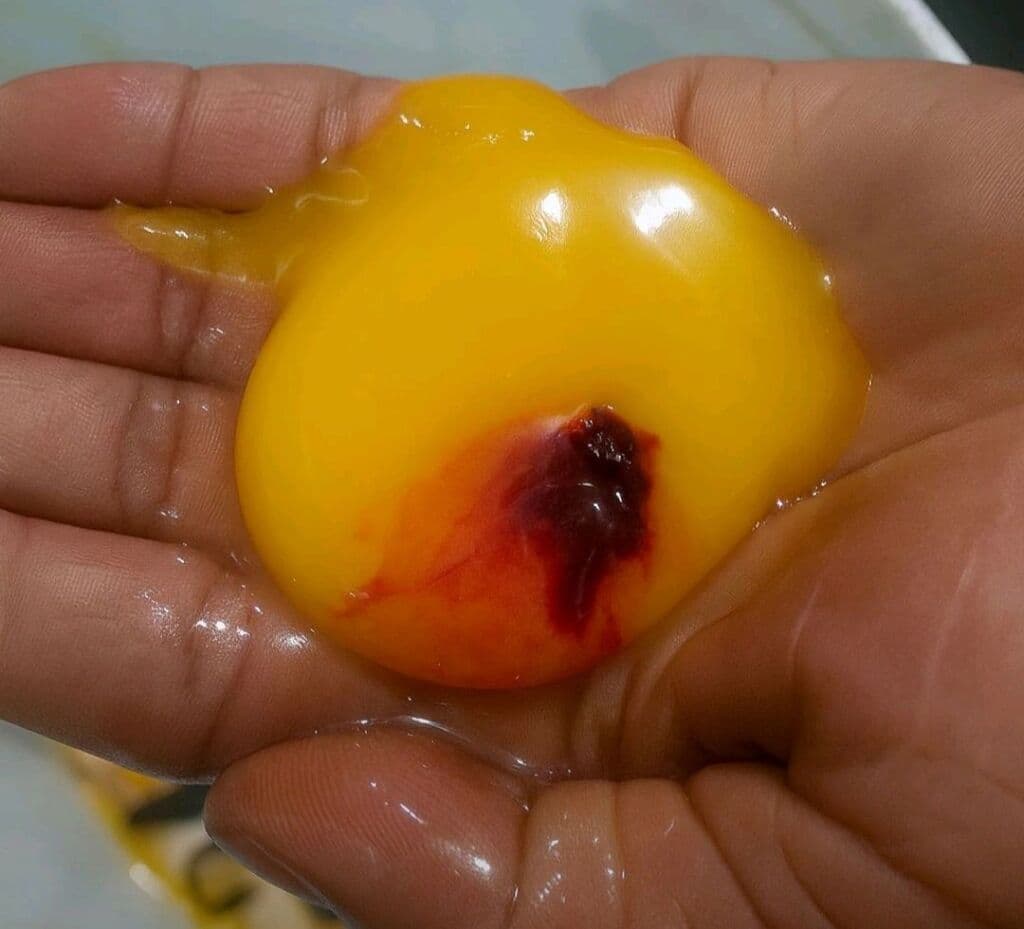
A few days ago, during routine egg breaking and quality observation in the hatchery, I encountered something that immediately caught my attention.
The egg looked normal externally, but once opened, a distinct clotted blood spot was visible on the yolk.
For a hatchery professional, this is never “just a spot.”
It is a signal worth understanding.
What is a clotted blood spot in the yolk?
A clotted blood spot forms when significant rupture of blood vessels occurs in the hen’s ovary or oviduct during ovulation.
Unlike small fresh blood specks, clotted blood indicates that the bleeding happened earlier and had time to coagulate before egg formation was completed.
This is a physiological issue, not an infectious one.
Primary reasons behind clotted blood spots:
Based on poultry reproductive physiology and breeder management data the most common causes include:
• Breeder hen age – More frequent in older breeders due to fragile ovarian blood vessels
• Nutritional deficiencies – Particularly vitamin A, vitamin K, and folic acid, which affect blood vessel integrity and clotting
• Sudden stress – Light intensity changes, handling stress, heat stress, or vaccination stress
• High ovulation pressure – Rapid follicle release in high-producing flocks
• Genetic predisposition – Some lines show higher incidence
hashtag#Does_clotted_blood_affect_hatchability?
This is where incubation science becomes critical.
?? Clotted blood spots can negatively impact hatchability, especially when:
• The clot is large or embedded deeply in the yolk
• Blood interferes with nutrient absorption by the developing embryo
• The egg environment becomes favorable for bacterial growth
• Early embryonic development is compromised
Studies and hatchery observations show increased risk of:
• Early embryonic mortality
• Delayed embryo development
• Poor chick quality in severe cases
Small, isolated blood spots may hatch normally, but clotted blood is a warning sign that should not be ignored.