Improving nutrient utilization in ruminants through extruded pelleted feeds
This study examined whether extrusion process can be optimized to produce pellets with tailored density and rumen fluid stability for improved nutrient utilization in ruminants. High-density pellets bypass the rumen to deliver nutrients directly to the intestine, while floating pellets enhance the synchronization of nutrient release and digestion. Barley, maize, and soybean meal (SBM) were extruded both individually and as 50:50 mixtures (barley + SBM and maize + SBM) under different conditions. Specific density (SD), specific density in rumen fluid (SDrf), sinking velocity (SV) and fluid stability index (FSI) of pellets were evaluated using in vitro methods. Pellets exhibited a broad range of SD values: those with an SD below 0.78 g/mL floated in rumen fluid, whereas pellets with an SD above 1.05 g/mL were deemed optimal for rumen escape. Cereal grain pellets spanned floating (SD < 0.78 g/mL), slow-sinking (SD 0.85–0.90 g/mL), and fastsinking (SD > 0.96 g/mL) categories and showed high FSI (averaged 893 ± 67 g/kg DM), while SBM and mixtures produced high-density (SD 0.89–1.18 g/mL), fast-sinking pellets with lower FSI (averaged 173 ± 113 g/kg DM). For cereal grains, cooling the extruder’s last section at a screw speed of 210 rpm yielded pellets with optimal SD and FSI for rumen escape, whereas adjusting the screw speed (minimum 210 rpm for maize and 300 rpm for barley) produced floating pellets. Pellets from SBM and mixtures did not meet the desired criteria and require alternative processing conditions. Indeed, these in vitro evaluations require in vivo validation.
Keywords: In vitro Extrusion Density Fluid stability Ruminants
2. Materials and methods
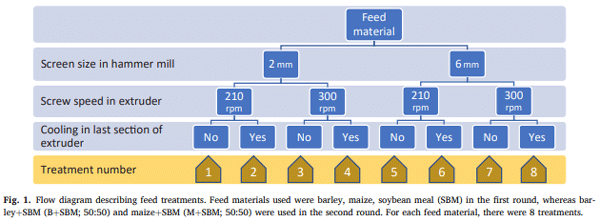
2.1. Experimental design and description of treatments
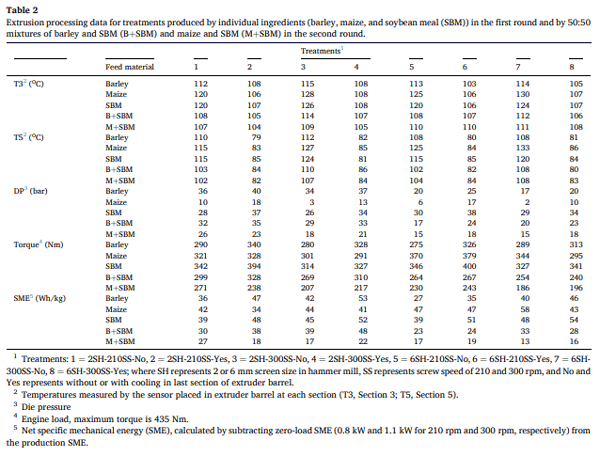
2.1.1. Processing of extruded treatments
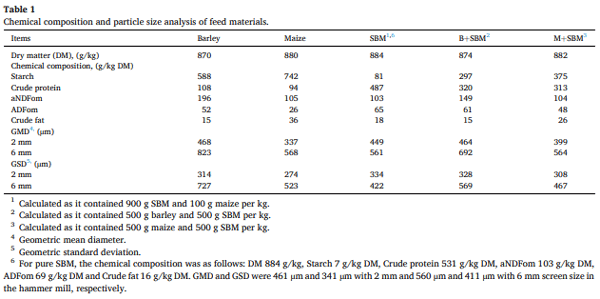
2.1.2. Chemical composition and particle size analysis of feed materials
2.2. Analysis of physical properties of pellets
2.2.1. Specific density (SD)

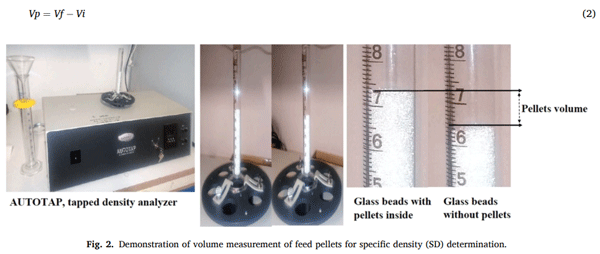
2.2.2. Specific density in rumen fluid (SDrf)
2.2.3. Sinking velocity (SV)
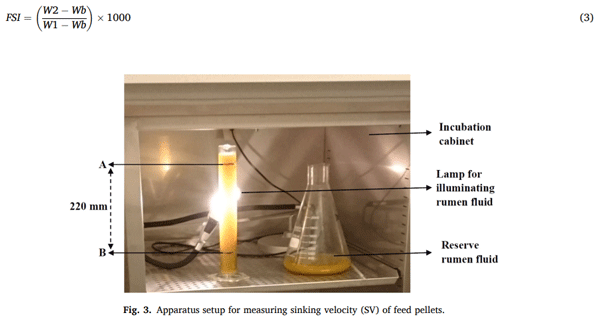
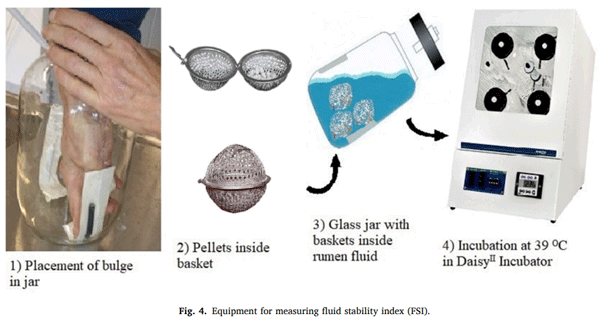
2.2.4. Fluid stability index (FSI)
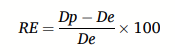
2.2.5. Radial expansion (RE)
2.2.6. Bulk density (BD)
2.3. Statistical analysis

3. Results
3.1. Process variables during extrusion
3.2. Physical properties of pellets
3.2.1. Specific density (SD) and SD in rumen fluid (SDrf)
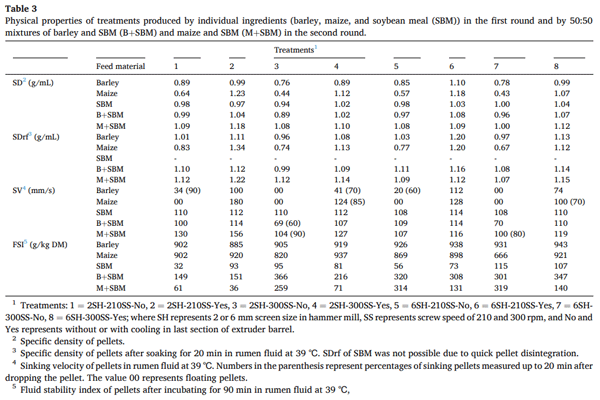
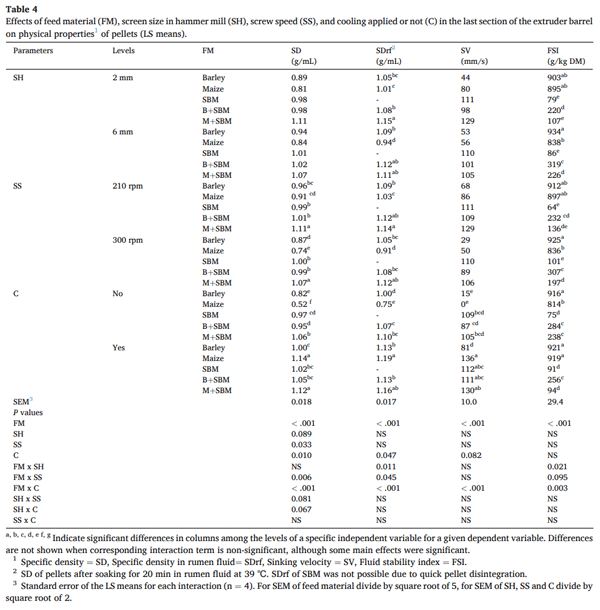
3.2.2. Sinking velocity (SV)
3.2.3. Fluid stability index (FSI)
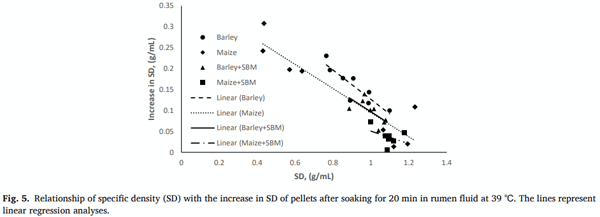
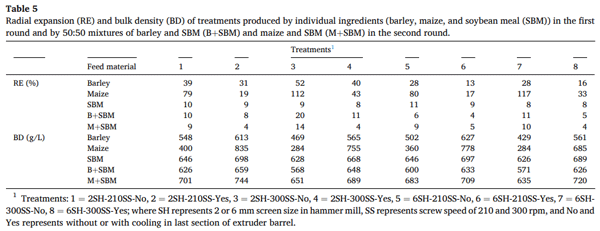
3.2.4. Radial expansion (RE) & Bulk density (BD) and their relationship with SD, SDrf, SV & FSI
4. Discussion
4.1. Behavior of extruded pellets in rumen like environment
4.2. Factors affecting density and fluid stability of extruded pellets
4.3. Radial expansion and bulk density as proxies for SD and FSI
5. Conclusion
Akdogan, H., 1996. Pressure, torque, and energy responses of a twin screw extruder at high moisture contents. Food Res. Int. 29, 423–429. https://doi.org/10.1016/ S0963-9969(96)00036-1.
Åkerlind, M., Weisbjerg, M., Eriksson, T., Tøgersen, R., Ud´en, P., Olafsson, ´ B., Harstad, O., Volden, H., 2011. Feed analyses and digestion methods. In: Volden, H. (Ed.), NorFor-The Nordic feed evaluation system. Wageningen Academic Publishers, Wageningen, The Netherlands, pp. 41–54. https://doi.org/10.3920/978-90- 8686-718-9_5.
Allen, M.S., 2000. Effects of diet on Short-Term regulation of feed intake by lactating dairy cattle. J. Dairy Sci. 83, 1598–1624. https://doi.org/10.3168/jds.S0022- 0302(00)75030-2.
Allen, M.S., 2023. Symposium review: integrating the control of energy intake and partitioning into ration formulation. J. Dairy Sci. 106, 2181–2190. https://doi.org/ 10.3168/jds.2022-22473.
Allen, K.E., Carpenter, C.E., Walsh, M.K., 2007. Influence of protein level and starch type on an extrusion-expanded whey product. Int. J. Food Sci. Technol. 42, 953–960. https://doi.org/10.1111/j.1365-2621.2006.01316.x.
AOAC, 2000. In: Horwitz, W. (Ed.), AOAC Official Method 973.18 Fiber (acid detergent) and lignin in animal feed, Official methods of analysis of AOAC international. Association of Official Agricultural Chemists, Gaithersburg, MD, USA, pp. 37–38.
Arˆeas, J.A.G., 1992. Extrusion of food proteins. Crit. Rev. Food Sci. Nutr. 32, 365–392. https://doi.org/10.1080/10408399209527604.
ASABE, 2013. Method of determining and expressing fineness of feed materials by sieving. ANSI/ASAE Standard No. S319.4 FEB2008 (R2012). Approved February 2008; re-affirmed February 2013, p. 8.
Baeverfjord, G., Refstie, S., Krogedal, P., Åsgård, T., 2006. Low feed pellet water stability and fluctuating water salinity cause separation and accumulation of dietary oil in the stomach of rainbow trout (Oncorhynchus mykiss). Aquaculture 261, 1335–1345. https://doi.org/10.1016/j.aquaculture.2006.08.033.
Baik, B.-K., Powers, J., Nguyen, L.T., 2004. Extrusion of regular and waxy barley flours for production of expanded cereals. Cereal Chem. 81, 94–99. https://doi.org/ 10.1094/CCHEM.2004.81.1.94.
Chen, Y.S., Beveridge, M.C.M., Telfer, T.C., 1999. Physical characteristics of commercial pelleted atlantic salmon feeds and consideration of implications for modeling of waste dispersion through sedimentation. Aquac. Int. 7, 89–100. https://doi.org/10.1023/A:1009249721787.
Cheng, H., Guo, Y., Højberg, S.J., Zatti, K.M., Feyissa, A.H., 2023. Understanding and modelling the aquafeed extrusion process for atlantic salmon feed with an empirical model. Anim. Feed Sci. Technol. 304, 115752. https://doi.org/10.1016/j.anifeedsci.2023.115752.
Cheng, H., Hao, W., Shifeng, M., Min, X., Junguo, L., Yang, J., 2022. Development of a water solubility model of extruded feeds by utilizing a starch gelatinization model. Int. J. Food Prop. 25, 463–476. https://doi.org/10.1080/10942912.2022.2046055.
Chevanan, N., Muthukumarappan, K., Rosentrater, K.A., Julson, J.L., 2007. Effect of die dimensions on extrusion processing parameters and properties of DDGS-based aquaculture feeds. Cereal Chem. 84, 389–398. https://doi.org/10.1094/CCHEM-84-4-0389.
desBordes, C.K., Welch, J.G., 1984. Influence of specific gravity on rumination and passage of indigestible particles. J. Anim. Sci. 59, 470–475. https://doi.org/ 10.2527/jas1984.592470x.
Desrumaux, A., Bouvier, J.M., Burri, J., 1998. Corn grits particle size and distribution effects on the characteristics of expanded extrudates. J. Food Sci. 63, 857–863. https://doi.org/10.1111/j.1365-2621.1998.tb17914.x.
Diosady, L.L., Paton, D., Rosen, N., Rubin, L.J., Athanassoulias, C., 1985. Degradation of wheat starch in a single-screw extruder: Mechano-kinetic breakdown of cooked starch. J. Food Sci. 50, 1697–1699. https://doi.org/10.1111/j.1365-2621.1985.tb10568.x.
Draganovic, V., van der Goot, A.J., Boom, R., Jonkers, J., 2011. Assessment of the effects of fish meal, wheat gluten, soy protein concentrate and feed moisture on extruder system parameters and the technical quality of fish feed. Anim. Feed Sci. Technol. 165, 238–250. https://doi.org/10.1016/j.anifeedsci.2011.03.004.
Dufreneix, F., Faverdin, P., Peyraud, J.L., 2019. Influence of particle size and density on mean retention time in the rumen of dairy cows. J. Dairy Sci. 102, 3010–3022. https://doi.org/10.3168/jds.2018-15926.
Ehle, F.R., Stern, M.D., 1986. Influence of particle size and density on particulate passage through alimentary tract of Holstein heifers. J. Dairy Sci. 69, 564–568. https://doi.org/10.3168/jds.S0022-0302(86)80439-8.
Fallahi, P., Rosentrater, K.A., Muthukumarappan, K., Tulbek, M., 2013. Effects of steam, moisture, and screw speed on physical properties of DDGS-based extrudates. Cereal Chem. 90, 186–197. https://doi.org/10.1094/CCHEM-08-12-0102-R.
Forte, D., Young, G., 2016. Rheology and flow in extrusion processing. In: Food and Feed extrusion Technology: An Applied Approach to Extrusion Theory. Food Industry Engineering, Brisbane, Australia, pp. 29–44.
Ge, C., Xue, M., Hooft, J.M., Øverland, M., Liang, X., Wang, J., Meng, P., Qin, Y., Wang, H., 2023. Impact of physiochemical properties of protein ingredients on pellet quality and microstructure. Aquac. Rep. 31, 101632. https://doi.org/10.1016/j.aqrep.2023.101632.
Guy, R., 2001. Raw materials for extrusion cooking. In: Guy, R. (Ed.), Extrusion cooking: Technologies and Applications. Woodhead Publishing, Cambridge, England, pp. 5–28.
Hemmingsen, A.K.T., Stevik, A.M., Claussen, I.C., Lundblad, K.K., Prestløkken, E., Sørensen, M., Eikevik, T.M., 2008. Water adsorption in feed ingredients for animal pellets at different temperatures, particle size, and ingredient combinations. Dry. Technol. 26, 738–748. https://doi.org/10.1080/07373930802046393.
Hooper, A.P., Welch, J.G., 1985. Effects of particle size and forage composition on functional specific gravity. J. Dairy Sci. 68, 1181–1188. https://doi.org/10.3168/ jds.S0022-0302(85)80945-0.
Hwang, M.P., Yakawa, K.I., 1980. Bulk densities of cookies undergoing commercial baking processes. J. Food Sci. 45, 1400–1402. https://doi.org/10.1111/j.1365- 2621.1980.tb06563.x.
Kannadhason, S., Muthukumarappan, K., Chevanan, N., initial, initial, 2007. Effect of Starch Sources on Properties of Extrudates Containing DDGS, 2007 ASAE Annual Meeting, ASABE, St. Joseph, MI. https://doi.org/10.13031/2013.23437.
Khater, E.-S.G., Bahnasawy, A.H., Ali, S.A., 2014. Physical and mechanical properties of fish feed pellets. J. Food Process. Technol. 5 (1). https://doi.org/10.4172/ 2157-7110.1000378.
Kirjoranta, S., Tenkanen, M., Jouppila, K., 2016. Effects of process parameters on the properties of barley containing snacks enriched with brewer’s spent grain. J. Food Sci. Technol. 53, 775–783. https://doi.org/10.1007/s13197-015-2079-6.
Kraugerud, O.F., Jørgensen, H.Y., Svihus, B., 2011. Physical properties of extruded fish feed with inclusion of different plant (legumes, oilseeds, or cereals) meals. Anim. Feed Sci. Technol. 163, 244–254. https://doi.org/10.1016/j.anifeedsci.2010.11.010.
Kristiawan, M., Chaunier, L., Della Valle, G., Ndiaye, A., Vergnes, B., 2016. Modeling of starchy melts expansion by extrusion. Trends Food Sci. Technol. 48, 13–26. https://doi.org/10.1016/j.tifs.2015.11.004.
Lai, L.S., Kokini, J.L., 1991. Physicochemical changes and rheological properties of starch during extrusion (a review). Biotechnol. Prog. 7, 251–266. https://doi.org/ 10.1021/bp00009a009.
Larsen, M., Lund, P., Storm, A.C., Weisbjerg, M.R., 2019. Effect of conventional and extrusion pelleting on postprandial patterns of ruminal and duodenal starch appearance in dairy cows. Anim. Feed Sci. Technol. 253, 113–124. https://doi.org/10.1016/j.anifeedsci.2019.04.012.
Larsen, M., Raun, B.M.L., 2018. Effect of compound composition on water stability of pellets. In: Ud´en, P., Sporndly, ¨ R. (Eds.), Proceedings of the 9th Nordic Feed Science Conference, report no. 298. Swedish University of Agricultural Sciences, Uppsala, Sweden, pp. 149–152.
Lechner-Doll, M., Kaske, M., Engelhardt, W.V., 1991. Factors affecting the mean retention time of particles in the forestomach of ruminants and camelids. In: Tsuda, T., Sasaki, Y., Kawashima, R. (Eds.), Physiological Aspects of Digestion and Metabolism in Ruminants. Academic Press, San Diego, pp. 455–482. https:// doi.org/10.1016/B978-0-12-702290-1.50027-8.
Lin, S., Hsieh, F., Huff, H.E., 1997. Effects of lipids and processing conditions on degree of starch gelatinization of extruded dry pet food. LWT Food Sci. Technol. 30, 754–761. https://doi.org/10.1006/fstl.1997.0271.
Liu, K., Frost, J., Welker, T.L., Barrows, F.T., 2021. Comparison of new and conventional processing methods for their effects on physical properties of fish feed. Anim. Feed Sci. Technol. 273, 114818. https://doi.org/10.1016/j.anifeedsci.2021.114818.
Ma, S., Wang, H., Li, J., Xue, M., Cheng, H., Qin, Y., Blecker, C., 2021. Effect of the ratio of wheat flour and cassava and process parameters on the pellet qualities in low starch feed recipe extrusion. Anim. Feed Sci. Technol. 271, 114714. https://doi.org/10.1016/j.anifeedsci.2020.114714.
McCleary, B.V., Solah, V., Gibson, T.S., 1994. Quantitative measurement of total starch in cereal flours and products. J. Cereal Sci. 20, 51–58. https://doi.org/ 10.1006/jcrs.1994.1044.
Mertens, D.R., 2002. Gravimetric determination of amylase-treated neutral detergent fiber in feeds with refluxing in beakers or crucibles: Collaborative study. J. AOAC Int. 85, 1217–1240. https://doi.org/10.1093/jaoac/85.6.1217.
Mertens, D.R., 2005. Rate and extent of digestion. In: J Dijkstra, J.Fa.J.F. (Ed.), Quantitative Aspects of Ruminant Digestion and Metabolism. CAB International, Wallingford, UK, pp. 13–44.
Miladinovic, D., Zimonja, O., 2010. Influence of the die design, screw speed and filling grade on physical properties, processing parameters and output rate of the extruded fish feed. In: Levi´c, J., Duragi´c, O., Sredanovi´c, S. (Eds.), 2nd Workshop Feed-to-Food FP7 REGPOT-3. Extrusion technology in feed and food processing. Institute for Food Technology, Novi Sad, Serbia, pp. 53–61. In: 〈http://fins.uns.ac.rs/uploads/zbornici/Thematic-proceedings-2010.pdf〉.
Moraru, C.I., Kokini, J.L., 2003. Nucleation and expansion during extrusion and microwave heating of cereal foods. Compr. Rev. Food Sci. Food Saf. 2, 147–165. https://doi.org/10.1111/j.1541-4337.2003.tb00020.x.
Murphy, M.R., Kennedy, P.M., Welch, J.G., 1989. Passage and rumination of inert particles varying in size and specific gravity as determined from analysis of faecal appearance using multicompartment models. Br. J. Nutr. 62, 481–492. https://doi.org/10.1079/BJN19890047.
Obaldo, L.G., Divakaran, S., Tacon, A.G., 2002. Method for determining the physical stability of shrimp feeds in water. Aquac. Res. 33, 369–377. https://doi.org/ 10.1046/j.1365-2109.2002.00681.x.
Offer, N., Dixon, J., 2000. Factors affecting outflow rate from the reticulo-rumen. Nutr. Abstr. Rev. Ser. B 70, 833–844.
Owens, F., Zinn, R., Kim, Y., 1986. Limits to starch digestion in the ruminant small intestine. J. Anim. Sci. 63, 1634–1648. https://doi.org/10.2527/ jas1986.6351634x.
Piedecausa, M.A., Aguado-Gim´enez, F., García-García, B., Ballester, G., Telfer, T., 2009. Settling velocity and total ammonia nitrogen leaching from commercial feed and faecal pellets of gilthead seabream (Sparus aurata L. 1758) and seabass (Dicentrarchus labrax L. 1758). Aquac. Res. 40, 1703–1714. https://doi.org/10.1111/ j.1365-2109.2009.02272.x.
Plaizier, J.C., Mulligan, F.J., Neville, E.W., Guan, L.L., Steele, M.A., Penner, G.B., 2022. Invited review: effect of subacute ruminal acidosis on gut health of dairy cows. J. Dairy Sci. 105, 7141–7160. https://doi.org/10.3168/jds.2022-21960.
Ramanzin, M., Bailoni, L., Bittante, G., 1994. Solubility, water-holding capacity, and specific gravity of different concentrates. J. Dairy Sci. 77, 774–781. https://doi. org/10.3168/jds.S0022-0302(94)77012-0.
Robin, F., Schuchmann, H.P., Palzer, S., 2012. Dietary fiber in extruded cereals: limitations and opportunities. Trends Food Sci. Technol. 28, 23–32. https://doi.org/ 10.1016/j.tifs.2012.06.008.
Rolfe, L.A., Huff, H.E., Hsieh, F., 2000. The effect of processing conditions on the quality of extruded catfish feed. Trans. ASAE 43, 1737–1743. https://doi.org/ 10.13031/2013.3076.
Saleh, A.A., Elnagar, A.M., Eid, Y.Z., Ebeid, T.A., Amber, K.A., 2021. Effect of feeding wheat middlings and calcium lignosulfonate as pellet binders on pellet quality growth performance and lipid peroxidation in broiler chickens. Vet. Med. Sci. 7, 194–203. https://doi.org/10.1002/vms3.344.
SAS, 2013. Base SAS 9.4 procedures guide: statistical procedures, SAS Institute, NC, USA.
Schwab, C.G., Broderick, G.A., 2017. A 100-Year review: protein and amino acid nutrition in dairy cows. J. Dairy Sci. 100, 10094–10112. https://doi.org/10.3168/ jds.2017-13320.
Seyama, T., Hirayasu, H., Kasai, K., 2017. Excretion rates of indigestible plastic balls of different specific gravities and diameters in dairy cattle. Anim. Sci. J. 88, 94–98. https://doi.org/10.1111/asj.12590.
Shewry, P.R., Halford, N.G., 2002. Cereal seed storage proteins: structures, properties and role in grain utilization. J. Exp. Bot. 53, 947–958. https://doi.org/10.1093/ jexbot/53.370.947.
Sørensen, M., 2012. A review of the effects of ingredient composition and processing conditions on the physical qualities of extruded high-energy fish feed as measured by prevailing methods. Aquac. Nutr. 18, 233–248. https://doi.org/10.1111/j.1365-2095.2011.00924.x.
Sørensen, M., Nguyen, G., Storebakken, T., Øverland, M., 2010. Starch source, screw configuration and injection of steam into the barrel affect the physical quality of extruded fish feed. Aquac. Res. 41, 419–432. https://doi.org/10.1111/j.1365-2109.2009.02346.x.
Stojkov, V., Rakita, S., Banjac, V., Raki´c, D., Fiˇsteˇs, A., Vidosavljevi´c, S., Pinotti, L., 2025. Optimising soybean molasses in broiler feed diet: influence on pelleting process and pellet physical quality. Ital. J. Anim. Sci. 24, 677–688. https://doi.org/10.1080/1828051X.2025.2466739.
Suknark, K., Phillip, R.D., Huang, Y.W., 1999. Tapioca-fish and tapioca-peanut snacks by twin-screw extrusion and deep-fat frying. J. Food Sci. 64, 303–308. https:// doi.org/10.1111/j.1365-2621.1999.tb15888.x.
Sutherland, T.M., 1988. Particle separation in the forestomachs of sheep. In: Dobson, A., Dobson, M.J. (Eds.), Aspects of Digestive Physiology in Ruminants. Cornell University Press, Ithaca, New York, pp. 43–73. https://doi.org/10.7591/9781501745713-005.
Thiex, N.J., Manson, H., Anderson, S., Persson, J.-Å., 2002. Determination of crude protein in animal feed, forage, grain, and oilseeds by using block digestion with a copper catalyst and steam distillation into boric acid: Collaborative study. J. AOAC Int. 85, 309–317. https://doi.org/10.1093/jaoac/85.2.309.
Thomas, M., van Vliet, T., van der Poel, A.F.B., 1998. Physical quality of pelleted animal feed 3. Contribution of feedstuff components. Anim. Feed Sci. Technol. 70, 59–78. https://doi.org/10.1016/S0377-8401(97)00072-2.
Vassallo, P., Doglioli, A.M., Rinaldi, F., Beiso, I., 2006. Determination of physical behaviour of feed pellets in Mediterranean water. Aquac. Res. 37, 119–126. https:// doi.org/10.1111/j.1365-2109.2005.01403.x.
Wang, H., Ma, S., Yang, J., Qin, Y., Cheng, H., Xue, M., Li, J., Li, J., 2021. Optimization of the process parameters for extruded commercial sinking fish feed with mixed plant protein sources. J. Food Process Eng. 44, e13599. https://doi.org/10.1111/jfpe.13599.
Wattiaux, M.A., Satter, L.D., Mertens, D.R., 1992. Effect of microbial fermentation on functional specific gravity of small forage particles. J. Anim. Sci. 70, 1262–1270. https://doi.org/10.2527/1992.7041262x.
Welker, T.L., Overturf, K., Snyder, S., Liu, K., Abernathy, J., Frost, J., Barrows, F.T., 2018. Effects of feed processing method (extrusion and expansion-compression pelleting) on water quality and growth of rainbow trout in a commercial setting. J. Appl. Aquac. 30, 97–124. https://doi.org/10.1080/10454438.2018.1433095.
Zambrano, Y., Contardo, I., Moreno, M.C., Bouchon, P., 2022. Effect of extrusion temperature and feed moisture content on the microstructural properties of RiceFlour pellets and their impact on the expanded product. Foods 11, 198. https://doi.org/10.3390/foods11020198.
Zhang, C., Zhang, H., Wang, L., Qian, H., 2014. Physical, functional, and sensory characteristics of cereal extrudates. Int. J. Food Prop. 17, 1921–1933. https://doi. org/10.1080/10942912.2013.767831.
Zhu, F., 2017. Barley starch: composition, structure, properties, and modifications. Compr. Rev. Food Sci. Food Saf. 16, 558–579. https://doi.org/10.1111/1541- 4337.12265.