Investigation of Avian Reovirus Evolution and Cross-Species Transmission in Turkey Hosts by Segment-Based Temporal Analysis
Avian reovirus (ARV) has emerged as an important pathogen in turkeys, causing economic losses through tenosynovitis, necrotizing hepatitis, immunosuppression, and enteric disease. Despite its ubiquity, the evolutionary history of ARV cross-species transmission among chickens, turkeys, and wild birds remains poorly understood, hindering effective control and surveillance. This study investigates ARV temporal phylogenetics with an emphasis on interspecies transmission in turkeys. Whole genome sequences (WGSs) from seventy-seven turkey cases and one quail case at the Iowa State University Veterinary Diagnostic Laboratory, along with 74–136 segment sequences per gene from GenBank (1970–2023), were analyzed. Temporal phylogenetic analyses identified chickens as the ancestral host, with spillover into turkeys beginning in the mid-20th century, followed by stable transmission within turkey populations. Migration analyses revealed predominantly unidirectional transmission from chickens to turkeys. WGS analyses showed high variability in the M2 and σC-encoding region of the S1 segment, suggesting selective pressure on outer capsid proteins. M2, S1 σC, and L3 had the highest substitution rates, implicating their role in adaptation and antigenic diversity. These findings highlight the complexity of ARV evolution across hosts and underscore the need for robust genotyping schemes and surveillance strategies to mitigate outbreaks in poultry.
Keywords: avian reovirus; evolution; spillover; phylogeny; turkey reovirus
1. Introduction
2. Materials and Methods
2.1. Samples and Real-Time Reverse Transcription Polymerase Chain Reaction (qRT-PCR)
2.2. Virus Isolation
2.3. Whole Genome Sequencing (WGS)
2.4. Data Acquisition and Curation
2.5. Phylogenetics and Temporal Reconstruction of ARV Transmission
2.6. Reassortment, Recombination, and Selective Pressure Analyses
2.7. Statistics
3. Results
3.1. Clinical Data
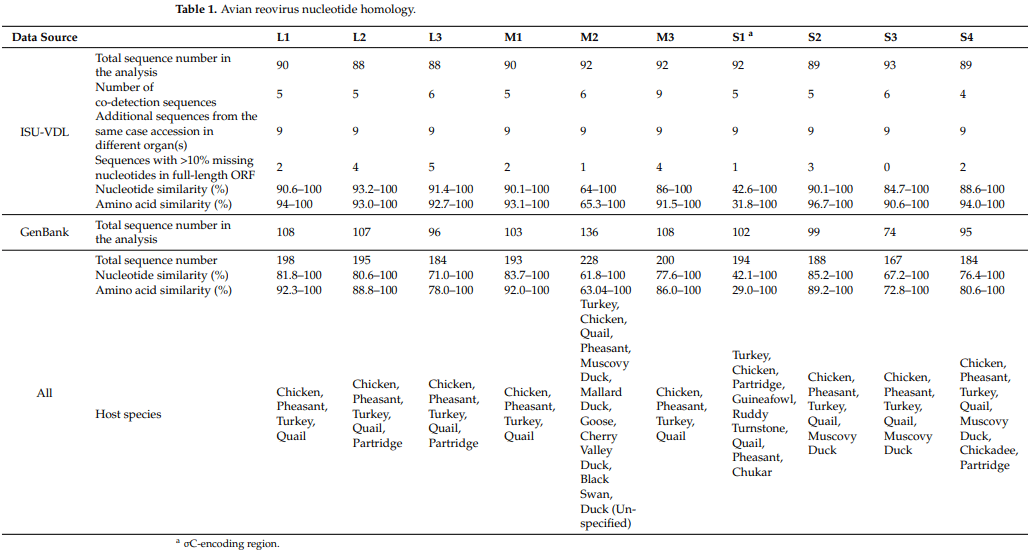
3.2. ARV Nucleotide Homology

3.3. Phylogeny of ARV Segments and Spillover Investigation
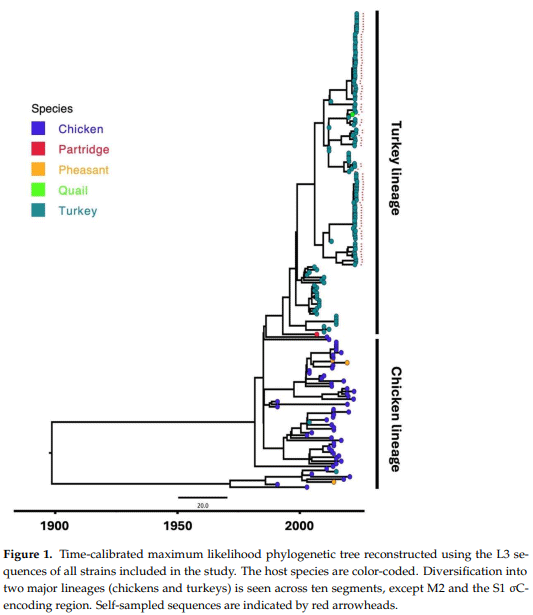
3.3.1. Chicken as a Common Ancestral Host for ARVs in Turkeys
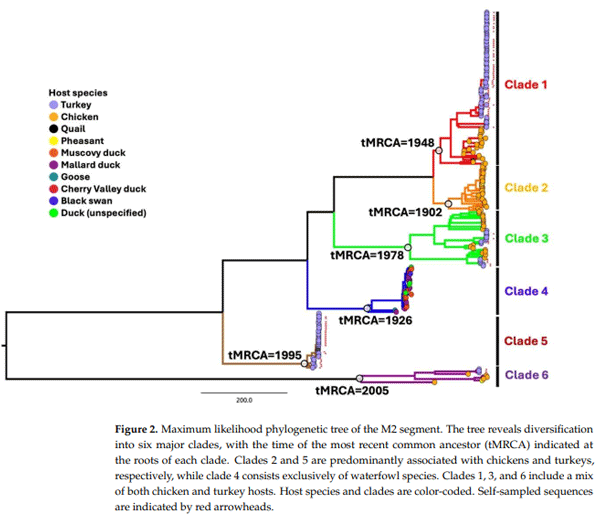
3.3.2. M2 Has a Unique Evolutionary History
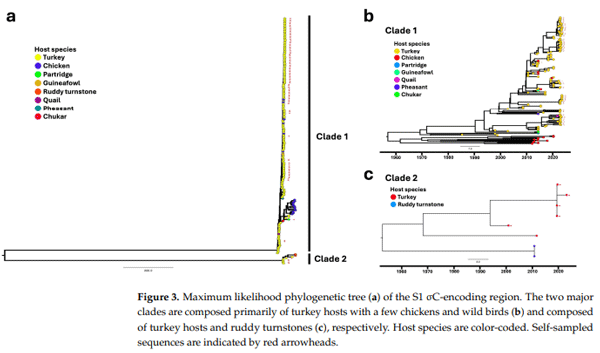
3.3.3. The S1 σC-Encoding Region in Turkeys Is Estimated to Have Differing Common Ancestors Compared to Other Segments
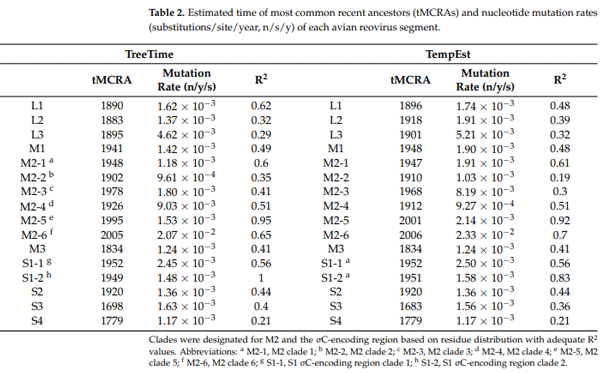
3.3.4. Estimated Higher Nucleotide Mutation Rates in L3, M2, and the S1 σC-Encoding Region
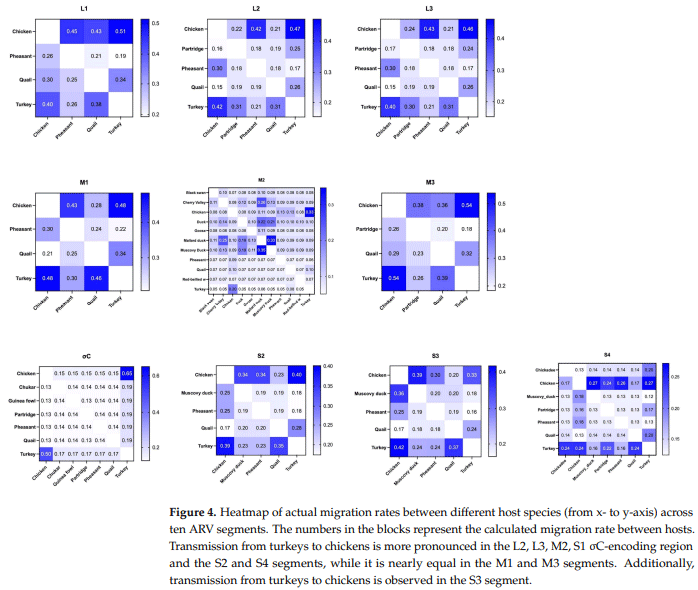
3.3.5. Cross-Species Transmission Predominantly from Chickens to Turkeys and Other Avian Species
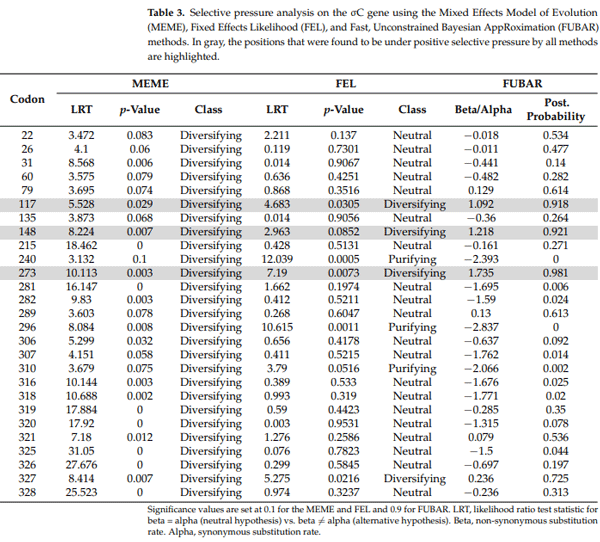
3.3.6. Positive Selective Pressure on σC Protein
4. Discussion
5. Conclusions
1. Pitcovski, J.; Goyal, S.M. Avian Reovirus Infections. In Diseases of Poultry, 14th ed.; Swayne, D.E., Ed.; John Wiley & Sons, Inc.: Hoboken, NJ, USA, 2020; pp. 382–400.
2. Kumar, R.; Sharafeldin, T.A.; Sobhy, N.M.; Goyal, S.M.; Porter, R.E.; Mor, S.K. Comparative Pathogenesis of Turkey Reoviruses: Reovirus pathogenesis. Avian Pathol. 2022, 51, 435–444. [CrossRef] [PubMed]
3. Jones, R. Avian reovirus infections. Rev. Sci. Tech.-Off. Int. Des Epizoot. 2000, 19, 614–619. [CrossRef] [PubMed]
4. Gallardo, R.A. Molecular Characterization of Variant Avian Reoviruses and Their Relationship with Antigenicity and Pathogenicity. Avian Dis. 2022, 66, 443–446. [CrossRef]
5. Kim, S.-W.; Choi, Y.-R.; Park, J.-Y.; Wei, B.; Shang, K.; Zhang, J.-F.; Jang, H.-K.; Cha, S.-Y.; Kang, M. Isolation and genomic characterization of avian reovirus from wild birds in South Korea. Front. Vet. Sci. 2022, 9, 794934. [CrossRef]
6. Choi, Y.-R.; Kim, S.-W.; Shang, K.; Park, J.-Y.; Zhang, J.-F.; Jang, H.-K.; Wei, B.; Cha, S.-Y.; Kang, M. Avian reoviruses from wild birds exhibit pathogenicity to specific pathogen free chickens by footpad route. Front. Vet. Sci. 2022, 9, 844903. [CrossRef]
7. Rafique, S.; Rashid, F.; Wei, Y.; Zeng, T.; Xie, L.; Xie, Z. Avian orthoreoviruses: A systematic review of their distribution, dissemination patterns, and genotypic clustering. Viruses 2024, 16, 1056. [CrossRef] [PubMed]
8. Benavente, J.; Martínez-Costas, J. Avian reovirus: Structure and biology. Virus Res. 2007, 123, 105–119. [CrossRef]
9. Xu, W.; Coombs, K.M. Avian reovirus L2 genome segment sequences and predicted structure/function of the encoded RNAdependent RNA polymerase protein. Virol. J. 2008, 5, 153. [CrossRef]
10. Tourís-Otero, F.; Cortez-San Martín, M.; Martínez-Costas, J.; Benavente, J. Avian reovirus morphogenesis occurs within viral factories and begins with the selective recruitment of sigmaNS and lambdaA to microNS inclusions. J. Mol. Biol. 2004, 341, 361–374. [CrossRef]
11. Day, J.M.; Pantin-Jackwood, M.J.; Spackman, E. Sequence and phylogenetic analysis of the S1 genome segment of turkey-origin reoviruses. Virus Genes 2007, 35, 235–242. [CrossRef]
12. Dawe, W.; Kapczynski, D.; Linnemann, E.; Gauthiersloan, V.; Sellers, H. Analysis of the Immune Response and Identification of Antibody Epitopes Against the Sigma C Protein of Avian Orthoreovirus Following Immunization with Live or Inactivated Vaccines. Avian Dis. 2022, 66, 465–478. [CrossRef] [PubMed]
13. Bodelón, G.; Labrada, L.; Martínez-Costas, J.; Benavente, J. Modification of late membrane permeability in avian reovirus-infected cells: Viroporin activity of the S1-encoded nonstructural p10 protein. J. Biol. Chem. 2002, 277, 17789–17796. [CrossRef]
14. Hu, X.; Zhao, R.; Li, W.; Pan, X.; Dai, Y.; Wu, H.; Wu, Y.; Zhang, C. Host protein PRPS2 interact with the non-structural protein p17 of Avian Reovirus and promote viral replication. Poult. Sci. 2025, 104, 104582. [CrossRef]
15. Liu, H.-J.; Lin, P.-Y.; Lee, J.-W.; Hsu, H.-Y.; Shih, W.-L. Retardation of cell growth by avian reovirus p17 through the activation of p53 pathway. Biochem. Biophys. Res. Commun. 2005, 336, 709–715. [CrossRef]
16. Premanand, B.; Zhong Wee, P.; Prabakaran, M. Baculovirus surface display of immunogenic proteins for vaccine development. Viruses 2018, 10, 298. [CrossRef]
17. King, A.M.; Lefkowitz, E.; Adams, M.J.; Carstens, E.B. Virus Taxonomy: Ninth Report of the International Committee on Taxonomy of Viruses; Elsevier: Amsterdam, The Netherlands, 2011; Volume 9.
18. Matthijnssens, J.; Attoui, H.; Bányai, K.; Brussaard, C.P.D.; Danthi, P.; Del Vas, M.; Dermody, T.S.; Duncan, R.; Fang, Q.; Johne, R.; ¯ et al. ICTV virus taxonomy profile: Spinareoviridae 2022. J. Gen. Virol. 2022, 103, 001781. [CrossRef] [PubMed]
19. Curtis, P.; Al-Mufarrej, S.; Jones, R.; Morris, J.; Sutton, P. Tenosynovitis in young pheasants associated with reovirus, staphylococci and environmental factors. Vet. Sec. 1992, 131, 293. [CrossRef]
20. Kugler, R.; Dandár, E.; Fehér, E.; Jakab, F.; Mató, T.; Palya, V.; Bányai, K.; Farkas, S.L. Phylogenetic analysis of a novel reassortant orthoreovirus strain detected in partridge (Perdix perdix). Virus Res. 2016, 215, 99–103. [CrossRef] [PubMed]
21. Ritter, G.D.; Ley, D.; Levy, M.; Guy, J.; Barnes, H.J. Intestinal cryptosporidiosis and reovirus isolation from bobwhite quail (Colinus virginianus) with enteritis. Avian Dis. 1986, 30, 603–608. [CrossRef]
22. Farkas, S.L.; Dandár, E.; Marton, S.; Fehér, E.; Oldal, M.; Jakab, F.; Mató, T.; Palya, V.; Bányai, K. Detection of shared genes among Asian and European waterfowl reoviruses in the whole genome constellations. Infect. Genet. Evol. 2014, 28, 55–57. [CrossRef]
23. Wille, M.; Holmes, E.C. The ecology and evolution of influenza viruses. Cold Spring Harb. Perspect. Med. 2020, 10, a038489. [CrossRef] [PubMed]
24. Sun, X.; Guo, J.; Shen, J.; Guan, M.; Liu, L.; Xie, Y.; Xu, H.; Wang, M.; Ren, A.; Li, W.; et al. Genetics and biological characteristics of duck reoviruses isolated from ducks and geese in China. Vet. Res. 2025, 56, 30. [CrossRef]
25. Ayalew, L.E.; Ahmed, K.A.; Mekuria, Z.H.; Lockerbie, B.; Popowich, S.; Tikoo, S.K.; Ojkic, D.; Gomis, S. The dynamics of molecular evolution of emerging avian reoviruses through accumulation of point mutations and genetic re-assortment. Virus Evol. 2020, 6, veaa025. [CrossRef]
26. Farkas, S.L.; Marton, S.; Dandár, E.; Kugler, R.; Gál, B.; Jakab, F.; Bálint, Á.; Kecskeméti, S.; Bányai, K. Lineage diversification, homo-and heterologous reassortment and recombination shape the evolution of chicken orthoreoviruses. Sci. Rep. 2016, 6, 36960. [CrossRef]
27. Tang, Y.; Lu, H. Whole genome alignment based one-step real-time RT-PCR for universal detection of avian orthoreoviruses of chicken, pheasant and turkey origins. Infect. Genet. Evol. 2016, 39, 120–126. [CrossRef] [PubMed]
28. Lu, H.; Tang, Y.; Dunn, P.A.; Wallner-Pendleton, E.A.; Lin, L.; Knoll, E.A. Isolation and molecular characterization of newly emerging avian reovirus variants and novel strains in Pennsylvania, USA, 2011–2014. Sci. Rep. 2015, 5, 14727. [CrossRef] [PubMed]
29. Shen, H.; Zhang, J.; Gauger, P.C.; Burrough, E.R.; Zhang, J.; Harmon, K.; Wang, L.; Zheng, Y.; Petznick, T.; Li, G. Genetic characterization of porcine sapoviruses identified from pigs during a diarrhoea outbreak in Iowa, 2019. Transbound. Emerg. Dis. 2022, 69, 1246–1255. [CrossRef]
30. Bolger, A.M.; Lohse, M.; Usadel, B. Trimmomatic: A flexible trimmer for Illumina sequence data. Bioinformatics 2014, 30, 2114–2120. [CrossRef]
31. Li, H.; Durbin, R. Fast and accurate short read alignment with Burrows—Wheeler transform. Bioinformatics 2009, 25, 1754–1760. [CrossRef]
32. Danecek, P.; Bonfield, J.K.; Liddle, J.; Marshall, J.; Ohan, V.; Pollard, M.O.; Whitwham, A.; Keane, T.; McCarthy, S.A.; Davies, R.M.; et al. Twelve years of SAMtools and BCFtools. Gigascience 2021, 10, giab008. [CrossRef]
33. Simpson, J.T.; Wong, K.; Jackman, S.D.; Schein, J.E.; Jones, S.J.; Birol, I. ABySS: A parallel assembler for short read sequence data. Genome Res. 2009, 19, 1117–1123. [CrossRef]
34. Bankevich, A.; Nurk, S.; Antipov, D.; Gurevich, A.A.; Dvorkin, M.; Kulikov, A.S.; Lesin, V.M.; Nikolenko, S.I.; Pham, S.; Prjibelski, A.D. SPAdes: A new genome assembly algorithm and its applications to single-cell sequencing. J. Comput. Biol. 2012, 19, 455–477. [CrossRef] [PubMed]
35. Robinson, J.T.; Thorvaldsdóttir, H.; Winckler, W.; Guttman, M.; Lander, E.S.; Getz, G.; Mesirov, J.P. Integrative genomics viewer. Nat. Biotechnol. 2011, 29, 24–26. [CrossRef]
36. Katoh, K.; Standley, D.M. MAFFT multiple sequence alignment software version 7: Improvements in performance and usability. Mol. Biol. Evol. 2013, 30, 772–780. [CrossRef]
37. Nguyen, L.-T.; Schmidt, H.A.; Von Haeseler, A.; Minh, B.Q. IQ-TREE: A fast and effective stochastic algorithm for estimating maximum-likelihood phylogenies. Mol. Biol. Evol. 2015, 32, 268–274. [CrossRef] [PubMed]
38. Sellers, H.S. Avian reoviruses from clinical cases of tenosynovitis: An overview of diagnostic approaches and 10-year review of isolations and genetic characterization. Avian Dis. 2022, 66, 420–426. [CrossRef]
39. Rambaut, A.; Lam, T.T.; Max Carvalho, L.; Pybus, O.G. Exploring the temporal structure of heterochronous sequences using TempEst (formerly Path-O-Gen). Virus Evol. 2016, 2, vew007. [CrossRef]
40. Sagulenko, P.; Puller, V.; Neher, R.A. TreeTime: Maximum-likelihood phylodynamic analysis. Virus Evol. 2018, 4, vex042. [CrossRef] [PubMed]
41. Rambaut, A. FigTree v1. 4. Molecular Evolution, Phylogenetics And Epidemiology; University of Edinburgh, Institute of Evolutionary Biology: Edinburgh, UK, 2012.
42. Markin, A.; Macken, C.A.; Baker, A.L.; Anderson, T.K. Revealing reassortment in influenza A viruses with TreeSort. bioRxiv 2024. [CrossRef]
43. Kosakovsky Pond, S.L.; Posada, D.; Gravenor, M.B.; Woelk, C.H.; Frost, S.D.W. Automated phylogenetic detection of recombination using a genetic algorithm. Mol. Biol. Evol. 2006, 23, 1891–1901. [CrossRef]
44. Murrell, B.; Wertheim, J.O.; Moola, S.; Weighill, T.; Scheffler, K.; Kosakovsky Pond, S.L. Detecting individual sites subject to episodic diversifying selection. PLoS Genet. 2012, 8, e1002764. [CrossRef]
45. Kosakovsky Pond, S.L.; Frost, S.D.W. Not so different after all: A comparison of methods for detecting amino acid sites under selection. Mol. Biol. Evol. 2005, 22, 1208–1222. [CrossRef]
46. Murrell, B.; Moola, S.; Mabona, A.; Weighill, T.; Sheward, D.; Kosakovsky Pond, S.L.; Scheffler, K. FUBAR: A fast, unconstrained bayesian approximation for inferring selection. Mol. Biol. Evol. 2013, 30, 1196–1205. [CrossRef] [PubMed]
47. Weaver, S.; Shank, S.D.; Spielman, S.J.; Li, M.; Muse, S.V.; Kosakovsky Pond, S.L. Datamonkey 2.0: A modern web application for characterizing selective and other evolutionary processes. Mol. Biol. Evol. 2018, 35, 773–777. [CrossRef]
48. Dandar, E.; Huhtamo, E.; Farkas, S.L.; Oldal, M.; Jakab, F.; Vapalahti, O.; Banyai, K. Complete genome analysis identifies Tvärminne avian virus as a candidate new species within the genus Orthoreovirus. J. Gen. Virol. 2014, 95, 898–904. [CrossRef]
49. Wille, M.; Shi, M.; Hurt, A.C.; Klaassen, M.; Holmes, E.C. RNA virome abundance and diversity is associated with host age in a bird species. Virology 2021, 561, 98–106. [CrossRef]
50. Pantin-Jackwood, M.J.; Spackman, E.; Day, J.M. Pathology and virus tissue distribution of Turkey origin reoviruses in experimentally infected Turkey poults. Vet. Pathol. 2007, 44, 185–195. [CrossRef] [PubMed]
51. Calvo, P.G.; Fox, G.C.; Parrado, X.L.H.; Llamas-Saiz, A.L.; Costas, C.; Martínez-Costas, J.; Benavente, J.; van Raaij, M.J. Structure of the carboxy-terminal receptor-binding domain of avian reovirus fibre sigmaC. J. Mol. Biol. 2005, 354, 137–149. [CrossRef] [PubMed]
52. Franzo, G.; Tucciarone, C.M.; Faustini, G.; Poletto, F.; Baston, R.; Cecchinato, M.; Legnardi, M. Reconstruction of Avian Reovirus History and Dispersal Patterns: A Phylodynamic Study. Viruses 2024, 16, 796. [CrossRef]
53. De Carli, S.; Wolf, J.M.; Gräf, T.; Lehmann, F.K.M.; Fonseca, A.S.K.; Canal, C.W.; Lunge, V.R.; Ikuta, N. Genotypic characterization and molecular evolution of avian reovirus in poultry flocks from Brazil. Avian Pathol. 2020, 49, 611–620. [CrossRef]
54. Wasik, B.R.; de Wit, E.; Munster, V.; Lloyd-Smith, J.O.; Martinez-Sobrido, L.; Parrish, C.R. Onward transmission of viruses: How do viruses emerge to cause epidemics after spillover? Philos. Trans. R. Soc. B 2019, 374, 20190017. [CrossRef]
55. Gál, B.; Varga-Kugler, R.; Ihász, K.; Kaszab, E.; Farkas, S.; Marton, S.; Martella, V.; Bányai, K. A Snapshot on the Genomic Epidemiology of Turkey Reovirus Infections, Hungary. Animals 2023, 13, 3504. [CrossRef]
56. Spackman, E.; Pantin-Jackwood, M.; Michael Day, J.; Sellers, H. The pathogenesis of turkey origin reoviruses in turkeys and chickens. Avian Pathol. 2005, 34, 291–296. [CrossRef] [PubMed]
57. Mor, S.K.; Marthaler, D.; Verma, H.; Sharafeldin, T.A.; Jindal, N.; Porter, R.E.; Goyal, S.M. Phylogenetic analysis, genomic diversity and classification of M class gene segments of turkey reoviruses. Vet. Microbiol. 2015, 176, 70–82. [CrossRef] [PubMed]
58. Mutlu, O.F.; Grund, C.; Cöven, F. Reovirus infection of pheasants (Phasianus colchicus). Tierarztl. Praxis. Ausg. G Grosstiere/Nutztiere 1998, 26, 104–107.
59. Sitthicharoenchai, P.; Zhang, J.; Tian, L.; Stasko, J.; Hashish, A.; Hsueh, C.-S.; Sato, Y.; Hause, B.; El-Gazzar, M. High mortality associated with avian reoviral hepatitis in young quail (Colinus virginianus). Vet. Pathol. 2024, 62, 216–220. [CrossRef]
60. Kant, A.; Balk, F.; Born, L.; van Roozelaar, D.; Heijmans, J.; Gielkens, A.; ter Huurne, A. Classification of Dutch and German avian reoviruses by sequencing the σ C protein. Vet. Res. 2003, 34, 203–212. [CrossRef]
61. Jenkins, G.M.; Rambaut, A.; Pybus, O.G.; Holmes, E.C. Rates of molecular evolution in RNA viruses: A quantitative phylogenetic analysis. J. Mol. Evol. 2002, 54, 156–165. [CrossRef]
62. Matthijnssens, J.; Heylen, E.; Zeller, M.; Rahman, M.; Lemey, P.; Van Ranst, M. Phylodynamic analyses of rotavirus genotypes G9 and G12 underscore their potential for swift global spread. Mol. Biol. Evol. 2010, 27, 2431–2436. [CrossRef]
63. McDonald, S.M.; Nelson, M.I.; Turner, P.E.; Patton, J.T. Reassortment in segmented RNA viruses: Mechanisms and outcomes. Nat. Rev. Microbiol. 2016, 14, 448–460. [CrossRef]
64. Smith, B.L.; Wilke, C.O. A new twist in measuring mutation rates. Elife 2017, 6, e29586. [CrossRef] [PubMed]




















United States