Influence of Different Litter Regimens on Ceca Microbiota Profiles in Salmonella-Challenged Broiler Chicks
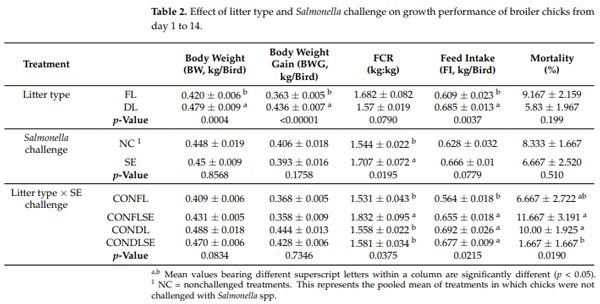
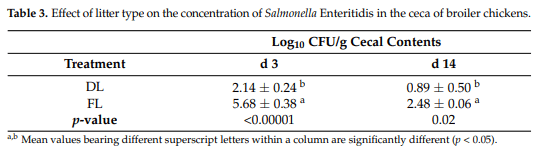
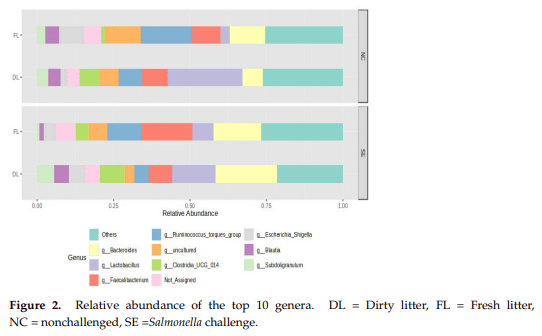
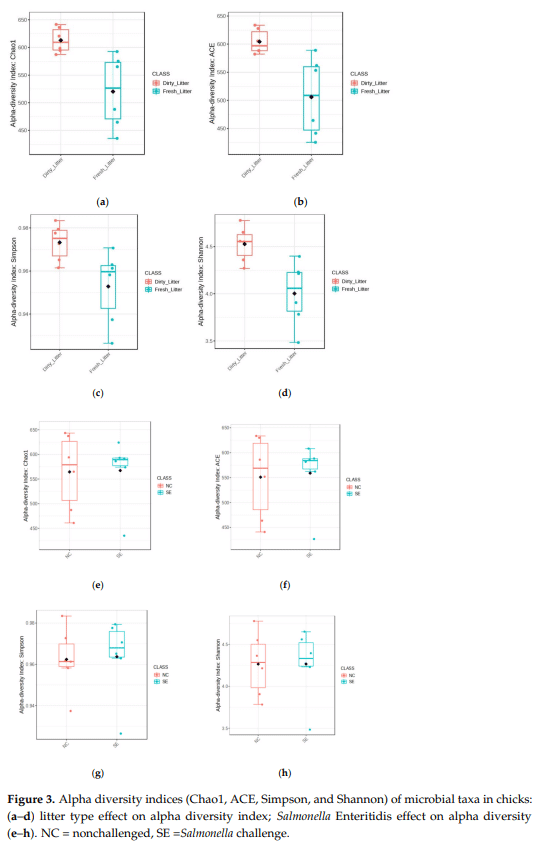
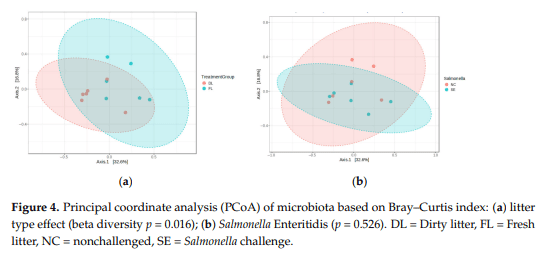
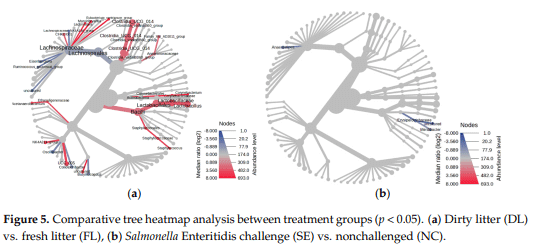
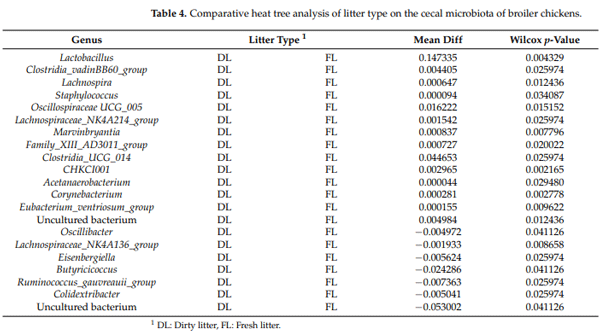
A 14-day study was conducted to evaluate the effect of litter type (dirty litter, DL; fresh litter, FL) and Salmonella Enteritidis SE challenge (no challenge, NC; challenge, SE) on the growth performance and cecal microbial composition of neonate chicks. Day-old chicks (n = 240, Ross 708 male) were allocated to a 2 × 2 factorial design consisting of four treatments: chicks raised on dirty litter (CONDL), chicks raised on fresh litter (CONFL); and chicks raised on litter types similar to CONDL and CONFL but inoculated with 7.46 × 10⁸ CFU SE/mL at d 1 (CONDLSE and CONFLSE). The performance indices measured included body weight (BW), body weight gain (BWG), feed intake (FI), mortality, and feed conversion ratio (FCR). Cecal SE concentration was assessed on d 3 and 14, and ceca were collected from chicks on day 14 for DNA extraction. The Illumina Miseq platform was used for microbiome analysis of the V3–V4 region of the 16S rRNA gene. The interaction of litter type and SE influenced FCR and FI. CONDL recorded the poorest FCR (1.832). FI was highest and similar in CONFLSE, CONDL, and CONDLSE (0.655, 0.692, and 0.677, respectively). Cecal SE concentration was significantly reduced in CONDLSE at d 3 and 14. Alpha diversity was higher (p < 0.05) in the DL compared to that in NC. Beta diversity showed a separation (p < 0.05) between the DL and the FL. Comparative tree analysis revealed 21 differential significant genera, with 14 prevalent in the DL and 7 in the FL, specifically, bacteria genera such as Lactobacillus, Clostridia_vadinBB60_group, Lachnospira, Oscillospiraceae UCG_005, and Marvinbryantia, which play significant roles relating to improved growth performance, metabolic homeostasis within the gut, energy metabolism, and short-chain fatty acid (SCFA) utilization. Our results concluded that litter management regimen differentially alters the microbiome of chicks, which accounts for the improved performance and exclusion of pathogens in the study.
Keywords: 16S rRNA; microbiota; Salmonella; microbiome–host interaction; broiler chicks; poultry
1. Introduction
2. Materials and Methods
2.1. Description of Salmonella Strain Used for Experimentation
2.2. Experimental Design, Diet, and Bird Management
2.3. Preparation of Bacterial Inoculum and Salmonella Challenge
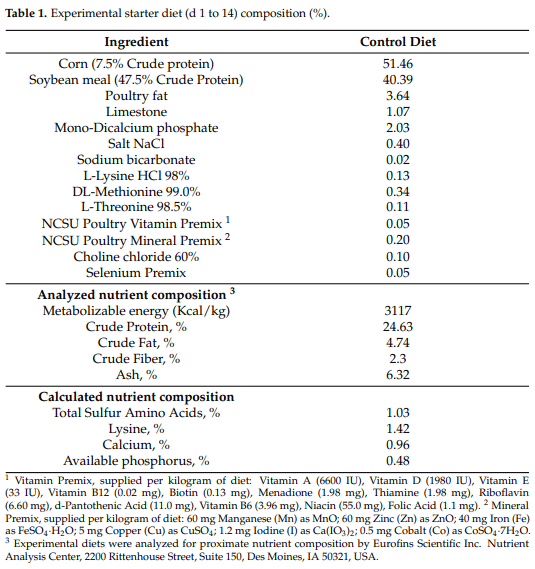
2.4. Chick Growth Performance Indices
2.5. Cecal Sample Collection
2.6. DNA Extraction
2.7. 16S rRNA Amplicon Sequencing and Bioinformatics Analysis
2.8. Statistical Analysis
3. Results
3.1. Growth Performance Parameters and Cecal SE Concentration of Chicks
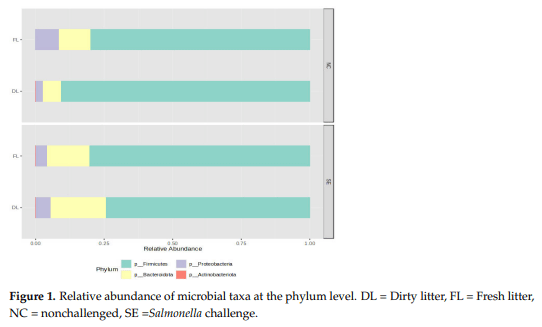
3.2. Sequencing Results and Cecal Microbial Community
4. Discussion
Conclusions
1. Durmu¸s, M.; Kur¸sun, K.; Açık, I.P.; Tufan, M.; Kutay, H.; Benli, H.; Baylan, M.; Kutlu, H.R. Effect of different litter materials on growth performance, the gait score and footpad dermatitis, carcass parameters, meat quality, and microbial load of litter in broiler chickens. Poult. Sci. 2023, 102, 102763. [CrossRef] [PubMed]
2. Cressman, M.D.; Yu, Z.; Nelson, M.C.; Moeller, S.J.; Lilburn, M.S.; Zerby, H.N. Interrelations between the microbiotas in the litter and in the intestines of commercial broiler chickens. Appl. Environ. Microbiol. 2010, 76, 6572–6582. [CrossRef] [PubMed]
3. Yu, X.; Niu, S.; Tie, K.; Zhang, Q.; Deng, H.; Gao, C.; Yu, T.; Lei, L.; Feng, X. Characteristics of the intestinal flora of specific pathogen free chickens with age. Microb. Pathog. 2019, 132, 325–334.
4. Oakley, B.B.; Lillehoj, H.S.; Kogut, M.H.; Kim, W.K.; Maurer, J.J.; Pedroso, A.; Lee, M.D.; Collett, S.R.; Johnson, T.J.; Cox, N.A. The chicken gastrointestinal microbiome. FEMS Microbiol. Lett. 2014, 360, 100–112. [CrossRef]
5. Chen, Y.; Wang, J.; Yu, L.; Xu, T.; Zhu, N. Microbiota and metabolome responses in the cecum and serum of broiler chickens fed with plant essential oils or virginiamycin. Sci. Rep. 2020, 10, 5382. [CrossRef]
6. Wei, S.; Morrison, M.; Yu, Z. Bacterial census of poultry intestinal microbiome. Poult. Sci. 2013, 92, 671–683. [CrossRef]
7. Mancabelli, L.; Ferrario, C.; Milani, C.; Mangifesta, M.; Turroni, F.; Duranti, S.; Lugli, G.A.; Viappiani, A.; Ossiprandi, M.C.; van Sinderen, D. Insights into the biodiversity of the gut microbiota of broiler chickens. Environ. Microbiol. 2016, 18, 4727–4738. [CrossRef]
8. ¸Sekero˘glu, A.; Elero˘glu, H.; Sarıca, M.; Camcı, Ö. Based materials and base material management used in production on the ground. J. Poult. Res. 2013, 10, 25–34.
9. Cengiz, Ö.; Hess, J.B.; Bilgili, S.F. Effect of bedding type and transient wetness on footpad dermatitis in broiler chickens. J. Appl. Poult. Res. 2011, 20, 554–560. [CrossRef]
10. Watts, D.B.; Hess, J.B.; Bilgili, S.F.; Torbert, H.A.; Sibley, J.L.; Davis, J.D. Flue gas desulfurization gypsum: Its effectiveness as an alternative bedding material for broiler production. J. Appl. Poult. Res. 2017, 26, 50–59. [CrossRef]
11. Pan, D.; Yu, Z. Intestinal microbiome of poultry and its interaction with host and diet. Gut Microbes 2014, 5, 108–119. [CrossRef] [PubMed]
12. Wang, L.; Lilburn, M.; Yu, Z. Intestinal microbiota of broiler chickens as affected by litter management regimens. Front. Microbiol. 2016, 7, 593. [CrossRef] [PubMed]
13. Chinivasagam, H.N.; Estella, W.; Rodrigues, H.; Mayer, D.G.; Weyand, C.; Tran, T.; Onysk, A.; Diallo, I. On-farm Campylobacter and Escherichia coli in commercial broiler chickens: Re-used bedding does not influence Campylobacter emergence and levels across sequential farming cycles. Poult. Sci. 2016, 95, 1105–1115. [CrossRef] [PubMed]
14. Muniz, E.; Mesa, D.; Cuaspa, R.; Souza, A.M.; Santin, E. Presence of Salmonella spp. in reused broiler litter. Rev. Colomb. Cienc. Pecu. 2014, 27, 12–27. [CrossRef]
15. Lu, J.; Sanchez, S.; Hofacre, C.; Maurer, J.J.; Harmon, B.G.; Lee, M.D. Evaluation of broiler litter with reference to the microbial composition as assessed by using 16S rRNA and functional gene markers. Appl. Environ. Microbiol. 2003, 69, 901–908. [CrossRef]
16. Velazquez-Meza, M.E.; Galarde-López, M.; Carrillo-Quiróz, B.; Alpuche-Aranda, C.M. Antimicrobial resistance: One health approach. Vet. World 2022, 15, 743–749. [CrossRef]
17. Roll, V.; Dai Prá, M.A.; Roll, A.P. Research on Salmonella in broiler litter reused for up to 14 consecutive flocks. Poult. Sci. 2011, 90, 2257–2262. [CrossRef]
18. Lee, K.W.; Lillehoj, H.S.; Lee, S.H.; Jang, S.I.; Ritter, G.D.; Bautista, D.A.; Lillehoj, E.P. Impact of fresh or used litter on the posthatch immune system of commercial broilers. Avian Dis. 2011, 55, 539–544. [CrossRef]
19. Fasina, Y.O.; Newman, M.M.; Stough, J.M.; Liles, M.R. Effect of Clostridium perfringens infection and antibiotic administration on microbiota in the small intestine of broiler chickens. Poult. Sci. 2016, 95, 247–260. [CrossRef]
20. Fasina, Y.O.; Holt, P.S.; Moran, E.T.; Moore, R.W.; Conner, D.E.; McKee, S.R. Intestinal cytokine response of commercial source broiler chicks to Salmonella typhimurium infection. Poult. Sci. 2008, 87, 1335–1346. [CrossRef]
21. Fasina, Y.O.; Bowers, J.B.; Hess, J.B.; McKee, S.R. Effect of dietary glutamine supplementation on Salmonella colonization in the ceca of young broiler chicks. Poult. Sci. 2010, 89, 1042–1048. [CrossRef]
22. USDA Food Safety and Inspection Service, Office of Public Health Science. USDA Food Safety and Inspection Service Laboratory Guide (2019) Isolation and Identification of Salmonella from Meat, Poultry, Pasteurized Egg, Siluriformes (Fish) Products, and Carcass and Environmental Sponges; USDA Food Safety and Inspection Service, Office of Public Health Science: Athens, GA, USA, 2019.
23. Waltman, W.D.; Gast, R.K.; Mallinson, E.T. Salmonellosis. In A Laboratory Manual for the Isolation, Identification and Characterization of Avian Pathogens, 5th ed.; Dufour-Zavala, L., Swayne, D.E., Glisson, J.R., Pearson, J.E., Reed, W.M., Jackwood, M.W., Woolcock, P.R., Eds.; American Association of Avian Pathologists: Athens, GA, USA, 2008; pp. 3–10.
24. National Research Council; Subcommittee on Poultry Nutrition. Nutrient Requirements of Poultry: 1994; National Academies Press: Washington, DC, USA, 1994.
25. Marsh, A.J.; Azcarate-Peril, M.A.; Aljumaah, M.R.; Neville, J.; Perrin, M.T.; Dean, L.L.; Wheeler, M.D.; Hines, I.N.; Pawlak, R. Fatty acid profile driven by maternal diet is associated with the composition of human milk microbiota. Front. Microbiomes 2022, 1, 1041752. [CrossRef]
26. Ribeiro, A.A.; Jiao, Y.; Girnary, M.; Alves, T.; Chen, L.; Farrell, A.; Wu, D.; Teles, F.; Inohara, N.; Swanson, K.V. Oral biofilm dysbiosis during experimental periodontitis. Mol. Oral Microbiol. 2022, 37, 256–265. [CrossRef]
27. Camp, K.K. Impact of Surgical and Dietary Weight Loss Interventions on the Obesity—Gut Microbiome—Breast Cancer Links. Ph.D. Dissertation, The University of North Carolina at Chapel Hill, Chapel Hill, NC, USA, 2022.
28. Bertelsen, R.J.; Barrionuevo, A.M.P.; Shigdel, R.; Lie, S.A.; Lin, H.; Real, F.G.; Ringel-Kulka, T.; Åstrøm, A.N.; Svanes, C. Association of oral bacteria with oral hygiene habits and self-reported gingival bleeding. J. Clin. Periodontol. 2022, 49, 768–781. [CrossRef]
29. Arbeeva, L.; Azcarate-Peril, M.A.; Cui, Y.; Nelson, A.E.; Loeser, R.F. Association of plasma microbial composition with a leaky gut in obesity-related osteoarthritis: An exploratory study. Osteoarthr. Cartil. Open 2022, 4, 100317. [CrossRef]
30. Haddad, L.B.; Tang, J.H.; Davis, N.L.; Kourtis, A.P.; Chinula, L.; Msika, A.; Tegha, G.; Hosseinipour, M.C.; Nelson, J.A.; Hobbs, M.M. Influence of Hormonal Contraceptive Use and HIV on Cervicovaginal Cytokines and Microbiota in Malawi. Msphere 2023, 8, e00585-22. [CrossRef] [PubMed]
31. Garcés-Gudiño, J.; Merino-Guzmán, R.; Cevallos-Gordón, A.L. Litter reuse reduces Eimeria spp oocyst counts and improves the performance in broiler chickens reared in a tropical zone in Ecuador. Eur. Poult. Sci. 2018, 82, 1–9. [CrossRef]
32. Hussein, M.A.; Khattak, F.; Vervelde, L.; Athanasiadou, S.; Houdijk, J.G. Growth performance, caecal microbiome profile, short-chain fatty acids, and litter characteristics in response to placement on reused litter and combined threonine, arginine and glutamine supplementation to juvenile male broiler chickens. Anim. Microbiome 2023, 5, 18. [CrossRef] [PubMed]
33. Taboosha, M.F. Effect of reusing litter on productive performance, carcass characteristics and behavior of broiler chickens. Int. J. Environ. 2017, 6, 61–69.
34. Kubasova, T.; Faldynova, M.; Crhanova, M.; Karasova, D.; Zeman, M.; Babak, V.; Rychlik, I. Succession, replacement, and modification of chicken litter microbiota. Appl. Environ. Microbiol. 2022, 88, e01809-22. [CrossRef]
35. Jazi, V.; Mohebodini, H.; Ashayerizadeh, A.; Shabani, A.; Barekatain, R. Fermented soybean meal ameliorates Salmonella Typhimurium infection in young broiler chickens. Poult. Sci. 2019, 98, 5648–5660. [CrossRef] [PubMed]
36. Fasina, Y.O.; Obanla, T.O.; Ferket, P.R.; Shah, D.H. Comparative efficacy of spray-dried plasma and bacitracin methylene disalicylate in reducing cecal colonization by Salmonella Enteritidis in broiler chickens. Poult. Sci. 2021, 100, 101134. [CrossRef] [PubMed]
37. Corrier, D.E.; Hinton, A., Jr.; Hargis, B.; DeLoach, J.R. Effect of used litter from floor pens of adult broilers on Salmonella colonization of broiler chicks. Avian Dis. 1992, 36, 897–902. [CrossRef] [PubMed]
38. Chinivasagam, H.N.; Tran, T.; Blackall, P.J. Impact of the Australian litter re-use practice on Salmonella in the broiler farming environment. Food Res. Int. 2012, 45, 891–896. [CrossRef]
39. Louis, P.; Hold, G.L.; Flint, H.J. The gut microbiota, bacterial metabolites and colorectal cancer. Nat. Rev. Microbiol. 2014, 12, 661–672. [CrossRef]
40. Louis, P.; Flint, H.J.; Michel, C. How to manipulate the microbiota: Prebiotics. In Microbiota of the Human Body: Implications in Health and Disease; Springer: Cham, Switzerland, 2016; pp. 119–142.
41. Zhao, W.; Wang, Y.; Liu, S.; Huang, J.; Zhai, Z.; He, C.; Ding, J.; Wang, J.; Wang, H.; Fan, W. The dynamic distribution of porcine microbiota across different ages and gastrointestinal tract segments. PLoS ONE 2015, 10, e0117441. [CrossRef]
42. Wen, C.; Gou, Q.; Gu, S.; Huang, Q.; Sun, C.; Zheng, J.; Yang, N. The cecal ecosystem is a great contributor to intramuscular fat deposition in broilers. Poult. Sci. 2023, 102, 102568. [CrossRef]
43. Torres-Rodriguez, A.; Donoghue, A.M.; Donoghue, D.J.; Barton, J.T.; Tellez, G.; Hargis, B.M. Performance and condemnation rate analysis of commercial turkey flocks treated with a Lactobacillus spp.-based probiotic. Poult. Sci. 2007, 86, 444–446. [CrossRef]
44. Brisbin, J.T.; Parvizi, P.; Sharif, S. Differential cytokine expression in T-cell subsets of chicken caecal tonsils co-cultured with three species of Lactobacillus. Benef. Microbes 2012, 3, 205–210. [CrossRef]
45. Borda-Molina, D.; Seifert, J.; Camarinha-Silva, A. Current perspectives of the chicken gastrointestinal tract and its microbiome. Comput. Struct. Biotechnol. J. 2018, 16, 131–139. [CrossRef]
46. Zenner, C.; Hitch, T.C.; Riedel, T.; Wortmann, E.; Tiede, S.; Buhl, E.M.; Abt, B.; Neuhaus, K.; Velge, P.; Overmann, J. Early-life immune system maturation in chickens using a synthetic community of cultured gut bacteria. Msystems 2021, 6, e01300-20. [CrossRef] [PubMed]
47. Okamoto, K.; Watanabe, T.; Komeda, Y.; Okamoto, A.; Minaga, K.; Kamata, K.; Yamao, K.; Takenaka, M.; Hagiwara, S.; Sakurai, T. Dysbiosis-associated polyposis of the Colon—Cap polyposis. Front. Immunol. 2018, 9, 918. [CrossRef]
48. Sokol, H.; Jegou, S.; McQuitty, C.; Straub, M.; Leducq, V.; Landman, C.; Kirchgesner, J.; Le Gall, G.; Bourrier, A.; Nion-Larmurier, I. Specificities of the intestinal microbiota in patients with inflammatory bowel disease and Clostridium difficile infection. Gut Microbes 2018, 9, 55–60. [CrossRef]
49. Wu, S.; Liu, Y.; Duan, Y.; Wang, F.; Guo, F.; Yan, F.; Yang, X.; Yang, X. Intestinal toxicity of deoxynivalenol is limited by supplementation with Lactobacillus plantarum JM113 and consequentially altered gut microbiota in broiler chickens. J. Anim. Sci. Biotechnol. 2018, 9, 74. [CrossRef] [PubMed]
50. Liu, S.; Bennett, D.C.; Tun, H.M.; Kim, J.; Cheng, K.M.; Zhang, H.; Leung, F.C. The effect of diet and host genotype on ceca microbiota of Japanese quail fed a cholesterol enriched diet. Front. Microbiol. 2015, 6, 1092. [CrossRef]
51. Xu, R.; Kiarie, E.G.; Yiannikouris, A.; Sun, L.; Karrow, N.A. Nutritional impact of mycotoxins in food animal production and strategies for mitigation. J. Anim. Sci. Biotechnol. 2022, 13, 69. [CrossRef]
52. Liu, Y.; Feng, Y.; Yang, X.; Lv, Z.; Li, P.; Zhang, M.; Wei, F.; Jin, X.; Hu, Y.; Guo, Y. Mining chicken ileal microbiota for immunomodulatory microorganisms. ISME J. 2023, 17, 758–774. [CrossRef]
53. Wang, Y.; Jin, T.; Zhang, N.; Li, J.; Wang, Y.; Kulyar, M.F.; Han, Z.; Li, Y. Effect of stocking density and age on physiological performance and dynamic gut bacterial and fungal communities in Langya hens. Microb. Cell Factories 2021, 20, 218. [CrossRef] [PubMed]
54. Liu, J.; Wang, J.; Zhou, Y.; Han, H.; Liu, W.; Li, D.; Li, F.; Cao, D.; Lei, Q. Integrated omics analysis reveals differences in gut microbiota and gut-host metabolite profiles between obese and lean chickens. Poult. Sci. 2022, 101, 102165. [CrossRef]
55. Lyu, Z.; Yuan, G.; Zhang, Y.; Zhang, F.; Liu, Y.; Li, Y.; Li, G.; Wang, Y.; Zhang, M.; Hu, Y. Anaerostipes caccae CML199 enhances bone development and counteracts aging-induced bone loss through the butyrate-driven gut–bone axis: The chicken model. Microbiome 2024, 12, 215. [CrossRef]
56. Eeckhaut, V.; Van Immerseel, F.; Pasmans, F.; De Brandt, E.; Haesebrouck, F.; Ducatelle, R.; Vandamme, P. Anaerostipes butyraticus sp. nov., an anaerobic, butyrate-producing bacterium from Clostridium cluster XIVa isolated from broiler chicken caecal content, and emended description of the genus Anaerostipes. Int. J. Syst. Evol. Microbiol. 2010, 60, 1108–1112. [CrossRef]
57. Gillis, C.C.; Hughes, E.R.; Spiga, L.; Winter, M.G.; Zhu, W.; de Carvalho, T.F.; Chanin, R.B.; Behrendt, C.L.; Hooper, L.V.; Santos, R.L. Dysbiosis-associated change in host metabolism generates lactate to support Salmonella growth. Cell Host Microbe 2018, 23, 54–64.e6. [CrossRef] [PubMed]
58. Oladeinde, A.; Abdo, Z.; Zwirzitz, B.; Woyda, R.; Lakin, S.M.; Press, M.O.; Cox, N.A.; Thomas IV, J.C.; Looft, T.; Rothrock, M.J., Jr. Litter commensal bacteria can limit the horizontal gene transfer of antimicrobial resistance to Salmonella in chickens. Appl. Environ. Microbiol. 2022, 88, e02517-21. [CrossRef] [PubMed]
59. McCormack, U.M.; Curião, T.; Buzoianu, S.G.; Prieto, M.L.; Ryan, T.; Varley, P.; Crispie, F.; Magowan, E.; Metzler-Zebeli, B.U.; Berry, D. Exploring a possible link between the intestinal microbiota and feed efficiency in pigs. Appl. Environ. Microbiol. 2017, 83, e00380-17. [CrossRef]
60. Frampton, J.; Murphy, K.G.; Frost, G.; Chambers, E.S. Short-chain fatty acids as potential regulators of skeletal muscle metabolism and function. Nat. Metab. 2020, 2, 840–848. [CrossRef] [PubMed]
61. Guo, W.; Wang, C.; Qin, K.; Shi, H.; Yang, X.; Yang, X. Lactobacillus Plantarum injection at the embryonic stage alters the early growth performance and lipid metabolism of broilers by specific genera of bacteria. Poult. Sci. 2023, 102, 102522. [CrossRef]
62. Stanley, D.; Hughes, R.J.; Geier, M.S.; Moore, R.J. Bacteria within the gastrointestinal tract microbiota correlated with improved growth and feed conversion: Challenges presented for the identification of performance enhancing probiotic bacteria. Front. Microbiol. 2016, 7, 187. [CrossRef]
63. Rychlik, I. Composition and function of chicken gut microbiota. Animals 2020, 10, 103. [CrossRef]
64. Vacca, M.; Celano, G.; Calabrese, F.M.; Portincasa, P.; Gobbetti, M.; De Angelis, M. The controversial role of human gut lachnospiraceae. Microorganisms 2020, 8, 573. [CrossRef]
65. Dai, Z.; Wang, X.; Liu, Y.; Liu, J.; Xiao, S.; Yang, C.; Zhong, Y. Effects of dietary microcapsule sustained-release sodium butyrate on the growth performance, immunity, and gut microbiota of yellow broilers. Animals 2023, 13, 3598. [CrossRef]
66. Ameer, A.; Cheng, Y.; Saleem, F.; Uzma; McKenna, A.; Richmond, A.; Gundogdu, O.; Sloan, W.T.; Javed, S.; Ijaz, U.Z. Temporal stability and community assembly mechanisms in healthy broiler cecum. Front. Microbiol. 2023, 14, 1197838. [CrossRef] [PubMed]
67. Zhang, J.; Yu, H.; Zhang, H.; Zhao, Q.; Si, W.; Qin, Y.; Zhang, J. Dietary Epimedium extract supplementation improves intestinal functions and alters gut microbiota in broilers. J. Anim. Sci. Biotechnol. 2023, 14, 14. [CrossRef]
68. Liao, X.; Shao, Y.; Sun, G.; Yang, Y.; Zhang, L.; Guo, Y.; Luo, X.; Lu, L. The relationship among gut microbiota, short-chain fatty acids, and intestinal morphology of growing and healthy broilers. Poult. Sci. 2020, 99, 5883–5895. [CrossRef]
69. Namted, S.; Poungpong, K.; Loongyai, W.; Rakangthong, C.; Bunchasak, C. Dietary autolysed yeast modulates blood profiles, small intestinal morphology and caecal microbiota of weaning pigs. Animal 2022, 16, 100660. [CrossRef]
70. Crespo-Piazuelo, D.; Migura-Garcia, L.; Estellé, J.; Criado-Mesas, L.; Revilla, M.; Castelló, A.; Muñoz, M.; García-Casco, J.M.; Fernández, A.I.; Ballester, M. Association between the pig genome and its gut microbiota composition. Sci. Rep. 2019, 9, 8791. [CrossRef] [PubMed]
71. Cui, X.; Gou, Z.; Jiang, Z.; Li, L.; Lin, X.; Fan, Q.; Wang, Y.; Jiang, S. Dietary fiber modulates abdominal fat deposition associated with cecal microbiota and metabolites in yellow chickens. Poult. Sci. 2022, 101, 101721. [CrossRef] [PubMed]
72. Chen, Y.; Akhtar, M.; Ma, Z.; Hu, T.; Liu, Q.; Pan, H.; Zhang, X.; Nafady, A.A.; Ansari, A.R.; Abdel-Kafy, E.M. Chicken cecal microbiota reduces abdominal fat deposition by regulating fat metabolism. npj Biofilms Microbiomes 2023, 9, 28. [CrossRef]
73. Rebollada-Merino, A.; Ugarte-Ruiz, M.; Hernández, M.; Miguela-Villoldo, P.; Abad, D.; Cuesta-Alvaro, P.; Rodríguez-Lázaro, D.; de Juan, L.; Domínguez, L.; Rodríguez-Bertos, A. Dietary supplementation with fermented defatted “alperujo” induces modifications of the intestinal mucosa and cecal microbiota of broiler chickens. Poult. Sci. 2020, 99, 5308–5315. [CrossRef]
74. McKenna, A.; Ijaz, U.Z.; Kelly, C.; Linton, M.; Sloan, W.T.; Green, B.D.; Lavery, U.; Dorrell, N.; Wren, B.W.; Richmond, A. Impact of industrial production system parameters on chicken microbiomes: Mechanisms to improve performance and reduce Campylobacter. Microbiome 2020, 8, 128. [CrossRef]
75. Torok, V.A.; Hughes, R.J.; Ophel-Keller, K.; Ali, M.; MacAlpine, R. Influence of different litter materials on cecal microbiota colonization in broiler chickens. Poult. Sci. 2009, 88, 2474–2481. [CrossRef]