1. Introduction
The rising global demand for animal-derived products is driven by population growth and the increasing need for high-quality protein sources. However, this surge in demand has heightened concerns about the environmental impacts and sustainability of livestock production. Food systems globally contribute nearly one-third of greenhouse gas (GHG) emissions, with the livestock sector being a significant contributor (Grossi et al., 2018; Crippa et al., 2021; Jaisli and Brunori, 2024). According to the Food and Agriculture Organization (FAO), livestock production generates approximately 7.1 gigatonnes of CO₂-equivalent emissions annually, accounting for 15–18 % of total global anthropogenic GHG emissions (FAO, 2016; Grossi et al., 2018). Among the primary sources of these emissions, feed production alone contributes nearly 45 % of the total emissions, making it one of the largest contributors to the environmental footprint of livestock systems (Bilotto et al., 2024; FAO, 2016). This indicates that, the efficiency with which livestock animals convert feed into edible products is a key determinant of the sector’s overall environmental impact.
Feed efficiency, often expressed as the feed conversion ratio (FCR), represents the amount of feed require to produce a unit of livestock product, such as meat, milk, or eggs. Animals with low feed efficiency generally require greater quantities of feed to achieve the same level of productivity as animals with high feed conversion rate. This inefficiency increases the demand for feed production, which, in turn, intensifies emissions from land use, fertilizer application, and crop processing (Weiss and Leip, 2012; Knapp et al., 2014). Additionally, inefficient animals generate more methane and nitrous oxide per unit of product through enteric fermentation and manure decomposition, exacerbating the sector’s GHG emissions (McAuliffe et al., 2018; McClelland et al., 2018). Several studies have shown that the environmental impacts of low feed efficiency are particularly pronounced in unhealthy or diseased animals. A five-year study on lambs demonstrated that inadequate control of gastrointestinal nematodes can reduce feed efficiency, with a 10 % increase in GHG emissions (Kenyon et al., 2013). Similarly, parasitized lambs were found to produce 33 % more methane emissions when compared to parasite-free lambs (Fox et al., 2018). Other diseases, such as trypanosomiasis (MacLeod et al., 2018) and mastitis (Mostert et al., 2019), have also been linked to poor FCR and increased GHG emissions.
While considerable scientific attention has focused on exotic diseases with devastating impacts on livestock industries, endemic health challenges such as mycotoxicosis pose persistent risks to both productivity and environmental sustainability. Mycotoxicosis arises from the ingestion of feeds contaminated with mycotoxins—secondary metabolites produced by fungi from genera such as Aspergillus, Penicillium, Alternaria, and Fusarium (Pitt and Miller, 2016; Moretti and Susca, 2017). Under favorable climatic conditions, these fungi infect crops both before and after harvest, contaminating an estimated 60–80 % of global feed raw materials, including cereals and soybeans with detectable levels of mycotoxins (Eskola et al., 2019). The detectable levels may vary from trace amounts to concentrations exceeding the regulatory limits. The primary mycotoxins of concern from a feed safety standpoint include aflatoxins, deoxynivalenol, zearalenone, ochratoxins, fumonisins, and T2/HT-2 toxins (Eskola et al., 2019). The impacts of these mycotoxins on livestock health range from subclinical impairments, which are difficult to diagnose, to severe clinical outcomes resulting in mortality (Kolawole et al., 2020). Beyond low feed conversion efficiency or feed utilization, feed mycotoxin contamination contributes to substantial increase in feed waste due to feed refusal or disposal of contaminated feed, necessitating additional feed production to meet the energy demands of livestock animals. In addition, higher mortality rates in unhealthy herds require the replacement of lost animals cumulatively increasing the resource intensity and footprint of livestock systems.
Although regulatory thresholds are intended to ensure feed safety, recent evidence suggests that chronic exposure to low-level mixtures of mycotoxins (within accepted limits) can still impair animal performance. These subclinical exposures frequently go undetected in routine monitoring but have been associated with reduced feed efficiency, elevated nutrient excretion, and subtle yet economically meaningful productivity losses across poultry, swine, and ruminant systems (Grenier et al., 2016; Kolawole et al., 2020; Weaver et al., 2022). In intensive production settings, even modest inefficiencies can translate into significant economic and environmental burdens over time. This underrecognized challenge highlights the need for a more holistic assessment of feed mycotoxin risks that addresses both economic performance and environmental outcomes.
To address this gap, the present study uses a poultry production system as a case study to quantify the economic and environmental consequences of feed mycotoxin contamination. A representative European broiler farm with non-detectable mycotoxin levels served as the baseline. Data from this system, combined with results from a meta-analysis of broiler feeding trials, were integrated into a production cost model and a cradle-to-farmgate life cycle assessment (LCA). This approach enabled a comparative evaluation of the production system’s environmental and economic performance under contaminated and non-contaminated feed scenarios. This systems-level perspective moves beyond conventional toxicological assessments to capture the broader implications of low-level, chronic mycotoxin exposure under commercial conditions. These insights underscore the need for early detection and mitigation strategies to reduce inefficiencies, limit resource losses, and support the transition toward low-carbon, economically resilient poultry systems. In doing so, the study contributes to global sustainability targets, particularly SDG 2 (zero hunger), SDG 12 (responsible consumption and production), and SDG 13 (climate action).
2. Methodology
2.1. Life cycle assessment
The environmental impacts of the broiler production system were assessed through attributional LCA, following the recommendations of the International Organization for Standardization (ISO) 14,040 and ISO 14044. Data for the analysis were sourced from LCA databases, national inventory reports, public statistics, and peer-reviewed scientific literature.
2.1.1. Goal and scope definition
The objective of this LCA was to estimate and compare the environmental impacts associated with broiler production using: (1) feeds without detectable levels of mycotoxins regulated by the European Union (EU), and (2) feeds contaminated with mycotoxins at concentrations compliant with EU regulatory limits (EC, 2006). The case study modelled a typical conventional broiler farm in the Netherlands, housing approximately 100,000 Ross 308 broilers per production cycle at a maximum stocking density of 42 kg/m2 . The broilers, raised in controlled, intensive indoor systems with concrete floors and bedding materials, were grown to an average live/slaughter weight of 2.5 kg over 42 days. Birds were fed ad libitum diets primarily composed of wheat and soybean, with the nutritional composition of the complete feed and the country of origin for feed ingredients detailed in Supplementary Table 1.
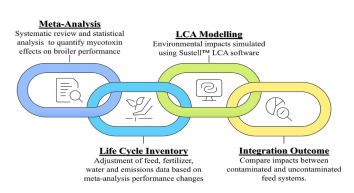
The broiler feeds used for this production cycle contained nondetectable levels of mycotoxins. However, due to difficulties in sourcing animal feeds naturally contaminated with different types and levels of mycotoxins within EU regulatory limits, it was not feasible to directly compare broilers fed contaminated and non-contaminated diets within this system. Instead, this broiler farm system with non-detectable levels of feed mycotoxins served as the baseline for simulating and predicting the economic and environmental impacts of diets contaminated with mixtures of regulated mycotoxins. Data on the effects of mycotoxins on broilers were obtained through a systematic review and meta-analysis of broiler feeding trials conducted within Europe, as described in detail below. The structure and flow of the analytical framework, integrating meta-analysis and LCA, are visually summarized in Fig. 3.
2.2. Systematic review and meta-analysis
2.2.1. Literature search and eligibility criteria
Electronic searches were conducted in June 2022 and updated in June 2024 across three databases: Scopus, Web of Science, and PubMed. The primary search terms were categorized as follows:
- EU-regulated mycotoxins (aflatoxins, deoxynivalenol, zearalenone, T-2, HT-2, fumonisins, ochratoxins),
- Animal species (e.g., poultry, turkey, broiler, chicken), and
- Performance parameters (e.g., body weight, feed intake, feed conversion ratio, feed efficiency).
- Poultry or broiler LCA, greenhouse gas emissions and economic modelling.
Keywords were combined using Boolean operators (AND, OR, NOT) and included terms such as “mycotoxins,” “feed,” “poultry,” and “performance” (Supplementary Table 2). The search strategy aimed to address the study’s objective of evaluating and quantifying the impact of mycotoxins on animal health and performance. EU-regulated mycotoxins refer to six specific toxins with guidance or maximum permitted levels in feed as determined by the European Union Food Safety Authority. Broiler birds were the primary focus due to their high sensitivity to mycotoxins and the availability of substantial data for LCA and performance impact studies. The performance parameters included such as body weight, feed intake, and FCR are globally recognized indicators of poultry productivity. No restrictions were placed on publication date or language. Search results from all databases were combined and deduplicated using Covidence (https://www.covidence.org/). Two reviewers (OK and CV) independently conducted the systematic review, screening titles and abstracts based on predefined eligibility criteria
Eligibility Criteria
Inclusion criteria:
- Broiler feeding trials conducted in the EU using naturally contaminated and non-contaminated feeds.
- Studies reporting the occurrence of multiple mycotoxins.
- Inclusion of feed composition and mycotoxin type/levels.
- Performance outcomes (body weight, feed intake, FCR) with statistical analysis.
- Clearly described methodology, including control (no mycotoxins) and contaminated (with mycotoxins) groups.
- Minimum trial duration of 21 days.
Exclusion criteria:
- Studies involving other livestock species (e.g., pigs, ruminants, laying hens, rabbits, horses, ducks, mice/rats).
- Conference abstracts, reviews, book chapters, patents, letters, editorial material, notes, brief reports, or published protocols.
- Studies using feeds spiked with mycotoxin standards or focusing on mycotoxin toxicokinetic.
2.2.2. Content analysis
The content analysis process involved three key steps: (1) initial coding categorizing key themes such as ‘feed conversion efficiency,’ ‘greenhouse gas emissions,’ and ‘economic losses’ using a qualitative software; (2) theme refinement through grouping codes into broader themes like ‘environmental impacts’, ‘mycotoxin effects on broilers’ and ‘feed ingredient source’ and (3) recording specific data points, such as reductions in feed efficiency, under relevant themes for synthesis. These steps ensured a systematic and transparent approach to the analysis.
Intercoder reliability test
To ensure consistency and accuracy in the coding process, an intercoder reliability test was conducted. Three independent coders (OK, CE and CV) applied the predefined coding framework to a subset of the dataset, comprising 85 % of the included studies. The coders independently evaluated key themes, including the impacts of mycotoxins on broilers and environmental impacts, using NVivo software. Intercoder agreement was assessed using Cohen’s kappa statistic, a widely used metric for measuring agreement beyond chance. The test yielded a kappa value of 0.82, indicating substantial agreement between the coders. The refined coding framework was subsequently applied to the full dataset by a single coder to ensure uniformity across the analysis.
Risk of bias assessment:
The risk of bias for the included studies was assessed using the COSMIN Risk of Bias Checklist, a comprehensive tool designed to evaluate the methodological quality of studies. Each study was independently reviewed by two researchers who categorized the risk of bias as “low,” “moderate,” or “high” for each domain. The inter-reviewer agreement was high, with consensus reached on 95 % of the assessments. Discrepancies were minimal and were resolved through discussion and consensus with a third reviewer (CE). The assessment revealed that 80 % of the included studies had a low risk of bias, primarily due to robust study designs and reliable reporting of key metrics. However, 10 % exhibited a moderate risk of bias, often related to insufficient details on reliability or validity, and 10 % were deemed to have a high risk of bias, largely due to methodological limitations or incomplete reporting.
2.2.3. Data extraction and statistical analysis
Data extraction was conducted and independently verified by OK and CV to ensure accuracy. Relevant information, including author name, year of publication, number of animals, country, study duration, type and levels of mycotoxins, FCR, and standard deviation (SD), was extracted from eligible articles and organized in Microsoft Excel 2016. For studies lacking SD values, these were imputed using data from similar studies or trials (Furukawa et al., 2006). The eligible studies were analyzed using the “meta” package in R 4.1.2 software (R Core Team, 2024). The mean difference was calculated to determine the average effect size of the dataset. A random-effects model, employing the restricted maximum likelihood (REML) estimator, was used to estimate heterogeneity variance. Additionally, Knapp-Hartung adjustments were applied to compute confidence intervals around the pooled effect, reducing the risk of false-positive results. Heterogeneity levels were assessed using Cochrane Q test and Higgins I 2 statistic, with heterogeneity classified as high (I2 < 75 %) or low (I2 > 25 %). Publication bias was evaluated using funnel plots and Egger’s test, with bias deemed significant if Egger’s test yielded a p-value < 0.05.
2.3. System boundary and functional unit
The system boundary for the broiler production system is depicted in Fig. 2. It encompasses key stages and associated inputs and outputs, including feed production (crop cultivation, processing, and transportation), chick production, broiler rearing, on-farm utilities (electricity, water, fuel, and other energy sources), bedding materials, and on-farm emissions from manure and animal housing. The functional unit for the analysis was defined as 1 kg of live broiler chicken at slaughter weight. Environmental impacts beyond the farm gate were not considered in this study.
2.4. Life cycle inventory
The life cycle inventories for the cultivation of feed ingredients (wheat and soybean) and other background processes—including energy, transportation, and fertilizers—were sourced from the Agrifootprint 5.0 and Global Feed LCA Institute (GFLI) databases (Supplementary Table 3). These datasets encompass various aspects of crop cultivation, such as land use change, production and application of inorganic fertilizers, water usage, fuel production and combustion for agricultural machinery, pesticide production, emissions during input transportation, electricity production, and emissions from pesticide, manure, urea, and inorganic fertilizers to the atmosphere. Additionally, they account for leaching of nitrate, phosphorus, and heavy metals into water systems.
The soybean and soy-derived ingredients used in the broiler production system were primarily imported from Brazil and the USA (Supplementary Table 1). To assess the influence of soybean origin on the environmental footprint of broiler production, a sensitivity analysis was conducted. This analysis incorporated data on the production of soybean meal, soybean oil, and full-fat soy in Brazil and the USA into the LCA calculations. Bird mortality rates and antibiotic usage were excluded from this study due to the lack of reliable datasets.
2.5. Impact assessment
The life cycle impact assessment (LCIA) was conducted using the robust and commercially available Sustell™ version 2.3 software (www. sustell.com), designed in compliance with ISO 14040/44 standards. The software’s commercial license provided full access to relevant databases for LCA calculations and facilitated collaboration with colleagues. Emission calculations in this study were based on the LCA framework for broilers developed by Blonk consultants (Blonk et al., 2017) and adhered to guidelines from the Livestock Environmental Assessment and Performance (LEAP) framework for greenhouse gas (GHG) estimation (FAO LEAP, 2020), the Intergovernmental Panel on Climate Change (IPCC, 2019), and EMEP/EEA air pollutant emission protocols.
Environmental impacts were evaluated using the European Commission Product Environmental Footprint (PEF 2.0) methodology (European Commission, 2021), which includes a comprehensive set of 19 impact categories: global warming potential 100 (GWP100), GWP100 land use and transformation, GWP100 biogenic, GWP100 fossil, resource use (minerals, metals, energy carriers), water scarcity, land use, ecotoxicity, freshwater eutrophication, terrestrial eutrophication, marine eutrophication, freshwater acidification, terrestrial acidification, cancer and non-cancer human health effects, respiratory inorganics, photochemical ozone formation (human health), ionizing radiation (human health), and ozone depletion.
GHG emissions (CO2, CH4, and N2O) from the broiler production system were estimated and expressed in kg CO2- equivalents based on 100-year global warming potentials: 34 for biogenic CH4, 298 for N2O, 1 for CO2, and 36.75 for fossil CH4 (IPCC, 2019). Manure emissions were estimated using IPCC (2019) recommendations, including both direct (N2O) and indirect (e.g., NH3, NOx) emissions. Emissions from interim storage (e.g., short-term piling or composting) were not explicitly modelled due to lack of farm-specific data.
Nitrogen excretion by broilers, under both uncontaminated and contaminated feed scenarios, was calculated as:
Nitrogen excreted = Nitrogen intake − Nitrogen retained for growth
Nitrogen intake was derived from feed intake and dietary nitrogen content, while nitrogen retained was estimated based on nitrogen content in broiler meat. Total ammoniacal nitrogen was calculated as:
(Nitrogen intake × Nitrogen digestibility)− Nitrogen retained
Direct GHG emissions from manure management were estimated by applying an emission factor of 1 % N2O from total nitrogen applied to soil (IPCC, 2019). NH3 emissions were calculated as:
Nitrogen applied to soil × 0.2kg NH3–N per kg nitrogen in manure
Wastewater emissions of NO3− and PO4 3 were calculated using rates of 0.3 kg NO3 − N per kg nitrogen and 0.01 kg PO4 3 –P per kg phosphorus in manure (IPCC, 2019; FAO, 2016).
For eutrophication and acidification impact categories, the analysis included direct emissions of ammonia and nitrous oxide from broiler housing, as well as indirect emissions from feed production.
For methane (CH₄) emissions, the following assumptions and calculations were used:
- Volatile solids (VS) were estimated using the equation:
- A methane conversion factor (MCF) of 0.5 % was applied, consistent with IPCC 2019 defaults for dry, non-liquid poultry manure in temperate conditions.
- Methane emissions were calculated using:
CH₄emissions (kg) = VS (kg) × MCF × 0.67
where 0.67 kg/m3 is the assumed methane density.
All emission factors and assumptions have been harmonized with IPCC 2019 and the Sustell platform’s internal datasets to ensure consistency and reproducibility across scenarios.
2.6. Production costs
The costs of broiler chicken production at the farm level were estimated using a spreadsheet model developed by Van Horne (2020). Cost data for a typical conventional broiler farm in the Netherlands were sourced from the Quantitative Information Animal Husbandry and Wageningen Economic Research. The model incorporated inputs such as technical performance metrics, market prices, and both variable and fixed costs, as outlined by Van Horne (2020).
3. Results
3.1. Quantitative effects of mycotoxins on broiler performance
3.1.1. Study selection
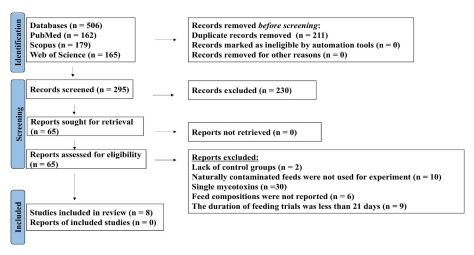
A total of 506 articles were retrieved from three electronic databases: PubMed (162), Scopus (179), and Web of Science (165). After removing duplicates, 295 unique articles remained. During the title and abstract screening phase, 230 studies were excluded. Full-text reviews of the remaining 65 articles resulted in the exclusion of 57 studies due to factors such as inappropriate study design, review articles, lack of access to full texts, absence of control groups, or incomplete data. Consequently, 8 studies met the inclusion criteria and were included in the meta-analysis. The systematic review process is outlined in Fig. 1.
3.1.2. Characteristics of the studies included
A total of 8 trials from 8 studies were included in the meta-analysis. The trials spanned durations of 23 to 42 days, with an average of 35 days, and predominantly utilized Ross 308 breeds. Birds were reared under temperature-controlled conditions with ad libitum access to a wheat/corn-soybean diet and water. Each trial involved birds fed diets co-contaminated with two or more EU-regulated mycotoxins, including deoxynivalenol, zearalenone, ochratoxins, T-2/HT-2, and fumonisins. Mycotoxin concentrations in the complete feeds were analyzed using LCMS/MS and HPLC-FLD. Deoxynivalenol was the most frequently detected mycotoxin, followed by zearalenone, fumonisins, T-2/HT-2, and ochratoxins.
All eligible studies/trials were conducted in Europe, ensuring that the findings are representative of poultry production practices typical of this region. Furthermore, the housing and feeding conditions in the eight trials closely align with the broiler farm system examined in this study, particularly with respect to breed, feed composition, and rearing environment. Detailed characteristics of the included studies are provided in Supplementary Table 4.
3.1.3. Meta-analysis of mycotoxin impact on broiler feed efficiency
The detrimental effects of mycotoxins on broiler performance are well-established, with significant impacts on performance and overall health. To mitigate these effects, strict regulatory limits on specific mycotoxins in livestock feed are enforced within the European Union (EU), preventing the use of feeds exceeding established thresholds. As a result, complete feeds within EU supply chains generally comply with these regulatory standards. In this study, meta-analysis was used to quantify the effect of mycotoxin-contaminated feeds on broiler FCR at levels within EU limits. This was conducted by comparing groups of birds exposed to co-contaminated diets with those fed diets containing no mycotoxins. FCR was selected because it is widely used as a key performance indicator in livestock production.
Fig. 1. PRISMA flow diagram depicting the systematic review process, including the identification, screening, eligibility assessment, and inclusion phases. The diagram outlines the number of records retrieved, screened, excluded, and ultimately included in the final review, along with reasons for exclusions at each stage.
Fig. 2. Process flow and system boundaries for a ‘cradle-to-gate’ life cycle assessment (LCA) of a broiler production system. The diagram outlines key components: inputs to the broiler system (e.g., crops, supplements, and energy), animal breeding, broiler production (rearing, small− /large-scale operations, processing), and byproduct management (spent hens, culls, and manure reuse or disposal). Arrows represent material and energy flows across the system.
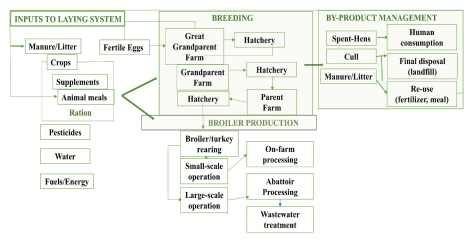
Fig. 3. Schematic representation of the integration of meta-analysis and life cycle assessment (LCA) in the present study. Meta-analysis was used to quantify the effects of mycotoxins on broiler performance. These performance changes were then used to adjust the life cycle inventory (LCI) inputs, including feed, fertilizer, water, and emission data. Subsequently, LCA modelling using Sustell™ software simulated environmental impacts. The final integration enabled comparative evaluation between contaminated and uncontaminated feed systems.
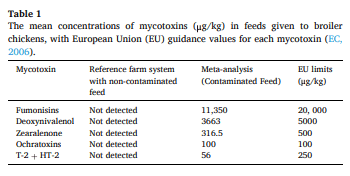
As depicted in Table 1 and Supplementary Table 4, all the eight studies included in the meta-analysis utilized feeds contaminated with two or more mycotoxins at levels within EU regulatory limits. A randomeffects model was employed to quantify the average impact of mycotoxin-contaminated feeds on broiler FCR. Pooled results revealed that mixtures of regulated mycotoxins, even at levels permitted by EU regulations, significantly impaired feed utilization efficiency, leading to a reduction of up to 10.8 % compared to non-contaminated diets (p < 0.05). Specifically, the FCR increased from 1.68 under uncontaminated conditions to 1.86 under mycotoxin-contaminated conditions.
The random-effects model for FCR yielded a pooled mean difference of 0.17 (95 % CI: 0.01 to 0.53, p = 0.047) (Fig. 4). These findings highlight the adverse effects of low-level mycotoxin contamination on broiler performance, even when contamination complies with regulatory standards.
The relatively small number of eligible studies (8 trials) for inclusion in this meta-analysis reflects the strict predefined criteria (Section 2.2.1; Fig. 1). However, prior research suggests that meta-analyses with as few as five studies can provide sufficient statistical power to derive reliable conclusions about the effects of a treatment (Valentine et al., 2010; Cumming, 2013). Egger’s test for regression intercept yielded a p-value of 0.29, indicating no evidence of publication bias. This result was further supported by the absence of asymmetry in the corresponding funnel plot (Supplementary Fig. 1). Moreover, the meta-analysis recorded an I 2 value of 18 % (Fig. 4), suggesting very low heterogeneity among the included studies.
Fig. 4. Random effect model forest plot of feed conversion ratio (FCR) of broiler chickens fed diets naturally contaminated with multiple mycotoxins at levels below the European Union guidance. The data marker and the black horizontal lines represent, respectively, each study and the corresponding 95 % confidence interval. The size of each green box is proportional to the weight of study (i.e., the percentage contribution of each study to the overall effect size). The yellow diamonds represent the overall effect of mycotoxins on broiler FCR when compared to control (birds fed uncontaminated feed). The result indicates a significant increase in FCR of birds fed contaminated diet (p = 0.0456). An increasing FCR value generally indicates a reduction in feed efficiency. (For interpretation of the references to colour in this figure legend, the reader is referred to the web version of this article.)
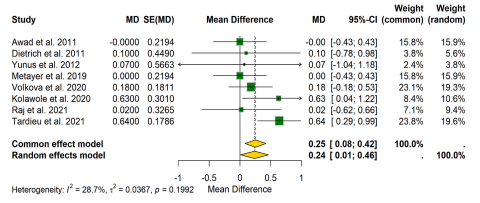
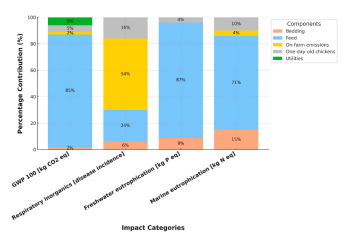
Fig. 5. Environmental impact contributions by category. The chart illustrates the percentage contributions of five components—Bedding, Feed, On-farm emissions, One-day-old chickens, and Utilities—to four key environmental impact categories: GWP 100 (kg CO2 eq), Respiratory inorganics (disease incidence), Freshwater eutrophication (kg P eq), and Marine eutrophication (kg N eq).
3.2. Life cycle assessment
3.2.1. Environmental footprint of the broiler production system
A robust, ISO-accredited, commercially available LCA software was employed to estimate the environmental impacts of the broiler production system under consideration, which utilized non-contaminated feed. The LCA results revealed that feed production (including crop cultivation, transportation, and processing) and on-farm emissions (primarily from manure and housing) were the dominant contributors to the overall environmental burdens associated with this broiler production system (Fig. 5). Normalization and weighting of impact categories were not reported, as these did not provide additional robust insights aligned with the objectives of this study. Among the 19 impact categories evaluated, four were identified as the most environmentally relevant for the broiler system: global warming potential (GWP100) (fossil, biogenic, land use, and land transformation), respiratory inorganics, marine eutrophication, and freshwater eutrophication (Fig. 5).
Specifically, feed production was responsible for 85 % of the carbon footprint, driven primarily by land use and land transformation impacts associated with crop cultivation. Additionally, feed production contributed significantly to freshwater eutrophication (87 %) and marine eutrophication (71 %). Nitrogen emissions from on-farm activities, including broiler housing (beddings and excretions), had a major impact (54 %) on the respiratory inorganics category. For 1 kg of live broiler weight, the estimated impacts for GWP100, freshwater eutrophication, marine eutrophication, and respiratory inorganics were at 4 kg CO2-eq, 5.83 × 10− 4 kg P-eq, 1.91 × 10− 2 kg N-eq and 3.82 × 10− 7 disease incidence, respectively. The contribution of utilities (electricity, water, fuel) to the overall environmental footprint was minimal. The comprehensive results across all 19 environmental impact categories are detailed in Supplementary Table 5.
3.2.2. Impact of mycotoxins on environmental footprints of broiler production
The potential environmental impacts of mycotoxin-contaminated feeds were quantified by modelling changes in FCR and nitrogen emissions, using performance data derived from the meta-analysis. The LCA results showed that broilers consuming feeds contaminated with multiple regulated mycotoxins experienced substantially increased environmental burdens compared to those fed uncontaminated diets (Fig. 6). Poor FCR in broilers fed contaminated feeds necessitated additional feed production to achieve market weight, leading to increased emissions of carbon dioxide and methane from feed production, as well as ammonia and nitrous oxide emissions from nitrogen excretion (Supplementary Table 5). Excess nitrogen, resulting from mycotoxin-induced metabolic disruptions, further contributed to eutrophication, acidification, and secondary particulate matter formation, exacerbating both air and water pollution.
The GWP100 of broilers consuming contaminated feed increased by 8.5 %, primarily due to reduced feed conversion efficiency. Resource use for minerals and metals rose by 9.0 %, while energy carrier consumption increased by 6.3 %, reflecting broader inefficiencies in resource utilization. Water scarcity impacts were 8.8 % higher in the contaminated feed system, while land use impacts increased by 8.3 %. These findings indicate that feed contamination increases pressure on important natural resources, driven by the additional feed required for broiler production. The cascading effects of feed contamination highlights its substantial burden on water and land resources.
Substantial increases were also observed in nutrient-related impacts, with marine eutrophication potential rising by 14.1 % and freshwater eutrophication increasing by 8.4 %. Acidification impacts on terrestrial and freshwater ecosystems were also 14.1 % higher under the contaminated feed scenario. These results show how feed contamination can exacerbates nutrient runoff and emissions, negatively affecting both aquatic and terrestrial ecosystems.
Fig. 6. Environmental impact comparison between uncontaminated feed and contaminated feed across various environmental categories. The bars represent the impact values for uncontaminated (light green) and contaminated feed (dark blue), while percentage differences (annotated above the bars) highlight the relative increase in impact for contaminated feed compared to uncontaminated feed. Categories include global warming potential (GWP 100), resource use (minerals, metals, and energy carriers), water scarcity, land use, ecotoxicity, eutrophication (terrestrial, marine, and freshwater), acidification, human health effects (cancer and noncancer), respiratory inorganics, photochemical ozone formation, ionizing radiation, and ozone depletion. Data emphasize the heightened environmental impact of contaminated feed in multiple categories. (For interpretation of the references to colour in this figure legend, the reader is referred to the web version of this article.)
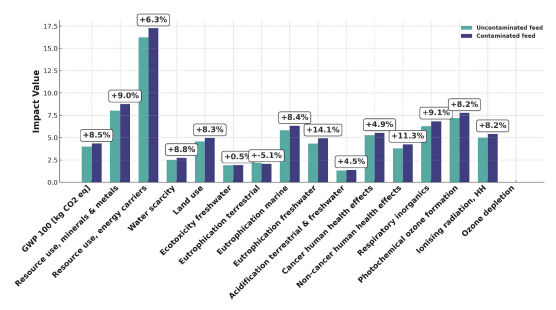
Human health-related impacts were similarly more pronounced in the contaminated feed system. Non-cancer health effects increased by 4.5 %, while cancer-related health effects rose by 4.9 %, likely due to emissions and residues from contaminated feed. Respiratory inorganics, linked to air pollution-induced disease increased by 11.3 %, while photochemical ozone formation rose by 9.1 %. Additionally, a 7.5 % increase in ionizing radiation impacts was observed, potentially reflecting higher energy inputs or emissions associated with increased feed production. Overall, the LCA model predicted substantial increase across all the environmental impact categories assessed. This indicates that mycotoxin contamination of feeds not only increases resource demands and emissions but also intensifies ecosystem degradation and health risks.
3.3. Economic impact of mycotoxin-contaminated feeds
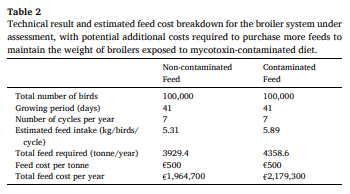
The study quantified the economic impacts of mycotoxincontaminated feed on broiler production, focusing on differences in feed intake and associated costs for a broiler farm housing 100,000 birds. The standard growing period of 41 days and seven production cycles per year were considered.
As shown in Table 2, broilers fed uncontaminated feed consumed an estimated 5.31 kg of feed per bird per cycle, whereas birds fed contaminated diets required 5.89 kg, an increase of 10.9 %. This inefficiency was predicted to result in an annual feed requirement of 4358.6 t for the contaminated feed system, compared to 3929.4 t for the uncontaminated feed system. At a feed cost of €500 per tonne, total annual feed costs for the uncontaminated system were €1,964,700, while costs for the contaminated feed system were predicted to rise to €2,179,300. This represents an additional cost of €214,600 per year attributable to mycotoxin contamination. These findings underscore the substantial economic burden imposed by mycotoxins, even at contamination levels within EU regulatory limits. Importantly, these cost estimates exclude secondary impacts, such as veterinary care for managing health issues induced by mycotoxin exposure, suggesting that the total economic burden is likely higher.
4. Discussion
Poultry production is one of the fastest-growing livestock industries worldwide due to increasing demand for poultry meat and eggs. The anticipated shift in dietary preferences from red meat to poultry, driven by lower costs and a preference for white meat, is expected to further increase the demand for poultry meat and eggs (FAO, 2016). While poultry production generates lower GHG emissions compared to ruminant livestock, it still contributes significantly to methane, nitrous oxide, and carbon dioxide emissions, primarily through manure management and feed production processes, such as crop cultivation, processing and transportation of feeds (Grossi et al., 2018; McAuliffe et al., 2018).
Mycotoxins are the most common natural chemical contaminants in animal feed (Khoshal et al., 2019; Eskola et al., 2019). Their presence in feed and feed crops presents a significant challenge for livestock farmers worldwide, as they can reduce profitability and impair feed conversion efficiency leading to substantial feed waste and increased feed production. Despite this, no studies have yet quantified the economic losses associated with feed mycotoxin contamination at the farm level and assessed their contribution to the environmental footprint of broiler production. This study addresses this gap by evaluating and quantifying the potential economic and environmental impacts of mycotoxins on poultry production.
In 2006, the European Commission established guidance limits for the following mycotoxins: deoxynivalenol, T-2 toxin, zearalenone, ochratoxins, and fumonisin in 2006 (EC, 2006). These limits were set primarily to protect animal health from the toxic effects of mycotoxins and to minimize the transfer of these toxins and their metabolites into food products of animal origin, such as eggs, meat, and milk. However, findings from this study and other recent research show that, even at levels within current EU regulatory limits, mycotoxins can still have significant impact on animal health and lead to poor FCR (Grenier et al., 2016; Lucke et al., 2017; Wang and Hogan, 2019; Liu et al., 2019; Awad et al., 2019; Keçi et al., 2019; Kolawole et al., 2020; Shanmugasundaram et al., 2022; Jia et al., 2023). This clearly indicates that the current EU regulatory limits for mycotoxins are not adequate to prevent performance losses in broiler production, especially when farm animals are exposed to low levels of co-contaminated feeds.
In terms of the environmental impacts of feed contamination, the key areas of concern include carbon footprint or global warming potential, eutrophication, acidification, resource use, and respiratory inorganics, which collectively highlight the significant environmental consequences of mycotoxin-contaminated feeds.
Our findings align with previous studies, showing that feed production, including land use change, contributes up to 85 % of the carbon footprint in broiler production systems (Cesari et al., 2017; Giannenas et al., 2017; Ogino et al., 2021). The carbon footprint or GWP100 value (4.0 kg CO2-eq per kg) obtained in this study is also relatively similar to other LCA studies on broiler production (Cesari et al., 2017; Giannenas et al., 2017; Ogino et al., 2021; Benavides et al., 2020; Campos et al., 2020; Costantini et al., 2021). The LCA model predicted around 8.5 % increase in carbon footprint when birds are fed mycotoxin-contaminated diets (Fig. 6). Importantly, our findings revealed that cultivation of feed ingredients, particularly sourcing of soybean and soy-derived products from South America largely influenced the high carbon footprint obtained in this study.
The global demand for soybeans as a key ingredient in poultry feed has significant environmental consequences, particularly through land use change and its associated impacts (Benavides et al., 2020; Campos et al., 2020). Soybean cultivation has been closely linked to deforestation and habitat conversion in regions such as South America, where large-scale agricultural expansion often occurs at the expense of tropical forests (Chiesa et al., 2024; Hamza et al., 2024). This process not only contributes to biodiversity loss but also exacerbates climate change by releasing vast quantities of stored carbon from vegetation and soils into the atmosphere (Chiesa et al., 2024; Hamza et al., 2024). In the context of poultry production, the heavy reliance on soybean-derived ingredients such as soybean meal and soybean oil increase these sustainability challenges. Therefore, sourcing soybeans from regions with lower deforestation risks, exploring alternative protein sources and transitioning toward circular economy models, such as the utilization of locally sourced by-products as alternative feed ingredients can help to minimize reliance on soybeans and reduce the environmental burden of European poultry systems.
For other important environmental impact categories, the LCA model showed that excess nitrogen from mycotoxin-induced metabolic disruptions contributed to eutrophication, acidification, and secondary particulate matter formation, exacerbating air and water pollution. Mycotoxins, particularly deoxynivalenol, T-2 toxin, and ochratoxins, disrupt nitrogen metabolism and kidney function, leading to excessive excretion of nitrogen as uric acid and undigested protein (Yunus et al., 2012; Raj et al., 2021). Microbial degradation of uric acid and protein in broiler excreta produces ammonia, which is transformed into nitrate. Nitrate is a major contributor to groundwater and surface water contamination. Ammonia emissions from poultry houses also exacerbate acidification, eutrophication, and biodiversity loss in ecosystems. Additionally, ammonia reacts with other gases to form secondary particulate matter (PM), significantly impacting air quality within the PM2.5 fraction (Hristov et al., 2013). Circular economy practices, such as repurposing poultry waste as biofertilizers or energy sources, can further reduce the environmental footprint of poultry systems (Bist et al., 2024). This is in line with Ecological Modernization Theory (EMT) principles of technological and systemic innovation as drivers of sustainability (Bugden, 2022).
Lastly, feed costs represent the largest component of broiler production expenses, accounting for over 60 % of total production costs globally (Van Horne, 2020). Our findings revealed that mycotoxin contamination, even at levels within EU regulatory thresholds, imposes substantial economic burdens amounting to annual losses exceeding €200,000 for a typical farm with 100,000 broilers. Such economic inefficiencies align with the economic pillar of the Triple Bottom Line (TBL) framework, which emphasizes the need for profitability while maintaining environmental and social sustainability (Wu et al., 2024). Mitigating these economic losses require adopting innovative feed management strategies, such as enhanced mycotoxin monitoring, detoxification technologies, and precision feeding. These approaches not only reduce feed waste but also improve profitability by enhancing resource efficiency.
4.1. Study limitations and future research direction
Overall, this study highlights the interconnected nature of economic burden and environmental degradation driven by mycotoxin contamination of broiler feed. Nevertheless, several limitations should be noted. First, this study focused exclusively on broilers, given their global significance in livestock production and the availability of robust data for LCA calculations. Future research should explore the applicability of these findings to other livestock systems, such as swine and ruminants, to provide a more comprehensive understanding of mycotoxin impacts across livestock production systems. While this study applied the PEF 2.0 methodology, the PEF has since advanced to version 3.0. However, the updated database is still under development and not yet integrated into most LCA tools, including Sustell™. As the analysis is comparative and methodologically consistent, future updates may affect absolute values but are unlikely to change the relative trends or conclusions.
Second, this study utilized feed compositions representative of the Netherlands. However, feed composition can vary significantly across countries and production systems due to differences in ingredient availability, cost, and regional feeding practices, potentially influencing the LCA results. Despite these variations, the core findings of this study remain broadly applicable across production systems because the underlying mechanisms (i.e. impaired FCR and increased nitrogen excretion due to mycotoxins) are consistent responses in broilers. Therefore, future research should model the environmental impacts of mycotoxin contamination in various geographic and production settings, incorporating region-specific feed compositions. Such analyses could improve the generalizability of these findings and provide more targeted recommendations for stakeholders in different regions.
Third, the meta-analysis was limited to regulated mycotoxins, reflecting real-world scenarios where regulatory thresholds dictate feed safety (Eskola et al., 2019). However, emerging and non-regulated mycotoxins, which are frequently detected in feed and feed crops, may exert additional adverse effects on broiler performance and require further investigation. Lastly, GHG emissions associated with increased feed production and nitrogen losses due to mycotoxin contamination were estimated using secondary data from sources such as IPCC, FAO, and other scientific literature. While these sources are reliable, the absence of primary data introduces potential uncertainties in the estimates. Future research should prioritize the design of well-controlled, longitudinal trials to collect primary data. This should include the measurement of feed mycotoxin levels for both regulated and nonregulated (e.g. beauvericin, enniatins, and diacetoxyscirpenol), performance parameters (e.g., feed intake, body weight, and FCR), nitrogen excretion, feed ingredient origins, morbidity and mortality rates. Such comprehensive datasets will enable more accurate assessments of the economic and environmental impacts of mycotoxins, facilitating the development of evidence-based policies and innovative technologies to mitigate mycotoxin-related challenges across the livestock sector. These efforts will align with the principles of TBL and EMT, contributing to sustainable solutions that deliver economic, environmental, and social benefits (Bugden, 2022; Milchakova and Reshetnikov, 2024; Wu et al., 2024).
5. Conclusion
This study presents the first integrated assessment of the economic and environmental impacts of mycotoxins in broiler production using a combined meta-analysis and LCA approach. The results demonstrate that even low-level mycotoxin contamination within current regulatory limits can substantially impair feed efficiency and sustainability outcomes in poultry systems.
Economically, contaminated feed increases production costs by reducing feed utilization efficiency, leading to higher feed requirements and financial losses at the farm level. Environmentally, LCA results show an 8.5 % increase in carbon footprint, up to 14.1 % increase in eutrophication, and 11.3 % increase in respiratory inorganic emissions per kg of live weight produced. These impacts are primarily driven by increased feed demand and elevated nitrogen excretion associated with reduced performance.
These findings reinforce the importance of feed safety in achieving climate-smart and economically resilient livestock systems. Reducing mycotoxin prevalence in feed supply chains, reassessing regulatory thresholds to reflect synergistic effects of multiple toxins, and promoting cost-effective detection and detoxification technologies are critical steps toward more sustainable poultry production. Addressing these challenges will support broader efforts to align livestock systems with the United Nations Sustainable Development Goals and global climate commitments.
This article was originally published in Environmental Impact Assessment Review 115 (2025) 107989. https://doi.org/10.1016/j.eiar.2025.107989. This is an Open Access article under the CC BY license (http://creativecommons.org/licenses/by/4.0/).