Introduction
Between 15 and 20 weeks of age, layer pullets undergo rapid physiological changes, including reproductive tract maturation, ovarian follicles development, increased calcium intake for medullary bone formation, and metabolic and hormonal adjustments to support daily egg production (Xin et al., 2022; Bahry et al., 2023; Noetzold and Zuidhof, 2025). These developmental events impose higher nutritional and immunometabolic demands. Consequently, pullets entering lay are more vulnerable to environmental, nutritional, and infectious stressors that can disrupt growth, delay sexual maturity, impair bone integrity, and compromise long-term egg production (Janczak and Riber, 2015). In commercial systems, this transition coincides with management-related stressors including relocation from rearing to laying facilities, changes in housing structure, new social hierarchies, changes in lighting schedules, and stocking densities (Janczak and Riber, 2015; Carvalho et al., 2018). These stressors increase corticosterone secretion, impair adaptive immunity, and increase susceptibility to enteric pathogens (Abo-Al-Ela et al., 2021). Simultaneously, the digestive system must adapt to increasing feed intake and mineral demands required for bone mineralization, hepatic lipid mobilization, and ovarian follicle development (Noetzold and Zuidhof, 2025). Disturbances during this stage can have disproportionate effects on lifetime productivity.
Deoxynivalenol (DON), a type-B trichothecene mycotoxin produced primarily by Fusarium graminearum and F. culmorum, is among the most frequently detected mycotoxins in poultry feed worldwide (Gruber-Dorninger et al., 2019). DON contamination occurs when cereal grains become infected with Fusarium spp. in the field, especially under cool-to-moderate temperatures (20-30 ◦ C) and humid conditions that promote fungal growth and mycotoxin biosynthesis (Platzer et al., 2025). Because DON is chemically stable and heat-resistant, it persists through grain harvesting, drying, storage, and feed manufacturing processes (Lin et al., 2025). Processing steps such as grinding and pelleting do not degrade DON, and ethanol production can further concentrate it in by-products such as corn distillers dried grains with solubles (DDGS), where levels may be several times higher than in the original grain, thereby increasing the likelihood of DON entering poultry rations (Khatibi et al., 2014). In broiler chickens and swine, DON is well known for its anorexic effects, mainly due to the activation of central satiety and stress pathways following ribotoxic signaling (Pestka, 2010; Tominaga et al., 2016; Lucke et al., 2017; Santos and van Eerden, 2021). At the intestinal level, DON impairs epithelial tight-junction integrity, increasing paracellular permeability and compromising barrier function (Pinton et al., 2012; Awad et al., 2012; Pinton and Oswald, 2014). Its ribosomal binding also inhibits protein synthesis, contributing to reduced growth and impaired cellular turnover (Hooft and Bureau, 2021). Similarly, DON shows a biphasic, dose-dependent effect on the immune system, acting as an immunostimulant at low concentration and becoming immunosuppressive at higher doses (Pestka et al., 2004). This dose-dependent response can negatively affect the host resilience to enteric pathogens and modify the course of infection. Although laying hens are traditionally considered more tolerant to DON (Kubena et al., 1987; Adugna et al., 2024), the transition into lay may represent a period of higher susceptibility due to higher feed intake and active tissue remodeling.
Coccidiosis remains one of the most economically significant parasitic diseases in poultry (Mathis et al., 2024). A global meta-analysis reported that Eimeria spp. infections are detected in 44.3% of surveyed commercial poultry flocks (Badri et al., 2024). This high prevalence indicates that coccidial parasites persist in the environment and continually cycle through flocks under typical rearing conditions. Replacement pullets, as well as pullets transitioning to lay are especially vulnerable to coccidiosis because of housing changes and litter exposure, stress-induced immunosuppression, and increased environmental contact in cage-free systems (Hofmann et al., 2020). Following inges tion, Eimeria spp. invade intestinal epithelial cells, causing villus damage, crypt hyperplasia, hemorrhage, nutrient malabsorption, and dysregulation of the intestinal inflammatory responses (Teng et al., 2020; Chen et al., 2025). These disruptions can limit energy availability for reproductive development, delay onset of lay, and reduce subsequent egg production (Sharma et al., 2024a).
Despite extensive research on DON and coccidiosis individually, their combined effects during the pullet-to-layer transition remain poorly characterized. No previous work has evaluated interactive effect of these stressors on growth and body composition, intestinal integrity and mucin and tight junction expression, mucosal and systemic T-cell dynamics, oxidative balance, and timing of sexual maturity. Hence, it was hypothesized that simultaneous high dietary DON exposure and mixed-species Eimeria challenge would interact to produce additive or synergistic impairments in growth performance, intestinal barrier integrity, mucosal and systemic T-cell homeostasis, systemic oxidative balance, and timing of sexual maturity compared with either stressor alone. This hypothesis was tested using a 2 × 2 factorial arrangement during the 15–22 wk pre-lay to early-lay transition in Hy-Line W36 pullets. Thus, the objective of this study was to evaluate the interactive effects of DON-contaminated feed and coccidial challenge on performance, intestinal physiology, immune responses, oxidative status, and sexual maturity in Hy-Line W36 pullets during the transition to lay using a controlled experimental model.
Materials and methods
Ethics statement
All experimental procedures were approved by the University of Georgia Institutional Animal Care and Use Committee (Protocol A2021- 05-013) and were conducted in accordance with the Guide for the Care and Use of Agricultural Animals in Research and Teaching (FASS, 2020).
Birds and housing
A total of 1,400 Hy-Line W36 pullets were obtained at 1 d of age from Hy-Line North America (Mansfield, GA) and reared in an environmentally controlled research facility at the University of Georgia Poultry Research Center (Athens, GA). From hatch to 15 wk of age, birds were housed in colony cages (40 × 90 × 45 cm; 300 cm²/bird) under a step-down lighting program in accordance with breeder guidelines, starting at 22L:2D on d-1 and gradually reduced to 12L:12D by 15 wk of age. During this period, birds were fed a standard pullet diet appropriate for age and growth phase following the breeder recommendations (Hy-Line International, 2020).
At 15 wk of age, pullets with uniform body weight (1,129 ± 4.6 g) were selected, individually weighed, and transferred to an environmentally controlled laying facility. Birds were randomly allocated to 144 wire layer cages (45 × 45 × 30 cm; 2 birds/cage; 1,013 cm²/bird). Each cage was equipped with a nipple drinker and linear trough feeder. Room temperature was maintained at 22 ± 2 ◦ C with mechanical ventilation and evaporative cooling. The photoperiod was increased stepwise from 12L:12D at 15 wk to 14L:10D by 22 wk of age in accordance with breeder guidelines (Hy-Line International, 2020).
Experimental design
The study was conducted using a two-stage experimental design. During the pre-challenge phase (15-18 wk of age), a total of 288 pullets were randomly assigned to 2 dietary treatments: a control diet or a DON- contaminated diet, with 12 replicates per diet. Each replicate consisted of 6 adjacent cages with 2 birds per cage (12 birds/replicate). Dietary DON exposure began at 15 wk of age and continued throughout the experiment, allowing a 3-wk dietary adaptation period before pathogen challenge.
At 18 wk of age, replicates within each dietary treatment were evenly subdivided to form a 2 × 2 factorial arrangement of treatments in a completely randomized design. The main factors were Eimeria challenge (non-challenged vs. challenged) and dietary DON exposure (control vs. DON-contaminated), resulting in 4 treatments: non-challenged control (NC-CON), Eimeria-challenged control (EC-CON), non-challenged DON- contaminated (NC-DON), and Eimeria-challenged DON-contaminated (EC-DON). Following subdivision, each treatment comprised 6 replicates, with 12 birds per replicate (72 birds per treatment). The day of Eimeria inoculation was designated as 0 days post-Eimeria inoculation (DPI).
Diets and mycotoxin analysis
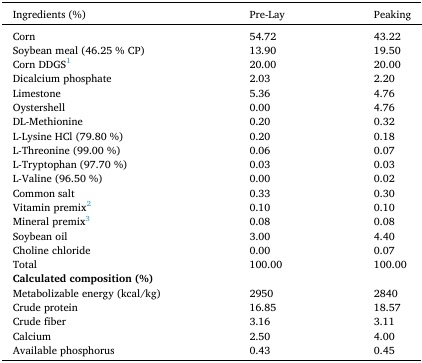
Corn-soybean meal-based pre-lay phase (15–17 wk) and peaking phase (18–22 wk) diets containing 20% DDGS were formulated to meet or exceed Hy-Line W36 nutrient specifications (Hy-Line International, 2020; Table 1). Control diets contained conventional DDGS, whereas
Table 1
Ingredient and calculated nutrient composition of experimental diets for the pre- lay and peaking phases
1 DDGS, distillers’ dried grains with solubles; control diets were formulated using conventional DDGS with a background level of deoxynivalenol (DON), whereas DON-contaminated diets were formulated using naturally contaminated DDGS to spike DON concentrations.
2 Vitamin premix supplied per kg of diet: vitamin A, 3,527 IU; vitamin D₃, 1,400 ICU; vitamin E, 19.4 IU; vitamin B₁₂, 0.008 mg; menadione, 1.1 mg; riboflavin, 3.53 mg; d-pantothenic acid, 5.47 mg; thiamine, 0.97 mg; niacin, 20.28 mg; vitamin B₆, 1.45 mg; folic acid, 0.57 mg; biotin, 0.08 mg
3 Mineral premix supplied per kg of diet: Ca, 25.6 mg; Mn, 107.2 mg; Zn, 85.6 mg; Mg, 21.44 mg; Fe, 21.04 mg; Cu, 3.2 mg; I, 0.8 mg; Se, 0.32 mg.
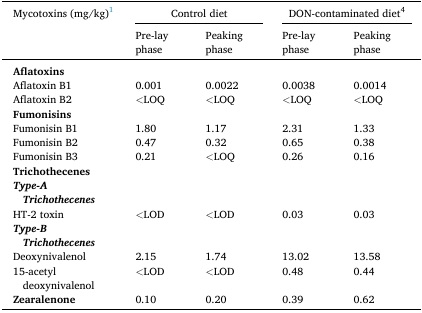
DON-contaminated diets were prepared by replacing conventional DDGS with naturally contaminated DDGS (kindly provided by Dr. Guilherme Bromfman and Ms. Paloma Zavala from Adisseo USA Inc., Alpharetta, GA). Representative samples from each diet were analyzed for DON, 3-acetyl-DON, 15-acetyl-DON, zearalenone, fumonisins, and aflatoxins by liquid chromatography-tandem mass spectrometry at Romer Labs Inc. (Union, MO). Analyzed DON concentrations are presented in Table 2 (control: 1.7–2.1 mg/kg; DON diets: 13.0–13.6 mg/kg).
Eimeria challenge
A mixed-species Eimeria inoculum was prepared by propagating field isolates of Eimeria acervulina, E. maxima, and E. tenella in broiler chickens. The final inoculum contained 125,000 sporulated oocysts of E. acervulina, 25,000 oocysts of E. maxima, and 25,000 oocysts of E. tenella per dose suspended in 1 mL of 1×PBS. At 18 wk of age (0 DPI), each bird assigned to the challenged treatments received 1.0 mL of the inoculum by oral gavage using a 16-gauge stainless-steel feeding needle (MilliporeSigma, Burlington, MA). Birds in the non-challenged treatments received 1.0 mL of 1×PBS by the same route. The mixed-species Eimeria challenge dose was selected based on Sharma et al. (2024a), who reported that this combination induces moderate intestinal lesions, transient growth depression, and delay in onset of lay in Hy-Line W36 pullets transitioning to lay without causing mortality.
Performance measurements
Body weight and feed intake were recorded by replicate. During the pre-challenge phase (15-18 wk of age), body weight and feed intake were measured weekly, and feed conversion was calculated. Post
Table 2
Analytical mycotoxin concentrations in control and deoxynivalenol- contaminated diets formulated for the pre-lay and peaking production phases.
1Values represent analytical mycotoxin concentrations measured in complete diets for each production phase. Aflatoxins, fumonisins, trichothecenes, and zearalenone were quantified using LC–MS/MS method.
Abbreviations: DON, deoxynivalenol; LOQ, limit of quantification; LOD, limit of detection.
Challenge body weight was recorded at 6, 14, 21, and 29 DPI. Feed intake was measured daily from 1 to 14 DPI and weekly thereafter (15- 21 and 22-29 DPI).
Egg production was recorded daily from 18 to 22 wk of age. Parameters included age at first egg and hen-day egg production. Egg quality was assessed only at 29 DPI because earlier time points (0, 6, 14, and 21 DPI) yielded insufficient eggs for representative sampling. At 29 DPI, 3 eggs per replicate were randomly collected. Egg weight was measured using a digital balance (OHAUS Corporation, Parsippany, NJ), and albumen height was measured using an electronic albumen height gauge (Technical Services and Supplies Ltd., Dunnington, York, UK). Eggs were then manually separated, and yolk, albumen, and eggshell weights were measured using a digital balance (OHAUS Corporation, Parsippany, NJ). Eggshell thickness was measured at 3 locations (air cell end, equator, and sharp end) with the shell membranes intact using a precision thickness gauge (AMES, Cranston, RI). Eggshell percentage was calculated as eggshell weight relative to whole egg weight. Haugh units were calculated as Haugh unit (HU) =100 ×log10(H +7.57 1.7W0.37), where H represents albumen height (mm), and W represents egg weight (g) (Haugh, 1937).
Intestinal lesion scoring
Gross intestinal lesion scores were evaluated at 6 and 14 DPI. At each time point, 2 birds per replicate (n =12 birds/ treatment) were euthanized by cervical dislocation, and lesion scores were averaged within replicate for statistical analysis. The duodenum, mid-intestine (Meckel’s diverticulum region), and ceca were examined and scored individually. Lesions were scored using Johnson and Reid (1970)scale: 0 =no gross lesions, 1 =mild, 2 =moderate, 3 =severe, and 4 =very severe or death due to coccidiosis. Scoring was performed by a single trained observer who was blinded to treatments. Because no macroscopic lesions were observed at 14 DPI in any treatment, only the 6 DPI lesion scores were subjected to statistical analysis.
Body composition analysis
Body composition was assessed at 6 and 14 DPI using a Lunar Prodigy DEXA system configured for small-animal imaging (GE Healthcare, Madison, WI). At each time point, 1 bird per replicate (n =6 birds/ treatment) was euthanized and scanned immediately after euthanasia. Birds were positioned in ventral recumbency (chest-up) with wings and legs gently extended to minimize tissue overlap, following the avian DEXA procedures (Mitchell et al., 1997; Ko et al., 2023). The scanner was calibrated before each scanning session using a hydroxyapatite phantom with bone mineral density: 0.975 g/cm²; bone mineral content: 24.45 g; bone area: 25.09 cm² (Paneru et al., 2026). All images were processed using enCORE analysis software (Version 14.10). Regions of interest were manually defined to include one bird per region. The system generated whole-body values for bone mineral density, muscle, and fat based on differential X-ray attenuation, and these total-body measurements were used for statistical analysis.
Gene expression analysis
Jejunum and cecal tonsil samples were collected from 1 bird per replicate (n =6 birds/ treatment) at 6 and 14 DPI, snap-frozen in liquid nitrogen, and stored at 80◦C. Total RNA was isolated using QIAzol Lysis Reagent (Qiagen, Germantown, MD) according to the manufacturer’s protocol. RNA purity and concentration were assessed using a NanoDrop spectrophotometer (Thermo Fisher Scientific, Waltham, MA), and samples with A260/280 ratios between 1.9 and 2.1 were used for downstream analysis (Teng et al., 2021).
Complementary DNA (cDNA) was synthesized from 2 µg of total RNA using a High-Capacity cDNA Reverse Transcription Kit (Thermo Fisher Scientific, Waltham, MA) in a 20-µL reaction volume. Reverse transcription was performed in a Veriti 96-Well Thermal Cycler (Applied Biosystems, Foster City, CA) using the following cycle: 25◦C for 10 min, 37◦C for 120 min, and 85◦C for 5 min, followed by a 4◦C hold. cDNA was stored at 20◦C until qPCR analysis.
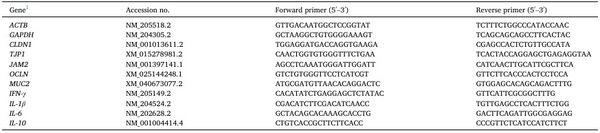
Quantitative real-time PCR (qPCR) was performed using iTaq Universal SYBR Green Supermix (Bio-Rad, Hercules, CA) on a QuantStudio 3 Real-Time PCR System (Applied Biosystems, Foster City, CA). Each reaction was prepared in a 10 µL volume containing 10×diluted cDNA, gene-specific primers, and SYBR Green master mix. Primer sequences used in this study are listed in Table 3. All primer pairs were validated to show single-peak melt curves. The reference genes β-actin (ACTB) and glyceraldehyde-3-phosphate dehydrogenase (GAPDH) were confirmed as stable across treatments and tissues using RefFinder tool (Xie et al., 2023). Normalization was performed using the geometric mean of the two reference genes. Relative fold-change was calculated using the 2⁻ΔΔCt method (Livak and Schmittgen, 2001). Target genes included inflammatory cytokines interleukin-1 beta (IL-1β), interleukin-6 (IL-6), interleukin-10 (IL-10), and interferon-gamma (IFN-γ) claudin-1 (CLDN1), occludin (OCLN), tight junction protein 1 (TJP1), junctional adhesion molecule 2 (JAM2), and mucin-2 (MUC2).
Gut permeability
test Gut barrier integrity was measured in vivo using the fluorescein isothiocyanate-labeled dextran (FITC-d) translocation assay at 5 and 13 DPI. At each time point, 1 bird per replicate (n =6 birds/ treatment) was orally administered with 1.0 mL of FITC-d 4 kDa (Sigma-Aldrich, St. Louis, MO) dissolved in distilled water at a concentration of 2.2 mg/mL (Paneru et al., 2025a). After 2 h, blood was collected from wing veins into serum separator tubes, allowed to clot at room temperature for 30 min, and centrifuged at 1,500 ×g for 10 min at 4◦C. Serum was harvested, aliquoted, and protected from light. Serum fluorescence intensity was measured in duplicate 100 µL aliquots in a 96-well black microplates (Thermo Fisher Scientific, Rochester, NY) using a multi-mode plate reader (VICTOR® Nivo™, PerkinElmer, Waltham, MA) at excitation/emission wavelengths of 485/528 nm. A standard curve was prepared by serial dilution of FITC-d (0-2,200 ng/mL) in pooled chicken serum from non-challenged birds to correct for matrix effects. Results were expressed as ng of FITC-d per mL of serum. Increased serum FITC-d concentration was interpreted as higher paracellular permeability and impaired intestinal epithelial barrier function (Gilani et al., 2017).
Intestinal histomorphology
Intestinal morphology was evaluated in the duodenum, jejunum, and ileum at 6 and 14 DPI. At each time point, 1 bird per replicate (n =6 birds/treatment) was randomly selected and euthanized by cervical dislocation. Approximately 2 cm tissue segments were collected from the duodenum (midpoint of the descending duodenal loop), jejunum (midpoint between the distal end of the duodenal loop and Meckel’s diverticulum), and ileum (midpoint between Meckel’s diverticulum and the ileocecal junction). Segments were gently flushed with 1×PBS to remove luminal contents and fixed in 10% neutral-buffered formalin for 48 h at room temperature. Fixed tissues were processed using a tissue processor (TP1020, Leica Biosystems, Wetzlar, Germany) following a standard dehydration and clearing protocol: 70% ethanol (1 h), 95% ethanol (2 ×1 h), 100% ethanol (3 ×1.5 h), xylene (3 ×1 h), and paraffin infiltration (3 ×1.5 h at 60◦C). Serial sections (5 µm) were cut using a rotary microtome (RM2235, Leica Biosystems), floated on a 42◦C water bath, mounted on positively charged slides, and dried overnight at 37◦C. Sections were deparaffinized in xylene (3 ×5 min), rehydrated through graded ethanol (100%, 95%, 70%; 3 min each), and stained with hematoxylin and eosin (H&E) using an automated stainer (Autostainer XL, Leica Biosystems). Slides were coverslipped with permanent mounting medium. Digital bright-field images were acquired at 100× and 200×magnification using a BZ-X810 All-in-One Microscope and BZ- X800 Analyzer software (Keyence Corp., Itasca, IL) (Liu et al., 2023). For each intestinal region, 5 well-oriented villi and their associated crypts were randomly selected from non-overlapping fields. Villus height (VH) was measured from the villus tip to the villus-crypt junction; crypt depth
Table 3
Primer sequences used for quantitative real-time PCR analysis of genes related to intestinal barrier function and inflammatory response in pullets.
1Abbreviations: ACTB, β-actin; GAPDH, glyceraldehyde-3-phosphate dehydrogenase; CLDN1, claudin 1; TJP1, tight junction protein 1; JAM2, junction adhesion molecule 2; OCLN, occludin; MUC2, mucin 2; IFN-γ, interferon gamma; IL-1β, interleukin 1 beta; IL-6, interleukin 6; IL-10, interleukin 10. ACTB and GAPDH were used as reference genes for normalization of target gene expression.
(CD) was measured from the villus-crypt junction to the muscularis mucosae. The VH:CD ratio was then calculated for each villus-crypt unit. Measurements were averaged within replicate for statistical analysis.
Flow cytometry
At 6 and 14 DPI, 1 bird per replicate (n = 6 birds/treatment) was randomly selected and euthanized. The spleen and cecal tonsil tissues were immediately collected and placed into sterile 15 mL tubes containing 3 mL of ice-cold RPMI-1640 medium (Corning, Glendale, AZ; cat. no. 11875093). Samples were transported on ice and processed within 30 min of collection. Single-cell suspensions were prepared by gently pressing tissues through 45-µm nylon cell strainers under aseptic conditions, following previously described (Shanmugasundaram et al., 2015). Approximately 1 × 10 ◦ protocol 6 viable cells were aliquoted into flow cytometry tubes and incubated for 20 min at 4 ◦ C in the dark with fluorochrome-conjugated monoclonal antibodies (SouthernBiotech, Birmingham, AL). After staining, cells were washed twice with 2 mL of ice-cold PBS (centrifugation at 400 × g for 5 min at 10 C) to remove unbound antibodies and resuspended in 250 µL PBS for acquisition. Flow cytometric analysis was performed on a Guava easy Cyte benchtop cytometer (Luminex Corporation, Austin, TX). At least 10,000 events were collected per sample. Lymphocyte populations were identified based on characteristic forward-scatter (FSC) and side-scatter (SSC) profiles. The percentages of CD4⁺ and CD8⁺ T cells were reported using InCyte software (v3.3; Luminex Corporation, Austin, TX).
Oxidative stress biomarkers
On 6 and 14 DPI serum and liver samples were collected (n = 6 birds/ treatment). Blood was obtained by cardiac puncture into serum separator tubes, allowed to clot for 30 min, and centrifuged at 1,500 × g for 10 min at 4 C. Serum was aliquoted and stored at 80ªC. Approximately 2 g of the median liver lobe was excised immediately after euthanasia, rinsed in PBS, blotted dry, snap-frozen in liquid nitrogen, and stored at - 80ªC.
Serum total antioxidant capacity (TAC) was determined using the Antioxidant Assay Kit (Cayman Chemical, Ann Arbor, MI; Item No. 709001). Serum diluted to 1:20 was loaded in duplicate (10 µL/well) with metmyoglobin and chromogen solutions, and reactions were initiated with hydrogen peroxide. Plates were incubated for 5 min at room temperature, and absorbance was measured at 750 nm using a SpectraMax ABS Plus microplate reader (Molecular Devices, San Jose, CA). TAC values were interpolated from a Trolox standard curve (0–0.495 mM) and expressed as µM Trolox equivalents.
Glutathione concentrations in liver were measured using the Glutathione Assay Kit (Cayman Chemical, Ann Arbor, MI; Item No. 703002) as described by Castro et al. (2020). Frozen liver (approximately 200 mg) was homogenized in 50 mM MES buffer (pH 6.0, 1 mM EDTA) using a Mini-BeadBeater (BioSpec Products, Inc., Bartlesville, OK). Homogenates were centrifuged at 10,000 × g for 15 min, and the supernatant was deproteinated with 10% metaphosphoric acid, clarified, and neutralized with triethanolamine. Reduced glutathione (GSH) was measured directly, whereas glutathione disulfide (GSSG) was quantified after derivatizing GSH with 2-vinylpyridine for 60 min. Assays were run in duplicate using kit standards (0–8 µM). Absorbance was measured at 405 nm after a 25-min incubation. Glutathione concentrations were normalized to protein content (nmol/mg), measured with the Pierce BCA Protein Assay Kit (Thermo Fisher Scientific, Waltham, MA; cat. no. 23225) as described by Tompkins et al. (2023).
Statistical analysis
All statistical analyses were performed using R software (version 4.5.1; R Core Team, 2025). The replicate (12 birds housed in 6 adjacent cages) was considered the experimental unit for all analyses. When multiple birds were sampled within a replicate at a given time point, values were averaged before statistical analysis. During the pre-challenge phase (15-18 wk of age), performance variables were analyzed using one-way ANOVA with dietary DON exposure (control vs. DON-contaminated) as the fixed effect. Post-challenge data were analyzed using two-way ANOVA in a 2 × 2 factorial arrangement with Eimeria challenge (non-challenged vs. challenged), dietary DON exposure (control vs. DON-contaminated), and their interaction included as fixed effects. When a significant interaction was observed (P < 0.05), treatment means were separated using Tukey’s honestly significant difference (HSD) test. When no interaction was present, main effects were interpreted, and pairwise comparisons were performed using Student’s t-tests. Intestinal lesion scores, which did not meet assumptions of normality, were analyzed using the Wilcoxon rank-sum test. Statistical significance was declared at P < 0.05, and tendencies were discussed when 0.05 ≤ P < 0.10 (Paneru et al., 2025b).
Results
Pre-challenge performance
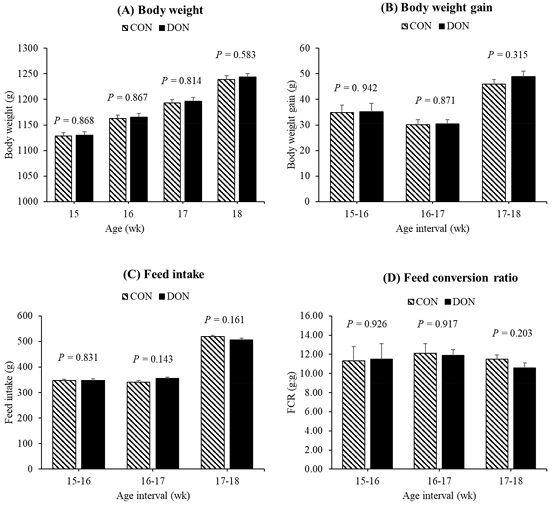
During the pre-challenge period (15-18 wk of age), pullets fed the DON-contaminated diet did not differ from those fed the control diet in body weight, body weight gain, feed intake, or feed conversion ratio (P > 0.05; Fig. 1A-D).
Post-challenge performance
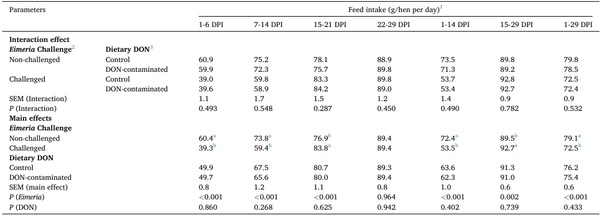
Feed intake was significantly affected by Eimeria challenge but not by dietary DON, and no DON × Eimeria interactions were observed (Table 4). During the acute infection phase (1–6 DPI), Eimeria-challenged birds consumed significantly less feed than non-challenged birds (P < 0.001), with reduced intake persisting into the early recovery phase (7-14 DPI; P < 0.001). Feed intake reached minimum values at 6-7 DPI (Fig. 2). From 15 to 21 DPI, challenged birds had higher feed intake than non-challenged birds (P < 0.001), whereas no differences were observed during 22–29 DPI (P = 0.964). Cumulatively, feed intake was lower in challenged birds during 1-14 DPI (P < 0.001) and slightly higher during 15–29 DPI (P = 0.002); however, total feed intake across the full 29-day post-challenge period remained lower in Eimeria-challenged birds (P < 0.001).
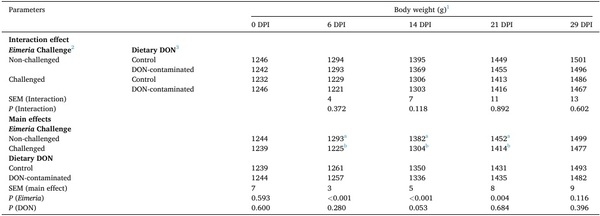
Body weight was significantly reduced by Eimeria challenge at 6, 14, and 21 DPI (P < 0.001; Table 5), whereas no differences were observed by 29 DPI (P = 0.116). Dietary DON did not affect body weight at any time point, and no DON × Eimeria interactions were observed (P > 0.05).
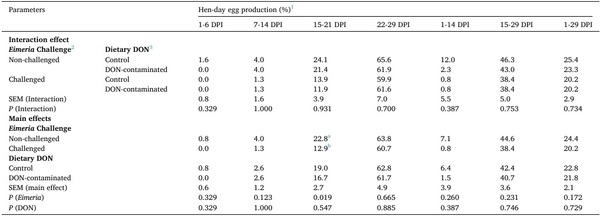
Hen-day egg production increased over time across all treatments (Fig. 3), but the timing of onset differed. Non-challenged hens fed the control diet initiated lay earliest, whereas non-challenged hens fed the DON-contaminated diet had a 6-d delay in onset of lay. Both Eimeria- challenged groups had a 10-d delay in onset of lay compared to non- challenged control hens. Despite these differences in onset, interval- based analysis showed no treatment differences during 1–14 DPI (P > 0.05; Table 6). During 15–21 DPI, Eimeria-challenged hens had lower hen-day egg production than non-challenged hens (P = 0.019). By 22–29 DPI, egg production did not differ between challenged and non- challenged hens (P = 0.231). Dietary DON did not affect egg production at any interval, and no DON × Eimeria interactions were observed (P > 0.05).
Intestinal lesions
At 6 DPI, both Eimeria-challenged groups developed lesions across the duodenum, mid-intestine, and ceca, whereas non-challenged hens showed no pathology (Fig. 4A-C). Duodenal lesions (Fig. 4A), caused by E. acervulina, and mid-intestinal lesions (Fig. 4B), associated with
Fig. 1. Pre-challenge growth performance of pullets during the transition to lay fed control or deoxynivalenol-contaminated diets from 15 to 18 weeks of age. Values are means ± SEM (n = 12/treatment). Pullets received either a control diet containing 1.7–2.1 mg/kg deoxynivalenol (DON) or a DON-contaminated diet containing 13.0–13.6 mg/kg DON from 15 to 18 weeks of age. (A) body weight (g), (B) Body weight gain (g), (C) feed intake (g), and (D) feed conversion ratio (g/g).
E. maxima were mild to moderate in challenged hens, with the DON- exposed challenged hens showing a higher proportion of moderate to severe lesion scores (P = 0.229 and P = 0.090, respectively). Cecal lesions caused by E. tenella were the most pronounced and were also more severe in DON-exposed challenged hens compared to those fed control diet (P = 0.025; Fig.4C).
Egg quality
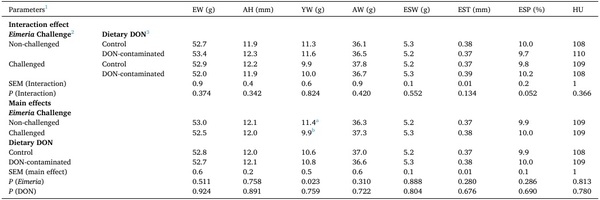
Egg quality traits measured at 29 DPI were largely unaffected by either Eimeria challenge or dietary DON exposure (Table 7). Egg weight, albumen height, albumen weight, eggshell weight, eggshell thickness, eggshell percentage, and Haugh unit did not differ among the treatments (P > 0.05). The only parameter affected by Eimeria challenge was yolk weight, which was lower in Eimeria-challenged hens compared with non-challenged hens (P = 0.023). DON had no significant effect on any egg quality parameters (P > 0.05), and no DON × Eimeria interactions were observed (P > 0.05).
Body composition
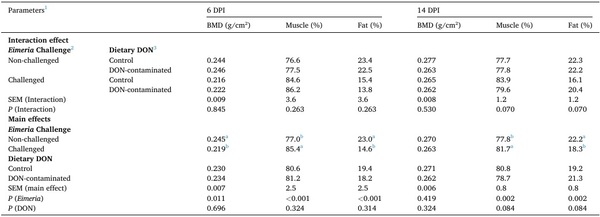
Body composition was significantly affected by Eimeria challenge, whereas dietary DON had no significant effect (Table 8). At 6 DPI, Eimeria-challenged birds showed lower bone mineral density (P = 0.011), higher proportion of muscle (P < 0.001), and lower proportion of fat (P < 0.001) compared with non-challenged birds. By 14 DPI, differences in bone mineral density between groups were no longer significant, but challenged birds continued to show a higher proportion of muscle (P = 0.002) and lower proportion of fat (P = 0.002) compared to non-challenged controls. Across both time points, dietary DON did not significantly affect bone mineral density, muscle, and fat percentages, and no DON × Eimeria interactions were observed.
Tight junction gene expression
At 6 DPI, Eimeria challenge significantly altered the expression of jejunal tight junction and barrier-associated genes (Fig. 5A-E). Expression of CLDN1 (Fig. 5A) and TJP1 (Fig. 5B) was significantly upregulated in Eimeria-challenged hens compared with non-challenged hens (P < 0.001 and P = 0.018, respectively), with challenged birds showing 21-
Table 4
Feed intake of pullets during the transition to lay following Eimeria challenge and dietary deoxynivalenol exposure in the acute and recovery phases (1–29 days post- Eimeria inoculation)
a–bWithin a column, means without a common superscript differ significantly (P < 0.05) for the main effect of coccidiosis. No significant Coccidiosis ×Diet interaction or main effect of diet on feed intake was observed. Values are means (n =6/treatment). Abbreviations: DON, deoxynivalenol; DPI, days post-Eimeria inoculation
1 Feed intake was recorded over 4 consecutive intervals following Eimeria inoculation (1–6, 7–14, 15–21, and 22–29 DPI), and cumulatively for 1–14, 15–29, and 1–29 DPI. Birds were 18 to 22 weeks of age during the experimental period.
2 Eimeria challenge consisted of oral gavage with 1 mL of a mixed Eimeria spp. inoculum containing 125,000 E. acervulina and 25,000 each of E. maxima and E. tenella sporulated oocysts at 18 wk of age.
3Dietary DON treatments included a control diet (2.1 mg/kg DON pre-lay; 1.7 mg/kg DON peaking) and a DON-contaminated diet (13.0 mg/kg DON pre-lay; 13.6 mg/kg DON peaking) from 15 to 22 wk of age.
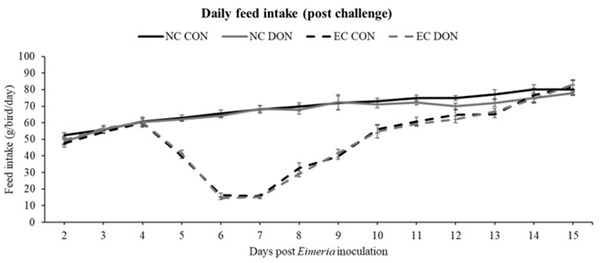
Fig. 2. Daily feed intake of pullets during the transition to lay from 1 to 14 days post-Eimeria inoculation (18–20 weeks of age) as affected by mixed Eimeria spp. challenge and dietary deoxynivalenol exposure. Treatments included non-challenged control diet (NC CON; solid black line), non-challenged deoxynivalenol (DON)- contaminated diet (NC DON; dashed black line), Eimeria-challenged control diet (EC CON; solid gray line), and Eimeria-challenged DON-contaminated diet (EC DON; dashed gray line). Values are means ±SEM (n =6/treatment). Pullets received either a control diet containing 1.7–2.1 mg/kg DON or a DON-contaminated diet containing 13.0–13.6 mg/kg DON. At 18 weeks of age, birds in challenged treatments were orally inoculated with a mixed Eimeria spp. inoculum containing 125,000 E. acervulina, 25,000 E. maxima, and 25,000 E. tenella sporulated oocysts. Feed intake declined sharply in Eimeria-challenged pullets (EC CON and EC DON) during the acute phase of coccidiosis (4–7 days post-inoculation), followed by gradual recovery through 14 days post-inoculation, whereas non-challenged pullets (NC CON and NC DON) maintained higher intake throughout. Dietary DON exposure did not affect feed intake in either non-challenged or Eimeria-challenged pullets.
36-fold higher expression depending on diet. A significant DON × Eimeria interaction was observed for JAM2 expression (P =0.023; Fig. 5C). This interaction was characterized by greater upregulation of JAM2 in Eimeria-challenged hens fed the DON-contaminated diet relative to challenged hens fed the control diet, whereas DON exposure significantly downregulated JAM2 expression in non-challenged hens. OCLN expression showed a tendency toward a DON ×Eimeria interac tion (P =0.061), driven by reduced expression in non-challenged hens receiving DON and lower expression in Eimeria-challenged hens regardless of diet (Fig. 5D). Expression of MUC2 was strongly down-regulated by Eimeria challenge (P < 0.001). A tendency toward a DON × Eimeria interaction was also observed (P =0.076; Fig. 5E), with DON exposure alone associated with reduced MUC2 expression in non- challenged hens.
At 14 DPI, modulation of tight junction and mucin gene expression was more subtle compared with the acute phase but still showed the effects of Eimeria challenge (Fig. 5F-J). CLDN1 expression tended to be lower in challenged hens than in non-challenged hens (P =0.079;
Table 5
Body weight of pullets during the transition to lay following Eimeria challenge and dietary deoxynivalenol exposure at 0, 6, 14, 21, and 29 days post-Eimeria inoculation.
a-bWithin a column, means with different superscripts differ significantly (P < 0.05) based on the main effect of coccidiosis. No significant interaction or diet effects were observed. Values are means (n =6/treatment). Abbreviations: DON, deoxynivalenol; DPI, days post-Eimeria inoculation.
1 Body weight was measured at 5 time points following Eimeria inoculation (0, 6, 14, 21, and 29 DPI). Birds were 18–22 weeks of age during this period.
2 Eimeria challenge consisted of oral gavage with 1 mL of a mixed Eimeria spp. inoculum containing 125,000 E. acervulina and 25,000 each of E. maxima and E. tenella sporulated oocysts at 18 wk of age
3Dietary DON treatments included a control diet (2.1 mg/kg DON pre-lay; 1.7 mg/kg DON peaking) and a DON-contaminated diet (13.0 mg/kg DON pre-lay; 13.6 mg/kg DON peaking) from 15 to 22 wk of age.
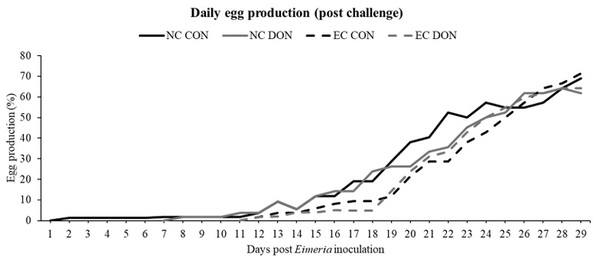
Fig.3.Daily egg production of pullets during the transition to lay from 1 to 29 days post-Eimeria inoculation (18–22 weeks of age) as affected by mixed Eimeria spp. challenge and dietary deoxynivalenol exposure. Treatments included non-challenged control diet (NC CON; solid black line), non-challenged deoxynivalenol (DON)- contaminated diet (NC DON; dashed black line), Eimeria-challenged control diet (EC CON; solid gray line), and Eimeria-challenged DON-contaminated diet (EC DON; dashed gray line). Pullets received either a control diet containing 1.7–2.1 mg/kg DON or a DON-contaminated diet containing 13.0–13.6 mg/kg DON. At 18 weeks of age, birds in challenged treatments were orally inoculated with a mixed Eimeria spp. inoculum containing 125,000 E. acervulina, 25,000 E. maxima, and 25,000 E. tenella sporulated oocysts. Onset of lay was delayed by 6 d in non-challenged pullets fed the DON-contaminated diet, whereas Eimeria challenge delayed onset by 10 d in both diet groups.
Fig. 5F). TJP1 expression did not differ among treatments (P > 0.05; Fig. 5G). Expression of JAM2 remained significantly higher in Eimeria- challenged hens than in non-challenged hens (P =0.033; Fig. 5H), independent of diet. OCLN expression was not affected by Eimeria challenge or dietary DON (P > 0.05; Fig. 5I). MUC2 expression was significantly reduced in Eimeria-challenged birds compared with non- challenged birds (P < 0.001; Fig. 5J). No significant main effects of dietary DON or DON ×Eimeria interactions were observed for any gene at 14 DPI (P > 0.05).
Gut permeability
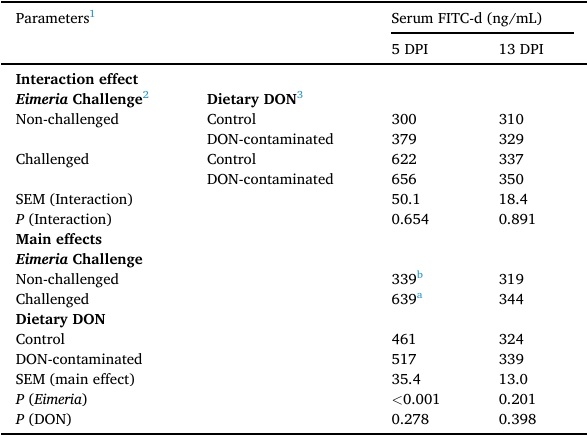
Gut permeability measured by serum FITC-d concentration differed significantly between non-challenged and Eimeria-challenged hens at 5 DPI but not at 13 DPI (Table 9). At 5 DPI, Eimeria-challenged hens showed significantly higher FITC-d levels compared with non- challenged birds (P < 0.001). By 13 DPI, FITC-d concentrations did not differ between non-challenged and Eimeria-challenged hens (P = 0.201). Dietary DON exposure did not significantly affect serum FITC- d at either time point (P > 0.05), and no DON ×Eimeria interactions were observed (P > 0.05).
Table 6
Hen-day egg production of pullets during the transition to lay following Eimeria challenge and dietary deoxynivalenol exposure in acute and recovery periods (1–29 days post-Eimeria inoculation).
a-bWithin a column, means with different superscripts differ significantly (P < 0.05) based on the main effect of coccidiosis. No significant interaction or diet effects were observed. Values are means (n =6/treatment). Abbreviations: DON, deoxynivalenol; DPI, days post-Eimeria inoculation.
1 Egg production was recorded daily and calculated for 4 consecutive intervals following Eimeria inoculation (1–6, 7–14, 15–21, and 22–29 DPI), and cumulatively for 1–14, 15–29, and 1–29 DPI. Birds were 18 to 22 weeks of age during the experimental period.
2 Eimeria challenge consisted of oral gavage with 1 mL of a mixed Eimeria spp. inoculum containing 125,000 E. acervulina and 25,000 each of E. maxima and E. tenella sporulated oocysts at 18 wk of age.
3Dietary DON treatments included a control diet (2.1 mg/kg DON pre-lay; 1.7 mg/kg DON peaking) and a DON-contaminated diet (13.0 mg/kg DON pre-lay; 13.6 mg/kg DON peaking) from 15 to 22 wk of age.
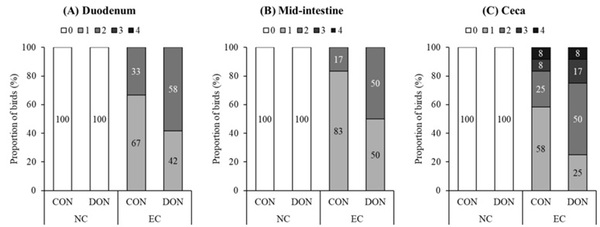
Fig. 4.Distribution of intestinal lesion scores in pullets during the transition to lay at 6 days post-Eimeria inoculation (19 weeks of age) as affected by mixed Eimeria spp. challenge and dietary deoxynivalenol exposure. Treatments included non-challenged control diet (NC CON), non-challenged deoxynivalenol (DON)-contaminated diet (NC DON), Eimeria-challenged control diet (EC CON), and Eimeria-challenged DON-contaminated diet (EC DON). Lesion scores (0-4) are shown as stacked bars using a grayscale gradient (0 =white, 4 =black), and bars represent the proportion of birds (n =12) within each score category. (A) duodenum lesion scores, (B) mid-intestine lesion scores, and (C) cecum lesion scores. Within Eimeria-challenged pullets, mean lesion scores were higher in the ceca of birds fed the DON- contaminated diet than in those fed the control diet (P =0.025), tended to be higher in the mid-intestine (P =0.090), and did not differ in the duodenum (P =0.229).
Intestinal histomorphology
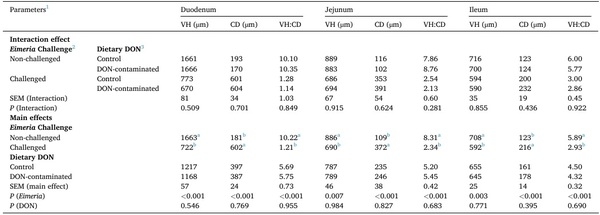
At 6 DPI, Eimeria challenge induced structural damage across all intestinal segments, whereas dietary DON exposure had no significant effects (Table 10). In the duodenum, Eimeria-challenged hens showed significantly shorter villi (P < 0.001), increased crypt depth (P < 0.001), and a substantially reduced villus height-to-crypt depth ratio (VH:CD; P < 0.001) compared with non-challenged birds. Similar results were observed in the jejunum, where villus height was reduced (P =0.007), crypt depth was increased (P < 0.001), and the VH:CD ratio was lower (P < 0.001) in challenged birds. The ileum showed the same pattern, with significantly shorter villi (P =0.003), deeper crypts (P < 0.001), and a reduced VH:CD ratio (P < 0.001). No main effects of dietary DON or DON ×Eimeria interactions were observed for any morphometric parameter at this time point (P > 0.05).
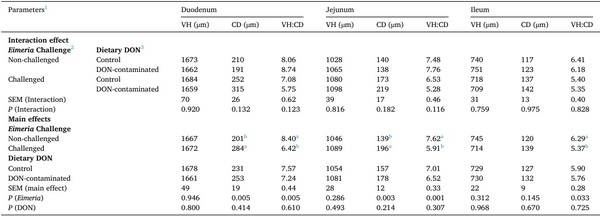
By 14 DPI, intestinal morphology indicated partial recovery from the acute damage observed earlier; however, birds previously challenged with Eimeria continued to show residual structural damage compared to non-challenged birds (Table 11). In the duodenum, villus height did not differ between groups (P =0.946), but crypt depth remained significantly greater in challenged birds (P =0.005), resulting in a lower VH: CD ratio (P =0.005). A similar pattern was observed in the jejunum, where villus height had recovered (P =0.286), yet crypt depth remained higher (P =0.003) and VH:CD ratio was reduced (P =0.001) in
Table 7
Egg quality characteristics of pullets during the transition to lay following Eimeria challenge and dietary deoxynivalenol exposure at 29 days post-Eimeria inoculation.
a-bWithin a column, means with different superscripts differ significantly (P < 0.05) based on the main effect of coccidiosis. No significant diet effects were observed (P > 0.05). Values are means (n =6/treatment). Abbreviations: DON, deoxynivalenol; EW, egg weight; AH, albumen height; YW, yolk weight; AW, albumen weight; ESW, eggshell weight; EST, eggshell thickness; ESP, eggshell percentage; HU, Haugh unit.
1 Egg quality was measured only at 29 days post-Eimeria inoculation (DPI) because insufficient samples were available at 6, 14, and 21 DPI.
2 Eimeria challenge consisted of oral gavage with 1 mL of a mixed Eimeria spp. inoculum containing 125,000 E. acervulina and 25,000 each of E. maxima and E. tenella sporulated oocysts at 18 wk of age.
3Dietary DON treatments included a control diet (2.1 mg/kg DON pre-lay; 1.7 mg/kg DON peaking) and a DON-contaminated diet (13.0 mg/kg DON pre-lay; 13.6 mg/kg DON peaking) from 15 to 22 wk of age.
Table 8
Body composition of pullets during the transition to lay following Eimeria challenge and dietary deoxynivalenol exposure at 6 and 14 days post-Eimeria inoculation.
a-bWithin a column, means with different superscripts differ significantly (P < 0.05) based on the main effect of coccidiosis. No significant interaction effects or diet effects were observed (P > 0.05). Values are means (n =6/treatment). Abbreviations: DON, deoxynivalenol; DPI =days post-Eimeria inoculation; BMD =bone mineral density.
1 Body composition was analyzed using dual-energy X-ray absorptiometry.
2 Eimeria challenge consisted of oral gavage with 1 mL of a mixed Eimeria spp. inoculum containing 125,000 E. acervulina and 25,000 each of E. maxima and E. tenella sporulated oocysts at 18 wk of age.
3Dietary DON treatments included a control diet (2.1 mg/kg DON pre-lay; 1.7 mg/kg DON peaking) and a DON-contaminated diet (13.0 mg/kg DON pre-lay; 13.6 mg/kg DON peaking) from 15 to 22 wk of age.
challenged birds. In the ileum, villus height did not differ between groups (P =0.312), and crypt depth showed only a numerical increase; nevertheless, the VH:CD ratio remained significantly lower in previously challenged hens (P =0.033). Dietary DON had no effect on villus height, crypt depth, or VH:CD ratio in any intestinal segment at 14 DPI, and no DON ×Eimeria interactions were observed (P > 0.05).
Cytokine expression in cecal tonsil
Cytokine expression in the cecal tonsil was strongly influenced by Eimeria challenge, with limited and time-dependent modulation by dietary DON (Fig. 6A-H). At 6 DPI, Eimeria challenge induced a strong inflammatory response characterized by upregulation of IFN-γ (P < 0.001; Fig. 6A) and IL-1β (P =0.003; Fig. 6B) compared to non- challenged controls. Similarly, expression of the regulatory cytokine
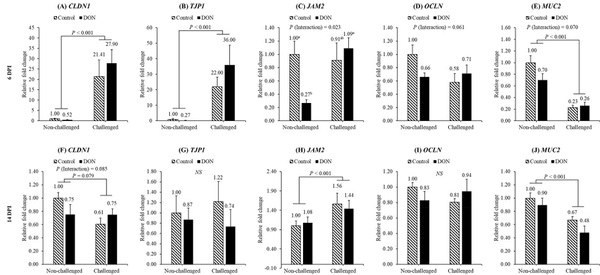
Fig. 5. Relative expression of tight junction and epithelial barrier-associated genes in the jejunum of pullets during the transition to lay at 6 and 14 days post-Eimeria inoculation (DPI) as affected by mixed Eimeria spp. challenge and dietary deoxynivalenol exposure. Treatments included non-challenged control diet, non-challenged deoxynivalenol (DON)-contaminated diet, Eimeria-challenged control diet, and Eimeria-challenged DON-contaminated diet. Gene expression were analyzed for (A) claudin-1 (CLDN1) at 6 DPI, (B) tight junction protein 1 (TJP1) at 6 DPI, (C) junctional adhesion molecule 2 (JAM2) at 6 DPI, (D) occludin (OCLN) at 6 DPI, (E) mucin 2 (MUC2) at 6 DPI, (F) CLDN1 at 14 DPI, (G) TJP1 at 14 DPI, (H) JAM2 at 14 DPI, (I) OCLN at 14 DPI, and (J) MUC2 at 14 DPI. Expression was normalized to the geometric mean of β-actin (ACTB) and glyceraldehyde-3-phosphate dehydrogenase (GAPDH) and calculated using the 2–ΔΔCt method with the non-challenged control group as the calibrator. Bars represent means ±SEM (n =6/treatment); distinct hatch patterns distinguish treatment groups in grayscale format. Pullets received either a control diet containing 1.7–2.1 mg/kg DON or a DON-contaminated diet containing 13.0–13.6 mg/kg DON. At 18 weeks of age, birds in challenged treatments were orally inoculated with a mixed Eimeria spp. inoculum containing 125,000 E. acervulina, 25,000 E. maxima, and 25,000 E. tenella sporulated oocysts.
Table 9
Serum fluorescein isothiocyanate-dextran concentration in pullets during the transition to lay following Eimeria challenge and dietary deoxynivalenol exposure at 5 and 13 days post-Eimeria inoculation.
a-bWithin a column, means with different superscripts differ significantly (P < 0.05) based on the main effect of coccidiosis. No significant interaction or diet effects were observed (P > 0.05). Values are means (n =6/treatment). Abbreviations: DON, deoxynivalenol; DPI, days post-Eimeria inoculation; FITC-d, fluorescein isothiocyanate-dextran.
1Gut permeability was measured using FITC-d concentration in blood serum following oral administration.
2 Eimeria challenge consisted of oral gavage with 1 mL of a mixed Eimeria spp. inoculum containing 125,000 E. acervulina and 25,000 each of E. maxima and E. tenella sporulated oocysts at 18 wk of age.
3Dietary DON treatments included a control diet (2.1 mg/kg DON pre-lay; 1.7 mg/kg DON peaking) and a DON-contaminated diet (13.0 mg/kg DON pre-lay; 13.6 mg/kg DON peaking) from 15 to 22 wk of age.
IL-10 was significantly upregulated in challenged birds (P < 0.001; Fig. 6C). No main effects of dietary DON and no DON ×Eimeria in teractions were observed for measured cytokine at this time point, including IL-6 (P > 0.05; Fig. 6D).
By 14 DPI, the acute inflammatory profile had largely resolved. IFN-γ expression was significantly lower in previously Eimeria-challenged birds compared with non-challenged ones (P =0.045; Fig. 6E). However, IL-1β expression remained higher in challenged birds (P =0.006; Fig. 6F). IL-10 expression did not differ among the treatments at 14 DPI (P > 0.05; Fig. 6G). A tendency toward an Eimeria ×DON interaction was observed for IL-6 (P =0.099; Fig. 6H), driven by lower IL-6 expression in non-challenged birds fed the DON-contaminated diet and similarly reduced expression in both challenged groups.
Splenic and cecal tonsil T cell responses
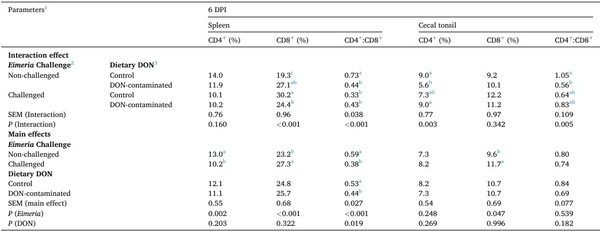
T-cell populations in the spleen and cecal tonsils were affected by Eimeria challenge and dietary DON in a time-dependent manner. At 6 DPI, Eimeria-challenged birds had a lower proportion of splenic CD4⁺ T cells (P =0.002) and a higher proportion of CD8⁺ T cells in the cecal tonsils (P =0.047) compared with non-challenged birds (Table 12). A significant Eimeria ×DON interaction was observed for the proportion of splenic CD8⁺ T cells (P < 0.001). In non-challenged birds, dietary DON was associated with an increased percentage of splenic CD8⁺ T cells, whereas Eimeria challenge alone also increased CD8⁺ T-cell proportions. However, DON exposure reduced the percentage of splenic CD8⁺ T cells in Eimeria-challenged birds. A corresponding interaction was observed for the splenic CD4⁺:CD8⁺ ratio (P < 0.001), which was lower in birds receiving the DON-contaminated diet and in Eimeria-challenged birds relative to non-challenged birds fed the control diet.
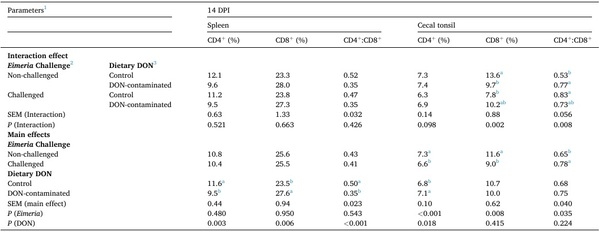
At 14 DPI, no Eimeria ×DON interactions were observed in the spleen for CD4⁺ T cells, CD8⁺ T cells, or the CD4⁺:CD8⁺ ratio (P > 0.05; Table 13). However, significant main effects of dietary DON were present. Birds fed the DON-contaminated diet had lower proportions of
Table 10
Intestinal histomorphology of pullets during the transition to lay following Eimeria challenge and dietary deoxynivalenol exposure at 6 days post-Eimeria inoculation.
a–b Within a column, means with different superscripts differ significantly (P < 0.05) based on the main effect of coccidiosis. No significant interaction or dietary effects were observed (P > 0.05). Values represent means (n =6/treatment). Abbreviations: DON, deoxynivalenol; VH, villus height; CD, crypt depth.
1 Intestinal morphology measurements were obtained from formalin-fixed, paraffin-embedded tissue sections of the duodenum, jejunum, and ileum collected at 6 days post-Eimeria inoculation.
2 Eimeria challenge consisted of oral gavage with 1 mL of a mixed Eimeria spp. inoculum containing 125,000 E. acervulina and 25,000 each of E. maxima and E. tenella sporulated oocysts at 18 wk of age
3Dietary DON treatments included a control diet (2.1 mg/kg DON pre-lay; 1.7 mg/kg DON peaking) and a DON-contaminated diet (13.0 mg/kg DON pre-lay; 13.6 mg/kg DON peaking) from 15 to 22 wk of age.
Table 11
Intestinal histomorphology of pullets during the transition to lay following Eimeria challenge and dietary deoxynivalenol exposure at 14 days post-Eimeria inoculation.
a–b Within a column, means with different superscripts differ significantly (P < 0.05) based on the main effect of coccidiosis. No significant interaction or dietary effects were observed (P > 0.05). Values represent means (n =6/treatment). Abbreviations: DON, deoxynivalenol; VH, villus height; CD, crypt depth.
1 Intestinal morphology measurements were obtained from formalin-fixed, paraffin-embedded tissue sections of the duodenum, jejunum, and ileum collected at 14 days post-Eimeria inoculation. Villus height, crypt depth, and villus height-to-crypt depth ratio (VH:CD) were quantified under light microscopy.
2 Eimeria challenge consisted of oral gavage with 1 mL of a mixed Eimeria spp. inoculum containing 125,000 E. acervulina and 25,000 each of E. maxima and E. tenella sporulated oocysts at 18 wk of age.
3Dietary DON treatments included a control diet (2.1 mg/kg DON pre-lay; 1.7 mg/kg DON peaking) and a DON-contaminated diet (13.0 mg/kg DON pre-lay; 13.6 mg/kg DON peaking) from 15 to 22 wk of age.
splenic CD4⁺ T cells (P =0.003), higher proportions of CD8⁺ T cells (P = 0.006), and a reduced CD4⁺:CD8⁺ ratio (P < 0.001) compared with birds fed the control diet. Eimeria challenge did not significantly affect splenic T-cell populations at this time point (P > 0.05). In the cecal tonsils at 14 DPI, significant Eimeria ×DON interactions were observed for the proportion of CD8⁺ T cells (P =0.002) and the CD4⁺:CD8⁺ ratio (P =0.008), with a tendency toward interaction for CD4⁺ T cells (P =0.098). Non- challenged birds fed the control diet had the highest proportion of CD8⁺ T cells, whereas Eimeria-challenged birds fed the control diet had the lowest. Dietary DON was associated with reduced CD8⁺ T-cell proportions in non-challenged birds but partially offset this reduction in Eimeria-challenged birds. Similar interaction patterns were observed for the CD4⁺:CD8⁺ ratio, which was lowest in non-challenged birds fed the control diet and highest in Eimeria-challenged birds fed the control diet, with DON exposure increasing the ratio in non-challenged birds and moderating it in challenged birds.
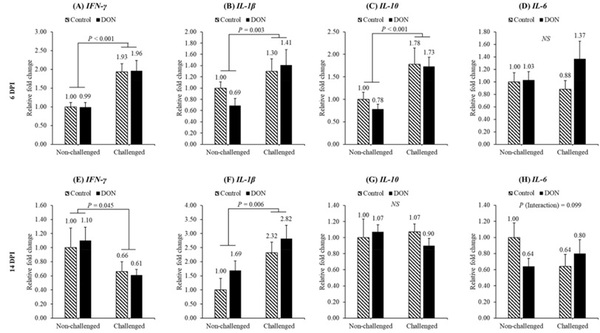
Fig. 6. Relative cytokine gene expression in the cecal tonsil of pullets during the transition to lay at 6 and 14 days post-Eimeria inoculation (DPI) as affected by mixed Eimeria spp. challenge and dietary deoxynivalenol exposure. Treatments included non-challenged control diet, non-challenged deoxynivalenol (DON)-contaminated diet, Eimeria-challenged control diet, and Eimeria-challenged DON-contaminated diet. Gene expression were analyzed for (A) interferon-gamma (IFN-γ) at 6 DPI, (B) interleukin-1 beta (IL-1β) at 6 DPI, (C) interleukin-10 (IL-10) at 6 DPI, (D) interleukin-6 (IL-6) at 6 DPI, (E) IFN-γ at 14 DPI, (F) IL-1β at 14 DPI, (G) IL-10 at 14 DPI, and (H) IL-6 at 14 DPI. Expression was normalized to the geometric mean of β-actin (ACTB) and glyceraldehyde-3-phosphate dehydrogenase (GAPDH) and calculated using the 2–ΔΔCt method with the non-challenged control group as the calibrator. Bars represent means ±SEM (n =6/treatment); distinct hatch patterns distinguish treatments in grayscale format. Pullets received either a control diet containing 1.7-2.1 mg/kg DON or a DON-contaminated diet containing 13.0-13.6 mg/kg DON. At 18 weeks of age, birds in challenged treatments were orally inoculated with a mixed Eimeria spp. inoculum containing 125,000 E. acervulina, 25,000 E. maxima, and 25,000 E. tenella sporulated oocysts.
Table 12
Splenic and cecal tonsil T-cell populations in pullets during the transition to lay following Eimeria challenge and dietary deoxynivalenol exposure at 6 days post-Eimeria inoculation.
a-bWithin a column, means with different superscripts differ significantly (P < 0.05) based on the interaction effects or main effects of coccidiosis or diet. Values represent means (n =6/treatment). Abbreviations: DON, deoxynivalenol; DPI =days post-Eimeria inoculation; CD4⁺ =helper T cells; CD8⁺ =cytotoxic T cells.
1 T cell populations were quantified as percentages of lymphocytes isolated from spleen and cecal tonsil and analyzed by flow cytometry.
2 Eimeria challenge consisted of oral gavage with 1 mL of a mixed Eimeria spp. inoculum containing 125,000 E. acervulina and 25,000 each of E. maxima and E. tenella sporulated oocysts at 18 wk of age.
3Dietary DON treatments included a control diet (2.1 mg/kg DON pre-lay; 1.7 mg/kg DON peaking) and a DON-contaminated diet (13.0 mg/kg DON pre-lay; 13.6 mg/kg DON peaking) from 15 to 22 wk of age.
Table 13
Splenic and cecal tonsil T-cell populations in pullets during the transition to lay following Eimeria challenge and dietary deoxynivalenol exposure at 14 days post- Eimeria inoculation.
a-bWithin a column, means with different superscripts differ significantly (P < 0.05) based on the interaction effects or main effects of coccidiosis or diet. Values represent means (n =6/treatment). Abbreviations: DON, deoxynivalenol; DPI =days post-Eimeria inoculation; CD4⁺ =helper T cells; CD8⁺ =cytotoxic T cells.
1 T cell populations were quantified as percentages of lymphocytes isolated from spleen and cecal tonsil and analyzed by flow cytometry.
2 Eimeria challenge consisted of oral gavage with 1 mL of a mixed Eimeria spp. inoculum containing 125,000 E. acervulina and 25,000 each of E. maxima and E. tenella sporulated oocysts at 18 wk of age.
3Dietary DON treatments included a control diet (2.1 mg/kg DON pre-lay; 1.7 mg/kg DON peaking) and a DON-contaminated diet (13.0 mg/kg DON pre-lay; 13.6 mg/kg DON peaking) from 15 to 22 wk of age
Oxidative status
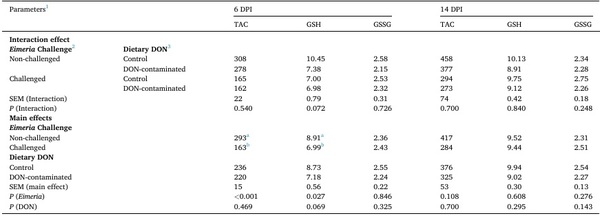
At 6 DPI, no Eimeria ×dietary DON interactions were observed for serum TAC and hepatic concentrations of GSH and GSSG (P > 0.05; Table 14). Dietary DON exposure alone did not affect any oxidative stress parameter at this time point (P > 0.05). However, Eimeria challenge was associated with lower serum TAC (P < 0.001) and reduced hepatic GSH concentration (P =0.027) compared with non- challenged birds, whereas hepatic GSSG concentration did not differ between challenged and non-challenged groups (P =0.846). At 14 DPI, no significant interactions or main effects of Eimeria challenge or dietary DON were observed for serum TAC or hepatic GSH and GSSG
Table 14
Oxidative status of pullets during the transition to lay following Eimeria challenge and dietary deoxynivalenol exposure at 6 and 14 days post-Eimeria inoculation.
a–bWithin a column, means with different superscripts differ significantly (P < 0.05) based on the main effect of coccidiosis. No significant interaction or dietary effects were observed (P > 0.05). Values represent means (n =6/treatment). Abbreviations: DON, deoxynivalenol; DPI, days post-Eimeria inoculation; TAC, total antioxidant capacity; GSH, reduced glutathione; GSSG, oxidized glutathione.
1 TAC was measured in blood serum and expressed as µM Trolox equivalents. GSH and GSSG were quantified from liver tissue homogenates and expressed as µmol/ mg protein.
2 Eimeria challenge consisted of oral gavage with 1 mL of a mixed Eimeria spp. inoculum containing 125,000 E. acervulina and 25,000 each of E. maxima and E. tenella sporulated oocysts at 18 wk of age.
3Dietary DON treatments included a control diet (2.1 mg/kg DON pre-lay; 1.7 mg/kg DON peaking) and a DON-contaminated diet (13.0 mg/kg DON pre-lay; 13.6 mg/kg DON peaking) from 15 to 22 wk of age.
concentrations (P > 0.05).
Discussion
The present study evaluated the individual and combined effects of naturally contaminated diets containing 13-14 mg/kg DON and a mixed- species Eimeria challenge in layer-type pullets during the transition to sexual maturity and early egg production. Although this DON concentration is relatively higher for commercial layer diets, it can occur under field conditions when contaminated DDGS or wheat by-products are included at high inclusion rates (Simsek et al., 2013; Khatibi et al., 2014). Despite this high DON exposure, we observed the resilience of layer-type pullets to DON alone and the limited synergistic interaction between DON and Eimeria on overall performance and egg production parameters.
Prior to the Eimeria challenge, pullets showed a remarkable tolerance to dietary DON concentrations as high as 13 mg/kg. Continuous exposure of DON from 15 to 18 weeks of age did not impair growth performance, supporting previous studies that layer-type chickens are more tolerant to DON toxicity than fast-growing broilers, even at concentrations exceeding 10 mg/kg (Awad et al., 2008; Santos et al., 2021; Kuai et al., 2024). The high DON tolerance in layer-type chickens could be due to several physiological factors. Layers possess more mature hepatic phase II conjugation pathways and greater gut microbial de-epoxidation activity, which rapidly convert DON into less toxic deepoxy-DON (Schwartz-Zimmermann et al., 2015; Pierron et al., 2016). In addition, gastrointestinal absorption of DON is lower in layers, with a substantial proportion of ingested DON remaining unabsorbed in the intestinal lumen and excreted (Prelusky, 1986). Lower feed intake per unit of metabolic body weight further restricts systemic exposure. Despite the absence of growth effects, pullets receiving the DON-contaminated diet showed a delay in sexual maturity, with onset of lay occurring 6 d later than those fed the control diet. Although direct measurement of vitellogenin and very low density lipoprotein (VLDL) was not performed in the present study, the observed 6 d delay in lay onset with DON alone is consistent with DON inhibition of hepatic protein synthesis (Pestka, 2010; Hooft and Bureau, 2021) and with metabolic thresholds for sexual maturity that require adequate yolk-precursor synthesis (Bahry et al., 2023; Noetzold and Zuidhof, 2025). Future studies quantifying circulating vitellogenin, VLDL, or LH/FSH would further elucidate this mechanism. Even a small reductions in circulating yolk precursors can slow the hierarchical recruitment of pre-ovulatory follicles and delay the onset of egg production (Song et al., 2023). DON has also shown to alter hypothalamic neuropeptides expression that regulate appetite and reproductive neuroendocrinology, potentially delaying the pre-pubertal surge in luteinizing hormone required for ovarian activation (Bonnet et al., 2012; Demaegdt et al., 2016).
Following the mixed-species Eimeria challenge at 18 wk, the parasite alone caused severe anorexia with 34% reduction in FI during the acute phase (1-6 DPI), along with temporary weight loss, and a 12-d delay in onset of egg production. These results align closely with a recent dose–response study in pullets transitioning to lay, which reported similar reductions in feed intake, growth, and delayed onset of egg production following Eimeria challenge (Sharma et al., 2024a). The observed negative effects of Eimeria challenge in the current study can be attributed to several overlapping pathogenic processes. The invasion of intestinal epithelium by Eimeria sporozoites and merozoites causes villus atrophy and crypt hyperplasia, which impairs the bird’s ability to digest and absorb nutrients (Sharma et al., 2024b). At the same time, the damaged gut triggers a strong immune reaction that releases large amounts of inflammatory cytokines such as IL-1β, IL-6, IFN-γ, and TNF (Yun et al., 2000; Lima et al., 2025). These cytokines suppress the appetite centers in the brain, reallocate energy toward immune defense, and increase maintenance energy requirements (Choi et al., 2025). Consequently, these overlapping pathological processes create a significant nutrient and energy deficit, delaying the accumulation of the body reserves and metabolic signals necessary for ovarian activation and folliculogenesis (Sharma and Kim, 2024).
Body composition results at 6 DPI further support this interpretation showing that Eimeria-challenged pullets had lower body fat percentage, higher relative muscle percentage, and reduced bone mineral density compared to non-challenged birds. These changes in body composition are consistent with acute nutrient repartitioning and catabolic state typically observed during the peak phase of coccidial infection, where energy and nutrients are redirected from growth and storage toward immune activation and tissue repair (Sharma et al., 2022; Choi et al., 2023).
In terms of growth performance, dietary DON at 13-14 mg/kg did not exacerbate the Eimeria-induced reductions in feed intake, body weight, and total egg production over the 29 d post-challenge period, confirming the relative tolerance of modern layer-type chickens to high DON exposure even under enteric pathogen challenge (Wickramasuriya et al., 2020). However, several gut and immune parameters in the present study showed subtle potentiating effects of high-dose DON during coccidiosis. Birds exposed to both stressors tended to show higher cecal lesion scores (E. tenella) and a greater proportion of moderate-to-severe duodenal (E. acervulina) and mid-intestinal (E. maxima) lesions, sug gesting that DON may further increase intestinal damage during Eimeria infection (Antonissen et al., 2014; Pierron et al., 2024).
At 6 DPI, the mixed-species Eimeria challenge induced strong upregulation of tight-junction-related genes (CLDN1 and TJP1). However, OCLN was downregulated with both Eimeria challenge and DON and showed a trend for interaction. The upregulation of CLDN1 and TJP1 observed in the challenged birds indicates an inflammation-induced compensatory response (Criado-Mesas et al., 2021). During peak epithelial damage, release of inflammatory cytokines such as IFN-γ, TNF α , IL-1β, and IL-6 activate nuclear factor kappa-light-chain-enhancer of activated B cells (NF-κB) and signal transducer and activator of transcription 1 (STAT1) signaling pathways, which in turn directly transactivate CLDN1 and TJP1 promoters to reinforce tight-junction repair (Bremner et al., 2021; Weng et al., 2024; Chen et al., 2025). In contrast, these cytokines promote occludin removal from the tight junctions and reduce its mRNA through RhoA/ROCK-mediated endocytosis and transcriptional repression, leading to the observed OCLN downregulation (Al-Sadi et al., 2009; Awad et al., 2017). Consistent with these molecular changes, gut permeability was significantly increased in Eimeria-challenged birds, but DON exposure produced no additional increase. Because gut permeability was measured at 5 and 13 DPI, transient changes during the early acute phase of infection may not have been captured. These results also suggest that, at the DON concentrations tested (13-14 mg/kg), the magnitude of Eimeria-induced barrier disruption may have reached a level beyond which additional DON effects were detectable under the present experimental conditions.
Intestinal histomorphology at 6 and 14 DPI were impaired mainly by Eimeria challenge, with no additional effect of dietary DON and no significant interaction. This pattern aligns with numerous studies in which mixed-species Eimeria consistently reduce VH, increase CD and decrease VH:CD ratio during the acute and recovery phases (Sharma et al., 2022; Choi et al., 2023; Paneru et al., 2025a), whereas DON alone typically has minimal effects on intestinal morphology (Chen et al., 2017). The lack of additive morphological damage in the DON + Eimeria group suggests that the exposure levels used, DON does not further aggravate the direct epithelial destruction and regenerative hyperplasia associated with Eimeria merozoite replication and inflammation.
The cytokine and T-cell response observed in the present study indicates the complex immunomodulatory effects of DON, which were strongly influenced by infection status and sampling time. At the peak of infection (6 DPI), the Eimeria challenge by itself triggered a strong protective immune response in birds fed the control diet. In the cecal tonsils, inflammatory genes (IFN-γ, IL-1β, and IL-10) were upregulated, indicating an intense T helper 1-type inflammatory reaction and danger signaling triggered by intestinal epithelial cells damage (Yun et al., 2000; Hong et al., 2006; Kim et al., 2019; Sharma et al., 2024a). Concurrently, both spleen and cecal tonsils showed increased CD8⁺ cytotoxic T cells and a lower CD4⁺:CD8⁺ ratio, indicating protective immunity against Eimeria spp. (Hériveau et al., 2000; Laurent et al., 2001; Pu et al., 2023). At this stage, DON did not further increase the inflammatory cytokine response, likely because the Eimeria induced inflammatory response overshadowed the weaker ribotoxic stress signals typically associated with DON (Pestka, 2010). However, DON did interfere with the adaptive immune response by reducing the normal Eimeria-induced recruitment of CD8⁺ cytotoxic T cells to both the spleen and cecal tonsils, suggesting a mild immunosuppressive effect during Eimeria infection (Vatzia et al., 2019).
By 14 DPI, when the primary Eimeria infection had largely resolved, the systemic and mucosal T-cell compartments showed the main effects of chronic DON exposure rather than residual effects of the parasite. In the spleen, DON alone decreased CD4⁺ T-cell, increased CD8⁺ T-cells, and caused a much lower CD4⁺:CD8⁺ ratio regardless of prior infection. Changes in CD4⁺ and CD8⁺ proportions indicate altered T-cell homeostasis; however, functional assays were not performed. These phenotypic shifts nonetheless align with the ribotoxic effects of DON on T-cell activation (Vatzia et al., 2019; Zhao et al., 2024) and warrant future functional validation. In the cecal tonsils, birds that had been challenged with Eimeria and fed the control diet showed the expected recovery pattern with declining CD8⁺ T cells, and increasing CD4⁺:CD8⁺ ratio, indicating normal resolution of the immune response after the infection was cleared (Bessay et al., 1996; Kim et al., 2019). However, DON disrupted this normal recovery by preventing the normal decrease in CD8⁺ cells in previously challenged birds, indicating a loss of the typical post-infection immune dynamics.
Acute Eimeria challenge transiently reduced serum TAC and hepatic GSH at 6 DPI, consistent with oxidative burst during inflammation (Oke et al., 2024). However, DON at 13-14 mg/kg neither induced oxidative stress alone nor amplified Eimeria-induced oxidative damage. Eimeria invasion of intestinal epithelial cells activates innate immune responses, including heterophil and macrophage recruitment, which generate reactive oxygen species (ROS) through respiratory burst mechanisms as part of pathogen clearance (Jebessa et al., 2025). At this stage, ROS production exceeded the capacity of endogenous antioxidant systems for neutralization, leading to a depletion of circulating antioxidants and hepatic GSH (Dominguez et al., 2015). DON at 13-14 mg/kg neither induced oxidative stress on its own nor amplified Eimeria-induced oxidative damage when assessed by serum TAC and hepatic GSH and GSSG. Although these are established markers, inclusion of direct ROS quantification in future studies would provide a more comprehensive picture of systemic redox status.
By 29 DPI, when feed intake and intestinal function had largely recovered, egg quality parameters were unaffected except for a small reduction in yolk weight in Eimeria-challenged hens. This minor effect could be due to incomplete replenishment of hepatic lipid reserves following the extended negative energy balance in Eimeria-challenged birds (Van Eck et al., 2023). However, DON had no significant effect on egg quality, likely because DON exposure did not disrupt hepatic lipid synthesis, calcium metabolism, and mineral utilization in these birds. In laying hens, egg quality traits are regulated by hepatic lipogenesis and endocrine regulation of calcium homeostasis, which appear relatively insensitive to DON exposure (Awad et al., 2008; Wickramasuriya et al., 2020).
In conclusion, this study demonstrates that during the transition to lay, mixed-species Eimeria challenge is the dominant biological stressor disrupting feed intake, body composition, intestinal integrity, immune homeostasis, oxidative balance, and reproductive timing in layer-type pullets, whereas chronic exposure to a naturally contaminated diet containing 13–14 mg/kg DON exerts comparatively limited effects on performance and egg production. Despite high dietary DON concentrations, pullets showed the resilience at the level of growth, egg production, intestinal morphology, and systemic oxidative status, indicating the relative tolerance of Hy-Line W36 pullets to DON concentrations up to 13-14 mg/kg during the physiologically demanding transition to lay, even under simultaneous Eimeria challenge. However, DON subtly but consistently modified host responses during coccidiosis by exacerbating cecal lesion severity, altering tight-junction and mucin gene expression, and disrupting the normal expansion and resolution of CD8⁺ T-cell responses in both systemic and mucosal compartments. These findings indicate that while DON does not synergistically amplify the overt performance losses caused by Eimeria, it can interfere with epithelial repair and immune resolution during and after infection, potentially prolonging subclinical gut dysfunction.