Precision Poultry Nutrition: Advancing Feed Efficiency Through Smart Additive Technologies
Published: May 20, 2026
Source : Roma Patil
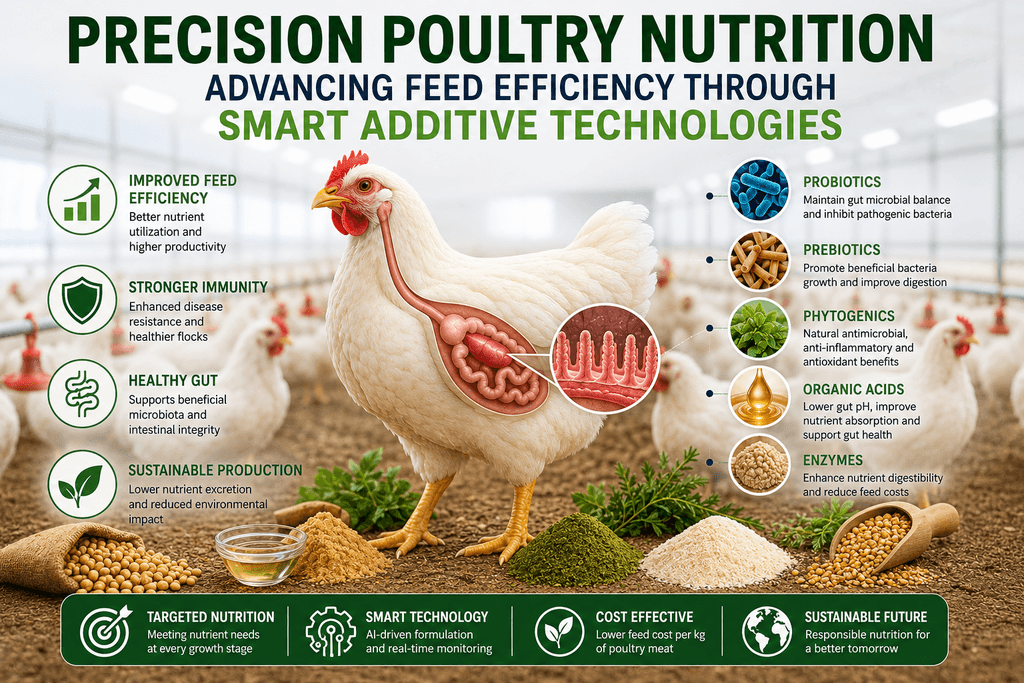
Feed efficiency remains one of the most critical economic indicators in poultry production because feed represents a substantial portion of total operational expenses. Modern poultry nutrition programs are therefore focusing on smart feed additive technologies that enhance nutrient digestibility, maintain intestinal integrity, and support sustainable production practices.
According to recent animal feed industry analysis, the growing demand for livestock productivity, improved feed quality, and sustainable animal nutrition solutions continues to drive innovation in the global feed sector.
The Role of Precision Nutrition in Poultry Production
Modern poultry breeds possess high genetic potential for rapid growth and improved productivity. However, achieving optimal performance requires carefully balanced diets supported by functional feed technologies.
Precision nutrition involves delivering targeted nutrients and bioactive compounds according to bird requirements, production stage, environmental stress conditions, and gut health status. This nutritional approach helps improve feed conversion ratio (FCR), minimize nutrient wastage, and strengthen flock health.
The increasing adoption of precision feeding systems is also being supported by advancements in feed formulation software, automation technologies, and digital livestock management systems.
Feed Additives Driving Modern Poultry Efficiency
Feed additives are becoming increasingly important in commercial poultry production because they improve nutrient availability, support intestinal microbial balance, and enhance digestive efficiency.
Several categories of sustainable additives are currently transforming poultry nutrition programs worldwide.
Enzyme Technologies and Nutrient Digestibility
Feed enzymes are widely used to improve nutrient release from feed ingredients and reduce anti-nutritional factors that limit digestion efficiency.
Common poultry feed enzymes include:
1. Phytase
2. Xylanase
3. Protease
4. Beta-glucanase
These enzymes improve nutrient absorption and reduce feed wastage while lowering nutrient excretion into the environment. Improved digestibility also contributes to better gut stability and lower pathogen proliferation within the digestive tract.
Phytase supplementation is particularly important because it enhances phosphorus utilization and supports more sustainable manure management practices.
Precision Probiotics and Gut Health Optimization
The poultry gut microbiome plays a critical role in digestion, immunity, and disease resistance. Maintaining balanced intestinal microbial populations is essential for achieving strong production performance.
Precision probiotics are specifically designed to support beneficial bacterial populations while suppressing pathogenic microorganisms.
Common probiotic strains used in poultry nutrition include:
1. Lactobacillus species
2. Bacillus subtilis
3. Bifidobacterium species
4. Enterococcus faecium
These microbial additives help stabilize intestinal health during environmental stress, vaccination programs, feed transitions, and disease challenges.
Benefits associated with probiotic supplementation include:
Improved feed conversion efficiency
Better nutrient utilization
Enhanced intestinal villi development
Reduced pathogen colonization
Stronger immune function
Phytogenic Feed Additives as Natural Performance Enhancers
Plant-derived feed additives are increasingly replacing conventional antibiotic growth promoters due to their natural antimicrobial and antioxidant properties.
Widely used phytogenic ingredients include:
1. Oregano oil
2. Garlic extract
3. Turmeric
4. Cinnamon
5. Thyme extracts
These compounds stimulate digestive enzyme activity, improve feed palatability, and support intestinal integrity. Their antioxidant capacity also helps reduce oxidative stress during heat stress conditions, which commonly affect poultry productivity in intensive farming systems.
Organic Acids Supporting Intestinal Stability
Organic acids are effective feed additives that help maintain favorable gut pH conditions while suppressing harmful bacterial growth.
Commonly used organic acids include:
Butyric acid
Formic acid
Propionic acid
Citric acid
Butyric acid has gained particular importance because it serves as an energy source for intestinal epithelial cells and supports intestinal barrier integrity.
Organic acid supplementation contributes to:
Better nutrient absorption
Lower pathogen load
Improved intestinal morphology
Enhanced feed efficiency
Sustainability Benefits of Smart Poultry Nutrition
Sustainable feed additives provide significant environmental and economic advantages for modern poultry operations.
Reduced Feed Waste
Improved digestibility and nutrient utilization reduce feed losses and improve overall production efficiency.
Lower Environmental Impact
Precision nutrition programs reduce nitrogen and phosphorus excretion, helping minimize environmental pollution from poultry manure.
Reduced Antibiotic Dependency
Functional additives strengthen gut resilience and immune performance, reducing the need for antibiotic interventions.
Improved Production Economics
Better feed conversion directly lowers feed cost per kilogram of poultry meat produced, improving profitability for poultry producers.
Digital Technologies Supporting Precision Feeding
The poultry industry is increasingly integrating digital agriculture technologies into nutritional management systems.
Modern poultry operations are adopting:
AI-based feed formulation
Automated feeding systems
Smart farm sensors
Real-time flock monitoring
Predictive analytics platforms
These technologies support more accurate nutritional decision-making and improve production efficiency across commercial poultry systems.
Recent agriculture industry research also highlights increasing investment in smart farming technologies, precision agriculture systems, and advanced livestock management solutions aimed at improving sustainability and operational productivity.
Challenges in Feed Additive Implementation
Although feed additives offer significant performance benefits, their effectiveness depends on multiple operational factors, including:
1. Feed composition
2. Bird genetics
3. Farm hygiene
4. Environmental conditions
5. Dosage optimization
6. Feed processing stability
Proper formulation and scientific validation remain essential for achieving consistent results in commercial poultry production.
Future Outlook for Poultry Nutrition
Future poultry nutrition strategies are expected to focus heavily on:
Microbiome engineering
Synbiotic formulations
Postbiotics
Fermented feed ingredients
Algae-based nutrition
AI-assisted nutritional optimization
As global demand for sustainable poultry production continues to increase, precision feed technologies will play a central role in improving productivity, animal welfare, and environmental sustainability.
Conclusion
Precision poultry nutrition is reshaping the modern poultry industry through the integration of sustainable feed additives and advanced nutritional technologies. Enzymes, probiotics, phytogenic compounds, and organic acids are helping producers improve gut health, enhance feed efficiency, and reduce environmental impact.
The continued advancement of smart feeding systems and sustainable nutritional solutions is expected to further accelerate innovation within the poultry sector. Poultry producers adopting precision nutrition strategies will be better positioned to achieve long-term economic sustainability, improved flock performance, and responsible production practices.
Source Reference: Consegic Business Intelligence – Animal Feed Market: https://www.consegicbusinessintelligence.com/animal-feed-market
Authors:

Recommend
Comment
Share

Would you like to discuss another topic? Create a new post to engage with experts in the community.




Life Rainbow
Life Rainbow Co., Ltd. is a feed additives specialist, with expertise in the manufacure of mycotoxins deactivation enzymes by gene cloning technology. With

Norel Animal Nutrition
Norel is a Spanish company whose business is based on the development, manufacturing, and marketing of ingredients for animal feed.






Featured users in Poultry Industry

Dr. Algis Martínez  Cargill
DVM, Diplomado ACPV - Poultry Veterinarian North America Cargill
United States
United States