Explore

Advertise on Engormix

Characterization of antimicrobial resistance and genome of a Salmonella enterica serovar Rissen (FARPER-637) isolated from swine in Peru

Published: June 17, 2026
Source : Angela Montalván-Avalos 1, 2; Luis Tataje-Lavanda 1,3; Doris Villanueva-Pérez 1; Dora Rios-Matos 1; Diego Paredes-Inofuente 1; Suly Montoya-Ortiz 1; Manuel Albetis-Apolaya 1; Ronnie Gavilan-Chavez 3, 4; Manolo Fernández-Sánchez 1; Manolo Fernández-Díaz 1.
Summary
Author details:

1 Laboratorios de Investigación y Desarrollo, FARVET SAC, Chincha Alta, Ica, Perú; 2 Escuela Profesional de Tecnología Médica, Universidad Privada San Juan Bautista, Lima, Perú; 3 Escuela Profesional de Medicina Humana, Universidad Privada San Juan Bautista, Lima, Perú; 4 Instituto Nacional de Salud, Lima, Perú.
Salmonella enterica serovar Rissen is an emerging zoonotic serovar increasingly associated with foodborne infections and antimicrobial resistance worldwide (1, 2). Although detected in porcine production systems in multiple regions, its presence and genomic characterization in Peru remain poorly documented (3, 4). Here, we describe the antimicrobial susceptibility profile and whole-genome sequence (WGS) of the strain FARPER-637, isolated within a national antimicrobial resistance surveillance initiative conducted in 2025 (5).
FARPER-637 was isolated from a rectal swab collected from clinically healthy swine in a commercial farm located in the province of Arequipa, Arequipa region, southern Peru. The samples were collected in buffered peptone water (BPW), at a ratio of 1:9, and were transported at 4°C. Conventional microbiological methods were applied for isolation, including selective enrichment in Rappaport–Vassiliadis broth from BPW; isolation in xylose lysine deoxycholate agar using 10-fold serial dilutions; biochemical identification from isolated colonies using the Analytical Profile Index (API 20E) system, obtaining biochemical profile 6,304,752, typical of the Salmonella genus; and PCR targeting invA performed from purified colonies (6–8). Antimicrobial susceptibility testing (AST) was performed using the Kirby–Bauer disk diffusion method on Mueller-Hinton agar following CLSI M100-2025, incubated at 37°C for 18–24 h in aerobic conditions (9). The isolate exhibited resistance to ampicillin, tetracycline, doxycycline, and colistin; intermediate susceptibility to cefoxitin and nalidixic acid; and susceptibility to β-lactams, aminoglycosides, carbapenems, amphenicols, trimethoprim–sulfamethoxazole, fosfomycin, and ciprofloxacin.
Genomic DNA was extracted with the DNeasy Blood and Tissue Kit (Qiagen, Germany) according to the manufacturer’s protocol. DNA integrity was evaluated by 0.8% agarose gel electrophoresis and quantified with a Qubit 4.0 fluorometer (Invitrogen, USA). WGS was performed on 200 ng of DNA. The library was prepared with the Rapid Barcoding Kit 24 (SQK-RBK114.24, Oxford Nanopore Technologies, ONT) and sequenced on R10.4.1 flow cell using MinION Mk1B device (ONT) under super-accuracy basecalling mode. Sequencing produced 90,575 raw reads, of which 78,129 passed quality filters.
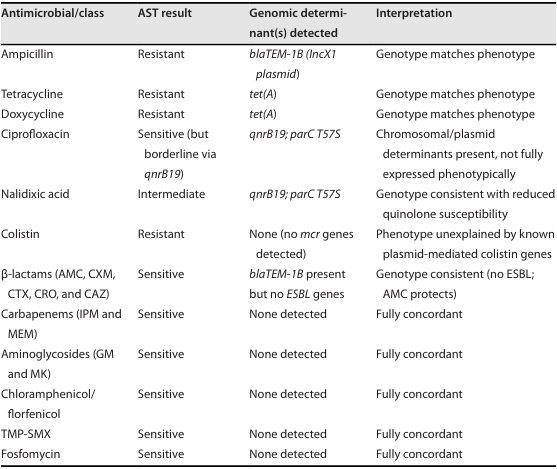
TABLE 1 Phenotypic antimicrobial susceptibility and corresponding genomic determinants in S. enterica serovar Rissen FARPER-637
Characterization of antimicrobial resistance and genome of a Salmonella enterica serovar Rissen (FARPER-637) isolated from swine in Peru - Image 1
Unless otherwise specified, all software was run with default parameters. All analyses from raw read processing through de novo assembly were performed via the GalaxyTrakr (10) web interface. Reads were processed using Porechop (v0.2.4) (11) for adapter trimming, NanoFilt (v0.1.0) (12) (-q 10 –length 500), and FastQC (13) with MultiQC (14) for quality inspection. De novo assembly was generated with Flye (v2.9.6) (15) (--nano-corr, -i 3, --meta), yielding five contigs, including a closed ~4.9 Mb chromosome. Assembly metrics were five contigs, N50 = 4,913,518 bp, and GC content 52%. Coverage was chromosome, 111× (circular); plasmid 1, 41,827 bp (457×, circular, IncX1); plasmid 2, 698 bp (3,854×, linear); plasmid 3, 4,819 bp (867×, circular); plasmid 4, 680 bp (3,858×, linear).
Final consensus polishing was performed locally with Medaka (v2.1.1) (16) (-m dna_r10.4.1_e8.2_400bps_sup@v5.2.0), following the standard workflow medaka_con sensus. Annotation employed NCBI PGAP (17). Serovar prediction by SISTR (v1.1.1) (18) confirmed S. enterica serovar Rissen, and SeqSero2 identified antigenic profile 7:f,g:–. Antimicrobial resistance genes were detected with staramr (v0.10.0) using the following database versions ResFinder (072621; DB date 24 May 2022), PointFinder (072621.2; DB date 1 Feb 2021), PlasmidFinder (DB date 18 Jan 2023), and MLST 2.23.0. Detected AMR determinants included blaTEM-1B, tet(A), and qnrB19, all located on an IncX1 plasmid. No mcr genes were identified.
Genotype–phenotype concordance was consistent: blaTEM-1B correlated with resistance to ampicillin, tet(A) with tetracycline and doxycycline resistance, and qnrB19 with borderline quinolone effects. These findings agreed with the observed phenotypic resistance to β-lactams, tetracycline, doxycycline, and quinolone borderline effects. Colistin resistance lacked known plasmid-mediated mcr genes, suggesting the involvement of chromosomal or alternative resistance mechanisms. Table 1 summarizes phenotype–genotype concordance.
This report documents the first genomic characterization of S. Rissen from Peruvian swine, emphasizing the need to expand genomic AMR surveillance in Latin American livestock systems (1, 19).
     
This article was originally published in Microbiology Resource Announcements, February 2026, Volume 15, Issue 2. https://doi.org/10.1128/mra.01314-25. This is an Open Access article distributed under the terms of the Creative Commons Attribution 4.0 International license.

1. Elbediwi M, Shi D, Biswas S, Xu X, Yue M. 2021. Changing patterns of Salmonella enterica serovar rissen from humans, food animals, and animal-derived foods in China, 1995-2019. Front Microbiol 12:702909. ht tps://doi.org/10.3389/fmicb.2021.702909

2. Tang B, Elbediwi M, Nambiar RB, Yang H, Lin J, Yue M. 2022. Genomic characterization of antimicrobial-resistant Salmonella enterica in Duck, Chicken, and Pig farms and retail markets in Eastern China. Microbiol Spectr 10:e0125722. https://doi.org/10.1128/spectrum.01257-2

3. Martínez-Avilés M, Garrido-Estepa M, Álvarez J, de la Torre A. 2019. Salmonella surveillance systems in Swine and humans in Spain: a review. Vet Sci 6:20. https://doi.org/10.3390/vetsci6010020

4. Quesada A, Reginatto GA, Ruiz Español A, Colantonio LD, Burrone MS. 2016. Resistencia antimicrobiana de Salmonella spp aislada de alimentos de origen animal para consumo humano. Rev Peru Med Exp Salud Publica 33:32. https://doi.org/10.17843/rpmesp.2016.331.1899

5. WHO. 2022-2024 Fighting AMR in Peru OneHealth | MPTF Office. Available from: http://mptf.undp.org/project/00130055 

6. Andrews,WH, Wang, H, Jacobson, A, Ge, B, Zhang, G, Hammack, T. 2024. Bacteriological Analytical Manual (BAM), Chapter 5: Salmonella

7. BioMérieux2025. API® ID strip range and APIWEB®. BioMérieux Website. Available from: https://www.biomerieux.com/corp/en/our-offer/clinical- products/api-id-strip-range-apiweb.html

8. Rahn K, De Grandis SA, Clarke RC, McEwen SA, Galán JE, Ginocchio C, Curtiss R III, Gyles CL. 1992. Amplification of an invA gene sequence of Salmonella typhimurium by polymerase chain reaction as a specific method of detection of Salmonella. Mol Cell Probes 6:271–279. https://d oi.org/10.1016/0890-8508(92)90002-F

9. CLSI. 2025. Performance standards for antimicrobial susceptibility testing. Clinical and Laboratory Standards Institute. https://clsi.org/shop /standards/m100.

10. Gangiredla J, Rand H, Benisatto D, Payne J, Strittmatter C, Sanders J, Wolfgang WJ, Libuit K, Herrick JB, Prarat M, Toro M, Farrell T, Strain E. 2021. GalaxyTrakr: a distributed analysis tool for public health whole genome sequence data accessible to non-bioinformaticians. BMC Genomics 22:114. https://doi.org/10.1186/s12864-021-07405-8

11. Wick R. 2018. Porechop. GitHub. https://github.com/rrwick/Porechop

12. De Coster W, D’Hert S, Schultz DT, Cruts M, Van Broeckhoven C. 2018. NanoPack: visualizing and processing long-read sequencing data. Bioinformatics 34:2666–2669. https://doi.org/10.1093/bioinformatics/bt y149

13. Andrews S. 2023. FastQC. Available from: https://github.com/s-andrews/ FastQC

14. Ewels P, Magnusson M, Lundin S, Käller M. 2016. MultiQC: summarize analysis results for multiple tools and samples in a single report. Bioinformatics 32:3047–3048. https://doi.org/10.1093/bioinformatics/bt w354

15. Kolmogorov M. 2021. Flye assembler. Available from: https://github.com /mikolmogorov/Flye

16. Oxford Nanopore Technologies2017. Medaka. Available from: https://git hub.com/nanoporetech/medaka

17. Tatusova T, DiCuccio M, Badretdin A, Chetvernin V, Nawrocki EP, Zaslavsky L, Lomsadze A, Pruitt KD, Borodovsky M, Ostell J. 2016. NCBI prokaryotic genome annotation pipeline. Nucleic Acids Res 44:6614 6624. https://doi.org/10.1093/nar/gkw569

18. Yoshida CE, Kruczkiewicz P, Laing CR, Lingohr EJ, Gannon VPJ, Nash JHE, Taboada EN. 2016. The Salmonella in silico typing resource (SISTR): an open web-accessible tool for rapidly typing and subtyping draft Salmonella genome assemblies. PLoS One 11:e0147101. https://doi.org/ 10.1371/journal.pone.0147101

19. Egan DA, Naughton V, Dooley JS, Naughton PJ. 2017. Detection of Salmonella enterica serovar rissen in Slaughter Pigs in Northern Ireland. Adv Microbiol. Scientific Research Publishing. https://doi.org/10.4236/ai m.2017.76040


Related topics:
Authors:
Ángela Montalván
Luis Tataje
Manolo Fernandez
Recommend
Comment
Share
Profile picture
Would you like to discuss another topic? Create a new post to engage with experts in the community.
Featured users in Pig Industry
Wes Schweer
Wes Schweer
United States
Francis Simard
Francis Simard
Agr., M. Sc. / Nutrition and Development Director at Trouw Nutrition Canada
United States
Erika Gisela Lin-Hendel
United States