INTRODUCTION
Poultry breast muscle is the most profitable tissue of chickens and is low in price (UNA, 2014). Broiler chicken production and consumption in the United States in 2014 was 85 pounds (38.6 kg) per inhabitant (NCC, 2014). Throughout the world, an estimated 130 million chickens are consumed each day. In 2013, approximately 9 billion broiler chickens will be produced (SAGARPA, 2009). Mexico is the fourth highest producer of chicken meat worldwide with over 3 million metric tonnes in 2008, representing 43% of the total meat consumption of 28.1 kg/person per year. Nevertheless, Mexico imported around 400,000 tons (4 × 10⁸ kg) of chicken legs, thighs, and drumsticks from the United States in 2008 (SAGARPA, 2009).
Aflatoxins (AF) are dangerous and common naturally occurring contaminants of grains used as feed (Flores et al., 2006), and their consumption represents a risk for both animal and human health. Aflatoxins have the same core structure, and their chemical properties are well known (OPS, 1983); they are produced by different fungi of the genus Aspergillus (Bennett and Klich, 2003), mainly A. flavus, A. parasiticus (Diener and Davis, 1987), and A. nomius (Feibelman et al., 1998). Other AF-producing fungi are members of the Aspergillus sections Flavi, Nidulantes, and Ochraceorosei (Peterson et al., 2001; Ehrlich et al., 2007). The main AF are AFB1, AFB2, AFG1, and AFG2, of which AFB1 is the most toxic as a potent biological mutagen and carcinogen (IARC, 1997). Aflatoxins affect all living creatures, including viruses, because they bond to proteins and nucleic acids, forming adducts that are the active carcinogens (Oğuz et al., 2000).
Aflatoxins inflict high economic losses to the poultry industry (Charmley et al., 1995) as they damage mucous membranes, the digestive tract, and nervous and circulatory systems (Del Bianchi et al., 2005), causing diarrhea, fatty liver, edema, digestion problems, and acute aflatoxicosis that kills birds in few hours (Bennett and Klich, 2003).
Aflatoxins quantities < 1.0 mg∙kg−1 can cause chronic damage in poultry such as low growth, hemorrhage in legs and breast muscles due to a decrease in blood coagulation and weakness of the capillary endothelium, poor conversion of feed to meat (Sodhi et al., 2005), hepatitis, cirrhosis, lack of pigmentation, low feed absorption, low response to vaccination, weakened immune defenses (Verma et al., 2004), increased risk to develop salmonelloses, coccidioses, bursa of Fabricius disease, candidiases, and low egg production (Jordan and Pattison, 1996). The LD50 (median lethal dose that kills 50% of a tested population after a specified test duration) of AF in poultry is 9.278 mg∙kg−1 BW, so AF levels > 10.0 mg∙kg−1 produce high mortality in barnyard fowl.
Although no cancer was detected in any internal organs (liver, kidneys, or breast muscle) of broilers or layer chickens raised for a year on feed containing 2 µg∙g−1 of AF (Rehman-Rizvi, 1988), laying hens exposed to > 2.0 mg∙kg−1 total AF (AFt) have lower egg production (Jordan and Pattison, 1996). Losses in meat production of laying hens are attributed to the acute or chronic damage that AFB1 causes in muscle, preceded by hepatocellular necrosis (Bryden and Cumming, 1980). The AFB1 stored in the reproductive organs can be transferred to eggs and chicks (Calnek et al., 1997). Aflatoxins are metabolized, biotransformed, and stored in poultry organs (Bahrami, 2004), mainly in the liver (Gregory and Manley, 1982), gizzard, breast muscle (Trucksess et al., 1983), and eggs.
Compared with liver, biotransformation is negligible in muscle tissue. Although broiler and laying hen breast muscles are the most valuable and commercial tissues, there are few studies on the presence of AF and their biotransformed products, hydroxylated metabolites, which are also carcinogenic although less toxic (Bennett and Klich, 2003); there have also been few and incomplete studies on chemical methods of AF detection in poultry. The aims of this study were to identify and quantify AFB1, AFB2, AFG1, AFG2, and their hydroxylated metabolites, AFM1, AFM2, AFP1, and aflatoxicol (AFL), in laying hen breast muscles and to validate the AF extraction and purification methods according to Qian and Yang (1984) and Koeltzow and Tanner (1990) for animal tissues.
MATERIALS AND METHODS
Experimental Design
To quantify the AF from feed stored in laying hen breast muscles, an experiment was carried out in the Poultry Centre for Research and Teaching of the National Autonomous University of Mexico (Universidad Nacional Autónoma de México) from August 8 to 15, 2005, under given rules (FASS, 2010).
The experiment included 25 Hy-Line W36 121-wkold hens in their second production cycle placed in individual cages.
Hens were fed daily with ground and homogenized feed, in individual rations of 250 g. A bag with 7.5 kg of homogenized feed was weighed on a daily basis, and it was subdivided into 3 different 2.5-kg portions. The hens were subdivided in 3 experimental groups:
a) Control group. One control feed portion was left unspiked to feed the 9 control laying hens.
b) Low AFB1 dosage. The second portion of feed was spiked with 30 µg∙kg−1 of AFB1 for a low AF concentration group of 8 hens to ensure consumption of a minimum of 20 µg∙kg−1, the maximum FDA regulatory policy tolerance level of AF for feedstuff (FDA, 2010).
c) High AFB1 dosage. Finally, the third portion was spiked with 500 µg∙kg−1 of AFB1 for the high AF group of 8 laying hens to reach the tolerance limit of 100 µg∙kg−1 for mature poultry and laying hens (FDA, 2010).
From the 3 lots of feed of 2.300 kg, 2 were spiked daily and independently with AFB1 (30 and 500 µg∙kg−1), the methanol (MeOH) was left to evaporate, and the mixture was homogenized in a shaker (Environ Shaker, model 3527, LabLine Instruments Inc., Melrose Park, IL) for 20 min on 450 rpm at 22°C. After the hens ate, the residues of feed of each trough were weighed daily to quantify the ingested feed by each hen, and the feeding troughs were refilled with the same clean or spiked feed; the experiment lasted 8 d.
On August 15, 2005, the hens no longer received spiked feed, the final hen weights were registered, and then they were euthanized as specified for domestic and wild animals (FASS, 2010). The breast muscles were collected, weighed fresh, and then dried in an air extraction chamber. After obtaining the dry weight, samples were labeled and cooled at –4°C until analysis.
Feed Composition
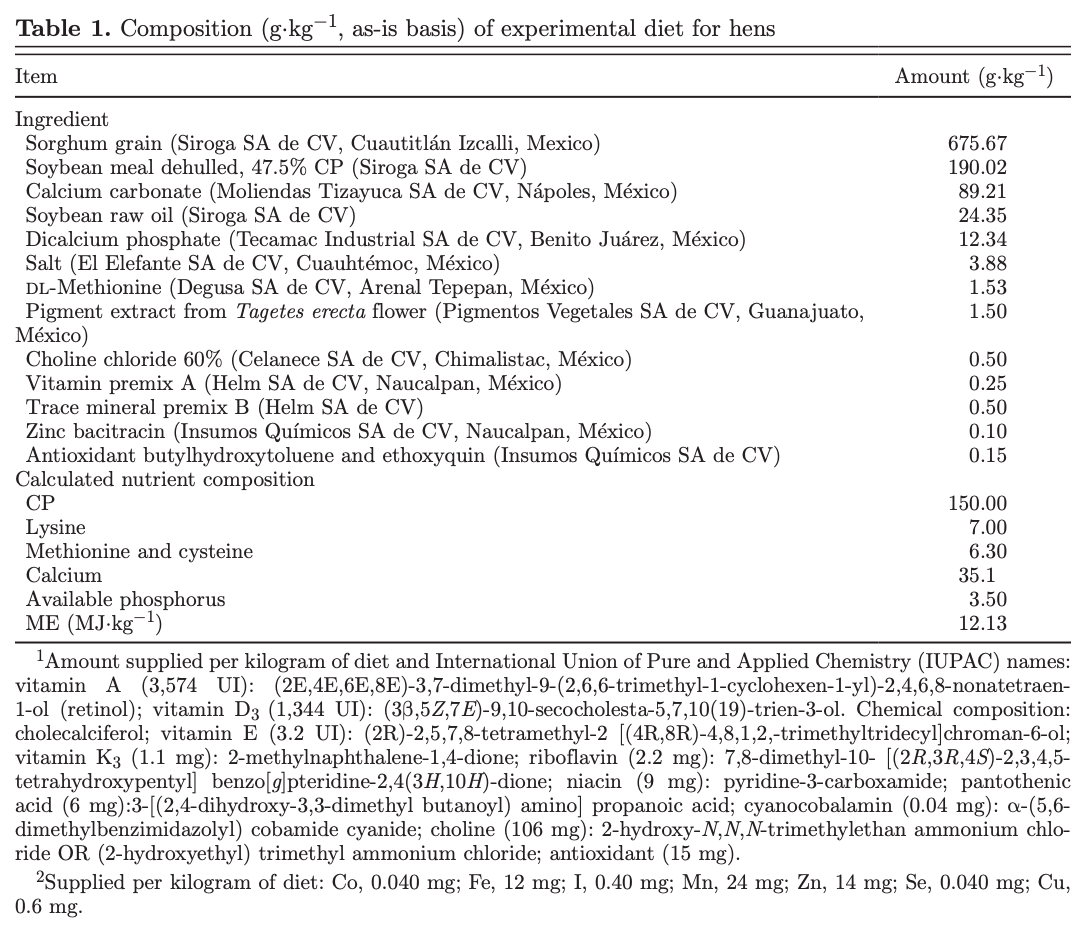
Each metric tonne of hen feed was prepared at the Centro de Enseñanza, Investigación y Extensión en Producción Avícola facility and contained the ingredients shown in Table 1.
AFB1 Stock Concentration for Feed Spiking
The AFB1 (Sigma-Aldrich, St. Louis, MO) dry standard was dissolved in a 98:2 vol/vol mixture of benzene:acetonitrile (ACN), benzene (Merck 404129, Whitehouse Station, NJ), and HPLC ACN (J.T. Baker Mallinckrodt Baker SA de CV, Xalostoc, Mexico), following method 971.22 (AOAC International, 2005). The AFB1 absorbance was measured in the UV-vis spectrophotometer (Genesys 10 UV Thermo Electron Corporation Model, Madison, WI) calibrated with the correction factor previously obtained following known methods 970.43 (B) and 970.44 (AOAC International, 2005). This method was used to prepare a stock solution of 1 µg∙kg−1 of AFB1 baseline to determine the recovery percentage in laying hen breast muscles and to obtain the 2 AFB1 concentrations (30 and 500 µg∙kg−1) used to prepare the spiked feed.
Quality Controls
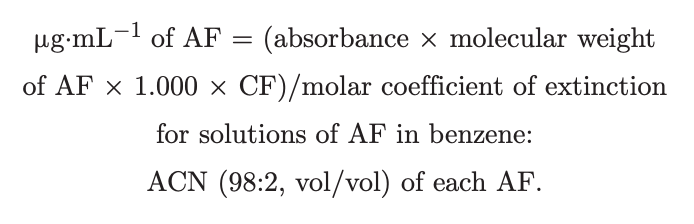
The calculation of the correction factor (CF) was applied to calibrate the UV-vis spectrophotometer (Genesys 10 UV, Thermo Electron Corp., Waltham, MA) following known methods (AOAC International, 2005). The validation measures covered linearity of the system (calibration curves of AF in HPLC), recovery percentage of AFB1 from breast muscle, HPLC limits of detection (LOD) and quantification (LOQ), and the validation of the 2 extraction methods of Qian and Yang (1984) and Koeltzow and Tanner (1990). The CF was certified to be in the acceptance interval to calculate 1 µg∙mL−1 stock concentration of each AF standard as the method (AOAC International, 2005) indicates, with the following equation:
Linearity of the System (HPLC Calibration Curves)
The stock solutions of 1 µg∙mL−1 of each AF standard (AFB1, AFB2, AFG1, AFG2, AFM1, AFM2, AFP1) and AFL (Sigma-Aldrich Co.) were made as previously specified for AFB1 (AOAC International, 2005), with molecular weights and extinction coefficients for each AF and the absorbance (nm) measured in the UV-vis spectrophotometer at an absorbance of 360 to 362 nm, except AFM1 and AFM2 (absorbance at 357 nm) and AFL (absorbance at 325 nm; OPS, 1983).
The curves were calculated with 8 AF stock concentrations diluted in HPLC methanol (1,000, 500, 250, 125, 62.5, 31.25, 15.63, and 7.8 ng∙mL−1) with 3 replicates. Values were plotted by linear regression to obtain the correlation coefficient (R2) of each AF calibration curve with Microsoft Excel 2003, using the chromatographic peak retention times and the area below the curve.
In Vitro AFB1 Recovery from Hen Breast Muscles
In vitro fortifications with AFB1 in control breast muscle of hens were analyzed to obtain AF basal contamination and recovery by the 2 mentioned extraction methods used to detect aflatoxins in animal tissues.
The AFB1 recovery percentage from each extraction method was determined as follows:
a. Five different AFB1 standard concentrations (0.5, 1.0, 2.0, 5.0, and 10 ng∙g−1) were prepared to independently fortify 1 g of hen breast muscle.
b. One gram from each of 5 different hen breast muscles was individually homogenized, in vortex for 1 min, and placed in mortars with 2 mL of saturated NaCl solution in triplicate.
c. Each homogenized gram was placed in a 50-mL centrifuge with 12.5 mL solution of methanol/ distilled water (MeOH/H2Od; 81:19 vol/vol; JT Baker) and spiked with each AFB1 concentration. Centrifugation (Centrifuge Cool Working System 4235, ALC International, Milano, Italy) was at 6,500 × g at −20°C for 15 min.
d. Spiked breast muscle replicates were incubated in the refrigerator for 24 h.
e. Later, the 2 extraction methods were independently applied.
Validation of Chemical Extraction Methods
To determine the best method to quantify, identify, and recover AF in hen breast muscles, 2 AF extraction methods for animal tissues according to Qian and Yang (1984) and Koeltzow and Tanner (1990) were validated, and their precision and repeatability were compared.
Extraction Methods
Qian and Yang (1984). For the experimental samples, 1 g of each of the 25 hen breast muscle from the in vivo experiment was individually homogenized in a mortar with 2 mL of saturated NaCl solution, mixed by vortexing for 1 min and centrifuged at 6,500 × g at −20°C for 15 min with 2.5 mL of MeOH/H2Od (81:19 vol/vol) solution. Each sample supernatant was passed through a first LC18 column (Supelclean LC-18 SPE Tubes 57054, Sigma-Aldrich Co.) previously equilibrated with 5 mL of MeOH and 5 mL of H2Od. Later, the filtrate of each first LC18 column was diluted with H2Od (1:5 vol/vol) and applied to a second previously equilibrated LC18 disposable column. The second LC18 column was dried at room temperature overnight, and AF were eluted with 2 mL of acetone/methylene chloride (5:95 vol/vol; J.T. Baker, Merck, Germany). The eluates of both LC18 columns were dried at 40°C and individually resuspended in 1,000 µL of HPLC MeOH, and 50 µL was injected to the HPLC chromatography pump. The remaining eluates were dried individually at 40°C and stored at 4°C. Both LC18 columns have the same solid phase and use conditions, so it was important to prove whether both columns retained AF; thus, both eluates were added to optimize the recovery percentage of the Qian and Yang (1984) method.
Koeltzow and Tanner (1990) Immunoaffinity Extraction Method. Forty grams of dry hen breast muscle was individually blended (Waring) for 2 min with 5 g of NaCl and 200 mL of MeOH/H2Od (80:20 vol/vol) solution and filtered. Each extract was evaporated for 15 mL and diluted in 60 mL of PBS (J.T. Baker), pH 7.4 (Sambrook et al., 1989). Then, the sample was filtered through glasswool paper, and the equivalent of 1 g of breast tissue was applied to AFt immunoaffinity columns (R-Biopharm Easi-Extract, Rhône Ltd., UK) previously equilibrated with 20 mL of PBS in a vacuum Manifold Processing Station (Agilent Technologies Inc., Santa Clara, CA). Later, the immunoaffinity column was washed with 20 mL of deionized H2Od dried by passing air through it, and eluted with 2 mL of HPLC MeOH in an amber vial. The eluates were dried in an incubator (Lab-Line Instruments Inc., Mumbai, India) at 40°C, were derivatized (Kok, 1994; Akiyama et al., 2001), shaked in vortex, and 50 µL was injected into the HPLC with a microsyringe (Hamilton, 80565). The remaining 950 µL were dried at 40°C and stored in a freezer.
AF Derivatisation
One µg∙mL−1 concentration of the 4 AF standards was evaporated to dryness and resuspended with 200 μL of ACN plus 800 μL of derivatizing solution to increase their fluorescence. The derivatizing solution consisted of 5 mL of trifluoroacetic acid (Sigma-Aldrich Co.) in 2.5 mL of glacial acetic acid (Merck, Naucalpan, Estado de Mexico, Mexico) and 17.5 mL of deionized water, and the mixture was shaken (Vortex G-560, Bohemia, NY) for 30 s. The vials were heated at 65°C for 10 min following a known method (Kok, 1994; Akiyama et al., 2001).
HPLC Conditions
The following equipment were used: liquid chromatographer Series 1100, an isocratic pump (G1310A) (Agilent Technologies Inc.) with a Rheodyne 20-μL loop injection valve, a data integrator LC100 and fluorescence detector (LC-10, Perkin-Elmer, Waltham, MA), and a chromatographic column C18 250 × 4.60 mm 5-μm (Phenomenex Torrance, CA). The AF quantitation was done in an HPLC set at 360 nm excitation with 425 and 450 emissions, and 1 mL∙min−1 flow. The HPLC mobile phase used was distilled with H2Od:ACN:MeOH (6:2:3 vol:vol:vol) filtered through a 0.45-μm Millipore Durapore (HVLP 04700, Billerica, MA) membrane filter in a vacuum filtration system. Three replicates of 50 μL of each sample were individually injected to the HPLC.
Statistical Analysis
The statistical analyses included 2-factor ANOVA, value transformation of each AF with a Box-Cox model, interaction graphics between LC18 columns, Tukey tests, chi-squared test, and analysis of the categorical variables through contingency tables to determine the significant differences between the control group and treatments.
RESULTS AND DISCUSSION
Experimental Design
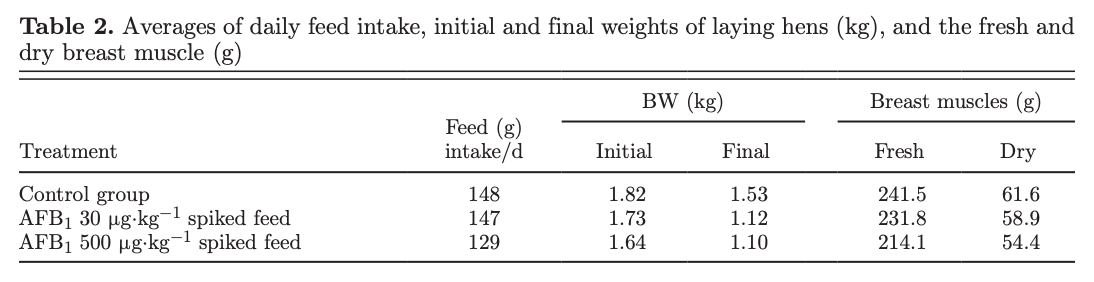
Weights and Feed Consumption. The results of the feed consumption by hen group, with the averages of the initial and final laying hen BW and fresh and dried breast muscle weights, are shown in Table 2. Control hens ate more than the groups with 30 µg∙kg−1 AFB1 or 500 µg∙kg−1 AFB1-spiked feed and had breast muscles with higher fresh and dry weights; the highdose treatment caused the lowest breast muscle weight, as expected.
Quality Controls. The correction factor value of the UV-Vis spectrophotometer was 1.0, acceptable for calculating the concentration of each AF (AOAC International, 2005). Hen breast muscle analysis had the following AF (µg∙kg−1) LOD, LOQ, and variance coefficient percentage, respectively: AFB1 (0.5, 2.7, 1.8%), AFB2 (0.1, 0, 1.2%), AFG1 (0.4, 1.2, 2.4%), AFG2 (0.2, 0.2, 2.0%), AFM1 (1.5, 24, 1.5%), AFM2 (1.6, 2.8, 3.2%), AFP1 (1.5, 2.7, 1.8%), and AFL (1.2, 2.2, 2.8%).
Linearity of the System; Calibration Curves. The ranges of chromatographic retention times (RT) in minutes and correlation coefficients (R2) obtained were as follows: AFB1 (RT = 11.61 to 12.91; R2 = 0.9977), AFB2 (RT = 10.38 to 10.62; R2 = 0.9948), AFG1 (RT = 8.65 to 9.2; R2 = 0.9968), AFG2 (RT = 7.13 to 7.53; R2 = 0.9959), AFM1 (RT = 6.44 to 6.59; R2 = 0.9837), AFM2 (RT = 9.51 to 9.68; R2 = 0.9981), AFP1 (RT = 5.38 to 5.74; R2 = 0.9990), and AFL (RT = 9.39 to 9.60; R2 = 0.9980).
AFB1 Recovery Percentage from Feed to Hen Breast Muscle
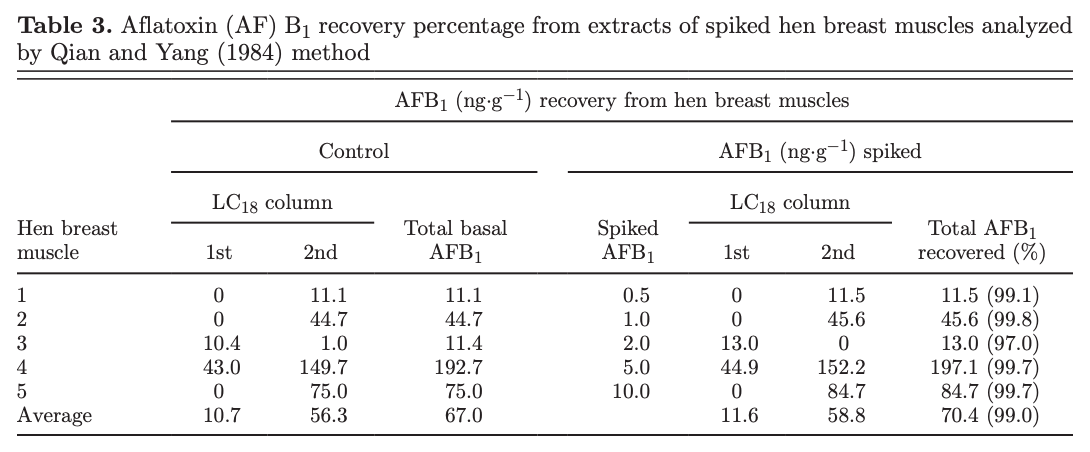
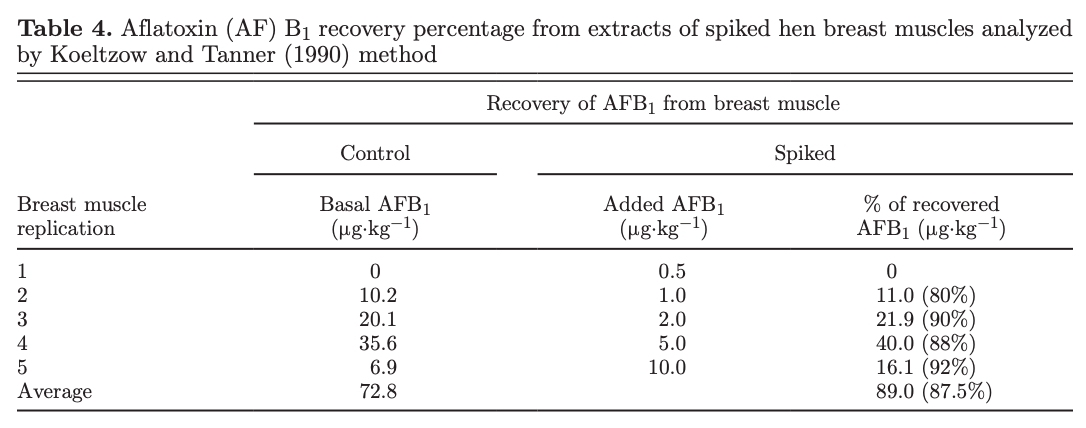
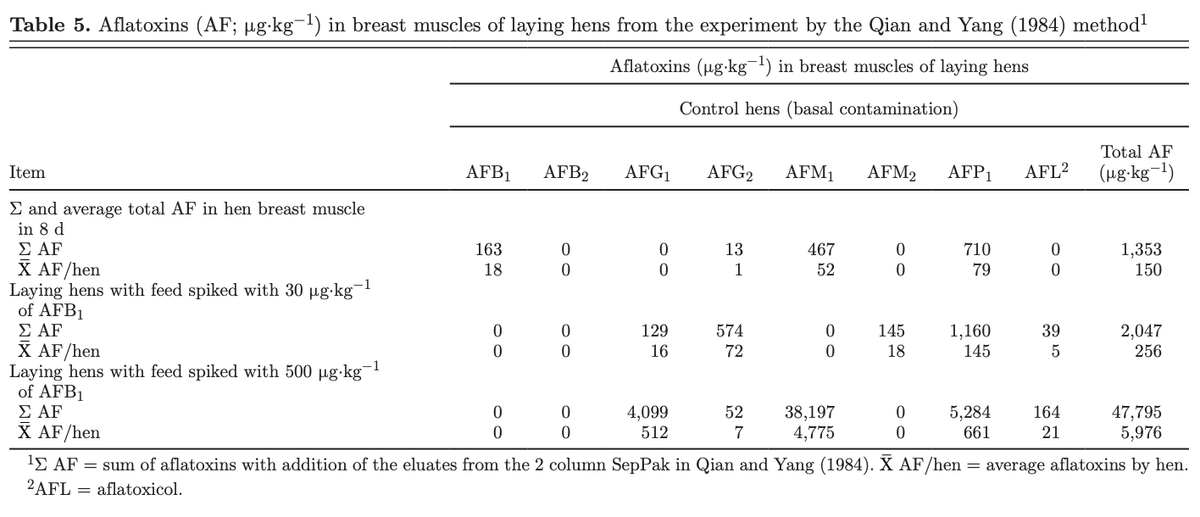
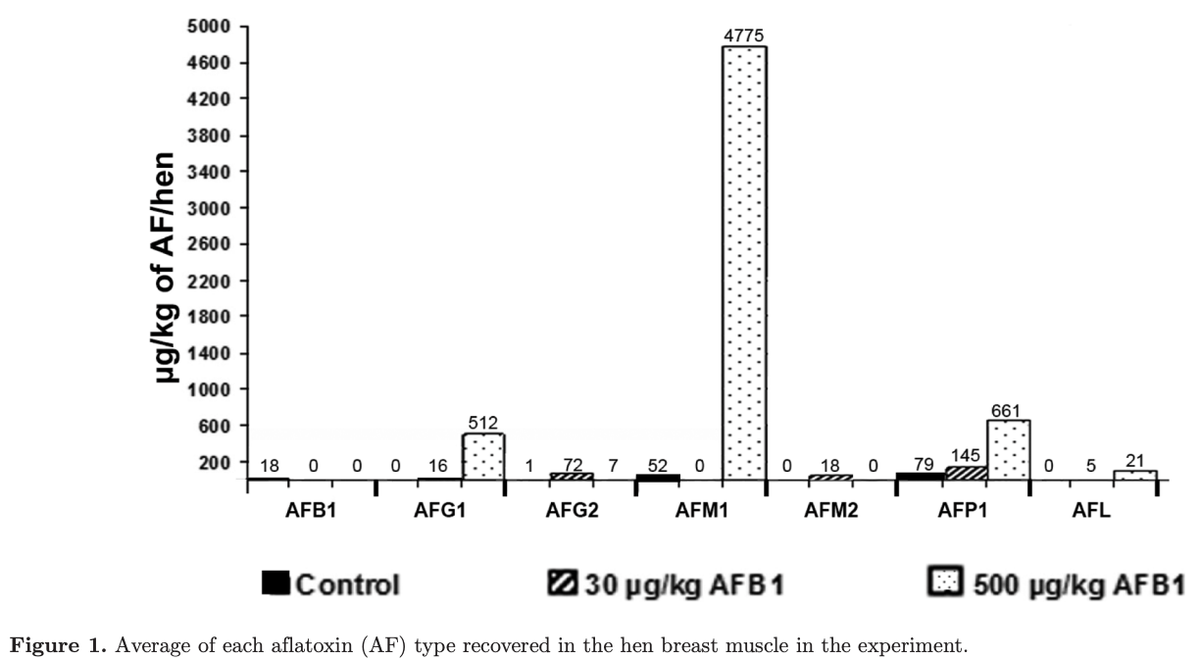
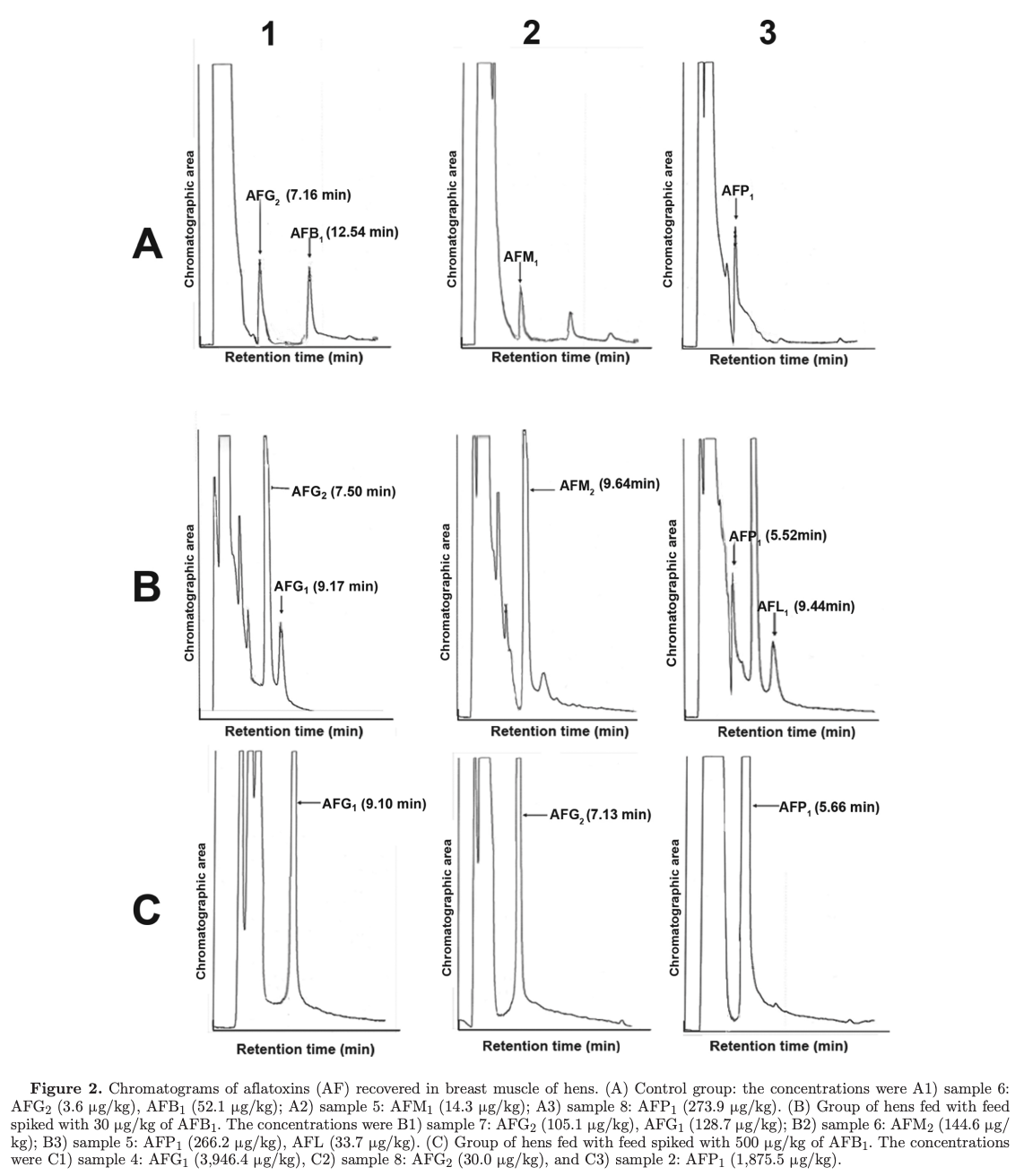
The average recovery of AFB1 in control hen breast muscle was 99%. The average basal AFB1 contamination of hen breast muscles in control tissues in the supermarket was high (67.0 µg∙kg−1), indicating a risk for human consumers (Tables 3 and 4). Animal species have different susceptibilities and responses to AF contamination, influenced by age, sex, weight, diet, and exposure to other infectious agents or mycotoxins (Eaton and Groopman, 1994). Aflatoxins G1 and G2 originated directly from the hens’ feed ingredients, and hen metabolism produced AFM1, AFM2, AFP1, and AFL (Table 5). Most of the retained AF in the 3 groups appeared in the second LC18 column as reported (Qian and Yang, 1984); no AFB2 was detected in any group, and only one hen of the group fed 30 µg∙kg−1 AFB1-spiked feed had 145 µg∙kg−1 of AFM2. There was high biotransformation to AFM1 (4,775 µg∙kg−1) in the breast muscles of the 500 µg∙kg−1 AFB1-spiked feed group (Table 5). Although there was not a direct correlation between the concentration of a specific AF type ingested from feed in the 8 d, the AFt average consumed by hens was directly proportional to the feed AF concentration: 150 µg∙kg−1 for the control feed, 256 µg∙kg−1 for the intermediate 30 µg∙kg−1 AFB1-spiked feed group, and 5,976 µg∙kg−1 for the highly contaminated 500 µg∙kg−1 AFB1-spiked feed group (Table 5). The type and average AF (µg∙kg−1) amounts found in hen breast muscle from the 3 groups are shown in Figure 1, and some chromatograms in Figure 2. The hen breast muscle contained AFG1, AFG2, AFM1, AFM2, AFP1, and AFL, and the 500 µg∙kg−1 AFB1-spiked group had the highest concentrations of AFG1 (512 µg∙kg−1), AFM1 (4775 µg∙kg−1), and AFP1 (661 µg∙kg−1) from the biotransformation of AFB1 because these are more soluble in water and easily excreted in urine and bile (Orellana and Guajardo, 2004). The Qian and Yang (1984) method uses 2 LC18 columns, with disposal of the eluate of the first column, which in our case recovered 58.8 µg∙kg−1 (20%) of AFB1 and retained 2.3% of AFt.
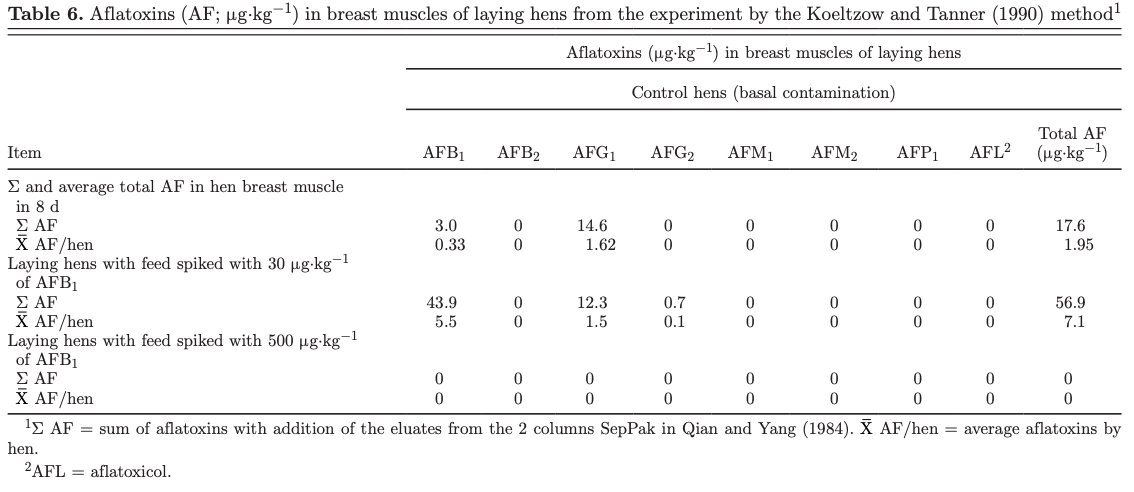
The second column did have higher AF retention in our assay, 294.0 µg∙kg−1 (Table 3). The addition of AF from both eluates of LC18 columns is recommended to obtain more accurate AF recovery measures. The 2 LC18 columns retain components of intermediate or low polarity. The first column retains only low polarity compounds, such as fat, and allows the passage of intermediate polarity compounds, such as AF, that would be retained in the LC18 second column. However, AFG2 and other AF traces (0.7 to 3.0 µg∙kg−1) were captured by the first column as well. For accurate AF quantitation, trace amounts must be considered, and a modification of the method is required. The Qian and Yang (1984) method had higher sensitivity with better results than the other method (Table 6), although the amount of fat affects the retention capacity of both columns.
Koeltzow and Tanner (1990) Method
This method was less sensitive for AF in breast muscle, although it had 87.5% of recovery with 5 replicates (Table 4) and a LOD of 1 µg∙kg−1 of AFB1. The results are shown in Table 6.
Statistical Analyses
Only the data from the Qian and Yang (1984) method were enough to do the statistical analyses. The AF traces (< LOD) from the first column and the significant amount of AF from the second LC18 column were added with a clear difference between their retention capacities. The most abundant AF in hen breast muscles were AFB1 (P < 0.0001*), AFG2 (< 0.0001*), AFM1 (P = 0.0014*), and AFP1 (P = 0.0003*), * means with statistical significance between the AF from the control and AFB1-spiked groups.
The remaining AF were not significantly different between groups. There were significant differences for AFM1 and AFP1 and significant differences (P < 0.05) for AFG2 in hen breast muscles between the control and AFB1-spiked groups. The AFP1 was present at different concentrations in the control group of hens.
The control group had no AFG1, the 30 µg∙kg−1 spiked group had 12.5% contamination and the 500 µg∙kg−1 spiked group had 25% contamination of the samples; no significant differences for AFG2 were found. The 500 µg∙kg−1 spiked feed group had more contaminated samples with AFM1 and AFP1, but these values were not statistically significant.
The amount of AF residues transported from feed to animal tissues is expressed as n:1, where n is the AFB1 concentration present in feed that resulted in residual AFB1 or their metabolites in food (Fernandes-Oliveira et al., 2003). Traces of AFB1 have been found in animal liver and eggs used for human consumption (Park and Pohland, 1986). In the present study, the carryover of AFt from spiked feed to the breast tissue in hens was 2.34 and 1.59 for hens that ingested 30 and 500 µg∙kg−1, respectively. This shows that for the 30 µg∙kg−1 hen group, hens ate 2.34 units for every unit that was found in tissues; hens that received the 500 µg∙kg−1 AFB1 dose retained 1 unit out of every 1.59 units ingested. These values are similar to those obtained for AFB1 in feed and milk (Stroud, 2007) and higher than those from poultry muscle (Fernández et al., 1994), perhaps because the studies used different methods of AF quantification (thin layer chromatography vs. HPLC) and different dosages of AF in feed.
Epidemiological studies have correlated the incidence of liver cancer in animals and humans to the consumption of AF in contaminated cereal (maize or sorghum) from cereal to hens and from there to humans, and the effects of AF were increased by B hepatitis viral infection (Henry et al., 1999). This study showed high AF and hydroxylate levels in control hens, consistent with Micco et al. (1988). Losses in meat production of laying hens are attributed to the acute or chronic damage that AFB1 causes in muscle, preceded by hepatocellular necrosis (Bryden and Cumming, 1980; Wilkinson et al., 2003).
Tedesco et al. (2004) indicated that AF contamination in fowl represents a risk for public health due to the high consumption of contaminated animals. The basal AFB1 concentration of breast muscles of 2- to 3-yr-old laying hens was high (150 µg∙kg−1), representing a risk to human health, although the breast muscles sold in markets are generally from chickens and young poult females aged 2 to 3 mo, which should have less basal contamination. Bintvihok and Kositcharoenkul (2006) found higher levels of AFB1 and AFM1 in hen liver than in muscle, and Giacomini et al. (2006) also reported the performance and plumage of broiler chickens intoxicated with AF. Harintharano et al. (2000) observed loss of appetite in hens treated with 5 mg∙kg−1 of AFB1 for 10 d. Our experimental design used 10 times less AFB1 in feed for 8 d, and no lethality was detected; these amounts of AF are closer to reality because high AF contaminations are seldom found.
The biotransformation of AFB1 also produces AFB1- DNA adducts that are active carcinogens causing mutations such as GC to AT transversions (Bennett and Klich, 2003), which can cause cancer with time. This fact is especially relevant in domestic animals such as pets or milking cattle that can live for many years.
Both AFB1 and AFG1 have the capacity to form DNA or RNA adducts and cause cancer, they represent high risks for poultry and human health (Bennett and Klich, 2003). The AF contamination found in hen breast muscles surpassed the AFt tolerance limits (20 µg∙kg−1) approved by the FDA in foods for human consumption.
Hens live longer and accumulate higher AF concentrations than broiler chickens with a shorter lifespan. The effects of AF accumulation in hens are reduced breast muscle weight and size (Bintvihok et al., 2002). This research proves that AF and hydroxylates concentrated in poultry meat are frequently ingested by the Mexican population and the breast muscles of 2-yr-old laying hens have higher accumulated AF. Differences in AF susceptibility make the extrapolation of data from animals to humans difficult because human fatalities due to AF acute toxicity are less common. Some adult humans can consume anywhere from 2 to 6 mg of AF per day (Krishnamachari et al., 1975), and lethal dosages for adult humans have been calculated to be in the range of 10 to 20 mg of AF (Pitt, 2000).
When animals consume AFB1, their livers tend to detoxify it, forming the less toxic hydroxylated metabolites AFM1, AFP1, and AFL, although there is still a health risk for humans that ingest them; therefore, it is meaningful to measure all AF metabolites. Aflatoxin M1 was the most abundant AF hydroxylated metabolite; it is frequently found in human urine and has a direct association with increased incidence of hepatitis, cirrhosis, and hepatocellular carcinoma (Sun et al., 1999). The IARC places AFM1 within the probable carcinogen category (IARC, 1997).
There are AF control measures to decontaminate animal feed and reduce its damaging effects on poultry and humans (Karaman et al., 2005); the use of feed supplement adsorbents, such as mannan-oligosaccharide, can degrade 2.5 mg∙kg−1 AFB1 in eggs and poultry liver to trace levels without toxic by-products; mannan-oligosaccharide also reduces gastrointestinal AFB1 absorbance and its levels in tissues (Zaghini et al., 2005). Plant oils (30 g∙kg−1) can also efficiently reduce damage caused by AFB1 in poultry liver (Raju et al., 2005).
In conclusion, the modified Qian and Yang (1984) method was the best AF extraction method for poultry breast muscle, with a better AF detection limit (0.1 to 1.6 ng) and recovery percentage (99%), and lowest cost. The modification consisted of adding the amounts of both LC18 column eluates to obtain recovery of 92% of AF in poultry breast tissues. There are health risks with daily consumption of hen breast muscle with the aforementioned amounts of AF. The control group showed the presence of 2 AF (AFB1, AFP1) as well as traces of AFG1 and AFM1 metabolites. The hen group fed 30 µg∙kg−1 AFB1-spiked feed showed AFG2, AFP1, and traces of AFG1, AFM2, and AFL in breast tissue. Finally, hens fed 500 µg∙kg−1 AFB1-spiked feed presented high AFG1 and AFP1, very high AFM1, and traces of AFG2. The immunoaffinity column method of Koeltzow and Tanner (1990) was not sensitive enough to detect AF in poultry breast tissue as it detected only trace levels.
ACKNOWLEDGMENTS
Thanks go to Julio César Montero and Diana Martínez for graphic design; Jorge López, Joel Villavicencio, and Alfredo Wong for computation support; Gerardo Arévalo and Georgina Ortega-Leite for library support, Institute of Biology, Universidad Nacional Autónoma de México (UNAM).
This research was financed under the Project IN225105 PAPIIT, Dirección General del Personal Académico, UNAM, 2005 and 2006. The first author is grateful to PAPIIT for the scholarship and to the Institute of Biology, UNAM, for the equipment, administration, and facilities provided.
This article was originally published in 2014 Poultry Science 93:3152–3162. http://dx.doi.org/10.3382/ps.2014-04240. This is an Open Access article under a Creative Commons Attribution License.