Explore all the information on
Feedstuffs
Welcome to the page about Feedstuffs of Engormix; a source of knowledge on Feedstuffs.
Amid the rising prevalence of industrialization on a global scale, numerous industrial sectors are on the lookout for efficient components to help boost not only their production processes but overall product performance. One such component is specialty chemicals.
Specialty chemicals refer to products that deliver myriad performance effects to an array of industrial sectors. These sectors include ink additives, oil & gas, construction, food, cosmetics, and textile, among...
Comments : 0
Recommendations: 0

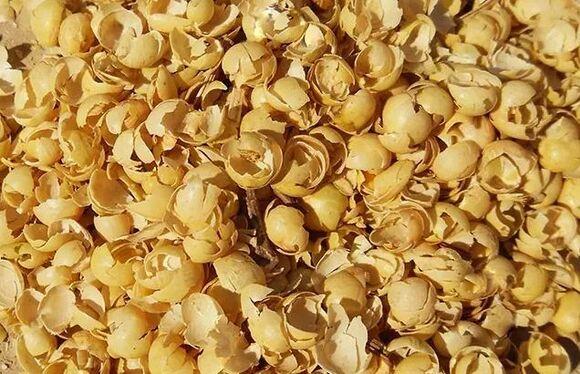
Soybean hulls are a by-product of soybean oil processing, accounting for 10% of the total volume and 8% of the total weight of soybean. Soybean hulls are mainly the outer coating material of soybean, the color is beige or light yellow, the main components are cell wall and plant fiber. Molasses bean skin is a special product which is made by spraying concentrated soybean oligosaccharides onto soybean hulls and drying with unique technology. Molasses bean skin contains 30% of soybean...
Comments : 0
Recommendations: 0

Blockchain and Artificial Intelligence in Livestock Product Traceability
Suggested link


Luiz Ferraretto (University of Florida) explained the importance of fiber and starch digestibility among other topics, during AMENA 2019 in Puerto Vallarta, Mexico....
Comments : 6
Recommendations: 16
A team of researchers from several institutions in China, one in the U.S. and one in Israel, has found a protective gene in wild wheatgrass that shows promise in stopping fusarium head blight in wheat and barley crops. In their paper published in the journal Science, the group describes how they found the gene and how well it has worked against...
Comments : 0
Recommendations: 0



...
Comments : 0
Recommendations: 0
The Distillers Grains Technology Council has taken the annual symposium virtual and with a new format: as an on-line webinar held in three occurrences. The first session was completed on May 13th and this second part will take place on June 10th.
Because sponsors have agreed to offset the costs of the technology, the promotion of these...
Comments : 0
Recommendations: 0
.jpg&w=3840&q=75)

Benefits of rendered products on sustainability
Suggested link
Introduction In recent times, there has been interest in the utilisation of whole grains to improve bird performance and reduce feed costs. Some previous research on whole grains simply added to a starter diet at graded levels has shown variable results on performance. Some studies have shown improved FCR, lower mortality, plus some carcass improvements and...
Comments : 7
Recommendations: 0
07 May 2020, Rome - World food commodity prices declined for the third month in a row during April, as the economic and logistical impacts of the COVID-19 pandemic resulted in significant contractions in demand for many commodities.
The FAO Food Price Index, which tracks international prices of the most commonly-traded food commodities, averaged 165.5 points in April, some 3.4 percent lower than the previous month and 3 percent lower than April 2019.
The FAO...
Comments : 0
Recommendations: 0
.jpg&w=3840&q=75)

Comprehensive solution in the aninal nutrition industry: Midland ADN Group
Suggested link
The Distillers Grains Technology Council is taking the annual symposium virtual. With the impacts of the Covid-19 on gatherings of groups for meetings and events, we have made the decision to continue to bring you the important information you look to us for.
This format will be as an on-line webinar held in three occurrences over six...
Comments : 0
Recommendations: 1
1. Introduction Mycotoxins are among the microbial toxins of most concern to public health, and they represent a barrier to a wider international trade of agri-food products and an important obstacle in the face of the harmonization of regulatory standards globally, as was discussed earlier [1]. They are produced by various mould species as low-molecular-weight non-immunogenic secondary metabolites whose occurrence has been reported in virtually all foods and feeds...
Comments : 0
Recommendations: 0
Blockchain and Artificial Intelligence in Livestock Product Traceability
Suggested link

Introduction Nowadays aquaculture in Egypt supplies ca. 80% of human fish consumption. Egypt occupies the tenth rank all over the world concerning aquaculture production ( FAO, 2016 ). But the Aqua-feeds are shorter than the demands, besides their expensive costs; therefore there is a need to recycle and reuse all possible and available field and industrial by-products that have a nutritional importance for fish ( Koeleman, 2018a & b ). Since fish are the most feed...
Comments : 1
Recommendations: 0

1. Introduction Maize (Zea mays L.) is a monoecious plant of the Poaceae family, and it is cultivated worldwide. Two phases can be distinguished during its growth—vegetative and reproductive. The vegetative phase begins with the growth of the plant and culminates with the appearance of the male flower. The reproductive phase begins with the emergence of the female flower, and the physiological maturity of the cob takes place in this stage [1]. Maize is one of the most...
Comments : 0
Recommendations: 1
The experience of the past 25 years indicates that it is possible to maintain present food consumption levels by increasing overall food supplies in quantitative terms. However, in terms of providing food of the right quality which is nutritious and free from environmental contaminants, the task ahead is challenging, particularly in highly populated parts of the world. Among food contaminants, mycotoxins will have greater consequences in terms of both human and animal health as well as...
Comments : 0
Recommendations: 0
Introduction Nowadays aquaculture in Egypt supplies ca. 80% of human fish consumption. Egypt occupies the tenth rank all over the world concerning aquaculture production (FAO, 2016). But the Aqua-feeds are shorter than the demands, besides their expensive costs; therefore there is a need to recycle and reuse all possible and available field and industrial by-products that have a nutritional importance for fish (Koeleman, 2018a & b). Since fish...
Comments : 0
Recommendations: 0
Benefits of rendered products on sustainability
Suggested link

Near infrared reflectance spectroscopy (NIRS) is nowadays a common tool to analyze the nutritional content of feedstuffs. Corn hybrids and drying temperatures could affect the nutritional value of the grain. It is important to determine if these factors are detected by NIR. Two corn hybrids (Dekalb 68-05 and Dekalb 65-20) varying in kernel hardness (average and hard respectively) were dried at three temperatures (35, 80, and 120°C) to investigate the effects on its nutritional content....
Comments : 0
Recommendations: 1
INTRODUCTION Since World War II, food insecurity has been an issue concerning the world’s poorest, with the received wisdom being that such insecurity could be alleviated by eliminating local poverty (McLaren, 1974) and improving food distribution since, globally, food has historically been produced in excess of world population needs. However, future food and nutritional security has become a major concern for both rich and poor, given the present concurrence of rising...
Comments : 0
Recommendations: 1
Comprehensive solution in the aninal nutrition industry: Midland ADN Group
Suggested link

Introduction According to the projected growth in global human population, by 2050 the world human population will reach 9.1 billion, 34 percent higher than current estimated 6.3 billion (FAO, 2015). Populations in the developing countries are growing so quickly that the arable lands and the available fresh water are unable to sustain their needs. In Egypt, about 95% of the land is desert, where the soil is sandy and most of the available ground-water is too saline to raise and...
Comments : 2
Recommendations: 2
A new export batch of U.S. Soy arrives this week in Constanta Port, Romania and will immediately be discharged and distributed by Bunge to their customers, end users from Romania and Bulgaria. This shipment consists of 50,000 metric tons (MT) of U.S. soybean meal, while all the previous vessels delivered to Romania this year were beans used to be crushed at the local Bunge plant. Greece also imported another large vessel containing U.S. soybeans this week, increasing market share in this...
Comments : 0
Recommendations: 1
Blockchain and Artificial Intelligence in Livestock Product Traceability
Suggested link
Unbiased Variety Performance Tests Under Arkansas Conditions
Choosing which varieties to plant is a cornerstone of all crop production systems. The University of Arkansas System Division of Agriculture's Variety Testing Program provides unbiased information about the adaptability and performance of...
Comments : 0
Recommendations: 0
By Ryan McGeeney
University of Arkansas System Division of Agriculture
Fast Facts:
• Arkansas soybean market value fell 15 percent in 2018
• Rice gained 26 percent as growers rebounded from flooding
• Peanut value dropped as stocks reached third-highest in nearly four decades
LITTLE ROCK – The value of the state’s No. 1 crop fell by 15 percent in 2018 as the effects of...
Comments : 0
Recommendations: 0