I. INTRODUCTION
Wheat is an important cereal grain in broiler diets due to its richness in starch and protein, but there is also considerable evidence that the cell wall non-starch polysaccharides (NSP) in wheat act as anti-nutritional factors and have been shown to impair poultry performance (Choct and Annison, 1992). NSP-degrading enzymes are commonly used in poultry feeds for better hydrolysis of the undigested fraction, resulting in higher energy and nutrient availability. While endo-xylanases can break down the polymers by hydrolysing the xylose (X) backbone in an endo-acting manner, the efficiency of these enzymes is often hampered by multiple arabinose (A) residue substitutions along the backbone (Lagaert et al., 2014). Therefore, it is of importance to understand the A/X ratio, which indicates how ramified the arabinoxylan (AX) fraction is. This ratio varies depending on the cereal (0.74 for corn, 0.62 for wheat; Knudsen, 2014). Arabinofuranosidases can cleave arabinose from the xylose backbone and therefore provide access to endo-xylanase activity. An in vitro study showed that a combination of arabinofuranosidase (Abf; GH51) and xylanase (Xyl; GH11) improves DM digestibility of corn and wheat compared to Xyl alone (Cozannet et al., 2016). When tested in broilers, an enzyme complex enriched in Xyl and Abf activities (Rovabio® Advance; Enz) improved energy utilisation and increased the rate of protein, fat and starch digestibility in poultry feed (Cozannet et al., 2017). The current study aimed at evaluating the effects of Enz on ileal digestibility of amino acids and energy availability in standard and 3% nutrient-diluted wheat/soybean-based broiler diets.
II. MATERIALS & METHODS
This experiment was carried out at the Centre for Expertise and Research in Nutrition, Adisseo, France S.A.S. (Malicorne, France). In total, 120 male Ross PM3 broiler chicks were used in this study, and it employed a 2 x 2 factorial arrangement of four treatments to study the effect of adding Enz to a standard and a nutrient-diluted feed. The experimental period was divided into three phases: a 7-day adaptation phase (13 - 19 d of age), a 3-day excreta collection phase (20 - 22 d of age) and a 4-day preparation phase prior to ileal digesta collection (23 - 26 d of age). Birds had ad libitum access to feed and water. Diets were produced using wheat and soybean meal and formulated to meet or exceed the bird’s nutrient specifications for the respective rearing phases, following Rhodimet® Nutrition Guide recommendations (2013). A diluted form of the standard diet was achieved using 3% silica as an inert diluent to give a diet containing an estimated 97% of the nutrients of the standard diet. Titanium dioxide (TiO2) was added to both experimental diets at 0.5% to serve as an indigestible marker. Dietary treatments included: T1, standard diet; T2, as for T1 with the addition of Enz; T3, diluted diet; T4, as for T3 with the addition of Enz. A liquid form of the multi-enzyme (Rovabio® Advance, Adisseo France S.A.S., Antony, France; inclusion rate: 200 mL/MT) was sprayed on the surface of pelleted feed to provide a minimum of 1,250 visco-units of endo-β-1,4-xylanase, 9,250 visco-units of α-L-arabinofuranosidase and 860 visco-β-glucanase units of endo-1,3(4)-β-glucanase per kg of feed. During the excreta collection phase, feed refusals and spillages were collected daily and analysed for DM content. Excreta were collected daily from trays under each cage, pooled and stored at -18 °C for AME analysis. At the end of the four d preparation phase for digesta collection, broilers were sacrificed using carbon dioxide exposure for ileal sampling. Ileal digesta were gently flushed out with deionized water, pooled in groups of five on a treatment basis, and immediately frozen at -18 °C prior to amino acid analysis. Data (n = 120) were subjected to ANOVA with block (n = 10), diet composition (n = 2) and enzyme (n = 2) as main effects. The ANOVA also considered the complete factorial interactions between enzyme addition, diet composition and nutrient density using the General Linear Models (GLM) procedure of SAS/STAT (SAS Institute Inc., Cary, USA). The means were compared using Tukey’s protected least significant difference test (P ≤ 0.05) only if the overall F test was significant (P ≤ 0.05).
III. RESULTS
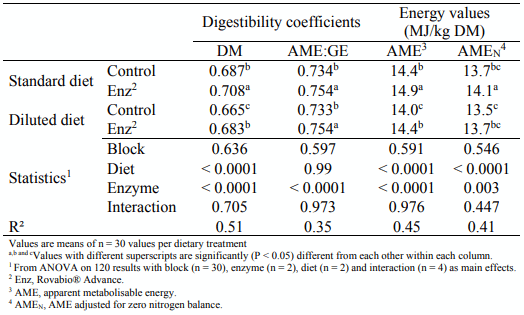
As shown in Table 1, energy utilisation (AME:GE) was similar in both standard and diluted diets at around 73.3% (P = 0.99); however, AME was 3% higher in the standard versus diluted diet (14.4 and 14.0 MJ/kg DM respectively; P < 0.0001). Apparent metabolisable energy was significantly increased in both diets by the addition of Enz, by 410 and 402 kJ/kg DM in the standard and diluted diet, respectively. Nitrogen corrected AME (AMEN) was significantly lower in the diluted diet relative to standard diet (P < 0.001). Addition of Enz significantly improved AMEN (P = 0.003), rendering the energy release of the diluted diet comparable with that of the control standard diet.
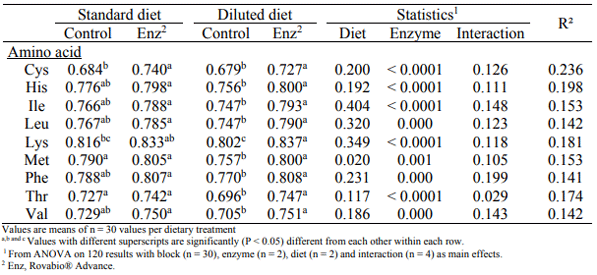
At the ileal level, no interaction among diet and enzyme effect was observed on AA digestibility except for Thr (P = 0.03). The addition of Enz significantly increased (P < 0.05) ileal digestibility of Thr in the diluted diet while no difference was observed in the standard diet. Amino acid digestibility was similar for diluted and standard diets, averaging around 75% except for Met (Table 2; P = 0.02). Indeed, nutrient dilution of the diet was associated with lower Met digestibility relative to standard diet. In treatments fed standard diets, the most pronounced improvement with Enz was seen on Cys (8.19%), Val (2.88%) and Ile (2.87%); while in those fed diluted diets, the supplementation of Enz had greatest effect on Thr (7.33%), Cys (7.07%) and Val (6.52%). On average, digestibility of all AA was increased by 4.5% in the presence of Enz (P < 0.001).
Table 1 - Effect of diet and enzyme (Enz) supplementation on energy digestibility in broilers from 20 to 22 days.
Table 2 - Effect of diet and enzyme (Enz) supplementation on ileal digestibility of AA at 26d.
IV. DISCUSSION
Previously, it has been shown that Rovabio® Advance (Enz), a multi-enzyme complex containing Xyl and Abf, improves overall digestibility of organic matter by 3% and enhances digestibility of fat, starch and protein in poultry feed (Cozannet et al., 2017). The current study confirms these previous observations using a different approach whereby the effect of Enz on a nutrient-diluted diet was investigated, with specific focus on how it influences AA digestibility.
Dilution of the diet with silica decreased DM digestibility and this is in connection with its indigestible properties. Addition of silica to the diet did not affect GE digestibility but had, as expected, a diluting effect on AME content. The restoration of energy utilisation (AMEN) in the diluted diet, with the exogenous Enz, to a level comparable with that of the standard diet indicates that Enz improved digestibility of dietary raw materials by around 3%. With respect to mechanism of action, previous in vitro work showed that Abf activities present in the current enzymatic solution improved the potential degradation of corn arabinoxylan (AX) by providing better access to the AX backbone for Xyl activity (Cozannet et al., 2016) . This collaborative activity between Xyl and Abf contained within Enz helps to explain the associated improved energy utilisation in the current study. The β-glucanase in the Enz may also play a role as it is known that wheat contains about 1% β-glucan (Knudsen, 2014). In addition, Xyl has been shown to reduce intestinal viscosity caused by soluble NSP (Adeola and Bedford, 2004), which might have contributed to the increased energy utilisation.
In the silica-diluted diet, the greatest absolute effect of Enz on AA digestibility was observed for Thr (+ 5.1% units) and the smallest effect was for Lys (+ 3.5% units). These differences were mainly due to differences in the inherent digestibility of each AA because the inherent digestibility of individual AA has great impact on the magnitude of impact due to enzyme supplementation, and Thr has been reported to have one of the lowest inherent digestibility among all AA (Cowieson, 2010). In the present study, no interaction between diet and enzyme on AA digestibility was found except for Thr. Threonine is strongly implicated in the mucin excretion. Mucin plays an important role in the protection of the intestinal villi against endogenous enzymes and the abrasive effects of digesta (Sigolo et al., 2017). The latter is increased by the addition of silica which could explain the interaction between diet and enzyme on Thr digestibility. In the current study, when Enz-induced improvement in individual AA digestibility in the undigested fraction of the diluted diet was calculated, these ranged from around 15 to 18%. Average improvement (16.5%) is in agreement with Cowieson, (2010) who concludes, in a review of 19 published studies, a consistent 16% improvement in digestibility of the undigested protein fraction in the presence of Xyl based enzyme preparations.
In conclusion, this study has shown that Enz, a multi-enzyme complex containing Xyl and Abf, can restore nutrient availability when the nutrient content of a diet is diluted by 3%. The exact mechanism responsible for this is unclear, although it is apparent that an increase in AA digestibility and a potential effect on endogenous AA flow are, in part, responsible. The study also highlights the importance of considering all the nutrients when diets are reformulated to include enzymes and offers further understanding of AA digestion characteristics in poultry feed.
Presented at the 29th Annual Australian Poultry Science Symposium 2018. For information on the latest and future editions, click here.