Modulation of the growth performance, amino acid digestibility, and jejunal integrity of broiler chickens by dietary inclusion of raw potato starch or high-amylose corn starch in a mixed-Eimeria challenge model
Published: December 30, 2025
Source : Iyabo W. Oluseyifunmi, Oluyinka A. Olukosi / Department of Poultry Science, University of Georgia, Athens, GA 30602, USA.
Introduction
Coccidiosis is the most prevalent enteric disease of major economic importance that affects the broiler industry worldwide, with annual global loss of more than $14 billion (Bafundo, 2025). Eimeria, a genus of apicomplexan parasites, cause coccidiosis in chickens, disrupting the host’s homeostasis and decreasing nutrient absorption and utilization. Seven species of Eimeria are widely known to affect chickens but E. necatrix, E. tenella, E. maxima, and E. acervulina constitute the major global economic challenge due to their pathogenicity and prevalence. They coinfect in most cases and each affects specific anatomical sites (small intestine and ceca, ceca, mid-intestine and upper-intestine, respectively (Shirley, 1986; Attree et al., 2021).
Over the years, different measures have emerged for controlling coccidiosis. However, the use of functional carbohydrates such as resistant starch (RS) to improve intestinal health has recently gained more attention. Dietary RS constitute a promising nutritional approach for improving gut homeostasis in poultry during enteric challenge as reported in ducks and weaned pigs (Bhandari et al., 2009; Zhang et al., 2022), as nutrition impacts all aspects of broiler chickens’ responses to Eimeria exposure, including susceptibility, protection, pathogenesis, recovery, and compensatory growth (G´ omez-Osorio et al., 2021).
RS are starches that escape digestion in the proximal intestinal tract and exert positive effects on the distal part by undergoing fermentation in the ceca to produce beneficial metabolites such as short-chain fatty acids (SCFA) and digesta oligosaccharide profile with prebiotic effects (Oluseyifunmi et al., 2024; Lin and Olukosi, 2021). The increased production of SCFA creates a favorable cecal luminal pH for proliferation of beneficial microbes such as Bifidobacteria and Lactobacilli, which in turn stimulate SCFA synthesis, supporting the tight junction barrier and enterocyte proliferation (Landon et al., 2012).
The existence of Lactobacillus at various locations in the gastrointestinal tract improved nutrition utilization, reduced the colonization of the intestines, and the lesions caused by E. tenella (Madlala et al., 2021). Escherichia coli-induced bone loss had been alleviated in meat ducks fed diet containing 120 g/kg RPS through SCFA production and microbial modulation (Zhang et al., 2022). In addition, feeding weaned piglets with diets containing 70 g/kg raw potato starch (RPS) has been reported to reduce postweaning diarrhea with no detrimental effects on growth performance (Bhandari et al., 2009). Dietary RPS at 50 g/kg inclusion reduced the severity of Salmonella typhimurium in weaned pigs through modulation of microbial ecosystem and immune status (Yi et al., 2023).
In the absence of enteric infection, a few studies had previously demonstrated negative effects of dietary RS (Regmi et al., 2011; Liu et al., 2020) or non-detrimental effects (Doti et al., 2014; Qin et al., 2019) on growth performance traits such as the weight gain, feed intake and feed efficiency, but these are highly dependent on factors such as the species, age, physiological status of the animals, intricate peculiarity of individual RS, and dietary concentrations. These factors influence RS resistance to pancreatic amylase, fermentability, digestion, and the eventual growth performance response (Oluseyifunmi, 2025; Oluseyi funmi et al., 2024).
The effects of dietary RS during enteric challenge in poultry have only been investigated in very limited studies, as reported in the previous paragraph. In addition, no study has investigated the potential ameliorative effects of resistant starches on phase-specific growth responses, nutrient digestibility, and intestinal integrity in broilers during Eimeria challenge. This experiment investigated the impact of dietary inclusion of RS in mitigating the loss in growth performance, apparent ileal amino acid digestibility, and intestinal integrity during mixed Eimeria challenge in broiler chickens. It was hypothesized that dietary RS, as a functional dietary fiber, partly alleviates the negative consequences of Eimeria challenge on performance, nutrient utilization, and gut integrity in broiler chickens.
Materials and methods
Birds and housing
The University of Georgia Institutional Animal Care and Use Committee approved the experimental procedures (IACUC number: A2021- 06-006).
Resistant starches
The raw potato starch used in the experiment was obtained from Danish potatoes using water extraction and procured from Bakers Authority (Maspeth, NY). The high-amylose corn starch (HI-MAIZE ® 260) used was procured from Ingredion (Westchester, IL) and is a high-amylose corn-based non-chemically modified starch. Both resistant starches are native, non-chemically modified starch granules that resist digestion due to the presence of B-type crystallinity and are categorized as type 2 resistant starches.
Animal housing, diets, and experimental design
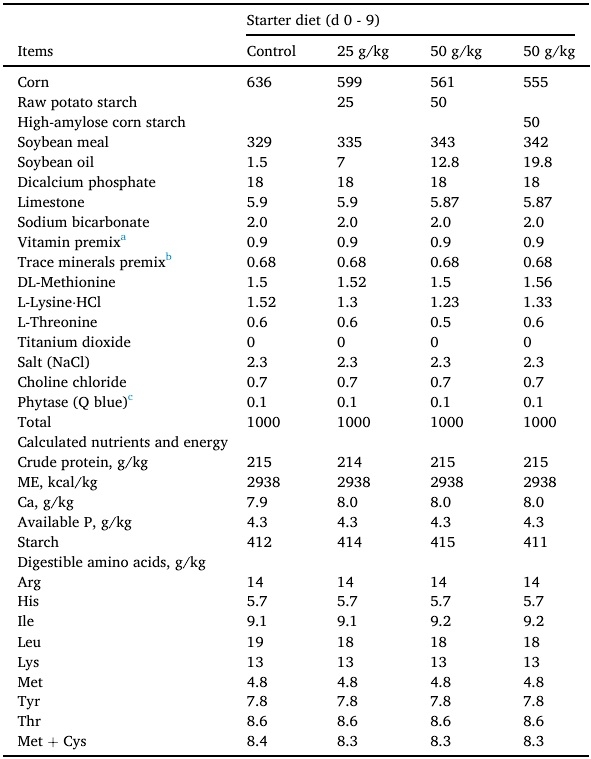
The birds were raised in a building containing 48-floor pens (white pine shavings litter, 4.5 ×0.8 m) in a temperature-controlled environment following recommended lighting and temperature regimes for Cobb 500 broiler chickens, with 22 birds per pen from d 0 to 35 d of age. The diets used included a control (corn-SBM diet with zero inclusion of RS) and three additional diets with inclusion of RS: 25 g/kg RPS, 50 g/kg RPS, or 50 g/kg high-amylose corn starch (HCS). The levels of RPS and HCS used were informed by previous research (Oluseyifunmi et al., 2024; Oluseyifunmi, 2025). Each diet was administered either with or without Eimeria challenge, constituting eight treatment groups arranged as 4 ×2 factorial. A total of 1,056 Cobb 500 male broiler chicks at day old received the experimental diets from day 0 to 35. Each treatment had 6 replicates and 22 birds per replicate. The analyzed chemical composition of the resistant starches was presented earlier (Oluseyifunmi et al., 2024). Feed and water were provided ad libitum throughout the experiment. The diets were presented as mash in the starter and as pellets in the grower and finisher phases, and formulated to meet the nutrient and energy recommendations for Cobb 500 broiler chickens (Cobb-Vantress, 2022). All the diets were isocaloric and isonitrogenous. The diet compositions are presented in Tables 1, 2, and 3for the starter, grower, and finisher phases, respectively.
On d 13, the challenge group was orally inoculated with a solution containing 12,500 sporulated oocysts of E. maxima, 12,500 sporulated oocysts of E. tenella, and 62,500 sporulated oocysts of E. acervulina suspended in 1 ml of distilled water, and the non-challenged groups were gavaged with 1 ml of distilled water. On d 19, one bird per pen was euthanized for intestinal permeability assay using FITC-dextran, and on d 20, the ileal digesta were pooled from 3 birds per pen for evaluation of
Table 1 Ingredients and chemical composition (g/kg) of the starter phase (d 0 to 9) diets.
a Vitamin Premix: Supplemented per kg of diet: thiamin mononitrate, 2.4 mg; nicotinic acid, 44 mg; riboflavin, 4.4 mg; D-Ca pantothenate, 12 mg; vitamin B12 (cobalamin), 12.0 g; pyridoxine HCl, 4.7 mg; D-biotin, 0.11 mg; folic acid, 5.5 mg; menadione sodium bisulfite complex, 3.34 mg; choline chloride, 220 mg; cholecalciferol, 27.5 g; transretinyl acetate, 1,892 g; α-tocopheryl acetate, 11 mg; ethoxyquin, 125 mg.
b Mineral Premix: Supplemented as per kg of diet: manganese (MnSO4.H2O), 60 mg; iron (FeSO4.7H2O), 30 mg; zinc (ZnO), 50 mg; copper (CuSO4.5H2O), 5 mg; iodine (ethylene diaminedihydroiodide), 0.15 mg; selenium (NaSeO3), 0.3 mg.
c Quantum blue phytase: Phytase (AB Vista, Malborough, UK) supplemental dose of 0.1 g/kg to supply 500 FTU/ kg of feed.
Table 2 Ingredients and chemical composition (g/kg) of the grower phase (d 9 to 28) diets.

a Vitamin Premix: Supplemented per kg of diet: thiamin mononitrate, 2.4 mg; nicotinic acid, 44 mg; riboflavin, 4.4 mg; D-Ca pantothenate, 12 mg; vitamin B12 (cobalamin), 12.0 g; pyridoxine HCl, 4.7 mg; D-biotin, 0.11 mg; folic acid, 5.5 mg; menadione sodium bisulfite complex, 3.34 mg; choline chloride, 220 mg; cholecalciferol, 27.5 g; transretinyl acetate, 1,892 g; α-tocopheryl acetate, 11 mg; ethoxyquin, 125 mg.
b Mineral Premix: Supplemented as per kg of diet: manganese (MnSO4.H2O), 60 mg; iron (FeSO4.7H2O), 30 mg; zinc (ZnO), 50 mg; copper (CuSO4.5H2O), 5 mg; iodine (ethylene diaminedihydroiodide), 0.15 mg; selenium (NaSeO3), 0.3 mg.
cQuantum blue phytase: Phytase (AB Vista, Malborough, UK) supplemental dose of 0.1 g/kg to supply 500 FTU/ kg of feed.
amino acid digestibility, and jejunal tissues were collected for relative mRNA expression and histomorphology.
Growth performance measurements
Birds and feed were weighed on days 0, 9, 13, 16, 20, 28, and 35 to evaluate the growth performance response at various phases of Eimeria challenge such as the pre-inoculation phase (d 9 13) prepatent phase (d 13-16, or 0–3 dpi), acute phase (d 17-19, or 4-6 dpi), the recovery (d 19- 27 or 7 15 dpi) and compensatory growth (d 28-35, or 16 - 22 dpi) phases. Body weight gain (WG), feed intake (FI), and FCR were corrected for mortality.
Table 3 Ingredients and chemical composition (g/kg) of the grower phase (d 28 to 35) diets.

a Vitamin Premix: Supplemented per kg of diet: thiamin mononitrate, 2.4 mg; nicotinic acid, 44 mg; riboflavin, 4.4 mg; D-Ca pantothenate, 12 mg; vitamin B12 (cobalamin), 12.0 g; pyridoxine HCl, 4.7 mg; D-biotin, 0.11 mg; folic acid, 5.5 mg; menadione sodium bisulfite complex, 3.34 mg; choline chloride, 220 mg; cholecalciferol, 27.5 g; transretinyl acetate, 1,892 g; α-tocopheryl acetate, 11 mg; ethoxyquin, 125 mg.
b Mineral Premix: Supplemented as per kg of diet: manganese (MnSO4.H2O), 60 mg; iron (FeSO4.7H2O), 30 mg; zinc (ZnO), 50 mg; copper (CuSO4.5H2O), 5 mg; iodine (ethylene diaminedihydroiodide), 0.15 mg; selenium (NaSeO3), 0.3 mg.
c Quantum blue phytase: Phytase (AB Vista, Malborough, UK) supplemental dose of 0.1 g/kg to supply 500 FTU/ kg of feed.
Ileal amino acid digestibility
On d 20, three randomly selected birds per pen were euthanized by CO2 asphyxiation. The digesta were collected from the distal half of the ileum (from mid-ileum up to 2 cm proximal to ileocecal junction) by flushing with distilled water into plastic containers and stored frozen at 20 ◦C for later processing for evaluation of ileal amino acid digestibility.
Jejunal histomorphology
Two birds per pen were randomly selected, and approximately 2-cm segments of mid-jejunal tissues of each bird were collected after careful removal of the adhering tissues and flushing out of the digesta using phosphate-buffered saline. The tissues were subsequently fixed in 10 % neutral buffered formalin, dehydrated in ethanol, cleared with xylene, embedded in paraffin wax, and sectioned into 5-μm sections. The sections were further stained with haematoxylin-eosin (H&E) stains and the images were captured with the aid of BZ microscope (BZ-X800; Keyence Inc., Itasca, IL) at 4 ×magnification and analyzed using BZ-X800 Analyzer. The villi height (the tip of the villus to the crypt junction) and the crypt depth (depth of the invagination between adjacent villi) were measured for six villi and the corresponding crypts per section, and the villi height-to-crypt depth ratio was determined.
Quantitative real-time PCR analysis
Mid sections of jejunal tissues were collected from 1 randomly selected bird per pen and snap-frozen in liquid nitrogen and stored at 80 ◦C prior to RNA extraction. The extraction was done using QiAzol lysis reagent (QIAGEN, Hilden, Germany), and the RNA samples were purified and normalized accordingly using the procedures described by Oluseyifunmi et al. (2024). Approximately 10 μl volume of the RNA was reverse transcribed to cDNA with the aid of a high-capacity cDNA reverse transcription kit (Thermo Fischer Scientific, Waltham) and the RT-PCR carried out in duplicate using StepOnePlus (Applied Biosystems, Carlsbad, CA, USA) with reaction master mix iTaq Universal SYBR Green Supermix (Bio-Rad, Hercules, CA). The fold change was calculated using the 2 ΔΔCT method (Livak and Schmittgen, 2001) and the housekeeping gene used were β-actin and glyceraldehyde-3-phosphate dehydrogenase. The primers sequence and their functions (Oluseyifunmi et al., 2024; Oluseyifunmi, 2025) are presented in Table 4.
Table 4 List of primers and their functions.

Chemical analyses
Oven-dried and ground diets and ileal digesta (0.5 mm sieve) samples were used for chemical analyses following (AOAC, 2012, 2016). Samples were dried at 100 ◦C for 24 hours for dry matter determination (Method 934.0) and combustion nitrogen analyzer (LECO, St. Joseph, MI) was used to evaluate the N content of the samples. The titanium dioxide analysis was done using the procedures described by Short et al. (1996). Amino acids (AAs) were analyzed following AOAC Method 982.30E (a, b, c). Samples were hydrolyzed with 6 N HCl containing phenol at 110 ◦C for 24 hours, and AAs were measured using an ion exchange analyzer with ninhydrin post-column derivatization. Chromatograms were detected at 570 and 440 nm and processed using Agilent Open Lab software. Cys and Met were analyzed as cysteic acid and methionine sulfone by oxidation with performic acid–phenol at 0◦C for 16hours prior to hydrolysis. Tryptophan was measured via alkaline hydrolysis with barium hydroxide at 110 ◦C for 20 hours, separated by reverse-phase HPLC, and detected using fluorescence to ensure specificity. Megazyme assay kit (K-AMYL) was used for total starch determination and the resistant starch assay was carried out by Eurofins Food Testing, Netherlands, using the AOAC method 2011.25.
Calculations
All calculations are presented on a dry matter basis. The apparent ileal digestibility of AA in the assay diets was calculated according to the following equation:

where ID =titanium concentration in the assay diet (% DM), AI =AA content in ileal digesta (% DM), AD =AA content in the assay diet (% DM), and II =titanium concentration in ileal digesta (% DM).
Statistical analysis
The statistical model for the experiment was:

where Yijkl is the response variable, μ is the overall mean, αi is the random effect of ith block, βj represent the fixed effect of jth diet within ith treatment group, γ represents the fixed effect of kth infection status within ith treatment group. (βγ)jk is the interaction effect of jth diet and kth infection status within ith treatment group, and the εijkl is the re sidual error. Data were analyzed using the mixed model procedure of JMP Pro 13.2.0 (SAS Institute Inc., Cary, NC) in a 4 ×2 factorial arrangements. The factors include three RS diets plus corn-soybean meal control diet with or without Eimeria challenge. Means with significant differences were separated using Tukey’s HSD, and the significant P- value was set at P ≤0.05. Main effects are discussed when there are no significant interactions, whereas the simple effects are described in cases of significant interactions.
Results
Growth performance
During the starter phase (Table 5), the birds that received 25 g/kg RPS had greater (P =0.047) weight gain (WG) and final body weight (FBW) (P =0.048) than those that received the control diet, whereas the feed intake (FI) and feed conversion ratio (FCR) were not significantly affected by the treatments. During the pre-inoculation phase (d 9 – 13), the WG (P =0.040) and FBW (P =0.023) were higher, along with reduced FCR, (P =0.001) in birds fed 50 g/kg HCS relative to the control diet.
The diet ×infection was not significant during the prepatent phase (0–3 dpi) (Table 6). The main effects of diets were significant (P < 0.05) for WG, FCR, and FBW, and the main effects of infection (P < 0.05) for WG, FI, and FBW. The WG (P =0.001) and FBW (P =0.003) of birds fed 50 g/kg HCS surpassed that of the control diet, coupled with reduced (P =0.015) FCR in the same group of birds. The challenged birds had greater WG (P =0.003), FI (P =0.011), and FBW (P < 0.001) than the unchallenged birds in the prepatent phase of infection.
During the acute phase (4-6 dpi), there were no significant diet × infection nor main effects of diet on the growth performance responses, except for the significant (P < 0.05) main effects of infection (Table 6). The Eimeria challenge reduced (P < 0.001) the WG, FI, and FBW and increased (P < 0.001) the FCR of the birds, irrespective of the diets fed.
Neither the diet ×infection nor the main effects of diets were
Table 5
Growth performance of broiler chickens fed diets with graded levels of resistant starches in the starter phase (d 0-9) and pre-inoculation phase (d 9-13).

RPS- Raw potato starch, HCS- High-amylose corn starch.
WG- body weight gain, FI- Feed Intake, FCR- feed conversion ratio, FBW: Final Body Weight.
n =12 replicate pens per treatment, with 22 birds per pen.
abMeans in a column with different superscripts differ significantly (P ≤0.05).
Table 6
Growth performance of broiler chickens fed diets with graded levels of resistant starches during the prepatent (0 - 3 dpi) and acute (4 - 6 dpi) phases when challenged or unchallenged with mixed Eimeria spp. oocysts.

RPS- Raw potato starch, HCS- High-amylose corn starch.
WG- body weight gain, FI- Feed Intake, FCR- feed conversion ratio, FBW: Final Body Weight.
n =6 replicate pens per treatment for simple effects, n =12 replicate pens per treatment for main effects of diets, n =24 replicate pens per treatment for main effects of infection status, with 22 birds per pen.
Prepatent phase (0–3 dpi), acute phase (4-6 dpi), dpi- days post-inoculation.
The birds in the infected group were inoculated with mixed oocysts of E. maxima (12,500), E. tenella (12,500), E. acervulina (62,500) per ml on d 13 of age. The non-infected group received oral gavage of 1 ml of distilled water.
abMeans in a column, within a group, with different superscripts differ significantly (P ≤0.05).
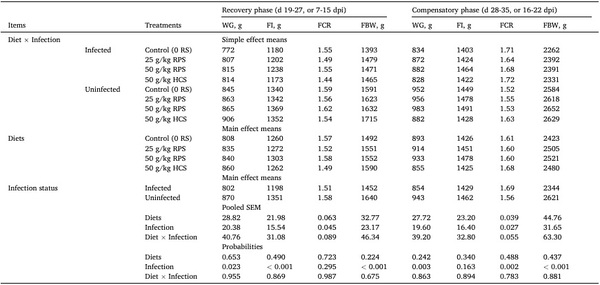
significant during the recovery (7 15 dpi) and compensatory growth (16 - 22 dpi) phases (Table 7). The main effects of infection were significant (P < 0.05) for the WG, FI, and FBW during the recovery phase and the WG, FCR, and FBW during the compensatory growth phase. The growth responses were negatively impacted in the birds challenged with Eimeria during the recovery and compensatory growth phases, marked by reduced WG (P =0.023), FI and FBW (P < 0.001) in the recovery phase and decreased WG (P =0.003), and FBW (P =0.001) along with increased FCR (P =0.002) in the compensatory growth phase.
Apparent ileal amino acid digestibility -indispensable amino acids
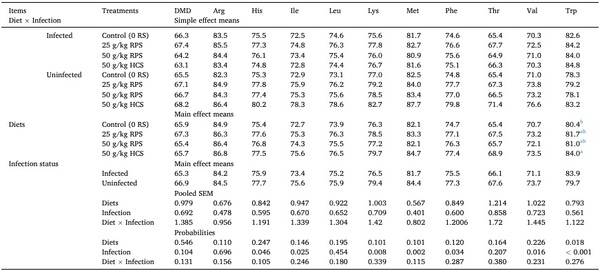
There was no significant diet ×infection interaction or main effects of diet for dry matter digestibility (DMD) or AID of indispensable amino acids, except for Trp (Table 8). Birds fed 50 g/kg HCS had greater (P = 0.018) AID of Trp than those that received the control diet. The main effects of infection were significant (P < 0.05) for the AID of His, Ile, Lys, Met, Phe, Val, and Trp. The AID of His (P =0.046), Ile (P =0.025), Lys (P =0.008), Met (P =0.002), Phe (P =0.034), and Val (P =0.016) were reduced in the challenged birds, except for the AID of Trp that was greater (P < 0.001).
Apparent ileal amino acid digestibility - dispensable amino acids
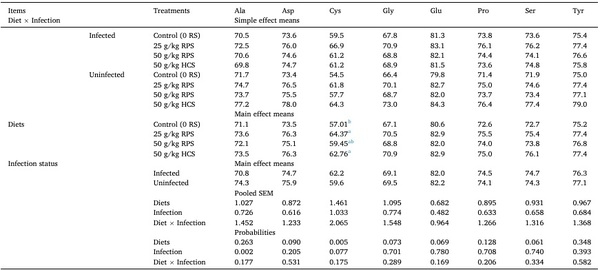
There was no significant diet ×infection for AID of all the dispensable amino acids assessed (Table 9). However, the main effect of diets was significant (P < 0.05) for Cys (P < 0.05) and showed a tendency (P < 0.10) for Asp, Gly, Glu and Ser. The birds that received 25 g/kg RPS and 50 g/kg HCS diets had greater (P =0.005) AID of Cys than those that received the control diet. The AID of Asp, Gly, Glu, and Ser tended (P <
Table 7
Growth performance of broiler chickens fed diets with graded levels of resistant starches during the recovery (7 - 15 dpi) and compensatory (16 - 22 dpi) phases when challenged or unchallenged with mixed Eimeria spp. oocysts.
RPS- Raw potato starch, HCS- High-amylose corn starch.
WG- body weight gain, FI- Feed Intake, FCR- feed conversion ratio, FBW: Final Body Weight.
n =6 replicate pens per treatment for simple effects, n =12 replicate pens per treatment for main effects of diets, n =24 replicate pens per treatment for main effects of infection status, with 22 birds per pen.
Recovery (7 15 dpi) and compensatory growth (16 - 22 dpi) phases, dpi- days post-inoculation.
The birds in the infected group were inoculated with mixed oocysts of E. maxima (12,500), E. tenella (12,500), E. acervulina (62,500) per ml on d 13 of age. The non-infected group received oral gavage of 1 ml of distilled water.
0.10) to increase in birds fed 25 g/kg RPS and 50 g/kg HCS diets. Additionally, the main effect of Eimeria infection was significant (P < 0.05) for AID of Ala and showed a tendency for AID of Cys. The AID of Ala decreased (P =0.002) in the challenged birds, and that of Cys tended (P =0.077) to decrease during infection as well.
Gastrointestinal tract permeability
The gut permeability assessed on d 19 (6 dpi) (Fig. 1) was not significantly (P > 0.05) affected by the interaction of diet ×infection or main effects of diets but the main effect of infection was significant (P < 0.05). The Eimeria-challenged birds had greater (P < 0.001) serum levels of FITC-d than the unchallenged group.
Jejunal histomorphology
The histomorphology results showed no significant (P > 0.05) interaction of diet ×challenge or main effects of diets (Table 10). However, the Eimeria challenge reduced the jejunal VH (P < 0.001), VH: CD (P < 0.001), and increased (P =0.001) the CD.
Relative mRNA expression of selected jejunal tight junction proteins and nutrient transporters
The relative mRNA expressions of jejunal tight junction proteins were not significantly affected by the interaction of the diet ×infection and main effects of diets, except for the main effects of infection on JAM- 2 and a tendency (P < 0.10) for occludin (Table 11). The Eimeria challenge reduced (P =0.001) the expression of JAM-2 and tended (P = 0.069) to reduce the expression of occludin. The diet ×infection was significant (P =0.054) for PepT1, which had greater expression in unchallenged birds fed 25 g/kg RPS relative to challenged birds fed 25 and 50 g/kg RPS. Among the challenged birds, those fed the control or 50 g/kg HCS had greater relative PepT1 expression.
Discussion
Over the years, the modulation of dietary compositions and formulations has constituted part of the major control measures for coccidiosis (Gómez-Osorio et al., 2021). Dietary resistant starches have gained attention in recent times for their potential to improve gut health and mitigate the negative impacts of enteric challenge, owing to their prebiotic properties and ability to modulate the hindgut microbial ecology (Thompson et al., 2022). This study investigated the possible prebiotic effects of resistant starches in broiler chickens during enteric challenge. We therefore hypothesized a phase-specific dietary RS modulation of the growth responses in broiler chicken challenged with mixed Eimeria spp. The choice of the RS and levels used in the current experiment were based on previous experiments (Oluseyifumi et al., 2024; Oluseyifunmi, 2025).
Growth performance
The results obtained in this study indicated greater WG in birds fed diets with inclusion of 25 g/kg RPS during the starter phase and 50 g/kg HCS during the early grower phase (pre-inoculation phase). This showed a phase-dependent impact of resistant starch (RS) on growth performance, suggesting that different RS sources and concentrations might influence differently at different phases of growth in broiler chicken.
Liu et al. (2020) previously reported a lower weight gain and feed intake and a decline in feed efficiency as the dietary RS level increased in chickens fed diets containing 40, 80, and 120 g/kg corn RS relative to
Table 8
Apparent ileal digestibility of indispensable amino acid in broiler chickens fed diets with graded levels of resistant starches at d 20 (during recovery phase) when challenged or unchallenged with mixed Eimeria spp. oocysts.
RPS- Raw potato starch, HCS- High-amylose corn starch, DMD- Dry matter digestibility.
n =6 replicate pens per treatment for simple effects, n =12 replicate pens per treatment for main effects of diets, n =24 replicate pens per treatment for main effects of infection status, with 22 birds per pen.
Recovery phase (7- 15 dpi), dpi- days post-inoculation.
The birds in the infected group were inoculated with mixed oocysts of E. maxima (12,500), E. tenella (12,500), E. acervulina (62,500) per ml on d 13 of age. The non-infected group received oral gavage of 1 ml of distilled water.
ab : Means in a column, within a group, with different superscripts differ significantly (P ≤0.05).
Table 9
Apparent ileal digestibility of dispensable amino acid in broiler chickens fed diets with graded levels of resistant starches on d 20 (during recovery phase) when challenged or unchallenged with mixed Eimeria spp. oocysts.
RPS- Raw potato starch, HCS- High-amylose corn starch.
n =6 replicate pens per treatment for simple effects, n =12 replicate pens per treatment for main effects of diets, n =24 replicate pens per treatment for main effects of infection status, with 22 birds per pen.
Recovery phase (7- 15 dpi), dpi- days post-inoculation.
The birds in the infected group were inoculated with mixed oocysts of E. maxima (12,500), E. tenella (12,500), E. acervulina (62,500) per ml on d 13 of age. The non-infected group received oral gavage of 1 ml of distilled water.
ab : Means in a column, within a group, with different superscripts differ significantly (P ≤0.05).

Fig. 1. The intestinal permeability on day 19 (6 dpi). The Eimeria-challenged birds had significantly higher (P < 0.001) serum levels of FITC-d. The birds in the infected group were inoculated with mixed oocysts of E. maxima (12,500), E. tenella (12,500), E. acervulina (62,500) per ml on d 13 of age. The non-infected group received oral gavage of 1 ml of distilled water.
the control diet (corn-soybean-based diet with 200 g/kg corn starch). Zhang et al. (2020) further compared the same set of diets with corn-soybean-based control diet in broiler chickens and found lower feed intake and weight gain in the birds that received RS diets and the diet containing 200 g/kg corn starch.
On the contrary, feeding day-old duckling diets with diets containing 60, 120, 180, and 240 g/kg RPS for a period of 14 and 35 days had no significant adverse effects on the growth performance relative to the corn-soybean-based control diet (Qin et al., 2019). The variation in results could be attributed to different botanical origins of RS, varying dietary RS content, and experimental models (ducks vs. broilers), feeding duration, and whether the birds were challenged or unchal lenged with enteric pathogens) in these studies. Lower concentrations of RS were used in the current experiment because higher inclusion levels (up to 100 g/kg) had been previously tested but were found to be difficult to incorporate in pelleted diets resulting in pasty pellets, as well as such diets are of little practical relevance from economics standpoint because of availability of only food-grade RS (Oluseyifunmi et al., 2024). The increase in WG observed in the current study can be explained by the positive effects of RPS and HCS on nitrogen retention and energy utilization, as demonstrated in our previous study (Oluseyifunmi et al., 2024).
The higher feed intake and weight gain observed at the early stage of infection (prepatent phase) might be because the infection is yet to peak at this time point, and the pathological consequence of coccidiosis might still be less severe during the incubation stage (de Freitas et al., 2023). In addition, the continuous supply of energy through production of SCFA by fermentation of RS in distal digestive tract in birds fed ad libitum, coupled with the modulation of nitrogen and energy metabolism by HCS (Oluseyifunmi et al., 2024) might have also played a role in alleviating the effects of coccidiosis at this phase of infection.
Coccidiosis had detrimental effects on the WG, FI and FCR during the acute and compensatory growth phases with no significant ameliorative impacts of RS observed during these phases. This can be explained by repartitioning of nutrients towards intestinal repair, immune responses, and disruption of digestive and absorptive capacity, which have been reported to account for about 28 % reduction in body weight and 73 % decrease in body weight as consequences of reduced FI during coccidiosis (Lillehoj and Trout, 1996; Lee and Rochell, 2022).
Apparent ileal amino acid digestibility
The AID value indicates the net disappearance of amino acids from the digestive tract (Kim et al., 2022). The effects of dietary fibers on nitrogen and amino acid digestibility are dependent on several factors, including the nature of the fiber, digestibility of dietary carbohydrate and protein, and the physiological condition of the animals. Native fi bers may play a role in the sloughing of intestinal cells and have the potential to adsorb amino acids, peptides, or proteins (Eggum, 1992).
Eimeria challenge could impair the digestive and absorptive capacity of the gastrointestinal tract and interfere with apparent ileal digestibility of amino acids and growth performance (Rochell et al., 2016a). In the current experiment, Eimeria infection reduced the AID of selected indispensable AA, which included Met and Lys, the most limiting amino acids for broiler growth performance (Alagawany et al., 2021). These amino acids are important for combating oxidative stress and crucial for immune functions (Jespersen et al., 2024). The AID of Ala was also reduced by mixed Eimeria challenge irrespective of the dietary RS fed. The digestibility of Ala has been reported previously to be one of the most impacted AA during mixed Eimeria challenge model (Kim et al., 2022).
The observed decrease in the AID of these AA in the infected birds could be a consequence of disruption of gut structure (villus atrophy, crypt hyperplasia, thinning of mucosa) and function (reduced absorption and digestive enzyme activity) thus making the animal to excrete more (Lee and Rochell, 2022). Another probable reason might be the birds’ innate response to reduce AA absorption in order to “starve” the infectious organism, as demonstrated with bacterial infection which may trigger the intracellular induction of AA starvation in order to reduce nutrient availability to the infectious organism (Tattoli et al., 2012). In addition, it has been reported that Eimeria challenge may reduce AA digestibility by an average of 8 % relative to the unchallenged birds (Rochell et al., 2016b; Adedokun et al., 2016; Lee and Rochell, 2022).
Table 10
Jejunal histomorphology on d 20 (during recovery phase) in broiler chickens fed diets with graded levels of resistant starches when challenged or unchallenged with mixed Eimeria spp. oocysts.

RPS- Raw potato starch, HCS- High-amylose corn starch.
VH- Villi height. CD- Crypt depth, VW- Villi width.
n =6 replicate pens per treatment for simple effects, n =12 replicate pens per treatment for main effects of diets, n =24 replicate pens per treatment for main effects of infection status, with 22 birds per pen.
Recovery phase (7- 15 dpi), dpi- days post-inoculation.
The birds in the infected group were inoculated with mixed oocysts of E. maxima (12,500), E. tenella (12,500), E. acervulina (62,500) per ml on d 13 of age. The non-infected group received oral gavage of 1 ml of distilled water.
Tryptophan plays an important role in modulating gut microbiota as it serves as a substrate for enzymes within the gut microbiota, leading to its breakdown into various metabolites, which can regulate the host’s immune response (Gao et al., 2020). Therefore, the elevated AID of Trp during the mixed Eimeria challenge in this study is not unexpected because Trp is involved in acute protein synthesis during inflammation, and birds may increase their requirement for it during Eimeria challenge (Kim et al., 2022). Although Rochell et al. (2016b)previously reported that E. acervulina did not affect the AID of Trp and Gly among other AA, the current study utilized a mixture of E. maxima, E. tenella, and E. acervulina; thus the enteric challenge is expected to be more severe as each affects different and specific anatomic sites.
The increase in the AID of Trp in the birds fed diet containing 50 g/kg HCS and greater AID of Cys in the birds that received diets with 25 g/kg RPS and 50 g/kg HCS indicated possible modulation of AA metabolism by dietary inclusion of RS as previously reported by Qin et al. (2023), although the mechanism behind this is yet to be understood. Resistant starches modulate microbial ecology towards beneficial profile (Tan et al., 2021) and evidence exists that some bacteria species may secrete dipeptidyl peptidase and dipeptidase that contribute to protein digestion and absorption of amino acids in the gut (Torres et al., 2023). In addition, starches that supply the lower part of the intestine with glucose may have some sparing effects on amino acids, preventing them from being oxidized (Weurding et al., 2003).
Gastrointestinal tract permeability
The intestinal permeability is commonly measured in poultry using fluorescein isothiocyanate-dextran (FITC-d) as an indicator (Liu et al., 2021). The elevated FITC-d levels in the serum of the infected birds on d 19 (6 dpi) points to the severity of Eimeria challenge at the peak of infection (acute phase) and is indicative of the elevated leakage of the gastrointestinal tract that eventuated from invasion of the host epithelial cells by merozoites during asexual reproduction (Lin and Olukosi, 2021). Coccidiosis causes the disruption of the mucosal and epithelial barrier, leading to inflammation characterized by vasodilation and increased intestinal permeability (Lee and Rochell, 2022).
However, dietary inclusion of RS had no ameliorative effect on gut leakage during the Eimeria challenge model used in the current study. This could be due to the localization of RS activity in the distal gastrointestinal tract, where they are fermented to produce beneficial metabolites such as butyrate, propionate, and acetate, which can support intestinal integrity and possess anti-inflammatory properties (Tan et al., 2021). In addition, the extent of intestinal tissue disruption in the current experiment may be beyond the ameliorative capacity of the RS used due to the observation that the extent of intestinal tissue disruption is proportional to the concentration of oocysts used in the challenge (Teng et al., 2021).
Jejunal histomorphology
Villi height to crypt depth ratio is an indicator of intestinal absorptive capacity and health (Marchewka et al., 2021). The reduced VH and VH:CD are indicative of villous atrophy, decreasing absorptive surface area as evidenced by the reduced apparent ileal digestibility of most of the AA evaluated in the challenged birds (Belote et al., 2023; Liu et al., 2023; Ajao et al., 2024; Taylor et al., 2024). The hyperplasia of jejunal crypts observed in Eimeria-challenged birds suggested increased proliferative activity of crypt cells, which are higher during inflammation (Bortoluzzi et al., 2020).
Although a previous work by Qin et al. (2020), reported improvements in VH, VH:CD, and reduced CD in the cecum of ducks fed high levels of raw potato starch (120 and 240 g/kg RPS-containing diets compared to those fed 0 % RPS for a period of 35 days). The RS inclusion did not yield similar benefits in the jejunum under our enteric challenge model likely because of the differences in the two experiments based on the species of birds, digestive site, and level of RS inclusion. These differences may be further explained by the severity of the acute Eimeria infection, which could have masked the potential ameliorative effects of RS, the relatively short feeding duration, or the site-specific action of RS, as its fermentation primarily occurs in the distal gut and may not sufficiently impact jejunal morphology during peak infection.
Relative mRNA expression of selected jejunal tight junction proteins and nutrient transporters
Tight junction proteins are complex transmembrane proteins crucial for maintaining the functionality and integrity of intestinal epithelial cell barriers by forming tight seals that control the transcellular and paracellular translocations of molecules and ions, preventing pathogen entry (Graham et al., 2023). The depression of relative mRNA expression of JAM-2 and occludin observed during mixed Eimeria challenge in the current study is indicative of the impairment of the tight junction barrier due to sloughing of the intestinal epithelial cells and disruption of the mucus layer during coccidiosis. Similar findings were reported by (Scharl et al., 2009; Lin et al., 2022) in Eimeria-challenged birds. Eimeria challenge may alter the gene expression of tight junctions, adhering junctions, gap junctions and desmosomes due to sloughing and impairment of the intestinal mucosa along with vasodilation of intestinal epithelium in response to enteric inflammation (Lee and Rochell, 2022).
Table 11
Relative mRNA expression of selected jejunal tight junction proteins and nutrient transporters on d 20 (during recovery phase) in broiler chickens fed diets with graded levels of resistant starches when challenged or unchallenged with mixed Eimeria spp. oocysts.
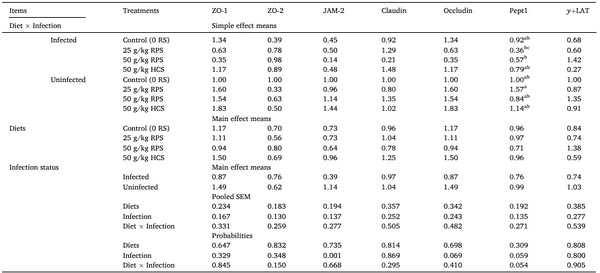
RPS- Raw potato starch, HCS- High-amylose corn starch.2.
n =6 replicate pens per treatment for simple effects, n =12 replicate pens per treatment for main effects of diets, n =24 replicate pens per treatment for main effects of infection status, with 22 birds per pen.
abc: Means in a column, within a group, with different superscripts differ significantly (P ≤0.05). n =6 replicate cages per treatment. Recovery phase (7- 15 dpi), dpi- days post-inoculation.
The birds in the infected group were inoculated with mixed oocysts of E. maxima (12,500), E. tenella (12,500), E. acervulina (62,500) per ml on d 13 of age. The non-infected group received oral gavage of 1 ml of distilled water.
PepT1 is a protein situated in the brush-border membranes that facilitates the transport of di- and tripeptides (Verri et al., 2010). Eimeria challenge may downregulate the AA transporters and peptides, along with brush border digestive enzymes as a part of the defense mechanism against infectious organism replication (Lin et al., 2022, 2023) Lee and Rochell, 2022; Lin et al., 2023). Greater relative mRNA expression of PepT1 during infection in the birds fed diet with 50 g/kg HCS than in other infected birds that received other RS diets demonstrated the potential of HCS in facilitating the luminal uptake of peptides during enteric challenge in broiler chickens. Additionally, a much higher expression of PepT1 in birds fed dietary 25 g/kg RPS and 50 g/kg HCS in the absence of Eimeria challenge is consistent with the previous report (Oluseyifunmi et al., 2024). Modulation of intestinal microbiota by RS fermentation metabolite (SCFA) may favor proliferation of beneficial bacteria, which could secrete some dipeptidyl peptidase and dipeptidase that may influence protein digestion and absorption of amino acids in the gut, although this has not been established in chickens (Tan et al., 2021; Tores et al., 2023).
Conclusion
Dietary inclusion of 25 g/kg RPS and 50 g/kg HCS improved the growth performance during the early growth phase until the acute phase of Eimeria infection and therefore showed limited significant positive effects during the subsequent phases, consistent with the effect on AA digestibility. Dietary RS improved the early growth performance, possibly via modulation of intestinal microbiota and shift in digestion trajectory, but the limited effects post-infection may be challenge-dose-dependent. The observations of the current experiment indicated potentially limited ameliorative effects of RS in Eimeria-challenged birds and suggested that the pathways by which this is effected are via effect on AA utilization and gut integrity, achievable by possible modulation of gut microbiome and their metabolites, which are subjects of follow-up investigation.
This article was originally published in Poultry Science, 104 (2025) 105963. https://doi.org/10.1016/j.psj.2025.105963. This is an Open Access article under the CC BY license (http://creativecommons.org/licenses/by/4.0/).
- Adedokun et al., 2016
Investigation of the effect of coccidial vaccine challenge on apparent and standardized ileal amino acid digestibility in grower and finisher broilers and its evaluation in 21-day-old broilersPoult. Sci., 95 (2016), pp. 1825-1835
- Ajao et al., 2024
Phase-specific outcomes of arginine or branched-chain amino acids supplementation in low crude protein diets on performance, nutrient digestibility, and expression of tissue protein synthesis and degradation in broiler chickens infected with mixed Eimeria sppPoultry Sci. (2024), Article 103811, 10.1016/j.psj.2024.103811
- Alagawany et al., 2021
Nutritional significance of amino acids, vitamins and minerals as nutraceuticals in poultry production and health–a comprehensive reviewVet. Q., 41 (2021), pp. 1-29
- AOAC 2012
Official Methods of Analysis(19 ed.), Association of Official Analytical Chemists, Washington, DC (2012)
- AOAC 2016
Official Methods of Analysis(20 ed.), Association of Official Analytical Chemists, Washington, DC (2016)
- Attree et al., 2021
Controlling the causative agents of coccidiosis in domestic chickens; an eye on the past and considerations for the futureCABI. Agric. Biosci., 2 (2021), p. 37
- Bafundo, 2025
Current Thinking on Eimeria spp. in Poultry and Potential for Advancements in Control, Animals,15 (2025), p. 424, 10.3390/ani15030424
- Belote et al., 2023
Applying different morphometric intestinal mucosa methods and the correlation with broilers performance under Eimeria challengePoult. Sci., 102 (2023), Article 102849
- Bhandari et al., 2009
Raw potato starch in weaned pig diets and its influence on postweaning scours and the molecular microbial ecology of the digestive tractJ. Anim. Sci., 87 (2009), pp. 984-993, 10.2527/jas.2007-0747
- Bortoluzzi et al., 2020
Influence of dietary zinc, copper, and manganese on the intestinal health of broilers under Eimeria challengeFront. Vet. Sci., 7 (2020), p. 13
- Cobb-Vantress 2022
Cobb500 Broiler performance and nutrition supplement
- de Freitas et al., 2023
Coccidiosis infection and growth performance of broilers in experimental trials: insights from a meta-analysis including modulating factorsPoult. Sci., 102 (2023), Article 103021
- Doti et al., 2014
Effect of dietary starch source on growth performances, digestibility and quality traits of growing pigsLivest. Sci., 164 (2014), pp. 119-127, 10.1016/j.livsci.2014.03.016
- Eggum, 1992
The Influence of Dietary Fibre on Protein Digestion and Utilisation, Dietary Fibre—A Component of Food: Nutritional Function in Health and DiseaseSpringer (1992), pp. 153-165
- Gao et al., 2020
Diverse enzymatic activities mediate antiviral immunity in prokaryotesScience (1979), 369 (2020), pp. 1077-1084
- Gómez-Osorio et al., 2021
Nutrition and poultry coccidiosis: causes, consequences and current strategies to modulate theAdv. Poult. Nutr. Res., 161 (2021)
- Graham et al., 2023
Assessing the effects of a mixed Eimeria spp. Challenge on performance, intestinal integrity, and the gut microbiome of broiler chickensFront. Vet. Sci., 10 (2023), Article 1224647
- Jespersen et al., 2024
Effects of a coccidiosis challenge on dietary methionine recommendations in broilersPoult. Sci., 103 (2024), Article 103502
- Kim et al., 2022
Centennial review: a meta-analysis of the significance of Eimeria infection on apparent ileal amino acid digestibility in broiler chickensPoult. Sci., 101 (2022), Article 101625
- Landon et al., 2012
The Resistant Starch Report–Food Australia SupplementGoodman Fielder Ltd and National, Australia (2012)
- Lee and Rochell, 2022
Precision intestinal nutrition: knowledge and gaps regarding the role of amino acids during an enteric challengePoult. Sci., 101 (2022), Article 101674
- Lillehoj and Trout, 1996
Avian gut-associated lymphoid tissues and intestinal immune responses to Eimeria parasitesClin. Microbiol. Rev., 9 (1996), pp. 349-360
- Lin et al., 2023
The effects of protease, xylanase, and xylo-oligosaccharides on growth performance, nutrient utilization, short-chain fatty acids, and microbiota in Eimeria-challenged broiler chickens fed low-protein dietPoult. Sci., 102 (2023), 10.1016/j.psj.2023.102789ARTN.102789
- Lin et al., 2022
The effects of xylo-oligosaccharides on regulating growth performance, nutrient utilization, gene expression of tight junctions, nutrient transporters, and cecal short chain fatty acids profile in Eimeria-challenged broiler chickensPoult. Sci., 101 (2022), 10.1016/j.psj.2022.102125
- Liu et al., 2023
The effects of arginine and branched-chain amino acid supplementation to reduced-protein diet on intestinal health, cecal short-chain fatty acid profiles, and immune response in broiler chickens challenged with Eimeria sppPoult. Sci., 102 (2023), Article 102773, 10.1016/j.psj.2023.102773
- Liu et al., 2020
Health beneficial effects of resistant starch on diabetes and obesity via regulation of gut microbiota: a reviewFood Funct., 11 (2020), pp. 5749-5767, 10.1039/D0FO00855A
- Liu et al., 2021
Assay considerations for fluorescein isothiocyanate-dextran (FITC-d): an indicator of intestinal permeability in broiler chickensPoult. Sci., 100 (2021), Article 101202
- Livak and Schmittgen, 2001
Analysis of relative gene expression data using real-time quantitative PCR and the 2− ΔΔCT methodMethods, 25 (2001), pp. 402-408
- Madlala et al., 2021
Understanding the interactions between Eimeria infection and gut microbiota, towards the control of chicken coccidiosis: a reviewParasite, 28 (2021)
- Marchewka et al., 2021
Gastrointestinal tract morphometrics and content of commercial and indigenous chicken breeds with differing ranging profilesAnimals, 11 (2021), p. 1881
- Oluseyifunmi, 2025
Dietary inclusion of raw potato or high- amylose-corn resistant starches fed for different durations: impact on phenotypic responses and indicators of gut health of broiler chickensJ. Sci. Food Agric., 105 (2025), p. 11
- Oluseyifunmi et al., 2024
The interactivity of sources and dietary levels of resistant starches–impact on growth performance, starch, and nutrient digestibility, digesta oligosaccharides profile, caecal microbial metabolites, and indicators of gut health in broiler chickensPoult. Sci. (2024), Article 104337
- Qin et al., 2020
Dietary administration of resistant starch improved caecal barrier function by enhancing intestinal morphology and modulating microbiota composition in meat duckBr. J. Nutr., 123 (2020), pp. 172-181
- Qin et al., 2023
Microbiome-metabolomics analysis insight into the effects of dietary resistant starch on intestinal integrityFood Chem., 401 (2023), p. 134148
- Qin et al., 2019
Effect of dietary graded resistant potato starch levels on growth performance, plasma cytokines concentration, and intestinal health in meat ducksPoultry Sci, 98 (2019), pp. 3523-3532, 10.3382/ps/pez186
- Regmi et al., 2011
Starch with high amylose and low in vitro digestibility increases short-chain fatty acid absorption, reduces peak insulin secretion, and modulates incretin secretion in pigsJ. Nutr., 141 (2011), pp. 398-405, 10.3945/jn.110.132449
- Rochell et al., 2016a
Influence of dietary amino acid reductions and Eimeria acervulina infection on growth performance and intestinal cytokine responses of broilers fed low crude protein dietsPoult. Sci., 95 (2016), pp. 2602-2614
- Rochell et al., 2016b
Effects of Eimeria acervulina infection severity on growth performance, apparent ileal mino acid digstibility, and plasma concentrations of amino acids, carotenoids, and α 1-acid glycoprotein in broilersPoult. Sci., 95 (2016), pp. 1573-1581
- Scharl et al., 2009
AMP-activated protein kinase mediates the interferon-γ-induced decrease in intestinal epithelial barrier functionJ. Biolog. Chem., 284 (2009), pp. 27952-27963
- Shirley, 1986
Shirley, M. 1986. New methods for the identification of species and strains of Eimeria.
- Short et al., 1996
Determination of titanium dioxide added as an inert marker in chicken digestibility studiesAnim. Feed. Sci. Technol., 59 (1996), pp. 215-221
- Tan et al., 2021
Resistant starch: implications of dietary inclusion on gut health and growth in pigs: a reviewJ. Anim. Sci. Biotechno., 12 (2021), p. 124
- Tattoli et al., 2012
Amino acid starvation induced by invasive bacterial pathogens triggers an innate host defense programCell Host Microbe., 11 (2012), pp. 563-575
- Taylor et al., 2024
Supplementing low protein diets with methionine or threonine during mixed Eimeria challengePoultry Sci., 103 (2024), Article 103714, 10.1016/j.psj.2024.103714
- Teng et al., 2021
Impacts of increasing challenge with Eimeria maxima on the growth performance and gene expression of biomarkers associated with intestinal integrity and nutrient transportersVet. Res., 52 (2021), p. 81, 10.1186/s13567-021-00949-3
- Thompson et al., 2022
A review: resistant starch, a promising prebiotic for obesity and weight managementFood Biosci., 50 (2022), Article 101965
- Torres et al., 2023
Amino Acid catabolism: an overlooked area of metabolismNutrients, 15 (2023), 10.3390/nu15153378
- Verri et al., 2010
Transport of di-and tripeptides in teleost fish intestineAquac. Res., 41 (2010), pp. 641-653
- Weurding et al., 2003
The relation between starch digestion rate and amino acid level for broiler chickensPoult. Sci., 82 (2003), pp. 279-284
- Yi et al., 2023
Raw potato starch diet supplement in weaned pigs could reduce Salmonella Typhimurium infection by altering microbiome composition and improving immune statusFront. Vet. Sci. (2023), 10.3389/fvets.2023.1183400Volume 10 - 2023(Original Research)
- Zhang et al., 2022
Dietary resistant starch alleviates Escherichia coli-induced bone loss in meat ducks by promoting short-chain fatty acid production and inhibiting Malt1/NF-κB inflammasome activationJ. Anim. Sci. Biotechnol., 13 (2022), p. 92
- Zhang et al., 2020
Dietary corn resistant starch regulates intestinal morphology and barrier functions by activating the Notch signaling pathway of broilersAsian-Australas. J. Anim. Sci., 33 (2020), p. 2008
Related topics:
Authors:



Recommend
Comment
Share

Would you like to discuss another topic? Create a new post to engage with experts in the community.














Featured users in Poultry Industry