Swine welfare
Some farming methods have ignored the pigs’ needs by treating them as production units rather than fascinating and intelligent creatures with innate behavioural and physical needs.
Pigs are sensitive to extremes of climate and have no sweat glands (except for on the tip of the snout) nor thick hair cover, relying on fat for insulation. In cold weather pigs often huddle to keep warm, whilst in warm weather they wallow in water and mud to keep cool. Pigs forage and root for food (a strong natural behaviour), and eat a wide range of vegetables and animal products, including carrion. In terms of senses, pigs rely on smell and hearing more than vision. They have a wide range of vocalisations and a good ability to locate odour sources.
Pigs prefer to live in stable families or small groups. However, they can be aggressive to each other, especially if unfamiliar animals are mixed. Boars are often solitary. Contrary to popular belief, pigs are clean animals and if given properly designed living accommodation, will always tend to use one particular area for dunging, thereby keeping their lying/sleeping area clean.
PEDv, a viral disease to which suckling pigs and newly weaned piglets are particularly vulnerable, now looks to have a powerful opponent. Researchers at the University of Minnesota have shown that Stalosan F is particularly effective against PEDv. PEDv has caused significant losses for a number of years in the United States, China and Eastern Europe. Although it is now tapering off in the US, the status remains unchanged in...
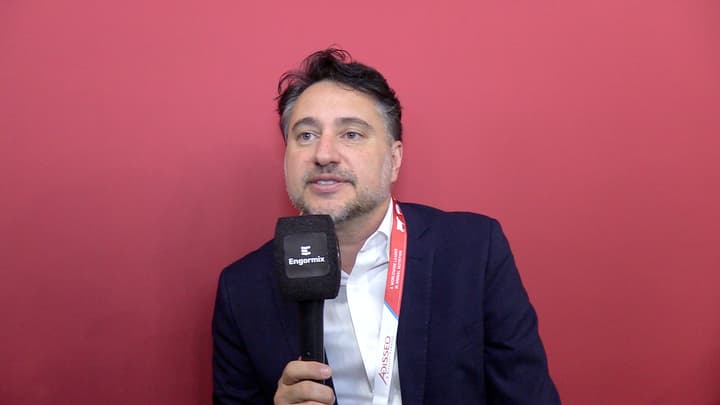
Ferdinand Entenfellner speaks about animal walfare regulations and the increasing of the restrictions related to management and farming. He also talks about the influence of the economic and enviromental situation....
Adam Pera from Farmwet, Ayurvet's polish representative, speaks about the advantages of natural products for animal prophylaxis....
Introduction Animal welfare can be defined in a number of different ways, but there is a growing consensus that whatever the definition, it has to include three elements: the emotional state of the animal, its biological functioning and its ability to show normal patterns of behaviour (Manteca, Velarde & Jones, 2009). These three elements are by no means contradictory; in fact they are closely interrelated. The Five...
Lee J. Johnston from the University of Minnesota, speaks about differences between traditional facilities and those which take into account animal welfare regulations. He also mentions good production practices such as the use of antibiotics responsibly, profer feed processing protocols, etc.....
Commercial production actually moved away from group housing to sow stalls to improve sow welfare and ensure that sows could be given individual treatment. For the past 30 years the Australian pig industry has investigated sow housing, with increasing emphasis on the welfare of sows in stalls. In 2010 the Australian pork industry, in a landmark decision for an agricultural industry, agreed to voluntarily phase out gestation...
Though nobody loves pigs more than the hog farmer, I am beginning to think that there is a Silver Lining behind all of this pressure that the Animal- Welfarist have put on the Modern Hog Producer! The modern hog producer is a very busy person, with a lot of jobs on his/her plate, and I am sure that he/she does not feel like they need more tasks to do! This Animal-Welfare pressure has, however, caused us to raise the bar of our care of the pigs entrusted to us. I imagine that we are...
1. Introduction This paper summarises some key findings fromrecent research into animal welfare during the preslaughter and slaughter periods. It focuses on injuries and ease of handling, stress effects on subsequent meat quality, and contemporary problems in stunning and slaughter. 2. Recent trends in preslaughter management ...
Welfare will continue to be a big issue in the pig industry and genetic selection for improved efficiency and ethics are not necessarily antagonistic to ethical production. Genetic selection can improve welfare and increase production ethically, Ed Sutcliffe told a Yorkshire conference organised by international pig-breeding company ACMC.
For instance, the halothane gene can increase carcase lean meat percentage but pigs...
The use of individual gestation accommodations (IGAs) for dry sows in commercial pork production is an issue that has raised much debate. Public perceptions and misconceptions of welfare issues have the potential to dramatically impact swine production. In an effort to provide objective, scientific information on the subject, the Council for Agricultural Science and Technology is releasing a new Issue Paper, Scientific Assessment of the Welfare of Dry Sows Kept in Individual...
Producers make daily management decisions for the best practice of their property and the welfare of their pigs. However, these decisions are now being viewed under tighter scrutiny due to the introduction of PigPass. For some producers there are several grey areas which surround the Withholding Periods (WHP’s) and Export Slaughter Intervals (ESI’s).
PigPass is concerned with the animal husbandry of pigs and includes some information and questions around the WHP’s and ESI’s for commonly used...
The European Commission is considering the economic impact of animal welfare proposals to be put forward next year, affecting slatted flooring systems, space allowances and castration.
The EU executive plans surveys in all 25 member states that would ask if consumers would be prepared to pay for these higher welfare standards.
Although a large proportion of UK finished pigs are kept on straw based systems, most European mainland production is slatted.
Non-straw systems provide...