Explore

Advertise on Engormix

Impacts of trace minerals (zinc, copper, and selenium) supplementation on pig’s health under different challenge models

Published: March 31, 2026
Source : Maykelly da Silva Gomes 1, Gabriel Cipriano Rocha 1, Danyel Bueno Dalto 2, Damares de Castro Fidelis Toledo 1, Jansller Luiz Genova 1* / 1 Universidade Federal de Viçosa, Departamento de Zootecnia, Laboratório Multiusuário de Biologia Muscular e Nutrigenômica, Viçosa, MG, Brasil; 2 Agriculture and Agri-Food Canada, Sherbrooke Research and Development Centre, Sherbrooke, QC, Canada.
Summary

Pigs are susceptible to infections and inflammatory conditions throughout their life phases, requiring adequate nutrient intake to support immune defense functions. Trace elements such as zinc (Zn), selenium (Se), and copper (Cu) are crucial for immune competence and antioxidant defense. While nutritional guidelines define baseline requirements, the swine industry frequently adopts supranutritional levels of Zn, Cu, and Se to optimize health and performance. Therefore, this review explores the impacts of trace mineral supplementation (e.g., Zn, Cu, and Se) on pig health subjected to stressors such as heat stress, oxidative stress, and infections. Various experimental models replicate challenges faced on commercial farms, in which Zn supports immune function by stabilizing cell membranes, modulating cytokine expression, and strengthening the intestinal barrier through increased synthesis of tight junction proteins, which collectively help reduce inflammation and pathogen translocation. In turn, Cu contributes to immune defense via its bacteriostatic effects and its role as a cofactor in antioxidant enzymes like superoxide dismutase, which mitigates oxidative damage by neutralizing reactive oxygen species. Moreover, Se is essential for the synthesis of selenoproteins, which protect cells from oxidative stress by regulating redox reactions and enhancing glutathione peroxidase activity. These mechanisms, as demonstrated in recent studies, suggest that supplementing these trace minerals above standard dietary levels can significantly improve immune function, antioxidant defenses, and intestinal integrity in pigs, providing strategies to meet the physiological demands imposed by various stressors in pig production systems.

Keywords: heat stress, immunological stressors, oxidative stress, pig health, swine, trace minerals

1. Introduction

The swine industry faces numerous sanitary and environmental challenges that can significantly affect pig health and productivity (Le Floc’h et al., 2021; Gomes et al., 2023). These challenges include infectious diseases, environmental stressors, and management practices that can result in the overactivation of the immune system and oxidative stress in pigs (Pluske et al., 2018). Various challenge models have been employed to simulate commercial stress conditions, such as oxidative stress, heat stress (HS) (Hong et al., 2024), and immunological stressors, such as infections from rotavirus (Tian et al., 2016), lipopolysaccharide (LPS) (Bergeron et al., 2017), porcine epidemic diarrhea virus (Yang et al., 2019), and enterotoxigenic E. coli (ETEC) (Lei and Kim, 2020). These models are essential for understanding how different stressors affect the physiological and immune responses in pigs and for developing strategies to mitigate these effects (Genova et al., 2020). For example, trace minerals such as Cu, Zn, and Se play crucial roles in maintaining the health of pigs (Pecora et al., 2020). These micronutrients are involved in various physiological functions, including immune response, antioxidant defense, and overall metabolic processes (Hao et al., 2021; Wang et al., 2023). However, the limited understanding of the specific requirements and effects of these micronutrients—both under normal and stress conditions—represents a barrier to their optimal use. Understanding the optimal levels and sources of supplementation is essential for maximizing their potential benefits (Pluske et al., 2018). Therefore, this review aimed to provide an overview of the role of trace minerals (Zn, Cu, and Se) in immune function and antioxidant capacity, as well as the efficacy of dietary supplementation with these micronutrients on the immune status and intestinal health of pigs under different challenging conditions (e.g., infection, oxidative stress, and HS).

2. Development

2.1. Efficacy of dietary supplementation with minerals (Zn, Cu, and Se) on the immune status of challenged pigs

Farm animals commonly experience infections and inflammatory challenges throughout their life cycle. When pigs encounter pathogenic challenges, they require nutrients to support vital defense functions. These include the innate and acquired immune responses, as well as the replenishment of damaged or lost tissues (e.g., plasma, sloughed cells) (Patience et al., 2015). Similarly, when facing oxidative stress challenges, pigs need nutrients to maintain antioxidant defenses and repair damaged molecules (Hong et al., 2024).
Trace elements (e.g., Zn, Se, and Cu) play indirect and direct influences on ensuring the effective function of immune systems, as well as on maintaining antioxidant capacity (Pecora et al., 2020).Consequently, the daily intake of micronutrients necessary to support immune function during immunological stress may exceed current recommended dietary levels. Supplementation of Zn, Cu, and Se at levels above current recommendations (NRC, 2012; Rostagno et al., 2024) has been shown to support immune responses and foster antioxidant capacity in pigs across different production phases under various challenging conditions, including inflammation (Bergeron et al., 2017; Jiao et al., 2017), infection (Sargeant et al., 2010; Lv et al., 2020), oxidative stress (Jing et al., 2024), and HS (Espinosa et al., 2019; He et al., 2022).

2.2. Inflammation/infection models

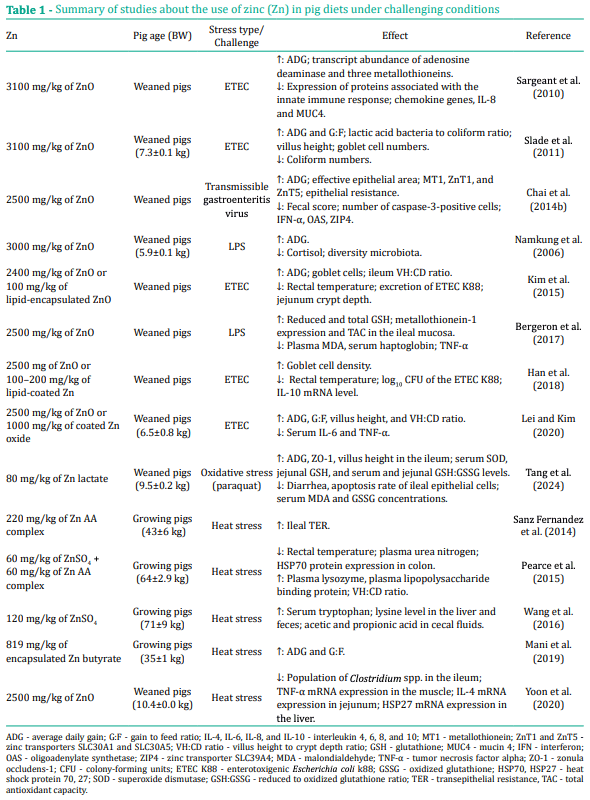
In commercial farms, pigs are exposed to several conditions that stimulate the immune system, such as pathogen exposure, early weaning, and suboptimal sanitary conditions. To replicate these challenges, several models have been established in scientific research, including the LPS, ETEC, and viral models (Wang et al., 2023; Hong et al., 2024), simulating the challenges that occur on commercial farms. Trace minerals (e.g., Zn, Cu, and Se) have been supplemented in the diet of immunologically challenged pigs at different concentrations and methods, aiming to maintain pig health and performance (Tian et al., 2016; Bergeron et al., 2017; Yang et al., 2019; Lv et al., 2020).Numerous studies have investigated the effects of Zn supplementation in the diets of weaned pigs faced with immunological challenges (Slade et al., 2011; Chai et al., 2014a,b; Kim et al., 2015; Bergeron et al., 2017; Han et al., 2018; Lei and Kim, 2020) (Table 1). The most frequently studied source of Zn in these investigations was ZnO administered at pharmacological levels, that is, at high concentrations (2400 ppm to 3100 ppm).
Table 1 - Summary of studies about the use of zinc (Zn) in pig diets under challenging conditions
Enterotoxigenic E. coli-infected piglets have been used as a model for post-weaning diarrhea. For example, ETEC K88 strains cause piglet diarrhea by attaching fimbriae to intestinal receptors and releasing enterotoxins that increase intestinal fluid and electrolyte secretion (Sargeant et al., 2010; Wang et al., 2023), resulting in decreased feed intake and growth rate. Based on this, ZnO supplementation (3100 mg/kg diet) may improve piglet performance by reducing the degree of intestinal inflammation caused by ETEC infection (Sargeant et al., 2010; Slade et al., 2011). The lower degree of intestinal inflammation was associated with decreased expression of inflammation-related immune response genes (IL-8 and four CXC chemokines), altered expression of pathogen receptors (e.g., MUC-4), and reduced intestinal morphological damage (Sargeant et al., 2010).In the study conducted by Slade et al. (2011), pigs showed reduced fecal shedding of ETEC, improved small intestine morphology, increased numbers of villus goblet cells, and favorable changes in the lactic acid bacteria to coliform ratio. These changes were associated with increased rates of feed intake and growth compared to the control group infected with ETEC with no ZnO in the diet. These results suggest that ZnO supplementation may reduce the level of inflammation caused by ETEC infection (Sargeant et al., 2010; Slade et al., 2011).
The studies conducted by Kim et al. (2015) and Han et al. (2018) demonstrated that dietary supplementation of 100 ppm lipid-encapsulated ZnO is as effective as 2400 ppm to 2500 ppm ZnO in promoting intestinal morphology and reducing diarrhea in weanling pigs infected with ETEC. In addition, the supplementation increased growth performance and goblet cell density in the small intestine (Kim et al., 2015). Gene expression analysis suggests that lipid-encapsulated ZnO may play a role in epithelial barrier function and inflammation by modulating the expression of IL-10 (Han et al., 2018). Additionally, the administration of a low dose (1000 mg of coated ZnO/kg, that is, a product protected with the use of a lipid matrix coating and contained 40% ZnO and 60% hydrogenated palm oil) showed effects similar to pharmacological levels of ZnO (2500 mg/kg) in alleviating the decrease in growth performance, controlling the severity of diarrhea, reducing the inflammatory response, and mitigating the deterioration of intestinal morphology induced by ETEC K88 infection in young pigs (Lei and Kim, 2020).
Supplementation with pharmacological levels of ZnO (2500 mg/kg) was also evaluated in pigs infected with LPS, transmissible gastroenteritis virus, and porcine reproductive and respiratory syndrome virus (PPRSV) models (Chai et al., 2014a,b; Bergeron et al., 2017). In weanling piglets infected with E. coli LPS, those consuming a ZnO-supplemented diet showed improved antioxidant and inflammatory status. This included increased plasma GSH levels, decreased TNF-α concentrations, reduced plasma lipid oxidation, and lower haptoglobin concentrations (Bergeron et al., 2017). Additionally, supplementation of the post-weaning diet with high levels of ZnO resulted in an earlier and higher transmissible gastroenteritis virus-specific antibody response, modulation of cytokine expression, and prevention of disruption of intestinal barrier integrity (Chai et al., 2014b). However, Chai et al. (2014a) demonstrated that higher levels of dietary ZnO do not significantly stimulate or modulate systemic immune responses after vaccination and heterologous PRRSV infection.
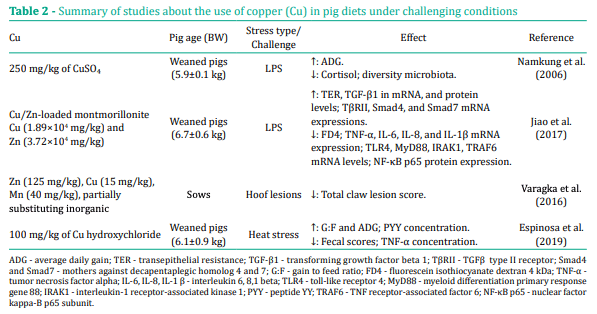
Regarding Cu, the efficacy of the pharmacological level (250 ppm/kg diet) on improving growth performance and lowering diarrhea is well documented (Forouzandeh et al., 2022).In the diet of pigs infected with E. coli LPS, the addition of Cu (250 ppm/kg diet) improved the growth performance during the first two weeks post-weaning and alleviated the stress response (e.g., decreased plasma cortisol concentration) (Namkung et al., 2006) (Table 2). However, Cu decreased the diversity of colonic microbiota, as demonstrated by the analysis of the density spectra of PCR-DGGE DNA profiles of the microbiota (Namkung et al., 2006). In some cases, reduced diversity of the intestinal microbiota can make the gastrointestinal tract of pigs more susceptible to invasions and colonization by pathogens (Gomes et al., 2023). Dietary supplementation with Cu/Zn-loaded montmorillonite (Cu and Zn concentrations of 1.89 × 10⁴ mg/kg and 3.72 × 10⁴ mg/kg diet, respectively) also has a positive effect on improving intestinal integrity, possibly associated with the regulation of the expression of intestinal inflammatory cytokines via the TLR4 and TGF-β1 canonical Smad signaling pathway (Jiao et al., 2017).
Table 2 - Summary of studies about the use of copper (Cu) in pig diets under challenging conditions
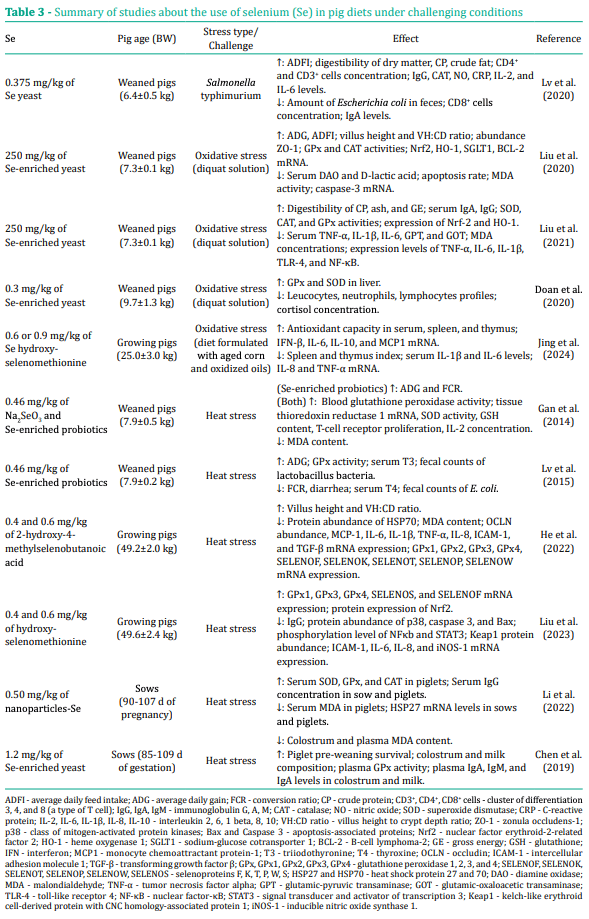
Less information has been found in the literature regarding the supplementation of Se in the diet of immunologically challenged pigs (Table 3). Lv et al. (2020) demonstrated that dietary supplementation of Se-enriched yeast (0.375 mg/kg diet) exerted effects on piglets after Salmonella typhimurium infection. Interestingly, Se-enriched yeast seemed to be more effective in enhancing growth performance and nutrient digestibility compared with sodium selenite at the same dosage. This could be attributed to the fact that Se-enriched yeast cells contain high levels of protein, B vitamins, fats, carbohydrates, and enzymes (Lv et al., 2020). Additionally, supplementation with Se-enriched yeast enhanced immune function and alleviated oxidative stress. This was evidenced by improved serum biochemical markers, such as increased IL-2, IL-6, IgG, and GPx levels (Lv et al., 2020).

2.3. Oxidative stress models

Adverse stimuli (e.g., thermal stress, unbalanced diet, or pollutants) during the pig’s life cycle in the production system eventually lead to an imbalance in redox levels in the body, resulting in oxidative stress (Hao et al., 2021). Oxidative stress can lead to an increase in intestinal permeability, compromising the function and integrity of the intestinal epithelial barrier (Hong et al., 2024). This imbalance can disrupt the microbiota, favoring the proliferation of pathogenic bacteria and potentially leading to diarrhea or reduced growth performance (Kim et al., 2015; Hao et al., 2021; Jing et al., 2024). Li et al. (2020) investigated a pig model subjected to chronic oxidative stress induced by D-galactose. Their findings revealed that D-galactose administration markedly affected growth performance, activities of SOD and GPx, suppressed related mRNA expression, elevated malondialdehyde (MDA) concentrations, disrupted intestinal microbiota, and altered serum amino acid profiles in pigs. Soybean glycinin (Sun et al., 2009), paraquat (Tang et al., 2024), hoof lesions (Varagka et al., 2016), diquat solution (Doan et al., 2020),diet formulated with aged corn, and oxidized oils (Silva-Guillen et al., 2020; Jing et al., 2024) are examples of challenges used in the literature to induce hypersensitivity and oxidative stress in pigs to assess the effect of trace minerals on the antioxidant capacity of pigs.
Paraquat induces redox imbalance by generating ROS through mitochondrial electron chain disruption, causing organ damage, and is commonly used to create oxidative stress models (Cai et al., 2024). Tang et al. (2024) studied the effect of dietary Zn lactate (80 mg/kg) on intestinal oxidative stress in paraquat-exposed piglets. They found that Zn lactate supplementation regulated intestinal barrier function, as evidenced by upregulated mRNA of the scaffolding protein zonula occludens-1 (ZO-1), which strengthens tight junctions (TJ) and thereby reduces intestinal permeability, contributing to intestinal homeostasis and protection against inflammation (Huang et al., 2023), increases jejunal and ileal villus heights, and reduces intestinal permeability. In addition, the antioxidant capacity and immune response were also enhanced. Dietary Zn lactate supplementation reduced serum IL-1β levels and jejunal IFN-γ mRNA abundance, while upregulating the mRNA expression of IL-10 in stressed piglets. Additionally, it inhibited constitutive androstane receptor activation to maintain intestinal redox homeostasis, and increased the diversity and improved composition of the intestinal microbiota, including the abundance of beneficial intestine microorganisms. These findings suggest that Zn lactate plays a protective role against oxidative stress, which can lead to a reduction in diarrhea and an improvement in average daily gain (ADG) of piglets, as observed in the same study (Tang et al., 2024).
Table 3 - Summary of studies about the use of selenium (Se) in pig diets under challenging conditions
Diquat is a bipyridyl herbicide that can utilize molecular oxygen to generate the superoxide anion radical (Doan et al., 2020; Hong et al., 2024).Exposure to diquat is a well-established method to induce oxidative stress (Hong et al., 2024). Doan et al. (2020) investigated the antioxidant effects of different Se sources (sodium selenite, soybean protein-chelated Se, and selenized yeast) supplemented at 0.3 mg of Se/kg on the resilience to diquat-induced oxidative stress in nursery pigs. Selenized yeast exhibited the most consistent antioxidant effects compared with other sources, enhancing endogenous antioxidant activity in various aspects, including reduced plasma cortisol levels, and increased plasma glutathione peroxidase (GPx) and superoxide dismutase (SOD) activity. Dietary supplementation with 250 mg of Se-enriched yeast/kg also mitigated the adverse effects of diquat injection on growth performance, oxidative stress, and inflammatory response, as demonstrated in the study by Liu et al. (2021). Specifically, the expression levels of TNF-α, IL-6, IL-1β, toll-like receptor 4 (TLR-4), and NF-κB in the liver and thymus were downregulated by Se yeast following diquat challenge. Additionally, Se yeast improved antioxidative activity, evidenced by increased activities of antioxidant enzymes such as SOD, catalase (CAT), and GPx. It also reduced MDA concentrations in the liver, thymus, and serum (Liu et al., 2021).
Additionally, in a previous study, Liu et al. (2020) observed similar results regarding antioxidant capacity when supplementing the diet of pigs exposed to a diquat challenge with Se-enriched yeast (250 mg/kg diet). The supplementation also attenuated oxidative stress-induced intestinal mucosa disruption, as evidenced by decreased serum concentrations of diamine oxidase and D-lactic acid, and improved intestinal barrier functions, including elevated villus height and the villus height to crypt depth ratio, improved distribution and abundance of ZO-1 in the jejunum epithelium, and decreased the total apoptosis rate of intestinal epithelial cells. These results demonstrate that Se-enriched yeast plays a key role in antioxidant and anti-inflammatory capacities, as well as in the improvement of intestinal barrier functions (Doan et al., 2020; Liu et al., 2020; Liu et al., 2021).
A diet formulated with aged corn and oxidized oils is considered a form of oxidative stress. Dietary supplementation with hydroxy-selenomethionine (0.6 or 0.9 mg of Se/kg) exhibited immune-protective effects in pigs, mitigating dietary oxidative stress by increasing antioxidant capacity (e.g., increased the activity of GPx and total antioxidant capacity (TAC), and decreased the content of MDA in serum, spleen, and thymus) and inhibiting the production of serum inflammatory cytokines IL-1β, IL-6, and TNF-α. Selenium supplementation also increased the expression of the selenotranscriptome in the thymus, with 10 selenoproteins identified as key in protecting against oxidative stress-induced inflammatory responses (Jing et al., 2024).

2.4. Heat stress models

Heat stress has a negative impact on the growth performance, reproduction, and overall health of pigs (Liu et al., 2023). In response to HS, pigs undergo immediate physiological changes, such as redirecting blood flow to the periphery for heat dissipation. This shift reduces blood flow to the gastrointestinal tract, leading to decreased oxygen levels (hypoxia) and nutrient supply, affecting gastrointestinal integrity and barrier function (Ortega and Szabó, 2021). Heat stress is linked to a decreased expression of junction proteins, compromising the intestinal barrier, allowing for bacterial influx and induction of oxidative stress (Pearce et al., 2013; Xia et al., 2022). Furthermore, prolonged HS that is called chronic heat stress (CHS) disrupt redox homeostasis and suppress immune system components, thereby increasing the risk of animal diseases, including an inflammatory reaction (Liu et al., 2023). These factors reduce feed intake and nutrient absorption, ultimately decreasing growth performance. Therefore, developing nutritional strategies (e.g., supranutritional mineral plans) to mitigate the negative effects of HS is crucial.
Different sources and dosages of Zn supplementation have been used in the diet of pigs challenged by HS, and have consistently shown benefits toward animal health. Sanz Fernandez et al. (2014) demonstrated that supplementing with Zn amino acid complex (ZnAA) at an appropriate dose (220 mg/kg) can improve the transepithelial electrical resistance of small intestinal integrity in growing pigs (43±6 kg BW) during severe HS. Moreover, ZnAA supplementation, providing 120 mg/kg Zn (60 mg from sulfate and 60 mg from organic Zn), improved several aspects of intestinal integrity in growing pigs (64±2.9 kg BW) under HS (Pearce et al., 2015). These effects were accompanied by increased epithelial resistance, maintained epithelial cell morphology, decreased circulating endotoxin, increased acute phase response, and improvements in blood markers of muscle catabolism, as indicated by decreased plasma urea nitrogen (Pearce et al., 2015).
Interestingly, a comprehensive metabolomic analysis of diverse biological samples revealed significant metabolic effects induced by HS and subtle metabolic changes associated with diets supplemented with ZnSO4 (120 ppm) and ZnAA (120 ppm) in growing pigs (71±9 kg BW) (Wang et al., 2016).Notably, ZnSO4 supplementation led to higher concentrations of short-chain fatty acids (SCFA), mainly acetic and propionic acid, in cecal fluid. Since SCFA in cecal fluid originate from microbial fermentation, this observation suggests that ZnSO4 may enhance these fermentation activities, especially the formation of acetic acid (Wang et al., 2016).Additionally, supplementation with Zn butyrate (819 mg Zn/kg diet) in growing pigs (35±1 kg BW) can maintain a higher growth rate and improve feed efficiency during HS, suggesting that Zn butyrate could be a suitable additive for maintaining pig health, especially during HS conditions (Mani et al., 2019). Zinc oxide at pharmacological levels (2500 mg/kg) was also evaluated in the diet of weaned piglets subjected to HS (Yoon et al., 2020). This supplementation showed benefits related to microbial composition, as demonstrated by the lower population of Clostridium spp. in the ileum, and the immune status of weaned piglets (Yoon et al., 2020). Thus, ZnO, besides benefiting the immune status of immunologically challenged piglets, can also be used to mitigate the negative impact of HS.
Regarding the trace mineral Cu, supplementation with Cu-H (100 mg Cu/kg diet) improved ADG from day 15 to 28 of the experimental period and during exposure to HS. Additionally, fecal scores were reduced throughout the period (Espinosa et al., 2019). There was also an increase in the concentration of peptide YY and a reduction in the concentration of TNF-α on day 14 of the experimental period for pigs fed diets with Cu-H. The authors theorized that these results could be attributed to the effect of Cu in increasing the expression of hypothalamic appetite regulators and the bacteriostatic nature of Cu-H in reducing inflammation caused by pathogens (Espinosa et al., 2019).
Several sources and dosages of Se supplementation were employed in the diet of pigs subjected to HS, consistently demonstrating benefits for animal health. Some studies have shown that dietary supplementation of Se-enriched probiotics (0.46 mg/kg) can improve animal growth performance, immune function, antioxidative capacity, thyroid function, and create a more stable and healthy gastrointestinal ecosystem (evidenced by higher fecal Lactobacillus bacteria counts and lower E. coli counts, as well as a reduction in the diarrhea occurrence) in post-weaning piglets raised under high ambient temperatures (25 to 40 °C) (Gan et al., 2014; Lv et al., 2015). The beneficial effects of the Se-enriched probiotics product may be attributed to the additive or synergistic effect between probiotics and Se. Alternatively, these effects may be enhanced by the organic Se source, which can potentiate antioxidant effects (Gan et al., 2014).
Furthermore, Liu et al. (2023) demonstrated that dietary Se supplementation (0.4 or 0.6 mg of Se/kg) in the form of hydroxy-selenomethionine, exceeding nutritional requirements (NRC, 2012), alleviates oxidative damage induced by CHS. This effect was indicated by increased splenic GPx and TAC activity, along with reduced MDA content. Additionally, Se supplementation mitigated apoptosis and inflammation, as evidenced by lower HSP70 expression, decreased serum concentrations of IgG and IL-6, suppression of inflammation-related signaling pathways (NF-κB, STAT1, and STAT3), and reduced mRNA expression of ICAM-1, IL-6, and IL-8 in the spleen of pigs (Liu et al., 2023).
Moreover, hydroxy-selenomethionine supplementation restored the expression of genes encoding selenoproteins to control levels. Among these genes, GPX1, GPX3, and GPX4—key members of the GPx family of antioxidant enzymes—play essential roles in maintaining cellular redox balance, reducing inflammation and enhancing immune function (He et al., 2022). Consistent with these findings, dietary supplementation with 2-hydroxy-4-methylselenobutanoic acid (0.4 or 0.6 mg of Se/kg, exceeding nutritional requirements) exerted protective effects on the intestinal barrier and immune function in heat-stressed pigs, mediated by selenoprotein-related responses (He et al., 2022). In summary, the chain of events from HS to oxidative stress follows a flow described by: exposure to heat stress, cellular heat shock response, mitochondrial dysfunction, onset of oxidative stress, lipid peroxidation and inflammatory cascade, and apoptosis and immune dysfunction.
Sows experiencing HS, especially during gestation, exhibit symptoms such as increased breathing rate, constipation, significant metabolic strain, and reduced litter size (Wang et al., 2023). When supplemented in sow diets at a level of 0.50 mg of nano-selenium/kg, it demonstrated a reduction in oxidative damage caused by HS, improving the immune defenses of sows and piglets with intrauterine growth restriction (IUGR)(Li et al., 2022).This was evidenced by the increase in serum SOD, GPx, and CAT activities in IUGR piglets, an increase in serum IgG concentration in sow, and the regulation of mRNA levels of HSP70 and HSP27, indicating the benefits for sows and IUGR piglets exposed to HS (Li et al., 2022). Furthermore, increasing Se supply to 1.2 mg/kg in the form of Se-enriched yeast for heat-stressed sows improved pre-weaning piglet survival, colostrum and milk composition, as well as maternal Se status, antioxidant capacity, and immunoglobulin transfer (Chen et al., 2019). 
It is important to note that Se works synergistically with vitamin E and is more readily absorbed in its presence (Pecoraro et al., 2022). Dietary Se (1.0 ppm) and vitamin E (200 IU/kg) levels greater than those usually recommended for pigs mitigated the impacts of HS on intestinal barrier integrity, associated with a reduction in oxidative stress (Pecoraro et al., 2022). Liu et al. (2016) demonstrated that high Se and vitamin E doses resulted in an increase in GPx-2 mRNA abundance and GPx activity, a decrease in the oxidized to reduced GSH ratio, and reduced impacts of HS on intestinal barrier function, as indicated by both transepithelial resistance and FD4 permeability. Huang et al. (2023) also observed improvement in intestinal integrity, for example, α-tocopherol (20 mg/kg to 50 mg/kg) enhanced the expression of TJ proteins in the intestine and inhibited permeability under normal healthy conditions, both in vivo and in vitro.
Another approach used by studies in the literature is the provision of a diet fortified with vitamins and microminerals at elevated levels and in combination (Liu et al., 2016; Ortega et al., 2022; Ortega et al., 2023). Supplementation of vitamins and microminerals at different levels (vitamin C at 150 mg/kg, vitamin E at 41 mg/kg, Zn at 100 mg/kg, and Se at 0.21 mg/kg) in pigs under CHS conditions (30 °C for three weeks) improved growth performance (Ortega et al., 2022).Ortega et al. (2023) demonstrated that increasing the dietary antioxidant levels in diet, both at medium (vitamin C at 150 mg/kg, vitamin E at 41 mg/kg, Zn at 100 mg/kg, and Se at 0.21 mg/kg) and higher (vitamin C at 300 mg/kg, vitamin E at 71 mg/kg, Zn at 150 mg/kg, and Se at 0.26 mg/kg) levels, resulted in higher digestibility and/or retention of dry matter, crude protein, crude fiber, calcium, sodium, Zn, and Se. The authors attributed these results to the benefits of dietary antioxidants in alleviating the damage induced by HS in intestinal epithelial cells. This improvement in intestinal barrier integrity and function could lead to enhanced digestibility (Ortega et al., 2023). The supplementation also increased the gene expression level of the anti-inflammatory cytokine IL-10, decreased the mRNA level of the pro-inflammatory TNF-α, and lowered the mRNA expression of HSP70 (Ortega et al., 2023).

2.5. Dose requirements of trace minerals (Zn, Cu, and Se) for pig under challenging conditions
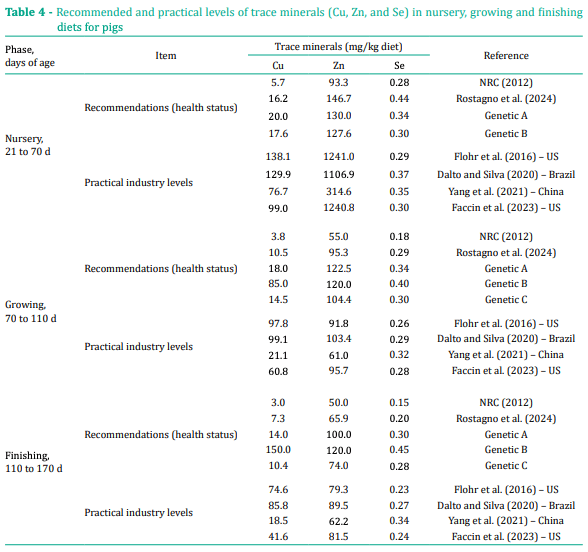
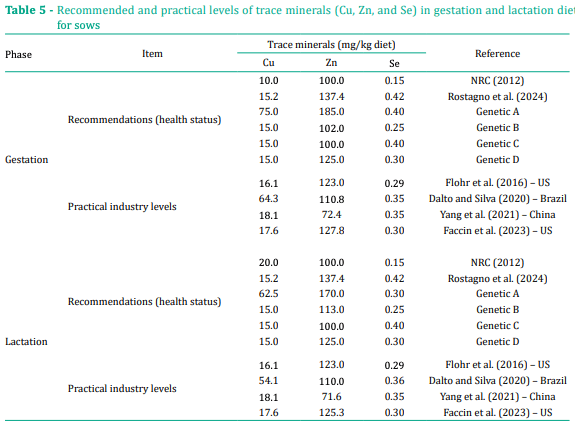
The recommended and practical levels of these trace minerals for pigs and sows are shown in Tables 4 and 5, respectively. Most of the literature evaluating Zn supplementation in the diets of pigs under challenging conditions used pharmacological levels of ZnO (2400 to 3100 mg/kg). These levels are well established to benefit the intestinal integrity and absorptive capacity of the mucosa of weaned piglets (Slade et al., 2011; Chai et al., 2014b).In fact, animals under immunological challenge benefited from the pharmacological levels. However, other sources of Zn used at certain dosages have also been shown to benefit pigs under challenging conditions: 100 ppm encapsulated ZnO (Kim et al., 2015) and 100 to 200 ppm lipid-coated ZnO for ETEC model (Han et al., 2018); 80 mg of Zn lactate/kg for paraquat model (Tang et al., 2024); and 220 mg of Zn AA complex/kg (Sanz Fernandez et al., 2014), 120 mg of Zn sulfate + Zn AA complex/kg (Pearce et al., 2015),120 mg of ZnSO4 /kg (Wang et al., 2016), and 819 mg of encapsulated Zn butyrate/kg under HS (Mani et al., 2019).In summary, administering low doses of these sources had comparable effects to pharmacological levels of ZnO in mitigating the damage caused by imposed stress conditions in weaned and growing pigs, without the concerns typically associated with high-dose ZnO supplementation.
Table 4 - Recommended and practical levels of trace minerals (Cu, Zn, and Se) in nursery, growing and finishing
There is limited evidence in the literature regarding the levels of supplemental Cu in diets for pigs under challenging conditions, highlighting the need for further studies. Research findings indicate that supplementing the diet of weaned pigs with 250 ppm of Cu from Cu sulfate using an LPS challenge model (Namkung et al., 2006) and 100 mg of Cu/kg from Cu-H under HS conditions (Espinosa et al., 2019) has been shown to enhance performance and immune status. The suggested levels of Cu by nutritional requirement tables for the weaned pig phase are approximately 5.7 mg/kg diet (NRC, 2012) and 16.2 mg/kg diet (Rostagno et al., 2024). The practical levels used by the swine industry in this same phase is approximately 250 mg/kg (Dalto and Silva, 2020; Forouzandeh et al., 2022). However, in some countries, a reduced authorized maximum level of Cu in feed has been proposed due to environmental concerns.
Based on findings from several studies and reviews on Se and immunity, there is consistent evidence showing the effectiveness of Se dietary supplementation in maintaining homeostasis in several metabolic processes in pigs (Dalgaard et al., 2018; Pecoraro et al., 2022; Zheng et al., 2022; Wang et al., 2023).Therefore, Se supplementation could serve as a nutritional strategy to help animals reduce the negative effects on their production performance and health during challenging conditions. However, the effective dosage varies depending on the source of Se product used. For weaned and growing pigs, the dosage varies between 0.3 and 0.46 mg Se/kg diet for most evaluated sources: sodium selenite (Gan et al., 2014), Se-enriched yeast (Doan et al., 2020; Lv et al., 2020), Se-enriched probiotics (Gan et al., 2014; Lv et al., 2015), 2-hydroxy-4-methylselenobutanoic acid (He et al., 2022), and hydroxyselenomethionine (Liu et al., 2023).Even higher levels such as 0.6 and 0.9 mg Se/kg diet have also been shown to be effective with the sources hydroxy-selenomethionine (Jing et al., 2024; Liu et al., 2023) and 2-hydroxy-4-methylselenobutanoic acid (He et al., 2022), but care must be taken due to possible toxicity and interactions with other minerals. For pregnant and lactating sows under challenging conditions, the levels found in the literature that have been shown to benefit sow reproduction are 0.50 mg of Se/kg diet using nano-Se (Li et al., 2022) and 1.2 mg of Se/kg diet using Se-enriched yeast (Chen et al., 2019)
Table 5 - Recommended and practical levels of trace minerals (Cu, Zn, and Se) in gestation and lactation diets

3. Conclusions and future perspectives

Supplementation of Zn, Cu, and Se above standard requirements enhances immune function and mitigates oxidative stress under various challenge models, potentially improving overall health and performance. Several studies highlighted in this review have suggested that administering low doses of various Zn sources can effectively mitigate stress damage in weaned and growing pigs. Copper supplementation has been suggested to benefit pigs facing challenges such as LPS exposure and heat stress, showing improvements in growth performance and reduced stress responses. The biological functions of Se are largely mediated through its incorporation into selenoproteins, many of which are key antioxidant enzymes. The benefits of Se supplementation have been indicated in oxidative stress and heat stress models in weaned and growing pigs and in sows.
Overall, more studies are needed to evaluate the different sources and levels of supplementation and their effects on immune response and antioxidant capacity in pigs under challenging conditions. Further investigation into the supplementation of these trace minerals in specific challenging conditions can provide valuable insights for the formulation of more effective diets for pigs in modern production systems.
  
This article was originally published in Revista Brasileira de Zootecnia, 54:e20250041, 2025. https://doi.org/10.37496/rbz5420250041. This is an Open Access article distributed under the terms of the Creative Commons Attribution License (http://creativecommons.org/licenses/by/4.0/).

Bergeron, N.; Robert, C. and Guay, F. 2017. Feed supplementation with arginine and zinc on antioxidant status and inflammatory response in challenged weanling piglets. Animal Nutrition 3:236–246. https://doi.org/10.1016/j.aninu.2017.06.009

Cai, L.; Ming, D.; Chen, W.; Zhao, Y.; Li, Y.; Sun, W.; Pi, Y.; Jiang, X. and Li, X. 2024. Silybin alleviated hepatic injury by regulating redox balance, inflammatory response, and mitochondrial function in weaned piglets under paraquat-induced oxidative stress. Antioxidants 13:324. https://doi.org/10.3390/antiox13030324

Chai, W.; Wang, Z.; Janczyk, P.; Twardziok, S.; Blohm, U.; Osterrieder, N. and Burwinkel, M. 2014a. Elevated dietary zinc oxide levels do not have a substantial effect on porcine reproductive and respiratory syndrome virus (PPRSV) vaccination and infection. Virology Journal 11:1–5. https://doi.org/10.1186/1743-422X-11-140

Chai, W.; Zakrzewski, S. S.; Günzel, D.; Pieper, R.; Wang, Z.; Twardziok, S.; Janczyk, P.; Osterrieder, N. and Burwinkel, M. 2014b. High-dose dietary zinc oxide mitigates infection with transmissible gastroenteritis virus in piglets. BMC Veterinary Research 10:75. https://doi.org/10.1186/1746-6148-10-75

Chen, J.; Zhang, F.; Guan, W.; Song, H.; Tian, M.; Cheng, L.; Shi, K.; Song, J.; Chen, F.; Zhang, S.; Yang, F.; Ren, C. and Zhang, Y. 2019. Increasing selenium supply for heat-stressed or actively cooled sows improves piglet preweaning survival, colostrum and milk composition, as well as maternal selenium, antioxidant status and immunoglobulin transfer. Journal of Trace Elements in Medicine and Biology 52:89–99. https://doi.org/10.1016/j.jtemb.2018.11.010

Dalgaard, T. S.; Briens, M.; Engberg, R. M. and Lauridsen, C. 2018. The influence of selenium and selenoproteins on immune responses of poultry and pigs. Animal Feed Science and Technology 238:73–83. https://doi.org/10.1016/j.anifeedsci.2018.01.020

Dalto, D. B. and Silva, C. A. 2020. A survey of current levels of trace minerals and vitamins used in commercial diets by the Brazilian pork industry—a comparative study. Translational Animal Science 4:txaa195. https://doi.org/10.1093/tas/txaa195

Doan, N.; Liu, Y.; Xiong, X.; Kim, K.; Wu, Z.; Bravo, D. M.; Blanchard, A. and Ji, P. 2020. Organic selenium supplement partially alleviated diquat-induced oxidative insults and hepatic metabolic stress in nursery pigs. British Journal of Nutrition 124:23–33. https://doi.org/10.1017/S0007114520000689

Espinosa, C. D.; Fry, R. S.; Usry, J. L. and Stein, H. H. 2019. Effects of copper hydroxychloride and choice white grease on growth performance and blood characteristics of weanling pigs kept at normal ambient temperature or under heat stress. Animal Feed Science and Technology 256:114257. https://doi.org/10.1016/j.anifeedsci.2019.114257

Faccin, J. E. G.; Tokach, M. D.; Goodband, R. D.; DeRouchey, J. M.; Woodworth, J. C. and Gebhardt, J. T. 2023. Industry survey of added vitamins and trace minerals in US swine diets. Translational Animal Science 7:txad035. https://doi.org/10.1093/tas/txad035

Flohr, J. R.; DeRouchey, J. M.; Woodworth, J. C.; Tokach, M. D.; Goodband, R. D. and Dritz, S. S. 2016. A survey of current feeding regimens for vitamins and trace minerals in the US swine industry. Journal of Swine Health and Production 24:290–303. https://doi.org/10.54846/jshap/963

Forouzandeh, A.; Blavi, L.; Pérez, J. F.; D’Angelo, M.; González-Solé, F.; Monteiro, A.; Stein, H. H. and Solà-Oriol, D. 2022. How copper can impact pig growth: comparing the effect of copper sulfate and monovalent copper oxide on oxidative status, inflammation, gene abundance, and microbial modulation as potential mechanisms of action. Journal of Animal Science 100:skac224. https://doi.org/10.1093/jas/skac224

Gan, F.; Chen, X.; Liao, S. F.; Lv, C.; Ren, F.; Ye, G.; Pan, C.; Huang, D.; Shi, J.; Shi, X.; Zhou, H. and Huang, K. 2014. Selenium-enriched probiotics improve antioxidant status, immune function, and selenoprotein gene expression of piglets raised under high ambient temperature. Journal of Agricultural and Food Chemistry 62:4502–4508. https://doi.org/10.1021/jf501065d

Genova, J. L.; Melo, A. D. B.; Rupolo, P. E.; Carvalho, S. T.; Costa, L. B. and Carvalho, P. L. O. 2020. A summary of feed additives, intestinal health and intestinal alkaline phosphatase in piglet nutrition. Czech Journal of Animal Science 65:281–294. https://doi.org/10.17221/70/2020-CJAS

Gomes, M. S.; Duarte, M. E.; Saraiva, A.; Oliveira, L. L.; Teixeira, L. M. and Rocha, G. C. 2023. Effect of antibiotics and low-crude protein diets on growth performance, health, immune response, and fecal microbiota of growing pigs. Journal of Animal Science 101:skad357. https://doi.org/10.1093/jas/skad357

Han, J. H.; Song, M. H.; Kim, H. N.; Jang, I.; Lee, C. Y. and Park, B. C. 2018. Effects of the lipid-coated zinc oxide dietary supplement on intestinal mucosal morphology and gene expression associated with the gut health in weanling pigs challenged with enterotoxigenic Escherichia coli K88. Canadian Journal of Animal Science 98:538–547. https://doi.org/10.1139/cjas-2017-0127

Hao, Y.; Xing, M. and Gu, X. 2021. Research progress on oxidative stress and its nutritional regulation strategies in pigs. Animals 11:1384. https://doi.org/10.3390/ani11051384

He, Y.; Liu, Y.; Tang, J.; Jia, G.; Liu, G.; Tian, G.; Chen, X.; Cai, J.; Kang, B. and Zhao, H. 2022. Selenium exerts protective effects against heat stress‐induced barrier disruption and inflammation response in jejunum of growing pigs. Journal of the Science of Food and Agriculture 102:496–504. https://doi.org/10.1002/jsfa.11377

Hong, C.; Huang, Y.; Cao, S.; Wang, L.; Yang, X.; Hu, S.; Gao, K.; Jiang, Z. and Xiao, H. 2024. Accurate models and nutritional strategies for specific oxidative stress factors: Does the dose matter in swine production? Journal of Animal Science and Biotechnology 15:11. https://doi.org/10.1186/s40104-023-00964-8

Huang, Y.; He, C.; Hu, Z.; Chu, X.; Zhou, S.; Hu, X.; Deng, J.; Xiao, D.; Tao, T.; Yang, H.; Chen, A. F.; Yin, Y. and Yang, X. 2023. The beneficial effects of alpha‐tocopherol on intestinal function and the expression of tight junction proteins in differentiated segments of the intestine in piglets. Food Science & Nutrition 11:677–687. https://doi.org/10.1002/fsn3.3103

Jiao, L.; Wang, C. C.; Wu, H.; Gong, R.; Lin, F. H.; Feng, J. and Hu, C. 2017. Copper/zinc-loaded montmorillonite influences intestinal integrity, the expression of genes associated with inflammation, TLR4–MyD88 and TGF-β1 signaling pathways in weaned pigs after LPS challenge. Innate Immunity 23:648–655. https://doi.org/10.1177/1753425917733033

Jing, J.; Xiang, X.; Tang, J.; Wang, L.; Jia, G.; Liu, G.; Chen, X.; Tian, G.; Cai, J.; Kang, B. and Zhao, H. 2024. Hydroxy selenomethionine exert different protective effects against dietary oxidative stress–induced inflammatory responses in spleen and thymus of pigs. Biological Trace Element Research 202:3107–3118. https://doi.org/10.1007/s12011-023-03925-4

Kim, S. J.; Kwon, C. H.; Park, B. C.; Lee, C. Y. and Han, J. H. 2015. Effects of a lipid-encapsulated zinc oxide dietary supplement on growth parameters and intestinal morphology in weanling pigs artificially infected with enterotoxigenic Escherichia coli. Journal of Animal Science and Technology 57:4. https://doi.org/10.1186/s40781-014-0038-9

Le Floc’h, N.; Gondret, F. and Resmond, R. 2021. Identification of blood immune and metabolic indicators explaining the variability of growth of pigs under contrasted sanitary conditions. BMC Veterinary Research 17:166. https://doi.org/10.1186/s12917-021-02872-3

Lei, X. J. and Kim, I. H. 2020. Evaluation of coated zinc oxide in young pigs challenged with enterotoxigenic Escherichia coli K88. Animal Feed Science and Technology 262:114399. https://doi.org/10.1016/j.anifeedsci.2020.114399

Li, Y.; Fan, M.; Qiu, Q.; Wang, Y.; Shen, X. and Zhao, K. 2022. Nano-selenium and Macleaya cordata extracts improved immune function and reduced oxidative damage of sows and IUGR piglets after heat stress of sows in late gestation. Biological Trace Element Research 200:5081–5090. https://doi.org/10.1007/s12011-022-03103-y

Li, Y.; Wang, P.; Yin, J.; Jin, S.; Su, W.; Tian, J.; Li, T. and Yao, K. 2020. Effects of ornithine α-ketoglutarate on growth performance and gut microbiota in a chronic oxidative stress pig model induced by d-galactose. Food & Function 11:472–482. https://doi.org/10.1039/c9fo02043h

Liu, F.; Cottrell, J. J.; Furness, J. B.; Rivera, L. R.; Kelly, F. W.; Wijesiriwardana, U.; Pustovit, R. V.; Fothergill, L. J.; Bravo, D. M.; Celi, P.; Leury, B. J.; Gabler, N. K. and Dunshea, F. R. 2016. Selenium and vitamin E together improve intestinal epithelial barrier function and alleviate oxidative stress in heat‐stressed pigs. Experimental Physiology 101:801–810. https://doi.org/10.1113/EP085746

Liu, L.; Chen, D.; Yu, B.; Luo, Y.; Huang, Z.; Zheng, P.; Mao, X.; Yu, J.; Luo, J.; Yan, H. and He, J. 2021. Influences of selenium-enriched yeast on growth performance, immune function, and antioxidant capacity in weaned pigs exposure to oxidative stress. BioMed Research International 2021:5533210. https://doi.org/10.1155/2021/5533210

Liu, L.; Wu, C.; Chen, D.; Yu, B.; Huang, Z.; Luo, Y.; Zheng, P.; Mao, X.; Yu, J.; Luo, J.; Yan, H. and He, J. 2020. Selenium-enriched yeast alleviates oxidative stress-induced intestinal mucosa disruption in weaned pigs. Oxidative Medicine and Cellular Longevity 2020:5490743. https://doi.org/10.1155/2020/5490743

NRC - National Research Council. 2012. Nutrient requirements of swine. 11th ed. National Academies Press, Washington, DC.

Rostagno, H. S.; Albino, L. F. T.; Calderano, A. A.; Hannas, M. I.; Sakomura, N. K.; Perazzo, F. G.; Rocha, G. C.; Saraiva, A.; Abreu, M. L. T.; Genova, J. L. and Tavernari, F. C. 2024. Tabelas brasileiras para aves e suínos: composição de alimentos e exigências nutricionais. 5th ed. UFV, Viçosa, MG. https://doi.org/10.26626/978-85-8179-206-4.2024.B001

Lv, C. H.; Wang, T.; Regmi, N.; Chen, X.; Huang, K. and Liao, S. F. 2015. Effects of dietary supplementation of selenium-enriched probiotics on production performance and intestinal microbiota of weanling piglets raised under high ambient temperature. Journal of Animal Physiology and Animal Nutrition 99:1161–1171. https://doi.org/10.1111/jpn.12326

Lv, L.; Zhang, H.; Liu, Z.; Lei, L.; Feng, Z.; Zhang, D.; Ren, Y. and Zhao, S. 2020. Comparative study of yeast selenium vs. sodium selenite on growth performance, nutrient digestibility, anti-inflammatory and anti-oxidative activity in weaned piglets challenged by Salmonella typhimurium. Innate Immunity 26:248–258. https://doi.org/10.1177/1753425919888566

Mani, V.; Rubach, J. K.; Sanders, D. J.; Pham, T.; Koltes, D. A.; Gabler, N. K. and Poss, M. J. 2019. Evaluation of the protective effects of zinc butyrate in IPEC-J2 cells and grower pigs under heat stress. Translational Animal Science 3:842–854. https://doi.org/10.1093/tas/txz023

Namkung, H.; Gong, J.; Yu, H. and De Lange, C. F. M. 2006. Effect of pharmacological intakes of zinc and copper on growth performance, circulating cytokines and gut microbiota of newly weaned piglets challenged with coliform lipopolysaccharides. Canadian Journal of Animal Science 86:511–522. https://doi.org/10.4141/A05-075

Ortega, A. D. S. V.; Babinszky, L.; Oriedo, O. H.; Csernus, B.; Ozsváth, X. E.; Czeglédi, L.; Oláh, J. and Szabó, C. 2023. Impact of heat stress length and dietary antioxidant supplementation on the nutrient digestibility, metabolism and immune response of fattening pigs. Annals of Agricultural Sciences 68:87–96. https://doi.org/10.1016/j.aoas.2023.06.002

Ortega, A. D. S. V.; Babinszky, L.; Rózsáné-Várszegi, Z.; Ozsváth, X. E.; Oriedo, O. H.; Oláh, J. and Szabó, C. 2022. Effects of high vitamin and micro-mineral supplementation on growth performance and pork quality of finishing pigs under heat stress. Acta Agriculturae Slovenica 118:1–10. https://doi.org/10.14720/aas.2022.118.4.2808

Ortega, A. D. S. V. and Szabó, C. 2021. Adverse effects of heat stress on the intestinal integrity and function of pigs and the mitigation capacity of dietary antioxidants: A review. Animals 11:1135. https://doi.org/10.3390/ani11041135

Patience, J. F.; Rossoni-Serão, M. C. and Gutiérrez, N. A. 2015. A review of feed efficiency in swine: biology and application. Journal of Animal Science and Biotechnology 6:33.

Pearce, S. C.; Mani, V.; Weber, T. E.; Rhoads, R. P.; Patience, J. F.; Baumgard, L. H. and Gabler, N. K. 2013. Heat stress and reduced plane of nutrition decreases intestinal integrity and function in pigs. Journal of Animal Science 91:5183–5193. https://doi.org/10.2527/jas.2013-6759

Pearce, S. C.; Sanz Fernandez, M. V.; Torrison, J.; Wilson, M. E.; Baumgard, L. H. and Gabler, N. K. 2015. Dietary organic zinc attenuates heat stress–induced changes in pig intestinal integrity and metabolism. Journal of Animal Science 93:4702–4713. https://doi.org/10.2527/jas.2015-9018

Pecora, F.; Persico, F.; Argentiero, A.; Neglia, C. and Esposito, S. 2020. The role of micronutrients in support of the immune response against viral infections. Nutrients 12:3198. https://doi.org/10.3390/nu12103198

Pecoraro, B. M.; Leal, D. F.; Frias-De-Diego, A.; Browning, M.; Odle, J. and Crisci, E. 2022. The health benefits of selenium in food animals: a review. Journal of Animal Science and Biotechnology 13:58. https://doi.org/10.1186/s40104-022-00706-2

Pluske, J. R.; Kim, J. C. and Black, J. L. 2018. Manipulating the immune system for pigs to optimise performance. Animal Production Science 58:666–680. https://doi.org/10.1071/AN17598

Sanz Fernandez, M. V.; Pearce, S. C.; Gabler, N. K.; Patience, J. F.; Wilson, M. E.; Socha, M. T.; Torrison, J. L.; Rhoads, R. P. and Baumgard, L. H. 2014. Effects of supplemental zinc amino acid complex on gut integrity in heat-stressed growing pigs. Animal 8:43–50. https://doi.org/10.1017/S1751731113001961

Sargeant, H. R.; McDowall, K. J.; Miller, H. M. and Shaw, M. A. 2010. Dietary zinc oxide affects the expression of genes associated with inflammation: Transcriptome analysis in piglets challenged with ETEC K88. Veterinary Immunology and Immunopathology 137:120–129.

Silva-Guillen, Y. V.; Arellano, C.; Boyd, R. D.; Martinez, G. and van Heugten, E. 2020. Growth performance, oxidative stress and immune status of newly weaned pigs fed peroxidized lipids with or without supplemental vitamin E or polyphenols. Journal of Animal Science and Biotechnology 11:22. https://doi.org/10.1186/s40104-020-0431-9

Slade, R. D.; Kyriazakis, I.; Carroll, S. M.; Reynolds, F. H.; Wellock, I. J.; Broom, L. J. and Miller, H. M. 2011. Effect of rearing environment and dietary zinc oxide on the response of group-housed weaned pigs to enterotoxigenic Escherichia coli O149 challenge. Animal 5:1170–1178. https://doi.org/10.1017/S1751731111000188

Sun, P.; Li, D.; Dong, B.; Qiao, S.; Ma, X. and Chen, X. 2009. Vitamin C: An immunomodulator that attenuates anaphylactic reactions to soybean glycinin hypersensitivity in a swine model. Food Chemistry 113:914–918. https://doi.org/10.1016/j.foodchem.2008.08.018

Tang, W.; Xiang, X.; Wang, H.; Zhou, W.; He, L.; Yin, Y. and Li, T. 2024. Zinc lactate alleviates oxidative stress by modulating crosstalk between constitutive androstane receptor signaling pathway and gut microbiota profile in weaned piglets. Animal Nutrition 16:23–33. https://doi.org/10.1016/j.aninu.2023.10.001

Tian, G.; Liang, X.; Chen, D.; Mao, X.; Yu, J.; Zheng, P.; He, J.; Huang, Z. and Yu, B. 2016. Vitamin D3 supplementation alleviates rotavirus infection in pigs and IPEC-J2 cells via regulating the autophagy signaling pathway. Journal of Steroid Biochemistry and Molecular Biology 163:157–163. https://doi.org/10.1016/j.jsbmb.2016.05.004

Varagka, N.; Lisgara, M.; Skampardonis, V.; Psychas, V. and Leontides, L. 2016. Partial substitution, with their chelated complexes, of the inorganic zinc, copper and manganese in sow diets reduced the laminitic lesions in the claws and improved the morphometric characteristics of the hoof horn of sows from three Greek herds. Porcine Health Management 2:26. https://doi.org/10.1186/s40813-016-0040-3

Wang, L.; Urriola, P. E.; Luo, Z.; Rambo, Z. J.; Wilson, M. E.; Torrison, J. L.; Shurson, G. C. and Chen, C. 2016. Metabolomics revealed diurnal heat stress and zinc supplementation-induced changes in amino acid, lipid, and microbial metabolism. Physiological Reports 4:e12676. https://doi.org/10.14814/phy2.12676

Wang, L.; Wang, C.; Peng, Y.; Zhang, Y.; Liu, Y. and Yin, Y. 2023. Research progress on anti-stress nutrition strategies in swine. Animal Nutrition 13:342–360. https://doi.org/10.1016/j.aninu.2023.03.006

Xia, B.; Wu, W.; Fang, W.; Wen, X.; Xie, J. and Zhang, H. 2022. Heat stress-induced mucosal barrier dysfunction is potentially associated with gut microbiota dysbiosis in pigs. Animal Nutrition 8:289–299. https://doi.org/10.1016/j.aninu.2021.05.012

Yang, J.; Tian, G.; Chen, D.; Zheng, P.; Yu, J.; Mao, X.; He, J.; Luo, Y.; Luo, J.; Huang, Z.; Wu, A. and Yu, B. 2019. Dietary 25-hydroxyvitamin D3 supplementation alleviates porcine epidemic diarrhea virus infection by improving intestinal structure and immune response in weaned pigs. Animals 9:627. https://doi.org/10.3390/ani9090627

Yang, P.; Wang, H. K.; Li, L. X. and Ma, Y. X. 2021. The strategies for the supplementation of vitamins and trace minerals in pig production: surveying major producers in China. Animal Bioscience 34:1350–1364.

Yoon, S. Y.; Sa, S. J.; Cho, E. S.; Ko, H. S.; Choi, J. W. and Kim, J. S. 2020. Effects of zinc oxide and arginine on the intestinal microbiota and immune status of weaned pigs subjected to high ambient temperature. Animals 10:1537. https://doi.org/10.3390/ani10091537

Zheng, Y.; Xie, T.; Li, S.; Wang, W.; Wang, Y.; Cao, Z. and Yang, H. 2022. Effects of selenium as a dietary source on performance, inflammation, cell damage, and reproduction of livestock introduced by heat stress: A review. Frontiers in Immunology.


Related topics:
Authors:
Maykelly Gomes
Gabriel Rocha
Universidade Federal de Viçosa - UFV
Danyel Bueno Dalto
Agriculture and Agri-Food Canada
Jansller Genova
Show more
Recommend
Comment
Share
Profile picture
Would you like to discuss another topic? Create a new post to engage with experts in the community.
Featured users in Pig Industry
Chris Parks
Chris Parks
Cargill
Cargill
United States
Karo Mikaelian
Karo Mikaelian
Trouw Nutrition
United States
Erika Gisela Lin-Hendel
dsm-Firmenich
United States