Explore

Advertise on Engormix

Nutrition as a tool for responsible innovation in animal production

Published: February 19, 2026
Source : E.J Burton / School of Animal, Rural and Environmental Sciences, Nottingham Trent University, UK.
Summary

Surviving sustainably on Earth is one of a set of challenges that transcend national boundaries and are the primary focus of the United Nations (UN). The UN Sustainable Development Goals (UN SDGs) clearly exist to find balance between economic, social, and environmental needs, both now and in the future. Ensuring we operate within the planetary boundaries estimated necessary for human survival is creating opportunities to change the way we think and work but with this opportunity comes both risk and reward. Our challenge, and indeed our responsibility as nutritionists, is to identify how to ensure animal nutrition brings sustainable development for all, both locally in Canada and globally. This requires us to rapidly change the way we think and work in order to capitalise on the emerging opportunities in both production and processing of feed and animal proteins.

Feed production sometimes takes a narrow approach to sustainability, with a strong focus on the use of finite resources and the environmental impact of resulting manure. However, leading economic bodies (including the World Bank) increasingly recognise the reliance of economic and societal stability on environmental stability. It is therefore important that the feed sector begins to recognise the increasing global focus on the well-being of the environment and valuing it as natural capital. The concept of responsible innovation, where industry and academia give society the opportunity to scrutinise the assumptions, values and visions that drive science, has been evolving in the EU for some time. Responsible research frameworks offer nutritionists the foundation for a new responsible innovation ethos where regulators are increasingly willing to rapidly adapt their regulatory systems to prevent delaying innovation that is beneficial to society.

Keywords: UN SDGs, responsible innovation, sustainable food production.

Introduction
Advancing our knowledge of animal nutrition has been a globally significant research field for approaching a century. The vast knowledge accumulated on how to meet the nutritional requirements of livestock has allowed researchers to evolve towards use of nutrition to achieve the wider aims of global food security. In parallel to the highly focused advances in animal nutrition, other researchers were grappling with the seemingly intractable conflict between globalized economic growth and accelerating ecological degradation. In 1983, the UN invited former Prime Minister of Norway, Gro Harlem Brundtland to chair an independent commission to explore this conflict and propose solutions. The chief outcome was the reframing of economic development in a new paradigm: sustainable development; defined as “development that meets the needs of the present without compromising the ability of future generations to meet their own needs” (Brundtland, 1987). The concept of sustainable development was explained in depth through the discussion of climate change, economic development, and global goals that should be implemented to achieve sustainable development.
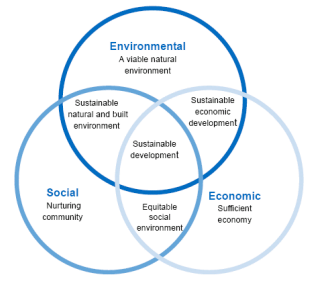
The Brundtland Report delineated how economic growth, social equity and environmental balance are essential to create a sustainable development solutions network – utilizing local, national and global development strategies. From this, sustainable development became based on three fundamental pillars: social, economic and environmental. Sustainability clearly exists to find balance between economic, social, and environmental needs, both now and in the future, which makes the three pillars a logical grouping system. However, sustainable development requires a holistic and systemic approach to the three pillars best visualised as a Venn diagram, shown in Figure 1 (Royer, 2019).
Figure 1: Sustainable Development

Sustainable development within and beyond boundaries

The close relationship between researchers and practitioners within the animal feed sector ensures that economic viability remains at the heart of innovations in animal nutrition: business units must be economically sustainable to remain in existence. However, the environmental and societal pillars of sustainable feed production are complex and often in conflict. Nutrition has a central role in managing these tensions. All life is ultimately regulated by natural systems, which makes environmental sustainability the first of the three sustainability pillars. Our work as feed manufacturers is pivotal to achieving food security; we continually advance the ability of humankind to create more from less. However, as we increase our detailed understanding, it is easy to lose track of the big picture: we have a wider role in ensuring we operate within the limits of the global environment. These limits, known as our ‘planetary boundaries’ are divided into 9 domains. This concept indicates that there are boundaries for the global environment that must not be surpassed for humans to survive sustainably on the Earth. Surviving sustainably on Earth is one of a set of challenges that transcend national boundaries and are the primary focus of the United Nations (UN).
Feed production sometimes takes a narrow approach to environmental sustainability, with a strong focus on finite resources and environmental impact of animal manure. However, environmental sustainability focuses holistically on the well-being of the environment. Therefore, this pillar includes climate change, water supply, and biodiversity; all of which are recognised by Agriculture and Agri-Food Canada (AAFC) within their land and environment stewardship programmes. Feed is reported to be the major contributor to the carbon cost associated with poultry products (Leinonen et al., 2012a ; 2012b ). While many elements of environmental impact resulting from our nutritional strategies lack the models and metrics necessary for quantification, carbon cost, more accurately described as global warming potential (GWP) is quantified in an almost overwhelming plethora of life cycle assessment (LCA) models (Alkhtib et al., 2023). While methodologies and databases for calculating GWP are diverse, LCA provides a common unit; CO2eq (also written as carbon dioxide equivalent, CO2 equivalent or CO2e). As the International Monetary Fund continues to promote carbon taxation policies to support global economic stability (Parry, 2019), nutritional evaluations must also include this unit alongside traditional measures (Burton et al., 2021).
Research for social sustainability has been historically overshadowed by concerns for environmental and economic sustainability (Vallance et al., 2011). Drawing societal sustainability into an animal context, the UN Sustainable Development Goals (SDGs), while providing an excellent framework for applying nutrition as a tool for sustainable feed production, fail to consider animal welfare (Messerli et al., 2019). However, within the European Union, the emergence of sustainability as a core policy objective (the ‘European Green Deal’) is shifting the focus and design of agriculture, food and rural policies to include societal sustainability (European Commission, 2019). However, the lack of established social metrics make it challenging to incorporate this element of sustainability into poultry production (Barral and Detang-Dessendre, 2023). Managing the opposing yet interlocked tensions related to environmental, social, and economic aspects of sustainability is one of the most crucial future challenges in the corporate world (Sasse-Werhahn et al., 2020).

Revolution in food production

In industry, the first industrial revolution was started in 1780 and represented the mechanization of manufacturing processes with the introduction of water and steam power. Thirty years later, the second industrial revolution initiated the era of mass production and in the late 1960s the third industrial revolution introduced automation using electronics and information technology (IT). Revolution in agriculture started much earlier and more slowly: switching around 12,000 years ago from a hunter-gatherer existence to selecting crops for agriculture. The Second Agricultural Revolution was both a contributing factor and consequence of the first industrial revolution: as societies grew larger and more complex, the farmers looked for new ways to maximize productivity by replacing low-yield crops with higher-yielding ones and developing chemical fertilizers to increase output. The third agricultural revolution, known as The Green Revolution spread globally until the late 1980s as a period of technology transfer initiatives that saw greatly increased crop yields and agricultural production. However, we are now experiencing some negative consequences: the energy for the Green Revolution was provided by fossil fuels, our use of inorganic fertilizers has created imbalances in geochemical flow of nitrogen and phosphorus and the pesticide usage has contributed to reduction in biodiversity. The Green Revolution irrefutably saved several nations from famine and economic disaster, but the luxury of hindsight allows us to reflect on whether any aspects of the Green Revolution could have been refined to avoid the associated negative environment impacts.
Agriculture and industry are now intrinsically linked so, when revolution occurs, the effect is simultaneous. The 4th industrial revolution is an advanced digital technology, combining artificial intelligence, robotics and big data to create Ag 4.0: the fourth agricultural revolution. This is creating opportunities to change the way we think and work but with this opportunity comes both risk and reward. Our challenge, and indeed our responsibility, is to identify how to ensure Ag 4.0 brings sustainable development for all, both locally in Canada and globally.

Responsible Innovation

Ag 4.0 requires us to rapidly change the way we think and work in order to capitalize on the emerging opportunities in both production and processing of feed and animal proteins. Many of today's regulatory systems are based on those introduced in the 20th century for technologies that are very different from current innovations associated with animal feed. This means regulatory compliance may become a barrier to innovation unless a new approach is established between regulators and innovators. The concept of responsible innovation, where companies give society opportunity to scrutinize the assumptions, values and visions that drive science, has been evolving in the EU from origins in responsible research frameworks developed for EU-funded research programmes through to consolidated responsible research and innovation frameworks (CRIFs) that support both academia and industry in a single resource (Tait, 2017).
Responsible behavior has become a core requirement of companies operating in all sectors, regardless of the extent of innovation involved in their business models. The ISO 26000 Standard, ‘Guidance on social responsibility’, launched in 2010, has addressed this requirement through a set of general principles including human rights, labour practices, the environment, fair operating practices, consumer issues, and community involvement and development (ISO, 2010). A parallel initiative advocating responsible research and innovation (RRI), has focused on innovators in academia and companies - particularly those developing transformative or disruptive innovations. The EU’s approach to RRI, like the ISO standard, focuses on general company-level requirements, including engagement, gender equality, science education, open access, ethics and governance (ICD-GfRa. 2012; European Commission 2014)
The UK’s approach to RRI was led by the Engineering and Physical Sciences Research Council whose AREA (Anticipate, Reflect, Engage, and Act) framework focused on the tools and techniques needed to deliver RRI (EPSRC. 2013). These RRI initiatives addressed both research and innovation without making any significant distinctions between them. However, recent papers (Tait, 2017; Hoyos-Flight et al., 2024) demonstrate that RRI needs to address additional innovation-related requirements that are not dealt with under the heading of social responsibility. Implementation of RRI by companies needs to consider: (a) the requirement to abide by agreed standards of societally responsible behaviour (company level responsibility); and (b) the specific properties of an innovative product, process, or service, as it becomes part of established or new value chains, often changing company ownership in the process (technology-specific responsibility) (Tait, 2021). Technology-specific responsibility varies depending on the nature of the innovative product, process, or service, so a company or innovation consortium will need to have a tailored approach to each innovation in its portfolio. The long supply chains involving animal feed make responsible innovation particularly important and challenge due to the diversity of expertise and (often) the distance from the point of societal engagement.
The first attempt to apply RI principles to UK publicly-funded translational research was in 2012. Government-funded calls for synthetic biology required all applicants to demonstrate how they would “…anticipate and give responsible consideration to the intended and potential unintended impacts of the commercial development and use of the technology, including the potential for misuse, before the work begins”. This step started a new approach that eventually led to publication of the Innovate UK-funded BSI Publicly Available Specification (PAS 440) Guidance on Responsible Innovation (BSI, 2020).
The PAS 440 provides a Responsible Innovation Framework (RIF) that companies can use to guide their own responsible behaviour and to demonstrate that they are innovating responsibly, charting how they identify, evaluate, record and communicate the expected benefits and possible risks of their innovative developments. The factors that innovators are guided to consider will help them to achieve the benefits of innovation in a timely manner and avoid any potential harm or unintended misuse of a new product, process or service. This in turn, will make companies more resilient, save costs, improve their sustainability, and gain customer and investor trust.
PAS 440 is intended to strike a balance between the Precautionary Principle (European Commission, 2000) and the Innovation Principle (European Commission, 2022) to bring safe and beneficial products to market without stifling innovation. It is manageable by small companies with limited resources, easily incorporated into project management and risk management standard operating procedures and provides guidance on conducting stakeholder engagement in potentially contentious circumstances. By encouraging early engagement with stakeholders, including value chain partners (VCPs), the PAS 440 can facilitate the progress of a new product throughout a value chain and contribute to coordinate responsible behaviour among companies involved in the value chain (Imaz et al., 2020; Annesi, 2023).

ONE Health

Many of the global challenges that can be positively influenced through our choices in feed manufacture are encapsulated by the UN ONE Health approach. One Health is an integrated, unifying approach that aims to sustainably balance and optimize the health of people, animals and ecosystems. The term ‘One Health’ was first used in early 2003 in association with the emergence of severe acute respiratory disease (SARS) and the spread of highly pathogenic avian influenza H5N1. One Health became established conceptually through the ‘Manhattan Principles’, which clearly recognized the link between human and animal health and the threats that diseases pose to food supplies and economies (Cook et al., 2004). Feeding strategies designed to enhance poultry gut health to reduce reliance on antibiotics is a powerful example of One Health in practice (La Ragione and Burton, 2023).
Antimicrobial resistance, which occurs when previously susceptible bacteria become resistant to the drug(s) used to treat them, is a major global threat to animals, ecosystems, and human health. With rising rates of antimicrobial resistance greatly outpacing the development of new antibiotics and antimicrobial drugs, resistant strains are increasingly identified within the community and environment where previously they were largely restricted to the hospital setting. Addressing the public health threat posed by antimicrobial resistance is a national strategic priority for many nations, including the UK. However, resistance is a complex issue driven by many interconnected factors. It is an issue that unites public health, animal welfare, food safety and food security, with the food chain being regarded as an important transmission route for resistant bacteria to enter humans (Williams-Nguyen et al., 2015).
Antibiotic resistance occurs naturally but is accelerated by the misuse and overuse of antibiotics, as well as poor infection prevention and control. In areas where antibiotics can be bought for human or animal use without a prescription, the emergence and spread of resistance is exacerbated. Similarly, in countries without standard treatment guidelines, antibiotics are often over-prescribed by health workers and veterinarians and overused by the public. Therefore, steps must be taken at all levels globally to limit the spread of resistance. With annual death rates attributed to antimicrobial resistance predicated to reach 10 million by 2050 unless urgent global action is taken, we could be heading towards a post-antibiotic era, where common infections and minor injuries can once again become fatal (McLean, 2023).
Infectious diseases are responsible for significant economic losses in the animal production industry and have implications with regards to welfare and economics. Furthermore, a number of pathogens are zoonotic and thus pose a public health risk. Traditionally, infectious diseases of livestock have been controlled using vaccination, biosecurity measures and antibiotics. However, with the increased awareness of the emergence of antimicrobial resistance (AMR) and the ban of antibiotic growth promoters (AGPs) in many countries, alternative control strategies are urgently required. Alternatives to antibiotics may include the use of vaccines, novel antimicrobials, prebiotics, and probiotics to modulate the gut microflora.
Phytochemicals, including polyphenols, and metal complexes such as carbon monoxide-releasing molecules (CORMs) are novel compounds, that alone or in combination have been shown to be effective against a vast array of human and animal bacterial pathogens (Betts et al., 2017). Probiotics are often members of the normal flora and Lactobacillus-based probiotics have been reported previously as protecting against infection with common enteric bacterial pathogens in livestock and poultry (La Ragione et al., 2004). Moreover, prebiotics such as galactooligosaccharide (GOS), have been shown to increase the number of bacteria such as bifidobacteria and lactobacilli and/or their fermentation products in the intestine. However, the mechanisms by which these novel interventions exert their antimicrobial activity are multifactorial but may include modulation of the intestinal flora or their functionality (Amir et al., 2023). Collectively, novel interventions may be effective alternatives to antibiotics for the control of bacterial pathogens in livestock, and thus reduce reliance on the use of antibiotics (Landers et al., 2012).

Nutrition in the future

While historically formulation focus has been on meeting animal nutrient needs at least cost within legislative safety requirements, formulation is now becoming multi-dimensional. Customer specifications may now include a diverse range of requirements including the problems associated with sourcing sustainable protein for monogastric species are well documented (Van Huis and Oonincx, 2017), as there are environmental concerns over the production and transport of soybean meal (SBM) for geographic regions unable to grow soya locally without land use change, such as the EU. The ethanol process generates a significant amount of yeast. The recent conceptual pivot from bioethanol production to ethanol biorefining has led to development of protein derived by fractionating the non-ethanol streams post fermentation within the plant. Technologies for isolating the yeast proteins from the product stream (Burton et al., 2013) have created an opportunity to provide a sustainable functional protein for animal feed.
Feed protein from the EU bioethanol industry can provide a significant quantity of protein which could be used in place of imported SBM, with the added advantage of being non-GM. Furthermore, this co-product is not in competition with human food protein. An arising skill requirement for nutritionists is application of life cycle analysis to feeding trials and diet formation. Where feed formulation previously reconciled nutrient supply against economic cost, now carbon cost must be considered as a third dimension. Reducing the use of fossil fuels at a pace to moderate climate change is one of the major challenges of our time (Benedek, 2017). Bioethanol has already been accepted as a renewable fuel, and many governments have created legislation around renewable transport fuel obligations (UK GOV, 2018) leading to an increase in bioethanol production and associated co-products., It is notable that the traditional bioethanol co-product; distiller’s dried grains with solubles (DDGS); was never a designed product but was the most convenient means of monetizing the co-product stream of a dry grind ethanol plant. The DDGS is produced from two separate production streams, which are combined to facilitate the efficiency of drying the material. Unfortunately, this could result in a documented inconsistency in the product (Spiehs et al., 2002).
A new form of bioethanol co-product has now been designed for animal feed. Corn fermented protein is produced by recovering high protein stream plus a large proportion of the fermentation spent yeast from a dry-grind ethanol plant. This technology is used in multiple dry-grind ethanol plants in the USA and South America, producing a high protein fraction, with a significant spent yeast content (24% yeast on a dry matter basis; Omar et al., 2012). The product has already been tested successfully in aquaculture, with 20% dietary inclusion reported as optimal for performance in several species of fish (Gause and Trushenski, 2011; Omar et al., 2012), broilers (> 10% inclusion;) Burton et al., 2013, and turkeys at ~ 8% inclusion (Scholey et al., 2023). More recently, use of corn-fermented protein materials has been assessed not only on an animal performance basis but also via a metric of emerging importance to animal feed manufacturers: carbon footprint associated with the feed used (Burton et al., 2021).

New skills for nutritionists

To ensure the animal feed sector continues to thrive, nutritionists need to support livestock producers by acting as ambassadors, offering producers new tools to address the requirements of society while continuing to deliver high-quality protein with very low environmental impact. As sustainability models progress from a ‘cradle to grave’ approach to adopt circular and networked economics (a ‘cradle to cradle’ approach) in managing resources and environmental impact, it is likely nutritionists will have to revise the type of materials we consider for use in feed. As we evaluate each candidate's material, nutritionists must keep one eye on the past to learn from historical errors and one eye on the future, to scan ahead for unintended consequences of our decision-making.
A second emerging skill is public communication: nutritionists must be able to summarize our sustainability achievements in formats that can be fed into social media streams by those in the agrifood supply chain holding consumer relationships. A final competency for nutritionists to maximally support the animal feed industry is to maintain awareness of changing societal needs and consider them with a growth mindset (Dweck, 2006); seeking to understand and use nutrition to address underpinning values rather than focusing on the (frequently incorrect) details that accompany these societal messages. In addition to these skills, it is clear that the nutrition vanguard must adopt a holistic view of sustainability that considers societal elements alongside environmental and economic to realize the enormous potential of animal nutrition in supporting sustainable development.
Consumer resistance to advances in agriculture commonly occur through lack of commonality between producers and consumers. Nutritionists and feed technologists therefore have a critical role in ensuring our innovations develop in harmony with societal values. This will require us to observe society and listen to our producer and consumer stakeholders without defence or judgement. We need to reflect societal mood and language in our narrative to ensure there is recognition and support for what we do well.

Conclusion

Balancing sustainable development across the three pillars requires us to enhance our communication skills. The UN SDGs offer a framework for adopting a mindset of Responsible Innovation that will increase trust and confidence in our sector as we move through the 4th Agricultural Revolution. Adopting the SDG language will allow our stakeholders to better understand the co-benefits, risks, trade-offs and opportunities associated with emerging innovations.
    
Presented at the 2024 Animal Nutrition Conference of Canada. For information on the next edition, click here

Alkhtib, A., Burton, E., Wilson, P.B., Scholey, D. and Bentley, J., 2023. Effect of life cycle inventory choices and nutritional variation on carbon footprint of broiler meat production. Journal of Cleaner Production, 383: 135463. ISSN 0959-6526

Amir S.E., Naeem M., Boocock D., Coveney C., O'Neill H.M., Bedford M.R., and Burton E.J. 2023. Xylo-oligosaccharide-based prebiotics upregulate the proteins of the Sus-like system in caecal Bacteroidetes of the chicken: evidence of stimbiotic mechanism. Poultry Science. doi: 10.1016/j.psj.2023.103113.

Annesi N, Battaglia M, Sganzetta L. 2023. Mutual benefits of sustainability integration in the value chain: Responsible innovation by public utilities. Utility Policy: 82.

BCC, 2019 Better Chicken Commitment https://betterchickencommitment.com/policy/ Accessed 2 May 2023.

Bedford, M., Gary Partridge, G., Carrie L Walk, C. & Milan Hruby, M. 2022. Enzymes in Farm Animal Nutrition, 3rd Ed. CABI Publishing.

Benedek, J., 2017. Climate change is one of the biggest challenges of our times – European Environment Agency. Available at: https:// www.eea.europa.eu/themes/climate/climate-changeis-one-of.

Betts, J., Nagel, C., Schatzschneider, U., Poole, R., La Ragione, R.M. 2017. Antimicrobial activity of carbon monoxide-releasing molecule [Mn(CO)3(tpa-κ3N)]Br versus multidrug-resistant isolates of Avian Pathogenic Escherichia coli and its synergy with colistin. PLOS ONE, 12, e0186359. https://doi.org/10.1371/JOURNAL.PONE.0186359.

Brennan, M., Hennessy E., & Meredith D. 2022. Putting social into agricultural sustainability: Integrating assessments of quality of life and wellbeing into farm sustainability indicators. Sociologica Ruralis doi.org/10.1111/soru.12417.

Brundtland, G.H. 1987 Our Common Future: Report of the World Commission on Environment and Development. Geneva, UN-Dokument A/42/427. http://www.un-documents.net/ocf-ov.htm

Burton, E., Scholey, D., Alkhtib, A. & Williams, P. 2021. Use of an ethanol bio-refinery product as a soy bean alternative in diets for fast-growing meat production species: a circular economy approach. Sustainability, 13 (19): 11019. ISSN 2071-1050.

Burton, E.J., Scholey, D.V. and Williams, P.E.V., 2013. Use of cereal crops for food and fuel – characterization of a novel bioethanol coproduct for use in meat poultry diets. Food and Energy Security 2: 197-206. https://doi.org/10.1002/FES3.30

Dweck, C. S. 2006. Mindset: The new psychology of success. Random House.

Elwinger, K., Fisher, C., Jeroch, H., Sauveur, B., Tiller, H., & Whitehead, C. 2016. A brief history of poultry nutrition over the last hundred years. World's Poultry Science Journal, 72(4), 701-720. doi:10.1017/S004393391600074X

EPSRC. Framework for responsible research and innovation. 2013 [Available from: https://www.ukri.org/about-us/epsrc/our-policies-and-standards/framework-for-responsibleinnovation/.

European Commission. 2019. Communication from the Commission to the European Parliament, the European Council, the Council, the European Economic and Social Committee and the Committee of the Regions. The European Green Deal. COM (2019) 640 final, 24 p. + Annex. https://eur-lex.europa.eu/resource.html?uri=cellar:b828d165-1c22-11ea-8c1f01aa75ed71a1.0002.02/DOC_1&format=PDF

European Commission. The Innovation Principle. 2022 [Available from: https://research-andinnovation.ec.europa.eu/system/files/2022-07/ec_rtd_factsheet-innovation-principle.pdf.

European Commission. Communication from the Commission on the Precautionary Principle. 2000 [Available from: https://op.europa.eu/en/publication-detail/-/publication/21676661-a79f4153-b984-aeb28f07c80a/language-en

Flight MH, Tait J, Chronopoulos T, Betancor M, Wischhusen P, Burton E, O'Neill HM, van der Heul K, Hays J, Rowe P. 2024 Analysing responsible innovation along a value chain-A single-cell protein case study. Eng Biol. Mar 20;8(1):16-29. doi: 10.1049/enb2.12031.

Gause, B. and Trushenski, J., 2011. Replacement of Fish Meal with Ethanol Yeast in the Diets of Sunshine Bass. North American Journal of Aquaculture 73: 97-103. https://doi.org/10.1080/15222055.201 1.544939

Imaz O, Eizagirre A. 2020 Responsible Innovation for Sustainable Development Goals in Business: An Agenda for Cooperative Firms. Sustainability-Basel.;12(17).

Innovation ECD-GfRa. Responsible research and innovation – Europe’s ability to respond to societal challenges.: 2012 [Available from: https://data.europa.eu/doi/10.2777/11739.

Joyce T. PAS 440:2020 Responsible Innovation - Guide: British Standards Institution.

Landers, T.F., Cohen, B., Wittum, T.E., Larson, E.L. 2012. A Review of Antibiotic Use in Food Animals: Perspective, Policy, and Potential. Public Health Reports, 127, 4–22. https://doi.org/10.1177/003335491212700103.

La Ragione R. & Burton, E. 2023. Moving beyond antibiotic usage to support the health and productivity of commercially reared poultry. In: Pre and probiotics, nutrition, veterinary and production perspectives. CABI Publishing.

La Ragione, R.M., Narbad, A., Gasson, M.J., Woodward, M.J. 2004. In vivo characterization of Lactobacillus johnsonii FI9785 for use as a defined competitive exclusion agent against bacterial pathogens in poultry. Letters in Applied Microbiology, 38, 197–205. https://doi.org/10.1111/J.1472-765X.2004.01474.X.

Leinonen I, Williams AG, Wiseman J, Guy J, Kyriazakis I. 2012a. Predicting the environmental impacts of chicken systems in the United Kingdom through a life cycle assessment: egg production systems. Poult Sci. 91:26-40. doi: 10.3382/ps.2011-01635.

Leinonen I, Williams AG, Wiseman J, Guy J, Kyriazakis I. 2012b. Predicting the environmental impacts of chicken systems in the United Kingdom through a life cycle assessment: broiler production systems. Poult Sci. 91:8-25. doi: 10.3382/ps.2011-01634.

Messerli, P., Murniningtyas, E., Eloundou-Enyegue, P., Foli, E.G., Furman, E., Glassman, A., Hernández Licona, G., Kim, E.M., Lutz, W., Moatti, J.P. and Richardson, K., (2019). Global sustainable development report 2019: the future is now–science for achieving sustainable development.

McLean, S. 2023. What is Antimicrobial Resistance and Why is it a Problem? In: Pre and probiotics, nutrition, veterinary and production perspectives. CABI Publishing.

Omar, S.S., Merrifield, D.L., Kühlwein, H., Williams, P.E.V. and Davies, S.J., 2012. Biofuel derived yeast protein concentrate (YPC) as a novel feed ingredient in carp diets. Aquaculture 330- 333: 54-62. https://doi.org/10.1016/J.AQUACULTURE.2011.12.004

Organisation IS. ISO 26000: 2010—Guidance on Social Responsibility. 2010 [Available from: https://www.iso.org/standard/42546.html Rome Declaration on Responsible Research and Innovation in Europe. 2014 [Available from: https://digital-strategy.ec.europa.eu/en/library/rome-declaration-responsible-research-andinnovation-europe.

Royer, Pierre. 2019. Circular Economy, utopia or promising new business model? An evaluation of Circular Economy efficiency against environmental challenges. 10.13140/RG.2.2.31586.27842.

Sasse-Werhahn, L., Bachmann, C. & Habisch, A. (2020).Managing Tensions in Corporate Sustainability Through a Practical Wisdom Lens. J Bus Ethics 163, 53–66. https://doi.org/10.1007/s10551-018-3994-z

Scholey, D., Alkhtib, A., Wiliams, P., & Burton, E. (2023). Corn fermented protein, an alternative protein to soybean meal to support growth in young turkey poults. Journal of Applied Animal Nutrition (published online ahead of print 2023). https://doi.org/10.3920/JAAN2023.0002

Spiehs, M.J., Whitney, M.H., Shurson, G.C., 2002. Nutrient database for distiller’s dried grains with solubles produced from new ethanol plants in Minnesota and South Dakota. Journal of Animal Science 80: 2639. https://doi.org/10.2527/2002.80102639X

Tait J., Banda, G. & Watkins, 2017. A Proportionate and Adaptive Governance of Innovative Technologies (PAGIT): A Framework to Guide Policy and Regulatory Decision Making. Innogen Institute Report to the British Standards Institution.

Tait J. 2017 From responsible research to responsible innovation: challenges in implementation. Engineering Biology.;1(1):7-11. Tait J, Wield D. 2021 Policy support for disruptive innovation in the life sciences. Technology Analysis & Strategic Management.;33(3):307-19.

UK GOV, 2018. The renewable transport fuels and greenhouse gas emissions regulations 2018. Available at: https://www.legislation. gov.uk/uksi/2018/374/contents/made.

William, R., Karesh, B. and Osofsky S. 2004. Wildlife Conservation Society One World-One Health: Building Interdisciplinary Bridges. http://www.oneworldonehealth.org/sept2004/owoh_sept04.html Accessed 05 May 2023.

Williams A., Hill L., 2017. Meat and Nicotinamide: A Causal Role in Human Evolution, History, and Demographics. Int J Tryptophan Res. 10:1178646917704661. doi: 10.1177/1178646917704661.

Williams-Nguyen J., Sallach J.B., Bartelt-Hunt S., Boxall A.B., Durso L.M. et al. 2016. Antibiotics and Antibiotic Resistance in Agroecosystems: State of the Science. Journal of Environmental Quality, 45, 394–406. doi: 10.2134/jeq2015.07.0336.

Vallance, S, Perkins, H, Dixon, J 2011. What is social sustainability? A clarification of concepts. Geoforum, 42: 342-348 https://doi.org/10.1016/j.geoforum.2011.01.002.

Van Huis, A. and Oonincx, D.G.A.B., 2017. The environmental sustainability of insects as food and feed. A review. Agronomy for Sustainable Development 37: 1-14. https://doi.org/10.1007/ S13593-017-0452-8

Content from the event:
Related topics:
Authors:
Dr. Emily Burton
Nottingham Trent University (NTU)
Recommend
Comment
Share
Profile picture
Would you like to discuss another topic? Create a new post to engage with experts in the community.
Featured users in Animal Feed
Dave Cieslak
Dave Cieslak
Cargill
Cargill
United States
Inge Knap
Inge Knap
dsm-Firmenich
Investigación
United States
Alex Corzo
Alex Corzo
Aviagen
United States