From Metabolism to Vitality: Uncovering Riboflavin’s Importance in Poultry Nutrition
Simple Summary: Riboflavin, an essential B-vitamin, plays a crucial role in poultry metabolism, impacting energy production, growth, and immune regulation. Its role in redox reactions and energy metabolism is vital for optimal growth and development. Riboflavin is essential for ATP production and the conversion of tryptophan into niacin. Deficiency can lead to skeletal deformities, impaired growth, and compromised immune function. Dietary riboflavin supplementation is necessary due to variable bioavailability in plant-derived sources. The vitamin is absorbed through specialized transport proteins, and its cellular uptake is facilitated by specific receptors. Riboflavin’s role in protein synthesis and its antioxidant properties influence poultry growth and defense against oxidative stress. Its impact on reproductive performance, hatchability, and overall poultry health underscores its significance in poultry nutrition. Future research should focus on its interactions with other nutrients, exploring analogs, and integrating advanced technologies like precision nutrition and nanotechnology for enhanced delivery.
Abstract: Riboflavin, or vitamin B2 , is indispensable for poultry, profoundly impacting their metabolic equilibrium, growth, and overall health. In a climate of increasing demand for poultry products and heightened production intensity, grasping the multifaceted roles of riboflavin in domestic fowl nutrition becomes paramount. This essential vitamin serves as a precursor to two vital coenzymes, flavin mononucleotide and flavin adenine dinucleotide, integral players in pivotal redox reactions and energy metabolism. Inadequate riboflavin levels translate into stunted growth, skeletal deformities, and compromised feed conversion efficiency, thereby adversely affecting poultry performance and bottom-line profitability. Riboflavin goes beyond its fundamental role, ameliorating nutrient utilization, facilitating protein synthesis, and augmenting enzyme activity, rightfully earning its epithet as the “growth-promoting vitamin”. Poultry’s reproductive success intricately hinges on riboflavin levels, dictating egg production and hatchability. It is imperative to note that riboflavin requirements exhibit variations among poultry species and distinct production phases, emphasizing the importance of judicious and balanced supplementation strategies. Aligning dietary recommendations with genetic advancements holds the promise of fostering sustainable growth within the poultry sector. Exploring the multifaceted aspects of riboflavin empowers researchers, nutritionists, and producers to elevate poultry nutrition and overall well-being, harmonizing with the industry’s evolving demands.
Keywords: riboflavin; vitamin B2; supplementation; poultry; redox reactions; oxidative stress; requirements.
1. Introduction
2. Biochemical Fundamentals of Riboflavin
![Figure 1. Chemical structure and nomenclature of flavins (Liu et al. [38]). RF = riboflavin; FMN = flavin mononucleotide; FAD = adenine dinucleotide; AMP = adenosine monophosphate.](/_next/image/?url=https%3A%2F%2Fimages.engormix.com%2FE_articles%2F56960_435.png&w=1080&q=100)
![Figure 2. Schematic diagram of flavocoenzymes in mitochondrial energy metabolism (Balasubramaniam et al. [28]). “The OXPHOS system is a 5-enzyme complex which encompasses the mitochondrial respiratory chain (Complexes I-IV), Complex V, and two mobile electron shuttles (coenzyme Q10 and cytochrome c). Electrons derived from oxidation of pyruvate mediated by pyruvate dehydrogenase (PDH) and fatty acid oxidation are transferred via NADH to Complex I (FMN-dependent NADHubiquinone oxidoreductase), while electrons from succinate in the Krebs cycle, amino acid metabolism, and fatty acid oxidation are transferred to Complex II (FAD-dependent succinate-ubiquinone oxidoreductase) via FADH2 . Electrons are subsequently transferred to ubiquinone (Coenzyme Q10) and then to Complex III (reduced CoQ-cytochrome c reductase), and via cytochrome c to cytochrome c oxidase (COX) (Complex IV), the terminal oxidase of the RC before finally reducing molecular oxygen to water. The free energy liberated during this sequential electron transfer is used to generate an electrochemical gradient of protons, which is finally used by Complex V (ATP synthase or F1F0 ATPase) to drive ATP synthesis from ADP and inorganic phosphate. RF: Riboflavin; RF kinase: riboflavin kinase; Q: Coenzyme Q10; CytC: cytochrome c oxidase; FMN: flavin mononucleotide; FAD: flavin adenine dinucleotide”.](/_next/image/?url=https%3A%2F%2Fimages.engormix.com%2FE_articles%2F56960_215.png&w=1080&q=100)
3. Riboflavin Metabolism in Poultry
![Figure 3. Crystal structure of chicken riboflavin-binding protein in “Apo” form at 2.5 A resolution (Loch et al. [77]).](/_next/image/?url=https%3A%2F%2Fimages.engormix.com%2FE_articles%2F56960_632.png&w=1080&q=100)
4. Riboflavin and Poultry Growth
5. Oxidative Stress Defense
![Figure 4. Conversion of oxidized glutathione (GSSG) to the reduced form (GSH) by glutathione reductase requires riboflavin in the flavin adenine dinucleotide (FAD) coenzyme form for its activity (Suwannasom et al. [10]). G-6P-D = glucose-6-phosphate dehydrogenase.](/_next/image/?url=https%3A%2F%2Fimages.engormix.com%2FE_articles%2F56960_876.png&w=1080&q=100)
![Figure 5. Riboflavin is converted by riboflavin kinase into flavin monophosphate (FMN) and flavin adenine dinucleotide (FAD), which are essential cofactors of the phagocytic NADPH oxidase 2 (Nox2) to generate reactive oxygen species (ROS). Riboflavin deficiency renders the phagocyte Nox2 incapable of producing ROS, a process crucial for deactivating phagocytosed microbes and regulating the inflammatory response in innate immune cells (Suwannasom et al. [10]). TNF = tumor necrosis factor; TNFR1 = tumor necrosis factor receptor 1.](/_next/image/?url=https%3A%2F%2Fimages.engormix.com%2FE_articles%2F56960_443.png&w=1080&q=100)
6. Reproductive Performance and Hatchability
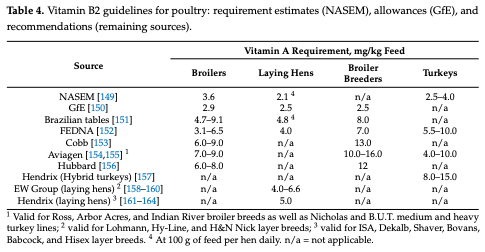
7. Riboflavin Requirements for Poultry
8. Future Prospects and Research Avenues
9. Conclusions
- FAO (Food and Agriculture Organization of the United Nations). (2022). OECD-FAO Agricultural Outlook 2022–2031: 6. Meat. OECD Publishing. OECD-FAO Agricultural Outlook 2022–2031
- Roth-Maier, D. A., & Paulicks, B. R. (2002). Effects of a suboptimal dietary intake of particular B-vitamins on the growth of fattening chicken. Archiv für Geflügelkunde, 66, 201–205.
- McDowell, L. R. (2006). Vitamin nutrition of livestock animals: Overview from vitamin discovery to today. Canadian Journal of Animal Science, 86, 171–179.
- Jortner, B. S., Cherry, J., Lidsky, T. I., Manetto, C., & Shell, L. (1987). Peripheral neuropathy of dietary riboflavin deficiency in chickens. Journal of Neuropathology and Experimental Neurology, 46, 544–555.
- Johnson, W. D., & Storts, R. W. (1988). Peripheral neuropathy associated with dietary riboflavin deficiency in the chicken I. Light microscopic study. Veterinary Pathology, 25, 9–16.
- Cai, Z., Finnie, J. W., & Blumbergs, P. C. (2006). Avian riboflavin deficiency: An acquired tomaculous neuropathy. Veterinary Pathology, 43, 780–781.
- Leiber, F., Amsler, Z., Bieber, A., Quander-Stoll, N., Maurer, V., Lambertz, C., Früh, B., & Ayrle, H. (2022). Effects of riboflavin supplementation level on health, performance, and fertility of organic broiler parent stock and their chicks. Animal, 16, 100433.
- Asplin, F. (1941). Riboflavin deficiency in poultry. Veterinary Journal, 97, 16–26.
- Cai, Z., Finnie, J., Manavis, J., & Blumbergs, P. (2023). Avian riboflavin deficiency causes reliably reproducible peripheral nerve demyelination and, with vitamin supplementation, rapid remyelination. Human & Experimental Toxicology, 42.
- Suwannasom, N., Kao, I., Pruß, A., Georgieva, R., & Bäumler, H. (2020). Riboflavin: The health benefits of a forgotten natural vitamin. International Journal of Molecular Sciences, 21, 950.
- Zhang, B., Zhao, R., Fouad, A., Wu, Y., Sun, P., Wei, J., Huang, W., Xie, M., Tang, J., & Hou, S. (2020). Research Note: Effects of riboflavin on reproductive performance and antioxidant status of duck breeders. Poultry Science, 99, 1564–1570.
- Tang, J., Hu, J., Xue, M., Guo, Z., Xie, M., Zhang, B., Zhou, Z., Huang, W., & Hou, S. (2019). Maternal diet deficient in riboflavin induces embryonic death associated with alterations in the hepatic proteome of duck embryos. Nutrition & Metabolism, 16, 19.
- Lambertz, C., Leopold, J., Damme, K., Vogt-Kaute, W., Ammer, S., & Leiber, F. (2020). Effects of a riboflavin source suitable for use in organic broiler diets on performance traits and health indicators. Animal, 14, 716–724.
- Cherian, G. (2015). Nutrition and metabolism in poultry: Role of lipids in early diet. Journal of Animal Science and Biotechnology, 6, 28.
- Abbas, C. A., & Sibirny, A. A. (2011). Genetic control of biosynthesis and transport of riboflavin and flavin nucleotides and construction of robust biotechnological producers. Microbiology and Molecular Biology Reviews, 75, 321–360.
- Udhayabanu, T., Manole, A., Rajeshwari, M., Varalakshmi, P., Houlden, H., & Ashokkumar, B. (2017). Riboflavin responsive mitochondrial dysfunction in neurodegenerative diseases. Journal of Clinical Medicine, 6, 52.
- Brooks, A., & Martin, E. (n.d.). Riboflavin deficiency in broiler chickens. AHL Newsletter, 27(1), 20. Animal Health Laboratory, University of Guelph, Ontario, Canada. Animal Health Laboratory
- Cook, M. E., & Springer, W. T. (1983). Effect of reovirus infection and dietary levels of selected vitamins on immunocompetence of chickens. Avian Diseases, 27, 367–377.
- Yoshii, K., Hosomi, K., Sawane, K., & Kunisawa, J. (2019). Metabolism of dietary and microbial vitamin B family in the regulation of host immunity. Frontiers in Nutrition, 6, 48.
- Scott, M. L., Holm, E. R., & Reynolds, R. E. (1959). Studies on the niacin, riboflavin, choline, manganese and zinc requirements of young ringnecked pheasants for growth, feathering and prevention of leg disorders. Poultry Science, 38, 1344–1350.
- Wyatt, R. D., Tung, H. T., Donaldson, W. E., & Hamilton, P. B. (1973). A new description of riboflavin deficiency syndrome in chickens. Poultry Science, 52, 237–244.
- Serafin, J. (1974). Studies on the riboflavin, niacin, pantothenic acid and choline requirements of young bobwhite quail. Poultry Science, 53, 1522–1532.
- Lee, D. J. W. (1982). Growth, erythrocyte glutathione reductase and liver flavin as indicators of riboflavin status in turkey poults. British Poultry Science, 23, 263–272.
- Roth-Maier, D. A., & Kirchgessner, M. (1997). Investigations on riboflavin requirement of fattening chickens. Archiv für Geflügelkunde, 61, 14–16.
- Olkowski, A., & Classen, H. L. (1998). The study of riboflavin requirement in broiler chickens. International Journal for Vitamin and Nutrition Research, 68, 316–327.
- Cogburn, L. A., Smarsh, D. N., Wang, X., Trakooljul, N., Carré, W., & White, H. B. (2018). Transcriptional profiling of liver in riboflavin-deficient chicken embryos explains impaired lipid utilization, energy depletion, massive hemorrhaging, and delayed feathering. BMC Genomics, 19, 177.
- Gržinić, G., Piotrowicz-Cieślak, A., Klimkowicz-Pawlas, A., Górny, R. L., Ławniczek-Wałczyk, A., Piechowicz, L., Olkowska, E., Potrykus, M., Tankiewicz, M., Krupka, M., et al. (2023). Intensive poultry farming: A review of the impact on the environment and human health. Science of the Total Environment, 858(Pt. 3), 160014.
- Balasubramaniam, S., & Yaplito-Lee, J. (2020). Riboflavin metabolism: Role in mitochondrial function. Journal of Translational Genetics and Genomics, 4, 285–306.
- Poudel, S., Tabler, G. T., Lin, J., Zhai, W., & Zhang, L. (2022). Riboflavin and Bacillus subtilis effects on growth performance and woody-breast of Ross 708 broilers with or without Eimeria spp. challenge. Journal of Animal Science and Technology, 64, 443–461.
- Ashoori, M., & Saedisomeolia, A. (2014). Riboflavin (vitamin B2) and oxidative stress: A review. British Journal of Nutrition, 111, 1985–1991.
- Olfat, N., Ashoori, M., & Saedisomeolia, A. (2022). Riboflavin is an antioxidant: A review update. British Journal of Nutrition, 128, 1887–1895.
- Alagawany, M., Elnesr, S. S., Farag, M. R., Tiwari, R., Yatoo, M. I., Karthik, K., Michalak, I., & Dhama, K. (2020). Nutritional significance of amino acids, vitamins and minerals as nutraceuticals in poultry production and health—A comprehensive review. Veterinary Quarterly, 41, 1–29.
- Cai, Z., Blumbergs, P. C., Finnie, J. W., Manavis, J., & Thompson, P. D. (2009). Selective vulnerability of peripheral nerves in avian riboflavin deficiency demyelinating polyneuropathy. Veterinary Pathology, 46, 88–96.
- Fischer, M., & Bacher, A. (2006). Biosynthesis of vitamin B2 in plants. Physiologia Plantarum, 126, 304–331.
- Kleyn, R., & Chrystal, P. (2020). Vitamins. In Broiler Nutrition: Masterclass (pp. 129–142). Context Products Ltd.
- Witten, S. (2018). Characterisation of Organic Cereals and Grain Legumes as Feedstuffs for Monogastric Animals: Effects of Variety and Environmental Conditions on the Contents of Crude Nutrients, Amino Acids, Thiamine, Riboflavin, and In Vitro Digestibility of Crude Protein and Amino Acids. Ph.D. Thesis, Georg-August-Universität Göttingen, Göttingen, Germany.
- Szczuko, M., Ziętek, M., Kulpa, D., & Seidler, T. (2019). Riboflavin—Properties, occurrence and its use in medicine. Pteridines, 30, 33–47.
- Liu, S., Hu, W., Wang, Z., & Chen, T. (2020). Production of riboflavin and related cofactors by biotechnological processes. Microbial Cell Factories, 19, 31.
- Rivero, M., Boneta, S., Novo, N., Velázquez-Campoy, A., Polo, V., & Medina, M. (2023). Riboflavin kinase and pyridoxine 5′-phosphate oxidase complex formation envisages transient interactions for FMN cofactor delivery. Frontiers in Molecular Biosciences, 10, 1167348.
- Huerta, C., Borek, D., Machius, M., Grishin, N. V., & Zhang, H. (2009). Structure and mechanism of a eukaryotic FMN adenylyltransferase. Journal of Molecular Biology, 389, 388–400.
- Friedmann, H. C. (1974). Flavin mononucleotide. In H. U. Bergmeyer (Ed.), Methods of Enzymatic Analysis (2nd ed., pp. 2179–2181). Academic Press.
- Pinto, J. T., & Zempleni, J. (2016). Riboflavin. Advances in Nutrition, 7, 973–975.
- Oprian, D. D., & Coon, M. J. (1982). Oxidation-reduction states of FMN and FAD in NADPH-cytochrome P-450 reductase during reduction by NADPH. Journal of Biological Chemistry, 257, 8935–8944.
- Mansoorabadi, S. O., Thibodeaux, C. J., & Liu, H.-W. (2007). The diverse roles of flavin coenzymes—Nature’s most versatile thespians. Journal of Organic Chemistry, 72, 6329–6342.
- Toyomizu, M., Kikusato, M., Kawabata, Y., Azad, A. K., Inui, E., & Amo, T. (2011). Meat-type chickens have a higher efficiency of mitochondrial oxidative phosphorylation than laying-type chickens. Comparative Biochemistry and Physiology Part A: Molecular & Integrative Physiology, 159, 75–81.
- Hubert, S., & Athrey, G. (2022). Transcriptomic signals of mitochondrial dysfunction and OXPHOS dynamics in fast-growth chicken. PeerJ, 10, e13364.
- Scott, M. L., Nesheim, M. C., & Young, R. S. (1982). Riboflavin. In M. L. Scott (Ed.), Nutrition of the Chicken (pp. 196–204). Associate Publishing.
- Jastroch, M., Divakaruni, A. S., Mookerjee, S., Treberg, J. R., & Brand, M. D. (2010). Mitochondrial proton and electron leaks. Essays in Biochemistry, 47, 53–67.
- Friedman, J., Mourokh, L., & Vittadello, M. (2021). Mechanism of proton pumping in complex I of the mitochondrial respiratory chain. Quantum Reports, 3, 425–434.
- Teixeira, F. K., Sanchez, C. G., Hurd, T. R., Seifert, J. R. K., Czech, B., Preall, J. B., Hannon, G. J., & Lehmann, R. (2015). ATP synthase promotes germ cell differentiation independent of oxidative phosphorylation. Nature, 17, 689–696.
- Qin, Y., Zhou, J., Xiong, X., Huang, J., Li, J., Wang, Q., Yang, H., & Yin, Y. (2022). Effect of riboflavin on intestinal development and intestinal epithelial cell function of weaned piglets. Journal of Animal Physiology and Animal Nutrition, 107, 518–528.
- Russell, A. P., Schrauwen, P., Somm, E., Gastaldi, G., Hesselink, M. K. C., Schaart, G., Kornips, E., Lo, S. K., Bufano, D., Giacobino, J.-P., et al. (2003). Decreased fatty acid β-oxidation in riboflavin-responsive, multiple acylcoenzyme A dehydrogenase-deficient patients is associated with an increase in uncoupling protein-3. Journal of Clinical Endocrinology & Metabolism, 88, 5921–5926.
- Parsons, H. G., & Dias, V. C. (1991). Intramitochondrial fatty acid metabolism: Riboflavin deficiency and energy production. Biochemistry and Cell Biology, 69, 490–497.
- Ruiz, N., & Harms, R. H. (1990). Conversion of tryptophan into niacin in the turkey (Meleagris gallopavo). Poultry Science, 69, 446–450.
- FNB (Food and Nutrition Board, Institute of Medicine, National Academy of Sciences). (1998). Dietary Reference Intakes: Thiamin, Riboflavin, Niacin, Vitamin B6, Folate, Vitamin B12, Pantothenic Acid, Biotin, and Choline. National Academy Press.
- Naber, E. C., & Squires, M. W. (1993). Research Note: Early detection of the absence of a vitamin premix in layer diets by egg albumen riboflavin analysis. Poultry Science, 72, 1989–1993.
- Wang, Z., Brannick, E., & Abasht, B. (2023). Integrative transcriptomic and metabolomic analysis reveals alterations in energy metabolism and mitochondrial functionality in broiler chickens with wooden breast. Scientific Reports, 13, 4747.
- Shastak, Y., Gordillo, A., & Pelletier, W. (2023). The relationship between vitamin A status and oxidative stress in animal production. Journal of Applied Animal Research, 51, 546–553.
- Cordona, N., & Payne, I. (1967). Absorption of riboflavin in chickens. Poultry Science, 46, 1176–1179.
- Ruiz, N., & Harms, R. (1988). Riboflavin requirement of broiler chicks fed a corn-soybean diet. Poultry Science, 67, 794–799.
- Ruiz, N., & Harms, R. (1989). Riboflavin requirement of turkey poults fed a corn-soybean meal diet from 1 to 21 days of age. Poultry Science, 68, 715–718.
- Banaszkiewicz, T. (2011). Nutritional value of soybean meal. In H. El-Shemy (Ed.), Soybean and Nutrition (pp. 1–20). IntechOpen. IntechOpen
- Merrill, A. H., Lambeth, J. D., Edmondson, D. E., & McCormick, D. B. (1981). Formation and mode of action of flavoproteins. Annual Review of Nutrition, 1, 281–317.
- Chung, T. K., & Baker, D. H. (1990). Riboflavin requirement of chicks fed purified amino acid and conventional corn-soybean meal diets. Poultry Science, 69, 1357–1363.
- Dove, R., & Cook, D. A. (2000). Water-soluble vitamins in swine nutrition. In A. J. Lewis & L. L. Southern (Eds.), Swine Nutrition (pp. 315–356). CRC Press.
- Sheraz, M. A., Kazi, S. H., Ahmed, S., Anwar, Z., & Ahmad, I. (2014). Photo, thermal and chemical degradation of riboflavin. Beilstein Journal of Organic Chemistry, 10, 1999–2012.
- Hynd, P. I. (2019). Digestion in the mono-gastric animal. In P. I. Hynd (Ed.), Animal Nutrition: From Theory to Practice (pp. 42–63). CSIRO Publishing.
- White, H. B., III, & Merrill, A. H., Jr. (1988). Riboflavin-binding proteins. Annual Review of Nutrition, 8, 279–299.
- M’Clelland, D. A. (1996). The Refolding of Riboflavin Binding Protein. Ph.D. Thesis, Department of Biological and Molecular Sciences, University of Stirling, Stirling, UK.
- EFSA (European Food Safety Authority). (2006). Tolerable Upper Intake Levels for Vitamins and Minerals. Scientific Committee on Food, Scientific Panel on Dietetic Products, Nutrition and Allergies. EFSA
- Shastak, Y., & Pelletier, W. (2023). Delving into vitamin A supplementation in poultry nutrition: Current knowledge, functional effects, and practical implications. World’s Poultry Science Journal, 1–23.
- McCormick, D. B. (2012). Riboflavin. In J. W. Erdman, I. A. Macdonald, & S. H. Zeisel (Eds.), Present Knowledge in Nutrition (10th ed., pp. 280–292). Wiley-Blackwell.
- Zheng, D. B., Lim, H. M., Pène, J. J., & White, H. B., III. (1988). Chicken riboflavin-binding protein: cDNA sequence and homology with milk folate-binding protein. Journal of Biological Chemistry, 263, 11126–11129.
- Monaco, H. L. (1997). Crystal structure of chicken riboflavin-binding protein. The EMBO Journal, 16, 1475–1483.
- Miller, M. S., Benore-Parsons, M., & White, H. B. (1982). Dephosphorylation of chicken riboflavin-binding protein and phosvitin decreases their uptake by oocytes. Journal of Biological Chemistry, 257, 6818–6824.
- Mac Lachlan, I., Nimpf, J., & Schneider, W. (1994). Avian riboflavin binding protein binds to lipoprotein receptors in association with vitellogenin. Journal of Biological Chemistry, 269, 24127–24132.
- Loch, J. I., Lipowska, J., & Lewinski, K. (2018). Crystal Structure of Chicken Riboflavin Binding Protein in “Apo” Form at 2.5 Å Resolution. Protein Data Bank, Brookhaven National Laboratory, New York, NY, USA.
- Combs, G. F., & McClung, J. P. (2017). Riboflavin. In G. F. Combs & J. P. McClung (Eds.), The Vitamins (pp. 110–159, 315–329). Academic Press.
- Norioka, N., Okada, T., Hamazume, Y., Mega, T., & Ikenaka, T. (1985). Comparison of the amino acid sequences of hen plasma-, yolk-, and white-riboflavin binding proteins. Journal of Biochemistry, 97, 19–28.
- Hamazume, Y., Mega, T., & Ikenaka, T. (1984). Characterization of hen egg white- and yolk-riboflavin binding proteins and amino acid sequence of egg white-riboflavin binding protein. Journal of Biochemistry, 95, 1633–1644.
- Hamazume, Y., Mega, T., & Ikenaka, T. (1987). Positions of disulfide bonds in riboflavin-binding protein of hen egg white. Journal of Biochemistry, 101, 217–223.
- Kirchhausen, T., Owen, D., & Harrison, S. C. (2014). Molecular structure, function, and dynamics of clathrin-mediated membrane traffic. Cold Spring Harbor Perspectives in Biology, 6, a016725.
- Carlsson, E. V., & Sherman, H. C. (1938). Riboflavin and a further growth essential in the tissues: Quantitative distribution and the influence of the food, two figures. Journal of Nutrition, 15, 57–65.
- Hodson, A. Z. (1940). The influence of dietary riboflavin on the content of this vitamin in chicken tissue. Journal of Nutrition, 20, 377–382.
- Leonhardt, M., & Wenk, C. (1997). Animal species and muscle related differences in thiamine and riboflavin contents of Swiss meat. Food Chemistry, 59, 449–452.
- Rivlin, R. S. (1975). Hormonal regulation of riboflavin metabolism. In R. S. Rivlin (Ed.), Riboflavin. Springer.
- McCormick, D. B. (2014). Riboflavin. In P. Wexler (Ed.), Encyclopedia of Toxicology (3rd ed., pp. 128–129). Academic Press.
- Fischer, M., & Bacher, A. (2010). Riboflavin biosynthesis. In H.-W. Liu & L. Mander (Eds.), Comprehensive Natural Products II (pp. 3–36). Elsevier.
- Karthikeyan, S., Zhou, Q., Mseeh, F., Grishin, N. V., Osterman, A. L., & Zhang, H. (2003). Crystal structure of human riboflavin kinase reveals a β-barrel fold and a novel active site arch. Structure, 11, 265–273.
- Norris, L., Heuser, C. G. F., & Wilgus, H. S. (1930). Is the chief value of milk for feeding poultry due to the presence of a new vitamin? Poultry Science, 9, 133–140.
- Lepkovsky, S., & Jukes, T. H. (1936). The response of rats, chicks and turkey poults to crystalline vitamin G (flavin). Journal of Nutrition, 12, 515–526.
- Norris, L., Wilgus, C. H. S., Ringrose, A. T., Heiman, V., & Heuser, G. F. (1936). The vitamin G requirements of poultry. Cornell Agricultural Experiment Station Bulletin, 600, 1.
- Bethke, R. M., Record, P. R., & Wilder, O. H. M. (1937). Further studies on vitamin G in chick nutrition with special reference to flavins. Poultry Science, 16, 175–182.
- Heuser, G., Wilgus, H., & Norris, L. (1938). The quantitative vitamin-G requirement of chicks. Poultry Science, 17, 105–108.
- Bethke, R., & Record, P. (1942). The relation of riboflavin to growth and curled-toe paralysis in chicks. Poultry Science, 21, 147–154.
- Biagi, E., Mengucci, C., Barone, M., Picone, G., Lucchi, A., Celi, P., Litta, G., Candela, M., Manfreda, G., Brigidi, P., et al. (2020). Effects of vitamin B2 supplementation in broilers microbiota and metabolome. Microorganisms, 8, 1134.
- Northrop-Clewes, C. A., & Thurnham, D. I. (2012). The discovery and characterization of riboflavin. Annals of Nutrition and Metabolism, 61, 224–230.
- Chou, S. T., Sell, J. L., & Kondra, P. A. (1971). Interrelationships between riboflavin and dietary energy and protein utilisation in growing chicks. British Journal of Nutrition, 26, 323–333.
- De Oliveira, J. E., Uni, Z., & Ferket, P. R. (2008). Important metabolic pathways in poultry embryos prior to hatch. World’s Poultry Science Journal, 64, 488–499.
- Van Every, H. A., & Schmidt, C. J. (2021). Transcriptomic and metabolomic characterization of post-hatch metabolic reprogramming during hepatic development in the chicken. BMC Genomics, 22, 380.
- Tu, B. P., Ho-Schleyer, S. C., Travers, K. J., & Weissman, J. S. (2000). Biochemical basis of oxidative protein folding in the endoplasmic reticulum. Science, 290, 1571–1574.
- Zhang, B., Cao, J.-T., Wu, Y.-B., Gao, K.-X., Xie, M., Zhou, Z.-K., Tang, J., & Hou, S.-S. (2022). Riboflavin (vitamin B2) deficiency induces apoptosis mediated by endoplasmic reticulum stress and the CHOP pathway in HepG2 cells. Nutrients, 14, 3356.
- Taniguchi, M., & Nakamura, M. (1976). Effects of riboflavin deficiency on the lipids of rat liver. Journal of Nutritional Science and Vitaminology, 22, 135–146.
- Manthey, K. C., Chew, Y. C., & Zempleni, J. (2005). Riboflavin deficiency impairs oxidative folding and secretion of apolipoprotein B-100 in HepG2 cells, triggering stress response systems. Journal of Nutrition, 135, 978–982.
- Xin, Z., Pu, L., Gao, W., Wang, Y., Wei, J., Shi, T., Yao, Z., & Guo, C. (2017). Riboflavin deficiency induces a significant change in proteomic profiles in HepG2 cells. Scientific Reports, 7, 45861.
- Lambertz, C., Leopold, J., Ammer, S., Leiber, F., Thesing, B., Wild, C., & Damme, K. (2021). Demand-oriented riboflavin supply of organic broiler using a feed material from fermentation of Ashbya gossypii. Animal, 15, 100003.
- Patrick, H., Darrow, M., & Morgan, C. (1944). The role of riboflavin in turkey poult nutrition. Poultry Science, 23, 146–148.
- Thesing, B., Göppel, S., Weindl, P., Lambertz, C., Damme, K., & Bellof, G. (2021). Efficiency of an Organic Farming Compatible Yeast Product to Ensure the Riboflavin-Supply of Organically Raised B.U.T. 6 Turkey Poults—Effects on Animal Performance and Health. Verlag Eugen Ulmer.
- Lepkovsky, S., Taylor, L. W., Jukes, T. H., & Almquist, H. J. (1938). The effect of riboflavin and the filtrate factor on egg production and hatchability. Hilgardia, 11, 559–591.
- Jukes, T. H., Stokstad, E. L. R., & Belt, M. (1947). Deficiencies of certain vitamins as studied with turkey poults on a purified diet: I. Pteroylglutamic acid, riboflavin, niacin and inositol: Six figures. Journal of Nutrition, 33, 1–12.
- Coles, R., & Cumber, F. (1955). Observations on the relationship between riboflavin, hatchability and clubbed down. Journal of Agricultural Science, 46, 191–198.
- Haves, R. O., & Buss, E. G. (1965). The use of the riboflavinless gene (rd) in determining the cause of clubbed down. Poultry Science, 44, 773–778.
- Brean, S. E. (1989). Dietary Riboflavin and the Production of Clubbed Down in Chick Embryo. Master’s Thesis, Oregon State University, Department of Poultry Science, Corvallis, OR, USA.
- Alibardi, L., & Toni, M. (2008). Cytochemical and molecular characteristics of the process of cornification during feather morphogenesis. Progress in Histochemistry and Cytochemistry, 43, 1–69.
- Kleiber, M., & Jukes, T. H. (1942). Metabolism and food utilization of riboflavin-deficient chicks. Proceedings of the Society for Experimental Biology and Medicine, 49, 34–37.
- Tang, J., Hegeman, M. A., Hu, J., Xie, M., Shi, W., Jiang, Y., de Boer, V., Guo, Y., Hou, S., & Keijer, J. (2017). Severe riboflavin deficiency induces alterations in the hepatic proteome of starter Pekin ducks. British Journal of Nutrition, 118, 641–650.
- Summers, J. D., Shen, H., Leeson, S., & Julian, R. J. (1984). Influence of vitamin deficiency and level of dietary protein on the incidence of leg problems in broiler chicks. Poultry Science, 63, 1115–1121.
- Squires, M. W., & Naber, E. C. (1993). Vitamin profiles of eggs as indicators of nutritional status in the laying hen: Riboflavin study. Poultry Science, 72, 483–494.
- Forrester, S. J., Kikuchi, D. S., Hernandes, M. S., Xu, Q., & Griendling, K. K. (2018). Reactive oxygen species in metabolic and inflammatory signaling. Circulation Research, 122, 877–902.
- Donaldson, W. (1986). Interaction of lead toxicity and riboflavin status in chicks (Gallus domesticus). Comparative Biochemistry and Physiology Part C: Comparative Pharmacology, 85, 1–3.
- Deyhim, F., Belay, T., & Teeter, R. G. (1992). An evaluation of dietary riboflavin supplementation on growth rate, feed efficiency, ration metabolizable energy content, and glutathione reductase activity of broilers. Nutrition Research, 12, 1123–1130.
- Stepuro, I. I., Adamchuk, R. I., & Stepuro, A. I. (2002). Interaction of riboflavin and hemoproteins with organic free radicals and superoxide anions generated in the ultrasound field. Biofizika, 47, 977–988.
- Mishra, B., & Jha, R. (2019). Oxidative stress in the poultry gut: Potential challenges and interventions. Frontiers in Veterinary Science, 6, 60.
- Surai, P. F., Kochish, I. I., Fisinin, V. I., & Kidd, M. T. (2019). Antioxidant defence systems and oxidative stress in poultry biology: An update. Antioxidants, 8, 235.
- Shastak, Y., Obermueller-Jevic, U., & Pelletier, W. (2023). A century of vitamin E: Early milestones and future directions in animal nutrition. Agriculture, 13, 1526.
- Alamin, B. M., Ibrahim, Y., & Salih, N. K. M. (2009). Effect of some vitamins and electrolytes on chickens infected with infectious bursal disease. World Applied Sciences Journal, 7, 366–370.
- King’ori, A. M. (2011). Review of the factors that influence egg fertility and hatchability in poultry. International Journal of Poultry Science, 10, 483–484.
- Davis, H. J., Norris, L. C., & Heuser, G. F. (1938). The rôle of vitamin G in reproduction in poultry. Poultry Science, 17, 81–86.
- Schumacher, A., & Heuser, G. (1939). The importance of riboflavin in reproduction in poultry. Poultry Science, 18, 369–374.
- Abrams, V. A., Han, C.-C., & White, H. B. (1995). Riboflavin-deficient chicken embryos: Hypoglycemia without dicarboxylic aciduria. Comparative Biochemistry and Physiology Part B: Biochemistry and Molecular Biology, 111, 233–241.
- Benore-Parsons, M. (1986). The Transport of Riboflavin-Binding Protein to the Hen Oocyte. Ph.D. Thesis, University of Delaware, Newark, DE, USA.
- Engel, R., Phillips, P., & Halpin, J. G. (1940). The effect of a riboflavin deficiency in the hen upon embryonic development of the chick. Poultry Science, 19, 135–142.
- Tuite, P., & Austic, R. (1974). Studies on a possible interaction between riboflavin and vitamin B12 as it affects hatchability of the hen’s egg. Poultry Science, 53, 2125–2136.
- Juriloff, D., & Roberts, C. (1975). Genetics of cleft palate in chickens and the relationship between the occurrence of the trait and maternal riboflavin deficiency. Poultry Science, 54, 334–346.
- Anisha, M., Karnani, S., Choudhary, & Manju. (n.d.). Nutritional factors affecting egg quality and hatchability in poultry. Pashu Sandesh. Pashu Sandesh
- Wilson, H. R. (1997). Effects of maternal nutrition on hatchability. Poultry Science, 76, 134–143.
- Folmes, C. D. L., & Terzic, A. (2015). Metabolic determinants of embryonic development and stem cell fate. Reproduction, Fertility and Development, 27, 82–88.
- Givisiez, P. E. N., Moreira Filho, A. L. B., Santos, M. R. B., Oliveira, H. B., Ferket, P. R., Oliveira, C. J. B., & Malheiros, R. D. (2020). Chicken embryo development: Metabolic and morphological basis for in ovo feeding technology. Poultry Science, 99, 6774–6782.
- Scanes, C. G., & Christensen, K. D. (2020). Fundamentals in poultry nutrition. In Poultry Science (pp. 109–131). Waveland Press.
- Loetscher, Y., Hospenthal, A. R., Kreuzer, M., & Messikommer, R. E. (2014). Do antioxidants induce feed selection behavior in laying hens? Preference for, and palatability of, different antioxidant sources. European Poultry Science, 78, 1–11.
- Yigit, A., Panda, A., & Cherian, G. (2014). The avian embryo and its antioxidant defence system. World’s Poultry Science Journal, 70, 563–574.
- Vieira, S. (2007). Chicken embryo utilization of egg micronutrients. Brazilian Journal of Poultry Science, 9, 1–8.
- McDowell, L. R. (2000). Riboflavin. In L. R. McDowell (Ed.), Vitamins in Animal and Human Nutrition (pp. 331–346). Iowa State University Press.
- Anonymous. (1969). Riboflavin No. 1170. Hoffmann-La Roche.
- Zhang, B., Tang, J., Wu, Y., Cao, J., Xing, G., Sun, P., Huang, W., Xie, M., & Hou, S. (2021). Effects of riboflavin deficiency on the lipid metabolism of duck breeders and duck embryos. Poultry Science, 100, 101342.
- Onwudike, O., & Adegbola, A. (1984). Riboflavin requirement of laying hens for egg production and reproduction in the humid tropics. Tropical Agriculture, 61, 205–2007.
- Leeson, S., Reinhart, B. S., & Summers, J. D. (1979). Response of White Leghorn and Rhode Island Red breeder hens to dietary deficiencies of synthetic vitamins. 2. Embryo mortality and abnormalities. Canadian Journal of Animal Science, 59, 569–575.
- Ribeiro, M., Bittencourt, L., Hermes, R., Rönnau, M., Rorig, A., Lima, F., & Fernandes, J. (2020). Mineral source and vitamin level in broiler diets: Effects on performance, yield, and meat quality. Brazilian Journal of Poultry Science, 22, 1–14.
- NASEM (National Academies of Sciences, Engineering, and Medicine). (1994). Nutrient Requirements of Poultry (9th ed.). National Academy Press.
- GfE (Gesellschaft für Ernährungsphysiologie). (1999). Empfehlungen zur Energie- und Nährstoffversorgung von Legehennen und Masthühnern (Broiler). Gesellschaft für Ernährungsphysiologie, DLG-Verlag.
- Rostagno, H. S. (Ed.). (2011). Brazilian Tables for Poultry and Swine: Composition of Feedstuffs and Nutritional Requirements (3rd ed.). Universidade Federal de Viçosa, Departamento de Zootecnia.
- FEDNA (Fundación Española para el Desarrollo de la Nutrición Animal). (2018). Necesidades nutricionales para avicultura (2nd ed.). Normas FEDNA. Santomá, G., & Mateos, G. G. (Eds.). Fundación Española para el Desarrollo de la Nutrición Animal, Madrid, Spain.
- Cobb-Vantress. (2022). Cobb 500 Broiler Performance & Nutrition Supplement. Cobb 500 Broiler Performance & Nutrition Supplement
- Aviagen. (2022). Ross Broiler: Nutrition Specifications. Ross Broiler: Nutrition Specifications
- Aviagen Turkeys. (2015). Nicholas and B.U.T. Heavy Lines Feeding Guidelines. Nicholas and B.U.T. Heavy Lines Feeding Guidelines
- Hubbard. (2006). Hubbard Management Guide. Hubbard Management Guide
- Hybrid Turkeys. (2016). Vitamin and Trace Mineral Supplementation. Hybrid Turkeys Vitamin and Trace Mineral Supplementation
- Lohmann Breeders. (2014). Lohmann LSL-Lite Management Guide. Lohmann LSL-Lite Management Guide
- Hy-Line International. (2020). Hy-Line W-36 Commercial Layers. Hy-Line W-36 Commercial Layers
- H&N International. (2016). H&N Management Guide. H&N Management Guide
- ISA Poultry. (2018). ISA Nutrition Management Guide. ISA Poultry
- DEKALB Poultry. (2017). Dekalb Nutrition Management Guide. DEKALB Poultry
- Babcock Poultry. (2017). Babcock Nutrition Management Guide. Babcock Poultry
- Hisex. (2017). Hisex Nutrition Management Guide. Hisex Nutrition Management Guide
- Poudel, S., Zhang, L., Tabler, G. T., Lin, J., & Zhai, W. (2020). Effects of riboflavin and Bacillus subtilis on internal organ development and intestinal health of Ross 708 male broilers with or without coccidial challenge. Poultry Science, 100, 100973.
- Leeson, S., & Summers, J. D. (2001). Commercial poultry nutrition. In S. Leeson (Ed.), Scott’s Nutrition of the Chicken (3rd ed., p. 398). Nottingham University Press.
- Motyl, K. J., Guntur, A. R., Carvalho, A. L., & Rosen, C. J. (2017). Energy metabolism of bone. Toxicologic Pathology, 45, 887–893.
- Costello, L. C., Franklin, R. B., Reynolds, M. A., & Chellaiah, M. (2012). The important role of osteoblasts and citrate production in bone formation: “Osteoblast citration” as a new concept for an old relationship. Open Bone Journal, 4, 27–34.
- Witten, S., & Aulrich, K. (2018). Exemplary calculations of native thiamine (vitamin B1) and riboflavin (vitamin B2) contents in common cereal-based diets for monogastric animals. Organic Agriculture, 9, 155–164.
- Burgos, S., Bohorquez, D. V., & Burgos, S. A. (2006). Vitamin deficiency-induced neurological diseases of poultry. International Journal of Poultry Science, 5, 804–807.
- Van Limbergen, T., Ronsmans, S., Maes, D., Van Erum, J., Van Ginderachter, J., Verlinden, M., Boel, F., Garmyn, A., Dewulf, J., & Ducatelle, R. (2020). A case of clubbed down syndrome in broilers. Avian Pathology, 50, 112–123.
- Hanna, M., Jaqua, E., Nguyen, V., & Clay, J. (2022). B vitamins: Functions and uses in medicine. The Permanente Journal, 26, 89–97.
- Pedrolli, D. B., Jankowitsch, F., Schwarz, J., Langer, S., Nakanishi, S., Frei, E., & Mack, M. (2013). Riboflavin analogs as antiinfectives: Occurrence, mode of action, metabolism and resistance. Current Pharmaceutical Design, 19, 2552–2560.
- Hemasa, A. L., Mack, M., & Saliba, K. J. (2022). Roseoflavin, a natural riboflavin analogue, possesses in vitro and in vivo antiplasmodial activity. Antimicrobial Agents and Chemotherapy, 66, e0054022.
- Graham, D. W., Brown, J. E., Ashton, W. T., Brown, R. D., & Rogers, E. F. (1977). Anticoccidial riboflavine antagonists. Cellular and Molecular Life Sciences, 33, 1274–1276.
- Mansjö, M., & Johansson, J. (2011). The riboflavin analog roseoflavin targets an FMN-riboswitch and blocks Listeria monocytogenes growth, but also stimulates virulence gene-expression and infection. RNA Biology, 8, 674–680.
- Farah, N., Chin, V. K., Chong, P. P., Lim, W. F., Lim, C. W., Basir, R., Chang, S. K., & Lee, T. Y. (2022). Riboflavin as a promising antimicrobial agent? A multi-perspective review. Current Research in Microbial Sciences, 3, 100111.
- Moss, A. F., Chrystal, P. V., Cadogan, D. J., Wilkinson, S. J., Crowley, T. M., & Choct, M. (2021). Precision feeding and precision nutrition: A paradigm shift in broiler feed formulation? Animal Bioscience, 34, 354–362.
- Patel, H., & Sana, A. (2022). Role of computer science (artificial intelligence) in poultry management. Devot. Journal of Research and Community Service, 3, 2068–2088.
- Mohamadi, M. A., Farshi, P., Ahmadi, P., Ahmadi, A., Yousefi, M., Ghorbani, M., & Hosseini, S. M. (2023). Encapsulation of vitamins using nanoliposome: Recent advances and perspectives. Advanced Pharmaceutical Bulletin, 13, 48–68.
- Date, A. A., Hanes, J., & Ensign, L. M. (2016). Nanoparticles for oral delivery: Design, evaluation and state-of-the-art. Journal of Controlled Release, 240, 504–526.
- Hirakawa, R., Nurjanah, S., Furukawa, K., Murai, A., Kikusato, M., Nochi, T., & Toyomizu, M. (2020). Heat stress causes immune abnormalities via massive damage to effect proliferation and differentiation of lymphocytes in broiler chickens. Frontiers in Veterinary Science, 7, 46.
- Akinyemi, F., & Adewole, D. (2021). Environmental stress in chickens and the potential effectiveness of dietary vitamin supplementation. Frontiers in Animal Science, 2, 1–21.
- Mosegaard, S., Dipace, G., Bross, P., Carlsen, J., Gregersen, N., & Olsen, R. K. J. (2020). Riboflavin deficiency—Implications for general human health and inborn errors of metabolism. International Journal of Molecular Sciences, 21, 3847.










United States