Seaweeds, Intact and Processed, as a Valuable Component of Poultry Feeds
Poultry production is an important area of the agricultural economy. Nowadays, there is an interest in novel sources of feed additives that will improve production performance and poultry health. As an easily available and renewable biomass rich in biologically active compounds, seaweeds can meet this demand. Different forms of seaweeds–seaweed powder from naturally occurring biomass, cultivated or waste biomass, extracted compounds, post-extraction residues or liquid extracts–may be used in poultry feeding. Inclusion of this unconventional material in the poultry nutrition can positively influence the poultry performance along with its health and enrich poultry products with active compounds, such as micro- and macroelements, polyunsaturated fatty acids and pigments. Seaweeds also reduce lipids and cholesterol in eggs. Moreover, due to their unique properties, they can serve as an alternative to antibiotic growth promoters. This review presents the latest developments in the use of seaweeds in poultry nutrition, as well as its limitations.
Keywords: poultry; seaweeds; active compounds; poultry performance; health status; food enrichment
1. Introduction
2. Seaweeds Biologically Active Compounds Important in Poultry Nutrition
![Figure 1. Examples of seaweeds used in poultry feeding [15,18,20–22,30–33,35–41,43–63].](/_next/image/?url=https%3A%2F%2Fimages.engormix.com%2FE_articles%2F56668_517.png&w=1080&q=100)
3. Forms of Seaweeds in Poultry Feed
4. Enrichment of Poultry Products with Algal Biologically Active Compounds
5. Quality of Food Derived from Poultry Feed with Seaweeds
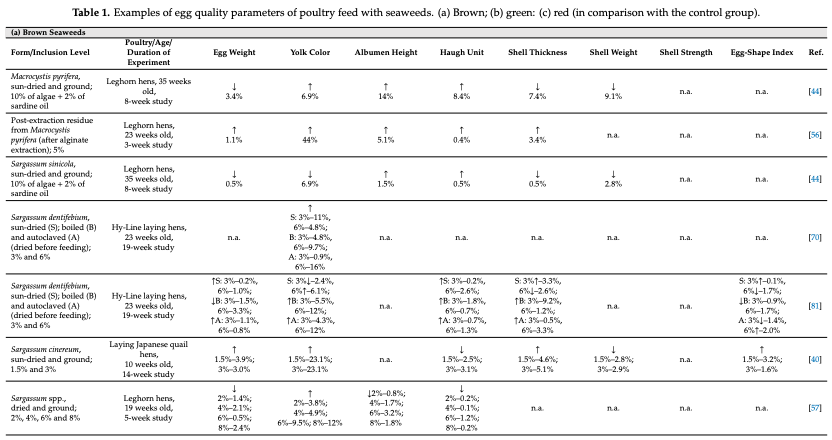
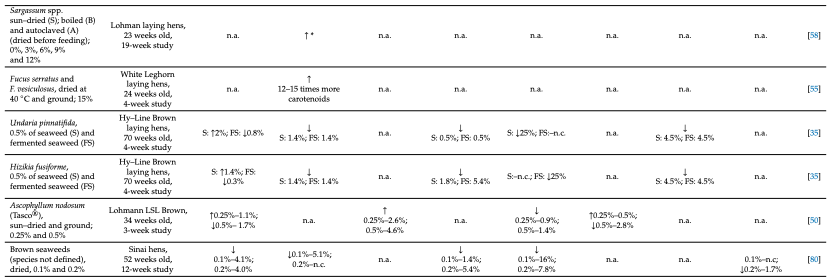
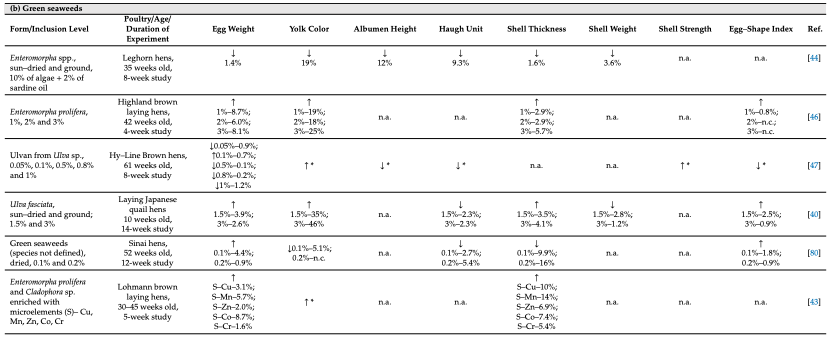
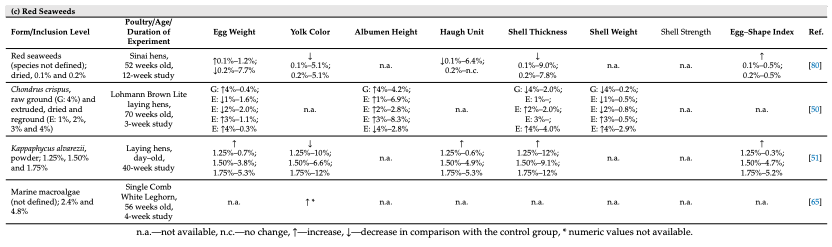
5.1. Egg Quality

5.2. Carcass Characteristics and Meat Quality
6. Effect of Seaweeds on Poultry Growth and Productive Performance
6.1. Growth Performance
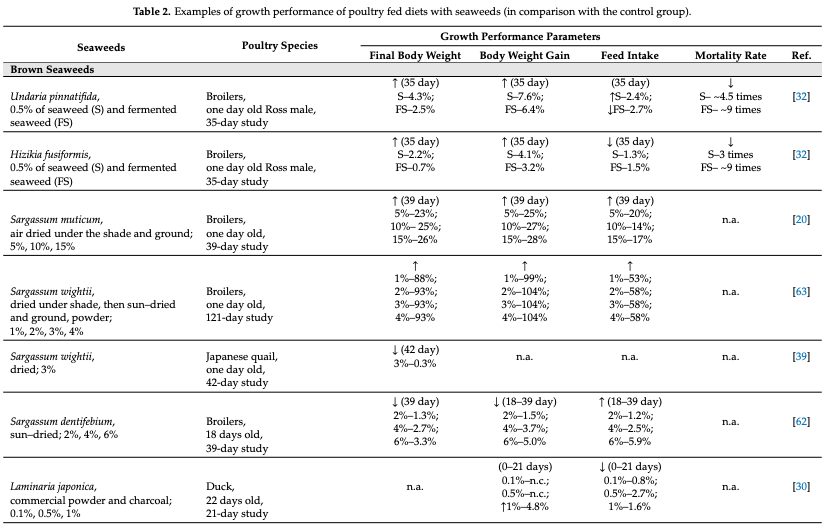
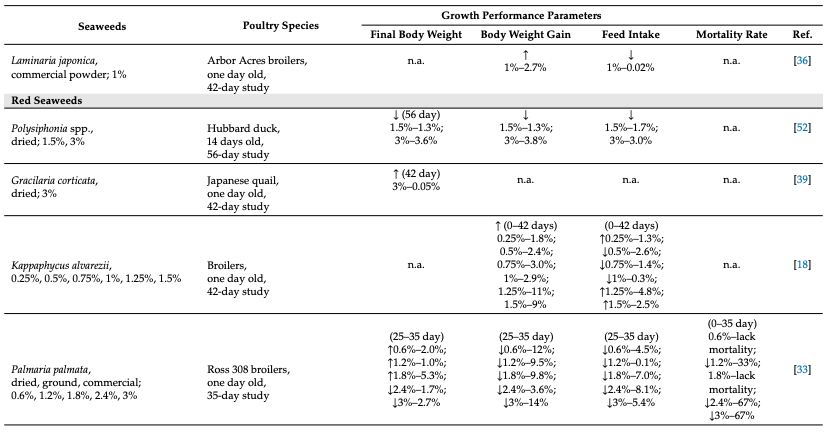
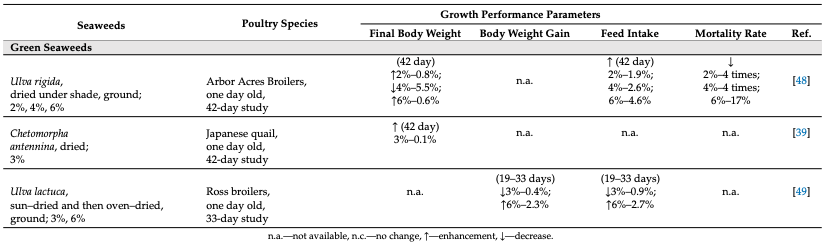
6.2. Egg Production Performance and Hatchability
7. Effect of Seaweeds on Poultry Health
8. Effect of Seaweeds on Blood Profile
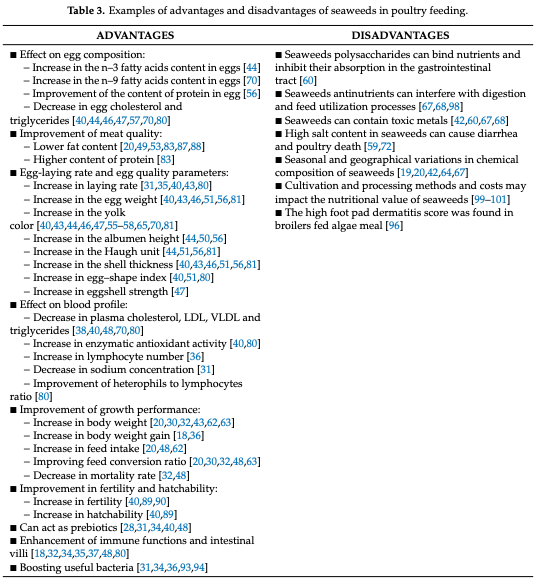
9. Advantages and Disadvantages of Seaweeds in Poultry Nutrition and Future Prospects
Ahaotu, E.O.; De los Ríos, P.; Ibe, L.C.; Singh, R.R. Climate change in poultry production system—A review. Acta Sci. Agric. 2019, 3, 113–117.
United States Department of Agriculture (USDA). Livestock and Poultry: World Markets and Trade. Foreign Agricultural Service, USA. 2020. Available online: https://apps.fas.usda.gov/psdonline/circulars/livestock_poultry.pdf (accessed on 27 July 2020).
El-Hack, M.E.A.; Mahrose, K.M.; Askar, A.A.; Alagawany, M.; Arif, M.; Saeed, M.; Abbasi, F.; Soomro, R.N.; Siyal, F.A.; Chaudhry, M.T. Single and combined impacts of vitamin A and selenium in diet on productive performance, egg quality, and some blood parameters of laying hens during hot season. Biol. Trace Element Res. 2016, 177, 169–179.
Saeed, M.; El-Hack, M.E.A.; Arif, M.; El-Hindawy, M.M.; Attia, A.I.; Mahrose, K.M.; Bashir, I.; Siyal, F.A.; Arain, M.A.; Fazlani, S.A.; et al. Impacts of distiller’s dried grains with solubles as replacement of soybean meal plus vitamin E supplementation on production, egg quality and blood chemistry of laying hens. Ann. Anim. Sci. 2017, 17, 849–862.
Nordhagen, S.; Klemm, R. Implementing small-scale poultry-for-nutrition projects: Successes and lessons learned. Matern. Child Nutr. 2018, 14, e12676.
Daghir, N.J. Poultry Production in Hot Climates, 6th ed.; Cromwell Press: Trowbridge, UK, 1995; pp. 1–12.
Alagawany, M.; Mahrose, K.M. Influence of different levels of certain essential amino acids on the performance, egg quality criteria and economics of Lohmann Brown laying hens. Asian J. Poult. Sci. 2014, 8, 82–96.
Farghly, M.F.A.; Mahrose, K.M.; Galal, A.E.; Ali, R.M.; Ahmad, E.A.M.; Rehman, Z.U.; Ullah, Z.; Ding, C. Implementation of different feed withdrawal times and water temperatures in managing turkeys during heat stress. Poult. Sci. 2018, 97, 3076–3084.
Farghly, M.F.A.; Mahrose, K.M.; Cooper, R.; Ullah, Z.; Rehman, Z.U.; Ding, C. Sustainable floor type for managing turkey production in a hot climate. Poult. Sci. 2018, 97, 3884–3890.
El-Hack, M.E.A.; Mahrose, K.M.; Attia, F.A.M.; Swelum, A.A.; Taha, A.E.; Shewita, R.; Hussein, E.-S.O.S.; Alowaimer, A.N. Laying performance, physical, and internal egg quality criteria of hens fed distillers dried grains with solubles and exogenous enzyme mixture. Animals 2019, 9, 150.
Abou-Kassem, D.E.; Ashour, E.A.; Alagawany, M.; Mahrose, K.M.; Rehman, Z.U.; Ding, C. Effect of feed form and dietary protein level on growth performance and carcass characteristics of growing geese. Poult. Sci. 2019, 98, 761–770.
Mahrose, K.M.; El-Hack, M.E.A.; Mahgoub, S.A.; Attia, F.A.M. Influences of stocking density and dietary probiotic supplementation on growing Japanese quail performance. An. Acad. Bras. Cienc. 2019, 91, e20180616.
Mahrose, K.M.; El-Hack, M.E.A.; Amer, S.A. Influences of dietary crude protein and stocking density on growth performance and body measurements of ostrich chicks. An. Acad. Bras. Cienc. 2019, 91, e20180479.
Rizk, Y.S.; Fahim, H.N.; Beshara, M.M.; Mahrose, K.M.; Awad, A.L. Response of duck breeders to dietary L-Carnitine supplementation during summer season. An. Acad. Bras. Cienc. 2019, 91, e20180907.
Cabrita, A.R.J.; Maia, M.; Oliveira, H.M.; Pinto, I.S.; Almeida, A.; Pinto, E.; Fonseca, A.J.M. Tracing seaweeds as mineral sources for farm-animals. J. Appl. Phycol. 2016, 28, 3135–3150.
Holdt, S.L.; Kraan, S. Bioactive compounds in seaweed: Functional food applications and legislation. J. Appl. Phycol. 2011, 23, 543–597.
Michalak, I.; Chojnacka, K. Algae as production systems of bioactive compounds. Eng. Life Sci. 2015, 15, 160–176.
Qadri, S.S.N.; Biswas, A.; Mandal, A.B.; Kumawat, M.; Saxena, R.; Nasir, A.M. Production performance, immune response and carcass traits of broiler chickens fed diet incorporated with Kappaphycus alvarezii. J. Appl. Phycol. 2018, 31, 753–760.
Øverland, M.; Mydland, L.T.; Skrede, A. Marine macroalgae as sources of protein and bioactive compounds in feed for monogastric animals. J. Sci. Food Agric. 2018, 99, 13–24.
Erum, T.; Frias, G.G.; Cocal, C.J. Sargassum muticum as feed substitute for broiler. Asia Pacific. J. Educ. Arts Sci. 2017, 4, 6–9.
Evans, F.; Critchley, A.T. Seaweeds for animal production use. J. Appl. Phycol. 2014, 26, 891–899.
Makkar, H.; Tran, G.; Heuzé, V.; Giger-Reverdin, S.; Lessire, M.; LeBas, F.; Ankers, P. Seaweeds for livestock diets: A review. Anim. Feed Sci. Technol. 2016, 212, 1–17.
Corino, C.; Modina, S.; Di Giancamillo, A.; Chiapparini, S.; Rossi, R. Seaweeds in pig nutrition. Animals 2019, 9, 1126.
Michalak, I.; Marycz, K. Algae as a promising feed additive for horses. In Seaweeds as Plant Fertilizer, Agricultural Biostimulants and Animal Fodder; Pereira, L., Bahcevandziev, K., Joshi, N.H., Eds.; CRC Press, Taylor & Francis Group: Boca Raton, FL, USA, 2019; Volume 7, pp. 128–142.
Morais, T.; Inácio, A.; Coutinho, T.; Ministro, M.; Cotas, J.; Pereira, L.; Bahcevandziev, K. Seaweed potential in the animal feed: A review. J. Mar. Sci. Eng. 2020, 8, 559.
Haberecht, S.; Wilkinson, S.; Roberts, J.; Wu, S.-B.; Swick, R. Unlocking the potential health and growth benefits of macroscopic algae for poultry. World’s Poult. Sci. J. 2018, 74, 5–20.
Kulshreshtha, G.; Hincke, M.T.; Prithiviraj, B.; Critchley, A.T. A Review of the varied uses of macroalgae as dietary supplements in selected poultry with special reference to laying hen and broiler chickens. J. Mar. Sci. Eng. 2020, 8, 536.
Yan, G.L.; Guo, Y.M.; Yuan, J.M.; Liu, D.; Zhang, B.K. Sodium alginate oligosaccharides from brown algae inhibit Salmonella Enteritidis colonization in broiler chickens. Poult. Sci. 2011, 90, 1441–1448.
Wiseman, M. Evaluation of Tasco® as a Candidate Prebiotic in Broiler Chickens; Dalhousie University: Halifax, NS, Canada, 2012; Available online: https://dalspace.library.dal.ca/bitstream/handle/10222/14443/Wiseman_Melissa_MSc.__Animal_Science_February_2012.pdf?sequence=3&isAllowed=y (accessed on 25 April 2020).
Islam, M.M.; Ahmed, S.T.; Mun, H.S.; Kim, Y.J.; Yang, C.J. Effect of Sea Tangle (Laminaria japonica) and charcoal supplementation as alternatives to antibiotics on growth performance and meat quality of ducks. Asian-Australas. J. Anim. Sci. 2014, 27, 217–224.
Kulshreshtha, G.; Rathgeber, B.; Stratton, G.; Thomas, N.; Evans, F.; Critchley, A.T.; Hafting, J.; Prithiviraj, B. Feed supplementation with red seaweeds, Chondrus crispus and Sarcodiotheca gaudichaudii, affects performance, egg quality, and gut microbiota of layer hens. Poult. Sci. 2014, 93, 2991–3001.
Choi, Y.J.; Lee, S.R.; Oh, J.-W. Effects of dietary fermented seaweed and Seaweed fusiforme on growth performance, carcass parameters and immunoglobulin concentration in broiler chicks. Asian-Australas. J. Anim. Sci. 2014, 27, 862–870.
Karimi, S.H. Effects of Red Seaweed (Palmaria palmata) Supplemented Diets Fed to Broiler Chickens Raised under Normal or Stressed Conditions; Dalhousie University: Halifax, NS, Canada, 2015; Available online: https://dalspace.library.dal.ca/bitstream/handle/10222/64662/Karimi--Seyed_Hossein--MSc--September_21.pdf?sequence=3&isAllowed=y (accessed on 24 April 2020).
Kulshreshtha, G.; Rathgeber, B.; MacIsaac, J.; Boulianne, M.; Brigitte, L.; Stratton, G.; Thomas, N.A.; Critchley, A.T.; Hafting, J.; Prithiviraj, B. Feed supplementation with red seaweeds, Chondrus crispus and Sarcodiotheca gaudichaudii, reduce Salmonella Enteritidis in laying hens. Front. Microbiol. 2017, 8, 567.
Choi, Y.; Lee, E.; Na, Y.; Lee, S. Effects of dietary supplementation with fermented and non-fermented brown algae by-products on laying performance, egg quality, and blood profile in laying hens. Asian-Australas. J. Anim. Sci. 2018, 31, 1654–1659.
Bai, J.; Wang, R.; Yan, L.; Feng, J. Co-supplementation of dietary seaweed powder and antibacterial peptides improves broiler growth performance and immune function. Braz. J. Poult. Sci. 2019, 21, 1–9.
El-Deek, A.; Brikaa, M.A. Effect of different levels of seaweed in starter and finisher diets in pellet and mash form on performance and carcass quality of ducks. Int. J. Poult. Sci. 2009, 8, 1014–1021.
Frasiska, N.; Suprijatna, E.; Susanti, S. Effect of diet containing Gracilaria sp. waste and multi-enzyme additives on blood lipid profile of local duck. Anim. Prod. 2016, 18, 22.
Karu, P.; Selvan, S.; Gopi, H.; Manobhavan, M. Effect of macroalgae supplementation on growth performance of Japanese quails. Int. J. Curr. Microbiol. Appl. Sci. 2018, 7, 1039–1041.
Zeweil, S.H.; Abu Hafsa, S.H.; Zahran, S.M.; Ahmed, M.S.; Abdel-Rahman, N. Effects of dietary supplementation with green and brown seaweeds on laying performance, egg quality, and blood lipid profile and antioxidant capacity in laying Japanese quail. Egypt. Poult. Sci. J. 2019, 39, 41–59.
Ventura, M.; Castañon, J.; McNab, J. Nutritional value of seaweed (Ulva rigida) for poultry. Anim. Feed Sci. Technol. 1994, 49, 87–92.
Michalak, I.; Chojnacka, K. Multielemental analysis of macroalgae from the Baltic Sea by ICP-OES to monitor environmental pollution and assess their potential uses. Int. J. Environ. Anal. Chem. 2009, 89, 583–596.
Michalak, I.; Chojnacka, K.; Dobrzański, Z.; Górecki, H.; Zielińska, A.; Korczyński, M.; Opaliński, S. Effect of macroalgae enriched with microelements on egg quality parameters and mineral content of eggs, eggshell, blood, feathers and droppings. J. Anim. Physiol. Anim. Nutr. 2010, 95, 374–387.
Carrillo-Dominguez, S.; López, E.; Casas, M.M.; Avila, E.; Castillo, R.M.; Carranco, M.E.; Calvo, C.; Pérez-Gil, F. Potential use of seaweeds in the laying hen ration to improve the quality of n-3 fatty acid enriched eggs. J. Appl. Phycol. 2008, 20, 721–728.
Carrillo-Dominguez, S.; Ríos, V.H.; Calvo, C.; Carranco, M.E.; Casas, M.; Pérez-Gil, F. n-3 fatty acid content in eggs laid by hens fed with marine algae and sardine oil and stored at different times and temperatures. J. Appl. Phycol. 2012, 24, 593–599.
Wang, S.; Hui, J.Y.; Hua, W.L.; Hua, Z.F.; Ting, L.Y. Enteromorpha prolifera supplemental level: Effects on laying performance, egg quality, immune function and microflora in feces of laying hens. Chin. J. Anim. Nutr. 2013, 25, 1346–1352.
Li, Q.; Luo, J.; Wang, C.; Tai, W.; Wang, H.; Zhang, X.; Liu, K.; Jia, Y.; Lyv, X.; Wang, L.; et al. Ulvan extracted from green seaweeds as new natural additives in diets for laying hens. J. Appl. Phycol. 2018, 30, 2017–2027.
Cañedo-Castro, B.; Piñón-Gimate, A.; Carrillo, S.; Ramos, D.; Casas-Valdez, M. Prebiotic effect of Ulva rigida meal on the intestinal integrity and serum cholesterol and triglyceride content in broilers. J. Appl. Phycol. 2019, 31, 3265–3273.
Abudabos, A.M.; Okab, A.B.; Aljumaah, R.; Samara, E.; Abdoun, K.A.; Al-Haidary, A.A. Nutritional value of green seaweed (Ulva lactuca) for broiler chickens. Ital. J. Anim. Sci. 2013, 12, 28.
Stupart, C.M. Supplementation of Red Seaweed (Chondrus crispus) and Tasco® (Ascophyllum nodosum) in Laying Hen Diets; Dalhousie University: Halifax, NS, Canada, 2019; Available online: https://dalspace.library.dal.ca/bitstream/handle/10222/76824/Stupart--Cassandra--MSc--AGRI--December--2019.pdf?sequence=5&isAllowed=y (accessed on 25 April 2020).
Mandal, A.B.; Biswas, A.; Mir, N.A.; Tyagi, P.K.; Kapil, D.; Biswas, A.K. Effects of dietary supplementation of Kappaphycus alvarezii on productive performance and egg quality traits of laying hens. J. Appl. Phycol. 2019, 31, 2065–2072.
El-Deek, A.; Brikaa, M.A. Nutritional and biological evaluation of marine seaweed as a feedstuff and as a pellet binder in poultry diet. Int. J. Poult. Sci. 2009, 8, 875–881.
El-Naga, M.A.; Megahed, M. Impact of brown algae supplementation in drinking water on growth performance and intestine histological changes of broiler chicks. Egypt. J. Nutr. Feed. 2018, 21, 495–507.
Bonos, E.; Kargopoulos, A.; Nikolakakis, I.; Florou-Paneri, P.; Christaki, E. The seaweed Ascophyllum nodosum as a potential functional ingredient in chicken nutrition. J. Oceanogr. Mar. Res. 2017, 4, 140.
Strand, A.; Herstad, O.; Liaaen-Jensen, S. Fucoxanthin metabolites in egg yolks of laying hens. Comp. Biochem. Physiol. Part A Mol. Integr. Physiol. 1998, 119, 963–974.
Rendón, U.; Carrillo, S.; Arellano, L.G.; Casas, M.M.; Pérez, F.; Avila, E. Chemical composition of the residue of alginates (Macrocystis pyrifera) extraction. Its utilization in laying hens feeding. Cuban J. Agricult. Sci. 2003, 37, 287–293.
Carrillo, S.; Bahena, A.; Casas, M.; Carranco, M.E.; Calvo, C.C.; Ávila, E.; Pérez-Gil, F. The alga Sargassum spp. as alternative to reduce egg cholesterol content. Cuban J. Agricult. Sci. 2012, 46, 181–186.
El-Deek, A.A.; Al-Harthi, M.A. Nutritive value of treated brown marine algae in pullet and laying diets. World Poultry Science Association. In Proceedings of the 19th European Symposium on Quality of Poultry Meat, 13th European Symposium on the Quality of Eggs and Egg Products, Turku, Finland, 21–25 June 2009; pp. 1–12.
Dewi, Y.L.; Yuniza, A.; Nuraini; Sayuti, K.; Mahata, M.E. Immersion of Sargassum binderi seaweed in river water flow to lower salt content before use as feed for laying hens. Int. J. Poult. Sci. 2017, 17, 22–27.
Dewi, Y.L.; Yuniza, A.; Sayuti, K.; Mahata, M.E.; Nuraini, N. Fermentation of Sargassum binderi seaweed for lowering alginate content of feed in laying hens. J. World’s Poult. Res. 2019, 9, 147–153.
Al-Harthi, M.A.; El-Deek, A.A. Nutrient profiles of brown marine algae (Sargassum dentifebium) as affected by different processing methods for chickens. J. Food Agricult. Environ. 2012, 10, 475–480.
El-Deek, A.A.; Al-Harthi, M.A.; Abdalla, A.A.; Elbanoby, M.M. The use of brown algae meal in finisher broiler diets. Egypt. Poult. Sci. 2011, 31, 767–781.
Athis Kumar, K. Effect of Sargassum wightii on growth, carcass and serum qualities of broiler chickens. Vet. Sci. Res. 2018, 3, 000156.
Fleurence, J. Seaweed proteins: Biochemical, nutritional aspects and potential uses. Trends Food Sci. Technol. 1999, 10, 25–28.
Herber-McNeill, S.M.; Van Elswyk, M.E. Dietary marine algae maintains egg consumer acceptability while enhancing yolk color. Poult. Sci. 1998, 77, 493–496.
González-Esquerra, R.; Leeson, S. Alternatives for enrichment of eggs and chicken meat with omega-3 fatty acids. Can. J. Anim. Sci. 2001, 81, 295–305.
Stengel, D.B.; Connan, S.; Popper, Z.A. Algal chemodiversity and bioactivity: Sources of natural variability and implications for commercial application. Biotechnol. Adv. 2011, 29, 483–501.
Rajauria, G. Seaweeds: A sustainable feed source for livestock and aquaculture. In Seaweed Sustain. 2015, pp. 389–420.
Lahaye, M.; Vigouroux, J. Liquefaction of dulse (Palmaria palmata (L.) Kuntze) by a commercial enzyme preparation and purified endo-β-1,4-D-xylanase. J. Appl. Phycol. 1992, 4, 329–337.
Al-Harthi, M.A.; El-Deek, A.A. Effect of different dietary concentrations of brown marine algae (Sargassum dentifebium) prepared by different methods on plasma and yolk lipid profiles, yolk total carotene and lutein plus zeaxanthin of laying hens. Ital. J. Anim. Sci. 2012, 11, 347–353.
Yuan, Y.V. Marine Algal Constituents. In Marine Nutraceuticals and Functional Foods; Barrow, C., Shahidi, F., Eds.; CRC: Boca Raton, FL, USA, 2008; pp. 259–296.
Zahid, P.B.; Aisha, K.; Ali, A. Green seaweed as component of poultry feed. Bangladesh J. Bot. 1995, 24, 153–156.
Charoensiddhi, S.; Abraham, R.E.; Su, P.; Zhang, W. Seaweed and seaweed-derived metabolites as prebiotics. Adv. Food Nutr. Res. 2020, 91, 97–156.
Gibson, G.R.; Beatty, E.R.; Wang, X.; Cummings, J.H. Selective stimulation of bifidobacteria in the human colon by oligofructose and inulin. Gastroenterology 1995, 108, 975–982.
Sun, J.; Song, H.L.; Zhao, J.; Xiao, Y.; Qi, R.; Lin, Y.T. Effects of different dietary levels of Enteromorpha prolifera on nutrient availability and digestive enzyme activities of broiler chickens. Chin. J. Anim. Nutr. 2010, 22, 1658–1664.
Herber, S.M.; Van Elswyk, M.E. Dietary marine algae promotes efficient deposition of n-3 fatty acids for the production of enriched shell eggs. Poult. Sci. 1996, 75, 1501–1507. [CrossRef]
Simopoulos, A.P. Human requirement for n-3 polyunsaturated fatty acids. Poult. Sci. 2000, 79, 961–970. [CrossRef]
FAO. Fats and Fatty Acids in Human Nutrition. Report of an Expert Consultation; FAO Food and Nutrition: Geneva, Switzerland, 2008.
Qi, H.; Sheng, J. The antihyperlipidemic mechanism of high sulfate content ulvan in rats. Mar. Drugs 2015, 13, 3407–3421. [CrossRef]
Rizk, Y.S.; Ismail, I.I.; Abu Hafsa, S.H.; Eshera, A.A.; Tawfeek, F.A. Effect of dietary green tea and dried seaweed on productive and physiological performance of laying hens during late phase of production. Egypt. Poult. Sci. 2017, 37, 685–706. [CrossRef]
Al-Harthi, M.A.; El-Deek, A.A. The effects of preparing methods and enzyme supplementation on the utilization of brown marine algae (Sargassum dentifebium) meal in the diet of laying hens. Ital. J. Anim. Sci. 2011, 10, 48. [CrossRef]
Bradbury, E.J.; Wilkinson, S.J.; Cronin, G.M.; Walk, C.L.; Cowieson, A.J. The effect of marine calcium source on broiler leg integrity. In Proceedings of the 23rd Annual Australian Poultry Science Symposium, Sydney, Australia, 19–22 February 2012; pp. 85–88.
Zahid, P.B.; Ali, A.; Zahid, M.J. Brown seaweeds as supplement for broiler feed. Hamdard Med. 2001, 44, 98–101.
Koh, T.S.; Im, J.T.; Park, I.K.; Lee, H.J.; Choi, D.Y.; Choi, C.J.; Lee, H.G.; Choi, Y.J. Effect of dietary brown seaweed levels on the protein and energy metabolism in broiler chicks activated acute phase response. J. Anim. Sci. Technol. (Kor.) 2005, 47, 379–390.
Ali, A.; Memon, M.S. Incorporation of Enteromorpha procera Ahlner as nutrition supplement in chick’s feed. Int. J. Biol. Biotechnol. 2008, 5, 211–214.
Aisha, K.; Zahid, P.B. Brown seaweeds as supplementary feed for poultry. Int. J. Phycol. Phycochem. 2009, 5, 17–20.
Wang, S.; Shi, X.; Zhou, C.; Lin, Y. Entermorpha prolifera: Effects on performance, carcass quality and small intestinal digestive enzyme activities of broilers. Chin. J. Anim. Nutr. 2013, 25, 1332–1337.
Martínez, Y.; Ayala, L.; Hurtado, C.; Más, D.; Rodríguez, R. Effects of dietary supplementation with red algae powder (Chondrus crispus) on growth performance, carcass traits, lymphoid organ weights and intestinal pH in broilers. Braz. J. Poult. Sci. 2019, 21, 1–7.
Bratova, K.; Ganovski, K. Effect of Black Sea algae on chicken egg production and on chick embryo development. Vet. Med. Nauki. 1982, 19, 99–105.
Vidanarachchi, J.; Mikkelsen, L.L.; Sims, I.; Iji, P.A.; Choct, M. Phytobiotics: Alternatives to antibiotic growth promoters in monogastric animal feeds. Rec. Adv. Anim. Nutr. Aust. 2005, 15, 131–144.
Ahmadi, A.; Moghadamtousi, S.Z.; Abubakar, S.; Zandi, K. Antiviral potential of algae polysaccharides isolated from marine sources: A review. BioMed Res. Int. 2015, 2015, 1–10. [CrossRef] [PubMed]
Elizondo-Gonzalez, R.; Cruz-Suárez, L.E.; Marie, D.R.; Mendoza-Gamboa, E.; Rodriguez-Padilla, C.; Trejo-Ávila, L.M. In vitro characterization of the antiviral activity of fucoidan from Cladosiphon okamuranus against Newcastle Disease Virus. Virol. J. 2012, 9, 307. [CrossRef] [PubMed]
Siahaan, E.A.; Pendleton, P.; Woo, H.-C.; Chun, B.-S. Brown seaweed (Saccharina japonica) as an edible natural delivery matrix for allyl isothiocyanate inhibiting food-borne bacteria. Food Chem. 2014, 152, 11–17. [CrossRef]
Radulovich, R.; Umanzor, S.; Cabrera, R.; Mata, R. Tropical seaweeds for human food, their cultivation and its effect on biodiversity enrichment. Aquaculture 2015, 436, 40–46. [CrossRef]
Leonard, S.G.; Sweeney, T.; Bahar, B.; Lynch, B.P.; O’Doherty, J.V. Effect of maternal fish oil and seaweed extract supplementation on colostrum and milk composition, humoral immune response, and performance of suckled piglets. J. Anim. Sci. 2010, 88, 2988–2997. [CrossRef]
El-Wahab, A.A.; Visscher, C.; Kamphues, J. Impact of different dietary protein sources on performance, litter quality and foot pad dermatitis in broilers. J. Anim. Feed. Sci. 2018, 27, 148–154. [CrossRef]
Zhang, Q.; Li, N.; Liu, X.; Zhao, Z.; Li, Z.; Xu, Z. The structure of a sulfated galactan from Porphyra haitanensis and its in vivo antioxidant activity. Carbohydr. Res. 2004, 339, 105–111. [CrossRef]
Francis, G.; Makkar, H.P.; Becker, K. Antinutritional factors present in plant-derived alternate fish feed ingredients and their effects in fish. Aquaculture 2001, 199, 197–227. [CrossRef]
Huyghebaert, G.; Ducatelle, R.; Van Immerseel, F. An update on alternatives to antimicrobial growth promoters for broilers. Veter. J. 2011, 187, 182–188. [CrossRef]
Buschmann, A.H.; Camus, C.; Infante, J.; Neori, A.; Israel, A.; Hernández-González, M.C.; Pereda, S.V.; Pinchetti, J.L.G.; Golberg, A.; Tadmor-Shalev, N.; et al. Seaweed production: Overview of the global state of exploitation, farming and emerging research activity. Eur. J. Phycol. 2017, 52, 391–406. [CrossRef]
van den Burg, S.; Stuiver, M.; Veenstra, F.; Bikker, P.; López Contreras, A.; Palstra, A.; Broeze, J.; Jansen, H.; Jak, R.; Gerritsen, A.; et al. A Triple P Review of the Feasibility of Sustainable Offshore Seaweed Production in the North Sea; Wageningen UR (University & Research Centre): Wageningen, The Netherlands, 2012.

















United States
United States