Sustainable Feed Additives for Improving Poultry Gut Health and Feed Efficiency
Published: May 18, 2026
Source : Roma Patil
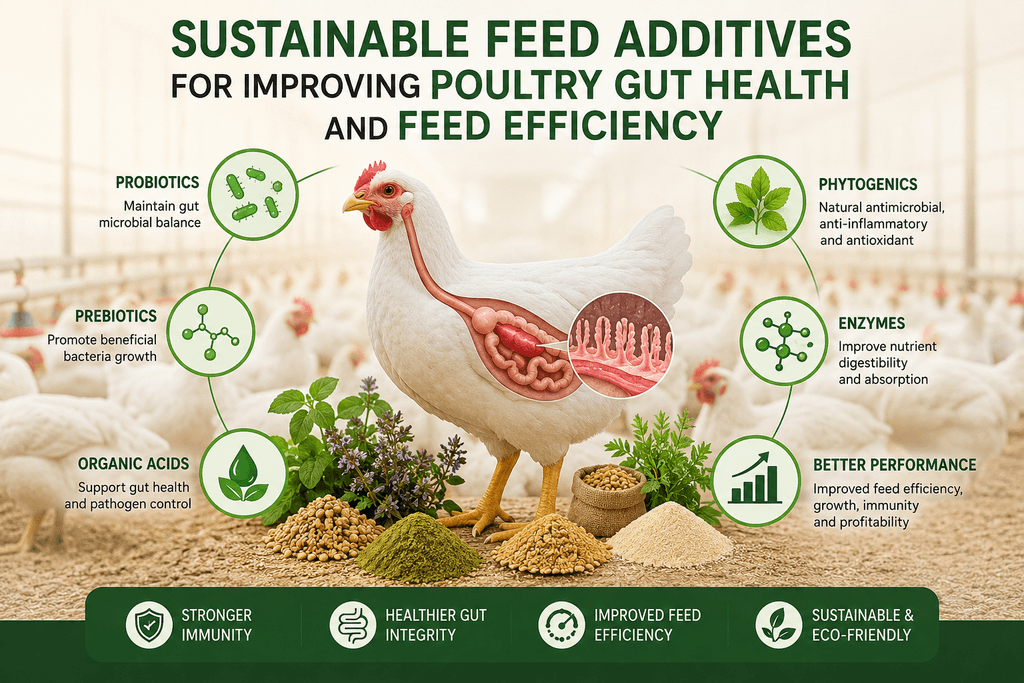
Gut health plays a critical role in poultry productivity. A healthy digestive system supports nutrient absorption, strengthens immune response, enhances feed conversion ratio (FCR), and reduces disease susceptibility. As antibiotic growth promoters continue to face restrictions in many countries, the industry is increasingly adopting alternative feed additives that support intestinal integrity and microbial balance without contributing to antimicrobial resistance.
The Importance of Gut Health in Poultry Production
The gastrointestinal tract of poultry is responsible for digestion, nutrient absorption, and immune regulation. Any imbalance in gut microbiota or intestinal damage can negatively affect feed intake, growth rate, and flock performance. Factors such as heat stress, poor feed quality, pathogenic bacteria, and environmental challenges can compromise gut integrity and reduce production efficiency.
An optimized gut environment enables birds to efficiently convert feed into body mass while maintaining better resistance against infections. Poultry producers are therefore focusing on nutritional strategies that enhance intestinal health and promote beneficial microbial populations.
Growing Demand for Sustainable Feed Additives
Sustainability has become a key priority across the animal nutrition sector. Feed manufacturers and poultry integrators are actively seeking environmentally responsible additives that improve productivity while reducing reliance on synthetic chemicals and antibiotics.
Sustainable feed additives are generally derived from natural, microbial, plant-based, or renewable sources. These additives contribute to improved nutrient digestibility, lower feed waste, enhanced bird welfare, and reduced environmental emissions.
Several categories of sustainable additives are currently gaining significant attention in poultry nutrition.
Probiotics and Gut Microbial Balance
Probiotics are among the most widely used sustainable feed additives in poultry production. These beneficial microorganisms help maintain intestinal microbial balance by inhibiting pathogenic bacteria and supporting digestive functions.
Common probiotic strains used in poultry feed include:
Lactobacillus species
Bacillus species
Bifidobacterium species
Enterococcus species
Probiotics improve gut morphology, increase enzyme activity, and enhance nutrient absorption. They also contribute to stronger immune responses and lower incidence of intestinal disorders such as necrotic enteritis.
Research has shown that probiotic supplementation can significantly improve feed conversion ratio and body weight gain in broiler chickens while reducing mortality rates.
Prebiotics and Digestive Support
Prebiotics are non-digestible feed ingredients that stimulate the growth of beneficial gut bacteria. Unlike probiotics, prebiotics act as a nutritional source for healthy microbial populations already present in the digestive tract.
Common poultry prebiotics include:
Mannan oligosaccharides (MOS)
Fructooligosaccharides (FOS)
Beta-glucans
Inulin
These compounds improve intestinal health by promoting microbial diversity and reducing colonization by harmful pathogens such as Salmonella and E. coli. Improved microbial stability leads to better digestion efficiency and nutrient utilization.
Phytogenic Feed Additives
Phytogenic additives derived from herbs, spices, and plant extracts are increasingly being incorporated into poultry diets due to their antimicrobial, antioxidant, and anti-inflammatory properties.
Common phytogenic ingredients include:
Oregano oil
Garlic extract
Thyme
Cinnamon
Turmeric
Capsaicin
These natural compounds help stimulate digestive enzyme secretion, improve feed palatability, and support intestinal integrity. Phytogenic additives also contribute to oxidative stress reduction, particularly during periods of heat stress and environmental challenges.
Many poultry producers are adopting phytogenic blends as sustainable alternatives to antibiotic growth promoters.
Organic Acids and Pathogen Control
Organic acids are effective feed additives used to control harmful bacteria and maintain optimal gut pH levels. These acids create an unfavorable environment for pathogenic microorganisms while supporting beneficial microbial populations.
Common organic acids include:
Formic acid
Propionic acid
Butyric acid
Lactic acid
Citric acid
Butyric acid is particularly valuable for poultry gut health because it serves as an energy source for intestinal epithelial cells. Improved intestinal development and stronger villi structure enhance nutrient absorption and feed efficiency.
Organic acid supplementation has been associated with improved growth performance, lower pathogen loads, and enhanced flock uniformity.
Enzymes and Nutrient Digestibility
Feed enzymes play a critical role in improving nutrient availability and reducing feed wastage. Modern poultry diets often contain ingredients with anti-nutritional factors that limit digestibility.
Common feed enzymes include:
Phytase
Xylanase
Protease
Beta-glucanase
These enzymes help break down complex feed components, releasing nutrients that would otherwise remain unavailable to the bird. Improved digestibility leads to lower feed costs, better nutrient absorption, and reduced nutrient excretion into the environment.
Phytase supplementation, for example, significantly improves phosphorus utilization and reduces phosphorus pollution from poultry manure.
Sustainable Benefits Beyond Performance
The adoption of sustainable feed additives offers multiple long-term benefits beyond improved bird performance.
Reduced Antibiotic Dependency
Natural feed additives support gut resilience and immune health, reducing the need for antibiotic interventions and helping producers comply with global antibiotic reduction initiatives.
Lower Environmental Impact
Improved nutrient digestibility decreases nitrogen and phosphorus excretion, helping reduce environmental pollution associated with poultry production.
Enhanced Feed Efficiency
Better feed conversion directly lowers feed consumption per kilogram of meat produced, improving economic sustainability for poultry operations.
Improved Animal Welfare
Healthier gut conditions contribute to reduced disease incidence, improved flock comfort, and lower stress levels among birds.
Challenges in Feed Additive Implementation
Despite their advantages, sustainable feed additives must be carefully selected and properly formulated to achieve consistent results. Factors such as dosage, feed composition, bird age, farm management, and environmental conditions can influence additive effectiveness.
Producers should evaluate:
Additive compatibility
Stability during feed processing
Cost-effectiveness
Scientific validation
Regulatory compliance
Collaboration between nutritionists, veterinarians, and feed manufacturers is essential for developing optimized feeding programs.
Future Outlook for Sustainable Poultry Nutrition
The future of poultry nutrition is expected to focus heavily on precision feeding, microbiome management, and sustainable ingredient innovation. Advances in biotechnology and nutritional science are enabling the development of next-generation additives that improve both productivity and environmental sustainability.
Emerging trends include:
Postbiotics
Precision probiotics
Fermented feed ingredients
Algae-based additives
Synbiotic formulations
AI-driven feed optimization
As consumer demand for antibiotic-free and sustainably produced poultry products continues to grow, feed additives will remain central to modern poultry production systems.
Conclusion
Sustainable feed additives are transforming poultry nutrition by improving gut health, enhancing feed efficiency, and supporting environmentally responsible production practices. Probiotics, prebiotics, phytogenic compounds, organic acids, and enzymes all contribute to better nutrient utilization and stronger intestinal health.
With rising feed costs and increasing pressure to reduce antibiotic usage, poultry producers are adopting innovative nutritional strategies that balance productivity with sustainability. By investing in scientifically validated feed additives and optimized feeding programs, the poultry industry can achieve improved flock performance while advancing long-term environmental and economic sustainability.
Related topics:
Authors:

Recommend
Comment
Share

1 de junio de 2026
I found your article very informative. Do keep posting such articles! Thank You.
Recommend
Reply
1
Would you like to discuss another topic? Create a new post to engage with experts in the community.












Featured users in Poultry Industry

Dr. Algis Martínez  Cargill
DVM, Diplomado ACPV - Poultry Veterinarian North America Cargill
United States
United States