Mitigating the Adverse Effects of Lead and Cadmium Heavy Metals-Induced Oxidative Stress by Phytogenic Compounds in Poultry
Environmental pollution has increased over the past few decades, posing serious risks to all biological systems, including the poultry sector. Oxidative stress in chickens caused by dietary, environmental, and pathological variables influences how well chickens perform as well as the quality of meat and eggs. Lead (Pb) and cadmium (Cd) are two examples of heavy metals that are harmful for chicken health. They can cause oxidative stress by increasing the production of reactive oxygen species (ROS) and reactive nitrogen species (RNS) and blocking antioxidants from protecting cells from increased amounts of free radicals. The oxidative state of heavy metals, their interactions with endogenous antioxidants, and chemical processes all affect how hazardous they are to the body. Today, scientists have investigated and applied a variety of nutritional tactics to lessen the harmful effects of oxidative stress on animal health brought on by heavy metals. Researchers have recently become interested in the chemicals because of their chelating and growth-stimulating functions, as well as the antioxidant qualities of useful plant components. The deleterious consequences of oxidative stress induced by two heavy metals on chickens is discussed in this review, along with phytogenic use as a potential intervention strategy to lessen these effects and maintain the redox equilibrium in poultry.
Keywords: heavy metals; phytogenic compounds; oxidative stress; performance; poultry
1. Introduction
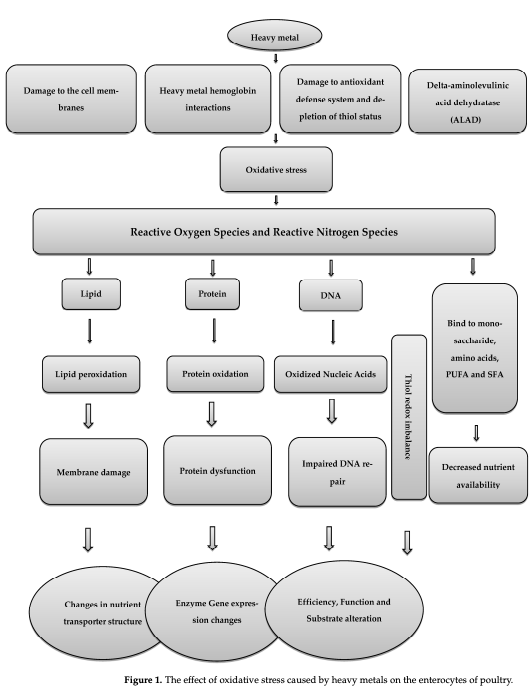
2. Oxidative Stress and Antioxidative Systems in Poultry
3. Heavy Metals and Oxidative Stress in Poultry
3.1. Pb
3.2. Cd and As
3.3. Mitigation of Oxidative Stress in Poultry
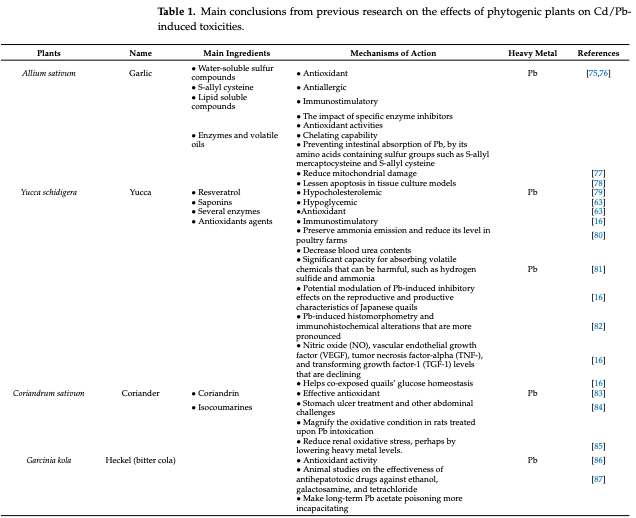

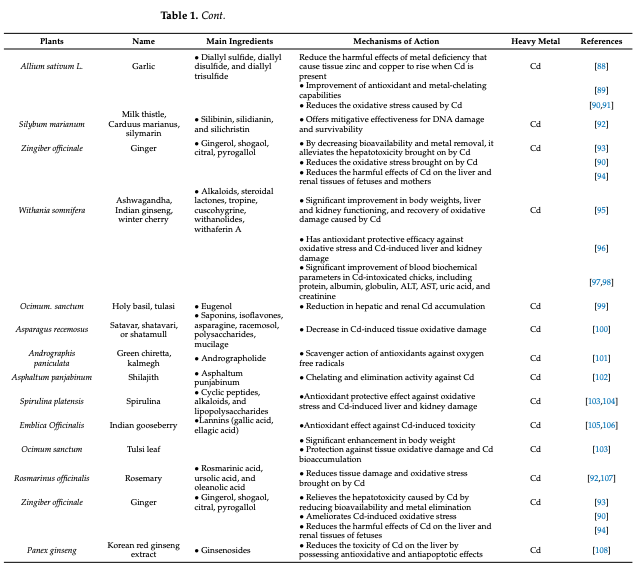
4. Pb and Phytogenic Plants
4.1. Allium sativum (Garlic)
4.2. Yucca schidigera
4.3. Coriandrum sativum (Coriander)
4.4. Garcinia Kola Heckel (Bitter cola)
5. Cd and Phytogenic Plants
5.1. Garlic (Allium sativum L.)
5.2. Milk Thistle (Silybum marianum)
5.3. Ginger (Zingiber officinale)
5.4. Winter Cherry (Withania somnifera)
5.5. Tulsi Leaf (Ocimum sanctum)
5.6. Indian Gooseberry (Emblica officinalis)
5.7. Rosemary (Rosmarinus officinalis)
5.8. Extract of Korean Ginseng (Panex ginseng)
5.9. Other Different Types of Herbal Plants
6. Conclusions
Bacou, E., Walk, C., Rider, S., Litta, G., & Perez-Calvo, E. (2021). Dietary oxidative distress: A review of nutritional challenges as models for poultry, swine and fish. Antioxidants, 10, 525.
Shakeri, M., Oskoueian, E., Le, H. H., & Shakeri, M. (2020). Strategies to combat heat stress in broiler chickens: Unveiling the roles of selenium, vitamin E and vitamin C. Veterinary Sciences, 7, 71.
Shakeri, M., & Le, H. H. (2022). Deleterious effects of heat stress on poultry production: Unveiling the benefits of betaine and polyphenols. Poultry, 1, 147–156.
Mishra, B., & Jha, R. (2019). Oxidative stress in the poultry gut: Potential challenges and interventions. Frontiers in Veterinary Science, 6, 60.
Shakeri, M., Cottrell, J. J., Wilkinson, S., Zhao, W., Le, H. H., McQuade, R., Furness, J. B., & Dunshea, F. R. (2019). Dietary betaine improves intestinal barrier function and ameliorates the impact of heat stress in multiple vital organs as measured by Evans blue dye in broiler chickens. Animals, 10, 38.
Sharma, R. K., & Agrawal, M. (2005). Biological effects of heavy metals: An overview. Journal of Environmental Biology, 26, 301–313.
Balali-Mood, M., Naseri, K., Tahergorabi, Z., Khazdair, M. R., & Sadeghi, M. (2021). Toxic mechanisms of five heavy metals: Mercury, lead, chromium, cadmium, and arsenic. Frontiers in Pharmacology, 12, 643972.
Khafaga, A. F., El-Hack, A., Mohamed, E., Taha, A. E., Elnesr, S. S., & Alagawany, M. (2019). The potential modulatory role of herbal additives against Cd toxicity in human, animal, and poultry: A review. Environmental Science and Pollution Research, 26, 4588–4604.
Nai, G. A., Marin, F. F., Queiroz, L. M. M., & Estrella, M. P. S. (2017). Respiratory tract cadmium-induced injuries—poisoning via intake and water pH could influence their genesis? An experimental study in rats. Comparative Clinical Pathology, 26, 997–1002.
Schaefer, H. R., Dennis, S., & Fitzpatrick, S. (2020). Cadmium: Mitigation strategies to reduce dietary exposure. Journal of Food Science, 85, 260–267.
Papanikolaou, N. C., Hatzidaki, E. G., Belivanis, S., Tzanakakis, G. N., & Tsatsakis, A. M. (2005). Lead toxicity update. A brief review. Medical Science Monitor, 11, RA329.
Korish, M. A., & Attia, Y. A. (2020). Evaluation of heavy metal content in feed, litter, meat, meat products, liver, and table eggs of chickens. Animals, 10, 727.
Baloš, M. Ž., Jakšić, S., & Pelić, D. L. (2019). The role, importance and toxicity of arsenic in poultry nutrition. World’s Poultry Science Journal, 75, 375–386.
Cadet, J., & Davies, K. J. (2017). Oxidative DNA damage & repair: An introduction. Free Radical Biology and Medicine, 107, 2–12.
Rehman, Z. U., Meng, C., Sun, Y., Safdar, A., Pasha, R. H., Munir, M., & Ding, C. (2018). Oxidative stress in poultry: Lessons from the viral infections. Oxidative Medicine and Cellular Longevity, 2018, 5123147.
Farag, M. R., Alagawany, M., Abd El-Hack, M. E., El-Sayed, S. A., Ahmed, S. Y., & Samak, D. H. (2018). Yucca schidigera extract modulates the lead-induced oxidative damage, nephropathy and altered inflammatory response and glucose homeostasis in Japanese quails. Ecotoxicology and Environmental Safety, 156, 311–321.
Surai, P. F., Kochish, I. I., Fisinin, V. I., & Kidd, M. T. (2019). Antioxidant defence systems and oxidative stress in poultry biology: An update. Antioxidants, 8, 235.
Bottje, W., Wang, S., Kelly, F. J., Dunster, C., Williams, A., & Mudway, I. (1998). Antioxidant defenses in lung lining fluid of broilers: Impact of poor ventilation conditions. Poultry Science, 77, 516–522.
Xiong, Y., Yin, Q., Li, J., & He, S. (2020). Oxidative stress and endoplasmic reticulum stress are involved in the protective effect of alpha lipoic acid against heat damage in chicken testes. Animals, 10, 384.
Zheng, S., Wang, Q., Yuan, Y., & Sun, W. (2020). Human health risk assessment of heavy metals in soil and food crops in the Pearl River Delta urban agglomeration of China. Food Chemistry, 316, 126213.
Okoye, P., Ajiwe, V., Okeke, O., Ujah, I., Asalu, U., & Okeke, D. (2015). Estimation of heavy metal levels in the muscle, gizzard, liver and kidney of broiler, layer and local (cockerel) chickens raised within Awka metropolis and its environs, Anambra state, south eastern Nigeria. Journal of Environmental Protection, 6, 609.
Bakalli, R., Pesti, G., & Ragland, W. (1995). The magnitude of lead toxicity in broiler chickens. Veterinary and Human Toxicology, 37, 15–19.
Dobrzański, Z., Górecki, H., Chojnacka, K., Górecka, H., & Synowiec, M. (2007). Effect of dietary humic preparations on the content of trace elements in hens’ eggs. American Journal of Agricultural and Biological Sciences, 2, 234–240.
Abduljaleel, S. A., & Shuhaimi-Othman, M. (2011). Metals concentrations in eggs of domestic avian and estimation of health risk from eggs consumption. Journal of Biological Sciences, 11, 448–453.
Hunton, P. (2005). Research on eggshell structure and quality: An historical overview. Brazilian Journal of Poultry Science, 7, 67–71.
Dauwe, T., Janssens, E., Bervoets, L., Blust, R., & Eens, M. (2005). Heavy-metal concentrations in female laying great tits (Parus major) and their clutches. Archives of Environmental Contamination and Toxicology, 49, 249–256.
Ebrahimi, R., Faseleh Jahromi, M., Liang, J. B., Soleimani Farjam, A., Shokryazdan, P., & Idrus, Z. (2015). Effect of dietary lead on intestinal nutrient transporters mRNA expression in broiler chickens. BioMed Research International, 2015, 149745.
Flora, S., Mittal, M., & Mehta, A. (2008). Heavy metal induced oxidative stress & its possible reversal by chelation therapy. Indian Journal of Medical Research, 128, 501.
Ye, F., Li, X., Li, F., Li, J., Chang, W., Yuan, J., & Chen, J. (2016). Cyclosporin A protects against lead neurotoxicity through inhibiting mitochondrial permeability transition pore opening in nerve cells. Neurotoxicology, 57, 203–213.
Ma, L., Liu, J.-Y., Dong, J.-X., Xiao, Q., Zhao, J., & Jiang, F.-L. (2017). Toxicity of Pb2+ on rat liver mitochondria induced by oxidative stress and mitochondrial permeability transition. Toxicology Research, 6, 822–830.
Gurer-Orhan, H., Sabır, H. U., & Özgüneş, H. (2004). Correlation between clinical indicators of lead poisoning and oxidative stress parameters in controls and lead-exposed workers. Toxicology, 195, 147–154.
Wang, J., Zhu, H., Yang, Z., & Liu, Z. (2013). Antioxidative effects of hesperetin against lead acetate-induced oxidative stress in rats. Indian Journal of Pharmacology, 45, 395.
Liu, C.-M., Ma, J.-Q., & Sun, Y.-Z. (2012). Puerarin protects rat kidney from lead-induced apoptosis by modulating the PI3K/Akt/eNOS pathway. Toxicology and Applied Pharmacology, 258, 330–342.
Neal, A. P., & Guilarte, T. R. (2010). Molecular neurobiology of lead (Pb2+): Effects on synaptic function. Molecular Neurobiology, 42, 151–160.
Zhu, M., Li, H., Bai, L., Wang, L., & Zou, X. (2020). Histological changes, lipid metabolism, and oxidative and endoplasmic reticulum stress in the liver of laying hens exposed to cadmium concentrations. Poultry Science, 99, 3215–3228.
Branca, J. J. V., Morucci, G., & Pacini, A. (2018). Cadmium-induced neurotoxicity: Still much ado. Neural Regeneration Research, 13, 1879.
Li, Y.-X., Xiong, X., Chun-Ye, L., Feng-Song, Z., Wei, L., & Wei, H. (2010). Cadmium in animal production and its potential hazard on Beijing and Fuxin farmlands. Journal of Hazardous Materials, 177, 475–480.
Fan, R., Hu, P.-C., Wang, Y., Lin, H.-Y., Su, K., Feng, X.-S., Wei, L., & Yang, F. (2018). Betulinic acid protects mice from cadmium chloride-induced toxicity by inhibiting cadmium-induced apoptosis in kidney and liver. Toxicology Letters, 299, 56–66.
Akyolcu, M., Ozcelik, D., Dursun, S., Toplan, S., & Kahraman, R. (2003). Accumulation of cadmium in tissue and its effect on live performance. In Proceedings of the Journal de Physique IV (Proceedings), Porto, Portugal, 8–10 September 2003 (pp. 33–36).
Stohs, S. J., & Bagchi, D. (1995). Oxidative mechanisms in the toxicity of metal ions. Free Radical Biology and Medicine, 18, 321–336.
Patrick, L. (2003). Toxic metals and antioxidants: Part II. The role of antioxidants in arsenic and cadmium toxicity. Alternative Medicine Review, 8, 106–128.
Castagnetto, J. M., Hennessy, S. W., Roberts, V. A., Getzoff, E. D., Tainer, J. A., & Pique, M. E. (2002). MDB: The metalloprotein database and browser at the Scripps Research Institute. Nucleic Acids Research, 30, 379–382.
Kern, M., Wisniewski, M., Cabell, L., & Audesirk, G. (2000). Inorganic lead and calcium interact positively in activation of calmodulin. Neurotoxicology, 21, 353–363.
Sun, X., Tian, X., Tomsig, J. L., & Suszkiw, J. B. (1999). Analysis of differential effects of Pb2+ on protein kinase C isozymes. Toxicology and Applied Pharmacology, 156, 40–45.
Marchetti, C. (2013). Role of calcium channels in heavy metal toxicity. International Scholarly Research Notices, 2013, 184360.
Gu, J., Dai, S., Liu, Y., Liu, H., Zhang, Y., Ji, X., Yu, F., Zhou, Y., Chen, L., & Tse, W. K. F. (2018). Activation of Ca2+-sensing receptor as a protective pathway to reduce cadmium-induced cytotoxicity in renal proximal tubular cells. Scientific Reports, 8, 1–13.
Sarkar, A., Ravindran, G., & Krishnamurthy, V. (2013). A brief review on the effect of cadmium toxicity: From cellular to organ level. International Journal of Biotechnology Research, 3, 17–36.
Liu, J., Qu, W., & Kadiiska, M. B. (2009). Role of oxidative stress in cadmium toxicity and carcinogenesis. Toxicology and Applied Pharmacology, 238, 209–214.
Flora, S. J. (2011). Arsenic-induced oxidative stress and its reversibility. Free Radical Biology and Medicine, 51, 257–281.
Zhao, H., He, Y., Li, S., Sun, X., Wang, Y., Shao, Y., Hou, Z., & Xing, M. (2017). Subchronic arsenism-induced oxidative stress and inflammation contribute to apoptosis through mitochondrial and death receptor dependent pathways in chicken immune organs. Oncotarget, 8, 40327.
Jomova, K., Jenisova, Z., Feszterova, M., Baros, S., Liska, J., Hudecova, D., Rhodes, C., & Valko, M. (2011). Arsenic: Toxicity, oxidative stress and human disease. Journal of Applied Toxicology, 31, 95–107.
Estévez, M. (2015). Oxidative damage to poultry: From farm to fork. Poultry Science, 94, 1368–1378.
Lauridsen, C. (2019). From oxidative stress to inflammation: Redox balance and immune system. Poultry Science, 98, 4240–4246.
McGill, M. R., Du, K., Weemhoff, J. L., & Jaeschke, H. (2015). Critical review of resveratrol in xenobiotic-induced hepatotoxicity. Food and Chemical Toxicology, 86, 309–318.
Rice-Evans, C. (2001). Flavonoid antioxidants. Current Medicinal Chemistry, 8, 797–807.
Chen, L., Yang, X., Jiao, H., & Zhao, B. (2002). Tea catechins protect against lead-induced cytotoxicity, lipid peroxidation, and membrane fluidity in HepG2 cells. Toxicological Sciences, 69, 149–156.
Winiarska-Mieczan, A. (2018). Protective effect of tea against lead and cadmium-induced oxidative stress—A review. BioMetals, 31, 909–926.
Mężyńska, M., Brzóska, M. M., Rogalska, J., & Piłat-Marcinkiewicz, B. (2018). Extract from Aronia melanocarpa L. berries prevents cadmium-induced oxidative stress in the liver: A study in a rat model of low-level and moderate lifetime human exposure to this toxic metal. Nutrients, 11, 21.
Fang, Y., Zhong, R., Chen, L., Feng, C., Sun, H., & Zhou, D. (2015). Effects of astaxanthin supplementation on the sperm quality and antioxidant capacity of ram semen during liquid storage. Small Ruminant Research, 130, 178–182.
Najafi, D., Taheri, R. A., Najafi, A., Shamsollahi, M., & Alvarez-Rodriguez, M. (2020). Effect of astaxanthin nanoparticles in protecting the post-thawing quality of rooster sperm challenged by cadmium administration. Poultry Science, 99, 1678–1686.
Miki, W. (1991). Biological functions and activities of animal carotenoids. Pure and Applied Chemistry, 63, 141–146.
Rubiolo, J., & Vega, F. (2008). Resveratrol protects primary rat hepatocytes against necrosis induced by reactive oxygen species. Biomedicine & Pharmacotherapy, 62, 606–612.
Alagawany, M., El-Hack, A., Mohamed, E., & El-Kholy, M. S. (2016). Productive performance, egg quality, blood constituents, immune functions, and antioxidant parameters in laying hens fed diets with different levels of Yucca schidigera extract. Environmental Science and Pollution Research, 23, 6774–6782.
Chakravarthi, S., Jessop, C. E., & Bulleid, N. J. (2006). The role of glutathione in disulphide bond formation and endoplasmic-reticulum-generated oxidative stress. EMBO Reports, 7, 271–275.
Wang, C., Zhao, F., Li, Z., Jin, X., Chen, X., Geng, Z., Hu, H., & Zhang, C. (2021). Effects of resveratrol on growth performance, intestinal development, and antioxidant status of broilers under heat stress. Animals, 11, 1427.
Olas, B., Wachowicz, B., Stochmal, A., & Oleszek, W. (2003). Inhibition of oxidative stress in blood platelets by different phenolics from Yucca schidigera Roezl. bark. Nutrition, 19, 633–640.
Nurdiana, S., Goh, Y. M., Ahmad, H., Dom, S. M., Syimal’ain Azmi, N., Noor Mohamad Zin, N. S., & Ebrahimi, M. (2017). Changes in pancreatic histology, insulin secretion and oxidative status in diabetic rats following treatment with Ficus deltoidea and vitexin. BMC Complementary and Alternative Medicine, 17, 1–17.
Krishnaiah, D., Sarbatly, R., & Nithyanandam, R. (2011). A review of the antioxidant potential of medicinal plant species. Food and Bioproducts Processing, 89, 217–233.
Bhattacharya, S. (2017). Medicinal plants and natural products in amelioration of arsenic toxicity: A short review. Pharmaceutical Biology, 55, 349–354.
Mehrandish, R., Rahimian, A., & Shahriary, A. (2019). Heavy metals detoxification: A review of herbal compounds for chelation therapy in heavy metals toxicity. Journal of HerbMed Pharmacology, 8, 69–77.
Das, B., & Chaudhuri, K. (2014). Amelioration of sodium arsenite induced toxicity by diallyl disulfide, a bioactive component of garlic: The involvement of antioxidants and the chelate effect. RSC Advances, 4, 20964–20973.
Adegboyega, A., & Odunola, O. (2012). The modulatory effects of aqueous extracts of Viscum album and garlic on sodium arsenite induced toxicity in Wistar albino rat. Journal of Chemical and Pharmaceutical Research, 4, 4698–4701.
Sharmila Banu, G., Kumar, G., & Murugesan, A. (2009). Effect of ethanolic leaf extract of Trianthema portulacastrum L. on aflatoxin induced hepatic damage in rats. Indian Journal of Clinical Biochemistry, 24, 414–418.
Bjørklund, G., Rahaman, M. S., Shanaida, M., Lysiuk, R., Oliynyk, P., Lenchyk, L., Chirumbolo, S., Chasapis, C. T., & Peana, M. (2022). Natural dietary compounds in the treatment of arsenic toxicity. Molecules, 27, 4871.
Arreola, R., Quintero-Fabián, S., López-Roa, R. I., Flores-Gutiérrez, E. O., Reyes-Grajeda, J. P., Carrera-Quintanar, L., Ortuño-Sahagún, D., & Garza, R. G. (2015). Immunomodulation and anti-inflammatory effects of garlic compounds. Journal of Immunology Research, 2015, 401630.
Ibrahim, D., Ismail, T. A., Khalifa, E., Abd El-Kader, S. A., Mohamed, D. I., Mohamed, D. T., Shahin, S. E., & Abd El-Hamid, M. I. (2021). Supplementing garlic nanohydrogel optimized growth, gastrointestinal integrity and economics and ameliorated necrotic enteritis in broiler chickens using a Clostridium perfringens challenge model. Animals, 11, 2027.
Morales-González, J. A., Madrigal-Bujaidar, E., Sánchez-Gutiérrez, M., Izquierdo-Vega, J. A., Valadez-Vega, M. d. C., Álvarez-González, I., Morales-González, Á., & Madrigal-Santillán, E. (2019). Garlic (Allium sativum L.): A brief review of its antigenotoxic effects. Foods, 8, 343.
Obioha, U. E., Suru, S. M., Ola-Mudathir, K. F., & Faremi, T. Y. (2009). Hepatoprotective potentials of onion and garlic extracts on cadmium-induced oxidative damage in rats. Biological Trace Element Research, 129, 143–156.
Ro, J.-H., Liu, C.-C., & Lin, M.-C. (2021). Resveratrol mitigates cerebral ischemic injury by altering levels of trace elements, toxic metal, lipid peroxidation, and antioxidant activity. Biological Trace Element Research, 199, 3718–3727.
Piacente, S., Pizza, C., & Oleszek, W. (2005). Saponins and phenolics of Yucca schidigera Roezl: Chemistry and bioactivity. Phytochemical Reviews, 4, 177–190.
Saeed, M., Arain, M. A., Naveed, M., Alagawany, M., El-Hack, A., Ezzat, M., Bhutto, Z. A., Bednarczyk, M., Kakar, M. U., & Abdel-Latif, M. (2018). Yucca schidigera can mitigate ammonia emissions from manure and promote poultry health and production. Environmental Science and Pollution Research, 25, 35027–35033.
Taha, H. S., Abdelnour, S. A., & Alagawany, M. (2019). Growth performance, biochemical, cytological and molecular aspects of rabbits exposed to lead toxicity. Journal of Animal Physiology and Animal Nutrition, 103, 747–755.
Fatemi, H., Pour, B. E., & Rizwan, M. (2020). Isolation and characterization of lead (Pb) resistant microbes and their combined use with silicon nanoparticles improved the growth, photosynthesis and antioxidant capacity of coriander (Coriandrum sativum L.) under Pb stress. Environmental Pollution, 266, 114982.
Velaga, M. K., Yallapragada, P. R., Williams, D., Rajanna, S., & Bettaiya, R. (2014). Hydroalcoholic seed extract of Coriandrum sativum (Coriander) alleviates lead-induced oxidative stress in different regions of rat brain. Biological Trace Element Research, 159, 351–363.
Nishio, R., Tamano, H., Morioka, H., Takeuchi, A., & Takeda, A. (2019). Intake of heated leaf extract of Coriandrum sativum contributes to resistance to oxidative stress via decreases in heavy metal concentrations in the kidney. Plant Foods for Human Nutrition, 74, 204–209.
Daramola, B., & Adegoke, G. (2011). Bitter kola (Garcinia kola) seeds and health management potential. In Nuts and Seeds in Health and Disease Prevention (pp. 213–220). Elsevier, Amsterdam, The Netherlands.
Osemwegie, O. O., Nwonuma, C. O., Oluyori, A. P., Abraham, P. O., Akanbi, A. A., Opaleke, D. O., & Alejolowo, O. O. (2017). In vitro antimicrobial and in vivo lead acetate poison abatement study of Garcinia kola Heckel. Journal of Taibah University for Science, 11, 883–894.
Tandon, S., Singh, S., & Prasad, S. (2001). Influence of garlic on the disposition and toxicity of lead and cadmium in the rat. Pharmaceutical Biology, 39, 450–454.
Mohamed, M., & Mohamed, A. H. (2009). Protective role of garlic against cadmium toxicity in rats: Clinicopathological and histopathological studies. Egyptian Journal of Comparative Pathology and Clinical Pathology, 22, 114–140.
Eteng, M. U., Onwuka, F. C., Akpanyung, E. O., Osuchukwu, N. C., Bassey, S. C., & Nwankpa, P. (2012). Reversal of cadmium induced toxicity following dietary supplementation with garlic, ginger and cabbage in male Wistar rats. Journal of Natural Products and Plant Resources, 2, 169–174.
Andleeb, S., Shaukat, S., & Ara, C. (2018). Protection against cadmium-induced abnormalities and hepatotoxicity in ovo by Allium sativum. Punjab University Journal of Zoology, 33, 34–41.
Borges, F. F. V., e Silva, C. R., Goes, W. M., Godoy, F. R., Franco, F. C., Véras, J. H., Bailão, E. F. L. C., e Silva, D. d. M., Cardoso, C. G., & da Cruz, A. D. (2018). Protective effects of silymarin and silibinin against DNA damage in human blood cells. BioMed Research International, 2018, 6056948.
Egwurugwu, J., Ufearo, C., Abanobi, O., Nwokocha, C., Duruibe, J., Adeleye, G., Ebunlomo, A., Odetola, A., & Onwufuji, O. (2007). Effects of ginger (Zingiber officinale) on cadmium toxicity. African Journal of Biotechnology, 6.
Genchi, G., Sinicropi, M. S., Lauria, G., Carocci, A., & Catalano, A. (2020). The effects of cadmium toxicity. International Journal of Environmental Research and Public Health, 17, 3782.
Mishra, B., & Singh Sangwan, N. (2019). Amelioration of cadmium stress in Withania somnifera by ROS management: Active participation of primary and secondary metabolism. Plant Growth Regulation, 87, 403–412.
Yan, L.-J., & Allen, D. C. (2021). Cadmium-induced kidney injury: Oxidative damage as a unifying mechanism. Biomolecules, 11, 1575.
Ganguly, B., Mrigesh, M., Chauhan, P., & Rastogi, S. K. (2020). Dietary supplementation with Withania somnifera root powder ameliorates experimentally induced Infectious Bursal Disease in chicken. Tropical Animal Health and Production, 52, 1195–1206.
Yadav, S. N., & Batra, M. (2017). Effect of Withania somnifera root powder administration on immune responses in cadmium-treated chickens. Indian Journal, 19, 36–41.
Ramesh, B., & Satakopan, V. (2010). Antioxidant activities of hydroalcoholic extract of Ocimum sanctum against cadmium induced toxicity in rats. Indian Journal of Clinical Biochemistry, 25, 307–310.
Park, J. H., Lee, B. M., & Kim, H. S. (2021). Potential protective roles of curcumin against cadmium-induced toxicity and oxidative stress. Journal of Toxicology and Environmental Health, Part B, 24, 95–118.
Prabu, M., Selvarajan, N., Hemalatha, S., & Rameshkumar, T. (2008). Hepatoprotective effect of Andrographis paniculata against cadmium induced toxicity in male Wistar rats. Toxicology International, 15, 21.
Ivanova, J., Gluhcheva, Y., Tsanova, D., Piskova, A., Djaleva, R., Mokresheva, S., Kamenova, D., & Mitewa, M. (2013). On the effect of chelating agents and antioxidants on cadmium-induced organ toxicity. An overview. European Journal of Chemistry, 4, 74–84.
Bharavi, K., Reddy, A. G., Rao, G., Kumar, P. R., Kumar, D. S., & Prasadini, P. P. (2011). Prevention of cadmium bioaccumulation by herbal adaptogens. Indian Journal of Pharmacology, 43, 45.
Karadeniz, A., Cemek, M., & Simsek, N. (2009). The effects of Panax ginseng and Spirulina platensis on hepatotoxicity induced by cadmium in rats. Ecotoxicology and Environmental Safety, 72, 231–235.
Swapna, G., Reddy, A. G., & Reddy, A. R. (2010). Cadmium-induced oxidative stress and evaluation of Embilica officinalis and stressroak in broilers. Toxicology International, 17, 49.
Mehrzadi, S., Mehrabani, M., Malayeri, A. R., Bakhshayesh, M., Kalantari, H., & Goudarzi, M. (2019). Ellagic acid as a potential antioxidant, alleviates methotrexate-induced hepatotoxicity in male rats. Acta Chirurgica Belgica, 119, 69–77.
Promy, V., Mai, E., Sherifa, H., Zainab, K., Maha, A.-A., Maha, D. S. O., Eibtisam, A., Muzammil, I. S., & Nada, M. M. (2013). Ameliorative effects of Embilica officinalis and Rosmarinus officinalis on cadmium-induced oxidative stress in Wistar rats. Journal of Medicinal Plants Research, 7, 805–818.
Park, S. J., Lee, J. R., Jo, M. J., Park, S. M., Ku, S. K., & Kim, S. C. (2013). Protective effects of Korean red ginseng extract on cadmium-induced hepatic toxicity in rats. Journal of Ginseng Research, 37, 37.
Shakeri, M., Shakeri, M., & Omidi, A. (2014). Effect of garlic supplementation to diet on performance and intestinal morphology of broiler chickens under high stocking density. Istanbul Üniversitesi Veteriner Fakültesi Dergisi, 41, 212–217.
Hossain, M., Akanda, M., Mostofa, M., & Awal, M. (2014). Ameliorative effects of dried garlic powder (Allium sativum) on hematological parameters against lead (Pb) intoxication in broiler chickens. Pharmacologia, 5, 110–119.
Flora, S. J. (2009). Structural, chemical and biological aspects of antioxidants for strategies against metal and metalloid exposure. Oxidative Medicine and Cellular Longevity, 2, 191–206.
Tang, E. L., Rajarajeswaran, J., Fung, S. Y., & Kanthimathi, M. (2013). Antioxidant activity of Coriandrum sativum and protection against DNA damage and cancer cell migration. BMC Complementary and Alternative Medicine, 13, 1–13.
Sharma, V., Kansal, L., & Sharma, A. (2010). Prophylactic efficacy of Coriandrum sativum (Coriander) on testis of lead-exposed mice. Biological Trace Element Research, 136, 337–354.
Téllez-López, M. Á., Mora-Tovar, G., Ceniceros-Méndez, I. M., García-Lujan, C., Puente-Valenzuela, C. O., del Carmen Vega-Menchaca, M., Serrano-Gallardo, L. B., Garza, R. G., & Morán-Martínez, J. (2017). Evaluation of the chelating effect of methanolic extract of Coriandrum sativum and its fractions on Wistar rats poisoned with lead acetate. Journal of Traditional and Complementary Medicine, 14, 92–102.
Song, J., Jiao, L., Xiao, K., Luan, Z., Hu, C., Shi, B., & Zhan, X. (2013). Cello-oligosaccharide ameliorates heat stress-induced impairment of intestinal microflora, morphology and barrier integrity in broilers. Animal Feed Science and Technology, 185, 175–181.
Mężyńska, M., & Brzóska, M. M. (2019). Review of polyphenol-rich products as potential protective and therapeutic factors against cadmium hepatotoxicity. Journal of Applied Toxicology, 39, 117–145.
Goto, K., & Watanabe, S. (2012). Large-billed crows (Corvus macrorhynchos) have retrospective but not prospective metamemory. Animal Cognition, 15, 27–35.
Shukla, R., & Kumar, M. (2009). Role of Panax ginseng as an antioxidant after cadmium-induced hepatic injuries. Food and Chemical Toxicology, 47, 769–773.





United States
United States