Importance of Vitamins and Minerals in Modern Layer Poultry Nutrition
Published: June 30, 2026
Source : Rakesh Kumar / Founder Director, Growel Agrovet Private Limited.
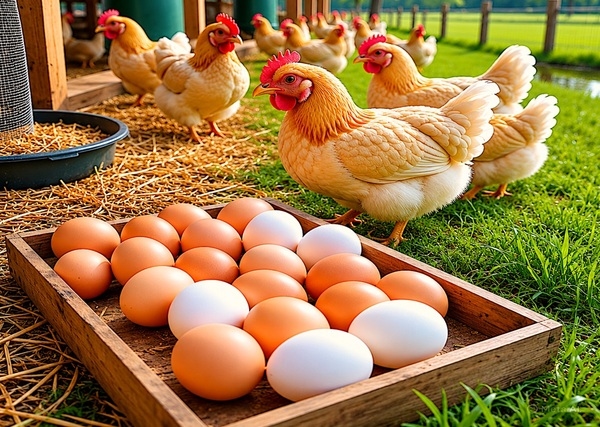
Modern layer poultry production depends on several key factors, including genetics, management, disease prevention, housing, and nutrition. Among these factors, nutrition plays an important role in maintaining bird health, supporting egg production, ensuring eggshell quality, and promoting reproductive performance.
While proteins, carbohydrates, and fats are required in larger quantities, vitamins and minerals are equally important because they regulate many physiological and metabolic processes within the body. Although required in small amounts, these micronutrients contribute significantly to the health, welfare, and productivity of laying hens.
Deficiencies of vitamins or minerals may result in reduced egg production, poor eggshell quality, impaired growth, weakened immunity, reproductive disorders, and increased susceptibility to disease.
Understanding Vitamins in Layer Poultry
Vitamins are organic compounds that support growth, metabolism, maintenance, reproduction, and immune function. Since poultry cannot synthesize most vitamins in sufficient quantities, they must be supplied through feed or supplementation.
Vitamins are generally classified into two groups based on their solubility.
Fat-Soluble Vitamins
The fat-soluble vitamins include Vitamins A, D3, E, and K. These vitamins are absorbed along with dietary fats and can be stored in body tissues.
Vitamin A supports vision, growth, epithelial tissue integrity, and immune function.
Vitamin D3 is involved in calcium and phosphorus metabolism and is essential for bone development and eggshell formation.
Vitamin E functions as an antioxidant and supports immunity, reproductive performance, and cellular health.
Vitamin K is involved in normal blood clotting and bone metabolism.
Water-Soluble Vitamins
Water-soluble vitamins include the B-complex group and Vitamin C. Unlike fat-soluble vitamins, they are not stored extensively in the body and therefore require regular dietary supplementation.
B-complex vitamins are involved in energy metabolism, nervous system function, protein synthesis, and nutrient utilization. Vitamin C, although synthesized to some extent by poultry, becomes particularly important during periods of environmental stress, heat stress, disease challenges, and vaccination.
Importance of Minerals in Layer Nutrition
Minerals are essential for maintaining normal physiological functions and supporting productive performance. Calcium and phosphorus are among the most important minerals for laying hens because they directly influence eggshell quality and skeletal strength.
Trace minerals such as zinc, manganese, copper, selenium, iron, and magnesium participate in numerous enzymatic reactions and biological processes. These minerals contribute to immune function, tissue development, reproductive performance, bone formation, and metabolic activity.
Insufficient mineral intake may lead to poor eggshell quality, reduced hatchability, skeletal abnormalities, weakened immunity, and lower production performance.
Why Modern Layers Require Additional Nutritional Support
The poultry industry has experienced considerable development over the past few decades. Genetic improvements have enabled modern layer strains to produce more eggs while utilizing feed more efficiently than earlier generations.
As productivity increases, nutritional requirements also increase. High-producing hens place greater demands on their metabolism and require balanced vitamin and mineral nutrition to maintain health and production.
In addition, commercial poultry operations expose birds to various stress factors, including:
- Heat stress
- High stocking density
- Vaccination programs
- Transportation
- Disease challenges
- Environmental fluctuations
- Mycotoxin contamination
These factors can increase vitamin and mineral requirements beyond the minimum levels needed to prevent clinical deficiency symptoms.
Vitamin Supplementation in Layer Poultry
The vitamin content of natural feed ingredients can vary considerably. Factors such as crop variety, climatic conditions, harvesting practices, storage methods, processing techniques, and ingredient quality all influence vitamin availability.
Furthermore, feed contaminants such as mycotoxins may interfere with vitamin absorption and utilization. As a result, naturally occurring vitamins in feed ingredients may not always be sufficient to meet the nutritional requirements of modern laying hens.
For this reason, vitamin supplementation has become a common practice in commercial poultry nutrition programs.
The Role of Vitamin E and Selenium
Vitamin E and Selenium are widely recognized for their antioxidant functions. Together, they help protect cell membranes from oxidative damage caused by free radicals.
Adequate Vitamin E and Selenium supplementation may provide several benefits, including:
- Improved immune response
- Better resistance to environmental stress
- Support for reproductive performance
- Improved fertility and hatchability
- Reduced oxidative stress
- Support for overall health and productivity
Studies have shown that appropriate levels of Vitamin E and Selenium can contribute to improved reproductive performance and flock health.
Calcium and Vitamin D3: Important Nutrients for Eggshell Quality
Eggshell quality remains an important economic factor in layer production. Cracked, thin-shelled, or weak eggs can result in significant economic losses.
Vitamin D3 is essential for the absorption and utilization of calcium. Without adequate Vitamin D3, birds cannot efficiently utilize dietary calcium, regardless of the calcium level in the diet.
Appropriate calcium and Vitamin D3 supplementation can help:
- Improve eggshell thickness and strength
- Maintain skeletal health
- Support bone mineralization
- Reduce leg weakness
- Support consistent egg production
As hens age, maintaining adequate calcium and Vitamin D3 nutrition becomes increasingly important.
Practical Supplementation for Modern Layer Poultry
To meet the nutritional requirements of modern laying hens, poultry producers commonly use vitamin and mineral supplements as part of a balanced feeding program.
B-complex vitamins support energy metabolism, nutrient utilization, growth, immunity, and egg production. These vitamins help birds efficiently convert feed nutrients into energy and maintain normal metabolic activity.
Multivitamin supplements containing Vitamins A, D3, E, C, B-complex vitamins, amino acids, and trace minerals can support growth, reproductive performance, fertility, hatchability, immunity, and overall flock productivity.
Vitamin E and Selenium supplements are commonly used to support antioxidant status, immune function, reproductive efficiency, and stress management. These nutrients are particularly valuable during periods of heat stress, vaccination, disease challenges, and peak production.
Calcium and Vitamin D3 supplementation contributes to eggshell quality, skeletal strength, bone mineralization, and sustained egg production. Adequate calcium nutrition helps reduce the occurrence of weak shells and skeletal disorders in laying hens.
When incorporated into a balanced feeding program, vitamin and mineral supplements can support bird health, feed efficiency, reproductive performance, and overall production throughout the laying cycle.
Conclusion
Vitamins and minerals are essential components of modern layer poultry nutrition. Their influence extends beyond the prevention of deficiency diseases and includes support for immunity, reproductive performance, eggshell quality, skeletal health, stress management, and productivity.
Providing balanced levels of vitamins and minerals is an important aspect of flock management. Appropriate supplementation programs can help maintain bird health, support productive performance, and contribute to the sustainability and profitability of modern egg production systems.
Related topics:
Authors:

Growel Agrovet Private Limited
Recommend
Comment
Share

Would you like to discuss another topic? Create a new post to engage with experts in the community.









Featured users in Poultry Industry

Dr. Algis Martínez  Cargill
DVM, Diplomado ACPV - Poultry Veterinarian North America Cargill
United States
United States