Author details:
1 Federal University of Santa Maria (UFSM), Veterinary Medicine Graduate Program, Master in Animal Health and Reproduction, Santa Maria, Brazil; 2 Federal University of Santa Maria (UFSM), Department of Animal Science, Santa Maria, RS 97105-900, Brazil; 3 Federal University of Santa Maria (UFSM), Center for Rural Sciences, Department of Preventive Veterinary Medicine, Laboratory of Diagnosis of Avian Pathologies, Santa Maria, Brazil; 4 Santa Catarina State University (UDESC), Animal Science Graduate Program, Chapecó, Brazil; 5 Federal University of Rio Grande do Sul (UFRGS), Animal Science Graduate Program, Porto Alegre, Brazil; 6 University of Arkansas, Division of Agriculture, Department of Poultry Science, Fayetteville, AR, USA; 7 National Autonomous University of Mexico, Faculty of Veterinary Medicine and Zootechnics, C.U., Department of Avian Medicine and Zootechnic, Mexico City, Mexico.
INTRODUCTION
Avian coccidiosis is caused by apicomplexan protozoan parasites of the Eimeria genus (Dalloul & Lillehoj, 2006). This disease has long been an important health threat in the poultry industry, exerting a significant worldwide economic loss estimated around £0.16 per bird (Blake et al., 2020). Coccidia are host-species specific, and are frequently identified by the specific section of the gastrointestinal tract (GIT) whose cells they infect (Haug et al., 2008a; Witcombe and Smith, 2014; Flores et al., 2022). Oocysts of avian Eimeria sp. have a demonstrated high resilience. Therefore, robust management programs, both prophylactic and therapeutic, are crucial for controlling the disease (Witcombe and Smith, 2014; Blake et al., 2021). The most effective method to control coccidia infection for the last 50 years has been the addition of ionophores to the feed (Chapman et al., 2016; Blake et al., 2021). This has been shown to limit the negative impacts of avian coccidiosis in the field (Mesa et al., 2021; Eckert et al., 2021). However, despite the observed effectiveness over time of these pharmacological strategies, novel restrictions on the use of antibiotics, due to government directives, and consumer demand, have pressured farmers to seek other options (Juárez-Estrada et al., 2021; Blake et al., 2021). Another common control method has been to inoculate birds with low levels of live Eimeria species to induce protective immunity (Long et al., 1986; Danforth, 1998; Juárez et al., 2007). Even though live coccidiosis vaccination has been generally successful, it strongly relies on proper cycling of Eimeria oocysts through each flock, and is management-demanding (Danforth, 1998; Constantinoiu et al., 2008; Parent et al., 2018; Kimminau & Duong, 2019). Effective preventive strategies need to be developed to avoid the continuous spread of this parasite (Blake et al., 2021; Juárez-Estrada et al., 2023). As these new strategies are develop, crucial metrics for measuring their efficacy should be considered. General metric tests combining standard broiler performance efficiency measures and specific coccidiosis infection level gauges, such as the anti-coccidial index (AIC) or the global resistance index (GI), have been widely applied in epidemic and experimental research (McManus et al., 1968; Stephan et al., 1997; Juárez-Estrada et al., 2021; Mesa et al., 2021). These indices commonly include variables such as viability (V), body weight gain (BWG), feed conversion ratio (FCR), macroscopic lesion score (LS), and, to a lesser extent, fecal Eimeria oocysts output measures, which are usually assessed as oocysts per gram of feces (OPG) (Chasser et al., 2020; Hauck et al., 2022). However, growth performance parameters, such as BWG and FCR may be influenced by factors beyond coccidial infection, occasionally making interpretation challenging (Chasser et al., 2020; Eckert et al., 2021; Hauck et al., 2022; Flores et al., 2022; Santiani et al., 2023). Additionally, much of the efficacy data have been generated in controlled research settings, which can differ significantly from complex commercial broiler operations due to variations in dietary, health, disease threat, genetic determinism, and environmental conditions (Hamzic et al., 2015; Eckert et al., 2021; Hauck et al., 2022; Zhou et al., 2023; Cevallos-Gordon et al., 2024). Although LS provides a real-time assessment of coccidia infection levels and gross damage impact on poultry flocks, it could be subjective, while also capturing only a point in time throughout the broiler rearing period (RP) (Teng et al., 2020; Hauck et al., 2022; Flores et al., 2022; Santiani et al., 2023). Additionally, LS does not quantify the actual or potential pathogen load (Conway et al., 1990; Chapman et al., 2016; Chasser et al., 2020; Teng et al., 2020; Flores et al., 2022). On the other hand, OPG is labor-demanding and cannot be measured on large-scale trials. Moreover, the use of different sampling techniques could yield inconsistent results (Hodgson, 1970; Long & Rowell, 1975; Haug et al., 2008b; Hamzic et al., 2015; Parent et al., 2018; Snyder et al., 2021). Given the drawbacks of these methodologies, it is important to incorporate other disease measurements capable of detecting effects that may otherwise be missed. In this context, direct micro-quantification of E. maxima oocyst through GIT has been shown to be significantly correlated with the LS of the same bird, an assessment that offers more comprehensive information on the infection and reproduction of oocysts (Gazoni et al., 2015; Kimminau & Duong, 2019; Gazoni et al., 2020). This approach would allow for a more accurate assessment of parasite loads and immunological responses within the poultry flock. Such information might be used to monitor the effects of prophylactic or treatment strategies on the overall Eimeria life cycle (Stephan et al., 1997; Haug et al, 2008a; Gazoni et al., 2020; Zhou et al., 2023 Gazoni et al., 2024). Incorporating LS along with direct micro-E. maxima oocyst quantification through the GIT may provide a practical tool for real-time monitoring of the effectiveness of intervention strategies (Kimminau & Duong, 2019; Gazoni et al., 2020; Gazoni et al., 2021). By correlating LS data with direct micro-q Em oocysts over the past decade in Brazil’s poultry production, this observational study sought to demonstrate how this integrated method constitutes a valuable practical tool for monitoring and optimizing avian coccidiosis control measures at the broiler farm level.
MATERIALS AND METHODS
Samples schedule and Eimeria sp. lesions screening
Several field samples were obtained from 103 contracted-grower companies located in the main states of Brazil (Rio Grande do Sul, Santa Catarina, Paraná, Mato Grosso do Sul, São Paulo, Minas Gerais, Rio de Janeiro, Goiás, Distrito Federal, Alagoas, Pará, Paraíba, Ceará, Espírito Santo, Sergipe, and Pernambuco) from 2012 to 2022, in order to detect broiler chickens affected with Eimeria-species lesions.
A total of 8,423 broiler chickens aged from 14 to 42 days were sampled, making no distinction between Cobb or Aviagen strains. The feed program for every farm was manufactured by the contractedgrower company, with no significant influence on the formulation stage, the use of growth booster additives, and/or coccidiosis control program (either in-feed anticoccidial medication or live Eimeria sp. vaccination). All data obtained from these broiler companies were analyzed and treated as part of an observational retrospective-cohort study.
Eimeria species identification
The Eimeria species (i.e. E. maxima) described in the current study were identified and discriminated based on matching the oocysts’ morphometric measures with specific characteristics described for each Eimeria sp. by Haug et al. (2008a).
Gastrointestinal Micro-quantification of Eimeria maxima
For the specific microscopy assessment of E. maxima, the scraped mucosa from the bowel portion closer to Meckel’s diverticulum was used to quantify oocysts, as described by Gazoni et al. (2015). However, as previously reported by several research groups (Costa & Paiva, 2009), E. maxima can also be found from the beginning of the duodenum to the distal part of the ileum. Therefore, the intestinal contents from these regions were also smeared on the microscope slide, and the cover slip was placed over the intestinal content, gently pressing it without spilling out. Every slide was observed at a magnification of 100X using one optical microscope (BM-100, Nigbo Barride Optics CO., Ltd. Ningbo, Zhejiang, China). Meckel’s diverticulum was microscopically assessed for micro-quantification of E. maxima oocysts. This assessment was performed at the same five distinct sites shown on the slide (four corners and center). The microscopic scores were ranked from zero to four, with zero representing the absence of oocysts, one representing 1 to 10 oocysts, two representing 11 to 20 oocysts, three representing 21 to 40 oocysts, and four representing more than 41 oocysts (Figure 1).

Eimeria sp. lesions were scored to assess their severity
Data on the incidence of lesions caused by E. acervulina, E. maxima, and E. tenella in different broiler chicken ages (14 to 42 days) were analyzed based on their respective lesion score (LS) severity, graded according to methodology described by Johnson & Reid (1970). The poultry-specialized veterinarians of every contracted grower company monitored the intestinal health of the broilers. This evaluation was conducted on 3 to 6 birds from each poultry house, randomly selected from three separate points (entry, middle, and end of the broiler house). In accordance with animal welfare and euthanasia requirements for birds (Ministério da Ciência, Tecnologia e Inovação, 2013), euthanasia was always performed by cervical dislocation.
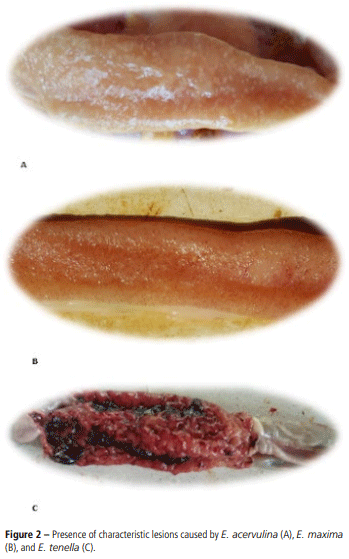
Figure 2 illustrates the presence of typical lesions caused by E. acervulina, E. maxima, and E. tenella in the gastrointestinal system of the sampled broilers. When lesions were present, they were classified according to the scoring system for intensity developed by Johnson & Reid (1970), where a score of 0 indicates no injury, and a score of 4 indicates the highest severity of damage.
The LS incidence data of E. acervulina, E. maxima, and E. tenella along with additional data from the E. maxima micro-quantification field assay in different ages of broiler chickens (14 to 42 days) throughout 10 years of sampling were statistically analyzed.
Statistical analysis
Throughout the 10-year study period, the broiler rearing period was divided into six stages. This time division was determined based on the shortest prepatent period associated with one of the analyzed Eimeria species (i.e., E. acervulina) (Conway et al., 1990; Haug et al., 2008a). In this way, except for the first stage of 4 days, each subsequent stage comprised 5 days, covering the entire broiler rearing period (14- 42 days). Incidence of Eimeria sp. LS and Micro-q Em scoring throughout the entire rearing period of every analyzed broiler farm was done through a descriptive analysis. These incidence data were expressed as a partial percentage of affected birds in relation to the total chickens sampled. Birds were considered the experimental unit for Eimeria sp. LS and Micro-q Em oocysts. The effect of each stage of the rearing period on lesion score magnitude was determined using a non-parametric one-way ANOVA procedure (SAS/STAT 9.2. SAS Institute Inc., Cary, NC, USA), with a significance level set at 5%. Data of the microquantification of E. maxima oocysts scoring were analyzed using a nonparametric one-way ANOVA. When the overall analysis of Kruskal-Wallis test revealed differences between groups (different stages of the RP), a post hoc Dunn’s test analysis was used to discriminate significant differences between groups, with significance assessed at p< 0.05. Data expressed as median by group (stage) were translate to arithmetic mean (± SD) to gain a better understanding of the overall data. However, all statistical differences refer to the group, not the arithmetic mean. The relationship between Eimeria LS and the micro-quantification of E. maxima oocysts scoring was analyzed employing the ProcCorr procedure of SAS (SAS/STAT 9.2. SAS Institute Inc., Cary, NC, USA) (Bonett & Wright, 2000). The correlation coefficient values between LS and the micro-quantification of E. maxima data determined with Spearman’s correlation coefficients (rho) were categorized as follows: negligible correlation (0.000– 0.100), weak monotonic relationship (0.100–0.259), moderate (0.300–0.699), strong (0.700–0.899), and very strong monotonic relationship (0.900–1) (Schober et al., 2018).
RESULTS
From all broiler chickens analyzed during the 10- year study period, 45.5% of them were diagnosed with coccidiosis. All of these broiler chickens showed lesions suggestive of Eimeria species. E. acervulina LS displayed a prevalence of 56.4%, followed by E. maxima LS (28%), and E. tenella LS (15.6%). On the other hand, 54.5% of all analyzed broiler chickens were positive for the micro-quantification of E. maxima oocysts. Figure 3 displays the percentage of broiler chickens with Eimeria lesions at every phase of the rearing period. The majority of affected broiler chickens were identified between 28 and 37 days of age, with the lowest in the first and sixth stages (Figure 3).

Figure 4 displays the incidence of Eimeria sp. LS and the micro-quantification of E. maxima at various stages of the broiler RP from 2012 to 2022. E. maxima showed a LS peak in the first stage, E. acervulina in the second one, and E. tenella in the third. Unexpectedly, E. acervulina LS remained higher during the last three stages of the RP. The higher incidence of the microquantification of E. maxima executed directly from GTI of broiler chickens was observed at the first stage, coinciding with the same stage where the incidence of E. maxima LS was also higher. However, at the last stage, Micro-q Em also showed high incidence (Figure 4).

During the first and second stages of the broiler rearing period, there were no differences in LS incidences between Eimeria species (Table 1). However, during the third and fourth stages (23-32 days), the highest incidence of LS was observed in E. acervulina, while the lowest was exhibited by E. tenella (Table 1). During the fifth stage, differences in LS incidences between different Eimeria species were not observed. However, in the last phase (38-42 days), E. maxima displayed the highest LS incidence (Table 1).
The highest ranking for E. maxima scores through micro-quantification of oocysts in the broiler gastrointestinal lining was observed at third stage (23- 27 days) (Figure 5).
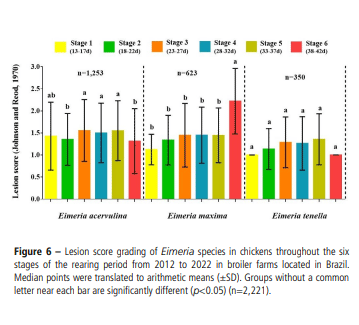
The highest LS of E. acervulina were observed from the third to the fifth stages of the rearing period, while the LS for E. maxima unexpectedly peaked at the last stage (38-42 days) (Figure 6). Otherwise, lesion scores for E. tenella did not show any significant differences between the six stages of the rearing period evaluated from 2012 to 2022 (Figure 6).
The highest Spearman’s correlation coefficient (rho) during the first stage was observed between the LS of E. maxima and the LS of E. tenella, indicating a very strong relationship of 0.932 (Table 2). At the second stage, the LS of E. maxima and the LS of E. acervulina showed the highest strong correlation (0.953) (Table 2). At the third stage, a very strong correlation (0.941) was observed between the LS of E. acervulina and the micro-quantification of E. maxima scoring, while the second very strong correlation (0.917) was observed between LS of E. maxima and the micro-quantification of E. maxima (Table 2). At the fourth stage, only the LS of E. maxima and the LS of E. acervulina exhibited a very strong correlation (0.953). Stage five showed a very high correlation (0.987) between the LS of E. tenella and the micro-quantification of E. maxima scoring. At the last stage, the highest correlation (0.967) was detected between the LS of E. tenella and the LS of E. acervulina (Table 2). The scoring of the micro-quantification of E. maxima oocysts showed the highest Spearman’s correlation coefficients with other variables (Table 2). The overall Spearman’s correlation coefficient between Eimeria sp. LS and the scoring of the micro-quantification of E. maxima oocysts was very strong (0.958).

DISCUSSION
The control of coccidiosis has become a challenge due to the fact that chickens can be infected by seven different Eimeria species, with mixed-species coinfections also often occurring (Carvalho et al., 2011). Understanding the epidemiology of Eimeria species is crucial to estimate the efficiency of coccidial control programs. The major Eimeria species that primarily cause coccidiosis, infecting and damaging the GTI of broiler chickens, are E. acervulina, E. maxima and E. tenella (Juárez et al., 2007; Haug et al., 2008a; Teng et al., 2020; Santiani et al., 2023). These are the Eimeria species with the highest incidence based on macroscopic lesion analysis in naturally infected broiler chickens (Chasser et al., 2020; Flores et al., 2022; Santiani et al., 2023; Gazoni et al., 2024). In the current study, monitoring the incidence of coccidiosis in broiler farms in Brazil from 2012 to 2022 revealed a significant proportion of birds with lesions suggestive of these Eimeria species. E. acervulina showed the highest prevalence at 56.4%, followed by 28% for E. maxima, and 15.6% for E. tenella.
Previous reports from several research groups have shown differing rates. In Romania, Györke et al. (2013) reported a prevalence of 91% for E. acervulina, 61% for E. tenella, and 22% for E. maxima. They indicated that E. acervulina was the most prevalent Eimeria species in flocks that received ionophores in-feed as anticoccidial control. Using lesion scores, Carvalho et al. (2011), found that the most common species in 30 broilers farms in Bahia, northeastern Brazil, were E. maxima (46.7%), E. acervulina (30%) and E. tenella (23.3%). Moraes et al. (2015) sampled 251 broiler farms in the south of Brazil, with morphological studies showing that 96% of the sampled farms were positive for Eimeria sp. Using RAPD-SCAR Multiplex PCR, they found a prevalence of 63.7% for E. maxima, 63.3% for E. acervulina, and 54.6% for E. tenella. They indicated that E. acervulina exhibited the highest participation in multiple infections. Mesa et al. (2021) sampled 194 broiler farms in four rural areas of Colombia. They reported that 92.8% of the farms were positive for Eimeria sp. oocysts. E. acervulina showed the highest prevalence (35.0%), followed by E. tenella (30.9%), and E. maxima (20.4%). Mesa et al. (2021) mentioned that mixed species infections were very common (31.4%). Santiani et al. (2023) sampled 32 broiler flocks of 29 days of age in Southern Brazil, reporting that 93.8% of the flocks were positive for Eimeria sp. macroscopic lesions. Employing multiplex PCR, they detected 34.3% of Eimeria sp. oocysts in the flocks, with 21.9% for E. tenella, 18.8% for E. maxima and 3.1% for E. acervulina. Recently, Cevallos-Gordon et al. (2024) sampled 155 poultry farms in two central provinces of Ecuador. They reported that 100% of the farms were positive for Eimeria sp. oocysts, with E. maxima showing a prevalence of 80.3%, followed by 70.5% for E. acervulina, and 53.5% for E. tenella. Although almost all the aforementioned studies are cross-sectional, they described Eimeria sp. prevalence instead of incidence. These studies did not report the incidence development of Eimeria sp. across the rearing period as the current study did. The studies mentioned above have shown that the overall prevalence of Eimeria species in poultry can range from around 92 to 96%. Research from various regions of Brazil indicated high prevalence rates, with up to 100% of Eimeria sp. in certain areas throughout all seasons of the year (Carvalho et al., 2011; Moraes et al., 2015; Santiani et al., 2023; Gazoni et al., 2024). These findings highlight the widespread presence of Eimeria species in poultry production and emphasize the importance of managing these parasitic infections at the farm level.
The prevalence of Eimeria species varies across different regions due to factors such as geographic location, altitude, climate, season of the year, biosecurity measures, age of the birds, poultry management practices, and the overall health status of the chickens (Ahad et al., 2015; Cevallos-Gordon, et al., 2024; Gazoni et al., 2024). Several studies have highlighted that factors like the ventilation systems of poultry houses, the presence of different Eimeria species, water sources, and the use of specific anticoccidial methods (ionophores, chemicals drugs, or Eimeria sp. live vaccines) can also influence the prevalence of Eimeria infections (Lee et al., 2012; Parent et al., 2018; Kimminau & Duong, 2019; Eckert et al., 2021; Snyder et al., 2021). Currently, with routine coccidiosis control programs in broilers such as in-feed anticoccidial medication or live Eimeria sp. vaccination, clinical coccidiosis outbreaks are indeed very rare. However, subclinical coccidiosis has become a major cause of lower overall productive performance among broiler chickens, posing a significant challenge in the global commercial broiler production industry (Haug et al., 2008b; Gazoni et al., 2020; Blake et al., 2021; Villas et al., 2023). Subclinical coccidiosis remains the major avian parasitic disease worldwide, affecting nutrient absorption and the overall intestinal health of broiler chickens during their rearing period (Teng et al., 2020; Gazoni et al., 2021; Villas et al., 2023). Subclinical coccidiosis caused by E. maxima and E. acervulina is a significant issue in commercial broiler chickens in Brazil (Carvalho et al., 2011; Moraes et al., 2015; Gazoni et al., 2021; Santiani et al., 2023; Gazoni et al., 2024). Results of the current study showed that a peak of 63.4% of broiler chickens were affected by Eimeria sp. lesions between 28 and 37 days of age, with lower rates recorded at the 1st and 6th stages of the RP. Notably, E. maxima showed a lesion score peak at the first stage, while E. acervulina and E. tenella exhibited lesion score peaks at the second and third stages, respectively. Several research groups have suggested that the study of macroscopic lesions alone is not accurate for the diagnosis of coccidiosis, as it rarely demonstrated the severity and extent of the lesions. Therefore, it is crucial to complement the evaluation of gross lesions with other methods such as identifying the coccidia in histologic sections or molecular diagnostics (Haug et al., 2008a; Carvalho et al., 2011; Moraes et al., 2015; Mesa et al., 2021; Santiani et al., 2023). However, both techniques are not commonly used for monitoring Eimeria sp. in longitudinal studies. Instead, both methods are widely used for academic or research purposes. The microscopic analysis of E. maxima oocysts from intestinal scrapings is indeed considered the most suitable method for detecting subclinical coccidiosis in broiler chickens (Costa et al., 2009; Kimminau & Duong, 2019; Gazoni et al., 2020). This method enables the accurate identification and quantification of the parasite burden in a cost-effective manner. Beyond identification, the microquantification of E. maxima oocysts in particular has been able to evaluate the severity and extent of E. maxima infections in broiler chickens, providing valuable insights into the prevalence and impact of coccidiosis in the poultry industry of Brazil (Gazoni et al., 2020). Although in the present study Micro-q Em oocysts revealed the highest scores at the third stage (23-27 days), it showed the highest incidence during the first stage. Unexpectedly, Micro-q Em displayed another elevated peak of incidence at the last stage (38- 42 d), aligning with the highest lesion score findings (+2.2). Further analysis revealed varying lesion scores among Eimeria sp. throughout different stages of the RP. There were no differences in LS incidence between Eimeria sp. during the first two stages. However, E. acervulina showed the highest incidence from the third to fifth stages, while E. tenella showed the lowest. Additionally, E. maxima had the highest LS incidence at the last stage (38-42 days) (Figure 6). At the third stage, a very strong correlation was found between E. acervulina LS and Micro-q Em, while at the sixth stage the LS of E. maxima compared with other LS of Eimeria sp. and Micro-q Em (0.808) showed the highest strong correlation (rho) with the Micro-q Em (Table 2). These results corroborate the atypical E. acervulina and E. maxima LS incidences throughout the RP. The elevation in the LS of E. acervulina during the last three stages suggests that E. acervulina oocysts continue to infect chickens throughout this final part of the RP. This contradicts the expected epidemiological curve of Eimeria sp. dynamic reproduction when ionophores or live Eimeria sp. vaccines are employed for prevention or control (Lee et al., 2012; You, 2014; Chapman et al., 2016; Price et al., 2016; Parent et al., 2018; Snyder et al., 2021; Hauck et al., 2022).
The epidemiological curve of Eimeria species reproduction typically involves a pattern where Eimeria species exhibit varying levels of reproduction and infection dynamics over the RP (Lee et al., 2012; Chapman et al., 2016; Price et al., 2016; Snyder et al., 2021). This epidemiological curve is influenced by factors such as the fecundity of the parasite and host control mechanisms, as well as immunological characteristics (Dalloul & Lillehoj, 2006; Juárez et al., 2007; Lee et al., 2012; You, 2014; Parent et al., 2018; Snyder et al., 2021). In this context, E. acervulina, known for its high immunological and fecundity characteristics, should theoretically exhibit limited reproduction during certain stages of the RP (You, 2014; Chapman et al., 2016; Flores et al., 2022). However, unexpected findings in this study show that E. acervulina lesion scores remained elevated during later stages, contrary to the expected epidemiological curve. E. acervulina should be limited in reproduction due to its high immunological and fecundity characteristics (Juárez et al., 2007; You, 2014; Price et al., 2016; Chapman et al., 2016; Flores et al., 2022). Typically, the host control the reproduction of E. acervulina early in the RP (between 21-28 days, i.e. stages 3-4), leading to minimal shedding of oocysts and minor lesions after 29 days of age (Juárez et al., 2007; You, 2014; Parent et al., 2018; Flores et al., 2022). Santiani et al. (2023) reported the lowest E. acervulina oocyst incidence in broiler chickens at 29 days of age, while incidences of E. maxima and E. tenella oocysts were higher. Additionally, they observed mixed infection in three flocks, two of which consisted of E. maxima and E. tenella, and only one of E. acervulina and E. tenella. Kimminau and Doung (2019) analyzed effects of bio-shuttle programs using live Eimeria sp. vaccines and ionophores. In the first bio-shuttle RP, they found a high prevalence of E. acervulina and E. maxima. Interestingly, the prevalence of E. acervulina lesions did not appear to correspond with growth performance, but the prevalence of E. maxima lesions did appear to do so (Chapman et al., 2016). These discrepancies highlight the complexity of Eimeria species dynamics throughout the rearing period and the need for further research to fully understand the reproduction patterns and infection dynamics of Eimeria species in broiler chickens. Although the LS and Micro-q Em scorings during the RP were mostly near median 1, indicating a low level of subclinical infection, an atypical pattern of E. acervulina and E. maxima LS incidence was observed. This suggests an unusual reproduction cycling of the oocysts. Whereas the strategic use of anticoccidial drugs and live Eimeria sp. vaccines have been achieving the commercial control goals at field, both prevention strategies can be surpassed in a short time by the strong reproductive biology of Eimeria sp., the unexpected emergence of new operational taxonomic units, inappropriate live vaccines coverage, and increases in anticoccidial drug resistance (Juárez et al., 2007; Chapman et al., 2016; Blake et al., 2021; Mesa et al., 2021; Snyder et al., 2021). All these issues should be considered in further studies. Although there are efficient metric tests in Eimeria sp. population studies, such as the anticoccidial index or the global resistant index, both widely utilized in research and academia, applying these methods in commercial broiler production could be labor- and time-consuming (Kimminau & Duong, 2019; Chasser et al., 2020). At the broiler farm level, interesting proposals for Eimeria sp. population studies have emerged, such as a survey of OPG from litter or fecal samples (Haug et al., 2008b), and combinate trait analyses of BWG, LS and OPG (Kimminau & Duong, 2019; Chasser et al., 2020; Flores et al., 2022; Hauck et al., 2022). Lesion scores have been proven to be effective in confirming Eimeria infection, although they do not correlate well with BWG or OPG (Conway et al., 1990; Hamzic et al., 2015; Chapman et al., 2016; Kimminau & Duong, 2019; Chasser et al., 2020; Hauck et al., 2022). Measuring OPG can be somewhat inaccurate, labor-consuming, and have technical limitations if they require measuring other parameters like intestinal LS (Hamzic et al., 2015; Parent et al., 2018; Snyder et al., 2021; Hauck et al., 2022; Gazoni et al., 2024). The Micro-q of Em oocysts showed the highest Spearman’s correlation coefficients (rho) with the remaining variables, indicating an overall very strong correlation between the micro-quantification of E. maxima oocysts and Eimeria LS. These relationships showed the potential use of both methods for monitoring and optimizing avian coccidiosis control measures at the farm level. This affordable approach ensures a more reliable diagnosis at the field level, and leads to a better comprehension of the disease’s impact on the affected birds. Santiani et al. (2023) observed that, in their histopathological evaluation, parasitic structures of E. maxima were the most abundant, which strongly aligns with our Micro-q Em findings (Figure 5). According to our findings, Eimeria sp. LS correlated very strongly with the micro-quantification of E. maxima oocysts. Indeed, this latter method would be interesting to evaluate in further studies, considering its correlation with LS, BWG, and OPG traits. The economic importance of subclinical coccidiosis may vary substantially in time, emphasizing the need for longitudinal population studies on the importance and dynamics of specific coccidial infections, and their impact under different coccidiosis control strategies (Price et al., 2016; Parent et al., 2018; Blake et al., 2021; Snyder et al., 2021; Eckert et al., 2021). Our results aimed to understand the epidemic course of avian coccidiosis under specific poultry production systems in Brazil, and contribute to the identification of trends and patterns in the incidence and prevalence of this parasitic illness. Longitudinal studies as the current research provide robust evidence for formulating predictions and recommendations for the control of avian coccidia. However, it is important to recognize that longitudinal studies are more time-consuming, resource-intensive, and may be subject to attrition and data loss.
CONCLUSION
The outcomes of the current research underscore the importance of integrating lesion scoring with direct micro-quantification of E. maxima oocysts grading. This affordable approach can generate large, uniform, and accurate datasets that are useful for understanding the epidemiology and effectiveness of Eimeria sp. infection management and the efficacy of novel strategies.
ACKNOWLEDGEMENTS
The authors thank the contracted broiler growers who participated in the study, and those who aided in the enrollment of producers, without whom this research would not have been successful.
This article was originally published in Revista Brasileira de Ciência Avícola, 2025 / v.27 / n.1 / 001-011. http://dx.doi.org/10.1590/1806-9061-2024-1994. This is an Open Access article distributed under a Creative Commons Attribution License.