Prebiotic Xylo-Oligosaccharides Modulate the Gut Microbiome to Improve Innate Immunity and Gut Barrier Function and Enhance Performance in Piglets Experiencing Post-Weaning Diarrhoea
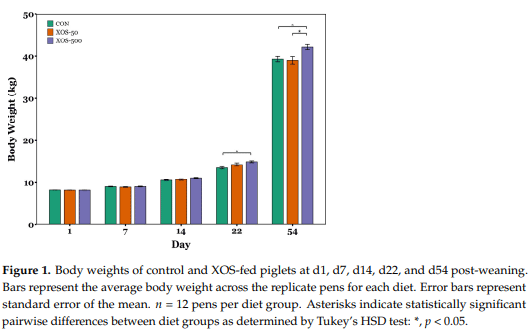
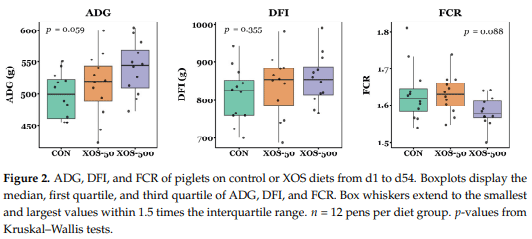
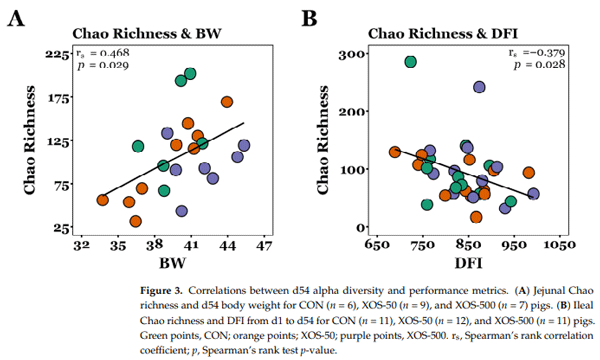
During commercial pig production, weaning is a major stressor that disrupts the gut microbiome, compromises intestinal barrier integrity, and increases the susceptibility of piglets to pathogens. This often results in post-weaning diarrhoea (PWD), leading to growth retardation, morbidity, and economic loss. This study investigated the effects of dietary xylo-oligosaccharide (XOS) supplementation on the growth performance and gut health of 216 piglets with naturally occurring PWD. Piglets received either 0 (CON), 50 (XOS-50), or 500 (XOS-500) mg XOS/kg feed from weaning at 28 days of age (d1) for 54 days. XOS-500 significantly improved body weight at d22 and d54, but had no effect on average daily gain, daily feed intake (DFI), or feed conversion ratio. The intestinal microbiota alphadiversity was unaffected by XOS, though jejunal beta diversity differed between CON and XOS-500 groups at d22. Jejunal Chao richness correlated positively with d54 body weight, while ileal Chao richness correlated negatively with DFI. Salmonella was present in all diet groups but did not differ in abundance; however, the levels were negatively correlated with alpha diversity. XOSs increased Lactobacillus (d22, d54) and Clostridium_XI (d22), while reducing Veillonellaceae spp. (d22). XOSs reduced jejunal goblet cell (GC) density at d22 but increased duodenal and jejunal GCs and reduced duodenal crypt depth at d54. XOSs upregulated the genes for the tight junction proteins CLDN2, CLDN3, ALPI, and ZO-1, while downregulating the cytokine IL-8. These findings highlight XOSs’ potential to improve growth and gut health in weaning piglets with naturally occurring PWD, to maintain productivity and enhance welfare.
Keywords: prebiotics; oligosaccharides; dietary carbohydrates; pigs; growth; microbiota; intestinal health; histology; immunity
1. Introduction
2. Materials and Methods
2.1. Ethical Approval
2.2. Experimental Animals and Trial Design
2.3. Sample Collection
2.4. DNA Isolation and PCR Amplification of 16S rRNA Gene Sequences
2.5. Microbiota Diversity Analysis
2.6. Salmonella Enrichment
2.7. Quantification of Lactobacillus HSP60 and Salmonella invA Genes
2.8. RNA Isolation, RT-qPCR, and Gene Expression Analysis
2.9. Histology Analysis
2.10. Statistical Analyses
3. Results
3.1. Production Performance
3.2. GIT Microbiota Diversity
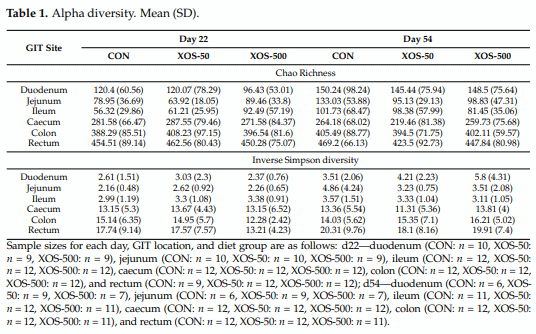
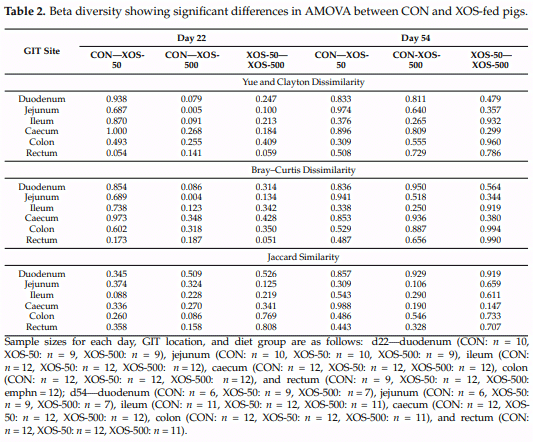
3.3. Performance and Microbiota Diversity Correlation
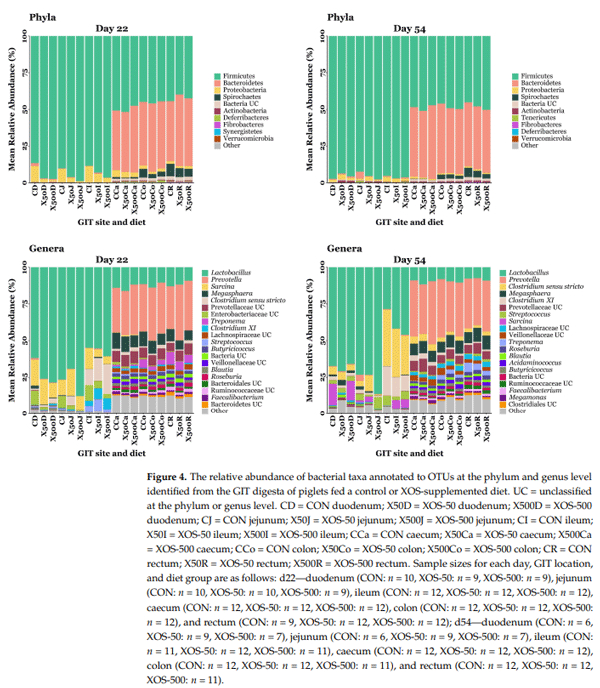
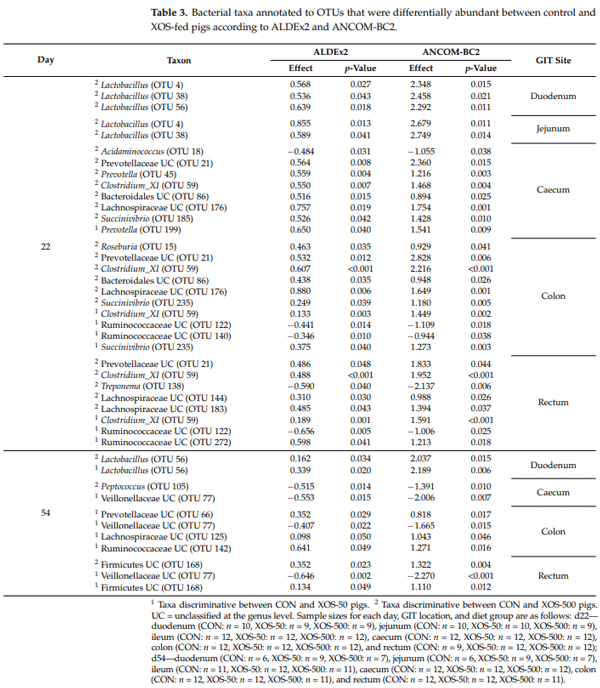
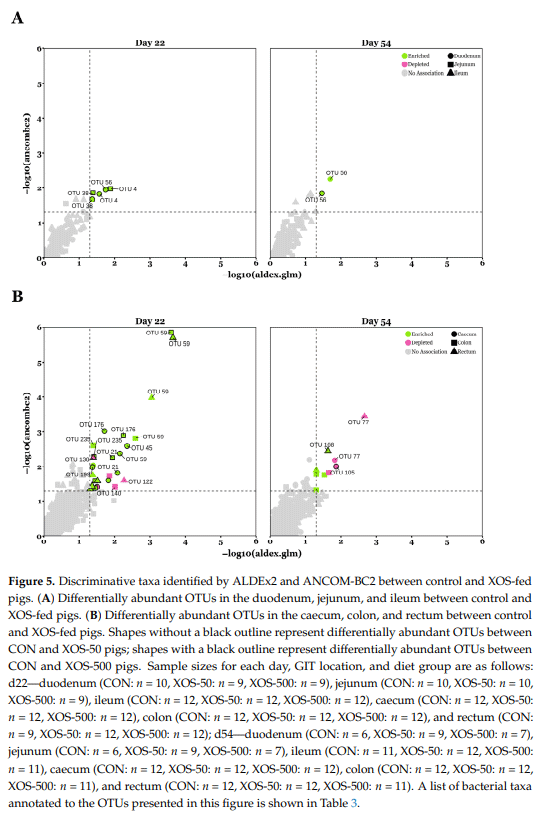
3.4. GIT Microbiota Composition
3.5. Salmonella Quantification and Correlation with Alpha Diversity
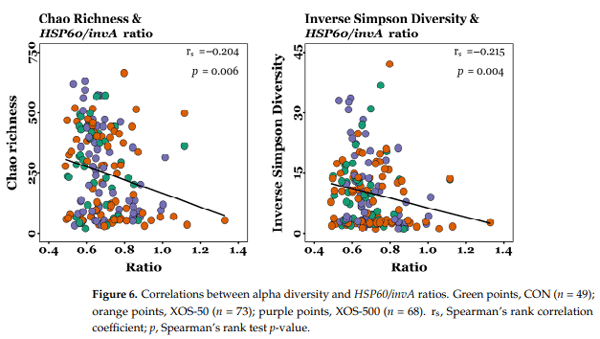
3.6. Histology and Gut Architecture
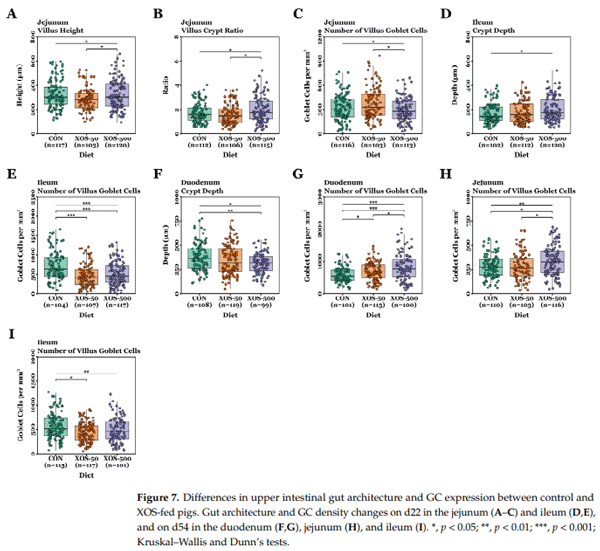
3.7. Immunomodulation
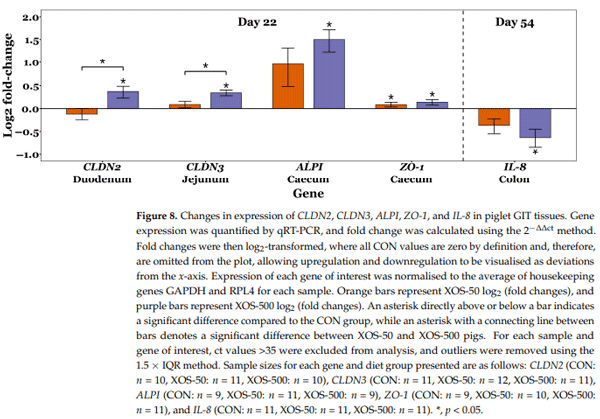
4. Discussion
5. Conclusions
1. OECD; Food and Agriculture Organization of the United Nations. OECD-FAO Agricultural Outlook 2021–2030; OECD-FAO Agricultural Outlook; OECD: Paris, France, 2021. [CrossRef]
2. Dividich, J.L.; Rooke, J.A.; Herpin, P. Nutritional and Immunological Importance of Colostrum for the New-Born Pig. J. Agric. Sci. 2005, 143, 469–485. [CrossRef]
3. Gormley, A.; Garavito-Duarte, Y.; Kim, S.W. The Role of Milk Oligosaccharides in Enhancing Intestinal Microbiota, Intestinal Integrity, and Immune Function in Pigs: A Comparative Review. Biology 2024, 13, 663. [CrossRef]
4. Moeser, A.J.; Ryan, K.A.; Nighot, P.K.; Blikslager, A.T. Gastrointestinal Dysfunction Induced by Early Weaning Is Attenuated by Delayed Weaning and Mast Cell Blockade in Pigs. Am. J. Physiol. Gastrointest. Liver Physiol. 2007, 293, G413–G421. [CrossRef] [PubMed]
5. Lallès, J.-P.; Boudry, G.; Favier, C.; Floc’h, N.L.; Luron, I.; Montagne, L.; Oswald, I.P.; Pié, S.; Piel, C.; Sève, B. Gut Function and Dysfunction in Young Pigs: Physiology. Anim. Res. 2004, 53, 301–316. [CrossRef]
6. Gresse, R.; Chaucheyras-Durand, F.; Fleury, M.A.; Van de Wiele, T.; Forano, E.; Blanquet-Diot, S. Gut Microbiota Dysbiosis in Postweaning Piglets: Understanding the Keys to Health. Trends Microbiol. 2017, 25, 851–873. [CrossRef] [PubMed]
7. Pié, S.; Lallès, J.P.; Sève, B.; Blazy, F.; Laffitte, J.; Oswald, I.P. Weaning Is Associated with an Upregulation of Expression of Inflammatory Cytokines in the Intestine of Piglets. J. Nutr. 2004, 134, 641–647. [CrossRef]
8. Lallès, J.-P.; Bosi, P.; Smidt, H.; Stokes, C.R. Nutritional Management of Gut Health in Pigs around Weaning. Proc. Nutr. Soc. 2007, 66, 260–268. [CrossRef]
9. Cromwell, G.L. Why and How Antibiotics Are Used in Swine Production. Anim. Biotechnol. 2002, 13, 7–27. [CrossRef]
10. Han, Y.; Zhan, T.; Tang, C.; Zhao, Q.; Dansou, D.M.; Yu, Y.; Barbosa, F.F.; Zhang, J. Effect of Replacing In-Feed Antibiotic Growth Promoters with a Combination of Egg Immunoglobulins and Phytomolecules on the Performance, Serum Immunity, and Intestinal Health of Weaned Pigs Challenged with Escherichia Coli K88. Animals 2021,
11, 1292. [CrossRef] 11. EC. Regulation (EC) No 1831/2003 of the European Parliament and of the Council of 22 September 2003 on Additives for Use in Animal Nutrition; EC: Brussels, Belgium, 2003.
12. Gibson, G.R.; Roberfroid, M.B. Dietary Modulation of the Human Colonic Microbiota: Introducing the Concept of Prebiotics. J. Nutr. 1995, 125, 1401–1412. [CrossRef]
13. Gibson, G.R.; Hutkins, R.; Sanders, M.E.; Prescott, S.L.; Reimer, R.A.; Salminen, S.J.; Scott, K.; Stanton, C.; Swanson, K.S.; Cani, P.D.; et al. Expert Consensus Document: The International Scientific Association for Probiotics and Prebiotics (ISAPP) Consensus Statement on the Definition and Scope of Prebiotics. Nat. Rev. Gastroenterol. Hepatol. 2017, 14, 491–502. [CrossRef]
14. de Figueiredo, F.C.; de Barros Ranke, F.F.; de Oliva-Neto, P. Evaluation of Xylooligosaccharides and Fructooligosaccharides on Digestive Enzymes Hydrolysis and as a Nutrient for Different Probiotics and Salmonella Typhimurium. LWT 2020, 118, 108761. [CrossRef]
15. Mäkeläinen, H.; Forssten, S.; Saarinen, M.; Stowell, J.; Rautonen, N.; Ouwehand, A. Xylo-Oligosaccharides Enhance the Growth of Bifidobacteria and Bifidobacterium Lactis in a Simulated Colon Model. Benef. Microbes 2010, 1, 81–91. [CrossRef]
16. Sun, F.; Li, H.; Sun, Z.; Liu, L.; Zhang, X.; Zhao, J. Effect of Arabinoxylan and Xylo-Oligosaccharide on Growth Performance and Intestinal Barrier Function in Weaned Piglets. Animals 2023, 13, 964. [CrossRef]
17. Su, J.; Zhang, W.; Ma, C.; Xie, P.; Blachier, F.; Kong, X. Dietary Supplementation with Xylo-Oligosaccharides Modifies the Intestinal Epithelial Morphology, Barrier Function and the Fecal Microbiota Composition and Activity in Weaned Piglets. Front. Vet. Sci. 2021, 8, 680208. [CrossRef]
18. Chen, Y.; Xie, Y.; Zhong, R.; Liu, L.; Lin, C.; Xiao, L.; Chen, L.; Zhang, H.; Beckers, Y.; Everaert, N. Effects of Xylo-Oligosaccharides on Growth and Gut Microbiota as Potential Replacements for Antibiotic in Weaning Piglets. Front. Microbiol. 2021, 12, 641172. [CrossRef] [PubMed]
. Baker, J.T.; Duarte, M.E.; Holanda, D.M.; Kim, S.W. Friend or Foe? Impacts of Dietary Xylans, Xylooligosaccharides, and Xylanases on Intestinal Health and Growth Performance of Monogastric Animals. Animals 2021, 11, 609. [CrossRef] [PubMed]
20. Chen, Y.; Xie, Y.; Zhong, R.; Han, H.; Liu, L.; Chen, L.; Zhang, H.; Beckers, Y.; Everaert, N. Effects of Graded Levels of XyloOligosaccharides on Growth Performance, Serum Parameters, Intestinal Morphology, and Intestinal Barrier Function in Weaned Piglets. J. Anim. Sci. 2021, 99, skab183. [CrossRef]
21. Liu, J.B.; Cao, S.C.; Liu, J.; Xie, Y.N.; Zhang, H.F. Effect of Probiotics and Xylo-Oligosaccharide Supplementation on Nutrient Digestibility, Intestinal Health and Noxious Gas Emission in Weanling Pigs. Anim. Biosci. 2018, 31, 1660–1669. [CrossRef]
22. Pang, J.; Zhou, X.; Ye, H.; Wu, Y.; Wang, Z.; Lu, D.; Wang, J.; Han, D. The High Level of Xylooligosaccharides Improves Growth Performance in Weaned Piglets by Increasing Antioxidant Activity, Enhancing Immune Function, and Modulating Gut Microbiota. Front. Nutr. 2021, 8, 764556. [CrossRef]
23. Wang, X.; Xiao, K.; Yu, C.; Wang, L.; Liang, T.; Zhu, H.; Xu, X.; Liu, Y. Xylooligosaccharide Attenuates Lipopolysaccharide-Induced Intestinal Injury in Piglets via Suppressing Inflammation and Modulating Cecal Microbial Communities. Anim. Nutr. 2021, 7, 609–620. [CrossRef]
24. Liu, G.; Sun, W.; Zhang, R.; Shen, F.; Jia, G.; Zhao, H.; Chen, X.; Wang, J. Dietary Xylo-Oligosaccharides Alleviates LPS-Induced Intestinal Injury via Endoplasmic Reticulum-Mitochondrial System Pathway in Piglets. J. Anim. Sci. 2024, 102, skae238. [CrossRef]
25. Pang, J.; Wang, S.; Wang, Z.; Wu, Y.; Zhang, X.; Pi, Y.; Han, D.; Zhang, S.; Wang, J. Xylo-Oligosaccharide Alleviates Salmonella Induced Inflammation by Stimulating Bifidobacterium Animalis and Inhibiting Salmonella Colonization. FASEB J. 2021, 35, e21977. [CrossRef] [PubMed]
26. Lee, A.; Stanley, J.S.; Mellits, K.H.; Connerton, I.F. Prebiotic Galacto-Oligosaccharide and Xylo-Oligosaccharide Feeds in Pig Production: Microbiota Manipulation, Pathogen Suppression, Gut Architecture and Immunomodulatory Effects. Appl. Microbiol. 2025, 5, 42. [CrossRef]
27. Berndtson, W.E. A Simple, Rapid and Reliable Method for Selecting or Assessing the Number of Replicates for Animal Experiments. J. Anim. Sci. 1991, 69, 67–76. [CrossRef]
28. EFSA Panel on Additives and Products or Substances used in Animal Feed (FEEDAP); Rychen, G.; Aquilina, G.; Azimonti, G.; Bampidis, V.; Bastos, M.D.L.; Bories, G.; Chesson, A.; Cocconcelli, P.S.; Flachowsky, G.; et al. Guidance on the Assessment of the Efficacy of Feed Additives. EFSA J. 2018, 16, e05274. [CrossRef]
29. Caporaso, J.G.; Lauber, C.L.; Walters, W.A.; Berg-Lyons, D.; Lozupone, C.A.; Turnbaugh, P.J.; Fierer, N.; Knight, R. Global Patterns of 16S rRNA Diversity at a Depth of Millions of Sequences per Sample. Proc. Natl. Acad. Sci. USA 2011, 108 (Suppl. S1), 4516–4522. [CrossRef]
30. Kozich, J.J.; Westcott, S.L.; Baxter, N.T.; Highlander, S.K.; Schloss, P.D. Development of a Dual-Index Sequencing Strategy and Curation Pipeline for Analyzing Amplicon Sequence Data on the MiSeq Illumina Sequencing Platform. Appl. Environ. Microbiol. 2013, 79, 5112–5120. [CrossRef]
31. Schloss, P.D.; Westcott, S.L.; Ryabin, T.; Hall, J.R.; Hartmann, M.; Hollister, E.B.; Lesniewski, R.A.; Oakley, B.B.; Parks, D.H.; Robinson, C.J.; et al. Introducing Mothur: Open-Source, Platform-Independent, Community-Supported Software for Describing and Comparing Microbial Communities. Appl. Environ. Microbiol. 2009, 75, 7537–7541. [CrossRef]
32. Pruesse, E.; Quast, C.; Knittel, K.; Fuchs, B.M.; Ludwig, W.; Peplies, J.; Glöckner, F.O. SILVA: A Comprehensive Online Resource for Quality Checked and Aligned Ribosomal RNA Sequence Data Compatible with ARB. Nucleic Acids Res. 2007, 35, 7188–7196. [CrossRef]
33. Westcott, S.L.; Schloss, P.D. OptiClust, an Improved Method for Assigning Amplicon-Based Sequence Data to Operational Taxonomic Units. mSphere 2017, 2, e00073-17. [CrossRef] [PubMed]
34. Wang, Q.; Garrity, G.M.; Tiedje, J.M.; Cole, J.R. Naïve Bayesian Classifier for Rapid Assignment of rRNA Sequences into the New Bacterial Taxonomy. Appl. Environ. Microbiol. 2007, 73, 5261–5267. [CrossRef] [PubMed]
35. Cole, J.R.; Wang, Q.; Fish, J.A.; Chai, B.; McGarrell, D.M.; Sun, Y.; Brown, C.T.; Porras-Alfaro, A.; Kuske, C.R.; Tiedje, J.M. Ribosomal Database Project: Data and Tools for High Throughput rRNA Analysis. Nucleic Acids Res. 2014, 42, D633–D642. [CrossRef]
36. Posit team. RStudio: Integrated Development Environment for R; Posit Software, PBC: Boston, MA, USA, 2023; Available online: http://www.posit.co/ (accessed on 4 November 2024).
37. R Core Team. R: A Language and Environment for Statistical Computing. In R Foundation for Statistical Computing; R Core Team: Vienna, Austria, 2022.
38. Shapiro, S.S.; Wilk, M.B. An Analysis of Variance Test for Normality (Complete Samples). Biometrika 1965, 52, 591–611. [CrossRef]
39. Benjamini, Y.; Hochberg, Y. Controlling the False Discovery Rate: A Practical and Powerful Approach to Multiple Testing. J. R. Stat. Soc. 1995, 57, 289–300. [CrossRef]
40. Good, I.J.; Toulmin, G.H. The Number of New Species, and the Increase in Population Coverage, When a Sample Is Increased. Biometrika 1956, 43, 45–63. [CrossRef]
41. Chao, A. Nonparametric Estimation of the Number of Classes in a Population. Scand. J. Stat. 1984, 11, 265–270.
42. Magurran, A.E. Measuring Biological Diversity. Available online: https://www.wiley.com/en-gb/Measuring+Biological+ Diversity-p-9781118687925 (accessed on 22 August 2023).
43. Yue, J.C.; Clayton, M.K. A Similarity Measure Based on Species Proportions. Commun. Stat.—Theory Methods 2005, 34, 2123–2131. [CrossRef]
44. Bray, J.R.; Curtis, J.T. An Ordination of the Upland Forest Communities of Southern Wisconsin. Ecol. Monogr. 1957, 27, 325–349. [CrossRef]
45. Jaccard, P. Étude Comparative de La Distribution Florale Dans Une Portion Des Alpes et Du Jura. Bull. Soc. Vaud. Sci. Nat. 1901, 37, 547–579. [CrossRef]
46. Excoffier, L.; Smouse, P.E.; Quattro, J.M. Analysis of Molecular Variance Inferred from Metric Distances among DNA Haplotypes: Application to Human Mitochondrial DNA Restriction Data. Genetics 1992, 131, 479–491. [CrossRef] [PubMed]
47. Anderson, M.J. A New Method for Non-Parametric Multivariate Analysis of Variance. Austral Ecol. 2001, 26, 32–46. [CrossRef]
48. Lin, H.; Peddada, S.D. Analysis of Compositions of Microbiomes with Bias Correction. Nat. Commun. 2020, 11, 3514. [CrossRef]
49. Fernandes, A.D.; Macklaim, J.M.; Linn, T.G.; Reid, G.; Gloor, G.B. ANOVA-Like Differential Expression (ALDEx) Analysis for Mixed Population RNA-Seq. PLoS ONE 2013, 8, e67019. [CrossRef]
50. Yin, J.; Li, F.; Kong, X.; Wen, C.; Guo, Q.; Zhang, L.; Wang, W.; Duan, Y.; Li, T.; Tan, Z.; et al. Dietary Xylo-Oligosaccharide Improves Intestinal Functions in Weaned Piglets. Food Funct. 2019, 10, 2701–2709. [CrossRef]
51. Crespo-Piazuelo, D.; Estellé, J.; Revilla, M.; Criado-Mesas, L.; Ramayo-Caldas, Y.; Óvilo, C.; Fernández, A.I.; Ballester, M.; Folch, J.M. Characterization of Bacterial Microbiota Compositions along the Intestinal Tract in Pigs and Their Interactions and Functions. Sci. Rep. 2018, 8, 12727. [CrossRef]
52. Han, G.G.; Lee, J.-Y.; Jin, G.-D.; Park, J.; Choi, Y.H.; Chae, B.J.; Kim, E.B.; Choi, Y.-J. Evaluating the Association between Body Weight and the Intestinal Microbiota of Weaned Piglets via 16S rRNA Sequencing. Appl. Microbiol. Biotechnol. 2017, 101, 5903–5911. [CrossRef]
53. Ding, X.; Lan, W.; Liu, G.; Ni, H.; Gu, J.-D. Exploring Possible Associations of the Intestine Bacterial Microbiome with the Pre-Weaned Weight Gaining Performance of Piglets in Intensive Pig Production. Sci. Rep. 2019, 9, 15534. [CrossRef]
54. Zhang, W.; Ma, C.; Xie, P.; Zhu, Q.; Wang, X.; Yin, Y.; Kong, X. Gut Microbiota of Newborn Piglets with Intrauterine Growth Restriction Have Lower Diversity and Different Taxonomic Abundances. J. Appl. Microbiol. 2019, 127, 354–369. [CrossRef]
55. Stecher, B.; Chaffron, S.; Käppeli, R.; Hapfelmeier, S.; Freedrich, S.; Weber, T.C.; Kirundi, J.; Suar, M.; McCoy, K.D.; von Mering, C.; et al. Like Will to Like: Abundances of Closely Related Species Can Predict Susceptibility to Intestinal Colonization by Pathogenic and Commensal Bacteria. PLoS Pathog. 2010, 6, e1000711. [CrossRef]
56. Karabasanavar, N.; Sivaraman, G.K.; S.P., S.; Nair, A.S.; Vijayan, A.; Rajan, V.; P.S., G. Non-Diarrhoeic Pigs as Source of Highly Virulent and Multidrug-Resistant Non-Typhoidal Salmonella. Braz. J. Microbiol. 2022, 53, 1039–1049. [CrossRef]
57. Ding, H.; Zhao, X.; Azad, M.A.K.; Ma, C.; Gao, Q.; He, J.; Kong, X. Dietary Supplementation with Bacillus Subtilis and XyloOligosaccharides Improves Growth Performance and Intestinal Morphology and Alters Intestinal Microbiota and Metabolites in Weaned Piglets. Food Funct. 2021, 12, 5837–5849. [CrossRef] [PubMed]
58. Wang, X.; Tsai, T.; Deng, F.; Wei, X.; Chai, J.; Knapp, J.; Apple, J.; Maxwell, C.V.; Lee, J.A.; Li, Y.; et al. Longitudinal Investigation of the Swine Gut Microbiome from Birth to Market Reveals Stage and Growth Performance Associated Bacteria. Microbiome 2019, 7, 109. [CrossRef] [PubMed]
59. Corcoran, B.M.; Stanton, C.; Fitzgerald, G.F.; Ross, R.P. Survival of Probiotic Lactobacilli in Acidic Environments Is Enhanced in the Presence of Metabolizable Sugars. Appl. Environ. Microbiol. 2005, 71, 3060–3067. [CrossRef] [PubMed]
60. Di Ciaula, A.; Garruti, G.; Lunardi Baccetto, R.; Molina-Molina, E.; Bonfrate, L.; Wang, D.Q.-H.; Portincasa, P. Bile Acid Physiology. Ann. Hepatol. 2017, 16, S4–S14. [CrossRef]
61. Mahowald, M.A.; Rey, F.E.; Seedorf, H.; Turnbaugh, P.J.; Fulton, R.S.; Wollam, A.; Shah, N.; Wang, C.; Magrini, V.; Wilson, R.K.; et al. Characterizing a Model Human Gut Microbiota Composed of Members of Its Two Dominant Bacterial Phyla. Proc. Natl. Acad. Sci. USA 2009, 106, 5859–5864. [CrossRef]
62. Looft, T.; Allen, H.K.; Cantarel, B.L.; Levine, U.Y.; Bayles, D.O.; Alt, D.P.; Henrissat, B.; Stanton, T.B. Bacteria, Phages and Pigs: The Effects of in-Feed Antibiotics on the Microbiome at Different Gut Locations. ISME J. 2014, 8, 1566–1576. [CrossRef]
63. Rubino, F.; Carberry, C.; Waters, S.M.; Kenny, D.; McCabe, M.S.; Creevey, C.J. Divergent Functional Isoforms Drive Niche Specialisation for Nutrient Acquisition and Use in Rumen Microbiome. ISME J. 2017, 11, 932–944. [CrossRef]
64. Tang, S.; Chen, Y.; Deng, F.; Yan, X.; Zhong, R.; Meng, Q.; Liu, L.; Zhao, Y.; Zhang, S.; Chen, L.; et al. Xylooligosaccharide-Mediated Gut Microbiota Enhances Gut Barrier and Modulates Gut Immunity Associated with Alterations of Biological Processes in a Pig Model. Carbohydr. Polym. 2022, 294, 119776. [CrossRef]
65. Pan, J.; Yin, J.; Zhang, K.; Xie, P.; Ding, H.; Huang, X.; Blachier, F.; Kong, X. Dietary Xylo-Oligosaccharide Supplementation Alters Gut Microbial Composition and Activity in Pigs According to Age and Dose. AMB Express 2019, 9, 134. [CrossRef]
66. Dowarah, R.; Verma, A.K.; Agarwal, N. The Use of Lactobacillus as an Alternative of Antibiotic Growth Promoters in Pigs: A Review. Anim. Nutr. 2017, 3, 1–6. [CrossRef]
67. Yang, Y.; Shen, L.; Gao, H.; Ran, J.; Li, X.; Jiang, H.; Li, X.; Cao, Z.; Huang, Y.; Zhao, S.; et al. Comparison of Cecal Microbiota Composition in Hybrid Pigs from Two Separate Three-Way Crosses. Anim. Biosci. 2021, 34, 1202–1209. [CrossRef] [PubMed]
68. Kubasova, T.; Davidova-Gerzova, L.; Babak, V.; Cejkova, D.; Montagne, L.; Le-Floc’h, N.; Rychlik, I. Effects of Host Genetics and Environmental Conditions on Fecal Microbiota Composition of Pigs. PLoS ONE 2018, 13, 0201901. [CrossRef] [PubMed]
69. Hu, P.; Niu, Q.; Zhu, Y.; Shi, C.; Wang, J.; Zhu, W. Effects of Early Commercial Milk Supplement on the Mucosal Morphology, Bacterial Community and Bacterial Metabolites in Jejunum of the Pre- And Post-Weaning Piglets. Anim. Biosci. 2020, 33, 480–489. [CrossRef] [PubMed]
70. Bi, Y.; Cox, M.S.; Zhang, F.; Suen, G.; Zhang, N.; Tu, Y.; Diao, Q. Feeding Modes Shape the Acquisition and Structure of the Initial Gut Microbiota in Newborn Lambs. Environ. Microbiol. 2019, 21, 2333–2346. [CrossRef]
71. Jalanka, J.; Cheng, J.; Hiippala, K.; Ritari, J.; Salojärvi, J.; Ruuska, T.; Kalliomäki, M.; Satokari, R. Colonic Mucosal Microbiota and Association of Bacterial Taxa with the Expression of Host Antimicrobial Peptides in Pediatric Ulcerative Colitis. Int. J. Mol. Sci. 2020, 21, 6044. [CrossRef]
72. Han, H.; Liu, Z.; Yin, J.; Gao, J.; He, L.; Wang, C.; Hou, R.; He, X.; Wang, G.; Li, T.; et al. D-Galactose Induces Chronic Oxidative Stress and Alters Gut Microbiota in Weaned Piglets. Front. Physiol. 2021, 12, 634283. [CrossRef]
73. Lee, Y.-S.; Kim, T.-Y.; Kim, Y.; Lee, S.-H.; Kim, S.; Kang, S.W.; Yang, J.-Y.; Baek, I.-J.; Sung, Y.H.; Park, Y.-Y.; et al. Microbiota-Derived Lactate Accelerates Intestinal Stem-Cell-Mediated Epithelial Development. Cell Host Microbe 2018, 24, 833–846. [CrossRef]
74. Gao, H.; Sun, F.; Lin, G.; Guo, Y.; Zhao, J. Molecular Actions of Different Functional Oligosaccharides on Intestinal Integrity, Immune Function and Microbial Community in Weanling Pigs. Food Funct. 2022, 13, 12303–12315. [CrossRef]
75. Luo, D.; Li, J.; Xing, T.; Zhang, L.; Gao, F. Combined Effects of Xylo-oligosaccharides and Coated Sodium Butyrate on Growth Performance, Immune Function, and Intestinal Physical Barrier Function of Broilers. Anim. Sci. J. 2021, 92, e13545. [CrossRef]
76. Bilski, J.; Mazur-Bialy, A.; Wojcik, D.; Zahradnik-Bilska, J.; Brzozowski, B.; Magierowski, M.; Mach, T.; Magierowska, K.; Brzozowski, T. The Role of Intestinal Alkaline Phosphatase in Inflammatory Disorders of Gastrointestinal Tract. Mediat. Inflamm. 2017, 2017, 9074601. [CrossRef]
77. Bhattacharyya, S.; Borthakur, A.; Pant, N.; Dudeja, P.K.; Tobacman, J.K. Bcl10 Mediates LPS-Induced Activation of NF-κB and IL-8 in Human Intestinal Epithelial Cells. Am. J. Physiol. Gastrointest. Liver Physiol. 2007, 293, G429–G437. [CrossRef]
78. Lin, R.; Sun, Y.; Mu, P.; Zheng, T.; Mu, H.; Deng, F.; Deng, Y.; Wen, J. Lactobacillus Rhamnosus GG Supplementation Modulates the Gut Microbiota to Promote Butyrate Production, Protecting against Deoxynivalenol Exposure in Nude Mice. Biochem. Pharmacol. 2020, 175, 113868. [CrossRef] [PubMed]
79. Gonçalves, P.; Catarino, T.; Gregório, I.; Martel, F. Inhibition of Butyrate Uptake by the Primary Bile Salt Chenodeoxycholic Acid in Intestinal Epithelial Cells. J. Cell Biochem. 2012, 113, 2937–2947. [CrossRef] [PubMed]
80. Moens, F.; Verce, M.; De Vuyst, L. Lactate- and Acetate-Based Cross-Feeding Interactions between Selected Strains of Lactobacilli, Bifidobacteria and Colon Bacteria in the Presence of Inulin-Type Fructans. Int. J. Food. Microbiol. 2017, 241, 225–236. [CrossRef] [PubMed]
81. Liu, W.; Hu, D.; Huo, H.; Zhang, W.; Adiliaghdam, F.; Morrison, S.; Ramirez, J.M.; Gul, S.S.; Hamarneh, S.R.; Hodin, R.A. Intestinal Alkaline Phosphatase Regulates Tight Junction Protein Levels. J. Am. Coll. Surg. 2016, 222, 1009. [CrossRef]
82. Lackeyram, D.; Yang, C.; Archbold, T.; Swanson, K.C.; Fan, M.Z. Early Weaning Reduces Small Intestinal Alkaline Phosphatase Expression in Pigs. J. Nutr. 2010, 140, 461–468. [CrossRef]