Introduction
The global livestock industry is increasingly pivoting toward sustainable and cost-effective nutritional strategies to meet the rising demand for animal protein [1]. In this context, rabbit production (cuniculture) has emerged as a vital sector due to the high fecundity, short generation interval, and efficient feed conversion of rabbits [2, 3]. However, the reproductive efficiency of breeding bucks remains a cornerstone of successful commercial rabbitries [3]. Male fertility is heavily influenced by oxidative stress, which can compromise sperm membrane integrity and disrupt the delicate hormonal balance required for spermatogenesis [4]. While conventional antioxidants like Vitamin C (ascorbic acid) have traditionally been used to mitigate these effects, there is growing interest in the use of fermented phytogenic feed additives, such as Delonix regia (Flamboyant) seed meal, which offer a complex matrix of bioactive compounds [5, 6].
One of the primary challenges in rabbit production is the decline in semen quality and libido in breeding bucks, often exacerbated by environmental stressors and nutritional deficiencies. Oxidative damage to spermatozoa characterized by high polyunsaturated fatty acid content in their plasma membranes leads to reduced motility and increased morphological abnormalities [7, 8, 9]. Furthermore, the high cost of synthetic vitamin supplements and conventional protein sources has squeezed the profit margins of small-scale and commercial farmers. Although Delonix regia seeds are abundant in tropical regions, their utilization is hindered by high levels of anti-nutritional factors (ANFs) like tannins and phytates, which can impair nutrient utilization and reproductive health if fed in their raw state [9].
Previous research has demonstrated that phytogenic additives rich in polyphenols can significantly improve the antioxidant status and reproductive traits of livestock. For instance, [10, 11] reported that the fermentation of Delonix regia seeds effectively lowers tannin levels, making them a viable protein and bioactive source for rabbits without adverse effects on haematology. Similarly, studies on other fermented legumes have shown an upward trend in serum testosterone and gonadotropins (LH and FSH), attributed to the presence of alkaloids and steroids that stimulate the hypothalamic-pituitary-gonadal axis [12, 13]. While the antioxidant properties of Vitamin C are well-documented for improving sperm concentration in heat-stressed rabbits, emerging literature suggests that the synergistic effect of botanical "cocktails"—containing diverse flavonoids and phenols may provide a more comprehensive physiological boost than isolated vitamins [14, 15, 16]. However, there is a dearth of comparative data specifically evaluating the transition from synthetic ascorbic acid to FDRSM in mature buck nutrition.
This study is justified by the need to identify natural, bio-processed alternatives to synthetic antioxidants that can simultaneously enhance reproductive performance and reduce feed costs. Fermentation is a transformative bioprocess that significantly reduces ANFs [16]. These phytochemicals serve as potent free-radical scavengers, potentially offering superior protection to the blood-testis barrier compared to single-molecule antioxidants like Vitamin C [17, 18]. By comparing the efficacy of Vitamin C with graduated levels of Fermented Delonix regia Seed Meal (FDRSM), this research aims to establish an optimal dietary inclusion level that maximizes testosterone production and semen quality, providing a scientific basis for the use of FDRSM as a functional "nutraceutical" in rabbit nutrition.
Materials and Methods
Experimental Site
The study was conducted at the Sumitra Research Institute, located in Gujarat, India. The institute is situated in a region characterized by a semi-arid climate. The area receives an average annual rainfall ranging from 600 mm to 800 mm, primarily during the monsoon season (June to September). The relative humidity fluctuates significantly between seasons, typically ranging from 25% during the dry summer months to as high as 80% during the peak of the monsoon. All experimental protocols were reviewed and approved by the Institutional Animal Care and Use Committee under the ethical approval number SRI/IACUC/2026/014, ensuring strict adherence to international standards for animal welfare.
Collection and Processing of Delonix regia Seeds
Mature seeds of Delonix regia were harvested from the Flamboyant trees within the Gujarat region. It was taken to the Department of Crop Production, Sumitra Research Institute, Gujarat for proper identification and assigned a voucher number ADS/2027-AC. The seeds were cleaned to remove debris and subsequently processed through a controlled soaking and fermentation technique. The seeds were first soaked in clean tap water at a ratio of 1:3 (w/v) for 48 hours to soften the hard seed coat and initiate the reduction of water-soluble anti-nutritional factors. Following the soaking period, the water was drained, and the seeds were placed in airtight polyethylene bags to undergo solid-state fermentation for 72 hours at room temperature. This process was aimed at enhancing the concentration of phytocompounds while minimizing phytates. After fermentation, the seeds were sun-dried until a constant moisture content of approximately 10 % was achieved, then milled into a fine powder (Fermented Delonix regia Seed Meal - FDRSM) and stored in airtight containers until diet formulation.
Experimental Animals and Management
A total of 50 matured male rabbits (Bucks) of the New Zealand White breed, aged approximately 10–12 months, were used for the trial. The rabbits were randomly assigned to one of five treatment groups (T1 to T5), with 10 rabbits per treatment. The animals were housed individually in cleaned and disinfected metallic cages equipped with nipple drinkers and ceramic feeders. The basal diet was formulated to meet the nutrient requirements of rabbits as specified by the NRC [17]. Feed and water were provided ad libitum throughout the experimental period, which lasted for 16 weeks. Proper ventilation and a 12-hour light/dark cycle were maintained to ensure optimal physiological conditions.
Experimental Design
A Completely Randomized Design was adopted and the experimental treatments were:
Treatment 1 (Control): Standard diet only
Treatment 2: Standard diet + 200 g/kg Vitamin C (positive control).
Treatment 3: Standard diet + 100 g/kg Delonix regia seed meal (FDRSM)
Treatment 4: Standard diet + 200 g/kg FDRSM
Treatment 5: Standard diet + 300 g/kg FDRSM
Analysis of Phytocompounds in fermented Delonix regia seed
Quantitative screening of secondary metabolites in FDRSM was performed using both colorimetric and advanced chromatographic techniques. Total phenols, steroids and flavonoids were measured spectrophotometrically on a Shimadzu UV-1900i (Japan), while saponins, alkaloids, phytates and tannins were quantified following the gravimetric and titrimetric methods.
Semen Collection and Analysis
A 4-week period was used to train the bucks for semen collection. Semen collection is performed using a specialized artificial vagina (AV), which is prepared by filling the jacket with warm water to maintain an internal temperature between 40°C and 42°C and slightly inflating it with air to provide the necessary pressure to mimic a natural doe. A sexually mature buck is introduced to a "teaser" doe or a dummy in a collection pen, and as the buck attempts to mount, the AV is skillfully positioned at the base of the penis to collect the ejaculate into a graduated tube attached to the end of the device according to the method outlined by [18]. Once collected, the sample undergoes immediate evaluation to ensure the biological integrity of the spermatozoa:
Sperm Motility
A drop of diluted semen is placed on a pre-warmed slide and examined under a phase-contrast microscope at 400x magnification; mass motility is scored on a scale of 0–5 based on "wave" intensity, while individual motility is calculated as the percentage of cells moving progressively forward.
Sperm Concentration
Determined using a Neubauer hemocytometer, where a diluted sample (typically using a formal-saline solution to immobilize the cells) is counted in specific squares to calculate the total number of sperm per milliliter of ejaculate.
Live/Dead Percentage (Viability)
Assessed using an Eosin-Nigrosin differential stain; the stain penetrates dead cells with damaged membranes (appearing pink/red), while live cells remain white/clear.
Semen Volume
Read directly from the graduated collection tube to the nearest 0.01 ml.
Hormonal Assay Procedure
Serum concentrations of reproductive hormones, including Testosterone, Follicle Stimulating Hormone (FSH), and Luteinizing Hormone (LH) were determined using the Enzyme-Linked Immunosorbent Assay (ELISA) technique, following the quantitative "sandwich" principle (StatPearls, 2026). 5 ml of blood sample was collected from five randomly selected animals per treatment via the ear vein into sample bottle free from anticoagulant. The collected samples were centrifuged at 3,000 rpm for 15 minutes to obtain clear serum, which was stored at -20°C until analysis. During the assay, standard calibrators and serum samples were pipetted into microplate wells pre-coated with hormone-specific antibodies. A horseradish peroxidase (HRP)-conjugated antibody was added to form an antibody-antigen-antibody complex, followed by the addition of a Tetramethylbenzidine (TMB) substrate to generate a color signal. The reaction was halted using a sulfuric acid stop solution, and the resulting optical density was measured using a microplate reader at a wavelength of 450 nm. The intensity of the color produced was directly proportional to the hormone concentration in the sample, calculated against a standard curve generated from known concentrations.
Statistical Analysis
All data collected were subjected to a one-way Analysis of Variance (ANOVA) using the SPSS Software (Version 26.0, IBM, USA). Significant differences between treatment means were separated using Duncan’s Multiple Range Test at a probability level of P< 0.05.
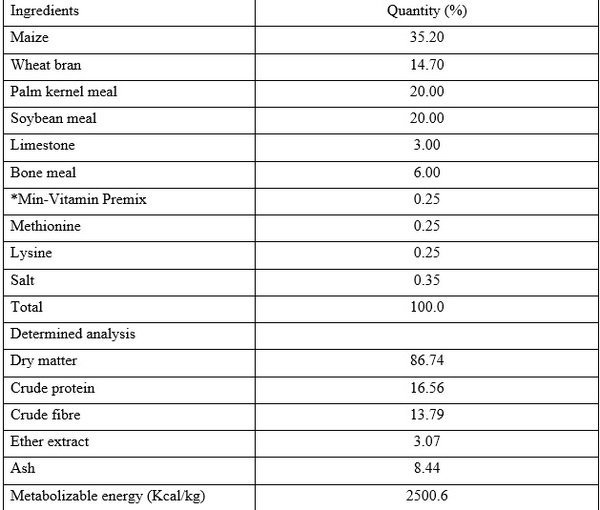
Table 1: Ingredient and chemical compositions of basal diet (% DM)
Grower Vitamin-Mineral Premix: based on 2.5 kg/ton (Thiamine, 2000 mg, riboflavin, 7000 mg, pyridoxine, 5000 mg, cyanocobalamine, 1700 mg, niacin, 30,000 mg, D-panthotenate, 10,000 mg, folic acid, 800 mg, biotin, 2000 mg, Retinyl acetate, 12,000 iu., cholecalciferol, 2,400,000 iu., tocopherol acetate, 35,000 iu., menadione, 4,000 mg, ascorbic acid, 60,000 mg, manganese, nill, iron, 70,200 mg, zinc, 78 mg, copper, 20mg, cobalt, 200 mg, iodine, 400 mg, selenium, 80 mg, choline chloride, 500,000 mg.
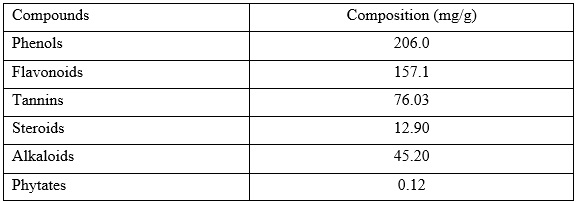
Phytochemical profile of fermented Delonix regia seed meal is presented in Table 2. Phenolic compound had the highest concentration of 206.0 mg/g followed by flavonoids (157.1 mg/g), tannins (76.03 mg/g), alkaloids (45.20 mg/g), steroids (12.90 mg/g) and phytates (0.12 mg/g) respectively. The seeds of Delonix regia are naturally rich in bioactive compounds [20]. However, the use of fermentation is a critical factor here. Fermentation reduced the anti-nutritional factors (like phytates and tannins) while enhancing the bioavailability of phenols and flavonoids. Phenols (206 mg/g) and Flavonoids (157 mg/g). These compounds act as potent antioxidants that scavenge reactive oxygen species [21]. Alkaloids and Steroids often play significant roles in stimulating the endocrine system and may act as precursors to reproductive hormones [22]. The low concentration of phytic acid (phytates) (0.12 mg/g) suggests that fermentation successfully deactivated these mineral-binders, ensuring that essential minerals like Zinc (crucial for spermatogenesis) were available to the rabbits [23].
Table 2: Phytochemical profile of fermented Delonix regia seed meal (FDRSM)
Whereas sperm concentration, motility, live sperm and sperm volume were higher (p< 0.05) with T3-T5 than for T2 and T1. The values obtained show this rank order: T5 > T4 > T3 > T2 > T1 (all P < 0.05). Abnormal sperm count was higher in T1, intermediate in T2 and lower in T3-T5 (p< 0.05) Table 3. The superior reproductive performance observed in the T3–T5 groups underscores a powerful synergy between the high phenolic content of fermented Delonix regia and the rabbits' endocrine efficiency [23]. By providing a dense matrix of phenols (206 mg/g) and flavonoids (157 mg/g), the fermented seed meal acts as a superior biological shield against oxidative stress compared to the synthetic in T2 (Vitamin C). These phytochemicals effectively scavenge reactive oxygen species (ROS) that would otherwise compromise the polyunsaturated fatty acid-rich membranes of spermatozoa. Furthermore, the fermentation process is critical; by reducing phytates to 0.12 mg/g, it unlocks essential micro-minerals like zinc and selenium, which are fundamental structural components for sperm tail assembly and DNA integrity [24]. This suggests that the natural additive provides a "multi-pathway" antioxidant defense that significantly lowers the percentage of abnormal sperm while enhancing overall viability [25, 32]. The result obtained in this study is in agreement with the reports of [26, 33] who recorded a higher sperm concentration and motility in rabbit bucks fed diet supplemented with Moringa oleifera leaf meal. [27] also recorded a higher semen volume in rabbits fed dietary levels of water spinach (Ipomoea aquatica) leaf meal. The semen volume observed in this study were similar to those observed by [28, 29], who found that the semen volume of rabbit bucks fed diet supplemented with Piliostigma thonningii essential oil ranged from 0.3 mL – 0.80 mL. The abnormal sperm cells in this present study was similar to the outcome by [30, 31] who discovered that abnormal sperm of rabbit bucks fed varying levels of phytogenics varied from 10.2 – 17.90 %.
Table 3: Semen characteristics of rabbit bucks fed diet supplemented with fermented Delonix regia seed meal
Means on the same row having different superscripts are significantly different (p< 0.05); SEM: Standard Error of Mean; n = 10
Hormonal profile of rabbit bucks fed diet supplemented with fermented Delonix regia seed meal is presented in Table 3. Testosterone, luteinizing hormone and follicle stimulating hormone values were significantly (p< 0.05) influenced by the treatment and their concentrations ranged from 2.56 – 4.68 ng/mL, 0.88 – 2.09 mIU/mL and 1.74 – 3.72 mIU/mL respectively. Testosterone, luteinizing hormone and follicle stimulating hormone concentrations were more in T3-T5, intermediate in T2 and lower in T1. The higher value in the hormonal profile of rabbits in T3 – T5 suggests that the synergy between the phytocompounds in FDRSM in the seed meal may function as natural secretagogues for the Hypothalamic-Pituitary-Gonadal (HPG) axis by potentially increasing the sensitivity of Leydig cells in the secretion Luteinizing Hormone (LH) [30]. The higher inclusion levels in T5 (300 g/kg) likely maximized testosterone biosynthesis, which is the primary driver for both libido and the maturation of spermatozoa in the epididymis [28, 31]. This metabolic upregulation, coupled with the reduction of systemic stress markers, positions fermented Delonix regia not just as a dietary filler, but as a functional feed additive. The testosterone range observed in this study with the supplementation of FDRSM was also similar to the results of a study by [32] who found that the testosterone value of bucks fed diet supplemented with Pawpaw peel meal ranged from 2.89 – 5.06 ng/mL. This result was higher than those presented by [33] who found that testosterone of bucks ranged from 2.99-3.60 ng/mL when diet supplemented with Phyllantus amarus leaf.
Table 3: Hormonal profile of rabbit bucks fed diet supplemented with fermented Delonix regia seed meal
Means on the same row having different superscripts are significantly different (p< 0.05); SEM: Standard Error of Mean; n = 10
Conclusion
The findings of this study demonstrate that fermented Delonix regia Seed Meal (FDRSM) is a highly effective, bio-active feed additive for mature rabbit bucks. The fermentation process successfully enhanced the concentration of beneficial phytochemicals—particularly phenols (206 mg/g) and flavonoids (157 mg/g)—while reducing anti-nutritional factors like phytates to negligible levels. The significant improvements in semen concentration, motility, and viability, coupled with the elevated serum levels of Testosterone, LH, and FSH, confirm that FDRSM possesses both antioxidant and pro-hormonal properties. Notably, the fermented seed meal at higher inclusion levels (300 g/kg) consistently outperformed the standard synthetic Vitamin C (200 mg/kg), proving that the complex botanical matrix of FDRSM provides superior protection and stimulation for the rabbit's reproductive system.