
Content sponsored by:
FIGAP MEXICO 2026 - INTERNATIONAL EXHIBITION
Blockchain and Artificial Intelligence in Livestock Product Traceability
Published: June 12, 2026
Source : FIGAP
Traceability is no longer an option it is a strategic necessity in the global agri-food market. As consumers demand transparency, governments tighten health regulations, and exports require digital certification, technologies like Blockchain and Artificial Intelligence (AI) emerge as critical tools for competitiveness, risk management, and value generation in the livestock sector.
What Does Traceability Mean in the Livestock Industry?
Traceability refers to the ability to track the history, location, and trajectory of a product through all stages of production, processing, and distribution.
In livestock operations, this includes:
- Individual animal traceability (birth, ID, movement)
- Process traceability (feeding, health, vaccination records)
- Product traceability (from farm to retail)
- Documentary traceability (compliance, audits, certifications)
Traceability ensures food safety while protecting producer reputation, simplifying health inspections, and enabling access to premium international markets.
Blockchain: Unprecedented Transparency and Security
How Blockchain Works in Livestock Systems
- Each data point (e.g., animal birth, feed type, transport, slaughter) is recorded as a block on a secure, chronological digital chain.
- Each block includes a timestamp and digital signature, ensuring immutability.
- The system is decentralized, minimizing data manipulation risks.
- It can integrate with IoT sensors, ERP platforms, and mobile applications.
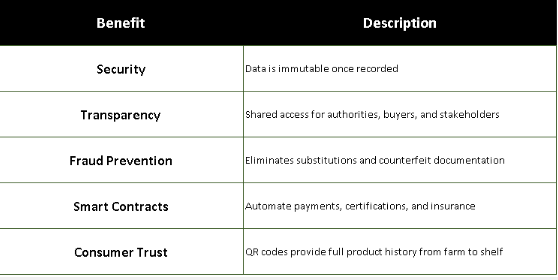
- Key Benefits of Blockchain in Livestock Traceability
Key Benefits of Blockchain in Livestock Traceability
Artificial Intelligence: Data-Driven Decision Making
Artificial Intelligence complements blockchain by transforming large volumes of data into predictive insights and real-time actions.
Key Applications of AI in Livestock Management
- Disease prediction using historical health, climate, and genomic data
- Automated diagnostics through computer vision (e.g., lameness detection)
- Intelligent feeding systems based on behavioral patterns
- Logistics optimization for animal transport and cold chain
- Risk analysis of health events and financial exposure
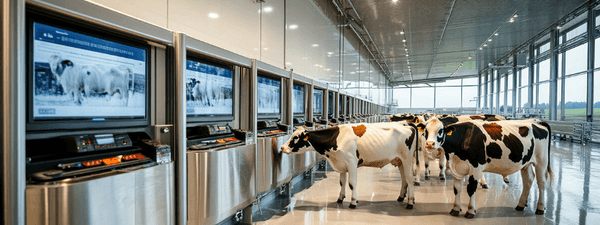
Integrated Digital Ecosystems: Smart Agro Supply Chains
The real impact arises from the integration of digital technologies into a unified system:
- Blockchain as the trust and data backbone
- AI for pattern recognition and predictive automation
- IoT devices for real-time data capture (temperature, location, weight)
- ERP systems for centralized livestock management
- Mobile apps for producers, veterinarians, and logistics operators
Example of an integrated flow:
- A temperature spike is detected in an animal via sensor
- AI evaluates disease risk
- Alert is issued to veterinarian and traceability system
- Blockchain logs the health event
- ERP blocks the affected batch
- Smart contract notifies insurance or buyer automatically
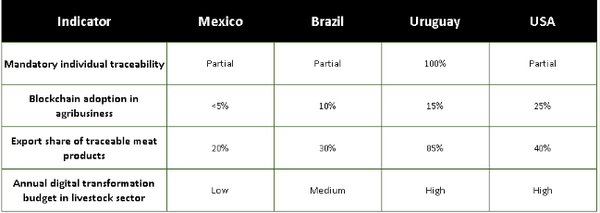
Market Data and Technological Adoption
Real-World Use Cases
Uruguay: National Bovine Traceability System
- Since 2013, all cattle are individually tagged and traceable.
- RFID and blockchain ensure 100% transparency.
- Uruguay positions itself as a premium meat exporter to the EU and Asia.
IBM Food Trust & Carrefour
- Blockchain-based traceability for beef in Europe.
- Consumers scan QR codes to access farm-to-fork product data.
Carnes Valdivia (Chile)
- Uses blockchain to certify antibiotic-free and organic meat.
- Differentiates its brand in gourmet and tourism markets.
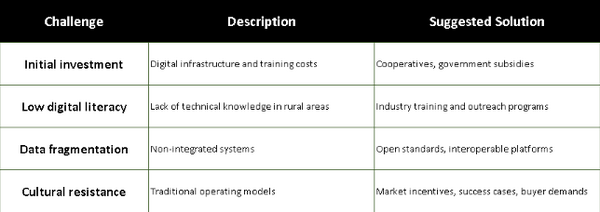
Challenges and Implementation Barriers
Looking Ahead: The Future of Digital Traceability by 2030
What’s Next in the Livestock Tech Horizon?
- 100% digital certifications using blockchain and e-signatures
- Premium pricing for verified products in Japan, Germany, UK
- AI integration with drones, wearables, and smart cameras
- Stricter international traceability regulations for meat exports
- Environmental transparency via blockchain-certified emissions and welfare standards
Strategic Recommendations for Agro-Industrial Executives
- Launch a traceability pilot using blockchain in a selected product or operation.
- Invest in scalable digital infrastructure, starting with IoT and cloud.
- Upskill staff through partnerships with universities or tech hubs.
- Collaborate with agritech startups for custom traceability solutions.
- Leverage financial incentives such as ESG-linked credits or sustainability certifications.
Adopting Blockchain and AI in livestock product traceability is not a trend it is a strategic mandate. Businesses that implement these technologies will not only enhance efficiency and compliance, but also unlock access to premium markets, reduce health and economic risks, and lead the sector into a more transparent, profitable, and sustainable future.
The future of livestock is no longer only decided in pastures it is built through digital infrastructure that connects the field to global markets. And that future is already underway.
Related topics:
Recommend
Comment
Share

Would you like to discuss another topic? Create a new post to engage with experts in the community.

Featured users