
Content sponsored by:
FIGAP MEXICO 2026 - INTERNATIONAL EXHIBITION
The True Future of the Agribusiness and Livestock Sector in 2026
Published: February 27, 2026
Source : FIGAP
Smart Agriculture and Livestock: A Data-Driven Revolution
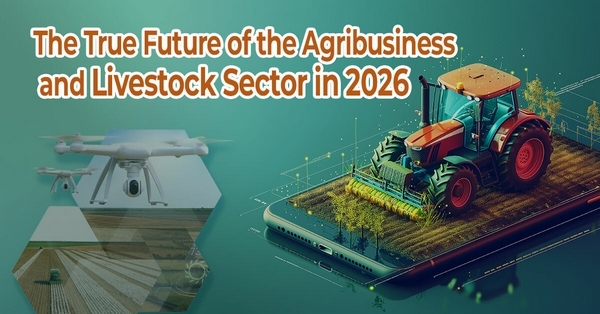
Artificial Intelligence (AI) is transforming operational decision-making by providing predictive analytics based on vast volumes of data. Technologies such as IoT sensors, drones, satellites, and thermal cameras are already generating real-time data on:
- Soil conditions and moisture levels
- Plant and animal health and behavior
- Localized weather forecasts
- Potential crop yields
With AI, this data turns into precise recommendations,for example: on when to plant, how much fertilizer to apply, or how to detect diseases before they spread. This reduces costs, waste, and production risks.
FIGAP, as the most relevant international forum for the livestock industry in the region, has been a privileged witness to this evolution. In recent editions, we have seen how AI innovations move from prototypes to scalable solutions that directly impact the value chain, from primary production to distribution.
Process Automation: Efficiency and Cost Reduction
AI not only provides valuable information but also enables advanced automation of key activities:
- Harvesting robots that pick fruits with precision and less physical impact
- Automated feeding and livestock monitoring systems
- Autonomous vehicles for planting, spraying, and internal transport
This automation leads to:
- Lower operating costs
- Reduced dependence on labor for repetitive tasks
- Increased productivity in terms of time and output
Precision Agriculture: Granular and Predictive Optimization
AI is revolutionizing precision agriculture through massive data analysis from IoT sensors, drones, and satellites. By 2026, generative AI platforms are projected to achieve a compound annual growth rate (CAGR) of around 25-30%, enabling yield predictions with over 95% accuracy even months before harvest.
Key applications include:
- Intelligent input management: Algorithms that determine exact doses of water, fertilizers, and pesticides by field zone, reducing waste by up to 40% and minimizing environmental impact.
- Early threat detection: Computer vision and machine learning models identify pests, diseases, or nutritional deficiencies in early stages, preventing significant losses.
- Hyperlocal forecasts: Real-time integration of climate data to anticipate extreme events, allowing proactive adjustments in planting and irrigation.
These tools not only boost yields, with estimated increases of up to 25% in targeted adoptions, but also strengthen sustainability, aligning with regulatory and market demands on emissions and responsible resource use.
Smart Livestock Farming: Animal Welfare and Productive Efficiency
In the livestock sector, AI is turning farms into connected and autonomous ecosystems. Continuous monitoring via smart collars, thermal cameras, and facial recognition systems enables:
- Health and behavior surveillance: Early detection of diseases, stress, or reproductive issues, improving animal welfare and reducing mortality.
- Feeding optimization: Predictive models adjust rations in real time, minimizing costs and methane emissions.
- Advanced automation: Robots for milking, feeding, and cleaning, along with predictive machinery maintenance, reducing labor dependency and boosting productivity.
By 2026, the global AI market in livestock farming is expected to grow exponentially, driven by demand for sustainable and traceable protein sources. Smart farms are already a reality, integrating AI with blockchain to ensure supply chain transparency.
Strategic Challenges for Senior Management
While the potential is immense, widespread adoption faces barriers: initial investment in digital infrastructure, human talent training, and data governance. For sector executives, the challenge in 2026 will be scaling these technologies through public-private partnerships, ongoing training, and accessible AI models even in rural areas with limited connectivity.
Collaboration among producers, agtech companies, and research centers will be key to multiplying the value of securely shared data in federated models.
Collaboration among producers, agtech companies, and research centers will be key to multiplying the value of securely shared data in federated models.
Toward a Resilient and Competitive Sector
The true future of the agribusiness and livestock sector in 2026 lies not in technology alone, but in its strategic integration. AI does not replace human intelligence; it enhances it, enabling data-driven decisions that balance productivity, profitability, and environmental responsibility.
Related topics:
Recommend
Comment
Share

Would you like to discuss another topic? Create a new post to engage with experts in the community.

Featured users