Content sponsored by:
HATO agricultural lighting
Lighting in milk production
Published: March 17, 2026
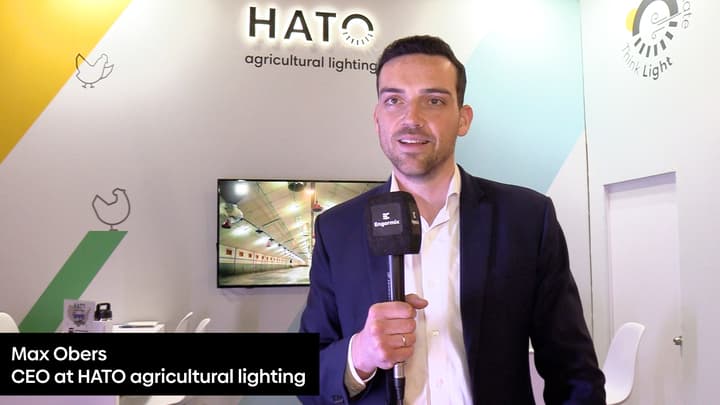
Cristabel Huerta (Hato Lighting) talks about the effects of lighting in milk production
Related topics:
Authors:

Influencers who recommended :
Alfredo J. Escribano, PhDRecommend
Comment
Share

AHV International
26 de marzo de 2026
Beyond production, the impact on animal welfare, stress reduction, and fertility is equally important, reinforcing that lighting should be considered a strategic management tool rather than a facility cost.
In a context where margins are tight and efficiency is critical, integrating precision lighting solutions represents a high-ROI opportunity for dairy producers looking to maximize output without increasing herd size.
Great to see more awareness being created around this topic—definitely an area with strong potential for the future of dairy farming.
In a context where margins are tight and efficiency is critical, integrating precision lighting solutions represents a high-ROI opportunity for dairy producers looking to maximize output without increasing herd size.
Great to see more awareness being created around this topic—definitely an area with strong potential for the future of dairy farming.
Recommend
Reply

3 de abril de 2026
Thank you, Carlos Alejandro, for your valuable input.
You raise an important point: lighting is often an underappreciated factor in dairy production, yet it has a direct impact on animal behavior, feed intake, and milk yield. Aligning lighting programs with the physiological needs of the animals can significantly enhance both productivity and welfare.
In today’s environment, where efficiency and sustainability are critical, precision lighting offers a compelling opportunity to improve performance without expanding herd size. When properly implemented, it optimizes biological responses, translating into measurable gains in productivity and consistency.
At HATO, we have seen how consistent light distribution, proper intensity, and photoperiod management support hormonal balance and improve overall herd performance. Well-designed lighting systems are increasingly becoming a key component of modern dairy operations.
It is encouraging to see more industry professionals recognizing the broader impact of lighting. This is undoubtedly an area with significant potential to shape the future of dairy farming.
You raise an important point: lighting is often an underappreciated factor in dairy production, yet it has a direct impact on animal behavior, feed intake, and milk yield. Aligning lighting programs with the physiological needs of the animals can significantly enhance both productivity and welfare.
In today’s environment, where efficiency and sustainability are critical, precision lighting offers a compelling opportunity to improve performance without expanding herd size. When properly implemented, it optimizes biological responses, translating into measurable gains in productivity and consistency.
At HATO, we have seen how consistent light distribution, proper intensity, and photoperiod management support hormonal balance and improve overall herd performance. Well-designed lighting systems are increasingly becoming a key component of modern dairy operations.
It is encouraging to see more industry professionals recognizing the broader impact of lighting. This is undoubtedly an area with significant potential to shape the future of dairy farming.
Recommend
Reply
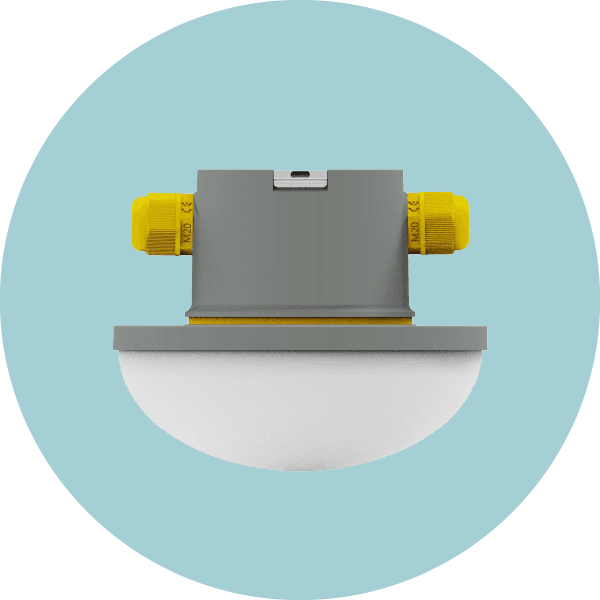
CORAX
CORAX from HATO is designed to improve the performance and well-being of your flock.
Suggested link

Kaesler Nutrition GmbH
9 de abril de 2026
Interesting discussion, and fresh air within the literature and Engormix.
Lighting plays a crucial role in dairy cow production!
Lighting Design is not so frequently discussed at the farm level nor at technical/scientific meetings, however, it's key!
Lighting plays a crucial role in dairy cow production!
Lighting Design is not so frequently discussed at the farm level nor at technical/scientific meetings, however, it's key!
Recommend
Reply
10 de abril de 2026
Alfredo, you are exactly right. Lighting is not being frequently discussed at farm level. That's why we at HATO are talking about the importance of light and about the way we can modify animal behavior with the use of light.
Through our proprietary development, RUDAX, we can influence animal behavior at a hormonal level. When other factors such as feed, air quality, genetics, and cleanliness are well managed, this can result in increased milk production.
Recommend
Reply
Kaesler Nutrition GmbH
13 de abril de 2026
interesting Carlos!
Recommend
Reply

20 de abril de 2026
Carlos, Alfredo—great discussion, and I agree this is an area that doesn’t get nearly enough attention at the farm or technical level.
One aspect that’s often overlooked in lighting conversations is the electrical quality of the lighting system itself. LED fixtures are non-linear loads, and depending on driver design, they can introduce electrical noise into the farm environment.
We were recently on a site where just three faulty LED drivers increased stray voltage levels by ~900 mV. That kind of electrical noise can directly impact animal behavior and physiology, potentially offsetting the benefits of long-day lighting programs.
So while lighting intensity, spectrum, and photoperiod are critical, it’s equally important that systems are electrically clean. Otherwise, you can unintentionally undermine the very gains you’re trying to achieve.
This is an area where lighting design and electrical engineering need to come together more closely.
One aspect that’s often overlooked in lighting conversations is the electrical quality of the lighting system itself. LED fixtures are non-linear loads, and depending on driver design, they can introduce electrical noise into the farm environment.
We were recently on a site where just three faulty LED drivers increased stray voltage levels by ~900 mV. That kind of electrical noise can directly impact animal behavior and physiology, potentially offsetting the benefits of long-day lighting programs.
So while lighting intensity, spectrum, and photoperiod are critical, it’s equally important that systems are electrically clean. Otherwise, you can unintentionally undermine the very gains you’re trying to achieve.
This is an area where lighting design and electrical engineering need to come together more closely.
Recommend
Reply
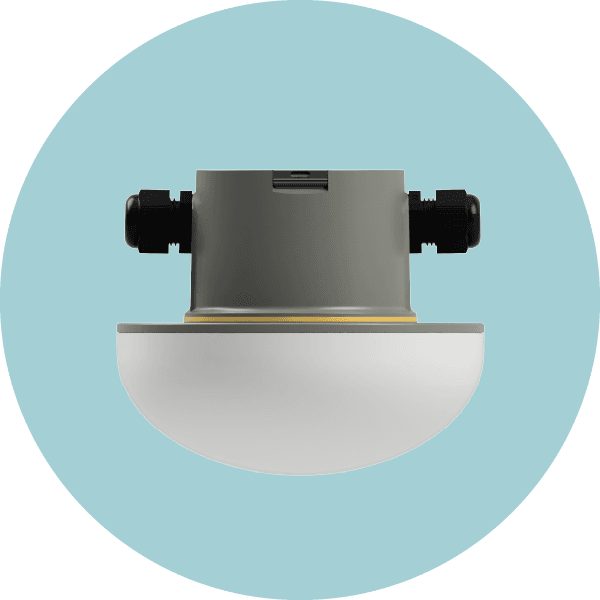
CORAX CoreCall
CORAX CoreCall from Hato is a unique communication protocol that operates via just two wires, enabling the most cost-effective installation.
Suggested link
21 de abril de 2026
@Jim Neawedde You bring up an important point regarding electrical quality. At HATO, we address this by using a 48V platform that transforms the electrical power supply into a flicker-free, noise-free lighting system.
Recommend
Reply
24 de abril de 2026
@Carlos Andrés Toro Good point—and 48V DC definitely helps with installation, safety, and maintenance.
But the weak link is still the power conversion. LED drivers are non-linear loads, so they inject harmonics back into the system. That’s where total harmonic distortion (THD%) becomes the real metric to watch.
The example I mentioned (three faulty drivers driving ~900 mV) was a rare failure case—but it proves the point that little things matter.
And lighting is just one piece. VFDs—especially on fans, pumps, and digesters—are typically the bigger offenders. The real issue is how all these elements interact across the farm.
That’s why this has to be approached holistically: grounding, wiring, drives, lighting—all working together to minimize stray voltage. The target isn’t just “better”—it’s getting the entire farm below ~70 mV.
Then the farm is actually positioned to capture the gains from long-day lighting and other performance programs—instead of unknowingly working against them.
But the weak link is still the power conversion. LED drivers are non-linear loads, so they inject harmonics back into the system. That’s where total harmonic distortion (THD%) becomes the real metric to watch.
The example I mentioned (three faulty drivers driving ~900 mV) was a rare failure case—but it proves the point that little things matter.
And lighting is just one piece. VFDs—especially on fans, pumps, and digesters—are typically the bigger offenders. The real issue is how all these elements interact across the farm.
That’s why this has to be approached holistically: grounding, wiring, drives, lighting—all working together to minimize stray voltage. The target isn’t just “better”—it’s getting the entire farm below ~70 mV.
Then the farm is actually positioned to capture the gains from long-day lighting and other performance programs—instead of unknowingly working against them.
Recommend
Reply
1
Would you like to discuss another topic? Create a new post to engage with experts in the community.
More Dairy Cattle content

Featured users