Introduction
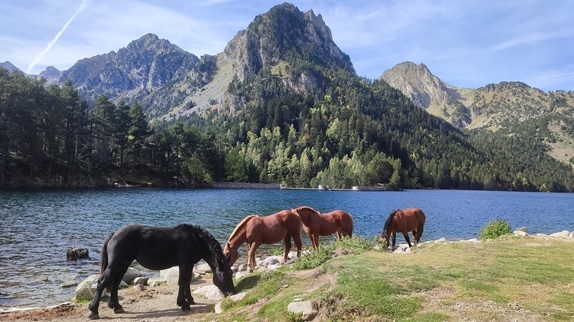
Extensive livestock farming is an animal production system characterized by the use of large land areas to raise livestock, allowing animals to move freely within their habitat, express natural behaviors, and feed mainly on natural pasture. In Spain, extensive livestock farming has played an important role in various regions, particularly in those with vast grasslands and mountainous areas (Montserrat & Fillat, 2004).
There is broad consensus on the benefits of extensive livestock farming: maintaining rural populations, preserving fragile open ecosystems that depend on grazing herds, and meeting the growing demand for products from animals raised in free-range conditions (Rodriguez et al., 2019). Abandonment of this activity would lead to the loss of pastures, hay meadows, and mountain croplands, resulting in reduced biodiversity, increased forest mass (with greater wildfire risk), changes in landscapes, and loss of cultural heritage. For these reasons, ensuring extensive livestock farming in our mountains is of vital importance (Figure 1).
Precision Livestock Farming (PLF)
In vast mountain grazing areas that define extensive farming, accurately locating and constantly monitoring livestock has historically been a major challenge (Turner & Dwyer, 2007). Unlike intensive systems, where conditions are controlled, extensive farming involves unpredictable environments and limited daily oversight by farmers. This complicates the detection of health or behavioral problems, such as lameness, mastitis, infections, or calving difficulties.
PLF proposes a solution through advanced technologies to improve management, animal welfare, economic productivity, and landscape conservation (Berckmans, 2014; Kokin et al., 2007). Tools include RFID for individual identification, accelerometers to track feeding, maternal care, disease detection, and optimal weaning timing (Berckmans, 2006; Rutter, 2012), and pedometers to monitor activity. However, challenges such as poor energy autonomy and unreliable rural network coverage hinder implementation.
Low Power Wide Area Networks (LPWANs), such as LoRaWAN and SigFox, now enable long-range, low-cost, energy-efficient connectivity (Gomez et al., 2019; Mekki et al., 2019). Data management platforms then integrate this information to support decision-making, often via mobile apps.
Geolocation Collars
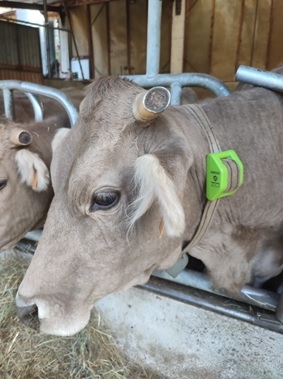
This article focuses on geolocation collars (Melgar, 2018), which provide remote real-time monitoring of animal behavior, location, and surface temperature. Benefits include reduced search time and costs, improved grazing management, prevention of overgrazing, detection of welfare and health problems, and better coexistence with predators (Barbara et al., 2006; DeMars et al., 2016).
Spanish companies such as Digitanimal®, ixoriguer®, and Innogando® manufacture such collars. In this study, Digitanimal devices were used, configured to send signals every 30 minutes via GSM, Sigfox, or LoRa networks. These waterproof devices last 6–12 months depending on network type and allow farmers to receive alerts on animal movement, health, or theft. Virtual fencing is also possible, with notifications when an animal leaves a designated area.
Results of the Study with Geolocation Collars
A total of 53,363 signals from 18 geolocation collars were analyzed across cattle (9), horses (5), and sheep (4) during the summer 2023 grazing season in Parc Natural de l’Alt Pirineu, Spain. Heat maps were generated to show grazing intensity, revealing species-specific preferences that reduce competition: sheep and horses occupied higher meadows and forests, while cattle preferred flat open grasslands near rivers.
Vegetation selection was analyzed using Jacobs’ Selection Index (JSI): cattle preferred open meadows (JSI=0.51) and avoided forests (JSI=-0.42), while horses and sheep favored black pine forests (JSI=0.52).
Activity levels showed sheep as the most active (4.0 ± 1.29 km/day), followed by cattle (2.5 ± 1.1 km/day) and horses (1.5 ± 0.53 km/day). Activity and dispersion data also helped identify calving events and possible predator attacks.
Conclusion
Geolocation collars are more than tracking devices: they enable efficient grazing management, prevent losses, improve animal welfare, and promote sustainable practices. Their success, however, depends on improvements in rural connectivity. By adopting this technology, farmers not only increase efficiency but also contribute to environmental conservation and animal well-being.